
应对人口老龄化

Search documents
第六险来了!一文读懂“长护险”
新华网财经· 2026-03-26 01:35
Core Viewpoint - The article discusses the establishment of a long-term care insurance system (referred to as "long care insurance") in China, aimed at providing financial support and services for disabled individuals, with a goal to be implemented nationwide within three years [1][4]. Group 1: Definition and Purpose - Long care insurance is a new type of social insurance designed to provide services or financial support for basic living care and medical care closely related to disabled individuals [2]. - The initiative is part of China's strategy to address population aging and improve the social security system, serving as a key measure to alleviate the burden on families when one member becomes disabled [3]. Group 2: Implementation Principles - The establishment of the long care insurance system will adhere to several principles: 1. Universal coverage starting with employed individuals and gradually including unemployed urban and rural residents [5]. 2. Unified management of funds across urban and rural areas [5]. 3. Fair and consistent standards across different regions [5]. 4. Enhanced safety and regulation of the system to ensure quality and fund security [5]. 5. Sustainable development of the system to ensure it is financially viable and meets the needs of the population [5]. Group 3: Eligibility and Benefits - Individuals who have paid into the insurance and have a long-term disability (generally over six months) can apply for benefits, with the initial focus on those with severe disabilities [6]. - The insurance fund will primarily cover the costs of approved long-term care services, ensuring that funds are used specifically for the care of disabled individuals [7]. Group 4: Timeline and Roadmap - The plan aims to establish a comprehensive system within three years, including a funding mechanism and a management structure that aligns with China's conditions [8]. - The implementation will start at the city and district level, with a unified policy and fund management [8]. Group 5: Contribution Levels - The insurance contribution rate is set to be around 0.3%, with costs shared between employers and employees for working individuals, and similar arrangements for retirees [10]. - Contributions for unemployed urban and rural residents will be shared between individuals and the government, with additional support from both central and local finances [10].


“十五五”时期人均预期寿命提高到80岁
21世纪经济报道· 2026-03-05 01:58
Group 1 - The core viewpoint of the article emphasizes the government's commitment to building a fertility-friendly society and improving the population service system [1] - The average years of education for the working-age population is set to increase to 11.7 years, reflecting a focus on enhancing educational quality [1] - The initiative to build a healthy China aims to raise the average life expectancy to 80 years, indicating a strong emphasis on public health [1] - The response to population aging includes increasing the proportion of nursing beds in elderly care institutions to 73%, addressing the needs of an aging population [1] - The government aims to promote high-quality and sufficient employment while improving the income distribution system and social security framework [1]

总书记考察的这个地方,藏着北京“老有颐养”的民生密码
Xin Jing Bao· 2026-02-13 06:56
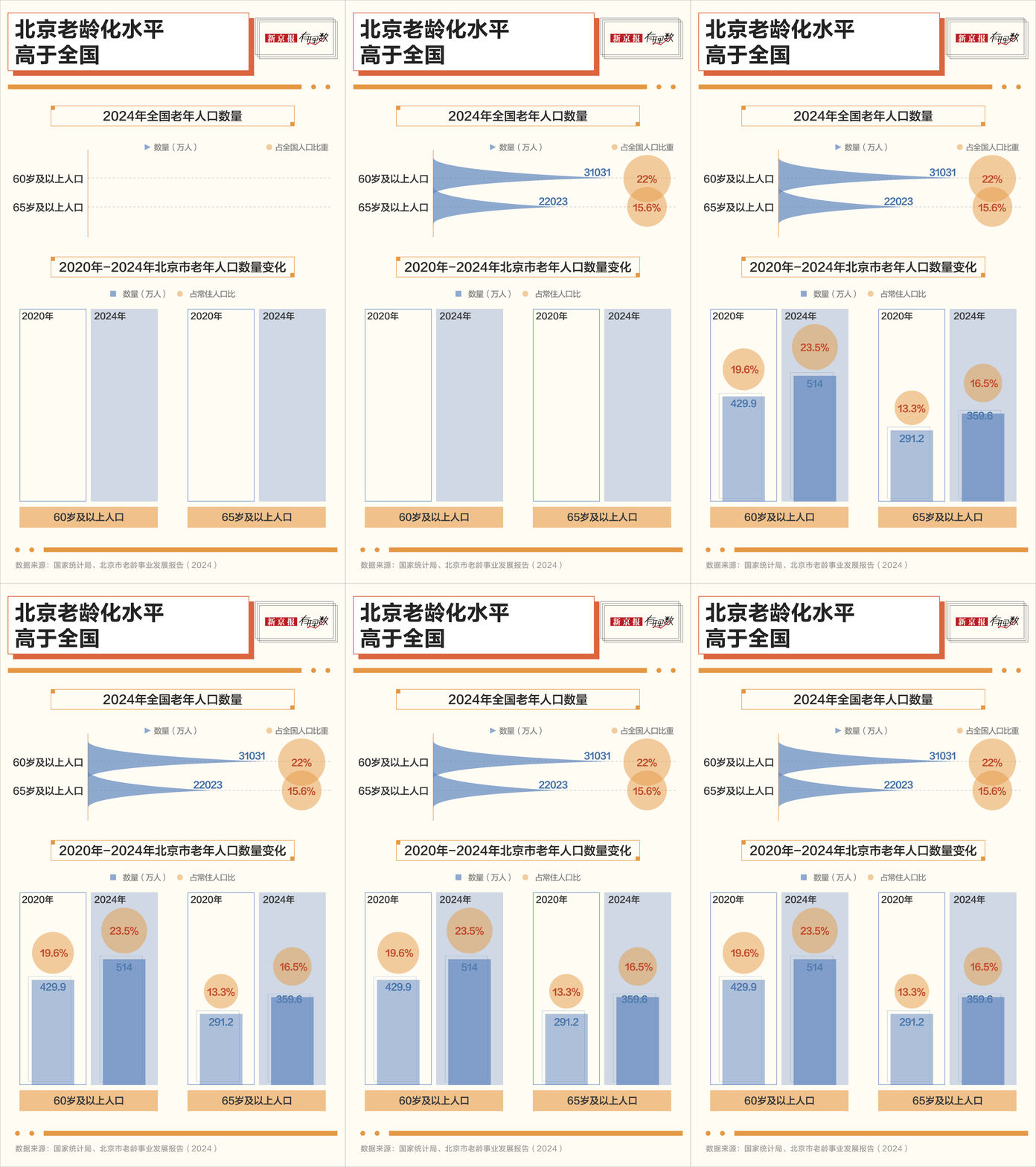
Core Viewpoint - The article emphasizes the importance of actively addressing the aging population in China, highlighting the need for comprehensive strategies and community-based solutions to improve elderly care and services [2][15]. Group 1: Demographic Trends - As of the end of 2024, the elderly population aged 60 and above in China is projected to reach 310.31 million, accounting for 22.0% of the total population, while those aged 65 and above will number 220.23 million, making up 15.6% [2]. - Beijing's aging process is more advanced than the national average, with a significant increase in the population aged 80 and above, which rose by 12,000 from 2023 to 2024 [4]. Group 2: Community-Based Elderly Care - Beijing is focusing on "home-based elderly care" rather than simply expanding institutional facilities, aiming to provide services within familiar environments for the elderly [7]. - The city has established 1,410 community elderly service stations and 807 neighbor assistance points to enhance local support for the elderly [8]. Group 3: Institutional Support and Services - By the end of 2024, Beijing had built and operated 577 elderly care institutions with a total of 108,000 beds [7]. - The city has also created 2,410 elderly meal assistance points, covering 6,539 urban and rural communities, ensuring that millions of elderly individuals have access to hot meals [10]. Group 4: Workforce Development - Beijing has implemented a comprehensive talent support policy for the elderly care sector, offering financial incentives for new hires and existing staff, with rewards ranging from 40,000 to 60,000 yuan for graduates entering the field [12]. - As of 2024, there are 51,000 elderly care workers in Beijing, contributing to a more professional and stable workforce [12]. Group 5: Regulatory Framework - The "Beijing Elderly Care Service Regulations," passed on January 29, 2026, aims to establish a three-tiered elderly care service network, ensuring that elderly individuals can access professional and inclusive services close to home [15][16]. - The regulations will take effect on July 1, 2026, with plans to build an additional 100 regional elderly service centers during the 14th Five-Year Plan period [16].
聚焦“十五五”规划建议|积极应对人口老龄化 健全养老事业和产业协同发展政策机制
Xin Hua She· 2025-11-30 23:01
Group 1 - The core viewpoint of the article emphasizes the need to actively respond to population aging and to establish a policy mechanism for the coordinated development of the pension industry and services [1]
【省民政厅】陕西省高龄老年人生活保健补贴发放办法12月起施行
Shan Xi Ri Bao· 2025-11-23 22:55
Group 1 - The new subsidy policy for elderly individuals in Shaanxi Province will be implemented on December 1, aimed at addressing the challenges of an aging population [1] - The subsidy amounts are structured based on age: individuals aged 70-79 will receive 50 yuan per month, those aged 80-89 will receive 100 yuan, individuals aged 90-99 will receive 200 yuan, and those aged 100 and above will receive 300 yuan per month [1] - The application process for the high-age subsidy has been simplified, requiring only the resident ID and household registration book, with multiple application channels available [1] Group 2 - Elderly individuals aged 60 and 65 will be eligible for corresponding welfare benefits to enhance their quality of life [2] - The Shaanxi Provincial Civil Affairs Department is revising the "Shaanxi Province Elderly Preferential Service Measures," which will be announced to the public once approved [2] - The aim of these policies is to continuously improve the sense of gain and happiness among the elderly population [2]
保民生、防风险、促发展 普惠性、基础性、兜底性民生建设有力推进
Ren Min Ri Bao· 2025-10-11 02:54
Core Viewpoint - The Chinese government has made significant progress in social welfare and civil affairs during the "14th Five-Year Plan" period, focusing on enhancing the social safety net and improving the quality of life for vulnerable populations [1]. Group 1: Social Safety Net Enhancements - The social assistance system has been strengthened, with a layered and categorized approach to support for disadvantaged groups [2]. - The average standard of urban and rural subsistence allowances has increased by 19.6% and 21.3% respectively since 2020, benefiting 39.4 million low-income individuals and 4.82 million severely disabled persons [2]. - A comprehensive support system for children in difficult situations has been established, with living standards for orphans and other vulnerable children increasing by 26% to 32% since 2020 [2][3]. Group 2: Elderly Care Improvements - The development of elderly care services has advanced, with a target of 40,600 elderly care institutions and 7.993 million beds by the end of 2024 [4]. - Various subsidies, including high-age allowances and care subsidies for disabled elderly individuals, now benefit 49.45 million elderly people [4]. - The average life expectancy in China has reached 79 years, an increase of 1.07 years since 2020, with the elderly population (aged 65 and above) projected to reach 220 million by the end of 2024 [4][5]. Group 3: Charity Sector Growth - The number of registered charitable organizations has increased from over 9,400 at the end of 2020 to more than 16,000 currently, with annual expenditures of 150 billion yuan on various social issues [6][7]. - A new charity law has been implemented, enhancing the regulatory framework for charitable activities [6]. - The atmosphere for charitable activities has become more robust, with initiatives like the "Chinese Charity Day" promoting widespread participation in charitable acts [7]. Group 4: Geographic Naming and Cultural Heritage - The Ministry of Civil Affairs has focused on improving geographic naming systems, with over 1.48 million geographic names recorded in the national database [8]. - A cultural heritage evaluation system for geographic names has been established, protecting over 68,000 names of historical significance [8].
普惠性、基础性、兜底性民生建设有力推进
Ren Min Ri Bao· 2025-10-11 00:08
Core Viewpoint - The Chinese government is making significant progress in enhancing social welfare and support systems during the "14th Five-Year Plan" period, focusing on inclusive, foundational, and safety-net social welfare initiatives to better protect livelihoods, mitigate risks, and promote development [2][3]. Group 1: Social Welfare Enhancements - The social safety net for vulnerable populations has been significantly strengthened, with a layered and categorized social assistance system established, and a dynamic monitoring and support mechanism for disadvantaged groups initiated [3][4]. - The average standard of urban and rural minimum living allowances has increased by 19.6% and 21.3% respectively since 2020, with 39.4 million individuals receiving regular minimum living support [3]. - Support for vulnerable children has expanded to include orphans and children left behind by parents, with a comprehensive care system established, resulting in a 26%, 32%, and 31% increase in living standards for different categories of children since 2020 [3]. Group 2: Elderly Care Improvements - The development of elderly care services has advanced, with a national basic elderly service system established, aiming to optimize the supply structure [5][6]. - By the end of 2024, the number of elderly care institutions is expected to reach 406,000, with 7.993 million beds available, and various subsidies benefiting 49.45 million elderly individuals [5]. - The average life expectancy in China has increased to 79 years, reflecting a growing elderly population, with 220 million individuals aged 65 and above by the end of 2024, accounting for 15.6% of the total population [6]. Group 3: Charity Sector Growth - The charity sector has seen significant growth, with the number of registered charitable organizations increasing from over 9,400 at the end of 2020 to more than 16,000 currently [7][8]. - Charitable expenditures have reached 150 billion yuan annually, focusing on various social issues, including support for the elderly, children, and those with disabilities [8]. - A more robust charitable atmosphere has been cultivated, with initiatives like the "Chinese Charity Day" and the "Chinese Charity Award" promoting a culture of giving [8]. Group 4: Geographic Naming and Cultural Heritage - The Ministry of Civil Affairs has focused on enhancing geographic naming management, with over 600,000 new names announced and a national geographic information database established, containing 14.8 million entries [9]. - A cultural heritage evaluation system for geographic names has been developed, ensuring the protection of ancient names and cultural sites [9].
努力谱写民政工作高质量发展新篇章——国新办发布会聚焦“十四五”时期民政事业发展成就
Xin Hua She· 2025-10-10 13:27
Core Insights - The article highlights the achievements and advancements in China's civil affairs sector during the "14th Five-Year Plan" period, emphasizing the importance of social welfare and support systems for vulnerable populations [1][2]. Summary by Sections Strengthening Basic Livelihood Security - The average standards for urban and rural subsistence allowances increased by 19.6% and 21.3% respectively compared to 2020, with significant growth in support for orphans and vulnerable children [2]. - A comprehensive social assistance system has been established, with 39.4 million individuals receiving regular subsistence support, preventing large-scale poverty [2][3]. Child Welfare Improvements - Major progress has been made in child welfare, with standards for orphans and unaccompanied children increasing by over 26% since the end of the "13th Five-Year Plan" [2]. - The "Dream Fund for Orphans" has allocated 1.687 billion yuan to support orphans' education through 2024 [2]. Enhancements in Disability Support - The average standards for living allowances for disabled individuals increased by 31.9% and 22.5% for severe disability care during the "14th Five-Year Plan" [3]. - Community rehabilitation services for individuals with mental disorders now cover 89.4% of districts, serving 1.26 million patients [3]. Aging Population and Elderly Care Development - By the end of 2024, the elderly population aged 65 and above is projected to reach 220 million, accounting for 15.6% of the total population [4]. - The government has completed home modifications for 2.24 million elderly individuals and established numerous community-based elderly care services [4][5]. Social Service Capacity and Governance Innovations - The number of registered social organizations has reached 865,000, with a significant increase in charitable organizations from over 9,400 to more than 16,000, reflecting a 70% growth [7][8]. - Charitable organizations have spent approximately 150 billion yuan annually on various social welfare initiatives, demonstrating the growing impact of charity in society [8].
湖北启动医疗机构免陪照护服务试点
Zhong Guo Xin Wen Wang· 2025-09-05 02:35
Core Viewpoint - The launch of the pilot program for "no accompanying care services" in medical institutions in Hubei Province aims to address the care needs of hospitalized patients, particularly those who are partially or completely unable to care for themselves, thereby reducing the burden on family caregivers [1][2]. Group 1: Pilot Program Details - The pilot program is officially initiated by the Hubei Provincial Health Commission, the Hubei Provincial Administration of Traditional Chinese Medicine, the Hubei Provincial Center for Disease Control, and the Hubei Provincial Medical Insurance Bureau [1]. - The first batch includes 18 tertiary hospitals across cities such as Wuhan, Yichang, Shiyan, and Xiangyang, including notable institutions like Huazhong University of Science and Technology Tongji Medical College Affiliated Tongji Hospital and Yichang Central People's Hospital [1]. - The program focuses on providing standardized and professional living care services, including assistance with meals, bathing, and hygiene, under the supervision of nurses [1][2]. Group 2: Implementation and Training - The implementation of the pilot program will occur in three phases, starting with deployment in August 2025, followed by organizational implementation in September 2025, and concluding with evaluation from April to June 2026 [2]. - To ensure the effectiveness of the pilot, Hubei will enhance training for medical caregivers to meet professional competency standards [2]. - The program is part of Hubei's broader efforts to reform the healthcare system, respond to population aging, and optimize the supply of medical services [2].
韩国经济学家呼吁新政府优先推动产业升级发掘未来增长动力
Shang Wu Bu Wang Zhan· 2025-08-08 17:30
Group 1 - The core viewpoint of the article emphasizes the need for the new South Korean government to prioritize industrial upgrades to discover future growth drivers [1] - A significant majority of surveyed economists believe that the primary economic task for the new government is to enhance potential growth rates and optimize industrial structure [1] - The second priority identified is to improve employment quality, reform the labor market structure, and address the challenges posed by an aging population [1] Group 2 - Among the structural issues facing the South Korean economy, 71% of respondents pointed to slowing productivity, stagnation in technological innovation, and a lack of new growth drivers as the most fundamental problems [1] - Economists emphasized the importance of supporting industries in adapting to rapid technological changes as a key challenge for the new government [1]