心血管疾病

Search documents
医生:长途旅行久坐要当心
Xin Lang Cai Jing· 2026-02-26 18:39
医生介绍,击倒这位19岁女孩的是"经济舱综合征"。经过6小时的全力抢救,医院启用ECMO生命支持 治疗,终于将小艾从死亡线上拉了回来。据悉,小艾出发前已持续胸闷两天,但为了不耽误开学报到, 她一直硬扛着,最终劳累与病情叠加,引发心脏骤停。 医生解释,"经济舱综合征"本质是长期久坐导致下肢形成血栓,血栓脱落可能引发致命肺栓塞,常见于 长途旅行者。春运返程高峰,乘客久坐不动、饮水不足、作息紊乱,都可能诱发心血管疾病。对此,暨 南大学附属第六医院心内科专家给出实用指南:出发前若有胸闷、头晕等不适,切勿硬扛;长途旅行中 每1~2小时起身走动,座位上可做勾脚尖、绷脚面的踝泵运动;每小时饮用100~150ml温水,避免咖啡 和酒精,防止血液黏稠。目前,小艾已转至普通病房,病情趋于稳定。 据广州日报 昨日,#女大学生坐硬座31小时返校心脏骤停#话题冲上热搜榜首,引发无数网友关注。 据了解,2月21日凌晨5时许,T127次列车缓缓停靠东莞东站,从成都西上车的19岁的东莞理工学院大 一女生小艾(化名)终于结束了近31小时的硬座旅程。可就在她走下站台、没迈出几步时,突然浑身无 力倒地,意识瞬间丧失,心跳也随之停止。东莞东站工作人 ...
全球病死率第一的“老年病”正悄悄逼近年轻人
Di Yi Cai Jing· 2026-02-26 11:33
每年导致全球1790万人死亡的心血管疾病一直被视为"老年病"。但在我国现有的3.3亿心血管病患人群 中,年轻人的比例正在大幅上升。 春节前后,因心梗去世的年轻人案例也不少见。据湖北媒体报道,今年春节期间,一位35岁男子在跨省 旅途中多次胸痛,最终心梗抢救无效离世。春节前,国内一位资深记者与朋友聚餐途中突发心脏病猝 死,年仅47岁。 心血管疾病作为健康的"头号杀手",是病死率最高的疾病,占据全球死亡总数的32%,我国每年约500 万人死于心血管疾病,大约是癌症死亡人数的两倍。 专家表示,心血管疾病并非单一疾病,而是从代谢异常到心梗中风、甚至猝死的一整个连锁性的疾病。 "一些年轻人在胸痛发作时,往往不当回事,以为扛一扛就能过去,但如果持续胸痛,必须立即就 医。"上海市第十人民医院心脏中心主任医师、泛血管中心主任张毅教授对第一财经记者表示。 张毅也向第一财经记者透露,可穿戴设备有望对急性心梗做出精准预警,其团队正在开发相关的12导联 背心,有望实现对心肌缺血的判断,但目前产品尚处于研发阶段。 据他观察,现在年轻人的心梗高发比较明显,有些等到就医时病情已经发展到相当严重的程度。有些病 人就医时尽管紧急手术,但因延误太 ...
全球病死率第一的“老年病”正悄悄逼近年轻人,这些因素成为隐形推手
Di Yi Cai Jing· 2026-02-26 10:10
"我们认为,无论年龄,理论上胸痛30分钟如果不缓解,就应该拨打120。"张毅表示,"从胸痛发作到开 通血管,最好在120分钟以内,心肌的损伤是最小的。" 武汉大学中南医院急救中心主任医师夏剑也表示,春节假期急诊中,心脑血管疾病患者明显增多,尤其 是心血管问题最为常见。气温波动、作息紊乱、饮食不当,也是一些年轻人突发心血管疾病的"隐形推 手"。 心血管疾病作为健康的"头号杀手",占据全球死亡总数的32%,我国每年约500万人死于心血管疾病, 大约是癌症死亡人数的两倍。 每年导致全球1790万人死亡的心血管疾病一直被视为"老年病"。但在我国现有的3.3亿心血管病患人群 中,年轻人的比例正在大幅上升。 春节前后,因心梗去世的年轻人案例也不少见。据湖北媒体报道,今年春节期间,一位35岁男子在跨省 旅途中多次胸痛,最终心梗抢救无效离世。春节前,国内一位资深记者与朋友聚餐途中突发心脏病猝 死,年仅47岁。 心血管疾病作为健康的"头号杀手",是病死率最高的疾病,占据全球死亡总数的32%,我国每年约500 万人死于心血管疾病,大约是癌症死亡人数的两倍。 专家表示,心血管疾病并非单一疾病,而是从代谢异常到心梗中风、甚至猝死的一 ...
所有现代尼古丁产品均可致血管损伤
Xin Lang Cai Jing· 2026-01-19 19:14
Core Findings - An international research team has concluded that all modern nicotine products, including e-cigarettes, cause vascular dysfunction, increasing the risk of cardiovascular diseases [1][2] - The study assessed over 100 experimental and observational studies, focusing on "vascular function" as an early indicator of cardiovascular damage [1] - The research indicates that nicotine itself, regardless of the method of intake, damages the heart and blood vessels, contradicting the belief that health risks are solely due to harmful substances released from tobacco combustion [1] Industry Implications - There is a growing concern regarding the rapid increase in the use of modern nicotine products among adolescents, with data showing that up to 40% of 15 to 16-year-olds in some European countries have tried e-cigarettes [1] - The use of nicotine salts in these products allows for rapid absorption in the brain, leading to increased addiction potential among young users [1] - The study highlights that the risks of secondhand smoke exposure are still underestimated, with even short-term exposure to nicotine product emissions potentially harming vascular function, particularly affecting children, pregnant women, and individuals with existing cardiovascular conditions [2] Regulatory Recommendations - Researchers urge public health policies to focus on regulating nicotine products, emphasizing the protection of children and adolescents, reducing passive exposure, and enforcing age restrictions and sales regulations to achieve effective disease prevention [2]
冬季请警惕这些心梗前兆
Xin Lang Cai Jing· 2026-01-17 14:40
Core Viewpoint - Winter is a high-risk season for cardiovascular diseases, with low temperatures triggering blood vessel contraction and elevated blood pressure, significantly increasing the risk of heart attacks, especially among the elderly [1] Group 1 - The elderly population is particularly vulnerable due to weakened bodily functions, making them more susceptible to heart attack symptoms that can easily be overlooked [1]
急性心梗缘何“盯”上年轻人?
Zhong Guo Xin Wen Wang· 2026-01-16 02:33
Core Viewpoint - The recent fluctuations in temperature have become a hidden trigger for cardiovascular diseases, particularly affecting younger individuals who are increasingly becoming a high-risk group for such conditions [1][2]. Group 1: Impact of Temperature Fluctuations - Temperature changes can cause significant stress on the cardiovascular system, leading to blood pressure fluctuations and instability of arterial plaques [2]. - A case study highlighted a young male patient with pre-existing hypertension and diabetes who suffered an acute myocardial infarction due to extreme temperature exposure, illustrating the dangers faced by younger populations [2]. Group 2: Young Population at Risk - Young individuals are facing increased risks of cardiovascular diseases due to lifestyle factors such as work pressure, irregular eating habits, and lack of sleep [2]. - Many young patients exhibit risk factors like hypertension, high cholesterol, diabetes, and obesity, which can be exacerbated by unhealthy habits like smoking and drinking [2]. Group 3: Symptoms and Diagnosis - Symptoms such as palpitations, chest tightness, and dizziness can indicate serious cardiovascular issues, and their severity, duration, and accompanying symptoms are critical for assessment [3]. - Misconceptions about the symptoms of heart conditions can lead to delayed treatment, emphasizing the need for awareness of varied symptom presentations [3]. Group 4: Preventive Measures - Regular health monitoring, especially for high-risk individuals, is essential to manage blood pressure and heart rate effectively [4]. - Proper clothing strategies should be employed to adapt to temperature changes, helping to maintain body temperature and reduce vascular stress [4]. - Patients with chronic cardiovascular conditions must adhere to prescribed medication regimens and avoid self-discontinuation, as this can lead to severe health risks [4].
血脂超标,当心6大误区
Xin Lang Cai Jing· 2026-01-13 20:54
Core Insights - High blood lipid levels and fatty liver disease are prevalent health issues in China, contributing significantly to cardiovascular disease risk [1][2] - Both conditions are linked through metabolic disorders, with common risk factors such as abdominal obesity, sedentary lifestyle, and poor diet [2][3] Group 1: Understanding the Conditions - High blood lipid levels, or hyperlipidemia, involve elevated total cholesterol, triglycerides, and low-density lipoprotein cholesterol (LDL-C), which can lead to atherosclerosis and cardiovascular events [2] - Fatty liver disease, characterized by excessive fat accumulation in liver cells, exacerbates cardiovascular risks through insulin resistance and inflammation [2][3] Group 2: Misconceptions and Management - Misconception 1: Reducing oil intake alone can lower blood lipid levels; however, 80% of cholesterol is synthesized by the liver, making dietary changes insufficient without addressing insulin resistance [4] - Misconception 2: Fatty liver patients can safely avoid statins; clinical studies indicate that statins can improve fatty liver conditions without exacerbating liver issues [5][6] - Misconception 3: Normal transaminase levels mean no need for ongoing medication; high-risk individuals require continuous lipid-lowering therapy to prevent disease progression [7] Group 3: Comprehensive Management Strategies - A three-pronged approach is recommended for managing high blood lipid levels: lifestyle modifications, pharmacological treatment, and regular monitoring [9] - Lifestyle interventions should focus on weight management, with a target weight loss of 5% to 10% over 6 to 12 months to improve insulin sensitivity and lipid levels [10] - Pharmacological treatment should be tailored based on individual risk factors, with specific LDL-C targets for different risk categories [11][12] Group 4: Monitoring and Follow-Up - Regular monitoring of lipid levels and liver function is crucial, with specific timelines for testing before and after medication initiation [14] - Patients with fatty liver and lipid abnormalities should consult multiple specialists to ensure comprehensive care and avoid treatment limitations [14]
心血管疾病不会缠上年轻人……是真是假?| 谣言终结站
Xin Lang Cai Jing· 2026-01-13 04:20
Core Viewpoint - The incidence of coronary heart disease is trending younger, with an increasing number of young and middle-aged individuals suffering from hypertension, diabetes, and hyperlipidemia, leading to cases of myocardial infarction and heart failure [1] Group 1: Risk Factors - Atherosclerosis is a major cause of cardiovascular diseases, which can develop over many years. Common risk factors include hypertension, diabetes, hyperlipidemia, poor diet, lack of exercise, and obesity [1] - Young individuals may already have significant plaque buildup in their blood vessels due to these risk factors, highlighting the need for early intervention [1] Group 2: Warning Signs - Common warning signs of cardiovascular issues include discomfort in the chest area, which may manifest as tightness or burning sensations, especially during physical activity, emotional stress, or after meals [2] - Symptoms may radiate to the jaw, shoulders, arms, back, and upper abdomen, indicating potential myocardial ischemia [2] - Additional symptoms may include gastrointestinal issues such as nausea and vomiting, often accompanied by palpitations, shortness of breath, dizziness, and extreme fatigue, which could signal acute myocardial infarction [2] Group 3: Medical Attention and Monitoring - If symptoms occur frequently or worsen, immediate medical attention is advised [3] - Regular health check-ups are recommended to monitor blood pressure, blood sugar, blood lipids, and ECG results, with prompt medical intervention for any abnormalities [4]
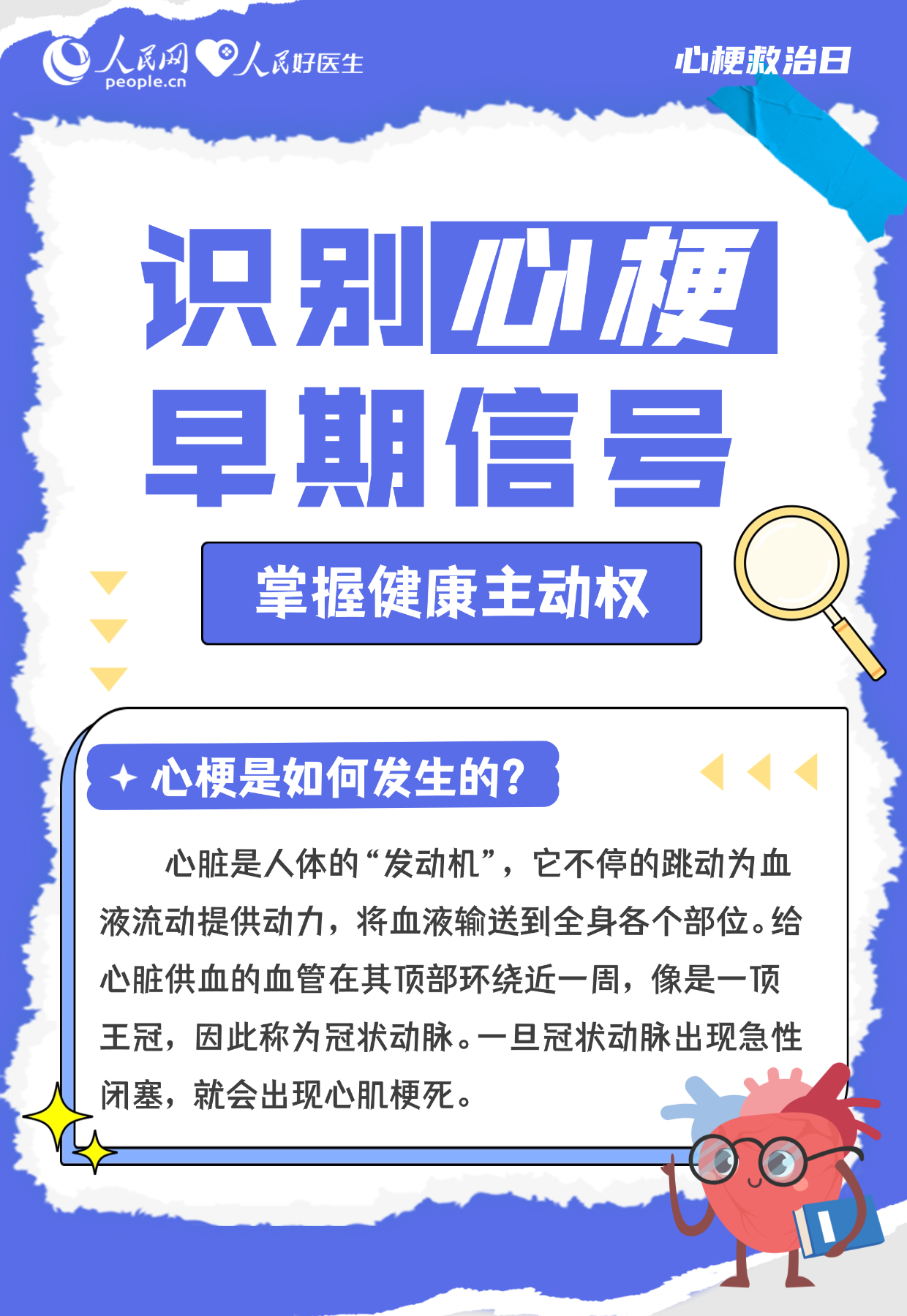
中国心梗救治日:看懂心梗信号 掌握健康主动权
Ren Min Wang· 2025-11-20 07:00
Core Viewpoint - The incidence and mortality rates of acute myocardial infarction (AMI) are increasing annually in China, particularly during the autumn and winter seasons when cardiovascular diseases are more prevalent due to lower temperatures, which heighten the risk of heart attacks [1]. Group 1: Symptoms of Acute Myocardial Infarction - Typical symptoms include severe chest pain lasting more than 15 minutes, which does not improve with rest or nitroglycerin [6]. - Chest pressure sensation, described as feeling like a heavy weight on the chest, may persist for several minutes or recur [7]. - Atypical symptoms may include radiating pain to the left shoulder, arm, jaw, or teeth, with women more likely to experience these non-typical symptoms [8]. - Other symptoms can include dizziness, weakness, cold sweats, pale complexion, difficulty breathing, nausea, and vomiting [10][11]. Group 2: Emergency Response Measures - Immediate actions include stopping all activities, lying down, and loosening tight clothing to calm down and improve oxygen supply to the heart [14]. - It is crucial to call emergency services promptly and provide accurate information about the patient's condition and medical history [15]. - If chest pain persists and blood pressure is stable, sublingual nitroglycerin may be administered; otherwise, alternative medications should be considered [16]. Group 3: Risk Factors and Causes - Risk factors for AMI include age, smoking, diabetes, hypertension, and a family history of heart disease [25]. - Common triggers for heart attacks include physical exertion, emotional stress, and unhealthy dietary habits [25]. - Atherosclerotic plaque rupture and coronary artery spasm due to various stimuli can lead to acute myocardial infarction [19][20]. Group 4: Prevention and Lifestyle Adjustments - Dietary recommendations emphasize low saturated fat and cholesterol intake, with a focus on fresh vegetables and whole grains [27]. - Maintaining a positive mindset and engaging in regular physical activity can benefit heart health [28]. - Avoiding excessive strain, monitoring high-risk factors, and adhering to prescribed medication regimens are essential for prevention [30][31][33].

杭州师范大学×浙江大学×西湖大学合作Cell子刊:生物打印“会生病”的人工动脉
生物世界· 2025-11-18 04:05
Core Insights - The article discusses a groundbreaking study on cardiovascular disease, highlighting the limitations of existing laboratory models in accurately replicating the complex environment of human arteries [2][5] - The research introduces a novel extrusion-on-demand (EoD) bioprinting technology that creates arterial models with micron-level structural fidelity and customizable macro geometries, enabling better understanding of vascular disease mechanisms and personalized treatment approaches [3][8] Summary by Sections Research Background - Cardiovascular disease is the leading cause of death globally, yet research has been hindered by inadequate laboratory models that fail to replicate the intricate interactions involved in vascular diseases [2] - Current models are either overly simplified (2D) or lack the necessary structural and functional complexity (3D), leading to unresolved mechanisms and ineffective drug trials [2] Technological Innovation - The EoD bioprinting technology developed in this study allows for the construction of arterial models that accurately reflect the microenvironment of vascular diseases, including specific gene/protein expressions that enhance endothelial function and barrier integrity [5][6] - This technology bridges the gap between simplified in vitro systems and the complex in vivo environments, providing a biomimetic platform for disease mechanism analysis and therapy evaluation [5][9] Key Findings - The printed arterial models successfully replicate hallmark processes of vascular diseases, such as endothelial dysfunction, immune cell infiltration, and foam cell formation under physiologically relevant flow and inflammatory conditions [8][9] - The response of these models to drugs mirrors in vivo results, establishing their value for preclinical testing and therapeutic discovery [8] Implications for Future Research - This research not only presents a sophisticated vascular model but also offers a blueprint for engineering complex disease environments, paving the way for decoding vascular disease progression, identifying therapeutic targets, and accelerating precision medicine [9]