机构震仓

Search documents
AI芯企冲刺IPO,数据看透震荡中的杀机
Sou Hu Cai Jing· 2026-02-18 12:13
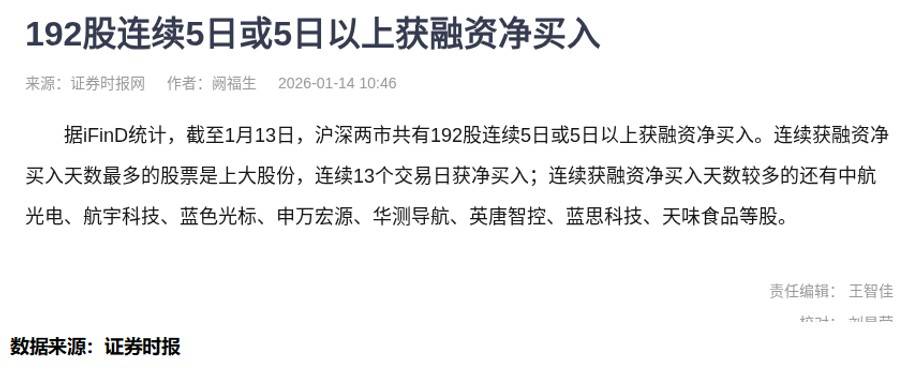
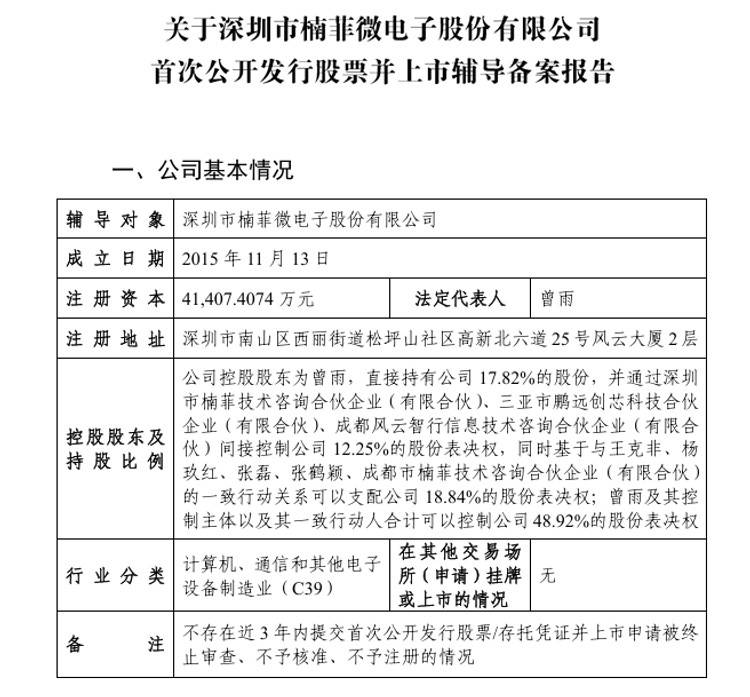
昨天和老杨喝茶,他还在念叨最近盯某AI芯片企业的消息闹心——这家做超节点互联的楠菲微刚提交IPO辅导,前阵子融了10亿多,背后有国资和上市 公司参投,主打超节点板间互联技术,连AI智算中心的万卡集群都能用,行业前景看着亮眼,但对应的关联个股走势忽上忽下,他拿了半个月,上周看 到大盘回调,手里的票跟着跌了两个点,吓得赶紧清仓,结果转天就拉涨,连涨三天,悔得拍大腿都拍红了。其实不光老杨,最近不少朋友都在说,明 明是好赛道的企业,怎么股价就这么磨人?以前大家只能靠感觉猜,涨了怕跌,跌了怕套,现在有了量化大数据,就能把那些藏在波动里的门道扒得明 明白白,再也不用被来回洗得晕头转向。 | 辅导对象 | 深圳市楠菲徽电子股份有限公司 | | | | --- | --- | --- | --- | | 成立日期 | 2015年11月13日 | | | | 注册资本 | 41.407.4074 万元 | 法定代表人 | 曾 南 | | 注册地址 | 深圳市南山区西丽街道松坪山社区高新北六道25号风云大厦2层 | | | | 控股股东及 持 股 比 例 | 公司控股股东为普雨,直接持有公司 17.82%的股份,并通过深圳 币楠 ...

节后基金密集布局,选对方向少走弯路
Sou Hu Cai Jing· 2026-02-17 02:36
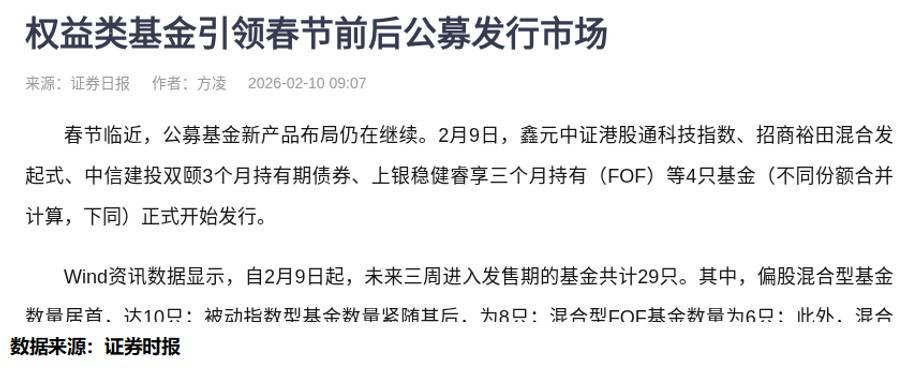
最近我留意到,春节前后公募基金的布局节奏明显加快,从2月9日起未来三周,有29只新基金陆续进入发售期,其中21只是权益类 品种,占比超七成。业内分析,当前权益市场估值具备吸引力,节后资金回流、政策预期偏暖,春季行情值得期待,但同时也指 出,2月市场会保持轮动格局,板块和个股的表现分化会比较明显。 不少投资者这时候容易犯难:看着新基金密集发行,市场又有行情预期,到底该怎么选标的?其实我身边就有朋友踩过坑,去年行 情初期追了一只反弹的标的,结果拿了大半年都没起色,后来用交易行为大数据拆解才发现,问题出在资金参与度上。今天我就结 合自己用了十多年的大数据工具,跟大家聊聊怎么通过资金行为看清标的本质,避免踩同样的坑。 一、选对标的,先看资金持续参与度 很多人选标的只看短期涨跌,却忽略了背后的资金行为,这是最容易踩的主观误区。其实一只标的能不能走得稳,核心看机构资金 是不是在持续积极参与交易。我用了十多年的大数据交易行为系统里,橙色柱体的「机构库存」数据,就是反映机构资金活跃程度 的指标,柱体越持续、越密集,说明参与的机构资金交易特征越明显,持续时间越长。 比如这只标的,股价整体呈现震荡向上的走势,中间有很长一段时间的 ...
ETF遭遇巨量抛盘,大A有情况?
Sou Hu Cai Jing· 2026-02-16 05:17
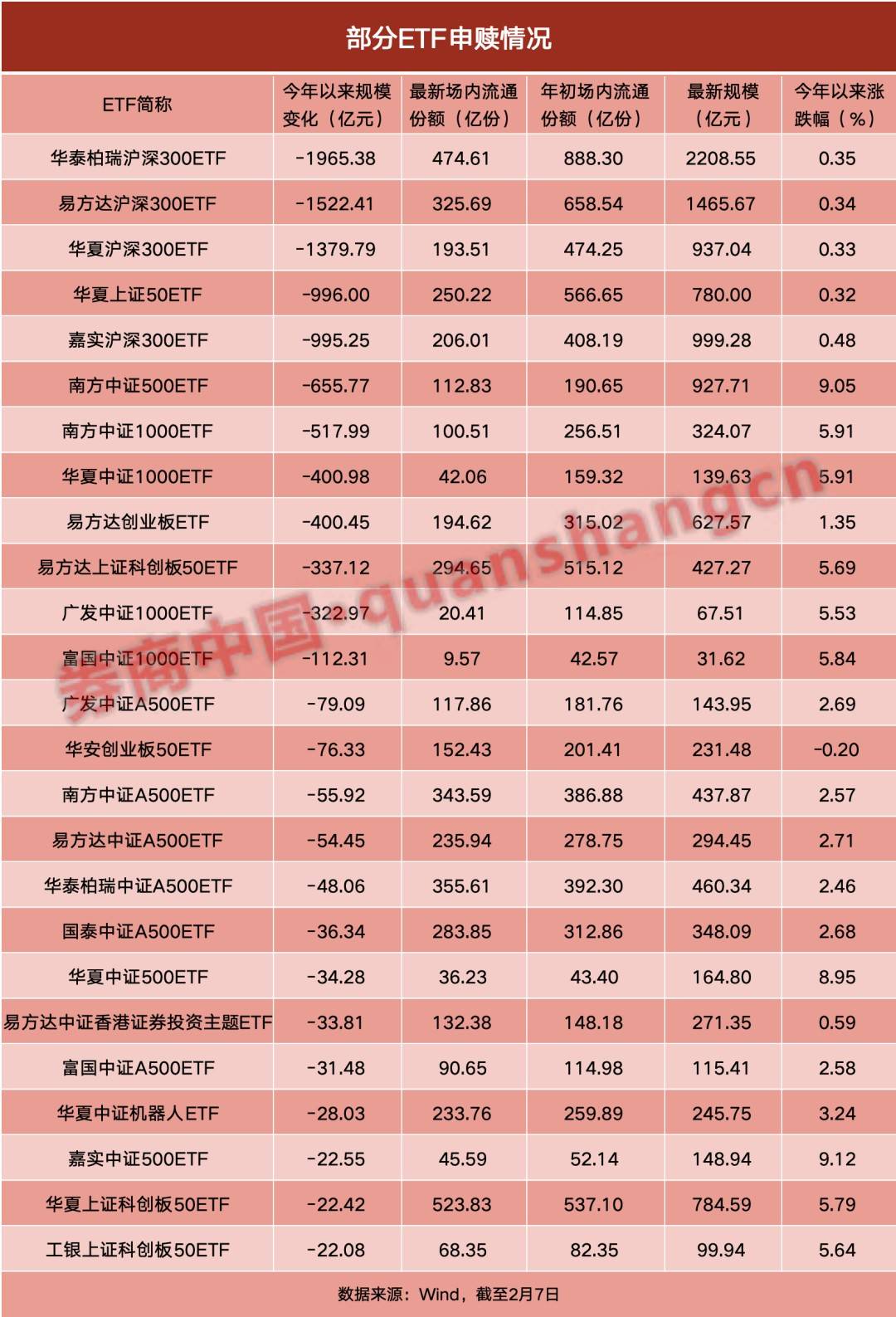
Core Viewpoint - The article discusses the significant outflows from broad-based ETFs since the beginning of the year, highlighting the importance of understanding the underlying behaviors of funds rather than reacting to market fluctuations [1] Group 1: ETF Fund Flows - Many ETFs have experienced substantial shrinkage in scale, with net outflows occurring for over ten consecutive trading days, peaking at over 130 billion [1] - Specific ETFs such as Huatai-PB CSI 300 ETF, E Fund CSI 300 ETF, and others have seen significant reductions in scale, with declines of 196.54 billion, 152.24 billion, and 137.98 billion respectively [2] Group 2: Institutional Participation - The article emphasizes the importance of identifying whether large institutional funds are actively participating in trading, as indicated by "institutional inventory" data [3] - Continuous participation from large funds suggests stability in the underlying asset, while a lack of participation can indicate potential volatility [5] Group 3: Market Adjustments - Market adjustments may not always indicate fund withdrawals; they can also reflect large funds engaging in "institutional shakeouts" to consolidate positions [8][10] - The presence of "institutional shakeouts" indicates that large funds are actively managing their positions, which can provide a foundation for future strategies [13] Group 4: Quantitative Analysis - Quantitative data offers a more objective perspective on market movements, helping to distinguish between panic and strategic adjustments by institutions [14] - Understanding the true motivations behind fund flows can lead to more rational investment decisions, moving beyond emotional reactions to market volatility [14]
黄金有色大起大落,这是慢牛快调吗?
Sou Hu Cai Jing· 2026-02-08 16:44
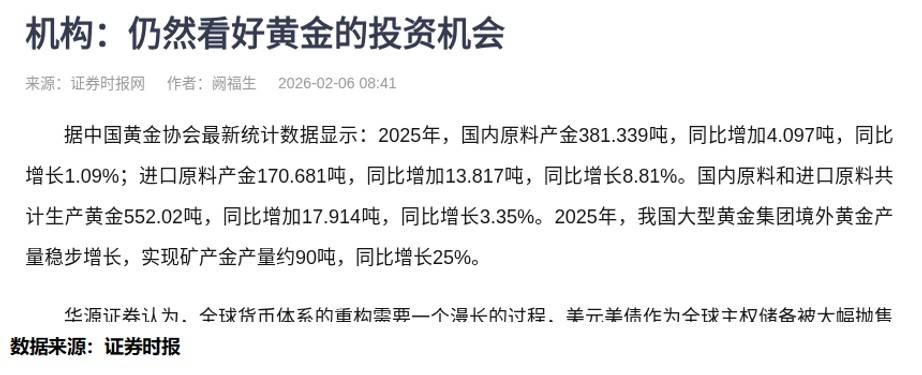
Group 1 - The core viewpoint is that the current investment enthusiasm for gold is significantly high, with last year's total investment doubling, driven by demand for hedging and asset allocation [1][3] - Domestic gold production, including imports, saw substantial growth last year, while the output of large overseas gold groups increased by 25% [1] - The market is characterized by a "slow bull fast adjustment" pattern, where investors often panic during price corrections, leading to premature selling [3][5] Group 2 - Quantitative big data can help investors understand the underlying trading behaviors, allowing them to avoid being swayed by emotions during volatile market conditions [5][10] - Instances of "institutional shock" were observed during price corrections, indicating that these adjustments are part of a strategic trading rhythm rather than a sign of abandonment by institutions [7][10] - In a continuously weakening market, many investors mistakenly believe in buying opportunities during short-term rebounds, only to face losses due to lack of institutional participation [10][13] Group 3 - The reliance on intuition can lead to significant errors in judgment, as emotional responses to price movements often cloud decision-making [13][14] - Using data as a "filter" for emotions can provide a clearer view of market realities, helping investors make more informed decisions rather than reacting to surface trends [10][14] - The importance of understanding the essence of market movements through data analysis is emphasized, as it aids in long-term investment strategies [10][14]
上市折戟背后,市场取舍以影响到机构行为
Sou Hu Cai Jing· 2026-02-05 13:43
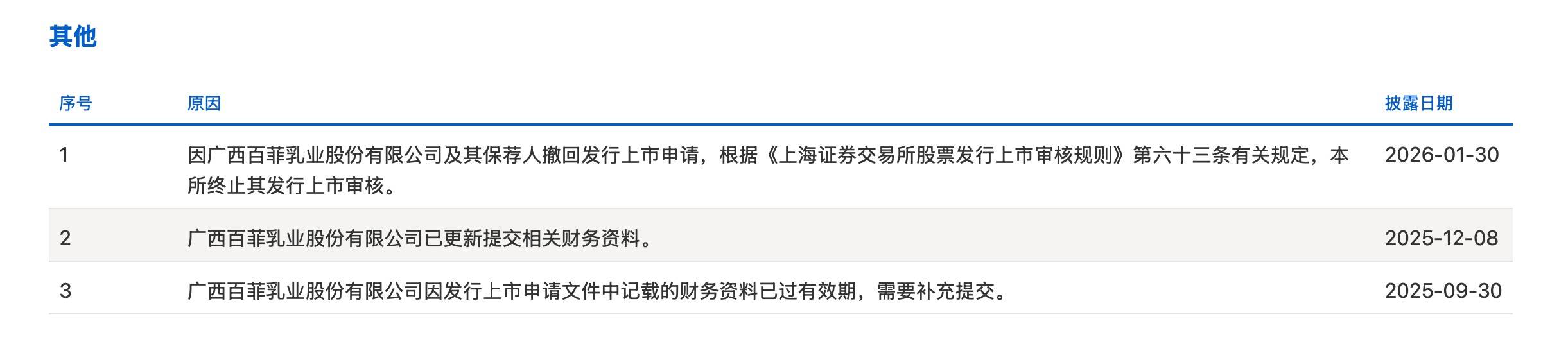
Core Viewpoint - The article discusses the challenges faced by regional dairy companies in the context of market dynamics and capital behavior, emphasizing the importance of quantitative data over subjective judgment in investment decisions [1]. Group 1: Market Dynamics - Many investors are often misled by market fluctuations, leading to premature exits from positions during minor volatility, resulting in missed opportunities when the market rebounds [4]. - The perception of market movements as random can obscure the underlying capital behaviors that drive these fluctuations, which are often strategically orchestrated [1][6]. Group 2: Subjective vs. Quantitative Analysis - Relying on subjective experience can lead to indecision and regret, as investors may hesitate to act due to fear of losses or missed gains, ultimately being manipulated by market trends [6]. - Quantitative analysis provides clarity by transforming invisible capital behaviors into visible data, allowing investors to see beyond subjective biases and make informed decisions [8][12]. Group 3: Importance of Quantitative Data - Quantitative data reveals that previous market fluctuations may be a result of institutional strategies aimed at shaking out weak hands, thereby reducing selling pressure for future movements [10]. - The ability to analyze large-scale trading behaviors through quantitative models enables investors to escape the confines of subjective interpretation and understand the true market dynamics [12][13]. Group 4: Investment Strategy - The article highlights that understanding the capital operations of companies, such as the regional dairy firm mentioned, requires a focus on the underlying financial behaviors rather than surface-level perceptions of struggle [13]. - By leveraging quantitative data, investors can build a robust investment strategy that is less influenced by market emotions and more grounded in objective realities [12][13].
估值工具受限,量化数据看机构新动作
Sou Hu Cai Jing· 2026-02-04 20:15
Core Viewpoint - Recent regulatory changes have led multiple third-party financial platforms to remove real-time fund valuation and related features, prompting investors to adapt to these changes. The regulation aims to promote long-term investment strategies and curb short-term speculative behaviors, which may enhance market structure in the long run [1][3]. Group 1: Regulatory Impact on Market Trends - The regulation on real-time fund valuation is fundamentally a correction of short-term speculative behaviors, guiding market participants back to long-term value investing. This shift indicates that decision-making based on short-term price fluctuations will gradually become ineffective [3][4]. - The focus should shift from real-time valuation to understanding the underlying logic of market operations through quantitative data, which can help investors avoid emotional biases [3][4]. Group 2: Quantitative Data and Market Behavior - Market fluctuations often conceal planned operations by funds, and quantitative data can capture these hidden behavioral characteristics. For instance, different colored bars in trading behavior data represent various states of fund participation [8][10]. - "Institutional shakeout" behavior, characterized by active trading phases and price fluctuations, signals that funds have clear intentions behind their operations. This behavior is essential for reducing future selling pressure by filtering out less committed participants [8][10]. Group 3: Understanding Institutional Shakeout - "Institutional shakeout" is not a singular behavior but a set of common data characteristics, where signals of institutional fund activity appear repeatedly during price fluctuations. This pattern indicates that large funds aim to clear unstable followers to lower future resistance [10][12]. - Observations from multiple securities show that "institutional shakeout" characteristics often precede significant price changes, highlighting the importance of understanding these data features to grasp the underlying logic behind market fluctuations [12]. Group 4: Value of Quantitative Thinking in Investment Decisions - In the context of regulatory guidance towards long-term investment, the value of quantitative thinking becomes increasingly prominent. It helps eliminate subjective assumptions by replacing intuitive judgments with objective quantitative data [13]. - Quantitative data provides stable decision-making anchors, allowing participants to focus on long-term fund intentions and behavioral logic rather than short-term price volatility, thus enhancing sustainable investment capabilities [13].

茶饮玩出新招,股市也藏同款逻辑
Sou Hu Cai Jing· 2026-01-28 11:41
Core Insights - The tea beverage brand has chosen to reduce collaboration frequency and focus on differentiated products, regional specialty ingredients, and overseas expansion, launching 15 globally synchronized tea specials and opening over 100 stores in 32 overseas cities, becoming the most widely distributed new tea beverage brand globally [1][9] - The market dynamics reflect a similar logic where some investors are misled by superficial market movements while others leverage quantitative data to uncover underlying intentions, leading to more rational investment decisions [1][2] Group 1: Market Behavior and Institutional Logic - The apparent "top-making" behavior in the market is essentially an "institutional shakeout," where large funds create repeated fluctuations to encourage less committed investors to exit, thereby solidifying the foundation for future price movements [4] - Institutions utilize these fluctuations to filter out "steadfast" investors, creating tension to prevent too many followers from sharing in future gains [2][4] Group 2: Quantitative Data Analysis - Quantitative data analysis involves accumulating long-term trading behavior data and extracting different behavioral characteristics through models, similar to analyzing the product structure and store layout of the tea brand [5] - Two core data sets are highlighted: the "dominant momentum" data reflecting different trading behaviors and the "institutional inventory" data indicating the level of institutional participation, with prolonged orange bars suggesting high institutional engagement [5][7] Group 3: Objective Data vs. Subjective Emotion - Many investors mistakenly use subjective feelings as a basis for judgment, leading to panic during market fluctuations, while the tea brand's focus on product competitiveness over trends illustrates the importance of a solid foundation [8][9] - The advantage of quantitative data is that it replaces subjective emotions with objective data, allowing investors to maintain rational judgments even amidst market volatility [8][9] Group 4: Long-term Decision-making - The essence of long-term growth for consumer brands and rational investment decisions lies in understanding the core essence behind choices, as demonstrated by the tea brand's strategic focus on differentiated products and overseas markets rather than short-term marketing gimmicks [9] - Investors can achieve long-term results not through luck or following trends but by relying on objective evidence provided by quantitative data, enabling them to see through institutional shakeout behaviors and avoid being swayed by short-term market noise [9]

IPO格局生变,量化看清变局的本质
Sou Hu Cai Jing· 2026-01-22 02:53
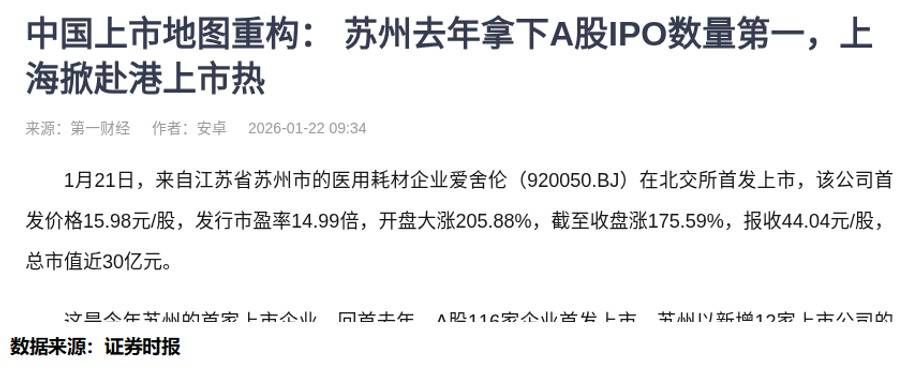
Group 1 - A city in Jiangnan has topped the A-share annual IPO ranking, with 1 in 10 new listed companies coming from there, while Shanghai dominates the Hong Kong IPO market, supporting half of the mainland companies going public in Hong Kong [1] - IPO resources are highly concentrated in the three major urban clusters: Yangtze River Delta, Beijing-Tianjin-Hebei, and Guangdong-Hong Kong-Macau Greater Bay Area, indicating a significant head effect [1] Group 2 - Investors often react emotionally to market fluctuations caused by external news, leading to impulsive decisions that may result in regret when the market reverses [3] - A quantitative data system can analyze trading behaviors, revealing insights such as "institutional inventory," which indicates the level of institutional participation in trades [3][5] Group 3 - The concept of "institutional shock" is introduced, where institutions may create panic through price drops to acquire shares from retail investors, which is not discernible through news alone [5] - The difference in trading behavior between two popular medical beauty stocks illustrates how institutional inventory can indicate whether a price movement is driven by institutional actions or merely short-term trading [6][8] Group 4 - During bullish market conditions, unexpected adjustments are common, often driven by institutions to filter out less committed investors, thereby easing future market pressures [9] - Quantitative data analysis can help identify the true market state by examining multiple dimensions such as funding, behavior, and institutional activity [9] Group 5 - Emotional responses are identified as the biggest enemy in investing, while data serves as the best weapon against such emotions [10] - Investors can build their own investment logic based on objective trading data, rather than being swayed by market fluctuations and news [10]
多家公司传利好,数据辨清真方向
Sou Hu Cai Jing· 2026-01-19 09:18
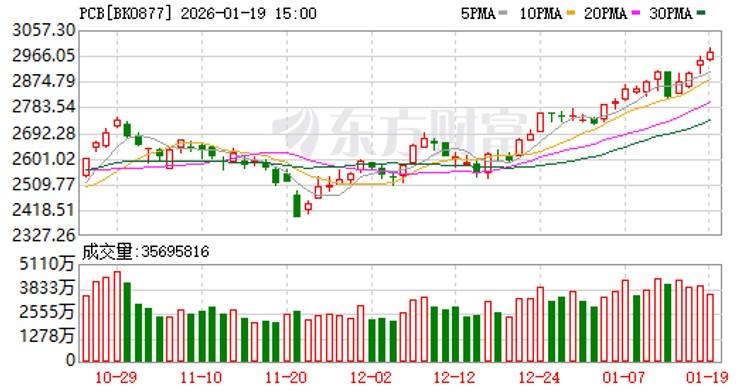
Core Viewpoint - The article emphasizes the importance of understanding the underlying trading intentions of funds rather than being misled by surface signals such as announcements and stock movements [1][3]. Group 1: Market Signals and Misinterpretations - Many investors react impulsively to announcements from listed companies, such as mergers or significant performance increases, without understanding the true implications behind these signals [1][2]. - A personal anecdote illustrates how two similar stocks with different announcements led to vastly different outcomes, highlighting the pitfalls of relying solely on surface information [2]. Group 2: Quantitative Data Analysis - Utilizing quantitative data tools can reveal the true trading behaviors of funds, moving beyond superficial trends and announcements [5][6]. - Key data visualizations include colored bars representing different trading actions, with orange bars indicating significant fund participation; prolonged orange bars suggest higher involvement from large funds [5][7]. Group 3: Institutional Trading Insights - The presence of blue recovery actions alongside active orange bars indicates that large funds are adjusting their trading strategies, a phenomenon referred to as "institutional shakeout," which aims to eliminate unstable follow-on positions [7]. - Stocks identified with institutional shakeout tend to return to their previous trading patterns after adjustments, while those without significant fund involvement may experience short-lived rebounds [8]. Group 4: Investment Strategy Evolution - The article concludes with a framework for sustainable investment, emphasizing the need for objective market understanding and structured decision-making processes, free from emotional interference [9]. - It reiterates that announcements, whether related to mergers or performance forecasts, are merely catalysts; the critical factor is whether substantial funds are actively participating in the trades [9].
百股获连续融资增持,量化拆解资金逻辑
Sou Hu Cai Jing· 2026-01-14 07:33
Core Viewpoint - The article discusses the significance of quantitative data in understanding stock price fluctuations and the underlying behaviors of different types of capital in the market, emphasizing the importance of data-driven strategies for investors. Group 1: Stock Price Fluctuations - Many stocks in the Shanghai and Shenzhen markets have seen continuous financing increases for over five days, with some experiencing net buying for more than ten days [1] - Stock price volatility often leads to emotional trading decisions, where investors struggle to hold onto profitable positions during fluctuations [3] - Each price movement is driven by capital dynamics, which can be better understood through quantitative data rather than intuition [6] Group 2: Quantitative Analysis of Capital Behavior - The article presents a quantitative analysis system that identifies trading behaviors, revealing the interactions between speculative capital and institutional investors [8] - The analysis distinguishes between "speculative capital accumulation" and "institutional shakeout," where institutions may intentionally adjust stock prices before accumulating shares [8] - Recognizing these patterns allows investors to understand the ongoing capital battles and maintain confidence in holding stocks despite volatility [8] Group 3: Efficient Investment Strategies - Long-term holding of stocks can yield positive results, but it is often inefficient during favorable market conditions; a more effective strategy involves participating in upward trends while minimizing exposure to corrections [9] - The article highlights five phases of opportunity between "shakeout" and "accumulation," which can lead to significant returns without enduring the full extent of price fluctuations [12] Group 4: Long-term Value of Quantitative Thinking - The difference in investment outcomes among individuals is attributed to systematic methodologies rather than luck, with quantitative data providing a framework for decision-making [13] - Quantitative analysis helps investors move beyond subjective judgments, revealing the true behaviors of capital and fostering a more rational understanding of market dynamics [13] - Over time, this approach can develop sustainable investment capabilities, reducing reliance on speculation and enhancing overall investment performance [13]