电池技术升级

Search documents
宁德时代:25Q4业绩亮眼,增长有望延续-20260318
ZHESHANG SECURITIES· 2026-03-18 10:45
Investment Rating - The investment rating for the company is "Buy" [5] Core Insights - The company reported a revenue of 423.7 billion yuan for 2025, representing a year-on-year increase of 17%. The net profit attributable to shareholders was 72.2 billion yuan, up 42% year-on-year. The non-recurring net profit was 64.5 billion yuan, also up 43% year-on-year. The gross margin stood at 26.3%, with a return on equity (ROE) of 21.4% [1] - In Q4 2025, the company achieved a revenue of 140.6 billion yuan, a 37% increase year-on-year and a 35% increase quarter-on-quarter. The net profit attributable to shareholders for this quarter was 23.2 billion yuan, up 57% year-on-year and 25% quarter-on-quarter, with a gross margin of 28.2% [1] - The company has seen a significant increase in orders, with contract liabilities reaching 49.2 billion yuan, a year-on-year increase of 76.9%. The total cash and trading financial assets amounted to 392.5 billion yuan, and the net operating cash flow for 2025 was 133.2 billion yuan, which is 1.8 times the net profit attributable to shareholders [1] Financial Forecast and Valuation - The company is expected to achieve revenues of 588.9 billion yuan, 704.6 billion yuan, and 851.0 billion yuan for 2026, 2027, and 2028 respectively, with year-on-year growth rates of 39%, 20%, and 21%. The net profit attributable to shareholders is projected to be 93.1 billion yuan, 113.9 billion yuan, and 136.0 billion yuan for the same years, with growth rates of 29%, 22%, and 19% respectively [2] - The three-year compound growth rate for net profit is estimated at 24%, with corresponding price-to-earnings (PE) ratios of 20, 16, and 13 for the years 2026, 2027, and 2028 [2] Business Segments - In the power battery segment, revenue is expected to reach 316.5 billion yuan in 2025, a 25% year-on-year increase, with a gross margin of 24%. The sales volume is projected to be 541 GWh, a 42% increase year-on-year, with global and overseas market shares rising to 39% and 30% respectively [10] - The energy storage battery segment is anticipated to generate revenue of 62.4 billion yuan in 2025, a 9% year-on-year increase, with a gross margin of 26.7%. The sales volume is expected to be 121 GWh, up 29% year-on-year [10] - The company is expanding its production capacity significantly, with a total battery system capacity of 772 GWh in 2025 and a utilization rate of 96.9%. The company is also advancing its overseas production capabilities and exploring new fields such as low-altitude and marine applications [10]

2月锂电:储能高增108%,动力出海托底
高工锂电· 2026-03-13 11:07
Core Viewpoint - The energy storage and power battery industry is experiencing high growth, with strong fundamentals supporting long-term development despite short-term pressures from seasonal factors [3]. Group 1: Industry Performance - In February, the combined production of power and energy storage batteries in China reached 141.6 GWh, a year-on-year increase of 41.3%, while sales totaled 113.2 GWh, up 25.7% year-on-year [4]. - Cumulative production from January to February was 309.7 GWh, with cumulative sales of 262.0 GWh, reflecting year-on-year growth of 48.8% and 53.8% respectively, indicating a solid long-term demand foundation [4]. - Despite a month-on-month decline in production and sales of 15.7% and 23.9% respectively in February, the strong growth in energy storage batteries provided crucial support, reinforcing the dual-track development of the industry [4]. Group 2: Sales Structure - Energy storage batteries continue to lead in growth, with February sales of 38.6 GWh, accounting for 34.1% of total sales, and a year-on-year growth rate of 67.3%, which is over six times that of power batteries [5]. - Cumulatively, energy storage battery sales from January to February reached 84.8 GWh, a significant year-on-year increase of 108.9%, representing 32.4% of total sales, up 8.6 percentage points from the previous year [5]. Group 3: Export Market - In February, the combined export of power and energy storage batteries was 23.9 GWh, a year-on-year increase of 13.2%, accounting for 20.6% of total sales, up from 16.2% in January [6]. - Cumulative exports from January to February reached 48.0 GWh, with a year-on-year growth of 24.6%, highlighting the increasing contribution of overseas markets [6]. - Power battery exports in February were 16.9 GWh, making up 70.6% of total exports, with a year-on-year growth of 31.9% [6]. Group 4: Domestic Market Trends - In February, domestic power battery installation volume was 26.3 GWh, reflecting a month-on-month decline of 37.4% and a year-on-year decline of 24.6% [8]. - The performance of different battery technologies varied significantly, with lithium iron phosphate batteries accounting for 78.3% of total installations, while ternary batteries showed better resilience with a smaller decline [8]. - The average energy capacity of new energy vehicles reached 75.9 kWh in February, a year-on-year increase of 52.6%, indicating a trend towards higher energy density models [9]. Group 5: Market Competition - The competitive landscape of the industry is undergoing marginal adjustments, with a faster exit of small and medium-sized enterprises, leading to a slight increase in market concentration among leading companies [11]. - In February, only 30 power battery companies achieved installation support, a decrease of 8 companies year-on-year, while the top 10 companies accounted for 94.3% of the installation volume, reflecting a strengthening of market dominance by leading firms [11].

鑫椤锂电一周观察 | 中东开战 碳酸锂“受扰”
鑫椤锂电· 2026-03-06 07:51
Core Viewpoint - The article provides a comprehensive overview of the lithium battery industry, highlighting key developments, market trends, and price fluctuations across various segments, including lithium carbonate, ternary materials, and phosphoric iron lithium. Lithium Carbonate Market - The domestic lithium carbonate market has seen a significant price drop due to short-term market sentiment influenced by the outbreak of conflict in the Middle East, with prices expected to fluctuate between 150,000 to 160,000 yuan/ton in the short term [6]. - As of March 5, the latest prices for battery-grade lithium carbonate are between 154,000 to 159,000 yuan/ton, and for industrial-grade, they are between 139,000 to 145,000 yuan/ton [7]. Ternary Materials Market - The price of ternary materials has decreased, primarily due to the drop in lithium carbonate prices. March is a crucial month for exports, with production ramping up to meet overseas orders, and prices are expected to return to year-end levels by April [8]. - The latest prices for ternary materials as of March 5 are 193,000 to 200,000 yuan/ton for 5-series single crystal type and 193,000 to 211,000 yuan/ton for 8-series 811 type [9]. Phosphoric Iron Lithium Market - The phosphoric iron lithium market has also experienced a slight price decline, although demand has rebounded quickly, with leading companies reporting a month-on-month growth of 20-30%. Some companies are facing production cuts due to unresolved pricing with downstream clients [10]. - The latest prices for phosphoric iron lithium as of March 5 are 52,800 to 53,800 yuan/ton for power type and 52,600 to 53,600 yuan/ton for energy storage type [10]. Negative Material Market - The price of negative materials has remained stable, with leading manufacturers increasing production capacity. Despite a significant rise in raw material prices, negative material manufacturers have not raised prices yet, pending downstream acceptance [11]. - The latest prices for negative materials as of March 5 are 50,000 to 65,000 yuan/ton for high-end natural graphite products and 31,800 to 64,800 yuan/ton for high-end artificial graphite [12]. Separator Market - The separator market has seen stable prices, with most manufacturers operating at full capacity. A recent fundraising initiative by a major company aims to enhance liquidity [13]. - The latest prices for separators as of March 5 are 0.55 to 1.025 yuan/square meter for 9μm wet method and 0.35 to 0.5 yuan/square meter for 16μm dry method [14]. Electrolyte Market - The electrolyte market has experienced a slight price decline, with a recovery in operating rates to around 20%. A major company is undergoing maintenance, and new capacity is expected to be released in May-June [15]. - The latest prices for electrolytes as of March 5 are 110,000 to 115,000 yuan/ton for lithium hexafluorophosphate electrolyte and 29,000 to 34,000 yuan/ton for ternary electrolyte [15]. Battery Market - The battery cell market has maintained stable prices, with varying performances across manufacturers. The market is closely watching the upcoming Beijing Auto Show in April for further developments [16]. - The latest prices for battery cells as of March 5 are 0.44 to 0.5 yuan/Wh for square ternary power cells and 0.29 to 0.38 yuan/Wh for square phosphoric iron lithium power cells [16]. New Energy Vehicle Market - In February, domestic new energy vehicle sales saw a normal seasonal decline. However, the gradual rollout of subsidy policies is expected to stimulate demand, with a further recovery anticipated in March [17]. Energy Storage Market - The energy storage market has shown little price change, with stable production capacity due to export demands. The recent geopolitical tensions have had a limited impact on the energy storage market [18].



亿欧智库:中国蓄电池行业出海国别机会洞察报告
Sou Hu Cai Jing· 2026-01-08 14:43
Group 1 - The report highlights the explosive growth in global electrification and energy storage demand, providing significant development opportunities for the battery industry, particularly for lithium-ion batteries from China [1][9]. - China's lithium-ion battery industry exhibits three major development characteristics: green compliance with environmental standards, deepening global layout through technology and management system exports, and accelerated vertical integration among leading companies [1][2]. - Key export markets for Chinese lithium-ion batteries include Vietnam, the United States, and India, with notable high-frequency and high-value purchasers emerging in these regions [2][21][23]. Group 2 - Each core export country has established clear import regulations and certification thresholds, necessitating compliance with local standards and testing procedures for Chinese manufacturers [2][28]. - Despite facing multiple challenges, the industry is transitioning towards a dual-driven model of technological upgrades and compliance, aiming to enhance global competitiveness [2][31]. - The report indicates that from 2020 to 2025, the overall export value of Chinese batteries is expected to rise significantly, with a projected growth rate of 24.22% by 2025 compared to the same period [14]. Group 3 - The report outlines the procurement situation in Vietnam, where approximately 2,000 purchasers engaged in transactions, resulting in a total transaction value of $5.19 billion [18]. - In the U.S. market, 847 purchasers participated in transactions, with a total transaction value of $5.41 billion, indicating strong demand [21]. - India's market saw around 1,000 purchasers involved in transactions, with a total transaction value of $3.4 billion, reflecting robust market activity [23]. Group 4 - The report emphasizes the need for Chinese companies to adapt to increasing compliance requirements and local market conditions, which are becoming critical for maintaining export competitiveness [28][31]. - The industry is witnessing a shift from price competition to a focus on technology and compliance, driven by rising regulatory standards in key markets [31][32]. - The challenges faced by the industry include supply chain constraints, technological iteration pressures, and heightened compliance thresholds, necessitating a strategic focus on local adaptation and technological innovation [32][33].

南孚电池,这次玩大了
半佛仙人· 2025-12-26 07:06
Core Viewpoint - The article discusses the innovative advancements of Nanfu batteries, particularly the introduction of the fifth generation of their batteries, highlighting their technological superiority and market dominance in the battery industry [2][4][8]. Group 1: Product Innovation - Nanfu has launched the fifth generation of its batteries, which showcases significant improvements in technology and performance compared to previous generations [4][8]. - The second generation of Nanfu batteries improved energy capacity by 25%, while the third generation enhanced it by an additional 30% [8]. - The fifth generation utilizes advanced technologies such as a 0.158mm thick steel shell and a unique sealing structure, allowing for greater energy density and efficiency [9][10]. Group 2: Market Position - Nanfu dominates the battery market, with over 80% of batteries sold in the market being from Nanfu, and its brand value reached 26.386 billion RMB in 2022, doubling from the previous year [8]. - The company has maintained a competitive edge for over 30 years, continuously innovating rather than resting on its laurels [8][10]. Group 3: Manufacturing Excellence - Nanfu's manufacturing facility in Nanping is the largest single alkaline battery production plant globally, with an annual capacity exceeding 3 billion batteries [15]. - The production process is highly automated, utilizing AI for quality control and ensuring consistent performance across products [15][16]. - The company employs rigorous testing standards, exceeding national benchmarks, to ensure the reliability and safety of its batteries [16]. Group 4: Consumer Experience - Nanfu has developed specialized batteries for various applications, such as the Fenglan No. 1 battery for gas stoves, which has a long lifespan of up to one year [12][13]. - The company collaborates with global consulting firms to understand consumer needs and adapt its products accordingly, ensuring compatibility with a wide range of devices [13][14]. - Nanfu's commitment to quality and performance has led to a strong consumer trust, making it a preferred choice for various electronic devices [14][19].

商用车电动化进入深水区:物流场景倒逼电池技术升级,补能网络建设同步加速
Zhong Guo Neng Yuan Wang· 2025-12-25 06:47
Core Viewpoint - The logistics sector is accelerating its transition to electric vehicles, driven by the need for green and low-carbon solutions, with significant involvement from leading battery manufacturers like CATL and EVE Energy [1][2]. Group 1: Strategic Collaborations - Multiple battery manufacturers have engaged in strategic partnerships within the logistics sector this year, such as the collaboration between Dola Haoyun and BYD's Fudi Battery to enhance electric commercial vehicle solutions [2]. - JD Group has signed a strategic cooperation agreement with CATL to explore high-quality development paths in the logistics industry, focusing on the electrification of urban distribution vehicles [2]. - EVE Energy and SF Express have also formed a strategic partnership to promote the integration of new energy technologies with modern logistics systems [3]. Group 2: Battery Performance Requirements - The demand for power batteries in logistics vehicles is increasing, driven by the need for zero emissions and lower operational costs [4]. - Logistics companies are increasingly incorporating electric vehicles into their fleets, with significant interest in electric heavy-duty trucks for high-energy, fixed-route transport scenarios [4]. - The logistics sector's unique operational demands require batteries with higher performance standards, including longer range, faster charging, and lighter weight [5][7]. Group 3: Charging Infrastructure Development - The development of a robust charging network is essential for the efficient operation of electric logistics vehicles, with calls for improved infrastructure at logistics parks and distribution centers [7][8]. - The National Development and Reform Commission has emphasized the need for planning and constructing high-power charging facilities for logistics and heavy-duty freight [8]. - Industry experts believe that the green transition in logistics will require collaborative efforts across the entire supply chain to address challenges such as charging convenience and range anxiety [8].

决战物流旺季,骆驼铠甲电池守护卡友“移动的家”
Jiang Nan Shi Bao· 2025-12-16 08:25
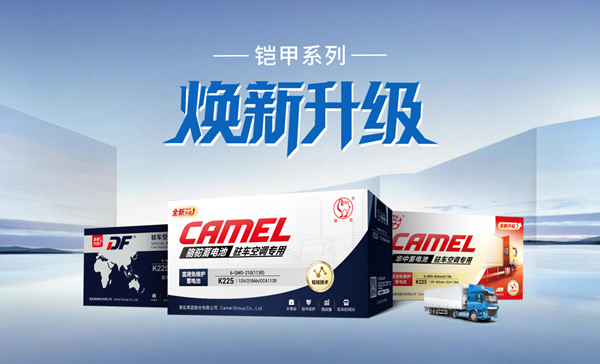
Core Viewpoint - The logistics transportation industry is entering its peak season, highlighting the importance of reliable battery systems for truck drivers, who rely on stable power supply for comfort and efficiency in their mobile homes [1]. Group 1: Product Features - The Camel Armor battery series is designed specifically for high-intensity transportation scenarios, providing a reliable power source for truck drivers [1]. - The Duralife technology used in Camel Armor batteries enhances durability and conductivity, resulting in a 15% increase in battery capacity, allowing for approximately 1 additional hour of power under the same load [2]. - The introduction of "super conductive electrolyte technology" improves charging efficiency by 20%, enabling quick recovery of battery power after 3-4 hours of vehicle operation [2]. Group 2: Quality and Service - The Camel Armor K series meets the European V4 standard for vibration resistance, ensuring stable performance under extreme conditions such as long-distance travel and continuous operation [4]. - The company offers nationwide support through over 110,000 service locations, ensuring convenient after-sales service and timely responses regardless of the vehicle's location [4]. - The Camel Armor battery series aims to provide enhanced endurance, faster charging, and stable performance, supporting truck drivers during the busy logistics season [4].

立中集团拟转让山立新36.72%股权 联合战投增资2亿布局固态电池
Chang Jiang Shang Bao· 2025-11-09 23:31
Core Viewpoint - Lichong Group is intensifying its investment in battery technology by introducing strategic investor Kunlun New Materials to its subsidiary Shandong Lichong New Energy Materials, aiming to enhance technology, market expansion, and cost optimization in liquid and solid-state battery sectors [1][2][3] Group 1: Strategic Investment and Shareholding Changes - The transaction involves Lichong Group transferring 36.72% of its stake in Shandong Lichong to Kunlun New Materials for 22.77 million yuan and acquiring an additional 16.5% stake at zero cost, leading to a total investment obligation of 33 million yuan [2] - Following the capital increase, Shandong Lichong's registered capital will rise from 200 million yuan to approximately 402 million yuan, with Kunlun New Materials subscribing to 120 million yuan of the new capital [2] - After the completion of the transaction, Kunlun New Materials will hold 51% of Shandong Lichong, becoming the controlling shareholder, while Lichong Group's stake will decrease to 45.15% [2][3] Group 2: Business Development and Financial Performance - Lichong Group has shown steady growth over the past five years, with revenue increasing from 18.63 billion yuan in 2021 to 27.25 billion yuan in 2024, and net profit rising from 450 million yuan to 707 million yuan [4] - In the first three quarters of 2025, Lichong Group reported revenue of 22.92 billion yuan and net profit of 625 million yuan, reflecting year-on-year growth of 18.34% and 26.77% respectively [4] - The company has been increasing its R&D investment, with expenses rising from 552 million yuan in 2021 to 934 million yuan in 2024, and 730 million yuan in the first three quarters of 2025 [4] Group 3: Market Position and Future Prospects - Lichong Group is actively expanding its aluminum alloy wheel business, receiving multiple project confirmations from international and domestic automotive manufacturers, with expected sales amounting to approximately 1.87 billion yuan and 16.43 billion yuan from recent projects [5] - The company anticipates significant growth in its aluminum alloy wheel segment, with projected project sales exceeding 24 billion yuan in 2024, surpassing its total revenue of 23.37 billion yuan in 2023 [4][5]

亿纬锂能:预计四季度继续推出全固态电池下一代产品
Di Yi Cai Jing· 2025-10-24 08:41
Core Viewpoint - The company is progressing with its solid-state battery development and plans to launch the next generation of products in the fourth quarter, while also exploring semi-solid battery production through minor upgrades to existing production lines [1] Group 1: Solid-State Battery Development - The company is focused on building its pilot production line for solid-state batteries as per its previous plans [1] - Continuous product upgrades are part of the company's strategy in the solid-state battery sector [1] - The next generation of solid-state battery products is expected to be launched in the fourth quarter [1] Group 2: Semi-Solid Battery Strategy - The company is considering entering the semi-solid battery market [1] - Plans include upgrading existing production lines with small capital investments to facilitate semi-solid battery production [1] Group 3: Market Expansion - The company is actively working on expanding its presence in the downstream market [1]
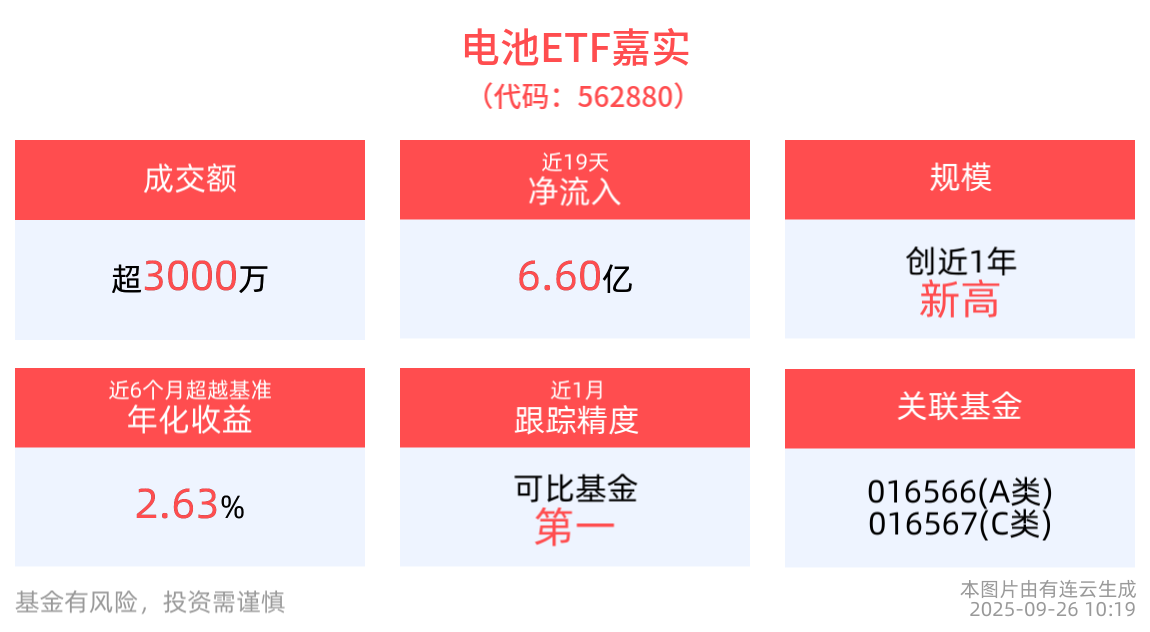
固态相关新产品有望陆续发布,电池ETF嘉实(562880)规模创成立以来新高!
Xin Lang Cai Jing· 2025-09-26 02:57
Core Insights - The battery theme index has shown a slight decline of 0.06% as of September 26, 2025, with mixed performance among constituent stocks, highlighting the volatility in the sector [1] - The battery ETF managed by Harvest has seen a significant increase in net inflows and trading volume, indicating strong investor interest and confidence in the battery industry [3] - Solid-state batteries are emerging as the next generation of battery technology, driven by advancements in energy density and safety, which are expected to accelerate industrialization and capital expenditure across the supply chain [4] Group 1: Market Performance - The battery ETF Harvest has recorded a 5.70% increase over the past week as of September 25, 2025, reflecting positive market sentiment [1] - The ETF's trading volume reached 37.96 million yuan with a turnover rate of 2.96%, indicating active trading [3] - The ETF's net asset value has increased by 99.90% over the past year, ranking it 417th out of 3031 index equity funds, placing it in the top 13.76% [3] Group 2: Investment Trends - The latest scale of the battery ETF Harvest has reached 1.269 billion yuan, marking a new high since its inception [3] - Over the past 19 trading days, there have been 12 days of net inflows totaling 660 million yuan, showcasing strong investor confidence [3] - Wood Mackenzie forecasts that global energy storage capacity will grow more than sevenfold over the next decade, requiring an investment of 1.2 trillion USD in battery systems by 2034 [3] Group 3: Industry Developments - The top ten weighted stocks in the battery theme index account for 53.03% of the index, with significant players including Sungrow Power, CATL, and EVE Energy [4][6] - Solid-state battery technology is expected to lead to new product releases and capacity expansions, enhancing performance validation in the market [4] - The entire supply chain, including equipment, materials, and batteries, is anticipated to undergo iterative upgrades, increasing capital expenditure [4]