
降低物流成本

Search documents
如何让“黔货”轻装远行?政协委员直面痛点开出“药方”
Xin Lang Cai Jing· 2026-01-29 12:37
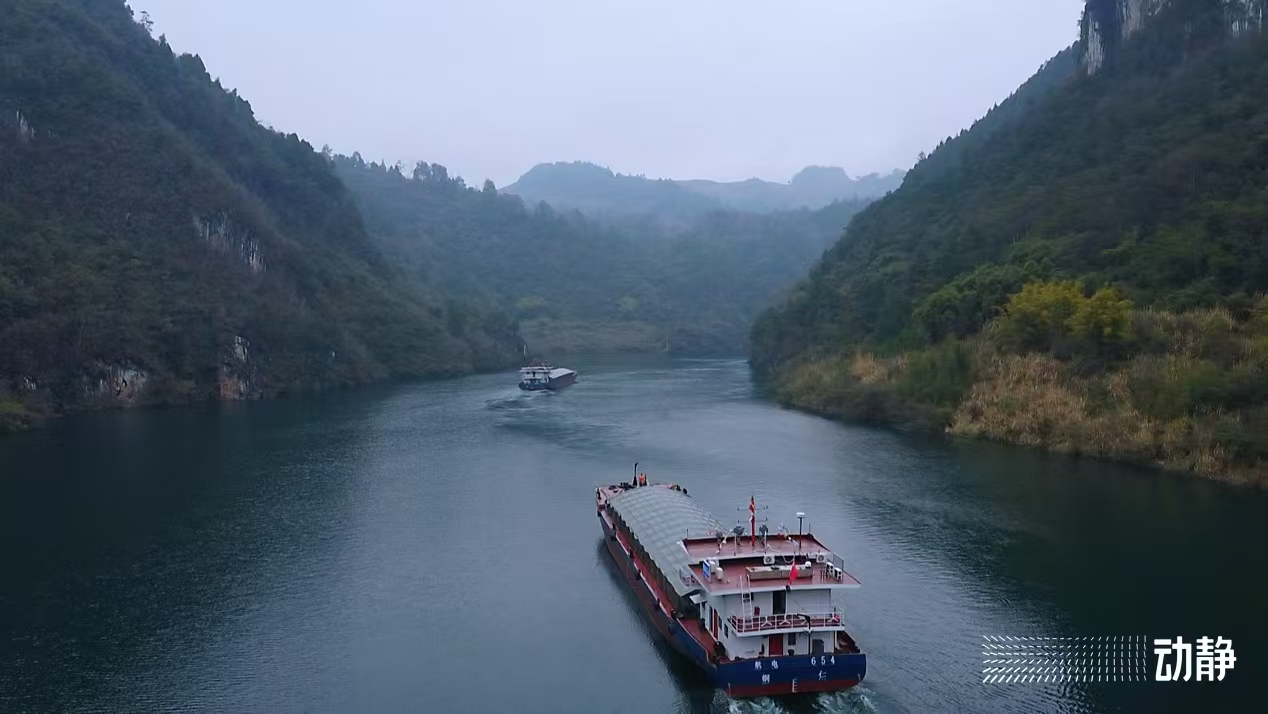
降低物流成本是一项牵一发而动全身的系统工程。王小刚委员建言,治本之策在于"打造法治化、市场化、国际化的营商环境,大力培育市场经营主体"。只 有市场主体活跃、经济蓬勃发展,货运需求才能持续旺盛,形成规模效应,从而摊薄单位物流成本。同时,政府应强化监管协同与要素保障,引导资源向重 点产业集群集聚,通过产业规模化、集群化发展,催生出更集约、更高效的物流需求模式。 谈及当下备受瞩目的水运建设规划,来自省生态环境厅的许风伦委员则带来了一份冷静的思考。他结合实地调研指出,基础设施建设只是第一步,关键还在 于产业的培育和支撑。他以乌江航运为例:"我们去调研的时候,乌江流域的货船数量不多,货物运输量也不大。"港口与航道的建成不等于水运的畅通,若 无充足的货源作为支撑,基础设施可能面临闲置,降本增效的目标便会落空。因此,交通规划必须与产业布局深度融合、同频共振。 水运的潜力如何才能真正释放?王小刚委员进一步剖析了多式联运中存在的"梗阻"问题。他以遵义乌江航运为例,点出了实操中的难点:"从乌江下去到涪 陵,要去转船,短途的成本可能算下来比公路运输还贵。"这其中,"最后一公里"衔接不畅、中转效率低下、分段运输成本叠加以及贵州河流落 ...

事关进出口货物多式联运业务,海关总署解读
Xin Lang Cai Jing· 2026-01-25 14:08
Background - The announcement by the General Administration of Customs aims to support the development of multimodal transport for import and export goods, specifically focusing on sea-rail and water-water transfer modes, to enhance logistics efficiency and reduce costs [1][2]. Significance of the Announcement - The pilot program for multimodal transport is expected to play a crucial role in building a modern logistics system in China, facilitating the efficient integration of transport resources and seamless organization of transport, thereby forming a modern logistics operation system that connects domestic and international markets [1]. Measures Interpretation - The pilot program covers sea-rail and water-water multimodal transport modes, with domestic transport being either rail or water, and international transport being by water. Other types of multimodal transport will be gradually improved and expanded based on the stability of current models [2]. - The announcement is based on the Customs Regulations for Transit Goods, allowing customs to supervise multimodal transport goods without requiring separate declarations from enterprises [2]. - Customs encourages enterprises within the pilot scope to adopt multimodal transport operations and supports the use of integrated national customs clearance or multi-stage transit methods for customs procedures [2]. - Before transmitting multimodal transport data to customs, operators or their agents must apply for data transmission permissions from the relevant customs authorities [3]. - Multimodal transport goods must be loaded, stored, and transferred at customs-supervised locations, except when the same operator provides domestic transport services [3]. - Operators can adjust transfer locations during transport by sending updated logistics information to customs for approval [3]. - For flexibility in domestic transport, containers under the same multimodal transport bill can be processed for departure and arrival in batches, with the timing of departure information transmission adjusted accordingly [3]. - Support is provided for the splitting and assembling of goods, allowing operators to apply for changes to transport documents as needed [4]. - If goods are canceled for export after customs clearance, operators can terminate the multimodal transport application without returning the goods to the origin [5].
透视双十一快递版图:长三角、珠三角城市群竞逐“快递之城”
2 1 Shi Ji Jing Ji Bao Dao· 2025-11-20 13:13
Core Insights - The article highlights the competitive landscape of express delivery services in China, particularly during the "Double Eleven" shopping festival, with a focus on the performance of various cities and provinces in terms of express delivery volume and growth potential [1][3][8]. Express Delivery Volume and Growth - In October 2025, the national express delivery volume reached 17.6 billion pieces, marking a year-on-year increase of 7.9% [3][4]. - Guangdong and Zhejiang provinces led the country with express delivery volumes of 3.704 billion and 3.191 billion pieces, respectively [3][4]. - The city of Jinhua achieved the highest express delivery volume in October at 1.924 billion pieces, closely followed by Guangzhou and Shanghai with 1.709 billion and 1.035 billion pieces [1][8]. Regional Performance - The eastern provinces continue to dominate in total express delivery volume, with Guangdong, Zhejiang, Jiangsu, Henan, and Hebei all exceeding 1 billion pieces in October [3][5]. - Notably, the central and western provinces, such as Shaanxi and Ningxia, reported impressive growth rates exceeding 40% in express delivery volume from January to October [6][7]. City Competition - The competition among cities for the title of "Express Delivery City" is intensifying, with the Yangtze River Delta and Pearl River Delta regions securing multiple spots in the top ten cities for express delivery volume [1][8]. - Cities like Hangzhou, Suzhou, Beijing, and Dongguan also showed significant express delivery volumes, all within the range of 700 million pieces in October [9]. Policy and Future Outlook - As the extended shopping season concludes, various cities are implementing new policies to boost consumption and achieve annual growth targets, such as the financial support plan for Beijing [10][11]. - The "14th Five-Year Plan" emphasizes the importance of consumption and logistics efficiency, aiming to lower logistics costs and enhance market connectivity [11].
前三季度中国社会物流总额同比增长5.4%
Zhong Guo Xin Wen Wang· 2025-10-29 10:08
Core Insights - The total social logistics volume in China reached 263.2 trillion yuan in the first three quarters, showing a year-on-year growth of 5.4% at comparable prices [1] - The logistics sector is experiencing stable growth with an optimized demand structure and a diversified development in sub-sectors, contributing to an overall positive industry outlook [1][2] - The total logistics cost for the first three quarters was 14.2 trillion yuan, reflecting a year-on-year increase of 4.3%, indicating steady progress in reducing logistics costs across the society [1] Summary by Categories Social Logistics Volume - The total social logistics volume for the first three quarters was 263.2 trillion yuan, with a year-on-year growth of 5.4% [1] - Industrial logistics volume grew by 5.6%, contributing 81% to the overall growth of social logistics [1] Logistics Costs - The total logistics costs amounted to 14.2 trillion yuan, marking a 4.3% increase year-on-year [1] - The efforts to reduce logistics costs have shown consistent results, with a focus on optimizing the logistics transport structure [1] Demand Structure - The demand structure is continuously optimizing, with logistics demand from units and residents increasing by 6.6% year-on-year [1] - The logistics sector is expected to see a stable recovery in demand in the fourth quarter, particularly in e-commerce and maritime logistics due to seasonal factors [2]
前三季度我国社会物流总费用14.2万亿元 物流效能稳步提升
Yang Shi Xin Wen· 2025-10-29 01:47
Core Insights - The logistics cost in China for the first three quarters of this year reached 14.2 trillion yuan, showing a year-on-year increase of 4.3%, with a deceleration of 0.6 percentage points compared to the first half of the year [1] - The ratio of total logistics costs to GDP is 14.0%, a decrease of 0.1 percentage points from the same period last year, indicating a reduction in logistics costs of approximately 100 billion yuan [1] - The transportation structure has been optimized, with significant growth in water and air freight turnover, increasing by 5.6% and 16.5% respectively [1] Logistics Infrastructure - The logistics infrastructure continues to improve, with strong investment in key areas such as national logistics hubs, cold chain logistics bases, and multimodal transport demonstration projects [1] - Investment in the water transport industry grew by 12.8%, while investment in the railway transport industry increased by 4.2% in the first three quarters [1] Technological Advancements - The application of intelligent logistics equipment across multiple sectors has enhanced the responsiveness and reliability of the overall supply chain [2] - Advanced logistics equipment such as automated warehouses, smart sorting robots, and unmanned forklifts have been increasingly adopted, contributing significantly to the reduction of logistics costs [2]
降低物流成本 这个模式助力长三角外贸提速
Xin Hua She· 2025-09-15 07:30
Core Insights - The Yangtze River Delta region achieved an import and export volume of 8.16 trillion yuan in the first half of the year, reflecting a year-on-year growth of 5.4%, showcasing the resilience and vitality of its foreign trade [1] - The "joint unloading" model has significantly reduced logistics costs for enterprises, saving approximately 400 yuan per export container and around 200 yuan per import container [1] - The "joint unloading" model integrates various logistics processes, allowing for streamlined customs procedures and faster cargo handling, thereby minimizing the time goods spend in transit [1] Industry Developments - The "joint unloading" model has been implemented across 14 ports in the Yangtze River Delta, enhancing the hub and radiation functions of the Shanghai port [2]
活力中国调研行丨降低物流成本 这个模式助力长三角外贸提速!
Xin Hua She· 2025-09-12 14:47
Core Insights - The Yangtze River Delta region achieved an import and export volume of 8.16 trillion yuan in the first half of the year, reflecting a year-on-year growth of 5.4%, showcasing the resilience and vitality of the region's foreign trade [1] Group 1: Logistics Cost Reduction - The implementation of the "joint unloading" model allows companies to save approximately 400 yuan in logistics costs per exported container and about 200 yuan per imported container [1] - This model integrates "water-water direct connection, multi-port interaction, inland river support, and Yangshan loading and unloading" based on traditional "water-water transshipment" [1] - The "joint unloading" model has been extended to cover 14 ports in the Yangtze River Delta, enhancing the hub and radiation functions of the Shanghai port [1]
改机制、优服务、引活水——看铁路货运三招降成本
Xin Hua Wang· 2025-08-12 05:45
Core Viewpoint - The article discusses the initiatives taken by the railway sector in China to reduce logistics costs and improve efficiency through comprehensive logistics services and financial products, aiming to enhance the overall logistics system and support economic development [4][6][12]. Group 1: Logistics Cost Reduction Initiatives - The "Action Plan for Effectively Reducing Logistics Costs" aims to increase the railway freight volume and turnover ratio to 11% and 23% respectively by 2027, while maintaining rapid growth in port container rail-water intermodal transport [4]. - The railway sector has introduced a logistics package service that includes short-distance transportation, storage, loading, unloading, and packaging, allowing for a "door-to-door" service that reduces overall logistics costs by approximately 20% for clients like Yitai Company [6][7]. - In the first five months, the railway signed 655 logistics package contracts with a total contract volume of 9.79 billion tons, indicating a significant increase in freight volume [7]. Group 2: Multi-Modal Transport and Efficiency - The introduction of a "one order" system for multi-modal transport allows for a seamless transition from rail to sea transport, significantly reducing the complexity of logistics processes [8][10]. - The "one order" system has led to a reduction in transportation time by 5 days and a decrease in freight costs by 10% for specific routes, enhancing overall efficiency [10]. - The railway sector has developed 119 multi-modal transport "one order" products to streamline logistics operations [11]. Group 3: Financial Services for Logistics - The "Freight Loan" product allows logistics companies to secure financing based on their historical freight data, eliminating the need for traditional collateral and enabling quicker access to funds [12][13]. - In the first five months, the railway's financial services supported 819 clients with a total financing amount of 19.783 billion yuan, helping reduce financing costs for small and medium-sized logistics enterprises by approximately 30% [14]. - The railway department plans to expand its financial services by introducing bank guarantee products to further assist clients with cash flow issues [14].
新疆开行棉纱班列助力降低物流成本
Xin Hua Cai Jing· 2025-07-20 09:31
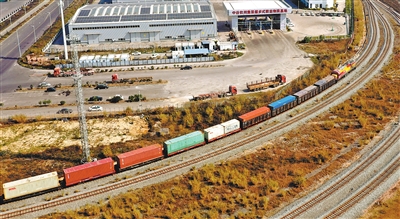
Core Viewpoint - The Xinjiang Railway Department is enhancing transportation capacity to support the cotton and textile industry, facilitating high-quality economic development in Xinjiang [1][2]. Group 1: Transportation Initiatives - Xinjiang Railway has launched dedicated cotton yarn trains to ensure the efficient transport of cotton and textile products across the country [1]. - Two fixed routes for rural revitalization trains have been established, connecting Akesu to the Yangtze River Delta and Akesu (Kashgar) to the Pearl River Delta, with over 200 trains operating to various destinations [1]. - The railway department is providing tailored logistics solutions for cotton yarn enterprises, offering one-on-one service and full tracking of goods during transportation [1]. Group 2: Market Competitiveness - Collaboration with the Urumqi Railway Logistics Center has enabled the rapid aggregation of goods from key cotton textile enterprises in Northern Xinjiang, reducing transportation time from 14 days to 6 days [2]. - The railway department has adopted a strategy of consolidating scattered cotton textile goods, expanding the "road-to-rail" transfer range, and helping companies reduce logistics costs effectively [2]. - A total of 234,000 tons of cotton yarn and fabric have been shipped so far this year, indicating a significant increase in transportation efficiency [2].
改机制、优服务、引活水 看铁路货运三招降成本(经济聚焦·降低物流成本在行动)
Ren Min Ri Bao· 2025-07-03 21:52
Core Viewpoint - The logistics sector is crucial for connecting production and consumption, and reducing logistics costs can significantly benefit economic development. The implementation of the "Action Plan for Effectively Reducing Logistics Costs" aims to optimize the transportation structure by 2027, with specific targets for railway freight volume and port container transport [1]. Group 1: Railway Logistics Innovations - The railway department has introduced a "logistics package" service, which allows for comprehensive logistics solutions, including short-distance transport, storage, loading, unloading, and packaging, thereby reducing overall logistics costs for clients by approximately 20% [3][4]. - The implementation of logistics packages has improved transportation efficiency, with the time from application to dispatch reduced to within one day, compared to the previous four days [3][4]. - In the first five months, the railway sector signed 655 logistics package contracts, with a total contract volume of 9.79 billion tons, indicating a significant increase in freight volume [4]. Group 2: Multi-Modal Transport and Efficiency - The introduction of a "one order" system for multi-modal transport allows for seamless integration of rail and sea transport, significantly enhancing efficiency and reducing costs by about 10% [6][8]. - The railway department has developed 119 products under the "one order" system, which simplifies the logistics process for clients, allowing for a single point of contact and streamlined operations [9]. - The new system includes a real-time pricing mechanism, enabling clients to see transport costs upfront, which enhances decision-making [7][8]. Group 3: Financial Innovations in Logistics - The "freight loan" service allows logistics companies to secure financing based on their historical freight data, eliminating the need for traditional collateral and significantly reducing financing costs by approximately 30% [10][12]. - In the first five months, the railway logistics financial services supported 819 clients with a total financing amount of 19.783 billion yuan, demonstrating the effectiveness of the "freight loan" initiative [12]. - The railway department is exploring additional financial products, such as bank guarantees, to further support logistics companies and enhance their financial flexibility [12].