Circular Financing

Search documents
Is the Stalled Nvidia-OpenAI Megadeal AI’s First Domino to Fall?
Yahoo Finance· 2026-01-31 13:19
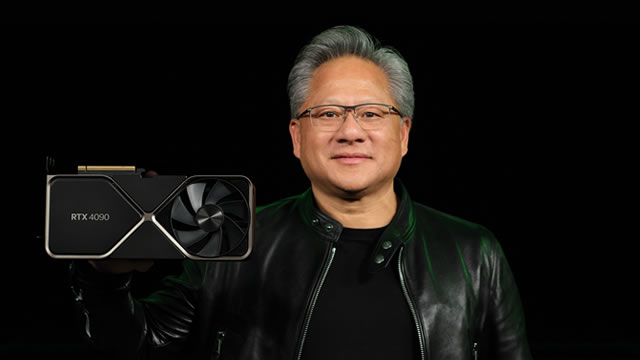
Core Insights - OpenAI has secured a multi-year deal with Advanced Micro Devices (AMD) to supply approximately 6 GW of GPU capacity, potentially valued at up to $300 billion, with warrants for a 10% stake in AMD contingent on meeting certain targets [1] - OpenAI has committed to an incremental $250 billion purchase of Microsoft Azure cloud services for AI training and inference over several years [1] OpenAI's Partnerships and Funding - OpenAI's current position is supported by a complex network of partnerships and funding discussions, totaling around $1.4 trillion in potential commitments across various cloud partners, chipmakers, and financial investors [2] - Nvidia's $100 billion plan to partner with OpenAI has reportedly stalled due to internal doubts about the transaction's size and structure, raising concerns about OpenAI's business discipline and competitive risks [2][4] - OpenAI is seeking up to $100 billion in fresh funding at a valuation of approximately $830 billion, with potential contributions from major players like Nvidia, Microsoft, Amazon, SoftBank, and Middle Eastern sovereign wealth funds [4] Concerns Over Circular Financing - Nvidia's deals have faced criticism for being a form of circular financing, where Nvidia invests heavily in OpenAI, which in turn commits to purchasing large quantities of Nvidia chips [5] - This circular financing model has led to concerns that revenues may be artificially supported rather than driven by sustainable demand [6] Implications of Stalled Deals - The stalled $100 billion plan raises fears that if Nvidia withdraws its investment, OpenAI may reduce its demand for CoreWeave's capacity, potentially impacting the entire AI ecosystem [7] - However, the non-binding nature of the Nvidia-OpenAI agreement means that it was contingent on infrastructure milestones, and OpenAI is still in discussions for substantial funding from various sources [8] Future of AI Investments - Demand for AI compute remains strong, and large-scale projects can be phased in, allowing for flexibility in funding and execution [9][10] - The Nvidia-OpenAI megadeal may be smaller than initially anticipated, but this does not signify the end of the AI boom; rather, it highlights the diverse ecosystem of potential backers for OpenAI [11] - The AI infrastructure and applications market continues to thrive, with a shift towards more cautious investment strategies as the sector matures [12]

Why Microsoft stock dropped after earnings
Youtube· 2026-01-30 00:40
Core Viewpoint - Microsoft shares have fallen over 11% due to concerns about capital expenditure (capex) plans, despite exceeding second-quarter earnings estimates [1][36] Group 1: Capital Expenditure and Investor Sentiment - Microsoft’s capex for Q2 reached nearly $38 billion, exceeding street expectations, which has spooked investors [58] - The company is facing capacity constraints and has indicated that Azure revenue could have been significantly higher without these constraints [5][12] - In contrast, Meta's capex plans were initially met with skepticism but have since been positively received following strong quarterly results [2][3] Group 2: Azure Performance and Growth Metrics - Azure's revenue grew by 38% in constant currency, adding approximately $9 billion in annual recurring revenue (ARR) sequentially, which was a broad-based beat across the portfolio [6][58] - Microsoft has 15 million subscriptions for its M365 co-pilot, which is a relatively small number compared to its overall user base [38][60] - Microsoft Fabric has reached $2 billion in ARR, reflecting a 60% increase since its launch less than two years ago, indicating strong growth potential [15] Group 3: AI Demand and Strategic Positioning - There is unprecedented demand for AI, driven by both model providers and enterprise adoption, which Microsoft is strategically positioned to capitalize on [13][20] - OpenAI contributes significantly to Microsoft’s commercial backlog, representing 45% of the remaining performance obligations (RPO), which is seen as a strength rather than a liability [18][19] - Microsoft’s products are designed to be model-agnostic, allowing flexibility in utilizing various AI technologies, which mitigates dependency on any single provider [20] Group 4: Market Dynamics and Future Outlook - The market is currently skeptical about the ability of software companies to navigate the evolving landscape of AI and LLMs, leading to pressure on companies like Salesforce and Microsoft [21][25] - Accelerating growth and demonstrating proof points around AI adoption are critical for companies to regain investor confidence [29][30] - The current market pullback is viewed as a potential buying opportunity for quality names like Microsoft, as long-term growth prospects remain strong [27][33]


Amazon in Talks to Invest $50 Billion in OpenAI, Expand Ties
Yahoo Finance· 2026-01-29 23:56
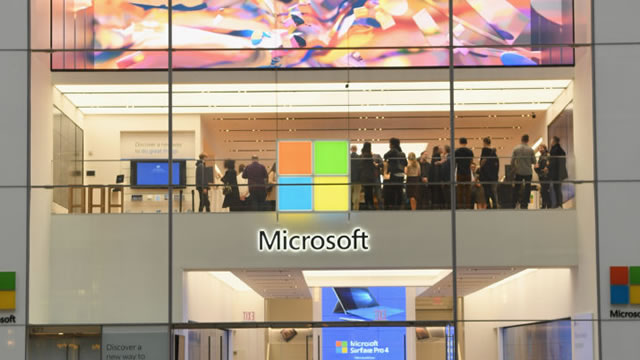
Photographer: Gabby Jones/Bloomberg Amazon.com Inc. is in talks to invest as much as $50 billion in OpenAI and expand an agreement that involves selling computer power to the AI startup, according to a person with knowledge of the matter. OpenAI is also weighing a deal in which Amazon would use the startup’s artificial intelligence models, which power the popular ChatGPT chatbot, in its products and platforms, the person said. Amazon’s employees could also access the model for their work. Most Read fro ...

Nvidia Puts Another $2B Into CoreWeave, Offers New Chips | Bloomberg Tech 1/26/2026
Youtube· 2026-01-26 19:28
Group 1: NVIDIA and CoreWeave Investment - NVIDIA has invested an additional $2 billion in CoreWeave to accelerate the buildout of AI factories, purchasing CoreWeave's common stock at $87.20 per share [1][2] - Jensen Huang, CEO of NVIDIA, stated that this investment is a small portion of what CoreWeave will need to raise for ongoing capacity buildout, emphasizing it is not circular financing [1][2][3] - CoreWeave's CEO described the investment as a drop in the ocean compared to their overall infrastructure spending needs, highlighting the strategic partnership with NVIDIA [1][2] Group 2: Microsoft AI Chip Development - Microsoft is rolling out a second generation of its own AI chip, which is crucial for reducing costs and enhancing its cloud business [1][2] - The initial units of the new AI chip are live in data centers near Des Moines, Iowa, with further rollout plans not yet specified [2] - Microsoft still heavily relies on NVIDIA for the majority of AI workloads in its data centers, indicating a continued dependence on NVIDIA's technology [1][2] Group 3: Market Reactions and Earnings Outlook - The markets are experiencing an upward trend ahead of major tech earnings reports from companies like Meta, Microsoft, Tesla, and Apple, with the NASDAQ 100 on a four-day winning streak [1][2] - Analysts are particularly focused on how these companies will meet revenue and profit expectations, especially in the AI sector [1][2] - The aerospace and defense sector has seen a significant increase, with stocks rising 44% over the past year due to heightened government spending amid geopolitical tensions [8][10] Group 4: Quantum Computing Developments - IonQ has acquired a chipmaker, SkyWater, in a deal aimed at accelerating its quantum computing roadmap and enhancing its manufacturing capabilities [3][4] - The acquisition is expected to bring forward IonQ's product development timeline by about a year, allowing for quicker scaling of quantum chips [3][4] - IonQ's CEO emphasized the importance of U.S. semiconductor manufacturing and its relationship with the government for future growth [3][4] Group 5: AI Industry Dynamics - The AI industry is witnessing significant investments, with major companies committing billions to capital expenditures, indicating a structural shift in the market [44][45] - There are concerns about the sustainability of the current AI boom, with discussions around whether the industry is in a bubble [44][45] - Companies are increasingly focused on meeting the high demand for compute power, leading to a competitive landscape where multiple players are vying for market share [29][30]


Mitrione: Energy moves don't change our view yet, inflation is the real risk
Youtube· 2025-12-17 12:11
All right. Uh, you know, we don't talk a lot about oil recently. Uh, right now we're seeing oil move to the upside on on potential sanctions on Russia and sanctions on Venezuela.Does that change your view of the energy sector in any way. Yesterday, we saw every uh stock in the energy sector close lower. It closed down about 3%.Does it reshape any views for you. >> I think it's still a little bit too early to tell on that. I mean, we're certainly seeing moves, certainly seeing moves this morning on that news ...

OpenAI's big 2025: What Wall Street needs to know about the AI giant's huge year
Youtube· 2025-12-15 17:18
Yahoo Finance has officially announced the company of the year. And this year, it's been a company at the center of Wall Street's bet on artificial intelligence, OpenAI. Here's what OpenAI CFO Sarah Frier had to say about the award.>> We're energized to get award like this. It, you know, really cements, I think, what Chat GPT has become, which is the world's default intelligence layer. >> Joining us for more, Yahoo Finance Executive Editor Brian Sazy, who helms this whole process for us, picking the company ...

Wall Street Sees AI Bubble Coming and Is Betting on What Pops It
Yahoo Finance· 2025-12-14 14:00
Core Insights - OpenAI plans to spend $1.4 trillion in the coming years but is currently generating significantly less revenue than its operating costs, expecting to burn $115 billion through 2029 before generating cash in 2030 [1] - The tech giants driving AI spending, such as Alphabet and Microsoft, have vast resources and are committed to continued investment, but concerns about growth rates and profitability are rising [2][3] - The AI sector is experiencing skepticism, with signs of a potential bubble as companies like Nvidia and Oracle face stock selloffs and increased scrutiny over their spending and growth projections [3][4] Investment Trends - Major tech companies, including Alphabet, Microsoft, Amazon, and Meta, are projected to spend over $400 billion on capital expenditures in the next 12 months, primarily for data centers, but their AI-related revenue growth is not keeping pace with these costs [11] - Rising depreciation expenses from data center investments are a significant concern, with Alphabet, Microsoft, and Meta's combined depreciation costs increasing from about $10 billion in Q4 2023 to an expected $30 billion by next year [13] - The shift in strategy towards AI spending represents a departure from the traditional model of generating rapid revenue growth at low costs, raising concerns about future profitability and cash flow [15] Market Sentiment - The current market environment reflects a mix of optimism and caution, with some investors questioning the sustainability of AI-related growth and the potential for a market correction if growth projections plateau [12][19] - While valuations for major tech companies are high, they are not at excessive levels compared to historical periods, suggesting that while there are risks, the market is not yet in a panic state [16][18] - Investors are faced with a dilemma as they navigate the AI trade, balancing the potential for significant returns against the risks of overvaluation and market corrections [19]

4Q25 AI 服务器动态- 加入 OpenAI 阵营延续热潮-Global Semiconductors, Hardware, Internet & Software-4Q25 AI Server Pulse joining the OpenAI club to keep the party going
2025-12-10 02:49
Summary of Key Points from the Conference Call Industry Overview - The conference call focuses on the **Global Semiconductors, Hardware, Internet & Software** industry, particularly the **AI server market** and the **AI supply chain** dynamics [1][2]. Core Insights and Arguments 1. **Investment in Data Centers**: Total investment in upcoming and under-construction data centers is approximately **US$840 billion**. Major projects include OpenAI's agreements with semiconductor and cloud service providers (CSPs) [3][38]. 2. **AI Capital Expenditure (Capex)**: Following 3Q25 earnings, consensus estimates for 2026 capex for major CSPs have been raised by nearly **20%**, projecting total capex to grow at a **36% CAGR** to around **US$630 billion** from 2024 to 2027 [3][37]. 3. **Server Shipment Growth**: Global server and high-end GPU AI server shipments are expected to grow at **3%** and **31% CAGR**, respectively, from 2025 to 2027. High-end GPU server shipments are projected to increase by **46%** in 2026 [4][58]. 4. **ASIC and GPU Demand**: ASIC adoption is increasing, with projections indicating that ASICs will comprise **47%** of total CoWoS-based AI chip shipments in 2026. The demand for TPUs is also expected to grow by approximately **75% YoY** [4][5]. 5. **Financial Performance of Suppliers**: ASIC supply chain stocks have recently outperformed GPU supply chains, driven by significant orders from Broadcom and successful product launches from OpenAI and Google [6][34]. Additional Important Insights 1. **Circular Financing Concerns**: There are concerns regarding "circular financing" among AI giants, particularly with OpenAI's substantial commitments to various suppliers, which may lead to a "too big to fail" scenario [34][35]. 2. **OpenAI's Revenue Projections**: OpenAI's revenue for 1H25 was reported at **US$4.3 billion**, with a target of **US$13 billion** for the full year. However, the company has significant purchase commitments exceeding **US$1 trillion** over the next 5-7 years [35][36]. 3. **Major CSPs' Capex Guidance**: Companies like Microsoft, Amazon, and Google have increased their capex guidance significantly for 2025, indicating a strong focus on AI infrastructure [57]. 4. **Emerging Neoclouds**: Neoclouds are gaining traction with flexible "build-to-order" models, showcasing a growing revenue backlog and partnerships with major tech firms [43]. Investment Ratings and Price Targets - **Chroma**: Rated Outperform, Price Target (PT) = NT$830 [11] - **Delta**: Rated Outperform, PT = NT$1190 [12] - **Unimicron**: Rated Outperform, PT = NT$220 [13] - **Quanta**: Rated Underperform, PT = NT$250 [14] - **Google**: Rated Market-Perform, PT = $305 [15] - **Meta**: Rated Outperform, PT = $870 [16] - **Amazon**: Rated Outperform, PT = $300 [17] - **Microsoft**: Rated Outperform, PT = $645 [18] - **AMD**: Rated Market-Perform, PT = $200 [19] - **NVIDIA**: Rated Outperform, PT = $275 [21] - **TSMC**: Rated Outperform, PT = NT$1,444 [25] This summary encapsulates the key points discussed in the conference call, highlighting the significant trends, financial projections, and investment opportunities within the AI server and semiconductor industries.



Circular Financing Worries Surround Nvidia
Bloomberg Technology· 2025-12-01 21:49
It is the first day of December, and actually a couple of hours ago, we started things looking pretty bleak. And Nvidia has turned a corner, which has kind of changed a little bit the tone, but basically tech lower, crypto lower and we started December risk off mode. Why.Yeah. I mean, we had a really solid rally last week, you know, on those expectations that the Federal Reserve will be cutting interest rates in December. But as we start of this new week, there's been a a turnaround in that sentiment.And I ...
Circular Financing Worries Surround Nvidia
Youtube· 2025-12-01 21:49
Market Sentiment - The beginning of December has seen a shift in market sentiment, with technology and cryptocurrency sectors experiencing declines after a solid rally in the previous week due to expectations of Federal Reserve interest rate cuts [1][2] - The Bank of Japan's Governor has adopted a more hawkish tone, raising expectations for a December rate hike, which has contributed to the current risk-off sentiment in the market [2][3] Impact on Carry Trade - Concerns are growing regarding the unwinding of the carry trade, where investors borrow in low-interest yen to invest in higher-yielding assets. A potential rate hike from the Bank of Japan could lead to repatriation of funds back to Japan [3][4] - The ten-year yield in Japan has reached a 17-year high, which may further exacerbate the unwinding of the carry trade and impact liquidity-sensitive sectors like technology and cryptocurrency [3][4] NVIDIA and Market Concerns - NVIDIA has faced significant pressure in the market, but recent comments suggest a potential turnaround in sentiment, although concerns regarding secular financing remain prevalent [6][7][8] - The latest earnings report from NVIDIA was positive, indicating strong performance despite market nervousness surrounding secular financing and its implications for the ecosystem [11][13] Cryptocurrency Market - The cryptocurrency market is experiencing challenges, with institutional demand remaining weak. November saw significant outflows from ETFs, totaling 3.48 billion, marking one of the worst months for the sector [15][16] - The unwinding of the yen carry trade is causing fears of reduced liquidity, which is particularly detrimental to the cryptocurrency market [15][16]