国际秩序

Search documents
土耳其对以色列关闭港口、领空 全面中断与以经贸往来
中国基金报· 2025-08-29 23:24
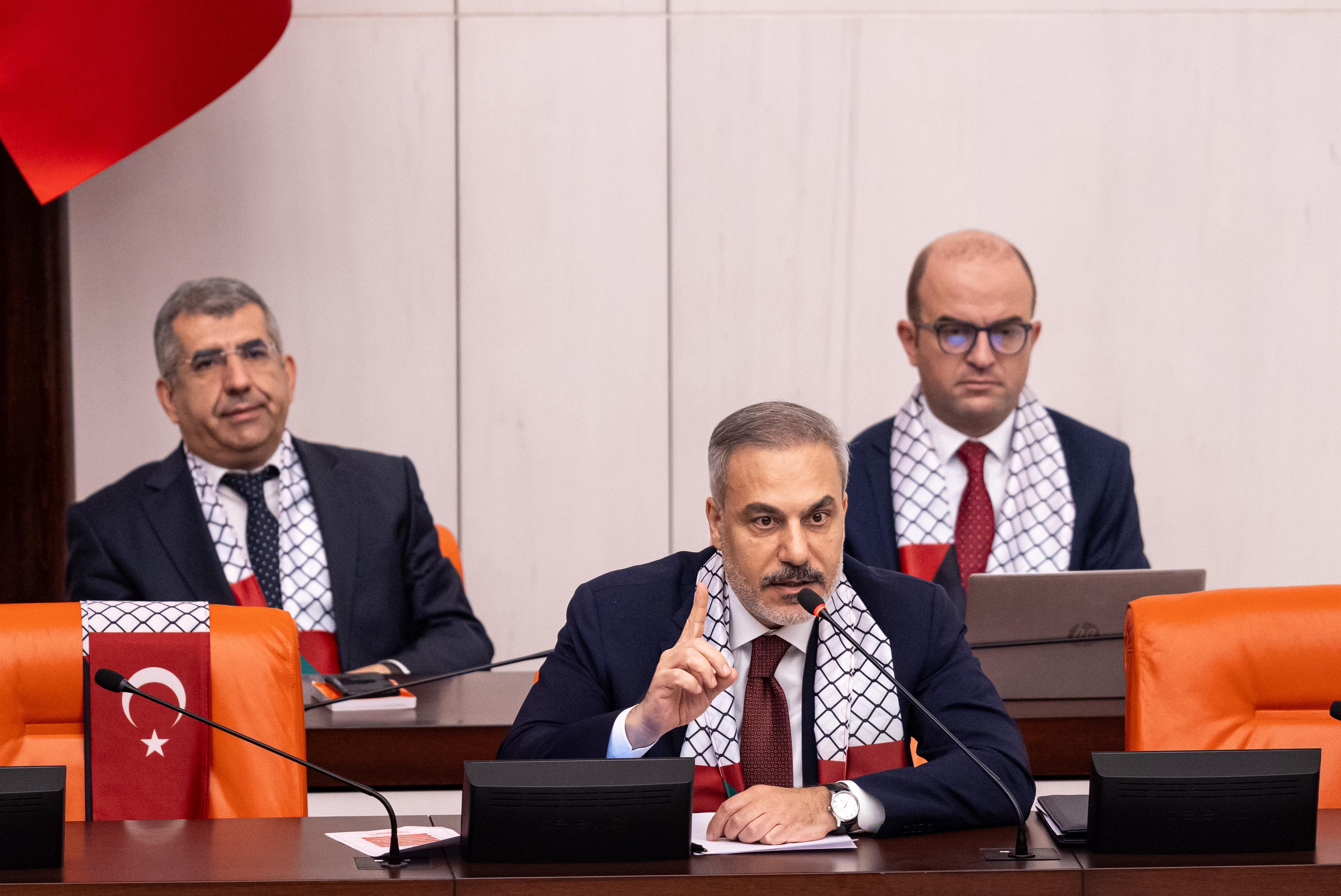
Group 1 - Turkey has decided to ban Israeli ships from using its ports and Turkish ships from docking at Israeli ports, as well as closing its airspace to Israeli aircraft, effectively halting all economic and trade relations with Israel [1] - Turkish Foreign Minister Fidan accused Israel of committing genocide in Gaza over the past two years and disregarding basic humanitarian values, stating that Israel's actions threaten to drag the entire Middle East into conflict [1] - Fidan emphasized that Israel's attacks on Gaza, Lebanon, Yemen, Syria, and Iran reflect a mindset of a "terrorist state that ignores international order" [1] Group 2 - Hamas expressed gratitude for Turkey's support for the Palestinian people and urged Turkey, Arab, and Islamic countries to intensify punitive measures against Israel, cut all ties, and hold its leaders accountable for their actions [1]

土耳其对以色列关闭港口、领空 全面中断与以经贸往来
Yang Shi Xin Wen· 2025-08-29 17:10
Core Viewpoint - Turkey has decided to ban Israeli ships from using its ports and Turkish ships from docking at Israeli ports, while also closing its airspace to Israeli aircraft, effectively halting all trade relations with Israel [1] Group 1: Turkey's Actions - Turkey's Foreign Minister, Hakan Fidan, announced the ban on Israeli ships and the closure of airspace to Israeli aircraft, marking a complete suspension of economic ties with Israel [1] - The Turkish government has condemned Israel's actions in Gaza, labeling them as genocide and a threat to regional stability [1] Group 2: International Response - Fidan emphasized the need for the international community to act swiftly to prevent further humanitarian disasters in the region and to improve the humanitarian situation on the ground [1] - Hamas expressed gratitude for Turkey's support for the Palestinian people and called for increased punitive measures against Israel from Turkey and other Arab and Islamic nations [1]
土耳其:禁止以色列船只、飞机通行,全面中断与以色列的经贸往来
财联社· 2025-08-29 16:42
Core Viewpoint - Turkey has decided to prohibit Israeli ships from using its ports and has closed its airspace to Israeli aircraft, effectively severing trade relations with Israel due to the ongoing humanitarian crisis in Gaza [1][2]. Group 1: Turkey's Actions - Turkey's Foreign Minister Hakan Fidan announced the ban on Israeli ships and the closure of airspace to Israeli planes, citing Israel's actions in Gaza as a form of genocide and a threat to regional stability [1]. - The Turkish port authority has begun requesting declarations from shipping agents to confirm that vessels are not associated with Israel and are not carrying military or hazardous cargo destined for Israel [2]. - Turkey has also prohibited ships flying the Turkish flag from docking at Israeli ports [2]. Group 2: Humanitarian Concerns - Fidan expressed opposition to any plans that would forcibly relocate residents of Gaza and called for the international community to act swiftly to prevent further humanitarian disaster and improve the local situation [2].
詹德斌:关税大棒下,新殖民主义幽灵在游荡
Sou Hu Cai Jing· 2025-08-11 22:40
Group 1 - The core argument highlights the detrimental impact of U.S. tariffs on countries like Lesotho, particularly with a 15% tariff on apparel products, which exacerbates economic challenges in these nations [1] - The U.S. has been using tariffs as a tool to compel global companies to relocate production and transfer technology to the U.S., effectively leveraging its market power [2][3] - Traditional allies of the U.S. are competing for lower tariff rates rather than resisting U.S. pressure, indicating a lack of strategic autonomy and a shift towards dependency on U.S. economic policies [2][3] Group 2 - The article critiques the U.S. for undermining international rules and order, portraying it as a significant disruptor rather than a fair market leader [3][4] - It emphasizes the need for global South countries to unite in defending a multilateral international system based on international law and the principles of the UN Charter [4][5] - The call for a more equitable international order is framed as a collective responsibility, urging nations to reject unilateralism and embrace genuine multilateralism [5]
连印度都开始威胁美国,也想“上桌吃饭”,这对中国未必是好现象
Sou Hu Cai Jing· 2025-07-13 05:44
Group 1 - India's firm stance against the US negotiations reflects its confidence and readiness to engage as an equal partner, rejecting demands to open its agricultural and dairy markets [1][3] - The Indian government has submitted a retaliation list to the WTO against US goods worth $725 million and imposed fines on Wall Street giants totaling nearly $500 million, indicating its assertiveness in international trade [3][5] - India's shift from mimicking China's development model to asserting its own influence on the global stage signifies a strategic transformation, recognizing its potential to engage with major powers like the US [5][6] Group 2 - The current international environment is unstable, and India's actions may negatively impact China's development, which has thrived under a relatively peaceful global order [6][8] - India's rise could lead to increased friction with China, driven by historical grievances and overlapping strategic interests in regions like South Asia and the Indian Ocean [7][8] - The potential collapse of the existing international order could result in conflicts over resources and power, posing significant threats to global stability and China's security [8]
伊朗称与俄罗斯有共同威胁和敌人
news flash· 2025-06-23 04:19
Core Points - Iran's Foreign Minister Zarif stated that the attacks by the US and Israel on Iran's nuclear facilities and other critical targets are blatant violations of the UN Charter [1] - Zarif emphasized that such actions severely undermine international order and their negative impact will extend throughout the region and globally [1] - Iran and Russia have established a joint analysis mechanism to address their common threats and enemies, indicating a deepening of their cooperation [1] - Zarif noted that the coordination between Iran and Russia will go beyond mere consultations and will translate consensus into concrete actions, continuing the cooperation process as per established agreements [1]
普京最新表态:伊朗未向俄方请求军援
Zhong Guo Ji Jin Bao· 2025-06-19 01:51
Group 1 - The core viewpoint of the articles highlights the ongoing tensions in the Middle East, particularly between Iran and Israel, and Russia's position as a potential mediator in the conflict [2][3][4] - President Putin stated that Russia does not provide military assistance to Iran and emphasized that the strategic partnership does not include defense aspects [1] - Putin expressed the need for Iran and Israel to cease hostilities and seek diplomatic solutions to ensure mutual interests [2][3] Group 2 - Russia is prepared to offer mediation support to facilitate dialogue between conflicting parties in the Iran-Israel situation, indicating a proactive diplomatic stance [3] - The escalation of military actions, including Israeli airstrikes on Iranian nuclear facilities and subsequent Iranian retaliatory attacks, has raised concerns about regional stability [4] - Putin's willingness to meet with Ukrainian President Zelensky suggests ongoing diplomatic efforts in the context of the Russia-Ukraine conflict, which may influence broader geopolitical dynamics [5]
经济学家潘向东:黄金估值体系的前置条件已被打破
Sou Hu Cai Jing· 2025-05-22 02:54
Core Viewpoint - The discussion emphasizes the changing international order and its implications for gold investment, highlighting the need to follow major trends while being cautious of short-term fluctuations [1][16]. Group 1: International Order and Gold Investment - The previous international order was centered around the United States, which provided global security and public goods [3]. - The transition to a "credit currency" era has seen the dollar maintain its status as the global hard currency, despite the detachment from gold [3]. - Since 2018, the world has been entering a "once-in-a-century change," with the dollar's dominance being challenged [3][16]. Group 2: Economic Indicators in the U.S. - The structure of U.S. household income has shifted from a "spindle" shape (predominantly middle-income) to a "dumbbell" shape, indicating increasing income inequality [5]. - U.S. government debt has reached historically high levels, raising concerns about fiscal sustainability [7]. - The share of the dollar in official reserves has been declining, indicating a potential shift in global currency dynamics [9]. Group 3: Future Economic Policies - The potential re-election of Trump in 2025 could lead to significant economic policy changes, including austerity measures and increased tariffs, particularly targeting countries with large trade deficits like China [11][12]. - Trump's administration may face substantial challenges in implementing these policies due to internal and external resistance [12]. Group 4: Market Dynamics and Gold Valuation - Current market conditions show a divergence from historical trends, with simultaneous declines in the dollar, U.S. bonds, and equities, which is atypical [14][15]. - The traditional valuation framework for gold has been disrupted, necessitating a wait for a new order to emerge before establishing a new valuation system [16]. - Investors are advised to adopt a strategy of "following the major trend while countering short-term fluctuations" in their gold investment approach [17][18].

外交部:近年来中荷关系保持稳健发展
news flash· 2025-05-19 07:32
Core Viewpoint - The relationship between China and the Netherlands has been steadily developing in recent years, characterized by frequent high-level exchanges and significant cooperation in various sectors [1] Group 1: Bilateral Relations - China and the Netherlands are described as open and pragmatic comprehensive partners, with a strong emphasis on trade and investment collaboration [1] - The recent visit by Dutch Foreign Minister Wopke Hoekstra marks his first trip to China since taking office, highlighting the importance of this diplomatic engagement [1] Group 2: Areas of Cooperation - Cooperation between the two countries has been notably effective in agriculture, water management, and technology, yielding significant benefits for both nations [1] - The visit aims to deepen discussions on bilateral relations and address international and regional issues of mutual concern, thereby expanding consensus and enhancing cooperation [1] Group 3: Broader Implications - The engagement is expected to contribute positively to the development of China-Europe relations and support multilateralism, as well as the maintenance of an international order based on international law and an open world economy [1]
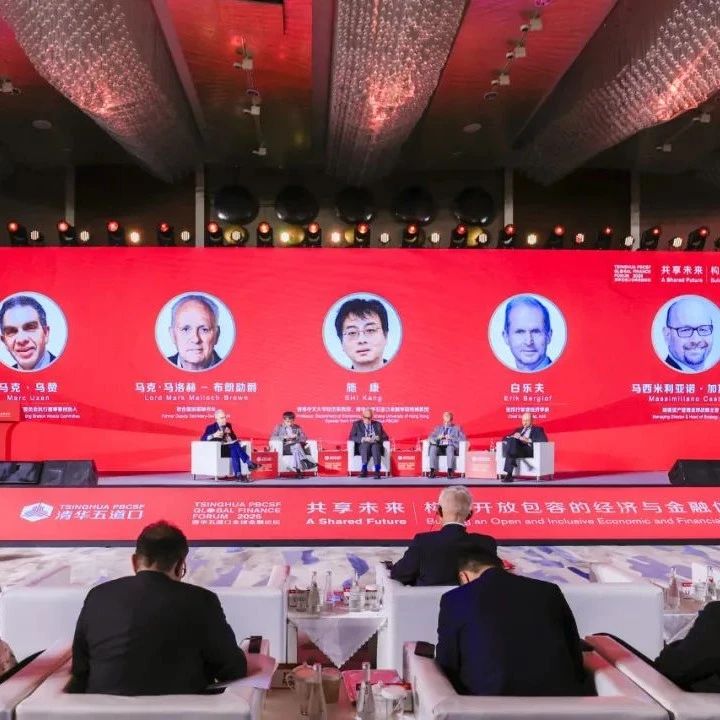
2025清华五道口全球金融论坛主题讨论一丨面向未来的全球货币体系
清华金融评论· 2025-05-18 10:16
Core Viewpoint - The forum discussed the need for a restructured global financial system in the face of rising geopolitical uncertainties and the importance of multilateralism to address global challenges [5][10][12]. Group 1: Global Financial Cooperation - The forum featured discussions among experts on the importance of multilateralism and the need for a diversified global financial order to address current challenges [3][5]. - Lord Mark Malloch-Brown emphasized the crisis in international order due to unilateral actions by the U.S. and the need for countries like China and Europe to actively promote multilateralism [5]. - Erik Berglof highlighted the necessity for a new multilateralism that reflects the current geopolitical landscape, advocating for cooperation between Europe and developing countries [8]. Group 2: Economic Imbalances and Domestic Demand - Professor Shi Kang pointed out that addressing global economic imbalances requires multilateral coordination and that China should focus on domestic demand rather than relying solely on external markets [10]. - The need for China to stimulate domestic consumption and create demand was emphasized as a key task for 2025, alongside the importance of economic reforms and industry upgrades [10]. Group 3: Currency Dynamics and Financial Stability - Massimiliano Castelli discussed the potential for the euro and renminbi to gain prominence as global reserve currencies, while the dollar remains the primary safe-haven asset [12]. - The discussion included the gradual reduction of dollar asset holdings by global central banks and institutional investors, indicating a shift in currency dynamics [12]. - Marc Uzan stressed the importance of regional cooperation and the establishment of new rules in rebuilding the international financial system [15].