
多资产配置

Search documents
股债商齐舞,波动中取势,宏观策略的胜负手在哪?
私募排排网· 2025-11-20 03:31
Core Viewpoint - The article emphasizes the significance of macro strategy private equity funds in the current investment landscape, highlighting their ability to dynamically balance multiple asset classes to manage risks and achieve returns in various market conditions [2][16]. Group 1: Characteristics of Macro Strategy Funds - Unlike single-market focused strategies, macro strategy funds operate like "multi-asset aircraft carriers," typically holding three to four core asset classes, including stocks, bonds, commodities, and currencies, with some managers extending to U.S. stocks, gold, overseas bonds, and futures [4][5]. - The underlying strategy involves systematic judgment on macroeconomic cycles, liquidity, inflation, and policy expectations, allowing for flexible asset allocation based on market conditions [5][6]. Group 2: Performance Analysis - The correlation analysis of the macro strategy index over the past three years reveals that its returns are primarily linked to risk assets, with a correlation of 0.71 with the A-share index, while showing low or negative correlations with commodities, bonds, and gold [9][12]. - The volatility contribution analysis indicates that stock indices contribute the most to the fund's volatility, while bonds and gold often help to stabilize overall risk during market fluctuations [12]. Group 3: Insights and Implications - The article concludes that volatility should not be viewed as risk but rather as an opportunity, as macro strategy funds can navigate through the asset volatility to seek returns [13][16]. - For investors, macro strategies serve as a long-term allocation tool that can act as a "stabilizer" and "volatility buffer," particularly in uncertain economic cycles, making them suitable as a core satellite investment [16].


显著回升!四季度FOF发行迎来“小高峰”,规模重回2000亿元
券商中国· 2025-11-20 02:42
Core Viewpoint - The FOF (Fund of Funds) market has experienced a significant rebound in both issuance and existing scale since the fourth quarter, indicating a renewed interest and demand from investors [1][2]. Issuance Trends - The issuance of FOF products has accelerated in the fourth quarter, reaching a total of 227.95 billion yuan, a substantial increase compared to less than 1 billion yuan in the same period last year [2]. - The quarterly issuance trend shows a clear "surge" in the fourth quarter, surpassing the combined issuance of the first three quarters, which were 141.47 billion yuan, 186.04 billion yuan, and 65.32 billion yuan respectively [2]. - Currently, there are 11 FOF products being issued, with 10 being mixed-asset FOFs, indicating a positive outlook on equity assets by fund managers [2]. Fundraising Success - Several newly established FOF products have achieved impressive fundraising results within a short time frame, such as 55.77 billion yuan raised in one day by Huatai-PB Yingtai Stable 3-Month Holding [3]. Existing Scale Recovery - The existing scale of FOF products has risen to 2154.93 billion yuan, with the number of products increasing to 529, marking a recovery above the 2000 billion yuan threshold [4]. - This recovery follows a decline in the previous year due to market adjustments and decreased risk appetite, highlighting a renewed attractiveness of FOFs among institutional and individual investors [4]. Performance and Investor Sentiment - FOF products have shown strong performance this year, with several achieving over 50% returns, and the average and median returns exceeding 10%, significantly better than the previous year [5]. - The mixed-asset FOFs have been particularly favored as they enhance investment returns while controlling risks, appealing to retail investors looking to participate in equity markets [5].

年内11只FOF募资超20亿元 新品“小爆款”密集涌现
Mei Ri Jing Ji Xin Wen· 2025-11-17 09:31
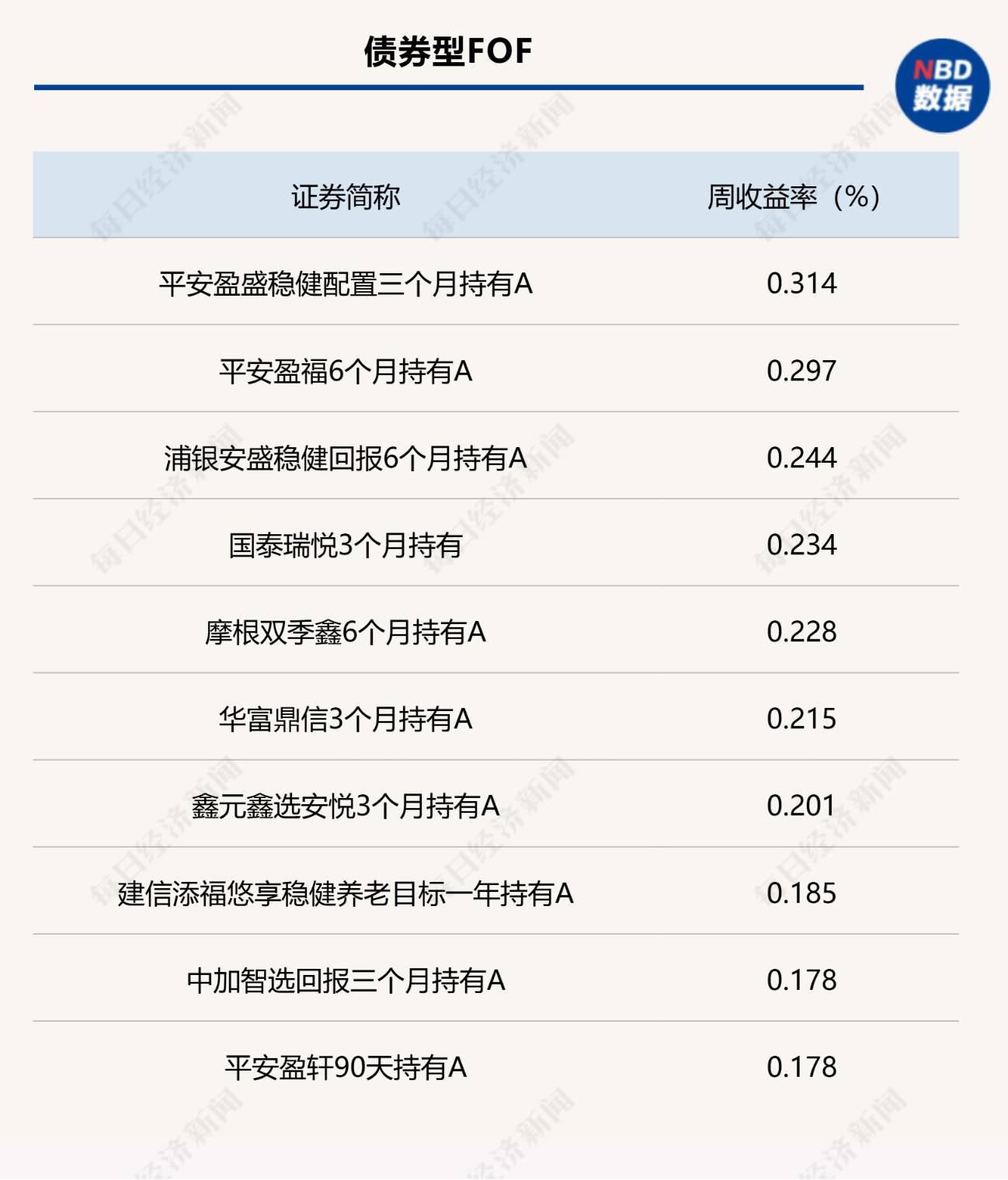
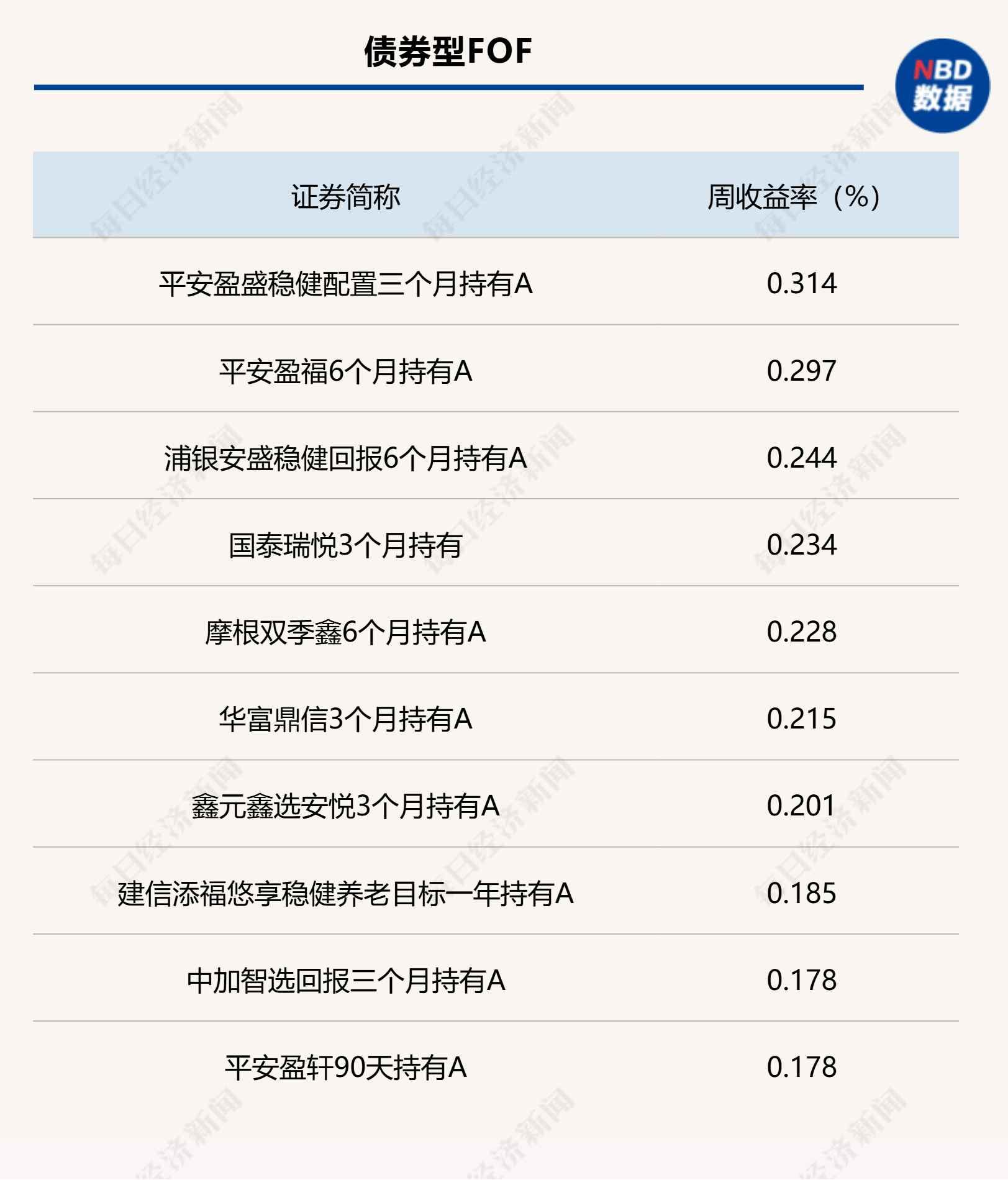
Core Insights - The recent issuance of public FOFs has garnered attention, with several "small blockbuster" products raising around 2 billion yuan each, and a total of 11 FOFs exceeding 2 billion yuan in fundraising this year [1][3] - The performance of stock-type FOFs has been lackluster, while some mixed-type FOFs have achieved returns exceeding 3% [1][3] FOF Market Dynamics - The FOF market is experiencing significant growth potential, with underlying funds expected to diversify further [2][6] - Recent FOF products have seen remarkable success, with notable examples including the 富国智悦稳健90天持有FOF raising 1.793 billion yuan and the 交银臻享多资产三个月持有期混合 (FOF) raising 2.367 billion yuan [3] - As of the end of Q3 this year, all public FOFs have achieved positive returns, with the top-performing FOF product yielding nearly 70% year-to-date, surpassing many active equity star funds [3][4] Performance Analysis - The recent performance of FOFs has been bolstered by strong returns from gold and resource-themed funds, with 中信建投睿选6个月A achieving a weekly return of 3.14%, the highest among all FOFs [5] - In the mixed-type FOF category, 20 products recorded returns above 1%, while stock-type FOFs had limited success, with only one product achieving a positive return [5][11] Investment Strategy and Trends - The current FOFs are diversifying their investments, including allocations to gold for risk mitigation, short-term bonds for liquidity, and technology for growth [6] - The FOF investment research teams are required to possess cross-market knowledge and capabilities to effectively manage risks associated with multi-asset strategies [6]
年内11只FOF募资超20亿元,新品“小爆款”密集涌现
Sou Hu Cai Jing· 2025-11-17 09:30
Core Insights - The recent issuance of public FOFs has garnered attention, with several "small blockbuster" new products raising around 2 billion yuan each, and a total of 11 FOFs exceeding 2 billion yuan in fundraising this year [1][3]. Group 1: Performance and Trends - Last week, stock-type FOFs performed poorly, while some mixed-type FOFs achieved returns exceeding 3% [1]. - As of the end of Q3 this year, all public FOFs have realized positive returns, with the top-performing FOF product yielding nearly 70% year-to-date, significantly outperforming many active equity star funds [3][4]. - The explosive growth of FOFs is notable, with 72 new FOFs launched this year, doubling the 33 launched last year, despite only accounting for 5.22% of the total fund issuance [3]. Group 2: Market Dynamics - The recent performance of gold and resource-themed funds has positively impacted FOF returns, with the top-performing FOF last week achieving a return of 3.14% [5]. - The majority of FOFs' top 50 holdings at the end of Q3 were bond funds, comprising 31 out of 50, indicating a strong focus on fixed-income assets [5]. Group 3: Future Outlook - There is significant room for growth in both the scale and number of FOFs, with potential for diversification in underlying heavy-weight funds [2][6]. - FOF investment teams are encouraged to possess cross-market knowledge and capabilities to effectively manage risks associated with multi-asset strategies [6].
投资能力闯关!测测你能通关吗?
雪球· 2025-11-17 08:10
Group 1 - The article emphasizes the importance of understanding investment tools, particularly funds, as a convenient way to invest in various assets and strategies [6][15]. - It categorizes funds into two main types: index funds, which passively track indices, and active funds, which rely on the fund manager's judgment and investment style [9][11]. - The article highlights that different assets perform better in different macroeconomic environments, such as stocks during economic recovery and bonds during economic recession [19][24][30]. Group 2 - Establishing an investment mindset is crucial, as it serves as the foundation for successful investing [17][39]. - The article discusses the uncertainty in predicting future macroeconomic conditions and suggests that a diversified asset allocation strategy can mitigate risks [31][37]. - It concludes that understanding when to buy and sell is essential for navigating the market effectively, with a multi-asset allocation approach being more resilient to market fluctuations [41][56].

又一量化私募完成登记!年内这一策略表现抢眼
券商中国· 2025-11-16 07:16
Group 1 - The establishment of Shenzhen Junxing Private Securities Fund Management Co., Ltd. was completed, with a registered capital of 10 million yuan and 7 full-time employees [1] - Wang Pei, the legal representative and general manager, holds 60% of the shares and has a background as a fund manager at previous firms [1] - In 2023, Wang Pei was involved in a labor dispute with his former employer, which led to arbitration [1] Group 2 - As of October 31, 2025, 91.33% of the 10,969 private funds achieved positive returns, with an average return rate of 24.32% [2] - Stock strategies led the performance with an average return of 29.52%, and 92.73% of products in this category were profitable [2] - Quantitative long strategies outperformed with an average return of 36.76% and a 96.52% positive return rate [2] Group 3 - Combination funds showed strong profitability stability, with 96.85% of products yielding positive returns [3] - Bond strategies maintained a conservative approach, achieving an average return of 8.77% but with a 90.09% positive return rate [3] Group 4 - Commodity market volatility posed challenges for futures and derivatives strategies, which had an average return of 13.02% and a positive return rate of 82.43% [4]

私募今年以来平均收益超24%,股票策略领跑五大策略
Zheng Quan Shi Bao· 2025-11-14 07:16
Core Insights - The A-share market has shown a slow upward trend since 2025, with a significant recovery in the bond market and notable performance in stock index futures and precious metals [1] - Private equity funds have performed exceptionally well this year, with 91.33% of products achieving positive returns and an average return rate of 24.32% as of October 31, 2025 [1] Summary by Strategy Type - **Equity Strategy**: Leads with an average return of 29.52% and a positive return rate of 92.73%, with 6,427 out of 6,931 products making profits, benefiting from the structural market rally in A-shares [1] - **Multi-Asset Strategy**: Ranks second with an average return of 19.71% and a positive return rate of 91.61%, effectively capturing equity market gains while diversifying risks through bonds and commodities [1] - **Combination Funds**: Show strong profitability stability with a positive return rate of 96.85%, although the average return of 17.86% is slightly lower than that of multi-asset strategies [1] Bond and Commodity Strategies - **Bond Strategy**: Maintains a steady style with an average return of 8.77%, the lowest among the five strategies, but with a strong positive return rate of 90.09%, reflecting robust risk defense capabilities [2] - **Commodity Strategy**: Faces challenges due to volatile prices in oil and gold, resulting in a relatively modest average return of 13.02% and a positive return rate of 82.43% [2] Quantitative Long Strategy Performance - The quantitative long strategy has excelled with an average return of 36.76% and a positive return rate of 96.52%, significantly outperforming the overall equity strategy [2] - Factors driving this success include adaptability to structural market conditions, high liquidity in the A-share market, volatility benefits, and enhanced data processing through AI technology [3]
今年以来20家理财子高管更迭 32万亿理财进入“交棒”时间
2 1 Shi Ji Jing Ji Bao Dao· 2025-11-13 12:03
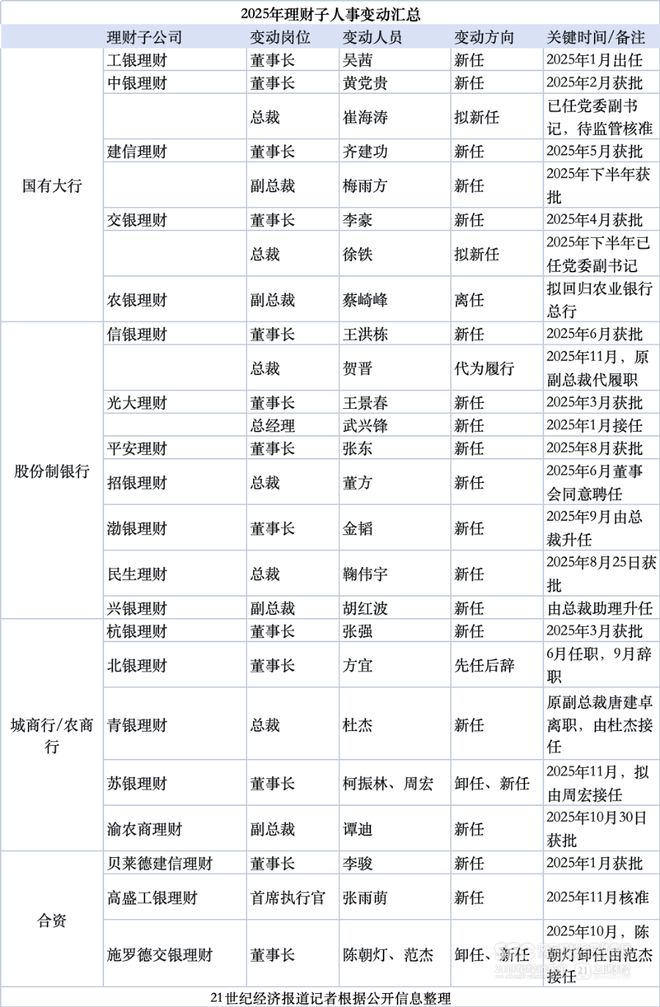
21世纪经济报道记者 吴霜 理财子诞生6年后,行业集中迎来"第二代"甚至第三代管理团队。 行业转型深水区内,据21世纪经济报道记者不完全统计,今年以来,31家理财子中已经有20家理财公司 核心管理层更迭,高管在集团内调、跨机构流动成主线。 | | | | 2025年理财子人事变动汇总 | | | | --- | --- | --- | --- | --- | --- | | | 理财子公司 工银理财 | 变动岗位 董事长 | 变动人员 吴茜 | 变动方向 新任 | 关键时间/备注 2025年1月出任 | | | 中银理财 | 重事长 | 黄党贵 | 新任 | 2025年2月获批 | | | | 总裁 | 崔海涛 | 拟新任 | 已任党委副书 记,待监管核准 | | | 建信理财 | 董事长 | 齐建功 | 新任 | 2025年5月获批 | | 国有大行 | | 副总裁 | 梅雨方 | 新任 | 2025年下半年获 | | | | | | | 批 | | | 交银理财 | 董事长 | 李蒙 | 新任 | 2025年4月获批 | | | | 总裁 | 徐铁 | 拟新任 | 2025年下半年已 | | | | | ...
银行理财大事记:养老理财试点扩全国,数据基建升级
HWABAO SECURITIES· 2025-11-11 07:49
Investment Rating - The report does not explicitly state an investment rating for the banking wealth management industry Core Insights - The banking wealth management market is experiencing steady growth, with the total market size reaching 31.60 trillion yuan in October, reflecting a 1.16% month-on-month increase and a 7.50% year-on-year increase [4][9] - The annualized yield of wealth management products has generally increased, with pure fixed-income products recording an annualized yield of 3.09%, up by 1.60 percentage points month-on-month [4][9] - The report highlights the expansion of pension wealth management trials nationwide, with a new mechanism for automatic connection to enhance product accessibility [11][17] Summary by Sections 1. Market Overview - As of October, the total market size of wealth management products is 31.60 trillion yuan, with a month-on-month increase of 1.16% and a year-on-year increase of 7.50% [4][9] - The market is seeing a shift in product types, with cash management products decreasing while fixed-income products maintain steady growth [4][9] 2. Product Performance - The annualized yield for cash management products is recorded at 1.29%, down by 2.73 basis points month-on-month, while pure fixed-income products have an annualized yield of 3.09%, up by 1.60 percentage points [4][9] - The report indicates a decrease in the net value ratio of wealth management products to 3.10%, down by 2.3 percentage points month-on-month [4][9] 3. New Product Launches - In October, the issuance of new wealth management products decreased, consistent with seasonal trends, with the majority of new products being fixed-income and closed-end products [4][9] - The report notes that many new products have seen a downward adjustment in performance benchmarks, reflecting a consensus on the long-term low interest rate environment [4][9] 4. Regulatory Developments - The National Financial Supervision Administration has expanded the pilot areas for pension wealth management products nationwide, enhancing the scale and accessibility of these products [11][17] - The report discusses the approval of regulatory measures to support the development of pension wealth management, including the establishment of an automatic connection mechanism for product compliance [11][17] 5. Industry Innovations - Several wealth management companies are innovating their product offerings, such as introducing multi-subscription wealth management products to improve capital efficiency [4][9] - The report highlights partnerships between leading wealth management firms and technology platforms to enhance service capabilities and investor education [11][17]
北银理财首席投资官孙俊杰:低票息时代反而成就多资产配置重要布局机会
Mei Ri Jing Ji Xin Wen· 2025-11-08 16:42
11月7日,每日经济新闻主办的"2025金融发展年会"在北京召开。 北银理财首席投资官孙俊杰在现场发言中指出,低票息时代,资产配置向多元化发展是必然趋势,重点 在于配置的有效性和及时性。 面对多元化资产配置,应提前对境外市场、资本市场、商品市场、REITs市场进行深度布局。"对于权益 市场的布局,重点对打新策略、对冲策略、量化策略以及定增策略、FOF策略进行细分,并积极运用衍 生品进行对冲,降低波动率。"孙俊杰说,低票息时代,反而成就了多资产配置的重要布局机会,这是 难得的机遇。 为了佐证自己的观点,孙俊杰分享了一个生动的案例。他回忆道,在2023年4月份之前,境内外美元存 款收益率存在差异,境外利率高于境内。然而到了4月份后,形势突然发生逆转,境内的存款利率开始 高于境外。 "当时我们发现,一家中资机构在境内分行给出的存款利率,竟然比其在香港分行的还要高。我们团队 立刻意识到这是一个机会,随即开始发行美元理财,一下子就在市场上把空间打开了。"孙俊杰说。 对此,有人曾不解地问他,这个机会每家理财公司都能发现,只要有外汇业务牌照,大家完全可以做, 为什么他们没有行动? 中小机构突围核心在于抓住投资机会 孙俊杰观 ...