
智慧港口

Search documents
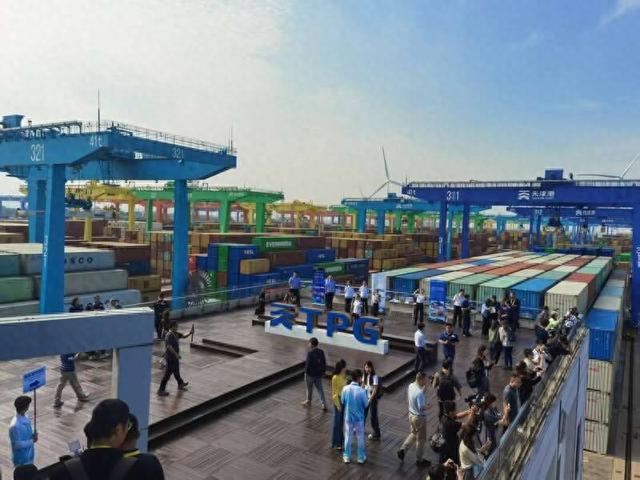
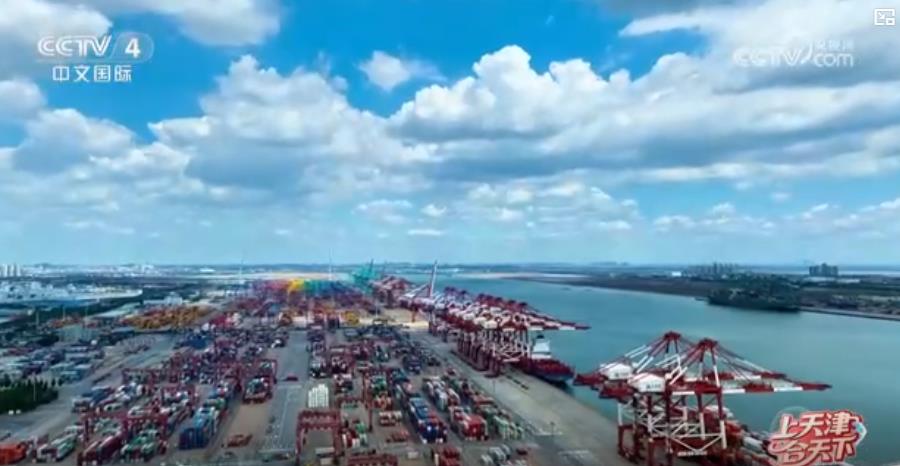
天津港无人码头引上合记者团惊叹
21世纪经济报道· 2025-08-31 14:28
Core Insights - Tianjin Port has achieved a leading position globally with its "smart zero-carbon" terminal, utilizing fully automated operations and advanced technologies to enhance efficiency and reduce carbon emissions [1][2]. Group 1: Operational Efficiency - The Tianjin Port's second container terminal recorded a historical peak operational efficiency of 329 boxes per hour during docked operations and 416 boxes per hour at peak times [2]. - From January to May this year, the port handled a cargo throughput of 207 million tons, marking a year-on-year increase of 1.1%, and a container throughput of 9.931 million TEUs, reflecting a growth of 3.7% [2]. Group 2: Environmental Sustainability - The terminal operates on a "wind-solar-storage" integrated green energy system, achieving 100% electricity usage from renewable sources, resulting in zero carbon emissions throughout its operations [2]. - International journalists have expressed admiration for the port's zero carbon emissions and advanced technology, highlighting its leadership in sustainable port operations [2][3]. Group 3: International Relations and Perception - As an international hub, Tianjin Port maintains close shipping ties with numerous countries, showcasing China's technological prowess and economic vitality during the Shanghai Cooperation Organization (SCO) summit [3]. - Journalists from various countries have noted the impressive scale and efficiency of the port, emphasizing its role in enhancing international cooperation and regional development [3].


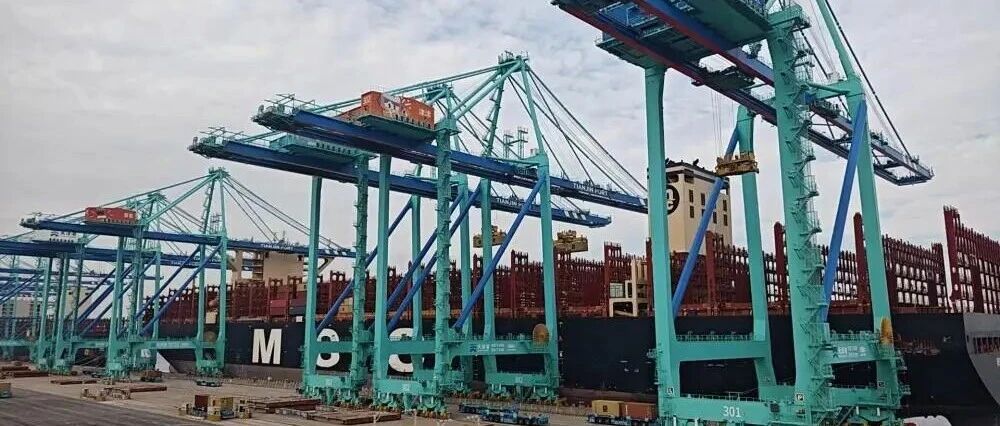
天津港以“智慧零碳”码头建设世界一流港口
Zhong Guo Qing Nian Bao· 2025-08-31 07:29
Core Viewpoint - Tianjin Port is transforming into a "smart zero-carbon" terminal, leveraging advanced technologies such as autonomous driving and 5G to enhance operational efficiency and sustainability [1][3][6]. Group 1: Technological Advancements - The "smart zero-carbon" terminal at Tianjin Port was completed in 2021 and features three 200,000-ton berths, achieving the highest level of full-process automation and intelligent container operations globally [6]. - The terminal utilizes a "wind-solar-storage integrated" green energy system, which operates entirely on self-produced green electricity, ensuring zero carbon emissions throughout its operations [6]. - Over 100,000 sensors have been installed, creating a fully interconnected Internet of Things (IoT) platform that enhances operational intelligence from "interconnected devices" to "intelligent devices" [8]. Group 2: Strategic Importance - Tianjin Port serves as a critical junction for the "Belt and Road" initiative and the New Eurasian Land Bridge Economic Corridor, maintaining trade relations with over 180 countries and regions and more than 500 ports globally [1][3]. - The port boasts over 200 square kilometers of land area and more than 200 berths, positioning it as one of the highest-rated artificial deep-water ports in the world [5].
中国“智慧”助力上合合作加速向“新” 科技成果更好惠及各国人民
Yang Shi Wang· 2025-08-31 06:40
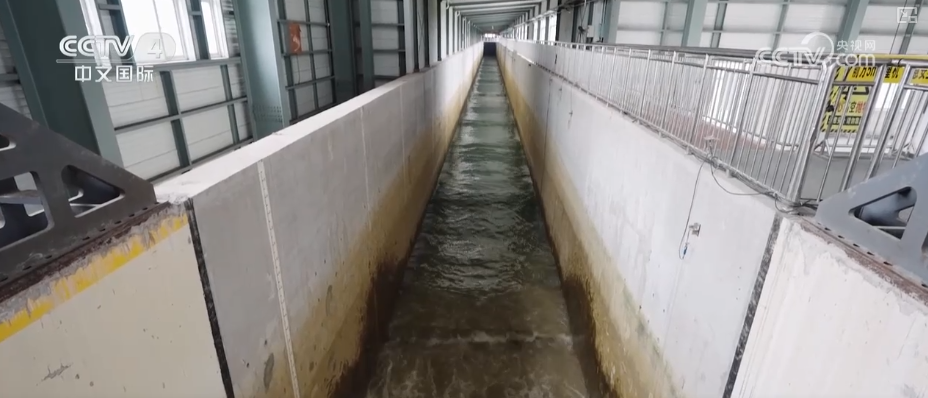
Core Viewpoint - Strengthening technological cooperation is a key aspect of collaboration between China and Shanghai Cooperation Organization (SCO) countries, with Tianjin leveraging its rich scientific and educational resources to advance frontier technology and technical cooperation with SCO nations [1][2][4]. Group 1: Technological Collaboration - The establishment of a joint laboratory for green ecological port construction between China and the UAE focuses on disaster prevention and mitigation in port coastal engineering and comprehensive environmental management [2]. - The Tianjin Water Transport Engineering Research Institute has developed a large-scale wave tank capable of simulating extreme weather conditions for testing the stability of port structures under various sea conditions [1][2]. - Recent projects include a 500,000-ton polypropylene project in Kazakhstan and a 1,600 MW combined cycle power plant in Uzbekistan, showcasing China's technological contributions to SCO member states [4]. Group 2: Future Directions - Tianjin aims to expand cooperation with SCO countries in smart technology, life sciences, and low-carbon technology, enhancing the breadth and depth of technological collaboration [7]. - The focus will be on ensuring that technological achievements benefit the peoples of all participating countries [7].
上合组织国家加强互联互通 从天津港这个智慧码头说起
Yang Shi Xin Wen Ke Hu Duan· 2025-08-30 23:21
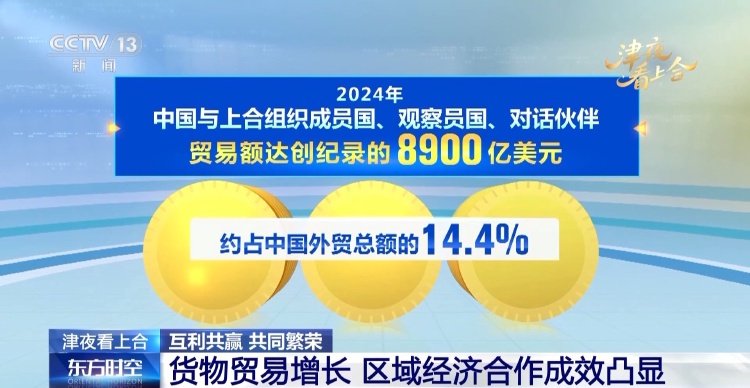
Group 1: Shanghai Cooperation Organization (SCO) Summit - The 2025 Shanghai Cooperation Organization Summit will be held in Tianjin from August 31 to September 1, marking China's fifth time hosting the summit and the largest since the organization's establishment [1] - The SCO has developed into a significant international organization over 24 years, representing about half of the world's population and a quarter of the global economy [3] - In 2024, trade between China and SCO member states, observer countries, and dialogue partners reached a record $890 billion, accounting for 14.4% of China's total foreign trade [3] Group 2: Tianjin Port as a Hub - Tianjin Port is actively playing its role as an international hub, with 11 container ships from SCO countries docking this week, making it a key gateway for trade with SCO nations [4] - The port has become a world-class international hub, showcasing its development achievements during the "World Mayors Dialogue - SCO Summit Cities" event [6] - The port's operations are now highly automated, utilizing AI transport robots and automated cranes, significantly reducing the need for manual labor and increasing efficiency [8][10] Group 3: Green and Smart Port Initiatives - Tianjin Port is recognized for its green initiatives, including wind and solar energy generation, with over 220 high-power charging stations and nearly 50 shore power systems for vessels [12][14] - The port's shore power is 100% sourced from renewable energy, contributing to its reputation as a green development model [14] Group 4: Trade Growth with SCO Countries - Trade between China and other SCO member states has been consistently increasing, with goods trade exceeding $290 billion in the first seven months of this year [17] - The port has established shipping trade relations with over 500 ports in more than 180 countries and regions, enhancing international logistics channels with SCO countries [15] Group 5: Agricultural Trade and Cooperation - Agricultural trade among SCO member states is becoming a new growth point, with China importing high-quality agricultural products from Kazakhstan [19][21] - The establishment of the "SCO Agricultural Technology Exchange Training Base" in Kazakhstan highlights the collaborative efforts in agricultural technology and trade [21] - In the first seven months of 2025, China's import and export volume with SCO countries via land transport reached 677.4 billion yuan, with a year-on-year increase of 7.4% [27]
营收149亿元,净利润近26亿元,宁波舟山港股份上半年业绩稳健增长
Zheng Quan Shi Bao Wang· 2025-08-29 09:32
Core Insights - Ningbo Zhoushan Port Co., Ltd. reported a revenue of 14.915 billion RMB for the first half of 2025, marking a year-on-year increase of 3.06%, and a net profit attributable to shareholders of 2.597 billion RMB, up 16.37% year-on-year [1] - The company announced its first interim dividend plan, proposing a cash dividend of 0.30 RMB per 10 shares, totaling approximately 584 million RMB [1] Group 1: Operational Performance - The company achieved a cargo throughput of 601 million tons in the first half of 2025, reflecting a year-on-year growth of 4.7%, with container throughput reaching 25.468 million TEUs, an increase of 9.8% [2] - The company successfully mitigated the impact of unilateral tariff policies from the U.S. government, leading to stable growth in container throughput [2] - The company maintained stable performance in bulk cargo operations, with liquid oil throughput at 15.81 million tons, up 1.0%, and automobile handling volume at 270,000 units, increasing by 4.1% [2] Group 2: Service Optimization and Efficiency - The company improved service efficiency, reducing the average waiting time for container vessels by 7.32% and increasing average berth efficiency by 7.46% [3] - The company implemented various measures to enhance port convenience, resulting in a monthly increase in the pre-inspection pass rate for incoming vessels [3] - The company adjusted its route network, completing 34 route adjustments and adding 3 new routes, bringing the total to 308 [3] Group 3: Technological and Green Initiatives - The company made significant progress in smart port construction, achieving operational efficiency improvements through automated systems and AI technology [4] - The company is committed to green transformation, with the Jiaxing Port District's Dushan Terminal recognized as the first four-star green general terminal in the country [4] Group 4: Investment and Management - The company established subsidiaries in Singapore and Japan to enhance its global market influence and completed key projects such as the Jinrong Railway container handling station [5] - The company is focused on refining internal management and enhancing legal compliance and risk management systems [6] - The company aims to leverage opportunities and improve operational quality and service brand influence in the second half of 2025 [6]

上港集团上半年实现扣非净利润73.69亿元 拟每10股派0.5元
Zheng Quan Shi Bao Wang· 2025-08-28 13:08
Core Viewpoint - Shanghai Port Group reported a slight decline in revenue and net profit for the first half of 2025, but showed growth in cash flow and non-recurring net profit, indicating resilience in operations despite external challenges [1][3]. Financial Performance - The company achieved an operating revenue of 19.569 billion yuan, a year-on-year decrease of 1.35% [1]. - Net profit reached 8.040 billion yuan, down 4.47% year-on-year [1]. - Non-recurring net profit was 7.369 billion yuan, reflecting a year-on-year increase of 2.10% [1]. - Net cash flow from operating activities was 6.285 billion yuan, up 46.75% year-on-year, primarily due to increased cash receipts from sales and reduced tax payments [1]. Operational Highlights - The company's container throughput at its home port reached 27.065 million TEUs, a year-on-year increase of 6.1%, maintaining its position as the world's largest port for 15 consecutive years [1]. - The Yangshan Port area handled 14.056 million TEUs, a 7.5% increase, accounting for 51.9% of the total throughput [1]. - Total cargo throughput was 297 million tons, up 1.2% year-on-year, while bulk cargo throughput decreased by 8.9% to 40.193 million tons [1]. Strategic Initiatives - The company is focusing on "seeking progress while maintaining stability, strengthening fundamentals, innovating breakthroughs, and lean management" to drive business development [1]. - Significant progress in the construction of the logistics system, with a 19.4% increase in sea-rail intermodal transport, completing 510,000 TEUs [2]. - Major engineering projects are underway, including the second phase of the Luojing Port area renovation and the expansion of the Yangshan deep-water port [2]. Technological Advancements - The automation rate at Shanghai Port is improving, with the launch of the first fully automated terminal combining unmanned and manned operations [3]. - The company is advancing its digital transformation with projects like F5G ultra-remote control and smart heavy trucks, enhancing operational efficiency and safety [3]. - The company received multiple awards at the 8th Shanghai International Invention Exhibition, achieving a record high in participation and accolades [2]. Dividend Announcement - The company plans to distribute a cash dividend of 0.5 yuan per share (before tax), totaling 1.164 billion yuan [3]. Industry Outlook - Despite uncertainties in foreign trade, China's import and export activities remain stable, with continued growth in port throughput, particularly in foreign trade container volumes [3]. - Long-term, the global economic landscape is influenced by geopolitical conflicts and trade frictions, but the fundamentals of the Chinese economy remain strong, fostering new trade corridors and increasing regional trade importance [3].

上天津 合天下丨智慧港口 绘就港产城新画面
Yang Shi Wang· 2025-08-28 09:06
Core Viewpoint - Tianjin Port is a crucial maritime gateway in northern China, facilitating the integration of port, industry, and city development, thereby enhancing the local economy and providing convenience to the public through smart port technologies [1][3]. Group 1: Port Development - Tianjin Port is positioned as a key node in the Belt and Road Initiative and multimodal transport, with over 10,000 vessels arriving and departing annually [1]. - The port features 213 berths, 147 container shipping routes, and 66 Belt and Road routes, with a projected container throughput of over 24 million TEUs this year [3]. - The second-generation smart tugboats at Tianjin Port can autonomously dock, navigate, and avoid collisions, significantly improving operational efficiency and safety [3]. Group 2: Economic Impact - The marine economy in Tianjin has surpassed 400 billion yuan, with industries such as marine equipment, green petrochemicals, new energy, cross-border e-commerce, and marine tourism thriving [5]. - The port's economic model is evolving from a "channel economy" to a "port economy," indicating a shift towards more value-added activities [5]. Group 3: Urban Integration - The integration of port, industry, and city is enhancing urban vitality, with the port serving as a core, industries as support, and the city as a carrier [6]. - In 2023, Tianjin's international cruise port welcomed 120 cruise ships, bringing over 200,000 tourists, which reflects the city's growing appeal as a travel destination [8]. - The development of comprehensive services for tourists, including dining and cultural experiences, is contributing to a more vibrant urban life [8].
迈向智能化 港口更“聪明”
Da Zhong Ri Bao· 2025-08-28 02:47
Core Insights - The article highlights the technological advancements and automation initiatives at Yantai Port, showcasing its transformation into a smart port with enhanced operational efficiency and customer service. Group 1: Automation and Efficiency - Yantai Port has implemented AGV (Automated Guided Vehicle) technology for vehicle handling, significantly increasing operational efficiency and alleviating driver shortages, with efficiency improvements measured in multiples [1] - The introduction of multi-thread radar on AGVs has improved vehicle retrieval efficiency by 5 seconds per vehicle, translating to nearly 2 additional hours of operational time daily [1] - The port's dry bulk terminal has adopted a fully automated system, resulting in a 21.9% increase in unloading efficiency and a 22.6% increase in loading efficiency [2] Group 2: Digital Transformation - The Yantai Port Supply Chain Comprehensive Service Platform allows customers to upload data via an app, increasing document processing efficiency by 300% and achieving a 98% online processing rate [3] - The platform has optimized inspection and customs release services, enhancing efficiency by 400% through direct data flow to the terminal for verification [3] - A partnership with Huawei has led to the development of a leading digital management platform, facilitating data assetization and operational digitization [3] Group 3: Innovation and Recognition - In 2024, Yantai Port received 144 patents, a 20-fold increase compared to five years ago, and has achieved significant recognition with 52 provincial-level honors, a more than fivefold increase since 2019 [4] - The port has established six provincial-level research innovation platforms, marking a breakthrough in provincial-level scientific research capabilities [4]
天津港:2025年上半年实现营业收入61.78亿元 同比增长4.33%
Zhong Zheng Wang· 2025-08-25 07:09
Core Insights - Tianjin Port reported a revenue of 6.178 billion yuan, a year-on-year increase of 4.33%, and a net profit of 503 million yuan for the first half of 2025 [1] - The company aims for high-quality development by focusing on production operations, market expansion, service upgrades, and collaborative development [1][2] Financial Performance - The total cargo throughput reached 229 million tons, a year-on-year increase of 0.44%, achieving 50.22% of the annual target of 456 million tons [1] - Container throughput was 10.604 million TEU, a year-on-year increase of 1.58%, completing 51.05% of the annual target of 20.77 million TEU [1] Industry Position - Tianjin Port is a key gateway for foreign trade in northern China, maintaining trade relations with over 500 ports in more than 180 countries and regions [2] - The port ranks 7th in cargo throughput and 6th in container throughput among coastal ports in China for the first half of 2025 [2] Strategic Initiatives - The company plans to leverage national strategies such as the Belt and Road Initiative and the development of the Xiong'an New Area to accelerate industrial upgrades and enhance its status as a container hub [2]
天津港上半年营收同比增长4.33%
Zheng Quan Shi Bao Wang· 2025-08-22 15:00
Core Viewpoint - Tianjin Port aims for high-quality development, focusing on production operations, market expansion, service upgrades, and collaborative development to enhance its market presence and operational efficiency [1][2][3] Financial Performance - The company reported a revenue of 6.178 billion yuan, a year-on-year increase of 4.33%, achieving 53.26% of the annual budget of 11.6 billion yuan [1] - The net profit attributable to shareholders was 503 million yuan, with a non-deductible net profit of 535 million yuan, and basic earnings per share of 0.17 yuan [1] Operational Metrics - Tianjin Port handled a cargo throughput of 229 million tons, a year-on-year growth of 0.44%, completing 50.22% of the annual target of 456 million tons [1] - The container throughput reached 10.604 million TEU, up 1.58% year-on-year, achieving 51.05% of the annual goal of 20.77 million TEU [1] Market Strategy - The company focused on key cargo sources through customer seminars and marketing activities, enhancing the effectiveness of its "Four Thousand Action" initiative [2] - It introduced premium shipping routes and optimized internal route layouts, maintaining a total of 147 shipping routes [2] Technological Advancements - Tianjin Port advanced the application of fully hydraulic grab machines and developed specialized lifting tools, improving operational efficiency and reducing risks [2] Risk Management and Compliance - The company implemented dynamic monitoring to manage risks and ensure compliance with related transactions, establishing a comprehensive ESG management framework [2] Market Value Management - Tianjin Port developed a market value management system and a three-year valuation enhancement plan, completing the 2024 cash dividend to improve shareholder returns [2] Future Outlook - The company plans to leverage national strategic opportunities such as the Belt and Road Initiative and the construction of the Xiong'an New Area to accelerate industrial upgrades and enhance its position as a key container hub [3]