生物制药

Search documents
科兴制药(688136),宣布赴香港IPO,冲刺A+H | A股公司香港上市
Sou Hu Cai Jing· 2025-08-24 14:47
Group 1 - The company, Sinovac Biotech, is in discussions with relevant intermediaries regarding the specific progress of its H-share listing, with details yet to be determined [1] - Sinovac Biotech is an innovative international biopharmaceutical company primarily engaged in the research, development, production, and sales of recombinant protein drugs and microbiome preparations [1] - The company focuses on treatment areas such as antiviral, anti-tumor, autoimmune, metabolic, and degenerative diseases, aiming to become a leader in high-quality biopharmaceuticals and serve global patients [1] Group 2 - The stock price opened at 44.27 and reached a high of 63.89, with a closing price of 43.60, reflecting a 3.12% increase [2] - The company has a total share capital of 201 million shares, with a price-to-earnings ratio (TTM) of 89.61 and a price-to-book ratio of 5.32 [2] - The earnings per share is reported at 0.50, with a net asset value per share of 8.36 [2]


赛分科技: 苏州赛分科技股份有限公司2025年半年度报告
Zheng Quan Zhi Xing· 2025-08-18 09:33
Core Viewpoint - Suzhou Sepax Technologies Co., Ltd. reported a significant increase in revenue and net profit for the first half of 2025, indicating strong business growth and operational improvements. Financial Performance - The company achieved operating revenue of RMB 182.63 million, a year-on-year increase of 19.76% compared to RMB 152.49 million in the same period last year [4]. - Total profit reached RMB 62.88 million, up 34.93% from RMB 46.60 million [4]. - Net profit attributable to shareholders was RMB 53.66 million, reflecting a 40.91% increase from RMB 38.08 million [4]. - The net cash flow from operating activities was RMB 35.72 million, a 36.32% increase from RMB 26.20 million [4]. - The company's net assets increased to RMB 1.29 billion, up 18.68% from the previous year [4]. Dividend Distribution - The company plans to distribute a cash dividend of RMB 0.026 per share, totaling RMB 10.83 million, which represents 20.18% of the net profit attributable to shareholders for the first half of 2025 [4]. Industry Overview - The chromatography technology market is experiencing growth, with the global chromatography media market expected to reach USD 8.2 billion in 2025, growing at a rate of 9.76% from 2025 to 2026 [16][17]. - The biopharmaceutical sector is the primary application area for chromatography media, with increasing demand driven by the expansion of antibody, vaccine, and recombinant protein markets [16]. - The Chinese chromatography media market is projected to reach RMB 16.7 billion in 2025, with a growth rate of 22.22% from 2025 to 2026 [19]. Chromatography Technology Applications - Chromatography technology is crucial in the pharmaceutical industry, covering the entire drug development process from research and development to clinical trials and production [10][11]. - Analytical chromatography is widely used for drug analysis and quality control, providing essential data for drug development and ensuring safety and efficacy [10][12]. - Industrial purification processes are vital for producing high-purity pharmaceutical products, with chromatography being a core component of these processes [10][14].
恒瑞医药子公司SHR—7782注射液获得药物临床试验批准
Bei Jing Shang Bao· 2025-08-14 09:13
Core Viewpoint - Heng Rui Medicine announced that its subsidiary, Suzhou Shengdiya Biopharmaceutical Co., Ltd., received approval from the National Medical Products Administration for the clinical trial of SHR-7782 injection, a novel biopharmaceutical for treating advanced solid tumors [1] Group 1 - SHR-7782 injection is a self-developed therapeutic biopharmaceutical that specifically binds to tumor cell surface antigens to kill tumor cells [1] - The drug is intended for the treatment of advanced solid tumors [1] - Currently, there are no similar drugs approved for marketing domestically or internationally [1]

金利华电(300069) - 300069金利华电投资者关系管理信息20250812
2025-08-12 09:06
Group 1: Company Performance and Strategy - The company has announced an investment in a production line for 3 million high-voltage glass insulators to enhance its core business competitiveness [1] - The company aims to focus on its main business while actively seeking quality acquisition opportunities to continuously improve its overall strength [2] - The company reported a profit in the previous two years but has started incurring losses this year, prompting a focus on performance improvement [1] Group 2: Termination of Major Asset Restructuring - The termination of the major asset restructuring was due to the inability of all parties to reach an agreement on key terms within the specified timeframe [3] - The company has stated that the termination will not significantly impact its existing operations and development in the glass insulator sector [2] - The company has no current plans to restart the major asset restructuring but will evaluate potential opportunities based on industry prospects and financial performance [4] Group 3: Investor Communication and Market Response - The company has adhered to information disclosure regulations and promptly fulfilled its obligations following the termination announcement [2] - There was a notable stock price fluctuation on August 6, attributed to high market expectations regarding the restructuring, which the company addressed in its announcements [4] - The company encourages investors to remain rational and aware of market risks following the recent developments [4]

趋势研判!2025年中国生物制药行业政策、发展历程、产业链、市场规模、竞争格局及行业发展趋势分析:行业增长非常强劲,市场规模有望达到4600亿元[图]
Chan Ye Xin Xi Wang· 2025-08-08 01:36
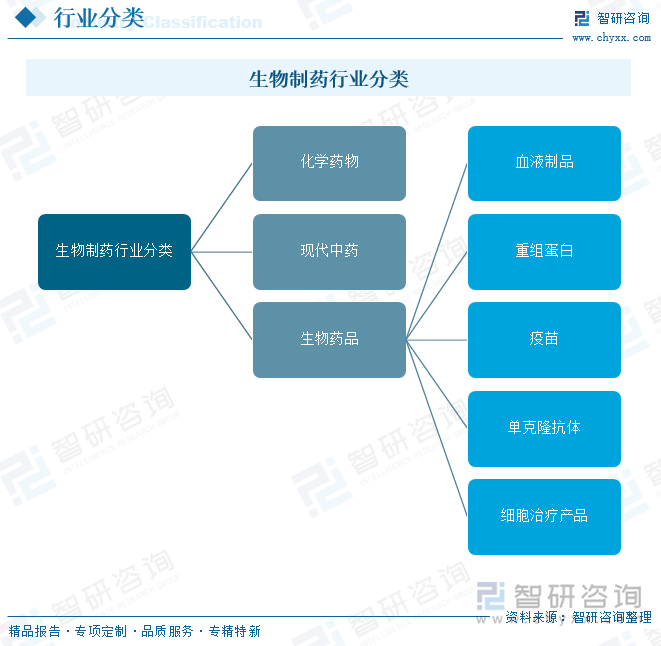
Core Viewpoint - The biopharmaceutical industry in China is rapidly developing, with significant growth expected in market size from 257.65 billion yuan in 2018 to 454.17 billion yuan in 2024, and projected to reach 460 billion yuan by 2025 [1][6][4]. Group 1: Definition and Classification - Biopharmaceuticals are products used for prevention, treatment, and diagnosis, developed using principles from microbiology, biology, medicine, biochemistry, and biotechnology [2][4]. - The biopharmaceutical industry can be categorized into biopharmaceuticals, chemical drugs, and modern traditional Chinese medicine, with biopharmaceuticals further divided into blood products, recombinant proteins, vaccines, monoclonal antibodies, and cell therapy products [2]. Group 2: Current Development Status - The development of the biopharmaceutical industry is closely linked to innovations in biotechnology, with significant advancements since the 20th century [4][6]. - China's biopharmaceutical market is still in its early stages but is experiencing strong growth, with biopharmaceuticals becoming a crucial part of the pharmaceutical sector [6][4]. Group 3: Industry Chain - The upstream of the biopharmaceutical industry consists of raw materials, pharmaceutical equipment, and biotechnology, with raw materials primarily sourced from natural biological materials [8]. - The midstream involves the research and production of biopharmaceutical products, while the downstream focuses on sales channels to medical institutions, diagnostic agencies, research units, and consumers [8]. Group 4: Development Environment and Policies - Recent policies have supported and regulated the development of the biopharmaceutical industry, focusing on improving new drug pricing mechanisms, drug price governance, centralized procurement, and medical service standardization [10][12]. Group 5: Competitive Landscape - The biopharmaceutical industry is a strategic emerging industry in China, with notable companies including WuXi AppTec, HengRui Medicine, and BeiGene, among others [13][15]. - Various segments within the biopharmaceutical industry have seen the emergence of leading companies, such as vaccine producers and diagnostic reagent manufacturers [15][20]. Group 6: Development Trends - There is a strong emphasis on developing new vaccines and improving traditional vaccines to meet global health challenges [25]. - The industrialization of antibody drugs and protein drugs is advancing, with significant roles in treating various diseases [26][27]. - Research and product development in diagnostic and detection technologies for major diseases are increasingly utilizing nanomaterials for enhanced sensitivity and specificity [28].

甘李药业股价上涨1.05% 盘中快速反弹超2%
Jin Rong Jie· 2025-08-06 16:52
Core Viewpoint - Gannee Pharmaceutical's stock price increased by 1.05% to 64.36 yuan as of August 6, 2025, with a notable intraday rebound and a peak of 65.90 yuan [1] Company Overview - Gannee Pharmaceutical specializes in the biopharmaceutical sector, focusing on the research, production, and sales of diabetes treatment drugs, including insulin analogs and human insulin [1] Market Performance - The trading volume on August 6 reached 1.322 billion yuan, with a turnover rate of 3.65% [1] - The net inflow of main funds on August 6 was 69.8268 million yuan, with a cumulative net inflow of 153 million yuan over the past five days [1] - The current total market capitalization of the company is 38.685 billion yuan, while the circulating market value stands at 36.132 billion yuan [1]

千红制药20250806
2025-08-06 14:45
Summary of Qianhong Pharmaceutical Conference Call Company Overview - Qianhong Pharmaceutical was established in 2003 and listed on the Shenzhen Stock Exchange in 2011. The company primarily engages in the production of active pharmaceutical ingredients (APIs) and formulations, including enzyme preparations and heparin products. The company has recently partnered with Muyuan to establish Henan Qianmu, aiming to build a leading global processing and biopharmaceutical base for pig intestinal by-products [4][5]. Key Points Business Performance - In 2024, the revenue from the formulation business is expected to increase to 71%, while the revenue from heparin raw materials is projected to decrease to 29%. This shift is primarily due to a significant drop in heparin raw material prices, which fell from over 50,000 yuan per unit in 2023 to over 20,000 yuan in 2024. However, the gross margin for heparin raw materials improved from 13.37% to 38% [2][7]. - The overall revenue of Qianhong Pharmaceutical grew from 1.3 billion yuan in 2018 to 2.3 billion yuan in 2022. However, due to weak international market demand, revenue is expected to decline in 2023 and 2024. The net profit for 2024 is estimated at approximately 360 million yuan, nearly doubling year-on-year, mainly due to the significant increase in heparin raw material gross margins [6][3]. Future Projections - The "Qianmu" project is set to commence production in July 2025, with a mid-term capacity expected to reach 20 to 30 trillion units, significantly increasing the supply of heparin raw materials and potentially creating a new growth point for the heparin raw material business [2][9]. - The company anticipates a profit of around 400 million yuan in 2025, with a non-GAAP net profit expected to grow by 20% year-on-year. Overall revenue is projected to increase by approximately 10% [3][13]. Acquisitions and Product Development - Qianhong Pharmaceutical acquired 100% of Fangyuan Pharmaceutical for 390 million yuan, gaining access to the antibiotic product, Sulfate Ertapenem, which has a favorable competitive landscape and significant market potential. The sales of this product are expected to recover to peak levels within three to four years, potentially adding 160 million yuan to the company's profits [10][11]. - The in-development product 107 (CDK9 inhibitor) has shown promising results in Phase II clinical trials for acute myeloid leukemia (AML), with a projected domestic sales peak of 1 billion yuan and even larger potential in international markets [12]. Industry Context - The heparin industry is significantly influenced by the inventory levels of pigs and the impact of epidemics, leading to price volatility. It is expected that heparin prices and export volumes will recover and show an upward trend in the future [8]. Management and Ownership Structure - The ownership structure of Qianhong Pharmaceutical is relatively stable, with the chairman, Wang Yaofang, holding approximately 20% of the shares. The management team is primarily composed of professionals with relevant backgrounds, including Wang Yaofang, who is a senior engineer and has received special government allowances since 1992 [5]. Additional Insights - The company’s gross margin for the formulation segment remains stable at around 62%, while the heparin raw material segment has seen a significant increase in gross margin [7]. - The competitive landscape for the antibiotic market is favorable due to limited new approvals, which could enhance market opportunities for Qianhong Pharmaceutical [10].

中国“三新”经济迅猛发展展现蓬勃活力 工业经济运行“向稳向新向优”
Yang Shi Wang· 2025-08-01 05:50
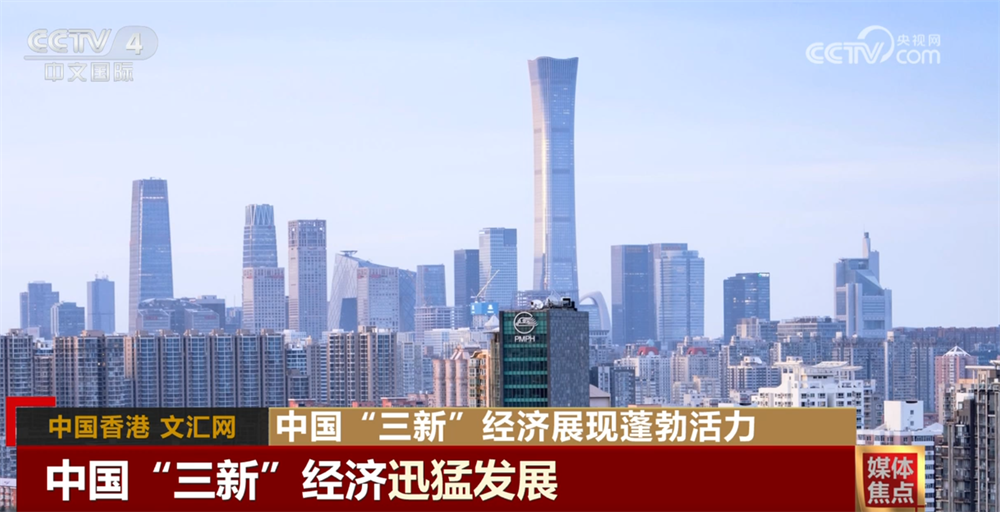
Group 1 - The "Three New" economy in China, which includes new industries, new business formats, and new business models, is projected to contribute 18.01% to GDP in 2024, with a value of 24.29 trillion yuan, reflecting a growth of 6.7% from the previous year [3][2] - The "Three New" economy is generating a significant number of new job opportunities, with the recent release of the seventh batch of new professions and job types in China, including 17 new professions and 42 new job types, particularly in artificial intelligence, drones, and new consumption sectors [3][2] - The development of artificial intelligence is being supported by the establishment of new industry alliances among Chinese companies, aimed at reducing reliance on foreign technology and promoting independent innovation [5] Group 2 - China's industrial economy is advancing towards stability, innovation, and quality, with the establishment of 33 national manufacturing innovation centers and 241 pilot platforms as of mid-2023 [7] - The integration of artificial intelligence into various industries is being accelerated, with a focus on applications in electronics, raw materials, and consumer goods, leading to the emergence of new business models and formats [7] - China is expected to continue releasing economic potential amid global economic challenges, with macro policies focusing on digital transformation, green development, biopharmaceuticals, artificial intelligence, and health care [9]
山东步长制药股份有限公司关于控股子公司药品生产许可证变更的公告
Shang Hai Zheng Quan Bao· 2025-07-31 19:03
Core Viewpoint - The announcement highlights that Sichuan Luzhou Buchang Biopharmaceutical Co., Ltd. has received approval from the Sichuan Provincial Drug Administration to change the production scope of its drug manufacturing license, which is expected to positively impact the company's future operations [1][2]. Group 1: Drug Production License Details - The company Sichuan Luzhou Buchang Biopharmaceutical Co., Ltd. has received a license to change its production scope to include therapeutic biological products, specifically the injection of recombinant anti-vascular endothelial growth factor receptor 2 (VEGFR2) human monoclonal antibody, limited to registration and declaration use [1]. - The license number is 川20220555, and it is valid until February 16, 2027 [1]. Group 2: Impact on the Company - The change in the drug production license is beneficial for the company as it optimizes the production structure and helps maintain stable production capacity to meet market demand [2]. - The high-tech and high-risk nature of pharmaceutical products means that the development and production process is lengthy and complex, which may be influenced by various uncertainties [2].

证券时报×执中重磅发布!《中国城市创投活力及城市创新力指数报告》来了
证券时报· 2025-07-31 03:08
Core Viewpoint - Venture capital has become a crucial lever for local economic development in China, with cities actively enhancing their investment environments and attracting quality investment institutions and innovative enterprises [1]. Group 1: City Venture Capital Activity - The 2024 China City Venture Capital Activity Index ranks Shanghai, Shenzhen, and Beijing as the top three cities, showing a significant lead over other cities [3]. - From 2018 to 2024, the overall trend of city venture capital activity indices has shown a fluctuating decline, with Beijing experiencing the most significant drop from 4302 in 2020 to 2166 [6]. - In terms of fundraising, Beijing ranks first due to its concentration of top financial institutions and national-level funding platforms, followed by Shanghai and Suzhou [8][11]. Group 2: Investment Trends - Shanghai leads the investment index in 2024, with Beijing and Shenzhen following closely behind, indicating a strong investment cluster in the Yangtze River Delta [12]. - The number of investment projects and financing events in Shanghai and Shenzhen accounts for 37% of the total in the top 10 cities, highlighting their roles as innovation engines [14]. Group 3: Exit Efficiency - Shenzhen has the highest exit index, breaking the previous dominance of Beijing and Shanghai in fundraising and investment, showcasing its exit efficiency advantage [15]. Group 4: City Innovation Power - The city innovation power index is closely linked to venture capital activity, with Beijing, Shanghai, and Shenzhen leading in both indices, indicating a symbiotic relationship between innovation and venture capital [19]. - Beijing's innovation power is bolstered by its national laboratories and top universities, while Shanghai benefits from its leading enterprises [20]. Group 5: Sector Concentration - The semiconductor and integrated circuit sector is the dominant investment area across major cities, with significant capital concentration [21]. - In terms of regional characteristics, Beijing leads in artificial intelligence, while Shenzhen excels in computer vision, reflecting the deep integration of local industrial resources and capital choices [22]. Group 6: Investment Activity in Key Cities - In 2024, Suzhou recorded 697 financing events with an estimated total financing amount of 272.67 billion, while Hangzhou had 577 events with 212.47 billion [22][23]. - Shenzhen's venture capital ecosystem is growing, with a notable increase in registered LP contributions, reaching 127.5 billion in 2024 [25].