
三新经济

Search documents
京东首席经济学家沈建光:与“十四五”相比,“十五五”规划有六大关键调整
Sou Hu Cai Jing· 2026-02-02 12:42
Group 1: Economic Outlook and Policy Direction - The 2026 macroeconomic outlook emphasizes the importance of the "15th Five-Year Plan," which marks a shift in policy focus towards economic construction, consumption, and technological development [1][6][17] - Key adjustments in the "15th Five-Year Plan" include a renewed emphasis on balancing economic growth with safety, promoting urban-rural integration, and reforming the fiscal and tax system [1][6][8] - China's economic growth rate has decreased to around 5%, but it remains competitive compared to emerging markets like Vietnam and India, highlighting the need for a focus on maintaining reasonable growth [1][7] Group 2: Monetary and Fiscal Policy Changes - Significant changes in monetary policy now include promoting stable economic development and reasonable price recovery as key considerations, moving away from a sole focus on inflation [2][10] - Fiscal policy is expected to maintain a deficit rate of around 4%, with an emphasis on necessary debt levels and total expenditure [2][10] - The policy aims to optimize existing demand through measures like "trade-in" programs and removing unreasonable restrictions to stimulate consumption [2][11] Group 3: Global Economic Context - The U.S. economy shows signs of weakness, with a cooling job market and a decline in the dollar's reserve status, while the European economy faces multiple challenges, including energy crises [4][15] - Despite a 35% drop in real estate prices over five years, China's economy has shown resilience, supported by advancements in semiconductor equipment, digital economy, and artificial intelligence [4][12] - China's trade surplus is projected to reach $1.2 trillion by 2025, indicating a balanced trade relationship with the U.S. despite ongoing trade tensions [12][16] Group 4: Consumer and Investment Dynamics - The core policy direction for 2026 is to boost consumption, with a significant gap between service consumption in China (18% of GDP) compared to the U.S. (46%), primarily due to urban-rural disparities [4][17] - Investment pressures are evident, with fixed asset investment declining by 12%, although this figure may not accurately reflect the actual investment situation [11][12] - The "15th Five-Year Plan" aims to enhance consumer spending through urban-rural integration and regulatory relaxation, such as in the automotive and yacht sectors [17]

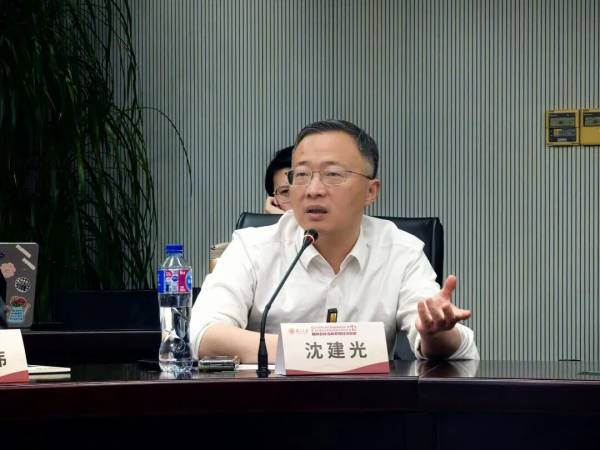
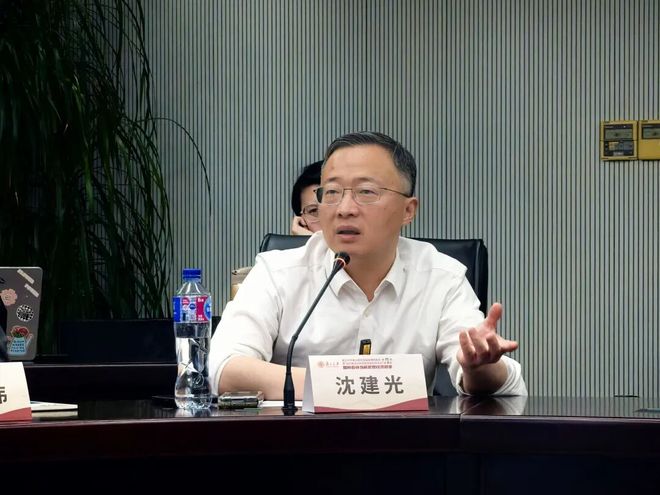
京东首席经济学家:与“十四五”相比,“十五五”规划有六大关键调整
Guan Cha Zhe Wang· 2026-02-02 12:32
Group 1 - The core viewpoint emphasizes the importance of the "15th Five-Year Plan" as a starting point for China's economic policies, highlighting six key adjustments compared to the previous plan, including a renewed focus on economic construction and balanced development [1][7] - The Chinese economy is projected to maintain a growth rate of around 5%, despite a decline from previous high levels, with a focus on consumption, internal circulation, and technological collaboration [1][8] - The policy direction for 2026 includes significant shifts in monetary and fiscal policies, with a new emphasis on stabilizing economic growth and reasonable price recovery [2][11] Group 2 - The analysis of the global economic landscape indicates vulnerabilities in the U.S. economy, including a cooling job market and a declining dollar reserve status, while China's economy shows resilience despite a 35% drop in real estate prices over five years [4][16] - Three main supports for China's economy in 2026 are identified: a rebound in infrastructure investment, resilient exports, and ongoing upgrades in manufacturing [4][18] - The focus on boosting consumption is highlighted as a core policy direction, with a significant gap in service consumption compared to the U.S., attributed to the urban-rural dual structure [4][18][19] Group 3 - The "15th Five-Year Plan" aims to optimize employment, social security, and rural-urban integration, addressing key reforms in these areas [9][10] - The fiscal policy is expected to maintain a deficit rate around 4%, with an emphasis on sustainable growth and necessary spending levels [2][11] - The policy signals a shift towards long-term solutions for real estate risks, with a focus on stabilizing the market and encouraging supply-side reforms [14][19]
本周A股市场涨跌榜:沪指站稳4100点,贵金属、农业等板块接力拉升
3 6 Ke· 2026-01-30 12:51
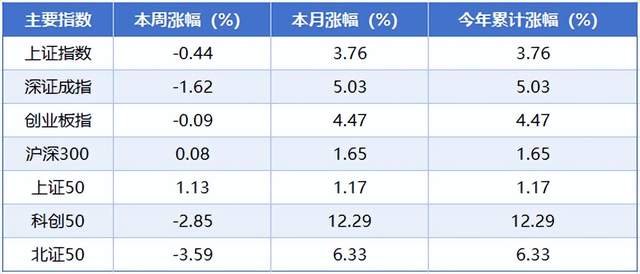
Market Overview - The A-share market indices all closed lower during the week from January 26 to January 30, with the Shanghai Composite Index down by 0.44%, the Shenzhen Component down by 1.62%, and the ChiNext Index down by 0.09% [1] - The average daily trading volume in the Shanghai and Shenzhen markets reached 30,348 billion yuan, showing an increase compared to the previous week, indicating a high level of market activity [4] Index Performance - The Shanghai 50 index showed relative strength with a weekly increase of 1.13%, while the CSI 300 index had a slight gain of 0.08%. In contrast, the North Star 50 and Sci-Tech 50 indices experienced notable declines of 3.59% and 2.85%, respectively [2][3] - For the month, the Sci-Tech 50 index led with a cumulative increase of 12.29%, followed by the North Star 50 and Shenzhen Component indices with increases of 6.33% and 5.03% [2] Sector Performance - The leading sectors for the week included genetically modified organisms, soybeans, combustible ice, corn, and gold concepts, with cumulative increases of 9.01%, 6.47%, 6.04%, 5.92%, and 5.87%, respectively [6][7] - Conversely, the sectors with the largest declines included military information technology, reducers, DRG/DIP, military-civilian integration, and commercial aerospace, with cumulative declines of 7.4%, 7.35%, 7.1%, 6.75%, and 6.75% [8] Individual Stock Highlights - The top five performing stocks for the week were Tongyuan Petroleum, Hunan Gold, Sidik, China Gold, and Xiaocheng Technology, with cumulative increases of 63.04%, 61.08%, 60.03%, 59.22%, and 53.13%, respectively [9][10] - The stocks with the largest declines included Huawai Design, *ST Yunchuang, Guosheng Technology, Tiangong Co., and Zhenstone Co., with cumulative declines of 33.91%, 30.87%, 30.70%, 28.94%, and 27.73% [14][15] Company Business Focus - Tongyuan Petroleum provides comprehensive oilfield services including enhanced oil recovery, drilling and completion technology services, and integrated project services [11] - Hunan Gold is engaged in the mining and processing of gold, antimony, tungsten, and other non-ferrous metals, as well as the import and export of related products [12] - Sidik specializes in precision coating materials and technical solutions [13]





中国展览业稳中有进 经贸类展会数量与面积双增长
Chang Jiang Shang Bao· 2026-01-26 06:07
Core Insights - The Chinese exhibition industry is transitioning from scale expansion to quality enhancement, playing an increasingly significant role in empowering industrial upgrades and promoting international economic and trade cooperation [1][2]. Group 1: Industry Growth - In 2025, the number of trade exhibitions in China is expected to exceed 4,000, with a total exhibition area nearing 160 million square meters, achieving a "double growth" target [2]. - The exhibition industry demonstrates strong resilience, maintaining steady growth in the context of the "14th Five-Year Plan" [1]. Group 2: International Influence - The international influence of China's exhibition industry continues to rise, with the China Council for the Promotion of International Trade approving 1,259 exhibitions in 57 countries, covering a net exhibition area of 684,000 square meters and involving 47,700 participating companies, marking a year-on-year growth of 7.98% [3]. Group 3: Regional Development - The share of exhibitions in the central and western regions of China has increased to 30%, with events like the Wuhan Optics Valley Expo and Chengdu Western Expo becoming new engines for regional economic development [2]. Group 4: Government Support - Local governments are actively implementing policies to support the exhibition industry, enhancing financial support, industry linkage, brand cultivation, and standardized management to stimulate market vitality and promote social consumption [2]. Group 5: Major Exhibition Platforms - National-level large exhibition platforms are becoming significant windows for international engagement, with the third China International Supply Chain Promotion Expo attracting participation from 75 countries and regions, showcasing concentrated innovative achievements and highlighting the collaborative effects of the industrial chain [2].
我国经贸类展会数量与面积均创历史新高
Xin Hua She· 2026-01-23 11:04
Group 1 - The core viewpoint of the report is that China's exhibition industry is set to achieve record growth in 2025, with 4,095 trade exhibitions and a total exhibition area of 159 million square meters, representing year-on-year increases of 6.53% and 2.5% respectively [1] - The report attributes the robust development of the exhibition industry to several supporting factors, including the transition of the Chinese economy towards higher quality, which lays a solid foundation for the industry's high-quality growth [1] - The "Three New" economy, focusing on new industries, new business formats, and new models, continues to inject momentum into the exhibition industry [1] Group 2 - Local government support for the exhibition industry has been increasing, further promoting quality upgrades within the sector [1] - National-level large exhibitions are playing a significant role as open windows for international cooperation, exemplified by the third China International Supply Chain Promotion Expo, which attracted participation from 75 countries and regions [1] - The China Pavilion at the Osaka Expo received nearly 2 million visitors and won a gold award for large self-built pavilion displays, highlighting the international influence of China's exhibitions [1][2] Group 3 - The overseas exhibition market is also experiencing stable development and structural optimization, significantly contributing to the high-quality development of foreign trade [2] - In 2025, the China Council for the Promotion of International Trade approved 1,259 exhibitions in 57 countries, with a net exhibition area of 684,000 square meters and participation from 47,700 enterprises [2] - The China International Cooperation Forum on Exhibition Economy, established in 2005, has been held in 20 cities, with the current forum themed "Transformative Era: Co-creating Links, Innovating the Future" [2]
2026年中国创新增量在哪里?
Xin Lang Cai Jing· 2026-01-22 10:20
Core Insights - The new economy, represented by technological innovation, has surpassed 18% of GDP, with new growth engines accelerating in strategic emerging industries, future industries, and the digital and AI transformation of traditional industries [3][4][25]. Group 1: Technological Innovation and Economic Growth - China aims to become an innovative power, with R&D expenditure reaching over 3.6 trillion yuan in 2024, accounting for 2.8% of GDP, approaching developed countries' average of 3.2% [4][26]. - The "three new" economies (including nine categories of new industries) accounted for 18.01% of GDP in 2024, an increase of 0.43 percentage points from the previous year, with a total value of 24.3 trillion yuan, growing by 6.7% [4][26]. - The government plans to expand investment in technology innovation and create a supportive ecosystem for scientific research and financial policies by 2026 [4][26]. Group 2: Strategic Emerging Industries - Strategic emerging industries are categorized into nine new industries, including new generation information technology, biotechnology, new energy, new materials, high-end equipment, new energy vehicles, green environmental protection, aerospace, and marine equipment [5][27]. - The "15th Five-Year Plan" emphasizes accelerating the development of strategic emerging industry clusters, particularly in new energy, new materials, and low-altitude economy [9][31]. Group 3: Future Industries and Market Potential - Future industries, such as brain-computer interfaces and embodied intelligence, are in early stages but show significant market potential, with predictions indicating the embodied intelligence market could exceed one trillion yuan by 2035 [14][36]. - The focus is shifting from technological novelty to commercial certainty in embodied intelligence applications across various sectors [14][36]. Group 4: AI Transformation in Traditional Industries - AI is transforming traditional manufacturing and service sectors, enhancing productivity, quality, and value addition [19][41]. - The core AI industry in China is projected to exceed 900 billion yuan in 2024, with a growth rate of 24%, and is expected to surpass 1.2 trillion yuan in 2025 [22][44]. Group 5: Investment and Financing Strategies - A multi-tiered financing service system is recommended to support innovation, including the establishment of a national-level intellectual property assessment center and a technology credit system [39]. - The National Venture Capital Guiding Fund, launched in late 2025, aims to invest in early-stage, small, and long-term hard technology projects, with a total funding of 100 billion yuan [40].

(经济观察)产业结构优化彰显中国经济动能
Xin Lang Cai Jing· 2026-01-19 15:07
Group 1: Economic Growth and Structural Optimization - In 2025, China's GDP is projected to grow by 5.0% compared to the previous year, with a significant shift towards optimizing industrial structure, injecting new momentum into economic growth [1] - The "Three New" economy, focusing on new industries, new business formats, and new models, is expected to account for 18.01% of GDP in 2024, maintaining a high level in 2025 [1] - The automotive industry is projected to maintain its global leadership in production, sales, and exports, with new energy vehicles expected to account for over 50% of domestic new car sales [1] Group 2: Green Transition - By 2025, clean energy sources such as hydropower, nuclear power, wind power, and solar energy are expected to see an 8.8% increase in generation from the previous year, with non-fossil energy consumption rising by approximately 2 percentage points [2] - The green transformation of traditional industries is yielding significant results, with major energy-consuming sectors like construction materials, steel, and non-ferrous metals showing a notable decrease in energy consumption per unit of added value [2] - New energy vehicle production is anticipated to exceed 16 million units, maintaining global leadership in production and sales for 11 consecutive years [2] Group 3: Future Industries - 2025 is viewed as the year of artificial intelligence, with rapid advancements in future industries, particularly in AI, which is becoming a core driver for new productive forces and new market opportunities [3] - The integration of 5G technology is expected to cover 86 out of 97 sectors of the national economy, while industrial internet applications will comprehensively cover 41 industrial categories, enhancing value in the real economy [3] - Future industries such as advanced manufacturing, information technology, materials, energy, space, and health are identified as key areas for breakthrough developments during the 14th Five-Year Plan period [3]
国家统计局:“三新”经济增加值占GDP比重已经升到18%
Jin Rong Jie· 2026-01-19 04:44
Group 1 - The core viewpoint of the article highlights that during the "14th Five-Year Plan" period, the annual growth rate of R&D expenditure in China is projected to be 10%, with basic research funding expected to reach a historical high of 7.08% by 2025 [1] - China has maintained its position as the world's leader in the number of top 100 technology innovation clusters for three consecutive years [1] - The innovation index in China is expected to increase by 25.5% from 2020 to 2024, with both the innovation environment and innovation output indices growing by 33.8% [1] Group 2 - The contribution of the "three new" economy to GDP has risen to 18%, while the value added by patent-intensive industries has increased to 13.38% of GDP [1] - The development of new-generation information technologies, such as artificial intelligence, is thriving, with the proportion of computer, communication, and electronic equipment in enterprise production processes increasing by approximately 1 percentage point, significantly higher than during the "13th Five-Year Plan" period [1] - By 2024, the value added of China's digital economy is projected to account for 33.1% of GDP, with the core industries of the digital economy contributing 10.5% [1]
释放消费潜力需拆除不合理限制“篱笆”
Xin Lang Cai Jing· 2026-01-14 19:42
Core Viewpoint - China's economy is undergoing a critical transformation, with consumption emerging as a key driver for growth and stability. However, unreasonable restrictions in the consumption sector hinder the full release of consumption potential, necessitating the urgent need to eliminate these limitations as outlined in the 2025 Central Economic Work Conference [1]. Group 1: Consumption Restrictions - Many restrictions in the consumption sector were established based on past safety or industry management needs, but they no longer align with current development requirements, becoming "invisible barriers" that stifle market vitality [1]. - Specific sectors like automobiles and housing still face unreasonable policy constraints, such as car purchase limits in cities that were originally intended for traffic and environmental considerations, which now need to be optimized to meet the demands of carless families [1]. - In the housing sector, the demand for new citizens and the trend of smaller family structures contradict existing purchase restrictions and household registration systems, indicating a need for policy updates [1]. Group 2: Reform Efforts - Some cities have begun reforms in these areas, showing initial positive results, such as Tianjin's allocation of 30,000 car purchase permits for carless families, which has boosted new car sales [2]. - Beijing's adjustments to real estate policies led to a significant increase in new residential property transactions during the New Year period, indicating a recovery in the second-hand housing market [2]. Group 3: Shift in Consumption Structure - China's consumption structure is shifting from goods-based to service-oriented, creating new scenarios, business models, and market opportunities [2]. - Experts identify three types of unreasonable restrictions in new service sectors: administrative, technical, and market-related, which need to be addressed to foster a more adaptable management approach for the "three new" economy [2]. Group 4: Consumer Empowerment - The removal of restrictions is essential for enabling consumers to "consume," "want to consume," and "dare to consume," with policies like credit restoration and public fund reforms enhancing consumer confidence and spending capacity [3]. - Implementing paid staggered vacations and adjusting holiday arrangements can increase disposable consumer time, directly creating more opportunities in tourism, dining, and other sectors [3]. - The trend of domestic consumption upgrading remains unchanged, with even a small percentage increase in consumption potentially unlocking vast market potential, emphasizing the need to dismantle unreasonable restrictions in the consumption sector [3].
财政、货币政策协同发力 经济延续复苏态势
Zheng Quan Ri Bao· 2026-01-04 23:19
Core Viewpoint - In 2026, China's economy is expected to experience a structural adjustment with a focus on sustainable growth, supported by proactive fiscal and monetary policies [2][3][4]. Economic Growth and Indicators - The overall economic performance in 2025 laid a solid foundation for 2026, with GDP growth expected around 5.1% for 2025 [2]. - The Purchasing Managers' Index (PMI) for December 2025 showed manufacturing PMI at 50.1%, non-manufacturing PMI at 50.2%, and a composite PMI at 50.7%, indicating a recovery in economic sentiment [2]. Structural Adjustments - The "three new economies" (new industries, new business formats, new models) are projected to surpass the real estate economy in GDP contribution for the first time in 2026 [3]. - The focus for 2026 will shift towards structural adjustments rather than just quantitative growth, with policies aimed at enhancing consumption patterns and boosting consumer confidence [3]. Fiscal Policy - The central economic work conference emphasized the continuation of a more proactive fiscal policy, with specific measures including the issuance of long-term special bonds and consumer subsidies [4]. - The first batch of 62.5 billion yuan in special bonds was allocated before the New Year to support consumption during peak seasons [4]. Monetary Policy - The People's Bank of China is expected to implement interest rate cuts of up to 0.3 percentage points in 2026, with potential adjustments occurring before the Spring Festival [5]. - Structural monetary policies will focus on directing financial resources towards technology innovation, manufacturing upgrades, and supporting small and micro enterprises [5][6]. Policy Coordination - Recent policies are designed to address current economic challenges, such as weak domestic demand, while also laying the groundwork for long-term development through investments in new productive forces and social welfare [6]. - The coordinated approach of fiscal and monetary policies aims to stimulate domestic demand and accelerate industrial upgrades [6].