绿电交易

Search documents
2025年4月全国绿证单独交易环比增长63.24%,泉果基金调研江苏新能
Xin Lang Cai Jing· 2025-07-01 07:47
Core Viewpoint - The news highlights the recent research conducted by QuanGuo Fund on Jiangsu XinNeng, focusing on the company's performance in the renewable energy sector and its future project considerations [1] Group 1: Company Performance - In Q1 2025, Jiangsu XinNeng's wind power generation was 877 million kWh, a year-on-year decrease of 17.19% due to poor wind conditions [1] - The company has participated in green electricity trading, with a trading volume of approximately 460,000 kWh at a price of 0.43 yuan/kWh in 2024 [1] - The average self-consumption ratio of the company's distributed photovoltaic projects exceeds 70%, with no restrictions on surplus electricity fed into the grid [1] Group 2: Market Conditions - In the Jiangsu electricity market, the weighted average price for wind power was 407.03 yuan/MWh, while for photovoltaic it was 407.59 yuan/MWh, compared to 413.15 yuan/MWh for thermal power and 409.66 yuan/MWh for nuclear power [1] - As of April 2025, the average trading price for green certificates was 2.31 yuan per certificate, reflecting a 63.24% increase month-on-month [1] Group 3: Future Considerations - The company will consider project costs, electricity prices, and local consumption levels when developing new renewable energy projects [1] - Emphasis will be placed on project site selection and equipment choice to ensure technical reliability and economic feasibility [1]

广西年度绿电交易首破百亿千瓦时大关
Zhong Guo Xin Wen Wang· 2025-07-01 00:34
Group 1 - The core viewpoint of the articles highlights the significant growth in green electricity trading in Guangxi, with a total trading volume reaching 100.05 billion kilowatt-hours, marking a year-on-year increase of 103.53% [1] - Since the launch of green electricity trading in 2022, Guangxi has seen a substantial increase in trading volume, with 36 batches of green electricity transactions conducted this year [1] - The average trading price of green electricity has decreased by 26.86% year-on-year, allowing users to purchase green electricity at lower costs while obtaining corresponding consumption certifications [1] Group 2 - The Southern Power Grid Guangxi Electric Power Company plans to invest over 14.5 billion yuan in 315 key transmission and transformation projects this year, including the construction of wind power projects [2] - The company has successfully facilitated the trading of 3.4 million kilowatt-hours of green electricity through its electric vehicle service subsidiary [2] - Future plans include further research into market trading rules for renewable energy and improving the connection between green electricity and energy markets [2]
北京碳市场联动绿电交易,重点碳排放单位成为绿电消纳主力
Xin Jing Bao· 2025-06-25 03:09
Group 1 - The core event of the "National Low Carbon Day" was held in Beijing, focusing on the linkage between the carbon market and green electricity trading, with key carbon emission units becoming the main consumers of green electricity [1] - Beijing's carbon market has been operational for 11 compliance cycles, with the average online transaction price of carbon emission allowances rising from approximately 50 yuan per ton at the start to 111 yuan per ton by 2024 [1] - Approximately 900 key carbon emission units are managed under Beijing's carbon market, covering industries such as electricity, cement manufacturing, petrochemicals, thermal supply, public transportation, and other industrial and service sectors, with a total carbon emission volume of about 45 million tons [1] Group 2 - Companies consuming green electricity can receive around 0.06 yuan compensation per kilowatt-hour, resulting in a net benefit of approximately 0.04 yuan after offsetting about 0.02 yuan of the incremental cost of green electricity [2] - The local carbon market primarily distributes carbon emission allowances for free, supplemented by paid allocations to promote healthy market operation and signal the cost of carbon emissions [2] - Since 2022, the introduction of paid competitive bidding for carbon emission allowances has increased market liquidity and activity, contributing to the healthy functioning of the carbon market [2]
五大电力上市公司碳排放量发布,大唐发电、中国电力上升 | ESG信披洞察
Xin Lang Cai Jing· 2025-06-23 06:05
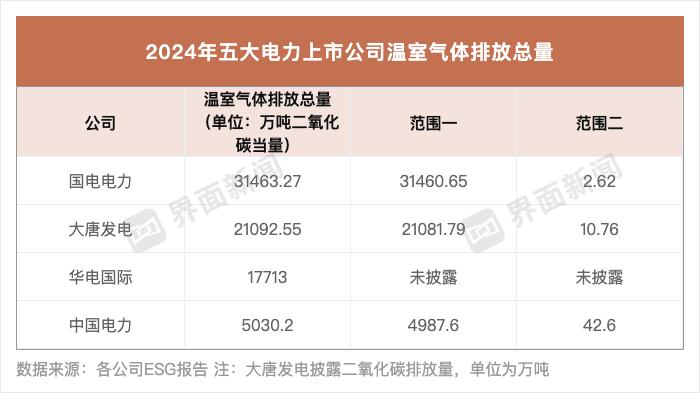
Core Viewpoint - The power industry plays a crucial role in the global energy system, with significant impacts on climate change, energy transition, and environmental quality. Major Chinese power companies have released their 2024 ESG reports, highlighting their greenhouse gas emissions and sustainability efforts [1]. Group 1: Greenhouse Gas Emissions - Three companies disclosed their total greenhouse gas emissions, with China Guodian Power leading at 31,463.27 thousand tons of CO2 equivalent, showing an 11.7% decrease from the previous year [2][3]. - Datang Power reported total emissions of 21,092.55 thousand tons of CO2 equivalent, a 7% increase year-on-year, primarily due to a rise in Scope 1 emissions [5]. - China Power's total emissions were the lowest at 5,030.2 thousand tons of CO2 equivalent, reflecting a 2.4% increase, with a significant 43% rise in Scope 2 emissions attributed to increased electricity purchases [3][5]. Group 2: Clean Energy Capacity - China Power has the highest clean energy capacity ratio at 80.12%, while Datang Power, Huaneng International, and Guodian Power have ratios of 40.37%, 35.82%, and 33.19% respectively [7][8]. - Huaneng International's total installed capacity is 14,512.5 million kW, followed by Guodian Power at 11,170 million kW, Datang Power at 7,911 million kW, and China Power at 4,939 million kW [8]. Group 3: Environmental Investments - Huaneng International invested the most in environmental protection at 1.78 billion yuan, followed by Huaneng International at 1.087 billion yuan, Datang Power at 747.9 million yuan, and Guodian Power at 730 million yuan [10]. - China Power had the lowest investment in environmental protection at 594 million yuan [10]. Group 4: Research and Development Investments - Datang Power led in R&D investments with 2.436 billion yuan, followed by Huaneng International at 2.389 billion yuan, and Guodian Power at 977 million yuan [12]. Group 5: Waste Management - China Power reported the highest hazardous waste generation at 128,000 tons, while Guodian Power significantly reduced its hazardous waste to 860 tons from 551,700 tons the previous year [14]. - Huaneng International reported hazardous waste generation of 610 tons, while Datang Power did not disclose this data [14]. Group 6: Green Power Trading - China Power sold 13.6119 million green certificates and participated in green electricity trading generating 5.198 billion kWh, resulting in revenue of 325 million yuan [15]. - Guodian Power achieved a historical high in green electricity trading volume at 3.51 billion kWh, with over 2.91 million green certificates obtained [15]. - Datang Power's new renewable energy project is expected to produce over 4.1 billion kWh of green electricity annually, significantly reducing CO2 emissions [15].






远光软件:世邦私募基金投资者于6月19日调研我司
Zheng Quan Zhi Xing· 2025-06-19 10:36
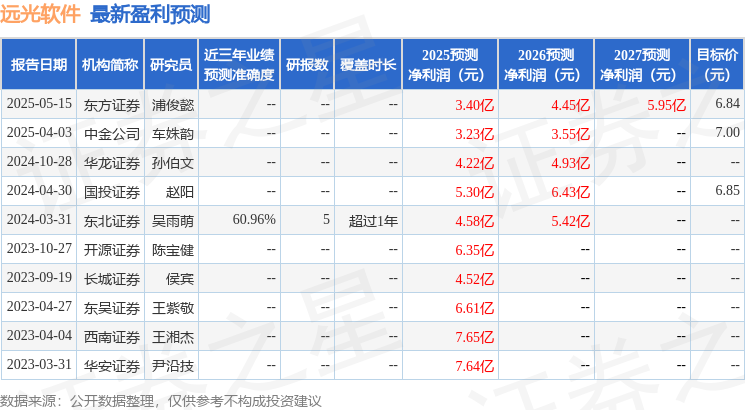
Core Insights - The company is poised to capitalize on three major development opportunities in 2025: the continuous release of digital economy policy dividends, significant momentum for domestic substitution, and the vast market potential of digital platforms for new energy systems [2] Group 1: Development Opportunities - The company aims to leverage the ongoing digital economy policy benefits, enhancing core functions and competitiveness through digital transformation [2] - The domestic substitution trend is gaining traction, with government emphasis on self-innovation and the establishment of a self-controlled industrial supply chain [2] - The digital platform business for new energy systems is expected to grow significantly, driven by the construction of a unified national electricity market and the transition to a carbon emission control mechanism [2] Group 2: Market Expansion - The company has established benchmark projects in various industries outside the electricity sector, including construction, equipment manufacturing, and healthcare, laying a solid foundation for future expansion [3] Group 3: Low-Carbon Business Strategy - The company is developing a comprehensive carbon market service system, offering services such as carbon verification, carbon asset management, and carbon trading [4] Group 4: Artificial Intelligence Initiatives - The company has been researching artificial intelligence since 2015, developing a range of intelligent applications and platforms, including RP robots and smart devices [5] - There is a notable increase in client demand for AI and large model technologies, prompting the company to enhance its AI product development and integration with enterprise management systems [7] Group 5: Impact of Electricity Market Reforms - The deepening of the electricity market is creating complex trading scenarios, necessitating enhanced digital and informational support for market participants [6] Group 6: Financial Performance - The company's Q1 2025 report shows a revenue of 417 million, a year-on-year decrease of 9.47%, while net profit increased by 2.66% to 9.39 million [8] - The company has a debt ratio of 12.03% and a gross margin of 54.39% [8] Group 7: Earnings Forecast - Various institutions have provided earnings forecasts for the company, with projected net profits for 2025 ranging from 340 million to 530 million [9]

6月18日周三《新闻联播》要闻19条
news flash· 2025-06-18 12:15
Group 1 - Multiple financial measures announced to support high-level opening-up [9] - The transaction volume of green electricity in China exceeded 220 billion kilowatt-hours in the first five months [13] - The completion rate of key reform tasks for state-owned enterprises has surpassed 80% [11] Group 2 - International oil prices significantly increased on June 17 due to the situation in the Middle East [17] - U.S. retail sales fell by 0.9% month-on-month in May [19]
前5月绿电交易量超过2200亿千瓦时 同比增长近50%
news flash· 2025-06-18 05:31
Core Viewpoint - The trading volume of green electricity in China exceeded 2,200 billion kilowatt-hours in the first five months of this year, marking a nearly 50% year-on-year growth, indicating a rapid increase in green electricity trading [1] Group 1: Green Electricity Trading - The green electricity trading volume in China surpassed 2,200 billion kilowatt-hours in the first five months of this year, reflecting a significant growth of nearly 50% compared to the same period last year [1] - The China Electricity Council reported that the market-oriented trading electricity volume has increased from 1,100 billion kilowatt-hours in 2016 to 6,200 billion kilowatt-hours in 2024 [1] - The proportion of market-oriented electricity trading in total electricity consumption has risen from 17% to 63%, indicating a major transformation in electricity resource allocation towards a market-driven approach [1]
浙江宁波外贸企业以绿电提升竞争力 绿色产品走俏海外
Ren Min Ri Bao· 2025-06-17 21:43
Core Viewpoint - The company has established a complete green supply chain, utilizing green electricity for both production and transportation, which enhances its market competitiveness and reduces carbon emissions [1][2]. Group 1: Production - The company produces its bamboo products using fully automated production lines powered by wind and solar energy from the northern Zhejiang region [1]. - Last year, the company purchased 3,141 green certificates, providing each product with a "green ID" that accurately tracks its carbon footprint throughout the production process [1]. - The implementation of green electricity has allowed the company to avoid high carbon taxes, which could have consumed 20% of its profits under traditional production methods [1]. Group 2: Transportation - The company utilizes electric container trucks for transporting its products, which operate on a dedicated new energy heavy truck route that includes six charging stations and four battery swap stations [1]. - This transportation route, operational since April of last year, reduces carbon dioxide emissions by 80 kilograms per trip over a distance of 80 kilometers [1]. Group 3: Market Impact - Over 2,000 foreign trade enterprises in Ningbo have enhanced their market competitiveness through the procurement of green certificates [2]. - The scale of green electricity trading in Ningbo has increased by 87% year-on-year in the first four months of this year [2].
借力“时间差”错峰绿电“链”接日光与灯光 电力资源实现“时空腾挪”
Yang Shi Wang· 2025-06-17 07:51
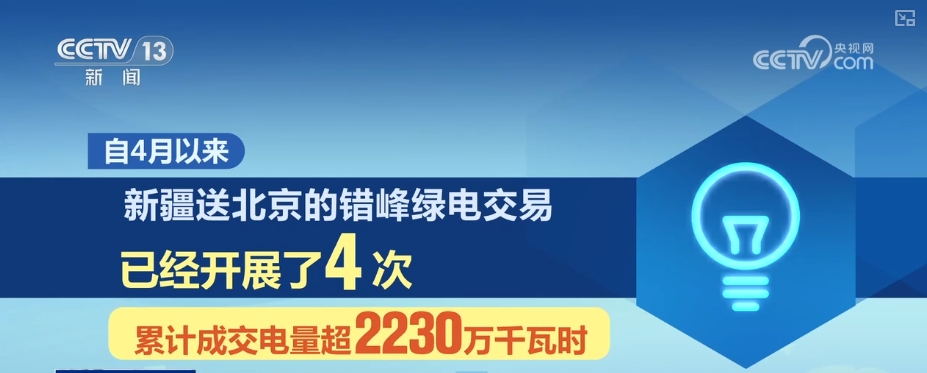
Core Viewpoint - The article discusses the successful implementation of cross-province peak-shifting green electricity trading in China, particularly between Xinjiang and Beijing, highlighting the innovative use of time differences in solar energy generation and electricity consumption to optimize energy distribution [3][22]. Group 1: Green Electricity Trading - The first market-based cross-province peak-shifting green electricity trading in China has been conducted, with four transactions since April, totaling over 22.3 million kilowatt-hours [3][22]. - The trading mechanism leverages the time difference in sunlight between Xinjiang and Beijing, allowing for efficient energy transfer during peak consumption hours in Beijing [6][12]. Group 2: Energy Demand and Supply Matching - Beijing experiences a peak electricity demand starting around 5 PM, coinciding with Xinjiang's solar power generation peak, thus facilitating the transfer of surplus energy from Xinjiang to Beijing [10][12]. - The Beijing Art Center has been utilizing green electricity from Xinjiang, consuming approximately 4,000 kilowatt-hours during peak performance times, which is crucial for their operations [16][18]. Group 3: Future Projections and Trends - The scale of green electricity imported into Beijing is expected to grow, with projections indicating that it will exceed 40 billion kilowatt-hours by 2025 [23]. - The overall national cross-province green electricity trading volume has reached 50 billion kilowatt-hours by April 2025, promoting the optimization of renewable energy across the country [27].
经济日报丨全国统一电力市场建设提速
国家能源局· 2025-06-17 06:51
保持用能成本总体稳定。在近年全球范围内能源供应趋紧、价格大幅波动的背景下,我国通过完善 电价机制、推进市场化交易等措施,保障电价基本稳定。居民和工商业平均电价水平分别为全球50 个主要经济体平均水平的32%、39%,均列第44位,在国际上处于较低水平。 经过一系列政策措施有序推动,改革红利有效释放,电力市场进一步发挥了"保供应、促转型、稳 价格"作用,有力促进了经济社会高质量发展。 助力保障电力供应。电力中长期交易电量占市场化电量比重超90%,充分发挥"压舱石"作用。 2024年迎峰度夏期间,在用电负荷大幅高于往年情况下,依托中长期市场及省间现货市场,跨区 通道最大送电达1.42亿千瓦,最大支援华东、西南1400万千瓦,有效保障经济社会发展用电需 要。 有效促进低碳转型。6月3日起,安徽绿电日挂牌交易进入常态化开展阶段,从多年期到逐日交易, 实现绿电交易全周期覆盖。在安徽铜陵,国网铜陵供电公司主导建设铜陵市虚拟电厂,结合当地高 载能企业占比多、绿电需求大的产业特点,聚合分布式光伏、用户侧储能等6类资源超9万千瓦,积 极参与电力市场交易。 国网铜陵供电公司营销部主任董文杰介绍,公司开展绿电交易试点,构建"中长期 ...