财务造假

Search documents
开年以来10余家会计所被罚,多家卷入A股公司财务造假案
第一财经网· 2026-01-19 12:22
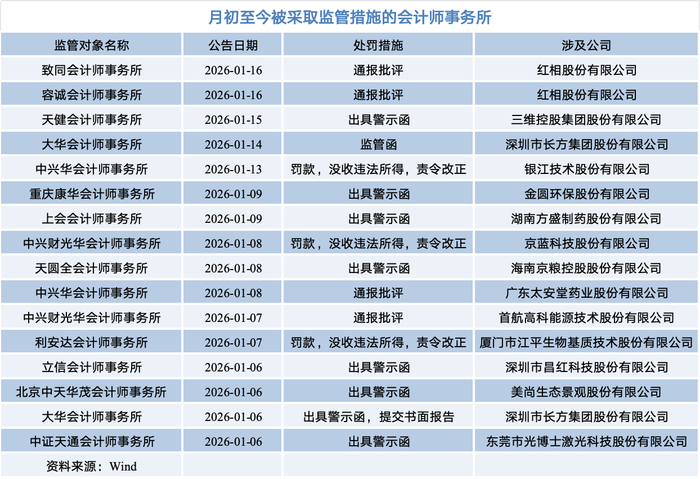
Core Viewpoint - The recent penalties imposed on multiple accounting firms highlight a systemic issue of financial fraud in the Chinese capital market, indicating a shift in regulatory focus from post-incident responses to proactive prevention and monitoring [2][13]. Group 1: Recent Penalties on Accounting Firms - Over 10 accounting firms have been penalized in January 2026, with notable cases including Rongcheng and Zhicheng accounting firms for their involvement in the financial fraud of Hongxiang Co., which inflated revenue by approximately 1 billion yuan over six years [1][4]. - The penalties are part of a broader trend, with 16 accounting firms facing regulatory actions this month alone, reflecting a crackdown on firms associated with fraudulent A-share clients [11][12]. - The penalties against accounting firms are seen as necessary to reinforce their role as gatekeepers in the capital market, ensuring they fulfill their responsibilities in preventing financial misconduct [13][10]. Group 2: Specific Cases of Financial Fraud - Hongxiang Co. was found to have inflated its revenue by 1 billion yuan and profits by 392 million yuan from 2017 to 2022, leading to penalties for both the company and its auditors [3][4]. - Another case involves Taiantang, which was delisted in July 2024 after being found guilty of financial fraud, with cumulative profit inflation of 429 million yuan from 2018 to 2021 [6][7]. - Jiangping Biological, a former New Third Board company, was penalized for inflating revenue by 299 million yuan and profits by 116 million yuan in its 2021 and 2022 reports, resulting in fines for both the company and its auditors [8][9]. Group 3: Regulatory Changes and Future Directions - The regulatory environment is shifting towards a "zero tolerance" approach to financial fraud, with a focus on creating a comprehensive accountability system that includes administrative, civil, and criminal penalties for all parties involved in fraudulent activities [13][16]. - The emphasis is on enhancing the quality control of accounting firms, urging them to prioritize substantive quality management over mere license maintenance [14]. - There is a call for synchronized accountability for third-party intermediaries involved in fraud, advocating for strict penalties and collaborative efforts across departments to effectively combat financial misconduct [15][16].


两年假账,一纸罚单!19人被查处,路桥信息财务造假案尘埃落定
Xin Lang Cai Jing· 2026-01-19 08:05
Core Viewpoint - The company, Road Bridge Information, has been found guilty of systematic financial fraud, significantly inflating profits through false contracts and fictitious sales, leading to severe regulatory penalties and potential investor lawsuits [1][2][4]. Group 1: Financial Fraud Punishment - Road Bridge Information's financial fraud involved creating a network of fictitious business activities, with the Xiamen Securities Regulatory Bureau identifying three main methods: signing false contracts, fabricating sales, and prematurely recognizing revenue [2][7]. - In 2023, the company inflated its operating income by 15.84 million, accounting for 6.66% of the reported revenue, and inflated profits by 15.31 million, representing 73.57% of the total profit [2][7]. - In 2024, the fraud escalated, with inflated operating income of 25.76 million, making up 10.71% of reported revenue, and inflated profits of 22.46 million, exceeding the total reported profit by 103.50% [2][7]. Group 2: Regulatory Actions - On September 29, 2025, Road Bridge Information issued a correction notice for accounting errors, amending seven periodic reports [3][8]. - The company received a notice of investigation from the China Securities Regulatory Commission on October 14, 2025, followed by a pre-penalty notice on December 31, 2025 [3][8]. Group 3: Investor Compensation Conditions - The formal penalties provide strong evidence for investor claims, with the company and several executives fined a total of 21.5 million, including 3.5 million each for the chairman and the general manager, along with three-year market bans [4][9]. - Investors who purchased shares between April 22, 2024, and September 29, 2025, and sold or still hold shares at a loss after September 30, 2025, are eligible to join the compensation claims [5][11]. - The case exemplifies the regulatory body's zero-tolerance approach to financial fraud and the comprehensive accountability mechanisms in place [5][11].
思科瑞索赔递交立案,符合要求即可参与
Xin Lang Cai Jing· 2026-01-19 08:05
Group 1 - The core issue involves the company, Sike Rui, being penalized for inflating revenue and profits in its 2022 annual report, with inflated revenue of 9.96 million and inflated profit of 7.01 million, representing 4.16% and 6.56% of the company's total revenue and profit, respectively [1][4] - A formal penalty allows investors who purchased shares between April 10, 2023, and January 17, 2025, and sold or held them after January 18, 2025, to claim compensation [4] - The company has a history of financial misconduct, which undermines investor trust and market transparency [4] Group 2 - Regulatory findings indicate that Sike Rui engaged in fictitious sales, including a fabricated 3.37 million testing service with Sichuan Saidi Information Technology Co., without actual delivery or service [2][4] - The company prematurely recognized revenue of 2.47 million from Jiayuan Technology without delivering goods or obtaining confirmation [2][4] - There were disputes over contracts with Jiayuan Technology amounting to 4.12 million, yet the company still recognized revenue despite knowing the disputes existed [2][4]

红相股份索赔时效进入倒计时,部分案件已开庭审理
Xin Lang Cai Jing· 2026-01-19 08:05
Core Viewpoint - Hongxiang Co., Ltd. has been penalized for financial fraud and fraudulent issuance, leading to significant legal actions and potential compensation for affected investors [1][2][4]. Group 1: Financial Penalties and Legal Actions - In April 2024, Hongxiang Co., Ltd. was fined 25.13 million yuan by the Xiamen Securities Regulatory Bureau due to financial misconduct and fraudulent issuance, with the actual controller Yang Cheng receiving a lifetime market ban [1][4]. - The company has been found to have committed financial fraud for six consecutive years, resulting in a total fine of 65.56 million yuan from the regulatory authority [2][4]. - The auditing firm Rongcheng Accounting Firm and three signing accountants have also been penalized for negligence and are included as defendants in the compensation claims [1][3]. Group 2: Investor Compensation and Legal Proceedings - A lawsuit has been filed by the Shanghai Huzhi Law Firm, and affected investors can still register to join the compensation claims [1][3]. - The actual controller of Hongxiang Co., Ltd. has made an irrevocable commitment to bear a certain amount of civil compensation for the company, providing some assurance for investors seeking compensation [3]. - Investors who purchased the company's stock between November 20, 2017, and April 28, 2023, and sold or still hold shares at a loss after April 29, 2023, are eligible to join the compensation efforts, with a reminder that the statute of limitations for the case will expire on April 28 [2][4].
这家公司两年虚增利润3700万,为逃避诉讼责任人“主动请辞”
Jing Ji Guan Cha Wang· 2026-01-19 08:00
Core Viewpoint - The announcement from Luqiao Information reveals the results of a prolonged investigation, indicating that the company inflated profits by over 37 million yuan through fraudulent contracts and fictitious business activities in 2023 and 2024 [1][3]. Group 1: Administrative Penalties - The Xiamen Securities Regulatory Bureau imposed a fine of 6 million yuan on Luqiao Information, with the chairman Yu Zheng and general manager Wei Cong among eight individuals fined a total of 15.5 million yuan [1][2]. - Yu Zheng and Wei Cong, as directly responsible supervisors, received individual fines of 3.5 million yuan and are subject to a three-year ban from the securities market [1][2]. Group 2: Financial Misconduct Details - Luqiao Information inflated its operating income by 15.836 million yuan and 25.764 million yuan for 2023 and 2024, respectively, accounting for 6.66% and 10.71% of the reported operating income [3]. - The inflated profits amounted to 15.307 million yuan and 22.459 million yuan for the same years, representing 73.57% and 103.50% of the reported total profits [3]. Group 3: Corporate Governance and Resignation - Wei Cong's resignation was framed as due to "personal reasons," despite being identified as a key figure in the financial fraud, raising concerns about the company's transparency and adherence to disclosure principles [1][2]. - Post-resignation, Wei Cong will continue to hold executive positions in subsidiary companies, indicating a potential conflict of interest [2]. Group 4: Implications and Future Risks - The administrative penalty is viewed as the first step, with potential civil claims, reputational damage, tightened bank credit, and loss of customer orders expected to follow [2]. - Legal experts suggest that investors who purchased shares between April 30, 2024, and October 14, 2025, may qualify for compensation, with potential claims exceeding 100 million yuan [5].
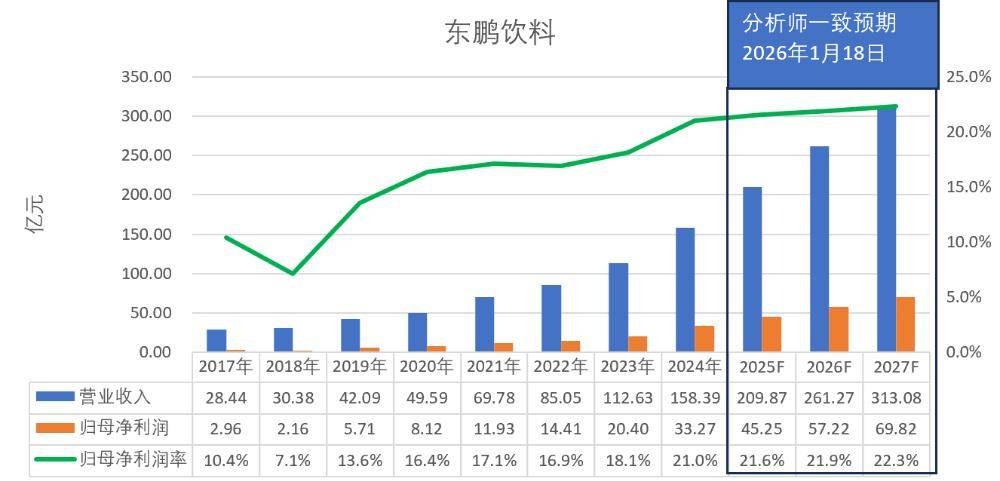
再谈“存贷双高”,东鹏饮料大量银行存款,同时大量银行借款,怎么回事?
Sou Hu Cai Jing· 2026-01-18 23:14
Core Viewpoint - The phenomenon of "high deposits and high loans" (存贷双高) can signal potential financial fraud, but it does not necessarily indicate fraudulent activity. It may arise from various legitimate financial arrangements or strategies employed by the company [1][2][21]. Financial Analysis - Dongpeng Beverage has shown strong profitability, high-quality earnings, rapid growth, and a solid competitive position, making it an attractive business from an investment perspective [4]. - The company has a high average Return on Equity (ROE) of 35.2% from 2022 to 2024, with a projected ROE of 47.5% in 2024 [8]. - Dongpeng's financials indicate a significant amount of cash flow, with a high net cash ratio, suggesting a healthy liquidity position [6]. Debt and Liquidity - As of 2024, Dongpeng's short-term loans amount to 65.51 billion, while cash holdings are at 56.53 billion, resulting in a short-term loan to cash ratio of 116% [15]. - The company has maintained a pattern of high deposits alongside high loans since 2022, with the short-term loan to cash ratio being only 61% in 2021 [16]. - The short-term loans are primarily used for issuing bank acceptance bills and financing through factoring, with interest rates ranging from 2.20% to 2.50%, indicating a strategy of financial arbitrage rather than financial fraud [19]. Interpretation of High Deposits and Loans - The presence of high deposits and loans can be interpreted as a financial arbitrage arrangement, especially if the cost of borrowing is lower than the interest earned on deposits [17]. - The company’s financial strategy may involve maintaining liquidity for potential future investments or risks, which is a common practice in corporate finance [20].

数亿元假账竟被“开绿灯”!财政部针对隐匿关键审计工作底稿、拒绝配合调查作出顶格处罚
Mei Ri Jing Ji Xin Wen· 2026-01-18 13:45
Core Viewpoint - The Ministry of Finance has imposed severe penalties on Beijing Yatai International Accounting Firm for concealing critical audit work papers related to Fujian Zitian Media Technology Co., Ltd, which led to significant financial misstatements exceeding 1.5 billion yuan [2][10]. Group 1: Audit Quality Issues - Yatai International was aware of Zitian Technology's fraudulent activities, including inflating inventory and accounts payable, yet still approved the inflated figures in the 2023 consolidated financial statements [2][10]. - The audit quality issues were particularly pronounced in the Zitian Technology project, where Yatai International failed to provide adequate audit evidence and concealed audit findings [5][10]. - The Ministry of Finance's investigation revealed that Yatai International fabricated audit work papers and did not implement appropriate audit procedures despite knowing about abnormal operating costs [10][11]. Group 2: Regulatory Actions and Penalties - The Ministry of Finance has taken the maximum penalty against Yatai International, including a one-year suspension of business operations and financial penalties for the involved accountants [11][16]. - The firm was included in a routine quality inspection list, which led to the discovery of its non-compliance and subsequent penalties [9][16]. - The penalties reflect a zero-tolerance approach by regulatory authorities towards violations that could harm stakeholders and the integrity of the financial market [19].

京山轻机因财务造假被罚500万元 股票简称变更为“ST京机”
Jing Ji Guan Cha Wang· 2026-01-18 05:48
Core Viewpoint - The regulatory penalties imposed on Hubei Jing Shan Light Industry Machinery Co., Ltd. for financial disclosure violations highlight the serious consequences of financial misconduct in the capital market [3][4][7] Group 1: Regulatory Actions - The company received an administrative penalty notice from the Hubei Securities Regulatory Bureau due to false records in its 2018 annual report, leading to a warning from the Shenzhen Stock Exchange [3][4] - The company's stock will be suspended for one day on January 19 and will resume trading on January 20 under the new name "ST Jingji," with a reduced daily price fluctuation limit from 10% to 5% [3][4] - The company faces a fine of 5 million yuan, while the former chairman and other executives are fined between 250,000 and 30,000 yuan [4] Group 2: Financial Misconduct Details - From 2015 to 2018, the company invested in Shenzhen Huida Cheng Intelligent Technology Co., Ltd., which inflated revenue by 58.19 million yuan and profits by 46.70 million yuan in the 2018 annual report [3][4] - The company only corrected the financial data in January 2022 after discovering financial irregularities, which did not prevent regulatory penalties [4][6] Group 3: Impact on Company Operations - The stock's risk warning and name change will significantly affect market liquidity, investor sentiment, and stock price volatility, creating uncertainty around the company's share repurchase plan [5] - The company has initiated a share repurchase plan with a budget of 68.5 million to 137 million yuan, but the implementation may be affected by the new restrictions [5] Group 4: Future Compliance and Governance - The company plans to apply for the removal of the risk warning after meeting specific conditions, including the completion of financial restatements [6] - The board has apologized to investors and committed to improving internal governance and information disclosure quality [6][7] - The case underscores the regulatory body's zero-tolerance stance on financial fraud and emphasizes the importance of accurate financial reporting for sustainable development in the capital market [6][7]

虚增利润4670万 京山轻机遭罚500万元并强制ST
Jing Ji Guan Cha Wang· 2026-01-18 04:21
Core Viewpoint - The regulatory penalties for financial fraud at Jing Shan Light Industry Machinery Co., Ltd. have been finalized, marking a significant consequence for the company due to false reporting in its 2018 annual report [1][2][3]. Group 1: Regulatory Actions - The company received an administrative penalty notice from the Hubei Securities Regulatory Bureau due to false records in its 2018 annual report, leading to a risk warning from the Shenzhen Stock Exchange [1][2]. - The company’s stock will be suspended for one day starting January 19 and will resume trading on January 20 under the new name "ST Jingji," with a trading limit of 5% [1][3]. - The company faces a fine of 5 million yuan, while key executives will also be penalized, including fines of 2.5 million yuan for the chairman and other executives [3]. Group 2: Financial Misconduct Details - From 2015 to 2018, the company invested in Shenzhen Huida Cheng Intelligent Technology Co., Ltd., which inflated revenue by 58.19 million yuan and costs by 9.61 million yuan through false contracts [2]. - The inflated profits amounted to 46.70 million yuan, representing 25.49% of the total profit disclosed for that period [2]. Group 3: Company Response and Future Outlook - The company has initiated a share buyback plan, intending to use between 68.5 million and 137 million yuan for this purpose, with partial completion reported by the end of 2025 [3][4]. - The company has committed to improving internal governance and enhancing the quality of information disclosure following the penalties [4][6]. - The implementation of the ST label indicates a one-year observation period to assess the effectiveness of the company's internal control reforms [6]. Group 4: Industry Implications - The case reflects a "zero tolerance" approach from regulators towards financial fraud, emphasizing the importance of truthful financial reporting in the capital market [5][6]. - The incident serves as a reminder of the long-term consequences of financial misconduct and the necessity for companies to adhere to strict governance and disclosure standards [5][6].
给自己列一张负面清单:打死也不碰的5类公司,投资瞬间变简单!
Sou Hu Cai Jing· 2026-01-17 23:15
Core Viewpoint - The most effective way to invest in stocks is not to find the best stocks but to first eliminate high-risk companies from consideration [1] Group 1: High Customer Concentration - Companies with excessively high customer concentration are at risk; if a major client relationship falters, the company may face immediate crisis [4] - For instance, the automotive parts company Jie Feng Power relies on Chery Automobile for over 70% of its revenue, with the top five clients accounting for more than 93% [4] - A warning signal is if a single client's revenue exceeds 50% or if the top five clients account for over 80% of total revenue [4] Group 2: Financial Integrity - Companies involved in financial fraud or under regulatory investigation are likely to experience significant performance declines and stock price drops [5] - Financial fraud is increasingly sophisticated, making it hard for ordinary investors to detect; however, regulatory warnings are clear indicators of internal control issues [5] - A company that has received a regulatory warning or has significant accounting corrections should be avoided [5] Group 3: Long-term Losses - Companies that report continuous losses are essentially "money-burning machines," often masking their poor performance with one-time gains [6] - A typical sign of such companies is two consecutive years of negative net profit or reliance on non-recurring gains for profitability [6] - The risk of delisting is increasing for companies with long-term losses, with 45 and 52 companies expected to be delisted in 2023 and 2024, respectively [6] Group 4: High Debt Levels - Companies with high debt and high shareholder pledge ratios indicate a strained financial situation, making them vulnerable to market fluctuations [7] - Jie Feng Power exemplifies high debt, with an asset-liability ratio of 78.72%, significantly above the industry average of 38.71% [7] - Warning signals include an asset-liability ratio far exceeding the industry average and shareholder pledges over 60% [8] Group 5: Industry Trends - Companies in declining industries face shrinking market demand and lack competitive advantages, leading to inevitable obsolescence [9] - Indicators of such companies include a market size decline over two consecutive years and a gross margin below the industry average [9] - Companies with low R&D investment and no core patents or technologies should also be avoided, as they are likely to be value traps [9] Conclusion - The core of investing is not about how much can be earned but ensuring that losses are minimized; establishing a negative list serves as a safety measure for investments [10] - By filtering out high-risk companies, the remaining options will be safer and more reliable [10]