
科技金融

Search documents
坚守信托本源 向高质量发展全面转型 访上海信托党委书记、总经理陈兵
Jin Rong Shi Bao· 2025-11-26 03:37
Core Viewpoint - The trust industry is focusing on returning to its roots, serving the real economy and people's well-being, and transitioning towards high-quality development during the "14th Five-Year Plan" period [1][6]. Group 1: Strategic Positioning and Business Transformation - The core strategic positioning of the company during the "14th Five-Year Plan" is to adhere to the essence of trust, serving the real economy and people's welfare, and fully transitioning to high-quality development [1]. - The strategic focus has fundamentally shifted from financing-related businesses, such as real estate and government financing, to developing wealth management, asset management, and social governance services [1][2]. - The development goal has changed from pursuing scale expansion to seeking quality and sustainable growth [1]. Group 2: Business Data and Performance - By the end of the "14th Five-Year Plan," the company expects its business scale to reach 1.3 trillion yuan, with significant growth in areas like securities trust exceeding 700 billion yuan and active management asset management trusts reaching 200 billion yuan [2]. - The net assets of the company have increased from 6.7 billion yuan in 2015 to 25 billion yuan [2]. Group 3: Response to Regulatory Changes - The company has proactively adapted to the "three-category" new regulations by forward-looking layout and active restructuring, focusing on professional capabilities to align with regulatory guidance [2]. - The company pioneered family trusts in 2014 and launched family service trusts in 2021, achieving the highest market share in this area [2]. Group 4: Social Impact and Community Engagement - In rural revitalization, the company emphasizes "investing in people" by establishing charitable trusts and providing training for local officials, enhancing governance capabilities [3]. - In the elderly care sector, the company has developed unique trust accounts to address issues related to wealth inheritance and care for the elderly [3]. Group 5: Green Transformation and Differentiation - The company aims to build a differentiated advantage in green trust development by utilizing the broad investment characteristics of trust systems and developing various green financial tools [4][5]. - Challenges in green trust include the mismatch between long-term funding needs of green projects and the market's short-term capital preferences [5]. Group 6: Future Outlook and Strategic Focus - Looking ahead to the "15th Five-Year Plan," the company will focus on deepening efforts in technology finance, green finance, inclusive finance, elderly finance, and digital finance [5]. - The company has made substantial investments in major technology innovation funds, with a total investment scale of nearly 40 billion yuan [5]. Group 7: Industry Development and Challenges - The trust industry is expected to enter a new phase of high-quality development characterized by greater regulation, transparency, and sustainability [6]. - The industry faces higher demands for professional capabilities, risk control, product innovation, and differentiated services [6].
华夏银行广州分行:廿六载奋楫湾区 勇立潮头开新局
Cai Fu Zai Xian· 2025-11-26 03:36
Core Viewpoint - Huaxia Bank's Guangzhou Branch has evolved over 26 years, focusing on sustainable development and supporting high-quality economic growth in Guangdong through various financial initiatives [1] Group 1: Technology Finance - The bank has established a special team for technology finance, creating a whitelist and green approval channels for innovative enterprises [2] - Innovative products like intellectual property pledge loans and investment-loan linkage have been introduced to support asset-light tech companies [4] - As of mid-November, the loan balance for technology enterprises has increased by 44.59% compared to the beginning of the year [4] Group 2: Green Finance - Green finance has been elevated to a strategic level, with a comprehensive service system covering green credit, green bonds, and ESG investment [5] - The bank launched its first "Sui Carbon" platform inclusive financing business, providing a credit loan of 1.5 million yuan to specialized tech enterprises [5] - Collaborations with international organizations like the World Bank and Asian Development Bank have involved over 3 billion yuan in funding for green projects [7] Group 3: Inclusive Finance - The bank supports the private economy, small and micro enterprises, and rural areas through tailored financial products like "Motorcycle Parts Loan" [8] - The "Assist Farmers Loan" product has been customized for agricultural services, with agricultural loans growing at a rate of 33.4% as of September [8] Group 4: Pension Finance - The bank has developed a three-in-one model for pension finance, including personal pension accounts and elder service financial products [9] - Initiatives like the "Silver Economy Breakfast Meeting" have reached over 6,000 elderly individuals, enhancing financial services for seniors [9] Group 5: Digital Finance - A dedicated digital finance department has been established, with over 2.4 billion yuan allocated to various industries through digital financial products [10] - The bank has introduced innovative digital products like "Carbon Quota Pledge Financing" and "Railway Freight Loan" to support enterprises [11] - As of mid-November, the bank has added nearly 3 billion yuan in corporate loans, supporting cross-border operations for companies [11]


岚山农商银行:精准助力科技型企业发展
Hua Xia Shi Bao· 2025-11-26 02:25
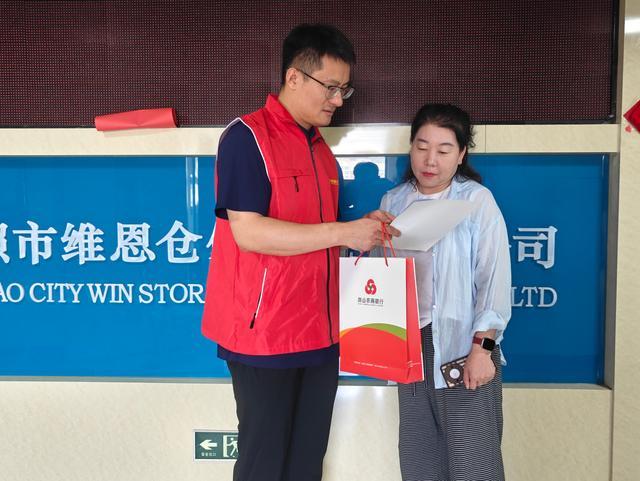
Core Insights - Innovation is identified as the core engine for industrial upgrading and a key competitive advantage for enterprises [1] - The bank has implemented a "gradient cultivation and key support" strategy to address the financing needs of technology-oriented enterprises [1] Group 1: Tailored Financing Solutions - The bank adopts a "one household, one policy" approach to provide customized financial solutions, successfully assisting multiple companies in overcoming financial difficulties [3] - For example, it provided a loan of 4.9 million yuan to a leading supplier in the home appliance manufacturing sector, alleviating cash flow issues caused by accounts receivable [3] - Another company received an additional 1 million yuan loan to enhance its production capacity after acquiring new equipment [3] Group 2: Innovative Financial Product System - The bank has developed a diversified matrix of technology financial products to support the transformation of technology-oriented enterprises [5] - It has introduced intellectual property pledge financing services, allowing companies to use intangible assets like patents and trademarks as collateral [5] - As of now, the bank has issued various technology financial loans totaling 161 million yuan, aiding in technology research, equipment upgrades, and market expansion [5] Group 3: Optimized Service Models - The bank has established a dedicated service team to ensure precise financial service matching with the development pace of technology enterprises [7] - It has implemented a "green loan channel" for companies on the "white list," streamlining the loan approval process [7] - The combination of online and real-time approval systems has effectively reduced financing costs for enterprises [7] Group 4: Strengthened Government-Bank Collaboration - The bank emphasizes a "finance + government" service model, enhancing collaboration with local government departments [8] - It has organized over 30 events to facilitate financing connections and policy discussions for technology enterprises [8] - The cumulative support for technology enterprises has reached 753 million yuan, benefiting 91 companies [8] Group 5: Focus on Industrial Upgrading - The bank is committed to directing credit resources towards high-tech and high-potential enterprises in the rubber and plastic manufacturing sector [9] - It aims to promote industrial innovation and transformation through financial empowerment [9] - The total support for technology and green enterprises has reached 1.092 billion yuan, contributing to regional industrial structure optimization [9]
光大银行辛锋:构建与科技创新“同频共振”的金融服务生态
2 1 Shi Ji Jing Ji Bao Dao· 2025-11-26 02:25
Core Viewpoint - The conference emphasizes the importance of financial services in supporting high-level technological self-reliance and innovation in China, with a focus on creating a financial ecosystem that resonates with technological advancements [1] Group 1: Financial Strategy and Services - The bank views technology finance as a crucial part of its strategy to support national technological self-reliance, aiming to create a positive cycle among technology, industry, and finance [1] - A new technology finance work plan was established, introducing the "Sunshine Innovation" brand and a "Five Strengths" support system to meet the needs of technology enterprises [2] Group 2: Organizational Structure - The bank has developed a "1+16+100" integrated organizational structure for technology finance, with a central technology finance center and 16 regional centers, planning to establish around 100 specialized branches [2] - As of now, over 60 specialized technology finance institutions have been set up across the bank [2] Group 3: Product Offerings - The bank has created a product matrix consisting of three series: "Mingxing," "Xinxing," and "Juxing," covering a comprehensive range of financial products tailored to different stages of technology enterprises [2] - Innovative products such as "R&D Loans," "Salary Loans," "Data Asset Loans," and "Investment-Linked Loans" have been developed to provide full lifecycle financial services [2] Group 4: Ecosystem Development - The bank leverages its comprehensive financial capabilities and industry integration to build a robust ecosystem, focusing on collaboration across various sectors including government, industry, academia, and investment [2] - The bank aims to create a "Investment + Custody + Loan Linkage" model to provide long-term funding support for "hard technology" enterprises [2] Group 5: Research and Digital Capabilities - The establishment of a financial research institute enhances the precision of technology finance services, focusing on emerging industries and traditional industry upgrades [3] - The bank has developed a customer profiling system and is utilizing data integration to facilitate the conversion from "technology flow" to "capital flow" [3] Group 6: Future Outlook - The bank plans to deepen its integration into national strategic layouts, focusing on key areas such as artificial intelligence, integrated circuits, and aerospace for financial support [3] - The bank aims to strengthen its collaborative advantages within the group, enhancing its technology finance service ecosystem and providing comprehensive financial solutions for technology enterprises [3] - A robust risk management system and talent development are prioritized to ensure the sustainable growth of technology finance services [4]

引金融活水滴灌科创沃土
Jin Rong Shi Bao· 2025-11-26 02:07
Core Insights - The proactive approach of banks in providing financial support to technology companies in Shaoyang is highlighted, showcasing the effectiveness of targeted financial policies [1][2][3] Group 1: Financial Support Initiatives - The People's Bank of China Shaoyang Branch has implemented various financial support measures, including the issuance of loans and interest subsidies to technology companies, resulting in significant expected revenue increases [1] - A collaborative financing action plan has been established, involving multiple government departments to direct financial resources towards technology innovation, with nearly 135 billion yuan in loans issued to 1,220 chain-related enterprises [2] - The introduction of knowledge value loans and risk compensation policies has facilitated the provision of nearly 8 billion yuan in loans to 307 technology enterprises, enhancing the financial ecosystem for innovation [2][3] Group 2: Innovative Financing Solutions - The bank has developed tailored financing solutions for companies with intangible assets, such as patents, allowing for loans of 55 million yuan without traditional collateral requirements [3] - A variety of new financial products have been introduced, increasing the number of technology finance products from 18 to 32, addressing the unique needs of technology enterprises [6] - The implementation of a specialized credit management model has prioritized the processing of loans for technology companies, ensuring favorable terms and conditions [6] Group 3: Engagement and Outreach - The bank has conducted numerous financing connection activities, resulting in over 360 billion yuan in signed agreements and more than 330 billion yuan in loans disbursed to local enterprises [7] - A comprehensive media campaign has been launched to promote financial policies and services, enhancing awareness and accessibility for technology companies in the region [7]
科技创新债券扩面增量,科创债ETF招商(551900)昨日“吸金”近1亿元,规模居沪市同类第一
2 1 Shi Ji Jing Ji Bao Dao· 2025-11-26 01:45
Group 1 - The core viewpoint of the news highlights the significant growth and impact of the Science and Technology Innovation Bond (科创债) market since its launch on May 7, with over 530 billion yuan issued to support 276 enterprises [1][2] - The Science and Technology Innovation Bond ETF (551900) has seen a strong market performance, closing at 99.677 yuan with a net inflow of nearly 100 million yuan on a single day, and a total fund size of 19.932 billion yuan, making it the largest in its category on the Shanghai Stock Exchange [1] - The issuance of Science and Technology Innovation Bonds has increased its share of the overall debt financing tools in the interbank market to over 10%, a 5 percentage point increase compared to before the bond's launch [1] Group 2 - The Science and Technology Innovation Bond ETF closely tracks the CSI AAA Technology Innovation Company Bond Index, which reflects the overall performance of eligible technology innovation company bonds [2] - The development of technology finance is aligned with the broader economic goals of improving total factor productivity and high-quality economic development, serving as a crucial bridge between finance and technology [2] - The initiative addresses the financing challenges faced by technology innovation enterprises, thereby enhancing industrial competitiveness and economic growth potential [2]

银行间科创债发行活跃
2 1 Shi Ji Jing Ji Bao Dao· 2025-11-25 23:26
Core Insights - The launch of the Sci-Tech Innovation Bonds (科创债) on May 7 has significantly stimulated market activity, with over 530 billion yuan issued to 276 companies by November 21 [1] - The participation of private enterprises in the issuance of these bonds has notably increased, indicating a trend towards greater financing vitality in the market [1] - Future development of Sci-Tech Innovation Bonds is expected to focus on three main areas: increased issuance by private enterprises, improved risk-sharing mechanisms, and a broader range of investor types [1][6][7] Group 1: Market Activity and Participation - As of November 21, 2023, 276 enterprises have issued over 530 billion yuan in Sci-Tech Innovation Bonds, with 230 being technology companies and 46 equity investment institutions [1] - Private enterprises have shown a significant increase in participation, with 55 private companies issuing 107.4 billion yuan in bonds, accounting for 20% of the total issuance in the interbank market [1] - Five private equity investment institutions have successfully issued 1.35 billion yuan in bonds, leveraging the risk-sharing tools created by the People's Bank of China [1][2] Group 2: Impact on Investment and Financing - The issuance of Sci-Tech Innovation Bonds has accelerated the capital allocation to specific technology enterprises, exemplified by the 26.17 billion yuan signed by Zhongke Chuangxing, which has invested in 36 "hard technology" companies [2] - The bonds are seen as a crucial tool for expanding financing channels, reducing costs, and enhancing the asset diversity in the bond market, thereby addressing the financing challenges faced by technology enterprises [3] - The introduction of risk-sharing tools has broadened the scope and depth of their application, facilitating more private equity institutions to access financing through the interbank bond market [4] Group 3: Future Trends and Developments - The market for Sci-Tech Innovation Bonds is expected to expand its issuance base, with a potential increase in private enterprise participation supported by policy measures [6] - There is an anticipated improvement in risk-sharing mechanisms, encouraging local governments to provide interest subsidies and guarantees [6] - The diversification of investor types and enhancement of product liquidity are expected to further invigorate market activity [7]
刘宁王凯会见交通银行董事长任德奇
He Nan Ri Bao· 2025-11-25 23:04
交通银行党委委员、副行长杨涛,交通银行公司与机构业务总监唐朔,省领导张敏、陈星参加会见。 (记者 刘婵 张笑闻) 责任编辑: 郭栩汝 11月25日,省委书记刘宁、省长王凯在郑州会见交通银行党委书记、董事长任德奇一行。 刘宁、王凯代表省委、省政府对任德奇一行表示欢迎,感谢交通银行给予河南发展的帮助支持。刘宁 说,当前,全省上下正在深入学习贯彻党的二十届四中全会精神和习近平总书记在河南考察时重要讲话 精神,聚焦"1+2+4+N"目标任务体系,着力稳就业、稳企业、稳市场、稳预期,全力打好经济发展冬春 季攻保战役。我们坚决贯彻习近平总书记关于金融工作的重要论述,认真落实党中央决策部署,扎实做 好金融"五篇大文章",统筹做好金融扩规模、调结构、降成本、防风险各项工作,金融服务实体经济质 效持续提升。长期以来,交通银行积极融入河南、服务河南、建设河南,在促进地方经济发展、服务保 障民生等方面作出了贡献。希望交通银行充分发挥国有大行规模庞大、业务全面等优势,在综合交通枢 纽项目建设、现代化产业体系构建、推进乡村全面振兴等方面开展全方位金融合作,完善科技金融服务 体系,提升普惠金融覆盖面和可及性,共同谋划好"十五五"时期河南 ...

【安康】以金融活水精准滴灌实体经济
Shan Xi Ri Bao· 2025-11-25 22:51
Group 1 - The People's Bank of China (PBOC) in Ankang City is focusing on stable growth, improving people's livelihoods, and promoting openness through a moderately loose monetary policy and optimized financial services [1] - The PBOC has established a policy framework around five key areas: technology finance, green finance, inclusive finance, pension finance, and digital finance, enhancing financial support capabilities in these sectors [1] - A total of 500 million yuan in loans has been issued to support green high-quality development projects, and over 100 million yuan in financing has been facilitated through the "Three Members Entering Enterprises" service activity [1] Group 2 - The PBOC in Ankang City has implemented targeted monetary policy tools to address financing difficulties for small and micro enterprises, resulting in a 130% year-on-year increase in newly issued agricultural and small enterprise re-loans, totaling 7.7 billion yuan [2] - More than 26,000 entities, including private and small enterprises, have benefited from these loans, with an average interest rate of 4.30%, down 41 basis points year-on-year [2] - The PBOC is committed to enhancing the connection between government, banks, and enterprises, encouraging financial institutions to innovate products and services to create a better financial environment for small and micro enterprises [2]
构建科技金融发展沃土 广州吸引百亿级AIC落地
Shang Hai Zheng Quan Bao· 2025-11-25 18:12
Core Insights - Xinyin Financial Asset Investment Co., Ltd. has been approved to operate and has established its presence in Guangzhou, marking it as the second financial asset investment company (AIC) approved among joint-stock banks [1] - The establishment of Xinyin Jin Investment in Guangzhou reflects the city's efforts to seize opportunities from the AIC pilot program and build a robust AIC ecosystem [1][2] Group 1: AIC Development in Guangzhou - Guangzhou has prioritized attracting AICs as a key financial strategy since the expansion of the AIC pilot program in 2024, with significant efforts to facilitate new AIC establishments [2] - The Guangzhou government signed a strategic cooperation agreement with CITIC Bank in June 2025, confirming Xinyin Jin Investment's establishment in the city, showcasing the city's support for financial innovation [1][2] - Guangzhou has implemented a comprehensive policy framework to support AIC development, including a 1.5 trillion yuan industrial investment mother fund and a 500 billion yuan venture capital mother fund [2] Group 2: Financial Ecosystem and Investment Opportunities - Guangzhou has successfully established 11 AIC funds with a total scale exceeding 16.8 billion yuan, attracting bank capital into key industries such as advanced manufacturing and new energy [2] - The city boasts nearly 400 licensed financial institutions, with total financial assets exceeding 13 trillion yuan, making finance the third-largest pillar industry in the city [2] - The efficient execution of policies in Guangzhou provides a predictable development environment for Xinyin Jin Investment, allowing for significant opportunities in market-oriented debt-to-equity swaps and equity investments in tech enterprises [2][3] Group 3: Role of AIC in Supporting Innovation - AICs are transitioning from debt risk mitigators to supporters of technological innovation, utilizing a model that combines equity investment, debt financing, and value-added services [3] - Xinyin Jin Investment aims to leverage its AIC license and CITIC Group's resources to serve local enterprises through a "debt-equity" model, focusing on the Guangzhou and Guangdong-Hong Kong-Macau Greater Bay Area [3][4] - The company plans to engage in major state-owned enterprise projects, assist in managing asset-liability ratios, and promote mergers and acquisitions within key industrial clusters [4] Group 4: Collaborative Ecosystem Development - Guangzhou is committed to supporting Xinyin Jin Investment's operations by integrating government investment funds and establishing a mechanism for ongoing project matching and funding needs [4] - The collaboration between Xinyin Jin Investment and Guangzhou is characterized by a model of "institutional establishment + policy support + ecological synergy," fostering a mutually beneficial development landscape [4][5] - The entry of AICs is expected to play a crucial role in the financing system for tech enterprises, enhancing the stability of returns while supporting the real economy [5]
