
元宇宙

Search documents
亨鑫科技(01085) - 自愿公告 - 近期业务发展
2025-08-01 13:12
香港交易及結算所有限公司及香港聯合交易所有限公司對本公告的內容概不負責, 對其準確性或完整性亦不發表任何聲明,並明確表示概不就本公告全部或任何部份 內容而產生或因倚賴該等內容而引致的任何損失承擔任何責任。 H E N G X I N T E C H N O L O G Y L T D. 亨 鑫 科 技 有 限 公 司 * (以 HX Singapore Ltd. 名稱在香港經營業務) (於新加坡共和國註冊成立的有限公司) (香港股份代號:1085) 自願公告 近期業務發展 本公告乃自願作出,旨在讓亨鑫科技有限公司(「本公司」,連同其附屬公司 統稱為「本集團」)股東及潛在投資者知悉本公司之最新業務發展。 參與起草國家《元宇宙參考架構》標準 本公司董事會(「董事會」)欣然宣佈,本公司的執行董事彭一楠先生作為起 草人之一以及本公司的全資附屬公司上海掌御信息科技有限公司作為主要起草 單 位 之 一 , 參 與 了 國 家 標 準 《 元 宇 宙 參 考 架 構 》 ( Metaverse-Reference Architecture)(「該標準」)的制定工作。該標準由全國信息技術標準化技術 委員會(SAC/TC 28 ...
对话凯文·凯利:不必过多担忧,AI变强后,人类只需专注于“玩”
3 6 Ke· 2025-08-01 10:55
Group 1 - The article discusses Kevin Kelly's vision of a future shaped by AI, particularly in his new book "2049: The Possible 10,000 Days" [1][2] - Kelly emphasizes the concept of "alien intelligence" rather than AGI, suggesting that AI will coexist with humans as a different form of intelligence rather than a superior one [6][7][10] - The idea of a "mirror world" is introduced, which is a virtual dimension layered over reality, allowing for interaction and collaboration between humans and AI [16][17][18] Group 2 - Kelly expresses skepticism about the current AI models achieving AGI, arguing that intelligence is a complex compound requiring more than just scaling existing models [4][5][13] - He believes that the future will see a few dominant companies in the AI space due to network effects, leading to a natural monopoly [26][27] - The article highlights the potential for AI to enhance human creativity and collaboration, suggesting that human value will increase as AI takes over routine tasks [29][35][36] Group 3 - The discussion includes the importance of learning how to learn in an AI-driven future, emphasizing the need for lifelong learning and adaptability [41][42] - Kelly argues that human interaction will remain valuable, even in a world with advanced AI, as the essence of human presence becomes a rare commodity [35][38] - The article raises concerns about privacy and trust in AI systems, suggesting that people may willingly trade privacy for personalized services [38][39]
Meta(META.US)Q2财报赢得华尔街集体喝彩!各大投行紧急上调目标价
智通财经网· 2025-08-01 08:19
富国银行分析师Ken Gawrelski指出,Meta带来了"远超预期的全面惊喜",包括更高的营收和每股收益, 以及"2026年运营支出/资本支出前瞻数据显著超出预期"。他给予Meta"增持"评级,并将目标价从783美 元上调至811美元,还给出981美元的乐观情景目标价,认为"Reels短视频、Advantage+广告平台和广告 定价改善的持续强劲贡献"将推动股价上行。他补充道:"强劲的增长前景抵消了投资压力,推动投资者 对2026/2027年的每股收益预期温和上升。" 摩根士丹利分析师Brian Nowak将目标价从750美元大幅调升至850美元,并给出1100美元的看涨情景估 值,认为"AI投资将提升用户参与度并催生新产品/工具,从而支撑超额广告变现和营收增长"。Nowak 强调:"关键结论是,我们看到了更高的短期(1-3年)盈利能力,以及一长串推动核心业务持续增长(用户 参与度和/或货币化改善、内容创作工具、Meta AI、搜索、商业代理、设备等)或超级智能/生成式AI带 来更长期增长的可选路径。" 智通财经APP注意到,Meta平台(META.US)的爆炸性季度业绩赢得了华尔街的喝彩。在亮眼财报公布 ...

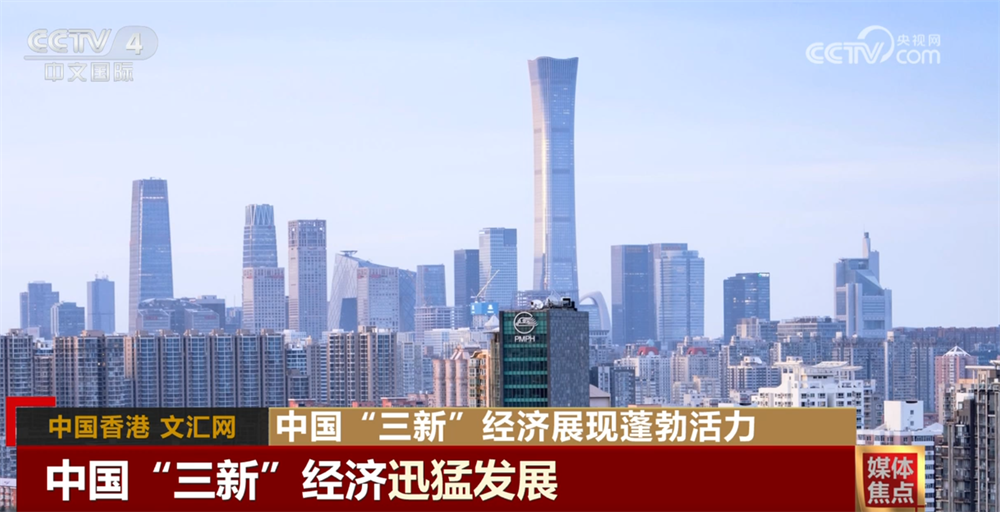
中国“三新”经济迅猛发展展现蓬勃活力 工业经济运行“向稳向新向优”
Yang Shi Wang· 2025-08-01 05:50
Group 1 - The "Three New" economy in China, which includes new industries, new business formats, and new business models, is projected to contribute 18.01% to GDP in 2024, with a value of 24.29 trillion yuan, reflecting a growth of 6.7% from the previous year [3][2] - The "Three New" economy is generating a significant number of new job opportunities, with the recent release of the seventh batch of new professions and job types in China, including 17 new professions and 42 new job types, particularly in artificial intelligence, drones, and new consumption sectors [3][2] - The development of artificial intelligence is being supported by the establishment of new industry alliances among Chinese companies, aimed at reducing reliance on foreign technology and promoting independent innovation [5] Group 2 - China's industrial economy is advancing towards stability, innovation, and quality, with the establishment of 33 national manufacturing innovation centers and 241 pilot platforms as of mid-2023 [7] - The integration of artificial intelligence into various industries is being accelerated, with a focus on applications in electronics, raw materials, and consumer goods, leading to the emergence of new business models and formats [7] - China is expected to continue releasing economic potential amid global economic challenges, with macro policies focusing on digital transformation, green development, biopharmaceuticals, artificial intelligence, and health care [9]

华星创业:将深耕移动通信技术服务并拓展数字经济业务
Sou Hu Cai Jing· 2025-08-01 04:51
Core Viewpoint - The company is actively seeking to turn around its financial performance by leveraging its core business and development strategy, focusing on expanding its profitability through various initiatives [1] Group 1: Business Strategy - The company plans to integrate various advantageous resources to explore new development channels and expand its business profitability [1] - The company will continue to deepen its services in mobile communication technology, focusing on the needs of operators and major equipment manufacturers for technological research and development [1] - The company aims to actively expand business cooperation with operators and major equipment manufacturers in sectors such as government enterprises and the digital economy [1] Group 2: Industry Opportunities - The low-altitude economy presents multiple opportunities for the communication industry, which the company intends to capitalize on by leveraging its years of experience in the field [1] - The company will continue its research and development in digital products related to the metaverse, virtual reality, and digital humans, aiming to expand its related business [1]

香港稳定币今日开闸,“5年左右将逐渐取代SWIFT”
Guan Cha Zhe Wang· 2025-08-01 03:42
【文/观察者网 陶立烽】 今天(8月1日),全球第一个针对法币稳定币的全面监管框架——香港《稳定币条例》正式实施,相关 机构可以开始申请牌照。 就在不久前,美国总统特朗普也签署了三个加密货币法案。相比于美国,香港的稳定币法案更加简洁明 了,也更加严厉:2500万港元准入门槛、100%资产抵押、1日内赎回保障。 一位从事10年稳定币相关业务的行业人士邵星认为,未来稳定币发行后,需要寻找渠道和流量平台来承 接,要有大量的应用场景来落地。邵星也预计,之后五年左右,以合规稳定币为基础的点对点支付方式 逐渐代替SWIFT(国际资金清算系统),整个金融体系会发生重大变化。 稳定币是什么? 到今年6月下旬,加密资产的总市值已经超过3万亿美元,超过法国去年GDP,其中稳定币的规模达到 2600亿美元左右,较2020年增长超40倍。 稳定币自2014年诞生,最初并未受到广泛关注。当时加密货币市场尚处于早期阶段,用户仍可用传统货 币直接买卖加密资产,稳定币作为中间介质的需求有限。随着越来越多国家对法币与加密货币之间的兑 换实施限制或禁令,稳定币逐渐成为加密资产市场内部交易的重要媒介,并在全球范围内流行起来。 而这一轮的热潮开始于 ...

香港稳定币今日开闸,业内人士:5年左右将逐渐取代SWIFT
Guan Cha Zhe Wang· 2025-08-01 03:29
Group 1: Regulatory Framework - Hong Kong's "Stablecoin Ordinance" officially implemented on August 1, allowing institutions to apply for licenses [1] - The ordinance requires a minimum capital of 25 million HKD and mandates 100% asset backing for stablecoins [1][10] - Issuers must ensure that stablecoins are redeemable at face value within one working day, addressing investor protection concerns [10] Group 2: Market Dynamics - As of June 2023, the total market capitalization of cryptocurrencies exceeded 3 trillion USD, with stablecoins reaching approximately 260 billion USD, a growth of over 40 times since 2020 [2] - Stablecoins have become essential for internal transactions in the cryptocurrency market due to restrictions on fiat and crypto exchanges [2] - The demand for stablecoins is expected to grow significantly, particularly in cross-border payments and gaming sectors [5][19] Group 3: Technological and Operational Aspects - Stablecoins are built on public blockchain technology, with Ethereum and TRON being the most prominent platforms [3] - Financial institutions like JPMorgan and major credit card companies have already integrated stablecoin solutions into their operations [3] Group 4: Future Outlook - Industry expert predicts that within five years, compliant stablecoins will gradually replace SWIFT for peer-to-peer payments, leading to significant changes in the financial system [19] - The development of stablecoins is seen as a strategy to bolster the dominance of the US dollar in the global economy [17][18]

扎克伯格用"超级智能"概念为AI巨额投资辩护
Sou Hu Cai Jing· 2025-07-31 16:49
Group 1 - Meta is investing hundreds of billions into GPU data centers, yet struggles to compete with rivals like OpenAI and Anthropic [2][3] - CEO Mark Zuckerberg is shifting focus towards a vague new goal of AI superintelligence, claiming signs of self-improvement in AI systems [2][3] - Meta aims to create personal superintelligence for users, emphasizing empowerment rather than job displacement [2] Group 2 - The blog post coincides with Meta's upcoming Q2 earnings report, amid scrutiny over infrastructure spending and high salaries for the new "superintelligence" team [3] - Meta is undertaking massive infrastructure projects, including a 2.2 GW AI supercluster in Louisiana, with plans for multiple multi-GW data centers [3] - By the end of the year, Meta plans to operate over 1.3 million NVIDIA and AMD GPUs for model training, with capital expenditures potentially reaching $72 billion by 2025 [3] Group 3 - Despite significant investments, Meta's AI models, including the Llama 4 series, have received lukewarm responses and faced criticism for benchmark manipulation [4] - Meta reportedly abandoned its most powerful model, Behemoth, which was expected to have 2 trillion parameters [4] - Analysts are expected to question the rationale behind Zuckerberg's AI spending spree during the earnings call, recalling past failures in the metaverse initiative [4]

国务院:深入实施“人工智能+”行动 大力推进人工智能规模化商业化应用
Mei Ri Jing Ji Xin Wen· 2025-07-31 16:21
Group 1 - The core viewpoint of the article emphasizes the importance of implementing the "Artificial Intelligence +" initiative to accelerate the commercialization and application of AI across various sectors, leveraging China's comprehensive industrial system and large market scale [1][2] - The transition from "Internet +" to "Artificial Intelligence +" signifies a fundamental shift from digitalization to intelligence, necessitating systematic policy guidance to meet the demands of the intelligent economy era [2][3] - The "Artificial Intelligence +" initiative aims to provide a top-level framework for integrating AI into various fields, fostering horizontal collaboration among industries through unified data, computing power, and algorithm standards [3] Group 2 - The meeting highlighted the need to optimize the AI innovation ecosystem by enhancing the supply of computing power, algorithms, and data, while also strengthening policy support and talent development [4] - The establishment of an open-source ecosystem is crucial for supporting industrial growth, particularly in traditional manufacturing and emerging strategic industries, facilitating the transition to flexible intelligent manufacturing and accelerating technological breakthroughs [5] - The meeting also discussed the implementation of interest subsidy policies for personal consumption loans and service industry loans to lower financing costs and stimulate market activity [6]
美股异动 Q2日均活跃用户创历史新高 “元宇宙第一股”Roblox(RBLX.US)涨超13%
Jin Rong Jie· 2025-07-31 14:55
本文源自:智通财经网 周四,Roblox(RBLX.US)股价走高,截至发稿,该股涨超13%,报142美元。公司Q2营收10.8亿美元, 同比增长21%。日均活跃用户增长41%,达到1.118亿,创下历史新高。用户参与时长也同比跃升58%, 达到274亿小时。这一增长很大程度上得益于"种植园"等病毒式传播的热门游戏。财务方面,第二季度 预订额达14.4亿美元,远超市场预期的12.4亿美元。Roblox大幅上调了2025财年的预订收入预期,从此 前的52.9亿-53.6亿美元提高至58.7亿-59.7亿美元。公司还预计第三季度预订额将达到15.9亿-16.4亿美 元,同样超出了此前13.5亿美元的预期。 ...
