
卫星互联网

Search documents
2025卫星互联网产业生态大会将于12月4日至5日在沪举办
Zheng Quan Shi Bao Wang· 2025-12-02 12:40
人民财讯12月2日电,据上海经信委,"星聚生态.链启未来——2025卫星互联网产业生态大会"定于12月 4日至5日在上海举办。为进一步强化跨链协同,大会期间将举行上海卫星互联网产业链生态伙伴签约仪 式,推动研发、制造、测试、运营和应用各环节形成产业网络,共同打造更具开放性与延展性的生态合 作格局。大会还将重磅发布上海卫星互联网产业项目与应用场景需求:项目方向覆盖卫星制造、星座组 网、终端研发及发射服务等关键环节;应用场景聚焦城市治理、应急通信、行业拓展、惠民服务等多维 领域。 ...
龙虎榜复盘丨福建股、航天持续走强,机构整体呈现买多卖少
Xuan Gu Bao· 2025-12-02 11:22
Group 1 - Institutional buying activity saw 32 stocks listed, with 21 experiencing net buying and 11 net selling on the day [1] - The top three stocks with the highest institutional purchases were Aerospace Development (CNY 167 million), Shunhao Co., Ltd. (CNY 150 million), and Guofeng New Materials (CNY 119 million over three days) [1] Group 2 - Shunhao Co., Ltd. reported a net purchase of CNY 150 million by three institutions today [2] - The company invested CNY 110 million in Beijing Trajectory Technology Co., Ltd. in June 2025, acquiring a 19.30% stake, focusing on satellite-based computing services [2] - The "Tianshutian Calculation" business of Trajectory Technology is expected to have clear commercial value in the next five years, while the "Dizhutian Calculation" business may gradually compete with ground data centers in 5-10 years [2] Group 3 - The Fujian Provincial Development and Reform Commission released measures to promote the development of computing infrastructure on December 1 [3] - A press conference was held by the Fujian Provincial Government to discuss the implementation of policies supporting cross-strait integration development [3] Group 4 - The successful first flight of Blue Arrow Aerospace's Zhuque-3 rocket has garnered significant market attention, marking a potential milestone for China's space industry [4] - If successful, China would become the second country after the United States to master reusable rocket technology [4] Group 5 - Fujian High-speed's subsidiary is involved in the "Maritime Silk Road" satellite development and launch, actively promoting the construction of a satellite constellation to serve the Southeast coast and the Belt and Road Initiative [5] Group 6 - Tongyu Communication plans to invest CNY 30 million by the end of 2024 to acquire a stake in Hongqing Technology, a key player in satellite core components [6] - The company aims to strengthen its upstream component layout for satellite internet [6]


十大概念板块,去伪存真,一个是历史性机会!
Sou Hu Cai Jing· 2025-12-02 10:00
Market Overview - The market is currently experiencing weakness, with major indices falling below the 60-day moving average, indicating a lack of upward momentum [1] - Despite a favorable monetary environment, there are signs of weakness in the real economy, leading to cautious investor sentiment [1][2] Investment Strategy - Investors are advised to stabilize their positions and avoid leveraging, focusing instead on technology and new economy sectors rather than cyclical stocks [2] - The emphasis should be on long-term opportunities in leading AI companies, as the AI and computing chip sector is seen as a historic opportunity despite potential short-term valuation risks [4][5] Technology Sector Insights - AI and computing chips are identified as transformative technologies that could significantly enhance productivity over the next 20 years [4] - Brain-computer interfaces are viewed as a bubble, with current technology only providing limited functionality for disabled individuals [5][6] - Satellite internet is recognized as a genuine opportunity due to its proven technology and demand in remote areas, particularly in China [7][8] Emerging Technologies - Blockchain is considered a bubble, with concerns over the security of cryptocurrencies like Bitcoin, which may lead to a collapse in their valuation [8] - Human-like robots and low-altitude electric manned flying vehicles are also categorized as bubbles, with significant regulatory and technical challenges hindering their development [9][10] - Quantum communication and quantum computing are still uncertain, with significant technical hurdles to overcome [10][11] Established Technologies - 3D printing is seen as having potential for growth, especially as AI lowers design barriers, making it more accessible for home use [11] - Lithium batteries, particularly solid-state batteries, are viewed as having opportunities, although traditional lithium battery technology is reaching maturity [11]


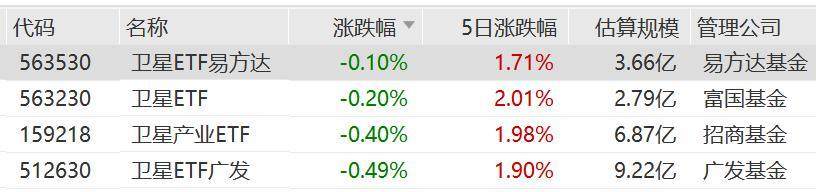
行业迎利好,卫星ETF、卫星产业ETF、卫星ETF易方达、卫星ETF广发近5日上涨
Ge Long Hui· 2025-12-02 07:49
| 代码 | 名称 | 涨跌幅 | 5日涨跌幅 | 估算规模 | 管理公司 | | --- | --- | --- | --- | --- | --- | | 563530 | 卫星ETF易方达 | -0.10% | 1.71% | 3.66亿 | 易方达基金 | | 563230 | 卫星ETF | -0.20% | 2.01% | 2.79亿 | 富国语会 | | 159218 | 卫星产业ETF | -0.40% | 1.98% | 6.87亿 | | | 512630 | 卫星ETF广发 | -0.49% | 1.90% | 9.22亿 广发基金 | | 华西证券表示,国家加速推动商业航天建设,有望助力包括手机直连卫星、北斗短信等应用加速普及。卫星网 络作为6G网络建设基础,当前时点符合6G标准及建设时间。自8月以来相关部门表示会发放卫星互联网牌照,我国 卫星互联网商业运营迈出关键的第一步,牌照的发放有望推动全产业链向规模化加速迈进。当前卫星互联网发展势 头迅猛,星座常态化发射,实现通信容量增大,时延降低,同时有望看到手机宽带直连卫星与低轨卫星网联智能驾 驶系统的相关应用快速落地。 A股三大指数今日集 ...
盛邦安全:锚定“大安全”新蓝海 构建空天地一体化防护生态
Zheng Quan Shi Bao Wang· 2025-12-02 06:30
Core Viewpoint - The rapid evolution of satellite internet and AI technologies is expanding the communication landscape, leading to a transition in the cybersecurity industry from "passive response" to "proactive defense," creating a trillion-level "big security" market opportunity [1] Group 1: Strategic Upgrade and Market Positioning - The core consideration for the strategic upgrade is the increasingly fierce competition in the traditional cybersecurity market, prompting the company to position itself as a new type of cybersecurity firm focusing on emerging fields like satellite internet and AI [2] - The company differentiates itself through two main characteristics: focusing on user scenario pain points with a "productization" approach and adhering to a "long-termism" strategy that aligns with its development pace [2] - Since 2021, the company has been steadily investing in research and development in the satellite internet sector, building a comprehensive security product system that covers satellite, base station, system, and terminal [2] Group 2: AI Integration and Product Development - The company is not following trends blindly in the AI sector but is instead integrating AI technology deeply into its core business scenarios, such as the DaydayMap platform that incorporates AI capabilities for enhanced security [3] - The recent development of a 200G high-speed link encryption gateway addresses key security pain points, achieving encryption latency of less than 3 microseconds, which supports real-time data transmission for applications like AI training and high-frequency trading [5] Group 3: Market Opportunities and Competitive Landscape - The acceleration of global low-orbit satellite constellation deployment positions satellite internet security as a new billion-level market, with future competition requiring a collaborative ecosystem approach rather than isolated efforts [4] - The company aims to leverage its first-mover advantage to secure long-term market share by focusing on core technology development, patent layout, and customized service offerings [4] Group 4: R&D Philosophy and Technical Barriers - The company adheres to a "two precision and one depth" R&D philosophy, emphasizing precise detection and defense capabilities as core strengths in addressing complex security challenges [6] - By deeply understanding industry pain points and integrating general security capabilities with specific scenario characteristics, the company creates differentiated solutions that enhance its technical barriers and meet customer needs [6] Group 5: Future Growth and Globalization - The company is positioned to lead in emerging fields like satellite internet security and computing power security over the next 3-5 years, with a focus on stabilizing core business, expanding new market segments, and globalizing its product offerings [7]

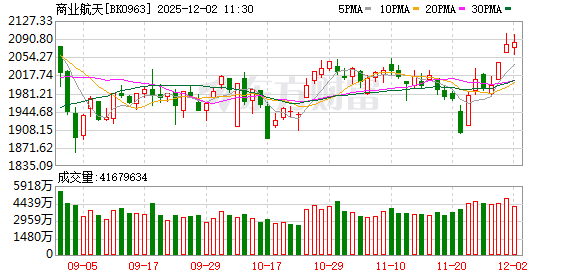
20%直线封板!刚刚利好突袭!商业航天继续发酵
Zheng Quan Shi Bao Wang· 2025-12-02 04:13
Core Viewpoint - The commercial aerospace sector in China is experiencing significant activity, driven by developments such as the successful delivery of the first rocket recovery platform and the anticipation surrounding the launch of the Zhuque-3 rocket [2][5]. Group 1: Market Activity - Zhaobiao Co. has seen a sharp increase in stock price, with a rise of 20%, leading the commercial aerospace sector [2][3]. - Several stocks in the commercial aerospace sector, including Yaguang Technology, Aerospace Development, and Tongyu Communication, have also experienced significant gains, with some reaching their daily limit [3]. Group 2: Technological Developments - The successful delivery of China's first rocket recovery platform, named "Navigator," marks a crucial advancement in reusable rocket technology [2][5]. - The platform is expected to enhance the efficiency and effectiveness of key technologies related to the sea recovery of reusable rockets, thereby strengthening China's competitive edge in rapid and cost-effective space access [5]. Group 3: Upcoming Launches - The Zhuque-3 rocket's maiden flight has garnered considerable market attention, although its launch date has been postponed from the initially expected November 29 [5]. - Market statistics indicate that there are expectations for 19 rocket launches this month, contributing to the heightened activity in the commercial aerospace sector [5]. Group 4: Policy Support - The National Space Administration has released an action plan to promote the high-quality and safe development of commercial aerospace from 2025 to 2027, integrating commercial aerospace into the national space development framework [6]. - The Ministry of Industry and Information Technology has initiated a two-year commercial trial for satellite IoT services, aimed at enhancing data connectivity across various industries [6]. Group 5: Institutional Developments - The establishment of a dedicated Commercial Aerospace Department by the National Space Administration signifies a step towards specialized management of commercial aerospace activities [7]. - Analysts suggest that China must leverage this opportunity to enhance its space infrastructure capabilities to compete with the United States in the global space internet race [7].
20%直线封板!刚刚,利好突袭!
券商中国· 2025-12-02 03:45
Core Viewpoint - The commercial aerospace sector is experiencing significant activity, driven by developments such as the anticipated launch of the Zhuque-3 rocket and the successful delivery of China's first rocket net recovery sea platform named "Navigator" [1][5]. Group 1: Market Activity - On December 2, Zhaobiao Co. saw a turnaround from decline to a 20% increase, leading the commercial aerospace sector, which included several stocks reaching their daily limit or increasing by over 10% [1][3]. - The commercial aerospace sector's recent activity is largely attributed to the expectation of reusable rocket launches, with a reported 19 anticipated rocket launches this month [5]. Group 2: Technological Developments - The "Navigator" platform, developed by the China Aerospace Science and Technology Corporation, marks a significant advancement in reusable rocket technology, enhancing efficiency and effectiveness in key areas such as rapid launches and low-cost access to space [1][4]. - The establishment of the "Navigator" platform is seen as a crucial step in updating China's manned space transportation system [4]. Group 3: Policy Support - The National Space Administration's recent action plan (2025-2027) aims to integrate commercial aerospace into the national development framework, enhancing overall aerospace efficiency [7]. - The Ministry of Industry and Information Technology has initiated a two-year commercial trial for satellite IoT services, targeting various industries to improve data collection and transmission capabilities [8]. - The establishment of a dedicated Commercial Aerospace Department by the National Space Administration signifies a commitment to advancing commercial aerospace management [8]. Group 4: Future Prospects - Analysts believe that the acceleration of commercial aerospace initiatives will facilitate the widespread adoption of applications such as satellite direct connection for mobile phones and Beidou messaging, aligning with the development of 6G networks [9]. - The issuance of satellite internet licenses since August indicates a pivotal step towards commercial operations in satellite internet, potentially driving the entire industry chain towards scale [9].

西部证券晨会纪要-20251202
Western Securities· 2025-12-02 02:27
Core Conclusions - The commercial rocket capacity breakthrough is a key variable for the turning point of China's commercial aerospace industry and the formation of capital market trends, with a high certainty of significant improvement in aerospace capacity next year [1][4]. Industry Dynamics - The satellite internet and commercial aerospace industries in China are expected to reach a fundamental turning point next year, supported by recent policies, commercial rocket launch schedules, and changes in core industry orders [3]. - The national "14th Five-Year Plan" emphasizes the construction of a modern industrial system, with commercial aerospace being a key focus area, as highlighted by the establishment of a Commercial Aerospace Office by the National Space Administration [3]. - The satellite internet industry is projected to maintain a compound annual growth rate (CAGR) of over 100% during the "14th Five-Year Plan" period, with a total of 100 satellite constellations registered, including 88 commercial projects and 12 national strategic projects [3]. - The construction of low-orbit constellations is expected to generate a market of 101.1 billion yuan for rocket capacity and 207.4 billion yuan for satellite manufacturing over the next five years, with respective CAGRs of 82% and 95% [3]. Key Variables - The upcoming launches of mainstream commercial rockets such as Zhuque-3, Tianlong-3, and Long March 12A are anticipated to significantly enhance China's commercial rocket capacity, marking a critical turning point for the industry [4]. Satellite Internet Sub-sectors and Key Companies - Key companies in the satellite internet sub-sector include: - Satellite Payloads: Zhenlei Technology, Xinke Mobile, Chengchang Technology, Shaanxi Huada, Shanghai Hantong, Chuangyi Information, Jiayuan Technology [5]. - Rocket Components: Chaojie Co., Sry New Materials, Gaohua Technology [5]. - Satellite Platform Components: Tianyin Electromechanical, China Satellite, Aerospace Huanyu, Qianzhao Optoelectronics, Shanghai Port, Fudan Microelectronics, Shanghai Huguang, Aerospace Electronics [5]. - Inspection and Testing: Sikrui, Xice Testing, Holiwo, Kunheng Shunwei [5]. - Ground Stations and Terminals: Zhenyou Technology, Tongyu Communications, Guobo Electronics, Sanwei Communications, Nanjing Panda, Mengsheng Electronics, Huali Chuantong, Changjiang Communications [5]. - Space Computing: Putian Technology, Zhongke Xingtou, Zhongke Shuguang, Xingtou Measurement and Control, Shengbang Security [5].
臻镭科技涨2.04%,成交额2.93亿元,主力资金净流出2203.40万元
Xin Lang Cai Jing· 2025-12-02 02:12
Core Viewpoint - Zhenlei Technology's stock has shown significant growth this year, with a 93.14% increase, indicating strong market performance and investor interest [1][2]. Company Overview - Zhenlei Technology, established on September 11, 2015, and listed on January 27, 2022, is located in Hangzhou, Zhejiang Province. The company specializes in the research, production, and sales of integrated circuit chips and microsystems [1]. - The company's revenue composition includes: 50.10% from power management chips, 39.47% from RF transceiver and high-speed high-precision ADC/DAC chips, 5.97% from technical services, 2.49% from microsystems and modules, 1.93% from terminal RF front-end chips, and 0.04% from other sources [1]. Financial Performance - For the period from January to September 2025, Zhenlei Technology achieved a revenue of 302 million yuan, representing a year-on-year growth of 65.76%. The net profit attributable to the parent company was 101 million yuan, showing a remarkable increase of 598.09% [2]. - Since its A-share listing, Zhenlei Technology has distributed a total of 89.06 million yuan in dividends, with 58.75 million yuan distributed over the past three years [3]. Shareholder Information - As of September 30, 2025, Zhenlei Technology had 23,600 shareholders, an increase of 93.15% from the previous period. The average number of circulating shares per shareholder was 9,086, a decrease of 23.17% [2]. - Among the top ten circulating shareholders, Hong Kong Central Clearing Limited is the fourth largest with 5.45 million shares, marking its entry as a new shareholder. Changxin National Defense Military Industry Quantitative Mixed A is the fifth largest with 4.35 million shares, having increased its holdings by 2.00 million shares [3].

亚光科技跌2.05%,成交额3.97亿元,主力资金净流入1004.48万元
Xin Lang Cai Jing· 2025-12-02 02:07
Core Viewpoint - A光科技's stock price has shown significant volatility, with a year-to-date increase of 31.72% and recent trading activity indicating mixed investor sentiment [1][2]. Financial Performance - For the period from January to September 2025, A光科技 reported revenue of 667 million yuan, a year-on-year decrease of 8.64%, and a net profit attributable to shareholders of -98.88 million yuan, down 20.42% year-on-year [2]. - The company has cumulatively distributed 110 million yuan in dividends since its A-share listing, with no dividends paid in the last three years [3]. Stock Market Activity - As of December 2, A光科技's stock price was 7.64 yuan per share, with a market capitalization of 7.807 billion yuan and a trading volume of 397 million yuan [1]. - The stock has appeared on the龙虎榜 twice this year, with the most recent net buying of 22.54 million yuan on December 1, accounting for 12.30% of total trading volume [1]. Shareholder Structure - As of November 20, A光科技 had 90,500 shareholders, an increase of 9.92% from the previous period, with an average of 11,058 shares held per shareholder, down 9.03% [2]. - The top ten circulating shareholders include Hong Kong Central Clearing Limited and several funds, with notable changes in holdings among these entities [3].
