
数字经济

Search documents
深圳市金证科技股份有限公司2025年年度业绩预告
Shang Hai Zheng Quan Bao· 2026-01-16 20:34
Core Viewpoint - Shenzhen Jinzhen Technology Co., Ltd. expects a significant net loss for the fiscal year 2025, with projected losses ranging from -143.72 million to -101.21 million CNY, indicating ongoing financial challenges for the company [2][3]. Financial Performance Forecast - The company anticipates a net profit attributable to shareholders of the parent company for 2025 to be between -143.72 million and -101.21 million CNY [2][3]. - The expected net profit, excluding non-recurring gains and losses, is projected to be between -178.87 million and -136.37 million CNY [2][3]. - The performance forecast period is from January 1, 2025, to December 31, 2025 [2]. Previous Year Comparison - In the same period last year, the net profit attributable to shareholders was -202.42 million CNY [4]. - The net profit, excluding non-recurring gains and losses, was -246.15 million CNY [5]. - The earnings per share for the previous year were -0.2141 CNY [6]. Reasons for Performance Changes - The primary reason for the losses is the impact of market changes on the digital economy sector, leading to increased uncertainty in cash collections and asset impairment losses [7]. - The reduction in losses compared to the previous period is attributed to the company's focus on its core financial technology business and a strategic contraction of IT equipment distribution and banking business scales, which allowed for resource reallocation while maintaining gross profit levels [7]. - The expected recognition of non-recurring gains and losses is projected to be 35.16 million CNY, a decrease of approximately 20% compared to the previous year, mainly due to reduced income from structured deposits and financial products [7]. Asset Impairment Provision - The company plans to recognize a total asset impairment provision of 116.70 million CNY for the fiscal year 2025 [12]. - The breakdown of the impairment includes 105.42 million CNY for contract asset impairment losses, 0.66 million CNY for inventory write-downs, and 10.60 million CNY for long-term equity investment impairment losses [13][14]. - The total asset impairment provision is expected to reduce the net profit attributable to shareholders by 101.56 million CNY [14]. Audit and Compliance - The performance forecast and asset impairment provisions have not been audited by a registered accountant and are based on preliminary calculations by the company's financial department [3][12]. - The audit committee has concluded that the asset impairment provisions are reasonable and comply with accounting standards and company policies [15].

全会精神进新兴领域宣讲报告会召开
Xin Lang Cai Jing· 2026-01-16 18:01
Group 1 - The report highlights the significant achievements in economic and social development during the "14th Five-Year Plan" period in Qinghai Province and outlines the strategic deployment for the "15th Five-Year Plan" focusing on modernizing the region [1] - It emphasizes the development opportunities in emerging sectors such as green industries and digital economy, providing guidance for private enterprises and social organizations to align with the provincial agenda [1] - The immersive theme presentation showcased the dedication of frontline workers in ecological protection, illustrating the ecological value and contemporary significance of the "Chinese Water Tower" [1] Group 2 - The event was part of a broader initiative by the Provincial New Work Committee to promote the spirit of the 20th National Congress of the Communist Party, with 27 provincial departments engaging in activities to disseminate the Congress's spirit within social organizations and private enterprises [1] - The approach of "learning to promote action" and "speaking to unite hearts" is being implemented to ensure the Congress's spirit takes root in emerging sectors [1]
成都市属国企2026年首轮集中招聘启动
Xin Lang Cai Jing· 2026-01-16 18:01
Group 1 - The first round of centralized recruitment for Chengdu's state-owned enterprises in 2026 has commenced, involving 10 companies and offering over 30 quality positions, with plans to recruit nearly 50 individuals [1][3] - The recruitment covers key sectors such as financial services, urban infrastructure, ecological environment, and public transportation, which are essential for urban functionality and industrial upgrading [1][2] - Technical positions dominate the recruitment, accounting for over 70% of the roles, focusing on cutting-edge fields like digital economy, artificial intelligence, and smart manufacturing [2][3] Group 2 - The recruitment aims to align with the goals of industrial development and modern service system construction, with positions in advanced manufacturing and emerging industries such as biomedicine [2][3] - The job openings cater to both industry veterans and young talents, with educational requirements ranging from associate degrees to master's degrees, and some positions are reserved for 2026 graduates [3] - The recruitment process will include qualification reviews, written tests, and interviews, with updates available through official government channels [3]
百万平供应冲击下,深圳写字楼空置率已超三成,豪宅成全年楼市“稳定器”
Sou Hu Cai Jing· 2026-01-16 16:42
Core Insights - In 2025, Shenzhen's real estate market experienced a significant supply of over one million square meters, with a net absorption rate reaching a four-year high, yet the vacancy rate remained high at 31.4% [2][4] - The retail property market showed a dichotomy, with premium projects thriving while secondary locations faced challenges, leading to a mixed performance across the sector [5][7] - The residential market saw an overall decline in transaction volume, but luxury property demand surged, stabilizing average prices [8][10] Office Market - The supply of Grade A office space in Shenzhen reached a rare peak in 2025, with 21 new projects adding 118.2 million square meters, resulting in a total stock of 1,284.3 million square meters, a 9.4% year-on-year increase [4] - Despite a net absorption of 66.4 million square meters, the vacancy rate increased slightly by 0.8 percentage points, indicating ongoing structural challenges in the market [4] - Rental prices decreased by 1.9% month-on-month and 10.6% year-on-year, averaging 132.6 yuan per square meter per month, reflecting landlords' need to offer incentives to attract tenants [4] Retail Market - The retail property market in 2025 displayed a "two extremes" pattern, with flagship projects attracting brands and customers, while secondary locations struggled with negative net absorption [5][7] - The total supply of retail space reached 818.8 million square meters, an 11.2% year-on-year increase, indicating a competitive landscape [5] - Rental prices for premium projects remained stable, while some secondary projects had to lower rents to retain tenants, leading to noticeable differences in rental trends across the market [7] Residential Market - The supply of new residential properties decreased by 11.0% year-on-year to 3.5 million square meters, with transaction volume dropping by 24.2% to 3.785 million square meters, reflecting a cautious buying sentiment [8][9] - Luxury properties saw a significant increase in demand, with high-end projects achieving excellent sales performance, contrasting sharply with the subdued demand for entry-level homes [10][11] - The average transaction price for residential properties stabilized at 54,765 yuan per square meter, with a year-on-year decline narrowing by 7.3 percentage points, driven by luxury sales [9][12] Market Dynamics - The structural differentiation in Shenzhen's real estate market is a result of various factors, including location scarcity, product competitiveness, and changing consumer sentiment [12][13] - The luxury market's resilience highlights a shift in buyer preferences towards core assets, while the entry-level market faces challenges due to oversupply and lack of differentiation [11][13] - Overall, the market has transitioned from a phase of uniform growth to one characterized by selective performance based on property quality and location [12][13]


49.5万留学生“集体回家”!政策红利拉满!一线城市抢人、大厂开招聘专场!
Sou Hu Cai Jing· 2026-01-16 16:41
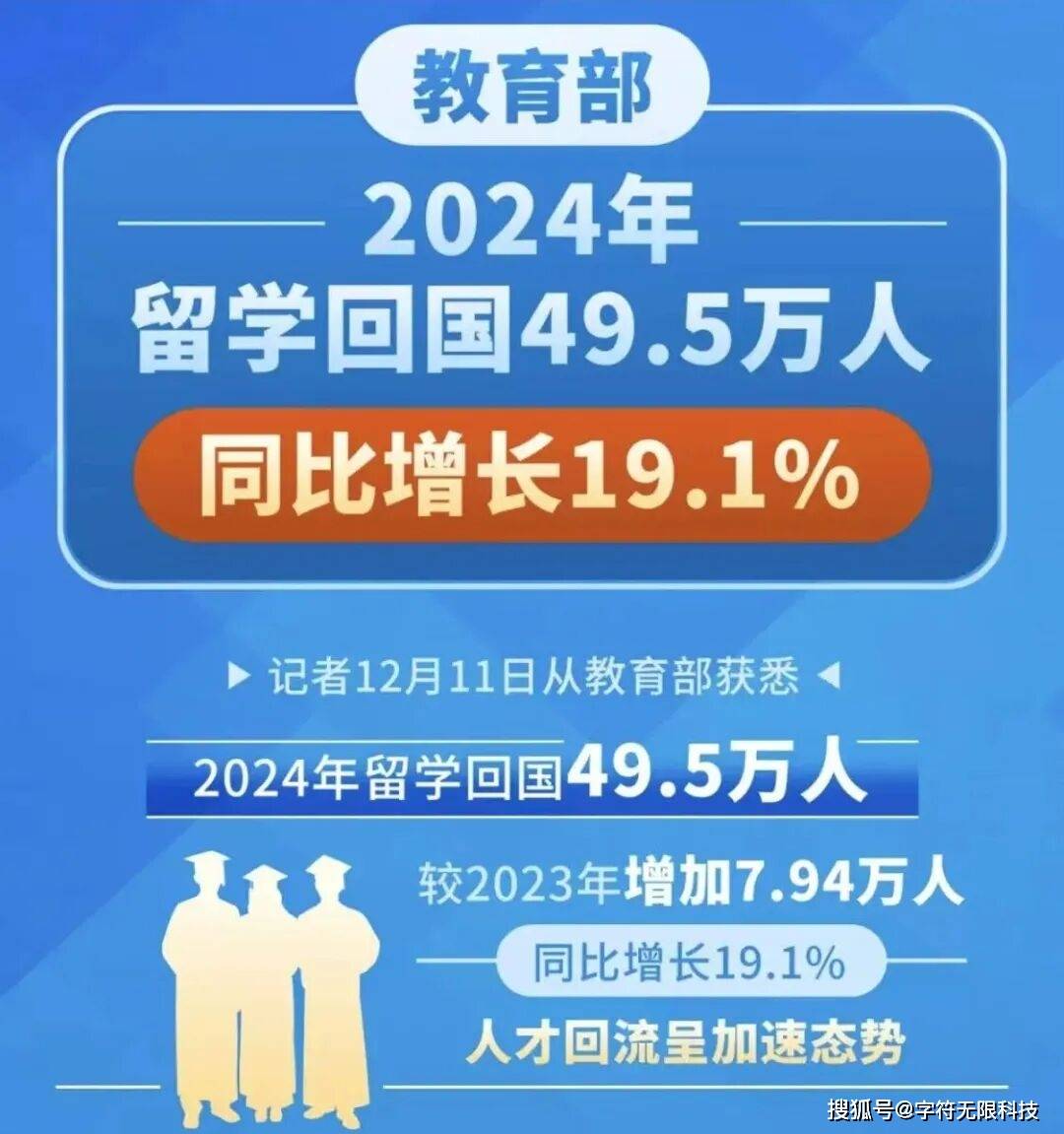
Group 1 - The core trend of returning overseas students is confirmed, with the number of returnees in 2024 reaching 495,000, an increase of 79,400 from 2023, representing a year-on-year growth of 19.1% [1] - From 1978 to 2024, a total of 8.88 million individuals have studied abroad, with 6.44 million choosing to return after completing their studies, indicating that two out of three students opt to return home [1] - The "returning heat" is not a short-term trend but a long-term phenomenon expected to continue for the next decade [1] Group 2 - The overseas job market is becoming increasingly challenging, with the H-1B visa acceptance rate in the U.S. dropping to a ten-year low of 14% in 2023, and other countries like the UK and EU tightening their immigration policies [3][5] - In contrast, domestic opportunities are growing, with the government integrating returning students into the national talent system, providing support for settlement, employment, and entrepreneurship [5][6] Group 3 - National policies are increasingly favorable towards returning students, with the Ministry of Education emphasizing their importance in the national talent pool and development strategy [6] - Major cities like Shanghai and Beijing have introduced attractive policies for returning students, including direct residency applications for graduates from top universities without social security payment requirements [9][10] Group 4 - Cities like Shenzhen are offering substantial subsidies for returning students starting businesses in strategic emerging industries, with potential grants reaching up to 1 million yuan [11][13] - Various provinces and cities are implementing their own entrepreneurial support and loan subsidy policies to attract overseas talent [13] Group 5 - Major tech companies are increasingly favoring returning students, with dedicated recruitment events for overseas graduates, allowing them to secure job offers independently from traditional recruitment processes [14][16] - Companies like Tencent, Huawei, and Alibaba are actively recruiting overseas talent, recognizing the need for interdisciplinary skills in emerging technology fields [16][18] Group 6 - The most popular fields for returning students include business and computer science, with business administration and finance being the top choices due to their promising career prospects [19][20] - The IT, internet, and gaming industries are significant employment sectors for returning talent, accounting for 15.4% of the job market for returnees [21] Group 7 - The domestic gaming market is thriving, with actual sales revenue reaching 350.79 billion yuan in 2024, a year-on-year increase of 7.68% [23] - Despite some companies closing overseas studios, the domestic gaming industry remains vibrant, with a significant demand for talent in game design and development [25][28]
数字经济赋能乡村文化高质量发展
Xin Lang Cai Jing· 2026-01-16 16:00
Core Viewpoint - The integration of digital economy into rural cultural ecology is essential for revitalizing cultural confidence, awakening local memories, and stimulating industrial vitality in the context of China's modernization and rural revitalization strategies [1] Group 1: Digital Empowerment of Rural Cultural Resources - Digital technology addresses the preservation challenges of traditional rural cultural resources by creating permanent backups and structured analyses through high-precision digitization methods [2] - Techniques such as 3D laser scanning and multispectral imaging enable the digital replication of cultural heritage, transforming physical forms into computable, storable, and retrievable digital assets [2] Group 2: Globalization of Rural Culture through Media - The digital economy era's media matrix breaks the traditional one-way communication structure, allowing rural culture to gain a decentralized and interactive dissemination ecosystem [3] - Algorithms and social platforms facilitate precise distribution of rural cultural content based on user interests, overcoming geographical and media limitations [3] Group 3: Innovation in Rural Cultural Industry - E-commerce models are pivotal in transforming cultural resources into market value, addressing the "supply without demand" issue faced by traditional handicrafts and specialty agricultural products [4] - E-commerce platforms not only serve as sales channels but also guide production through consumer data analysis, enabling rural producers to align with market trends and develop culturally rich products [4] Group 4: Immersive Experiences in Rural Tourism - The rise of immersive technologies like virtual reality and augmented reality is reshaping rural tourism consumption, moving beyond traditional sightseeing to deeper cultural experiences [5] - These technologies allow for the presentation of historical scenes and cultural rituals, transforming visitors from passive observers to active participants, thus extending the consumption chain and enhancing the value of rural tourism [5] Conclusion - The digital economy is fundamentally transforming rural cultural revitalization by activating cultural vitality through technological rationality and reshaping cultural productivity through industrial logic [6] - The emergence of new business models like rural e-commerce and immersive tourism represents a dialectical unity of cultural and economic value, turning cultural resource advantages into competitive advantages [6]
流金科技龙虎榜数据(1月16日)
Zheng Quan Shi Bao Wang· 2026-01-16 15:34
Group 1 - The stock of LiuJin Technology (920021) experienced a significant decline of 13.95% with a turnover rate of 31.25% and a trading volume of 743 million yuan, indicating high volatility with an amplitude of 21.89% [1] - The stock was listed on the "Dragon and Tiger List" due to its high turnover rate, with a net selling amount of 50.1384 million yuan from brokerage seats [1] - The top five brokerage seats accounted for a total transaction amount of 191 million yuan, with a buying amount of 70.6721 million yuan and a selling amount of 121 million yuan, resulting in a net selling of 50.1384 million yuan [1][2] Group 2 - Over the past six months, the stock has appeared on the "Dragon and Tiger List" five times, with an average price increase of 2.33% the day after being listed and an average decline of 11.55% in the following five days [2] - The largest buying brokerage was Guosen Securities Co., Ltd. Shenzhen Internet Branch, with a buying amount of 30.4547 million yuan, while the largest selling brokerage was Changcheng Securities Co., Ltd. Northwest Branch, with a selling amount of 41.6721 million yuan [2]

“十五五”期间朝阳区将推动建设首都新质生产力融合发展示范区
Bei Jing Shang Bao· 2026-01-16 13:24
Core Viewpoint - The Chaoyang District aims to enhance its GDP contribution from the information and technology service sectors, targeting a significant increase in technological innovation and digital economy integration by 2025 [1] Group 1: Economic Performance - In the first three quarters of 2025, the combined GDP contribution of the information service and technology service industries in Chaoyang District reached 27.7%, an increase of 6.3 percentage points compared to the end of the 13th Five-Year Plan [1] Group 2: Strategic Goals - During the 14th Five-Year Plan period, Chaoyang District will focus on scenario-driven development, ecological core, and cluster goals, positioning technological innovation as the main driving force for future growth [1] - The district plans to cultivate and expand the "3+X+N" industrial clusters, promoting the integration of technological innovation and the digital economy [1] Group 3: Development Vision - Chaoyang District aims to become a demonstration zone for the integration of new productivity, a high ground for the transformation of cutting-edge technological achievements, and a hub for innovative applications and international open innovation [1] - The district is set to be one of the main engines for the construction of Beijing's international science and technology innovation center [1]
聚焦北京各区两会|“十五五”期间朝阳区将推动建设首都新质生产力融合发展示范区
Bei Jing Shang Bao· 2026-01-16 13:08
Core Viewpoint - Chaoyang District aims to enhance its GDP contribution from information services and technology services, targeting a significant increase in the integration of technology innovation and digital economy by 2025 [1] Group 1: Economic Performance - In the first three quarters of 2025, the combined GDP contribution of information services and technology services in Chaoyang District reached 27.7%, an increase of 6.3 percentage points compared to the end of the 13th Five-Year Plan [1] Group 2: Strategic Goals - During the 14th Five-Year Plan period, Chaoyang District will focus on scenario-driven development, ecological core, and cluster goals, positioning technology innovation as the core driving force for future development [1] - The district plans to cultivate and expand the "3+X+N" industrial clusters, promoting the integration of technology innovation and digital economy [1] Group 3: Development Vision - Chaoyang District aims to become a demonstration zone for the integration of new productivity, a high ground for the transformation of cutting-edge technological achievements, and an innovation hub for scenario applications [1] - The district is set to play a key role as one of the main engines in the construction of Beijing's international technology innovation center [1]
安永中国主席陈凯:借力粤港澳大湾区独特优势 把握“一带一路”全新投资机遇
Zhong Guo Ji Jin Bao· 2026-01-16 12:55
Core Viewpoint - The article emphasizes the importance of leveraging the unique advantages of the Guangdong-Hong Kong-Macao Greater Bay Area to seize new investment opportunities presented by the Belt and Road Initiative, especially in the context of the evolving global geopolitical landscape [1][3]. Investment Opportunities - Chinese enterprises are increasingly deepening investment cooperation with countries along the Belt and Road, with non-financial direct investments maintaining rapid growth [3]. - The investment direction of Chinese capital is shifting from traditional sectors like energy and infrastructure to emerging fields such as green energy, advanced manufacturing, digital economy, artificial intelligence, and life sciences [3][6]. - The asset management industry must adapt to a more complex market environment, requiring refined asset allocation across different countries, industries, and financial instruments [3][6]. Risk Management - The article identifies three main risks in cross-border asset allocation: 1. **Compliance Risk**: With tightening global financial regulations, asset management firms must maintain high compliance standards across different jurisdictions, necessitating a flexible and forward-looking compliance management framework [5]. 2. **Capital Risk**: Fluctuations in exchange rates, capital controls, and market liquidity can significantly impact investment returns, prompting the need for diversified asset allocation to mitigate single market risks [5]. 3. **Political and Regulatory Uncertainty**: Some Belt and Road countries present uncertainties in political environments, legal frameworks, and cultural contexts, requiring targeted due diligence and risk assessments [5]. Role of Hong Kong - Hong Kong serves as a "super connector" and "super value adder," linking domestic resources with international markets, thereby enhancing the Greater Bay Area's competitiveness in global resource allocation [6][7]. - Under the "One Country, Two Systems" framework, Hong Kong has established a common law system and international regulatory rules, making it a crucial international financial hub for Belt and Road investments [6]. Technological Innovation in the Greater Bay Area - The Greater Bay Area is positioned as one of China's three major international technology innovation centers, with the "14th Five-Year Plan" emphasizing its strategic role in the national innovation system [7]. - Investment opportunities in the Greater Bay Area are increasingly focused on strategic emerging industries such as artificial intelligence, life sciences, high-end manufacturing, new energy, and digital economy [7]. - Asset management firms are encouraged to shift from traditional short-term financial investments to a long-term investment logic that combines industry understanding with strategic allocation [7].