
中华民族共同体意识

Search documents
都安瑶族自治县喜迎成立70周年
Guang Xi Ri Bao· 2025-12-16 02:52
当天下午,还举行了都安瑶族自治县成立70周年经济社会发展座谈会。谭丕创强调,要坚持实干为 要、创新为魂,用业绩说话、让人民评价,深入贯彻落实中央和自治区各项决策部署,加快推动都安经 济高质量发展,扎实推进都安乡村全面振兴,持之以恒增进都安各族群众民生福祉,坚定不移铸牢中华 民族共同体意识,加强党对民族工作的全面领导,不断开创都安高质量发展新局面,为奋力谱写中国式 现代化广西篇章作出新的更大贡献。 自治区代表团团长,自治区党委常委、统战部部长谭丕创代表自治区党委、自治区人大常委会、自 治区人民政府、自治区政协、广西军区和全区各族人民,向都安各族群众表示祝贺。他说,70年来特别 是新时代以来,都安各族干部群众接续奋斗、砥砺前行,经济实力稳步提升,乡村面貌焕然一新,绿色 发展成效显著,人民生活蒸蒸日上,民族团结持续巩固,取得了辉煌成就。希望都安各族干部群众坚持 不懈用习近平新时代中国特色社会主义思想凝心铸魂,全面贯彻落实习近平总书记关于广西工作论述的 重要要求,深入学习贯彻党的二十大和二十届历次全会精神以及中央经济工作会议精神,坚持和加强党 的全面领导,始终聚焦铸牢中华民族共同体意识这条主线,完整准确全面贯彻新发展 ...
内蒙古博物院:铺展北疆民族交融画卷(你所不知道的一级馆)
Ren Min Ri Bao Hai Wai Ban· 2025-12-16 02:33
Core Insights - The Inner Mongolia Museum, established in 1957, is the first national first-class museum in the Inner Mongolia Autonomous Region, housing 209,000 items, including 487 first-class cultural relics, and has recently relocated to a new facility that is more than double the size of the old one [3][4] Group 1: Museum Overview - The new museum has a total building area of 147,000 square meters and an exhibition area of 39,000 square meters, significantly enhancing public access to the cultural heritage of Inner Mongolia [3] - The museum aims to provide a window for the public to understand Inner Mongolia and appreciate the culture of the northern frontier [3] Group 2: Cultural Exhibitions - The exhibitions are organized to highlight the historical interactions among various ethnic groups in Inner Mongolia, showcasing the region's role as a significant birthplace of Chinese civilization [4] - The first exhibition hall covers the period from the Paleolithic to the Xia, Shang, and Zhou dynasties, featuring important archaeological sites and cultural types such as the Hongshan culture [4][5] - The second exhibition hall spans from the Spring and Autumn period to the Wei, Jin, and Northern and Southern Dynasties, illustrating the exchanges between agricultural communities and northern tribes [4] Group 3: Notable Artifacts - The museum's notable artifacts include the Eagle-topped gold crown ornament from the late Warring States period, which is a unique representation of Xiongnu aristocracy and showcases advanced metalworking techniques [5][6] - Other significant items include the Western Han "Heqin" tile and various bronze weapons and artifacts that reflect the development and construction of border areas by central dynasties [6] Group 4: Historical Context - The third exhibition hall presents the historical and cultural landscape of Inner Mongolia from the Sui and Tang to the Liao, Song, Xia, and Jin periods, emphasizing the contributions of northern ethnic groups to the unified Chinese civilization [7] - The fourth exhibition hall focuses on the cultural achievements of various ethnic groups during the Yuan, Ming, and Qing dynasties, featuring treasures like the Yuan Dynasty Jun kiln incense burner [8] Group 5: Educational Initiatives - The museum has developed educational spaces and programs, including interactive activities and workshops, to engage the public and promote cultural heritage [10] - In 2023, the museum hosted over 3,400 educational activities, with more than 220,000 participants, and aims to be a center for cultural transmission and social education [10]


为国际非遗保护事业贡献中国实践经验——文化和旅游部有关部门负责人谈赫哲族伊玛堪转入人类非遗代表作名录和入选优秀保护实践名册
Xin Hua She· 2025-12-11 14:32
Core Viewpoint - The successful transition of "Hezhe Ethnic Group's Imakan" from the urgent protection list to the representative list of intangible cultural heritage, along with the inclusion of the "Hezhe Ethnic Group's Imakan Protection Plan" in the excellent protection practice list, highlights China's commitment to preserving its cultural heritage and contributes to international efforts in safeguarding intangible cultural heritage [1][3]. Group 1: Cultural Significance - The Hezhe ethnic group is one of China's minority populations, primarily located in the Heilongjiang, Songhua, and Ussuri River basins. The "Hezhe Ethnic Group's Imakan" is a traditional oral narrative that conveys the history, hero stories, and cultural practices of the Hezhe people [2]. - The Imakan serves multiple functions, including recording history, educating future generations, and providing entertainment, while promoting values such as justice, bravery, and harmony [4]. Group 2: Achievements and Recognition - The successful transition of "Hezhe Ethnic Group's Imakan" and the recognition of its protection plan as an excellent practice demonstrate China's effective use of UNESCO's mechanisms for intangible cultural heritage protection [5][6]. - Since its inclusion in the urgent protection list in 2011, the Imakan project has seen significant progress, including an increase in the number of practitioners from 5 to 121, and heightened interest among the youth in preserving their cultural heritage [7]. Group 3: Future Directions - Moving forward, China aims to enhance its efforts in applying for more projects to be included in UNESCO's intangible cultural heritage lists, emphasizing the importance of these cultural practices in fostering national unity and cultural influence [8][9]. - The country plans to strengthen international cooperation in intangible cultural heritage, sharing its protection experiences and promoting cultural exchange [9].
权威访谈丨为国际非遗保护事业贡献中国实践经验——文化和旅游部有关部门负责人谈赫哲族伊玛堪转入人类非遗代表作名录和入选优秀保护实践名册
Xin Hua She· 2025-12-11 13:27
Core Viewpoint - The successful transition of "Hezhe Ethnic Group's Imakan" from the urgent protection list to the representative list of intangible cultural heritage, along with the inclusion of the "Hezhe Ethnic Group's Imakan Protection Plan" in the excellent protection practice list, highlights China's commitment to preserving its cultural heritage and contributes valuable experience to international efforts in safeguarding intangible cultural heritage [1][3]. Group 1: Cultural Significance - The Hezhe ethnic group is one of China's smaller ethnic minorities, primarily located in the Heilongjiang, Songhua, and Ussuri River basins. The "Hezhe Ethnic Group's Imakan" is a traditional oral narrative that conveys the history, hero stories, hunting lifestyle, customs, and moral norms of the Hezhe people, serving various functions such as historical documentation and education [2][4]. - The Imakan project promotes values of justice, bravery, kindness, and the pursuit of freedom, harmony, and peace, significantly influencing the Hezhe people's cultural identity and serving as a bridge for dialogue and mutual respect among different ethnic groups [4]. Group 2: Achievements and Recognition - The successful transition of "Hezhe Ethnic Group's Imakan" and the recognition of its protection plan as an excellent practice exemplify China's systematic approach to intangible cultural heritage protection, enhancing cultural confidence and promoting a sense of community among the Chinese nation [3][6]. - Since its inclusion in the urgent protection list in 2011, the Imakan project has seen significant progress, including an increase in the number of practitioners from 5 to 121, and a growing interest among the youth in preserving their cultural heritage [7]. Group 3: Future Directions - Moving forward, China aims to enhance its efforts in applying for more projects to be included in the UNESCO intangible cultural heritage lists, focusing on those that reflect Chinese characteristics and wisdom. This includes strengthening collaboration among various stakeholders to boost the vitality of these projects [8][9]. - China will actively participate in international intangible cultural heritage affairs, sharing its protection experiences and promoting international cooperation in heritage preservation [9].
汇聚志愿力量 共建美好社会——2025年“12·5”国际志愿者日倡议书
Nei Meng Gu Ri Bao· 2025-12-03 04:38
Group 1 - The core theme of the initiative is "Gathering Volunteer Power to Build a Better Society," emphasizing the importance of volunteerism in supporting national strategies and enhancing community well-being [1] - The call to action focuses on aligning volunteer efforts with the national strategic goals, particularly in areas such as rural revitalization, ecological protection, and technological innovation, as the region transitions into the new "15th Five-Year Plan" [2] - The initiative highlights the necessity of addressing the urgent needs of the public, advocating for targeted volunteer services that provide practical support to improve the quality of life for citizens [3] Group 2 - The role of volunteer services is framed as essential for grassroots social governance, promoting community engagement and conflict resolution through active participation of volunteers [4] - The collaboration between professional social workers, community workers, and volunteers is encouraged to enhance the effectiveness of services in areas like mental health and emergency response [4] - The initiative aims to foster a sense of ownership among the public, contributing to a new model of social governance characterized by shared responsibility and cooperation [4]
讴歌援藏精神 院线电影《雪域使命》首映式在京举行
Yang Shi Wang· 2025-11-30 08:35
Core Viewpoint - The film "Mission in the Snowy Region" celebrates the spirit of aid to Tibet and showcases the dedication of aid workers in supporting Tibet's development and stability, reflecting the collective consciousness of the Chinese nation [1][2]. Group 1: Film Overview - The film is produced by Hefei Fengrun Cultural Media Co., Ltd. and is set to premiere nationwide on December 12 [2]. - It portrays the real stories of aid workers who have selflessly contributed to Tibet since the Third Central Tibet Work Forum, emphasizing their commitment to the revolutionary ideal [1][2]. Group 2: Reception and Impact - The film has received high praise from attendees, including former leaders and aid workers, for its grand scenes, beautiful visuals, and touching narratives [2]. - It aims to promote and inherit the "Old Tibet Spirit" and "Aid to Tibet Spirit," highlighting the emotional connection to the nation and the sacrifices made by aid workers [2]. Group 3: Production Insights - The producer, Shu Youzhong, emphasized that the film took three years to create, focusing on themes of national responsibility and selfless dedication [2]. - The film aims to depict the significant achievements in Tibet over a short period, showcasing the collective spirit of the Chinese nation [2].
凝聚青春力量 不负时代使命 在砥砺奋进“十五五”中展现八桂青年实干担当
Zhong Guo Qing Nian Bao· 2025-11-30 00:22
Core Points - The 20th Central Committee's Fourth Plenary Session outlines a clear path for advancing Chinese-style modernization during the critical period of achieving the "14th Five-Year Plan" goals, emphasizing the importance of youth engagement in this process [1] Group 1: Political Guidance and Ideological Foundation - The session emphasizes the necessity of adhering to the "six persistences" for economic and social development during the "15th Five-Year Plan," with the foremost being the comprehensive leadership of the Party [2] - The Guangxi Youth League focuses on political education for youth, enhancing their ideological foundation through various theoretical and practical activities [2][3] Group 2: High-Quality Development and Innovation - The session stresses high-quality development as a primary goal, with the Guangxi Youth League mobilizing youth to contribute to this objective through practical and innovative efforts [4] - Initiatives like the "Artificial Intelligence + Youth Development" action plan aim to cultivate youth skills in AI, fostering new productive forces [4] Group 3: Youth Development and Support - The session highlights the principle of prioritizing people's well-being, with the Guangxi Youth League committed to addressing youth needs and promoting their growth and success [7] - Programs aimed at enhancing youth employment and entrepreneurship are being organized, including job fairs and support services for young people [7][8] Group 4: Organizational Strengthening and Reform - The session calls for strict governance within the Party, with the Guangxi Youth League implementing reforms to strengthen its organizational structure and effectiveness [9] - Continuous reform efforts are being made to enhance grassroots organizational capabilities and integrate youth development with broader political education [10]

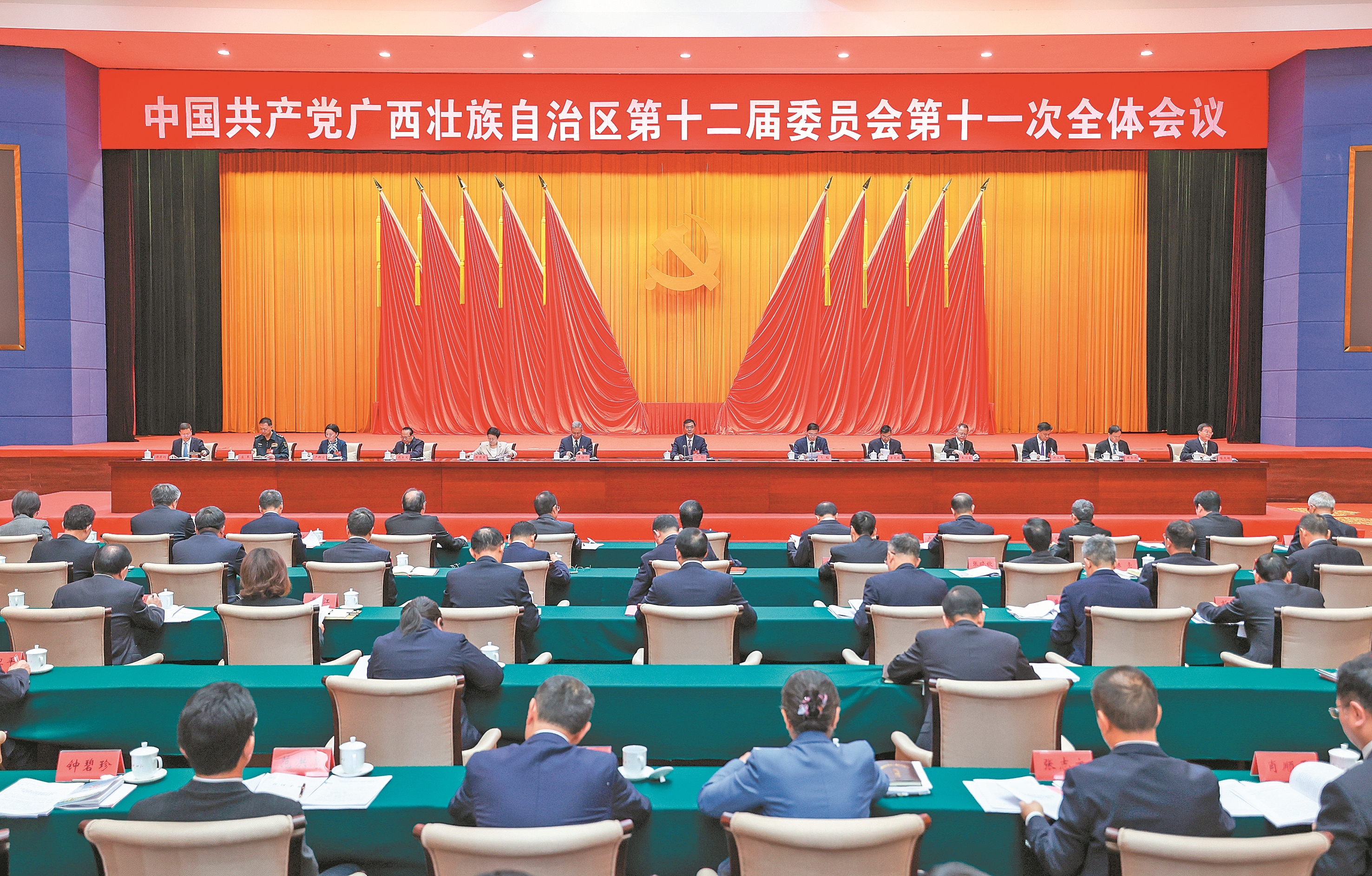
中国共产党广西壮族自治区第十二届委员会第十一次全体会议公报
Guang Xi Ri Bao· 2025-11-29 02:21
Core Points - The meeting emphasized the importance of the 15th Five-Year Plan for Guangxi's economic and social development, aiming for significant progress in achieving socialist modernization alongside the national timeline [5][10][16] - The meeting recognized the achievements during the 14th Five-Year period, highlighting the resilience shown in overcoming challenges such as the COVID-19 pandemic and the ongoing development of key infrastructure projects [7][8] - The meeting outlined strategic goals for the 15th Five-Year period, focusing on high-quality development, technological innovation, and deepening cooperation with ASEAN countries [10][11][12] Summary by Sections Meeting Overview - The 11th Plenary Session of the 12th Committee of the Communist Party of Guangxi was held on November 28, 2025, in Nanning, attended by 77 committee members and other officials [4] Key Discussions - The meeting discussed the work report presented by Chen Gang, emphasizing the need to align actions with the spirit of the 20th Central Committee [5][6] - The meeting highlighted the importance of the 20th Central Committee's decisions in guiding Guangxi's development strategies [5][9] Achievements and Challenges - The meeting acknowledged significant achievements during the 14th Five-Year period, including effective pandemic response and infrastructure development [7][8] - It recognized the complex changes in the development environment, balancing opportunities and risks [8] Strategic Goals for the 15th Five-Year Plan - The meeting set forth major goals, including enhancing the quality of economic development, advancing AI and technological innovation, and expanding domestic and international cooperation [10][11][12] - Emphasis was placed on building a modern industrial system and strengthening the foundation of the real economy [11] Policy Directions - The meeting called for a focus on high-quality development, innovation, and a robust open economy, while also addressing social welfare and environmental sustainability [12][15] - It stressed the importance of cultural development and the promotion of national unity [14] Implementation and Governance - The meeting underscored the need for effective governance and the implementation of the 15th Five-Year Plan, with a commitment to enhancing the political responsibility of local leaders [16][17] - It highlighted the importance of maintaining social stability and improving living standards as part of the development strategy [17]
黄卫平、杨宁,递补为广西壮族自治区党委委员
Bei Jing Ri Bao Ke Hu Duan· 2025-11-28 11:33
Core Points - The meeting emphasized the importance of the 15th Five-Year Plan for the economic and social development of Guangxi, aiming for high-quality growth and modernization in alignment with national goals [4][7][9] - The meeting highlighted the need for a modern industrial system, focusing on the real economy and promoting sectors such as artificial intelligence and green development [10][11][14] - The meeting called for enhanced cooperation with ASEAN countries and the establishment of a high-level platform for AI applications [10][11] Summary by Sections Meeting Overview - The 11th Plenary Session of the 12th Committee of the Communist Party of China in Guangxi was held on November 28, 2025, in Nanning, attended by 77 committee members and other officials [3][4] Key Discussions - The meeting reviewed and approved the "Suggestions on Formulating the 15th Five-Year Plan for National Economic and Social Development," which aims to guide Guangxi's development in the next five years [4][5] - The meeting acknowledged the achievements during the 14th Five-Year Plan period, emphasizing the importance of unity and leadership from the central government [6][8] Development Goals - The meeting set major goals for the 15th Five-Year Plan, including significant advancements in high-quality development, AI, and technology innovation, as well as improvements in social civilization and living standards [9][10] - It stressed the importance of a balanced approach to economic growth, environmental sustainability, and social equity [12][14] Strategic Directions - The meeting outlined strategies for expanding domestic and international cooperation, enhancing the open economy, and fostering innovation in education and technology [11][12] - It emphasized the need for a robust cultural and tourism sector, promoting national unity and improving public welfare [13][14] Implementation and Governance - The meeting called for a strong focus on governance, emphasizing the need for effective leadership and adherence to party discipline to ensure the successful implementation of the 15th Five-Year Plan [15][16] - It highlighted the importance of addressing current challenges and maintaining social stability while pursuing development goals [16][17]
穿越千年的山海,舞剧《龟兹》再现“丝路明珠”
Hang Zhou Ri Bao· 2025-11-28 02:28
Core Viewpoint - The dance drama "Kizil" showcases the cultural dialogue along the ancient Silk Road, blending the rich heritage of Kizil culture with contemporary artistic expression through performances in various cities, including Hangzhou, to foster emotional resonance between regions [2][3] Group 1: Performance and Reception - The dance drama "Kizil" premiered in Hangzhou from November 26 to 27, following a successful tour that included sold-out performances in Shanghai, Ningbo, and Suzhou, receiving acclaim from both experts and audiences [2] - The production is described as a "flowing Silk Road painting," emphasizing its role in promoting cultural exchange and emotional connections between Zhejiang and Xinjiang [2] Group 2: Creative Team and Artistic Vision - The creative team is led by renowned director Tong Ruirui, with contributions from historian Han Ziyong as the playwright, and features a collaboration of talented artists from the Xinjiang Art Theatre and young dancers from Xinjiang Normal University [3] - The director has extensively researched historical sites related to Kizil culture, stating that the project aims to bring the essence of Kizil's murals, music, and Buddhist art to the stage [3] Group 3: Cultural Significance and Future Plans - The dance drama reflects the spirit of "interaction, communication, and integration," highlighting the shared cultural identity of the Chinese nation [3] - Following its success in Hangzhou, "Kizil" is set to continue its tour to cities such as Beijing, Tianjin, and Harbin, further promoting the unique charm of Kizil culture through dance [3]
