人机交互

Search documents
直击WRC | 像真人一样表情生动!数字华夏多款人形机器人亮相
Xin Lang Cai Jing· 2025-08-08 12:12
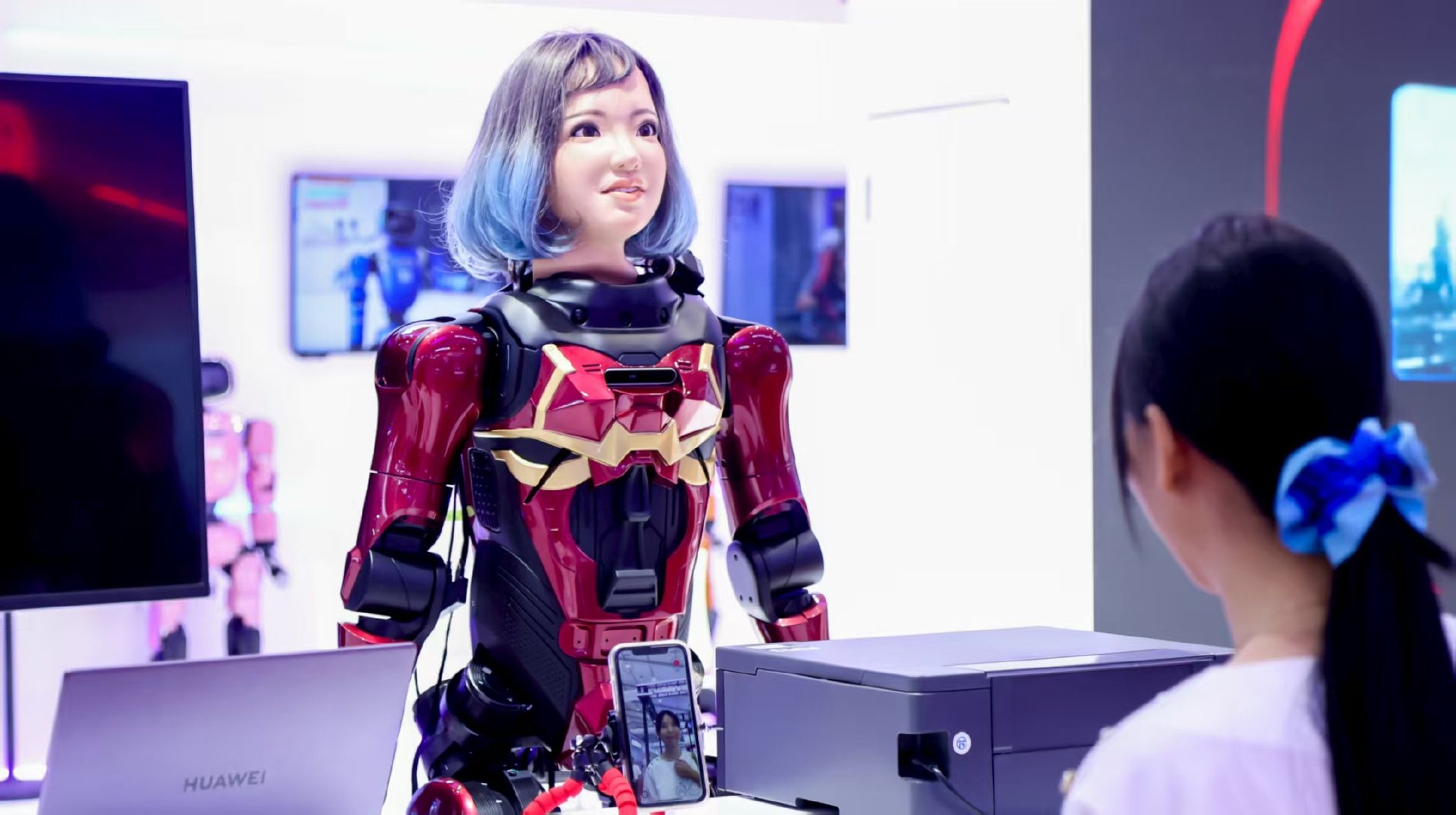
Core Insights - The 2025 World Robot Conference (WRC) opened in Beijing on August 8, showcasing advancements in robotic technology [1] Company Developments - Digital Huaxia presented its latest robot product line, including models such as Xiaolan, Xiaoqi, Xingxingxia, and Weixiaolu [1] - The Xiaolan robot has upgraded bionic interaction technology, adding 22 types of expressions and mimicking human facial expressions, equipped with electronic skin to sense touch, temperature, and pulse changes [1] - The Xingxingxia robot is a customizable IP robot with over 10 hours of battery life and a dual-mode design for various applications, currently receiving hundreds of orders [1] Industry Applications - The Xiaolan robot performed singing to attract audience attention, while Xingxingxia conducted educational demonstrations for children [1] - The Weixiaolu collaborated with Xiaoqi to complete item transportation tasks, showcasing multi-machine cooperation capabilities [1]


百事人形机器人家族亮相WAIC,饮料品牌正在刷新消费场景想象
36氪未来消费· 2025-08-08 11:07
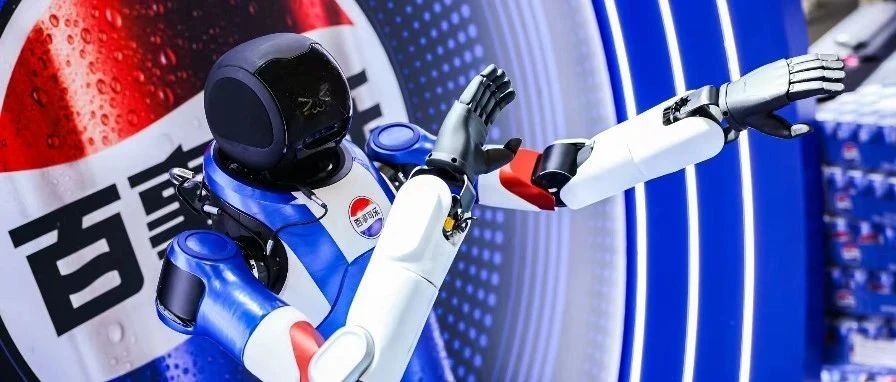
Core Viewpoint - PepsiCo is leveraging humanoid robots as a new brand interface to enhance consumer interaction and emotional connection, moving beyond traditional marketing methods to create a more engaging and relatable brand experience [3][10][21]. Group 1: Brand Innovation - The introduction of "Pepsi Cool Buddy" follows the earlier launch of "Pepsi Blue Buddy," marking a significant step in integrating humanoid robots into the brand's identity [4][10]. - These robots are not merely technological showcases but are designed to facilitate emotional engagement and interaction with consumers, thus becoming a tangible brand asset [4][11][12]. Group 2: Technology Integration - PepsiCo's deployment of humanoid robots at the WAIC (World Artificial Intelligence Conference) represents a pioneering effort to merge beverage branding with emerging technologies, particularly embodied intelligence [6][9]. - The underlying technology, based on the Zhiyuan Lingxi X2 platform, enables emotional recognition and interactive capabilities, enhancing the consumer experience [6][10]. Group 3: Consumer Engagement - The robots engage consumers through simple yet impactful actions like delivering drinks and initiating conversations, addressing the desire for a "warm technology" experience [7][21]. - This approach aims to transform the perception of humanoid robots from mere technical displays to relatable companions that enhance everyday interactions with the brand [15][23]. Group 4: Market Positioning - By positioning humanoid robots as ongoing interactive entities, PepsiCo is redefining brand communication strategies, moving from passive content delivery to active consumer engagement [12][19]. - The initiative reflects a broader industry trend where brands seek to establish personalized connections with consumers, particularly among younger demographics [18][24]. Group 5: Future Implications - The introduction of a new robot-themed can design indicates PepsiCo's intent to further embed this technological identity into everyday consumer products, enhancing brand recognition [16][20]. - This strategy not only addresses current consumer engagement challenges but also sets a precedent for how brands can utilize technology to foster deeper emotional connections with their audience [25].

全球首例意念操控苹果iPad!创新企业家陈天桥早于马斯克布局脑机接口
Tai Mei Ti A P P· 2025-08-08 00:08
人类终于可以用"意念"操作苹果iPad。 今年8月初,美国血管介入脑机接口企业Synchron首次公开展示了其完全通过意念操控iPad的成果。 Synchron发布推文称,借助苹果全新BCI HID协议及无障碍功能,一位ALS(肌萎缩侧索硬化症)患者 实现了完全通过思维操控iPad的历史性创举。特别致敬参与者Mark的勇气,以及苹果团队在推动无障 碍科技前沿发展中的卓越贡献。 "这是全球首次见证苹果设备实现原生思维操控,"Synchron创始人、CEO汤姆·奥克斯利(Tom Oxley) 博士表示,Mark的体验既是技术突破,也预示着人机交互的未来——认知输入将成为主流控制模式。 而且,这项演示借助苹果内置的无障碍功能"切换控制"及5月推出的全新脑机接口人机交互设备(BCI HID)协议实现,标志着脑信号首次成为苹果设备的原生输入方式。 值得关注的是,创新企业家、慈善家、天桥脑科学研究院创始人陈天桥,早于马斯克对脑机接口这一硬 核科技赛道进行超前布局。2021年,陈天桥就完成了对Synchron的多轮投资,而且早于两位投资 Synchron的世界前首富比尔·盖茨和贝索斯。 免开颅植入,ALS患者用脑机接口意念 ...


数伴成为ChinaJoy焦点,AI虚拟手办引领人机交互新趋势
Xiao Fei Ri Bao Wang· 2025-08-07 08:24
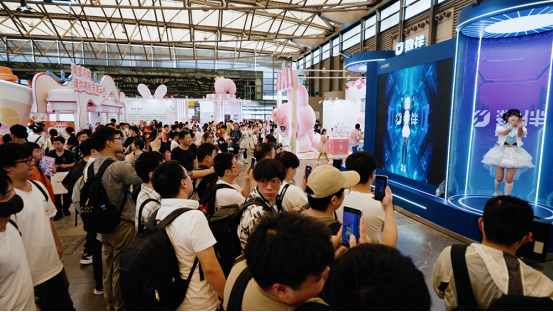
Group 1 - The 22nd China International Digital Interactive Entertainment Exhibition (ChinaJoy 2025) took place in Shanghai, showcasing the Dipal D1, the world's first curved screen pointing holographic AI interaction cabin, which became a popular attraction among Gen Z attendees [1][3] - Dipal's D1 utilizes "pointing holographic technology" to create the illusion of virtual characters floating in space, allowing for dynamic feedback and interaction, leading to long queues of attendees eager to experience its immersive capabilities [3][4] - The D1 redefines human-computer interaction by integrating emotional and personality traits into digital characters, enabling them to remember user preferences and habits, thus enhancing user engagement without the need for wearable devices [4][5] Group 2 - The founder of Dipal, Li Weijia, emphasized that the future of AI hardware transcends mere functionality, aiming to reconstruct the relationship between users and characters, reflecting a new interactive model that combines character personification, emotional interaction, and tangible hardware [5][6] - Dipal operates not only as a hardware manufacturer but also as a content platform, with its "Mojia House" being the largest MMD/3D model creation community in China, facilitating revenue sharing for creators [6][7] - The company plans to collaborate with more ACGN IPs, virtual idols, and game developers to build an open "AI virtual human ecosystem," signaling a shift towards more emotionally engaging AI experiences for younger audiences [7]
腾讯申请界面显示方法、装置、设备及介质专利,提高用户获取信息的效率
Jin Rong Jie· 2025-08-07 00:53
专利摘要显示,本申请公开了一种界面显示方法、装置、设备及介质,属于人机交互领域。上述方法包 括:在话题互动界面中,显示出彼此独立的多个内容区域,多个内容区域中各个内容区域的面积占比呈 现出第一分布情况,多个内容区域与多个观点一一对应,多个观点是针对同一话题的不同观点,多个内 容区域中每个内容区域用于容纳所对应观点的支持对象发布的内容;响应于当前对象完成投票操作,显 示出更新后的多个内容区域,更新后的多个内容区域中各个内容区域的面积占比呈现出第二分布情况, 第二分布情况与已投票对象在多个观点的数量分布情况相关联。 金融界2025年8月7日消息,国家知识产权局信息显示,腾讯科技(深圳)有限公司申请一项名为"界面 显示方法、装置、设备及介质"的专利,公开号CN120428881A,申请日期为2024年02月。 天眼查资料显示,腾讯科技(深圳)有限公司,成立于2000年,位于深圳市,是一家以从事软件和信息 技术服务业为主的企业。企业注册资本200万美元。通过天眼查大数据分析,腾讯科技(深圳)有限公 司共对外投资了15家企业,参与招投标项目263次,财产线索方面有商标信息5000条,专利信息5000 条,此外企业还拥有 ...

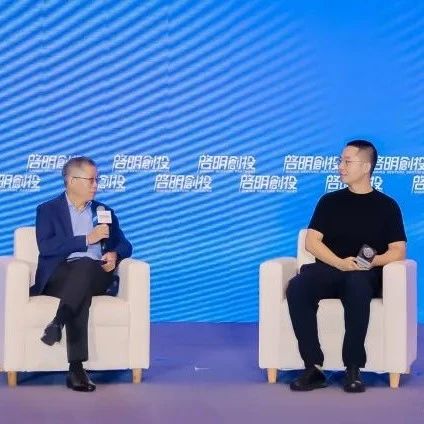
启明创投邝子平对话千里科技印奇:商业模式闭环才能持续推动技术进步,AI时代硬件机会巨大
创业邦· 2025-08-04 10:24
Core Viewpoint - The 2025 World Artificial Intelligence Conference (WAIC) emphasizes the integration of AI technology with various applications, highlighting the potential for significant advancements in the AI+terminal sector over the next three years [2][6]. Group 1: AI+Terminal Trends - The next three years are expected to be pivotal for the AI+terminal sector, particularly in the automotive and mobile phone industries, with significant advancements anticipated in human-machine interaction and application integration [6][8]. - The automotive industry is entering a critical phase, marking the tenth year of smart driving in China, with expectations of substantial changes in technology and product offerings [7][8]. Group 2: Model Evolution - Models are identified as the driving force behind the evolution of the AI industry, with a clear progression in learning paradigms from imitation learning to reinforcement learning and eventually to autonomous learning [9][11]. - The current state of multi-modal models in China is approximately six months behind that of the U.S., although the gap in computational power is widening, indicating a divergence in technological advancement [14][15]. Group 3: Business Model Insights - A sustainable business model must be closed-loop to effectively drive technological progress, emphasizing the importance of integrating technology, product, and commercialization from the outset [16][19]. - Companies focusing on foundational large models must justify significant investments in computational resources, as the long-term profitability of such models is critical for business viability [19]. Group 4: Hardware Opportunities - There are substantial opportunities in hardware beyond just vehicles and smartphones, with a focus on delivering comprehensive AI services through innovative hardware solutions [20][22]. - The future of AI services and operating systems is expected to undergo significant changes, with a shift towards human-machine collaboration and the emergence of new hardware forms driven by AI agents [24][25].
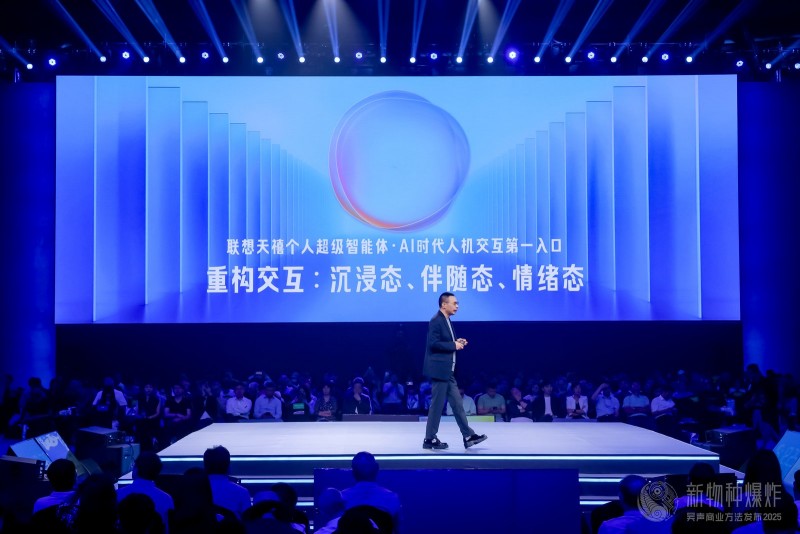
联想(00992.HK)AI挚友吴声:个人超级智能体是人机交互入口的系统性重构
Xin Lang Cai Jing· 2025-08-04 01:53
Core Insights - The event "New Species Explosion: Wu Sheng's Business Method Release 2025" focuses on the theme of "Instant Emergence," celebrating the speed and creativity of the AI era while reflecting on the past decade of scene revolution and future prospects [1] - Lenovo's Tianxi Personal Super Intelligent Agent was introduced as a significant advancement in human-computer interaction, positioning itself as the "first entry point for human-computer interaction in the AI era" [1][3] Group 1: Product and Technology Overview - The Personal Super Intelligent Agent captures user intentions, learns habits, and understands emotions, revealing Lenovo's strategic roadmap for AI terminal evolution [3] - The agent features three core functionalities: perception and interaction, cognition and decision-making, and autonomy and evolution, which redefine human-computer collaboration logic [3][4] - Key functionalities of the Tianxi Personal Super Intelligent Agent include AI control, AI translation, AI notes, AI search, and AI services, with over 300 skills for AI control in high-frequency usage scenarios [4][5] Group 2: User Experience and Design - The "Immersive State" of the Personal Super Intelligent Agent emphasizes seamless interaction and proactive service, while the "Accompanying State" breaks down barriers between devices for uninterrupted cross-platform collaboration [4] - The "Emotional State" integrates aesthetic design and emotional care into interactions, transforming AI terminals from mere tools to partners in inspiration [4] - The Lenovo Moto Razr 60 series, featuring the Personal Super Intelligent Agent, is designed with a focus on fashion and craftsmanship, incorporating premium materials and a unique aesthetic [7] Group 3: Market Positioning and Future Outlook - Lenovo's strategy emphasizes a "one body, multiple ends" approach, with the Personal Super Intelligent Agent serving as a core component across various AI devices, including PCs, smartphones, tablets, and AIoT devices [9] - The introduction of the Personal Super Intelligent Agent marks a significant evolution in the relationship between humans and devices, positioning it as a "silicon-based extension" of digital individuals [9] - The event highlights Lenovo's commitment to redefining human-computer interaction and setting new benchmarks for AI terminals in the evolving landscape of technology [9]

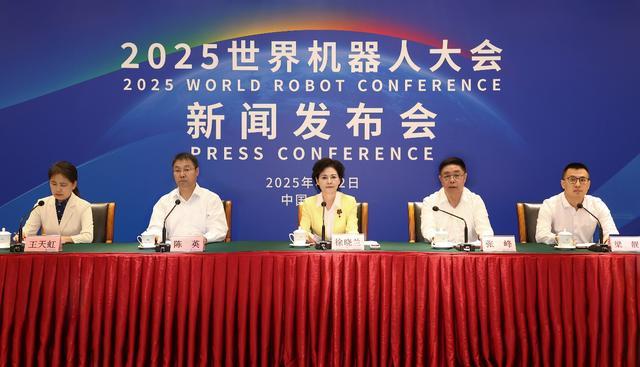
超100款新品集中亮相!2025世界机器人大会8月8日北京启幕
Huan Qiu Wang Zi Xun· 2025-08-03 04:37
Core Insights - The 2025 World Robot Conference will be held from August 8 to 12 in Beijing, featuring over 200 domestic and international robot companies showcasing more than 1,500 exhibits, including over 100 new product launches [1][3] - The theme of this year's conference is "Making Robots Smarter and Bodies More Intelligent," supported by 28 international organizations, marking a record high in international participation [1][3] Industry Overview - The World Robot Conference has become a leading event for innovation in the global robotics field over the past decade, with China accounting for two-thirds of global robot patent applications in 2024 [3] - China continues to solidify its position as the largest industrial robot market for 12 consecutive years and is the world's largest robot producer, with industrial robots now applied across 71 major sectors of the national economy [3] - The density of robots in the manufacturing sector has risen to the third highest globally [3] Conference Structure - The main forum will cover three key areas: "Industry Development," "Innovative Applications," and "Technology Integration," featuring over 400 top scientists, international organization representatives, academicians, and entrepreneurs [3] - The exhibition will include three main pavilions: Innovation Pavilion, Application Pavilion, and Technology Pavilion, showcasing cutting-edge products from leading companies such as ABB, KUKA, and others [3] Competitions and Events - The conference will host three major competitions: the Inclusive Robot Challenge, BCI Brain-Controlled Robot Competition, and Youth Robot Design Competition, with over 6,000 teams and 10,000 participants from more than 10 countries [4] - A total of 31 activities will be organized around themes such as innovative applications of robots, international cooperation, technological breakthroughs, standard testing, investment and financing, academic discussions, and talent cultivation in the industry [4] Human-Robot Interaction - The conference will feature 50 humanoid robot companies showcasing innovative applications in various sectors, including industrial manufacturing, medical care, and home services [5] - An "E-Town Robot Consumption Festival" will be held concurrently, offering a unique shopping experience and services for both online and offline consumers [5]
中国电子学会:中国人形机器人整体水平处全球第一方阵
Xin Lang Cai Jing· 2025-08-02 13:55
Core Insights - The core viewpoint of the article highlights significant advancements in humanoid robotics in China, positioning the country among the global leaders in this field [1] Technological Innovation - Major breakthroughs have been achieved in core technologies such as large robot models, intelligent collaborative control, human-machine interaction, and multimodal perception [1] - The motion capabilities of domestic robots have been significantly enhanced, with AI control algorithms optimized to achieve millisecond-level action response, improving stability, flexibility, and coherence [1] Industry Development - The sales volume of industrial robots in China has increased from 70,000 units in 2015 to 302,000 units in 2024, maintaining its status as the largest industrial robot market globally for 12 consecutive years [1] - China is the world's largest robot producer, with industrial robot output rising from 33,000 units in 2015 to 556,000 units in 2024 [1]
抖音走出的AI科学家:U航与百万“电子股东”共创人脸机器人革命
Guan Cha Zhe Wang· 2025-07-30 12:36
Core Insights - The article highlights the innovative development of the "Emo" facial robot, which can express emotions through AI-driven empathy, redefining human-robot interaction [1][3][4] Group 1: Technology and Innovation - The "Emo" robot, developed by U Hang, utilizes two groundbreaking technologies: "predictive empathy" and "self-modeling," allowing it to anticipate human emotions and learn expressions through self-observation [7][8] - U Hang's research aims to overcome traditional robotic limitations, such as "stiff expressions" and "mechanical interactions," by enabling robots to understand when to express emotions [4][5] Group 2: Community Engagement and Collaboration - U Hang engages with a large online community, referring to them as "electronic shareholders," whose feedback and suggestions significantly influence the development of the Emo robot [3][12] - The use of social media platforms like Douyin (TikTok) has transformed U Hang's research into a collaborative effort, allowing for real-time interaction and idea generation with potential users [9][12] Group 3: Market Trends and User Engagement - Douyin has emerged as a vibrant tech community, with a 175% increase in views for science and technology content over the past year, indicating a growing interest in AI and robotics among younger audiences [13] - The platform has facilitated the creation of 2.2 billion pieces of content related to artificial intelligence, showcasing the active participation of users in discussions about technology [13]