
人造太阳

Search documents
能源霸主即将易主,中国人造太阳获关键突破,能否研发无限能源?
Sou Hu Cai Jing· 2025-10-18 12:16
Core Insights - The article highlights China's significant breakthroughs in nuclear fusion technology, positioning it as a key player in the global energy landscape and potentially reshaping the competition in energy technology [3][12]. Group 1: China's Breakthroughs in Fusion Technology - China's advancements in nuclear fusion have disrupted the long-standing dominance of the US and Europe in this field, prompting a reevaluation of global energy competition [3][4]. - The International Thermonuclear Experimental Reactor (ITER) director stated that China's contributions could accelerate the commercialization timeline of fusion energy by at least 10 years [4][12]. - China's EAST facility achieved a world record by maintaining a temperature of 100 million degrees Celsius for 1066 seconds, surpassing similar devices in the US and Japan [4][6]. Group 2: Technological Developments and Achievements - China has established a multi-faceted approach to fusion technology, characterized by "stage leap + device upgrades + technological independence," leading to significant milestones [6][8]. - The "Chinese Circulation No. 3" device reached a dual milestone of 1.17 billion degrees for atomic nuclei and 1.6 billion degrees for electrons, showcasing China's strength in this domain [6][8]. - The development of a tungsten-copper alloy for reactor walls demonstrates China's innovative capabilities, with a lifespan three times longer than international counterparts [8][12]. Group 3: Collaborative Efforts and Global Impact - China emphasizes a collaborative approach in fusion research, participating actively in global initiatives like ITER and sharing experimental data with other countries [12][18]. - The establishment of a national fusion industry alliance and innovation consortium reflects China's commitment to fostering a cooperative environment for fusion technology development [8][12]. - The potential for fusion energy to provide a clean, safe, and nearly limitless energy source could significantly alleviate reliance on fossil fuels and address climate change [12][13]. Group 4: Future Prospects and Applications - The ongoing advancements in fusion technology may lead to a future where fusion power plants work alongside solar and wind energy to create a "zero-carbon energy network" [13][15]. - Small fusion devices could provide stable power in remote areas or islands, and fusion energy could support interstellar travel in space exploration [15][18]. - China's progress in fusion technology not only showcases its scientific prowess but also offers developing countries alternative energy pathways, enabling them to leapfrog traditional energy routes [13][18].


“人造太阳”成果迭出 吸引民企加入“种太阳”行列
Zhong Guo Xin Wen Wang· 2025-10-17 07:45
Core Insights - China's "artificial sun" has made significant progress, with controlled nuclear fusion no longer seen as a distant future [2] - The advancements in nuclear fusion technology are attracting more private enterprises and capital investments [3] Group 1: Technological Advancements - The new generation artificial sun, "China Circulation No. 3," achieved several breakthroughs in the first half of this year, including reaching atomic temperatures of 117 million degrees Celsius and electron temperatures of 160 million degrees Celsius [2] - The project has also set records with plasma current reaching 1 million amperes and ion temperatures of 100 million degrees, marking a significant leap into the burning experimental phase of nuclear fusion research [2] - The successful development and delivery of key components for the compact fusion energy experimental device (BEST) project indicate that the main engineering construction has entered a new phase, with completion expected by 2028 [2] Group 2: Private Sector Involvement - New Hope Group has invested over 4 billion yuan in fusion research since 2017 and has achieved significant milestones, including the first megampere discharge with its "Xuanlong-50U" device [3] - The next-generation device "Helong-2" is designed and expected to be completed by 2027, with an additional investment of approximately 6 billion yuan [3] - The company emphasizes a clean, environmentally friendly, and cost-effective technology route, adopting a strategy of rapid iteration and engineering-focused research [3] Group 3: Market Dynamics - The nuclear fusion index reached a historical high on October 10, with a year-to-date increase of over 60%, reflecting growing market interest in the nuclear fusion sector [3] - The development of fusion energy is seen as a potential game-changer for the global energy landscape, although it faces both opportunities and technical challenges [3]
一口气看懂可控核聚变:人造太阳,为何决定了中国未来?
Hu Xiu· 2025-10-16 05:02
Core Insights - A significant breakthrough has been achieved in China's artificial sun project located in Hefei during the recent National Day holiday, indicating progress in fusion energy technology [1] Group 1 - The term "artificial sun" may seem distant and science-fictional, but it raises interesting questions about the future of energy [1]
3连板安泰科技:公司产品已应用于我国“人造太阳”EAST大科学工程装置
Mei Ri Jing Ji Xin Wen· 2025-10-13 08:09
Core Viewpoint - Antai Technology has successfully applied its research and production of filter components and first wall components in major fusion projects in China and internationally, indicating strong capabilities in the fusion technology sector [2]. Group 1: Company Developments - The company has developed filter components made of full tungsten composite materials and first wall components that are now utilized in significant projects such as the "artificial sun" EAST, CRAFT, CFETR, and the ITER project [2]. - In 2025, the company won a contract for the modification of the EAST filter, showcasing its ongoing involvement and competitiveness in the fusion technology market [2]. - The company plans to closely monitor experimental and bidding situations for various projects while continuously optimizing core technologies for fusion products [2].

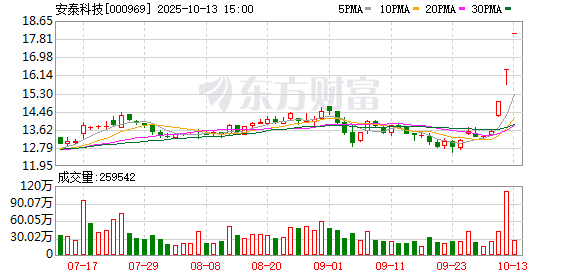
安泰科技:公司产品已应用于我国“人造太阳”EAST大科学工程装置
2 1 Shi Ji Jing Ji Bao Dao· 2025-10-13 08:09
Core Viewpoint - The company has successfully applied its research and production of filter components and first wall components in major fusion projects in China and internationally, indicating strong capabilities in fusion technology [1] Group 1: Product Applications - The company's tungsten composite components and first wall components have been successfully utilized in China's "artificial sun" EAST project, CRAFT, CFETR, and the international ITER project [1] - In 2025, the company won a contract for the modification of the EAST filter, showcasing its ongoing involvement in significant fusion projects [1] Group 2: Future Outlook - The company plans to closely monitor experimental and bidding situations for various projects, indicating a proactive approach to future opportunities in the fusion technology sector [1] - Continuous optimization of core technologies for fusion products is a priority for the company, reflecting its commitment to innovation and improvement in this field [1]
2025电力设备及新能源行业报告:核聚变太阳能量的地球复刻,产业化进程有
Sou Hu Cai Jing· 2025-10-13 04:08
Core Insights - The report discusses the acceleration of nuclear fusion technology, which is seen as a potential ultimate solution to the global energy crisis, with significant advancements expected by 2025 [1][2]. Group 1: Nuclear Fusion Overview - Controlled nuclear fusion aims to replicate the sun's energy production on Earth by fusing isotopes of hydrogen, deuterium, and tritium, releasing substantial energy [1][2]. - The process requires three critical conditions: temperatures exceeding 100 million degrees Celsius, sufficient plasma density, and a stable energy confinement time, collectively known as the "fusion triple product" [1][20]. Group 2: Advantages of Nuclear Fusion - Nuclear fusion offers significant advantages over traditional energy sources, including zero greenhouse gas emissions and minimal long-lived radioactive waste, making it an environmentally friendly option [2][29]. - The energy density of nuclear fusion is extremely high; for instance, one liter of seawater contains enough deuterium to produce energy equivalent to 300 liters of gasoline, indicating that fusion could provide energy for over 10 billion years [2][29]. Group 3: Technological Developments - The global nuclear fusion research landscape is divided into two main technological routes: magnetic confinement and inertial confinement, with notable advancements in both areas [2][3]. - The ITER project, a collaborative international effort, aims to achieve a fusion energy gain greater than 10 by 2034, while the SPARC project in the U.S. plans to produce plasma by 2026 and achieve net energy gain by 2027 [3][4]. Group 4: China's Nuclear Fusion Initiatives - China has established a diverse development framework in nuclear fusion, involving state research institutes, universities, and private enterprises, with significant projects like the BEST project and the "Spark" project underway [4][5]. - The BEST project, set to begin assembly in May 2025, aims to achieve net energy gain by 2027, while the "Spark" project targets 100 megawatts of power by 2030 [4][5]. Group 5: Future Prospects - The transition from experimental to demonstration and commercial fusion reactors is underway, with clear plans from major players like China, the U.S., and the EU [5]. - If technological breakthroughs continue, nuclear fusion could become a primary energy source in the latter half of the 21st century, supporting global carbon neutrality goals [5].

“人造太阳”照进A股:核聚变冲刺商业化引热炒,合锻智能9天5板
Hua Xia Shi Bao· 2025-10-10 13:39
Core Viewpoint - The nuclear fusion sector is experiencing significant stock market activity, with several companies seeing their stock prices double or more due to increasing expectations around nuclear fusion commercialization and engineering advancements [2][4]. Group 1: Stock Market Performance - As of October 10, 2023, the nuclear fusion sector has seen an overall increase of 60.62% since the beginning of the year, with a net inflow of 2.041 billion yuan [4]. - Individual stocks have shown remarkable gains, with Zhongzhou Special Materials up 271.94%, Hezhong Intelligent up 247.15%, and Yongding Co. up 200.39% [4]. - On October 9, 2023, the Wande Nuclear Fusion Index rose by 7.82%, while the Nuclear Power Index increased by 6.46%, indicating strong market interest [3]. Group 2: Project Developments - The BEST nuclear fusion device in Hefei is progressing, contributing to heightened market enthusiasm [2]. - The construction of the BEST device's key vacuum component has been successfully installed, marking a significant milestone [6]. - The Chinese Academy of Sciences and other institutions are leading nuclear fusion technology advancements, with the China Circulation No. 3 device achieving significant temperature breakthroughs [5][6]. Group 3: Industry Insights - Current nuclear fusion projects are primarily experimental, focusing on validating the feasibility of fusion power generation rather than commercial applications [3]. - The demand for energy, particularly from AI technologies, is driving interest in nuclear fusion as a future energy source [4]. - The cost structure of nuclear fusion reactors is heavily influenced by components such as building structures, magnets, and vacuum chambers, with magnets representing the largest value segment [7].


“人造太阳”照进现实!核聚变商业化稳步推进,多家A股公司布局
Shang Hai Zheng Quan Bao· 2025-10-10 01:07
Group 1: Recent Developments in Nuclear Fusion - The field of controllable nuclear fusion has seen significant advancements, with the Southwest Institute of Physics announcing progress in intelligent control of magnetic confinement fusion plasma on October 8 [1] - The BEST project in Hefei achieved a major milestone with the successful installation of a 400-ton core component with millimeter-level precision [1] - The "China Circulation No. 4" R&D plan revealed by China Fusion Energy Co. has sparked heightened market interest in nuclear fusion technology [1] Group 2: Market Response - On October 9, nuclear fusion-related stocks surged, with the Wande Nuclear Fusion Concept Index rising by 7.82% and the Wande Superconducting Concept Index increasing by 6.17% [1] - Several companies, including Western Superconducting, Hanhai Huaton, and China Nuclear Construction, reached their daily trading limits [1] Group 3: Commercialization Efforts - Multiple enterprises are actively pursuing the commercialization of nuclear fusion, although achieving practical power generation from fusion will take time [2] - China Fusion, representing the "national team," aims for commercial fusion energy by 2050 and has established five business centers in Shanghai and Chengdu [2] - Hanhai Fusion, the first linear field reverse configuration fusion company in China, is utilizing neutrons generated during fusion for various applications, thereby realizing some commercial value ahead of full-scale fusion power [2] Group 4: Application Scenarios and Market Projections - Hanhai Fusion plans to achieve a market scale exceeding 1 billion in industry testing by 2026 and over 10 billion in nuclear medicine by 2027 [3] - The company aims for significant market scales in semiconductor neutron irradiation and environmental applications by 2029 [3] - New entrants from universities, such as Dongsheng Fusion and Honghu Fusion, are also making strides in the fusion sector [3] Group 5: A-Share Companies Involvement - Several A-share listed companies are entering the nuclear fusion sector, focusing on core components, key systems, and supporting materials [4] - Hongxun Technology is investing in key subsystems while collaborating with research institutions and private fusion companies [4] - Guo Da Special Materials has successfully won a bid for the BEST coil box machining project and has begun mass production of superconducting coil armor materials [4] Group 6: Technological Contributions - Zhongtai Co. is applying its cryogenic technology to the low-temperature aspects of controllable nuclear fusion, with successful operations in South Korea [5] - Guojin Securities believes that the commercialization path for nuclear fusion technology is becoming clearer, with global investments increasing [5] - The industry is expected to enter a capital expenditure acceleration cycle during the 14th Five-Year Plan period, presenting potential investment opportunities [5]


58岁上市公司董事长,跨界“人造太阳”!他是麻省理工博士后,多次向国家提出可控核聚变发展建议
Mei Ri Jing Ji Xin Wen· 2025-10-09 12:19
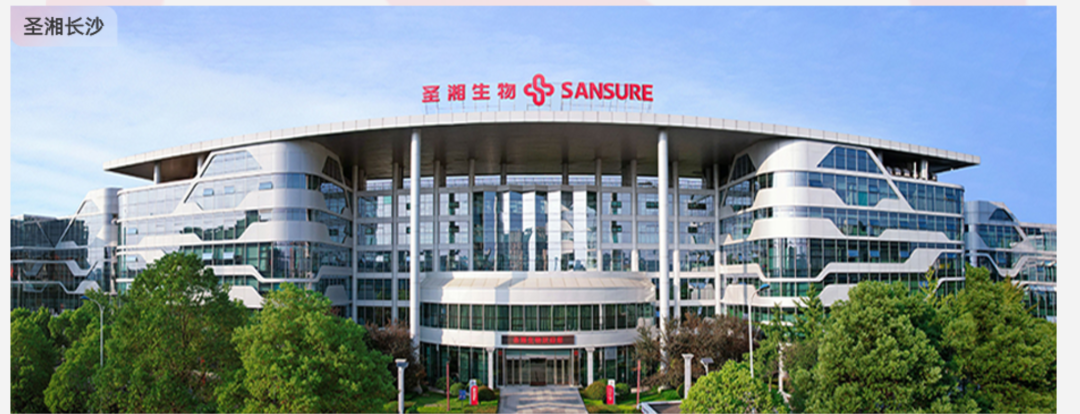
Core Insights - The news discusses the establishment of Honghu Fusion (Shanghai) Energy Technology Co., Ltd. by Dai Lizhong, the chairman of Shengxiang Biotechnology, highlighting his personal investment in the nuclear fusion sector and his non-involvement in the company's daily operations [1][11]. Company Overview - Shengxiang Biotechnology Co., Ltd. focuses on innovative gene technology, providing integrated diagnostic solutions including in vitro diagnostic reagents, instruments, third-party medical testing services, and biopharmaceuticals. The company is listed on the Sci-Tech Innovation Board and ranks among China's top 100 pharmaceutical companies and the top 100 global medical device companies [3]. - The company has established a global operational network with subsidiaries in major cities across China and key regions worldwide, including the UK, France, the US, Indonesia, the Philippines, and Thailand [3]. Leadership Profile - Dai Lizhong, born in July 1968, is a prominent figure with extensive academic credentials, including degrees from Peking University and Princeton University. He has received numerous awards for his contributions to science and technology, including the National Science and Technology Progress Award and the National Innovation Pioneer Award [6]. Business Developments - Honghu Fusion was officially established on December 7, 2023, with a registered capital of 10 million yuan. The company focuses on engineering and technology research and development, specifically in nuclear power equipment [9]. - The company aims to develop the first high-temperature superconducting stellarator fusion experimental device within four years, positioning itself as a key technology partner in the fusion power industry [11]. Market Position - As of the latest trading session, Shengxiang Biotechnology's stock closed at 21.36 yuan per share, reflecting a 0.9% increase, with a market capitalization of 12.376 billion yuan [12].
合肥“人造太阳”上新!BEST建设取得关键突破
Huan Qiu Wang Zi Xun· 2025-10-02 11:39
这个形如海葵的BEST装置杜瓦底座 "人造太阳"核心吗? 0:00 来源:央视新闻客户端 你见过重400吨的 来源:央视社教 国庆期间在合肥精准落位! 朝着"用核聚变能点亮第一盏灯"的目标 全速前进 它将承载四代中国聚变人的梦想 ...