
以人民为中心的发展思想

Search documents
体系化学理化研究 | 构建21世纪政治经济学的几点思考
Sou Hu Cai Jing· 2025-10-06 09:18
Core Ideas - The article emphasizes the need to construct a 21st-century political economy that reflects China's unique experiences and offers solutions to global challenges, guided by Xi Jinping's economic thought [1][3][5] Group 1: Theoretical Framework - Xi Jinping's economic thought serves as a comprehensive theoretical summary for China's economic development, providing a foundation for the construction of a 21st-century political economy [3][4] - The historical context of political economy shows that significant theoretical advancements arise from profound reflections on transformative practices, indicating that China's reform and modernization can inspire new theories [4][5] Group 2: Global Context and Challenges - The world is undergoing unprecedented changes, with issues such as economic imbalance, widening wealth gaps, and ecological crises becoming increasingly complex, necessitating a return to classical political economy concerns [1][2] - The dominance of Western economic paradigms has limited China's academic discourse and global understanding, highlighting the importance of developing a political economy that reflects Chinese practices and engages in international dialogue [5][6] Group 3: Key Issues in Political Economy - The fundamental purpose of development should focus on ethical values and social equity, moving beyond the Western economic model that often leads to wealth polarization [6][7] - The dynamics of development must consider new drivers such as technological innovation and data factors, emphasizing the role of new productive forces in shaping economic growth [6][8] - The relationship between economy and politics is crucial, with a need to clarify the roles of political parties, government, and markets in economic governance [7][8] Group 4: Environmental and Global Governance - Addressing the relationship between development and the environment is essential, advocating for a green development model that harmonizes economic growth with ecological sustainability [11][12] - The article discusses the challenges of economic globalization and the need for a fairer global governance system, proposing that China's initiatives can contribute to a more inclusive global economic order [12][13]

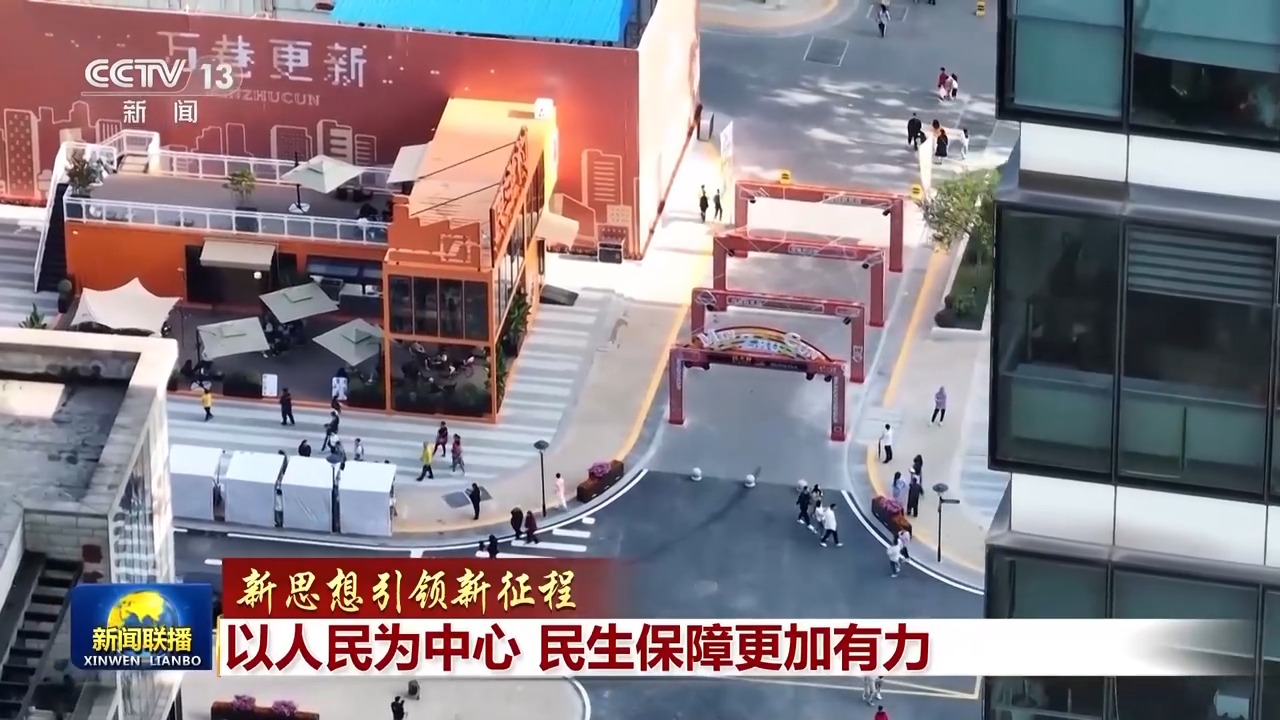
新思想引领新征程丨以人民为中心 民生保障更加有力
Yang Shi Xin Wen Ke Hu Duan· 2025-10-06 00:38
Core Points - The Chinese government emphasizes the importance of improving people's livelihoods as a fundamental goal of development [1][5] - Various local governments are implementing policies aimed at enhancing public welfare and addressing community needs [11] Group 1: Urban Development and Community Services - The Chongqing Jiulongpo District has completed the second phase of urban renewal in the Democracy Village community, benefiting over 3,800 households with new facilities such as a poetry corridor and activity center [3] - In 2024, the government plans to start renovating 25,000 old urban residential communities nationwide, with Chongqing targeting 1,227 projects and the installation of 4,000 elevators [7] Group 2: Elderly and Childcare Services - The government has allocated 1 billion yuan for childcare subsidies and 200 million yuan for promoting free preschool education, aiming to add 660,000 inclusive childcare spots this year [14] - Jiangsu province is enhancing elderly care services by establishing "one county, one center" for senior living experience, providing tailored services for the elderly [16] Group 3: Rural Infrastructure and Healthcare - Inner Mongolia plans to construct 5,000 kilometers of rural roads this year, focusing on improving access to villages [19] - Ningxia has achieved a 92% coverage rate of 5G base stations in administrative villages and is advancing "Internet + healthcare" initiatives to provide remote medical services [21][23]
【新思想引领新征程】以人民为中心 民生保障更加有力
Yang Shi Wang· 2025-10-05 11:42
Group 1 - The core message emphasizes the importance of improving people's livelihoods as a primary goal of governance, with a focus on reform and development to enhance the quality of life for citizens [1][2] - The Chinese government plans to start the renovation of 25,000 old urban residential communities in 2023, with Chongqing specifically planning to renovate 1,227 communities and upgrade 4,000 elevators [1] - The government aims to enhance public services and infrastructure, including the construction of 20,000 electric vehicle charging stations [1] Group 2 - The government has allocated 1 trillion yuan for childcare subsidies and 200 billion yuan for promoting free preschool education, with a goal of adding 660,000 inclusive childcare spots this year [3] - In Anhui, new urban areas are required to build at least 10 childcare spots per 1,000 people, resulting in an increase of 24,900 spots this year [3] - Jiangsu is promoting the establishment of aging-friendly living experience centers to provide comprehensive services for the elderly, including home assistance [3] Group 3 - Inner Mongolia plans to construct 5,000 kilometers of rural roads this year, focusing on connecting villages with dual-lane roads and improving access to rural infrastructure [4] - In Ningxia, the coverage rate of 5G base stations in administrative villages has reached 92%, facilitating the development of "Internet + healthcare" initiatives to provide remote medical services [4]
中国是全球包容性发展的典范(习近平经济思想指引下的中国经济专论)
Ren Min Ri Bao· 2025-10-04 21:50
Group 1 - The core idea emphasizes the importance of shared development outcomes globally, with a focus on people-centered development and poverty alleviation efforts in China [1] - Since the 18th National Congress, China has successfully lifted 98.99 million rural poor out of poverty, achieving a historic milestone in poverty reduction recognized by global leaders [1] - The government continues to consolidate poverty alleviation results while promoting rural revitalization, ensuring that no individual is left behind [1] Group 2 - The article highlights the issue of regional development imbalance, noting the "Matthew effect" where stronger regions become stronger while weaker regions lag behind [2] - Measures such as optimizing regional development strategies and increasing central financial transfers are being implemented to prevent regional collapse and promote balanced growth [2] - Various disadvantaged areas have managed to overcome challenges and find advantages for better development [2] Group 3 - The success of China is attributed to the collective success of ordinary individuals, supported by quality education, employment opportunities, and entrepreneurial space [3] - The government has maintained education spending at over 4% of GDP for 13 consecutive years, with a projected higher education enrollment rate exceeding 60% in 2024 [3] - A robust labor force, including over 200 million university graduates, supports China's economic development, with more than 1.9 million business entities driving economic growth [3] Group 4 - China has established the world's largest social security system, with 328 million people receiving monthly pensions, effectively mitigating risks of elderly poverty [4] - The country has built the largest healthcare system globally, ensuring over 90% of families can access medical services within 15 minutes [4] - The implementation of the Healthy China strategy has significantly improved public health, with life expectancy rising from 74.8 years in 2012 to 79 years in 2024, surpassing the global average by 5.7 years [4] Group 5 - The article discusses the commitment to sustainable development, emphasizing the "green mountains and clear waters are as valuable as mountains of gold and silver" philosophy [5] - Significant achievements include the fastest improvement in air quality and the largest increase in forest resources globally, alongside the establishment of the largest renewable energy system [5] - As of June 2025, China leads the world in electric vehicle ownership and charging infrastructure, showcasing its commitment to ecological civilization [5]
继续用好历史经验,把国家建设得更好
Ren Min Ri Bao· 2025-10-02 22:13
Core Points - The speech by General Secretary Xi Jinping emphasizes the historical achievements and future prospects of the Chinese nation, highlighting the importance of learning from history to build a better country [1] - The Communist Party of China (CPC) is identified as the key factor in the victory of the Chinese people during the Anti-Japanese War and the subsequent path to national rejuvenation [2] - The concept of "Chinese-style modernization" is centered around the well-being of the people, ensuring that development benefits all citizens fairly [3] Group 1 - The CPC has led the nation from poverty to prosperity, achieving significant economic growth and social stability over the past 76 years [1][2] - China's GDP has averaged a growth rate of 6% annually, and the country has risen from 34th to 10th in the global innovation index [2] - The CPC's leadership is deemed essential for overcoming challenges and achieving historical progress in the nation's development [2] Group 2 - The modernization process is described as a collective effort that requires the participation and support of all citizens, emphasizing the importance of a people-centered approach [3] - The speech underscores the need for unity between the Party and the people to navigate future challenges and maintain momentum in national development [4] - The commitment to a shared vision of modernization is framed as a source of strength and resilience for the nation [3][4]
深刻认识中国经济长期稳定发展的内在逻辑
Xin Hua Wang· 2025-09-30 23:20
Core Insights - The article emphasizes the internal logic behind China's long-term stable economic development, highlighting the role of the Communist Party's leadership and strategic planning [2][3][4]. Group 1: Economic Achievements - Since the establishment of New China and particularly after the reform and opening-up, China's GDP has grown from 367.9 billion yuan in 1978 to an expected 134.9 trillion yuan in 2024, averaging an annual growth rate of 8.8%, significantly higher than the global average of about 3% during the same period [2]. - During the 14th Five-Year Plan period, China's GDP surpassed 100 trillion yuan in 2020 and is projected to reach 140 trillion yuan this year [2]. Group 2: Leadership and Governance - The leadership of the Communist Party provides a fundamental guarantee for economic and social development through top-level design, overall layout, and effective coordination [2][3]. - The Party's long-term governance avoids the policy shortsightedness seen in Western multi-party systems, serving as a "stability anchor" for China's economic development [2]. Group 3: Theoretical Framework - The continuous innovation of the theoretical system provides a scientific guide for economic and social development, with Xi Jinping's economic thought introducing new concepts such as "new development concepts" and "new development patterns" [3]. - The integration of traditional socialist models with contemporary practices has led to a unique economic development path [3]. Group 4: People-Centric Development - The focus on a people-centered development philosophy has led to significant improvements in living standards, with nearly 100 million people lifted out of poverty and the establishment of the world's largest social security system [4]. - The alignment of national development goals with the aspirations of the populace has strengthened public trust and support for the government [4]. Group 5: Market Economy and Innovation - The combination of socialism with a market economy has injected continuous vitality into China's economic development, with reforms focusing on the relationship between government and market [5]. - The establishment of a high-level socialist market economy has optimized resource allocation and maximized efficiency, driving high-quality economic growth [5]. Group 6: Market Size and Innovation - China's vast domestic market, with over 1.4 billion people and more than 400 million middle-income individuals, creates significant potential for innovation and economic growth [6]. - The interaction between supply and demand has lowered innovation costs and accelerated technological advancements, meeting the evolving needs of the population [6].
从全球视角看新时代中国经济的跨越与蝶变(习近平经济思想指引下的中国经济专论)
Ren Min Ri Bao· 2025-09-29 22:30
Core Viewpoint - Since the 18th National Congress of the Communist Party of China, the country has entered a new era of socialism with Chinese characteristics, maintaining strategic determination and high-quality development despite global uncertainties and challenges [1] Economic Growth - China's GDP is projected to grow from 54 trillion yuan to nearly 135 trillion yuan from 2012 to 2024, with an average annual growth rate of 6%, nearly double the global average of 3.1% [1] - The International Monetary Fund (IMF) reports that China's economy is gradually transitioning to a higher quality, more balanced, and sustainable growth model [1] Development Dynamics - The supply side of the economy has shifted from traditional factor-driven growth to innovation-driven growth, with new technologies accelerating the development of new industries and business models [2] - During the 14th Five-Year Plan period, consumption is expected to contribute approximately 63% to economic growth, while investment's contribution will decrease to below 28% [2] - China's global innovation index ranking improved from 34th in 2012 to 10th in 2025, making it one of the fastest-improving economies in terms of innovation over the past decade [2] Regional Development - Significant progress has been made in coordinated regional development strategies, including the Beijing-Tianjin-Hebei integration and the Yangtze River Economic Belt [3] - Nearly 100 million rural residents have been lifted out of poverty, with rural income growth outpacing urban income growth for several consecutive years [3] Green Transformation - China is committed to high-quality development with a focus on ecological protection, aiming for carbon peak and carbon neutrality, and has made significant strides in green transformation [3] - The World Economic Forum's energy transition index shows China rising 66 places to rank 12th compared to 2020 [3] International Influence - China has adopted a more proactive opening-up strategy, establishing 22 free trade pilot zones and becoming a major trading partner for over 150 countries [4] - The country's share of the global economy increased from 11.3% in 2012 to 17.1% in 2024, providing new opportunities for win-win cooperation with other nations [4] Social Welfare - The focus on people's well-being has led to improvements in public safety and living standards, with life expectancy projected to reach 79 years by 2024 [5] - China ranks high in the Gallup Law and Order Index, surpassing several developed countries in safety scores [5]
贯彻实施原子能法 推动原子能事业高质量发展迈上新征程
Ren Min Ri Bao· 2025-09-29 22:11
Core Points - The National People's Congress passed the Atomic Energy Law, effective from January 15, 2026, emphasizing the importance of nuclear energy for national security and high-quality development [1][2][4] - The law aims to establish a comprehensive legal framework for the development, management, and application of atomic energy in China, enhancing governance and safety standards [2][5] - The law incorporates principles of public interest, encouraging the application of nuclear technology in various sectors while ensuring public communication and involvement [3][5] Summary by Sections Importance of the Atomic Energy Law - The law reflects the implementation of Xi Jinping's rule of law thought and aims to clarify national policies and management systems for atomic energy development [2] - It integrates nuclear safety into the overall national security framework, promoting a balanced approach to development and safety [2] Development and Management Framework - The law summarizes the experiences gained in China's atomic energy sector, establishing a management system that includes responsibilities for various government departments [4][5] - It outlines specific management systems for spent fuel storage, transportation, and disposal, as well as for nuclear technology applications [5] Legal Responsibilities and Public Engagement - The law defines the legal responsibilities and obligations of government entities, enterprises, and personnel involved in atomic energy activities [5] - It emphasizes the importance of public awareness and engagement in atomic energy development, mandating communication on significant issues affecting public interests [3][5] High-Quality Development Goals - The law aims to drive high-quality development in the nuclear industry by promoting innovation, sustainability, and the application of nuclear technology across various sectors [6][7] - It encourages international cooperation in peaceful nuclear energy use and supports China's participation in global nuclear governance [3][7]
省纪委监委召开理论学习中心组学习会议
Shan Xi Ri Bao· 2025-09-28 22:49
Group 1 - The meeting emphasized the importance of deeply learning and implementing Xi Jinping's important discourses on the Chinese People's Anti-Japanese War and the World Anti-Fascist War, as well as his significant speech at the 80th anniversary commemoration of the victory [1][2] - It was highlighted that all levels of disciplinary inspection and supervision agencies in the province should integrate the study of Xi Jinping's important discourses with the contents of "Xi Jinping: The Governance of China, Volume V" to grasp the spiritual essence and practical requirements [1][2] - The meeting called for a focus on political loyalty and the implementation of Xi Jinping's thoughts to ensure the decisions of the central government are effectively executed in Shaanxi [2] Group 2 - The meeting stressed the need to consolidate and expand the educational outcomes of the central eight regulations, addressing issues such as improper eating and drinking, gift-giving, and neglecting public interests [2] - It was stated that a people-centered development approach should be maintained, with efforts to rectify corruption and misconduct affecting the public [2] - The meeting encouraged the advancement of the "three transformations" construction year action, aiming for political integrity, capability, work style, and cleanliness [2]
继续推进马克思主义中国化(专题深思)
Ren Min Ri Bao· 2025-09-27 02:42
Core Viewpoint - The essence of the Chinese Communist Party's success and the effectiveness of socialism with Chinese characteristics lies in the adherence to Marxism as the fundamental guiding ideology [1][2][3] Group 1: Adherence to Marxism - The Chinese Communist Party has consistently upheld the basic principles of Marxism, utilizing it as a powerful ideological tool to understand and transform the world [2][4] - Marxism has guided the Party through various historical phases, including the New Democratic Revolution, Socialist Revolution, and the establishment of socialism with Chinese characteristics, leading to the great rejuvenation of the Chinese nation [2][4] Group 2: People-Centered Development - The Party emphasizes a people-centered development approach, maintaining that the essence of Marxism is to seek liberation for humanity and happiness for the people [3][4] - The commitment to serving the people has been a fundamental principle, ensuring that the Party remains connected to the masses and focused on their interests [3][4] Group 3: Practical Application of Marxism - The practical nature of Marxism distinguishes it from other theories, with the Party continuously advancing social revolutions through practical engagement [4][5] - Historical achievements include the establishment of the People's Republic of China, the implementation of socialist reforms, and the ongoing modernization efforts under socialism with Chinese characteristics [4][5] Group 4: Theoretical Innovation - The Party has consistently pursued theoretical innovation, adapting Marxism to contemporary Chinese realities and integrating it with traditional culture [5][6] - The evolution of Marxism in China has led to significant theoretical contributions, including Mao Zedong Thought and Xi Jinping's Thought on Socialism with Chinese Characteristics for a New Era [5][6]
