
反垄断

Search documents
市场监管总局首次对公用事业领域企业并购亮出红牌
Zhong Guo Xin Wen Wang· 2026-01-22 10:40
Core Viewpoint - The State Administration for Market Regulation (SAMR) has prohibited a merger involving gas companies in Foshan, marking the first ban on mergers in the public utility sector since the implementation of the Anti-Monopoly Law in China, aimed at maintaining competition in the liquefied petroleum gas market and protecting consumer interests [1]. Group 1: Regulatory Action - SAMR banned the establishment of a joint venture between Bluebird Gas Co. and Nanguan Gas Co. in Foshan, which was intended to invest in and operate a liquefied petroleum gas storage and distribution station [1]. - This merger was deemed to potentially lead to market dominance in the liquefied petroleum gas sector in Foshan, facilitating price coordination among market participants and harming fair competition [1]. Group 2: Market Impact - The merger was assessed to not meet the reporting standards set by the State Council for operator concentration, yet the parties voluntarily submitted the proposal for review [1]. - The analysis conducted by independent third-party institutions indicated that the merger could result in increased prices for liquefied petroleum gas, thereby increasing the financial burden on consumers [1].
马斯克单挑大半个音乐圈!
Sou Hu Cai Jing· 2026-01-22 07:18
Core Viewpoint - Elon Musk's X Corp has filed an antitrust lawsuit against 18 music copyright companies and the NMPA, accusing them of colluding to impose "supra-competitive prices" through a unified licensing agreement [1][3]. Group 1: Lawsuit Details - The lawsuit claims that the defendants control over 90% of the U.S. market for licensed music works, engaging in illegal trade restrictions and attempts to monopolize the market [3][5]. - X Corp is seeking a permanent injunction, triple damages, punitive damages, and reimbursement for all legal fees [5]. - The lawsuit names key industry players, including Sony Music, Universal Music, Warner Chappell Music, and others, alleging they conspired to force X into a collective licensing agreement [5][6]. Group 2: Background and Context - The conflict has been building for four years, with NMPA previously warning X about a large-scale DMCA takedown plan if they did not comply with licensing agreements [6][8]. - Since late 2021, NMPA has initiated systematic DMCA takedown actions against X, affecting over 200,000 posts in the first year alone, with the number rising to nearly 500,000 by 2023 [8][11]. - Major music copyright companies filed a lawsuit against X for $250 million, accusing it of systemic music infringement, marking a public escalation of the conflict [11][20]. Group 3: Industry Practices and Reactions - Music copyright companies argue that X is the only major social platform refusing to pay for music content, framing their actions as standard industry practice rather than collusion [13][19]. - The NMPA's approach has been previously successful with platforms like Twitch and Roblox, which faced similar infringement issues before ultimately signing comprehensive licensing agreements [16][20]. - The lawsuit raises questions about the effectiveness and fairness of the NMPA's centralized licensing model, which has historically pressured platforms into compliance [20][21]. Group 4: Implications and Future Considerations - The outcome of this lawsuit may challenge existing industry norms and prompt a reevaluation of licensing practices and negotiation processes between platforms and copyright holders [21][22]. - The core issue is not whether a platform can refuse to comply, but how future content platforms will adapt to the centralized governance trends in copyright management [22].

携程的教训:平台如何做大又不作恶
3 6 Ke· 2026-01-22 05:11
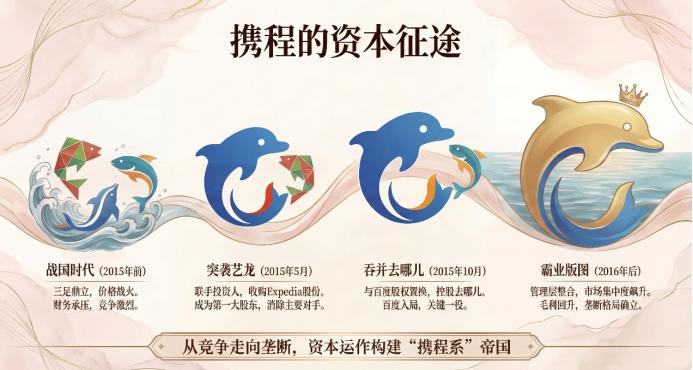
Core Viewpoint - Ctrip is under antitrust investigation by the State Administration for Market Regulation for suspected abuse of market dominance, leading to significant stock price drops in both US and Hong Kong markets [1][2][3] Group 1: Antitrust Investigation - The investigation is a culmination of long-term regulatory pressure, with previous inquiries dating back to August 2025 [1][2] - Ctrip's stock fell 17% in the US and over 19% in Hong Kong, marking the largest single-day drop since its secondary listing in 2021 [1][2] - The investigation reflects a tightening compliance environment for leading OTA platforms, with Ctrip facing accusations of harming both merchants and consumers [1][3] Group 2: Market Dynamics - Ctrip's market dominance was solidified through significant mergers in 2015, which reshaped the competitive landscape of the OTA market [2][4] - The consolidation led to Ctrip controlling 70%-80% of the OTA market share, particularly in high-star hotels and flight bookings [6][7] - The regulatory environment prior to 2015 was lenient, allowing Ctrip's mergers to proceed without antitrust scrutiny [6][7] Group 3: Supply-Side Issues - Ctrip's algorithms have been accused of imposing hidden penalties on merchants who do not comply with platform pricing strategies, leading to a competitive disadvantage for smaller businesses [9][10] - The platform's pricing power has resulted in high commission rates for merchants, often reaching 15%-25%, significantly higher than competitors like Douyin and Meituan [10][11] - This high cost structure has been described as a "rent-seeking" behavior, squeezing merchant profits and stifling innovation [11][12] Group 4: Demand-Side Challenges - Ctrip's algorithms create a fragmented consumer experience, leading to "price discrimination" where loyal customers face higher prices due to their established purchasing patterns [14][15] - The emergence of consumer resistance, exemplified by the "Momo" movement, highlights dissatisfaction with algorithm-driven pricing strategies [14][15] - The ongoing antitrust investigation is likely to focus on automated tools that facilitate these pricing strategies [15][16] Group 5: Financial Performance - Ctrip reported an 80% gross margin, which is significantly higher than competitors like JD.com and Alibaba, indicating a strong profit position [18][19] - However, the company faces rising customer acquisition costs, with marketing expenses reaching approximately $1.6 billion in 2024, accounting for 26% of net revenue [19][20] - This high marketing expenditure suggests a lack of organic customer loyalty and reliance on external channels for traffic acquisition [19][20] Group 6: Competitive Landscape - Ctrip's high commission rates have inadvertently allowed competitors like Meituan and Douyin to penetrate the market with lower fees, challenging Ctrip's dominance [20][21] - Meituan's strategy focuses on leveraging its high-frequency services to reduce customer acquisition costs, while Douyin is reshaping the consumer decision-making process [20][21] - Ctrip's reliance on a high-cost structure may lead to vulnerabilities as competitors exploit these weaknesses to gain market share [20][21] Group 7: Regulatory Implications - The antitrust investigation could result in fines amounting to 3%-5% of Ctrip's revenue, with a focus on eliminating exclusive agreements and restoring competitive practices [27][28] - The outcome of the investigation may signal a shift in the platform economy, promoting competition and efficiency over monopolistic practices [27][28] - Ctrip must adapt to a post-investigation landscape by enhancing its service offerings and exploring new growth avenues, such as international expansion and technology-driven efficiency [28][29]
反垄断调查:商家困在携程里
Jing Ji Guan Cha Bao· 2026-01-22 03:08
Core Viewpoint - The article discusses the ongoing antitrust investigation against Ctrip, highlighting the grievances of accommodation providers regarding high commission rates and restrictive practices that limit their ability to sell on other platforms, leading to a significant impact on their business operations [2][3][4][5][15]. Group 1: Ctrip's Business Practices - Ctrip's commission costs for accommodation providers have remained high, reaching 30%-40%, while the market demand has decreased, leading to complaints from merchants who feel they are working for the platform [2][3][12]. - The "Special Label" (特牌) system implemented by Ctrip requires higher commission rates and restricts merchants from selling on other platforms, which has led to significant dissatisfaction among providers [4][5][6][8]. - Ctrip's practices have prompted regulatory scrutiny, with the National Market Supervision Administration launching an investigation into potential monopolistic behavior, including the use of big data to manipulate consumer pricing [3][16]. Group 2: Market Dynamics and Merchant Challenges - The supply-demand imbalance in the Yunnan accommodation market has intensified, with many merchants relying heavily on Ctrip for bookings, leading to a situation where losing access to Ctrip would mean losing a significant portion of their customer base [8][11]. - Merchants report that the effectiveness of Ctrip's advertising and promotional tools has diminished, with rising costs for clicks and competition among providers leading to increased financial strain [12][15]. - The article notes that Ctrip's market share in the online travel agency (OTA) sector is substantial, with estimates suggesting it controls nearly 70% of the market when including its strategic investments [15][16]. Group 3: Regulatory and Industry Implications - The ongoing antitrust investigation could lead to significant penalties for Ctrip, similar to those faced by other major companies in the past, which may include fines based on their annual revenue [16][17]. - Industry experts suggest that while regulatory actions may address some issues, they may not resolve the fundamental challenges of oversupply and insufficient demand in the market [17][18]. - Ctrip's international expansion efforts are highlighted as a potential avenue for growth, as the company seeks to tap into the inbound tourism market, which remains underdeveloped compared to other countries [18][19].


督导货拉拉全面落实整改要求
Xin Lang Cai Jing· 2026-01-21 19:36
Core Viewpoint - The State Administration for Market Regulation (SAMR) is taking measures to address "involution" competition in the freight industry, specifically targeting the platform Huolala to ensure fair market practices and protect the rights of truck drivers [1] Group 1: Regulatory Actions - SAMR has mandated Huolala to implement comprehensive rectification measures to maintain fair competition and protect the legitimate interests of truck drivers [1] - The agency has publicly interviewed Huolala, requiring strict compliance with antitrust laws and the establishment of fair operational practices [1] Group 2: Industry Concerns - Huolala has been found to engage in practices such as using algorithms to unreasonably lower freight prices and enforcing exclusive vehicle stickers, which harm fair competition and the interests of truck drivers [1] - These practices have led to a follow-the-leader pricing strategy among competitive platforms, exacerbating "involution" competition and posing a risk of monopoly in the industry [1]
向“内卷式”竞争亮剑 市场监管总局公布十大典型案例
Zheng Quan Shi Bao Wang· 2026-01-21 12:48
Core Viewpoint - The State Administration for Market Regulation (SAMR) has announced a comprehensive initiative to address "involutionary" competition by presenting ten typical cases, showcasing its efforts in combating illegal activities, maintaining fair competition, and promoting high-quality industry development by 2025 [1][2]. Group 1: Regulatory Actions and Outcomes - In 2025, SAMR reviewed 58,000 policy measures and modified over 10,000 to prevent the introduction of policies that hinder a unified market and fair competition [1][3]. - SAMR initiated special actions to investigate the abuse of administrative power to eliminate competition, resulting in 96 cases filed and 75 concluded, effectively curbing improper interference in competition [1][5]. Group 2: Sector-Specific Interventions - The ten typical cases span multiple key sectors, including platform economy, new energy, consumer goods, and advertising, reflecting a multi-dimensional approach to tackle "involutionary" competition [2][3]. - In the platform economy, SAMR's actions against Huo La La included public discussions based on the Anti-Monopoly Law, aiming to stabilize driver employment and promote win-win scenarios between platforms and drivers [2][4]. - The solar energy sector is being guided towards innovation-driven growth, moving away from price wars, while the new energy vehicle sector has seen national quality supervision checks focusing on models with significant price reductions [2][3]. Group 3: Consumer Protection and Quality Assurance - In the consumer goods sector, SAMR has cracked down on misleading advertising practices targeting vulnerable groups, such as the elderly, and has enforced recalls of defective products, involving 1.3977 million units [3][4]. - The agency is enhancing compliance awareness among businesses through advertising compliance initiatives, aiming to reduce the incidence of illegal advertising and maintain low rates of violations [3][5]. - SAMR is committed to strengthening product consistency management and enforcing mandatory product certification to safeguard quality standards, with plans for a special action to ensure compliance with recall obligations [5]. Group 4: Future Directions and Strategic Goals - Moving forward, SAMR will intensify efforts to collect defect information and enforce recall obligations for products with quality safety issues, ensuring strict legal actions against non-compliant companies [5]. - The agency plans to refine fair competition review standards and enhance supervision to eliminate local protectionism and market segmentation, thereby promoting a unified national market [5].
货拉拉、外卖平台、光伏行业、充电宝、新能源汽车、私域直播等,综合整治“内卷式”竞争十大典型案例发布!
中国能源报· 2026-01-21 12:08
Core Viewpoint - The article discusses the release of ten typical cases of "involution-style" competition by the State Administration for Market Regulation (SAMR) for the year 2025, highlighting various regulatory actions taken to promote fair competition and protect consumer rights. Group 1: Regulatory Actions - SAMR conducted public interviews with HuoLaLa based on the Anti-Monopoly Law, implementing a tiered regulatory approach to enhance deterrence and social supervision, effectively protecting market competition and stabilizing driver employment [1] - The solar industry faces "involution and external spillover" risks, with preemptive warnings and policy coordination to help companies avoid overseas antitrust risks and economic losses, shifting competition from "price wars" to "innovation-driven" [2] - The market supervision bureau in Kaifeng, Henan, penalized Baikang Health Consulting for false advertising through private live streaming, impacting consumer rights and demonstrating a zero-tolerance stance on fraud against the elderly [3] Group 2: Industry-Specific Measures - SAMR held meetings with food delivery platforms to address the negative effects of low-price competition, urging platforms to operate legally and transparently, ensuring fair competition and preventing food waste [4] - Regulatory bodies in Guangdong, Hunan, and Beijing conducted defect investigations and recalls for mobile power products, with a total of 139.77 million units recalled, promoting healthy industry development [5] - SAMR initiated a national quality supervision special inspection for new energy vehicle products, focusing on models with significant price reductions, conducting safety performance tests and collision trials to enforce quality standards [6] Group 3: Advertising and Compliance - SAMR launched a special action to enhance advertising compliance awareness among businesses, aiming to guide companies away from "involution-style" competition and promote good branding through effective advertising [7] - Efforts to strengthen product consistency management were emphasized to prevent discrepancies between certified products and actual production, reducing the risk of low-quality products entering the market [8] Group 4: International Standards and Fair Competition - SAMR led the development and publication of international standards in governance, promoting over ten international standards in the new energy vehicle sector, encouraging a shift from "involution-style" competition to quality competition [9] - A total of 58,000 important policy measures were reviewed for fair competition, with over 10,000 policies checked nationwide, ensuring compliance and preventing policies that disrupt market unity and fair competition [10]
市场监管总局:优化货运平台竞争生态
Xin Hua Wang· 2026-01-21 08:16
【纠错】 【责任编辑:吴京泽】 刘健介绍,经核查,网络货运头部平台货拉拉存在利用算法不合理压低货运价格、利用平台规则实 施强制独家车贴等行为,损害公平竞争市场秩序和货车司机利益,导致竞争性平台跟随实施低价策略, 加剧行业"内卷式"竞争,存在垄断风险。 刘健表示,近年来,我国网络货运行业快速发展,在便利物流与消费、扩大就业等方面发挥了重要 作用,但同时低价无序竞争等问题逐步显现,社会各方面反映较为集中。党中央、国务院高度重视促进 平台经济创新和健康发展、整治"内卷式"竞争和维护新就业群体利益。市场监管总局依据反垄断法公开 约谈货拉拉,是落实党中央、国务院决策部署的具体监管举措,通过运用反垄断"三书一函"的方式,在 采取柔性监管措施的同时,充分传导监管压力,强化约束作用和社会监督,切实压实平台主体责任。 新华社北京1月21日电(记者赵文君、高亢)在市场监管总局21日举行的新闻发布会上,市场监管 总局反垄断一司副司长刘健在介绍通过约谈货拉拉推动整治相关行业"内卷式"竞争时表示,市场监管总 局将督导货拉拉全面落实整改要求,维护市场公平竞争,保护货车司机合法利益,引导行业回归理性竞 争,优化货运平台竞争生态,促进形成优 ...
外卖平台、货拉拉被约谈 综合整治“内卷式”竞争典型案例发布
Xin Lang Cai Jing· 2026-01-21 08:13
Group 1 - The State Administration for Market Regulation (SAMR) has released a list of ten typical cases of "involution" competition for 2025, highlighting the need for regulatory measures to ensure fair market practices [1] - The SAMR has conducted discussions with logistics platform Huolala to enhance market competition, stabilize driver employment, and address social concerns through antitrust measures [1] - The solar industry faces risks of "involution overflow," prompting preemptive warnings and policy coordination to help companies avoid overseas legal risks and shift competition from price wars to innovation-driven strategies [2] Group 2 - The Kaifeng Market Supervision Bureau has penalized Baikang Health Consulting for false advertising through private live streaming, affecting consumer rights, particularly among the elderly [3] - The SAMR has held meetings with food delivery platforms to address the negative effects of low-price competition, urging compliance with fair business practices and transparency in subsidy information [4] - Regulatory bodies in Guangdong, Hunan, and Beijing have conducted defect investigations and recalls for mobile power products, totaling 1.3977 million units, to ensure consumer safety [5] Group 3 - The SAMR has initiated a national quality supervision inspection for new energy vehicles, focusing on models with significant price reductions, to enforce quality and safety standards [4] - An advertising compliance initiative has been launched to enhance awareness among businesses, promoting quality branding and reducing "involution" competition [5] - The SAMR is strengthening consistency management to prevent discrepancies between certified products and actual production, ensuring quality standards are maintained [5] Group 4 - The SAMR is leading the development of international standards in organizational governance and has successfully promoted over ten new energy vehicle standards internationally [5] - A thorough review of 58,000 important policy measures has been conducted to ensure fair competition, with over 10,000 policies checked for compliance [5]
外卖平台、货拉拉被约谈 市场监管总局发布综合整治“内卷式”竞争典型案例
Xin Lang Cai Jing· 2026-01-21 08:13
Group 1 - The State Administration for Market Regulation (SAMR) has released a list of ten typical cases of "involution" competition for comprehensive rectification by 2025, highlighting the need for effective market competition and social supervision [1] - The solar industry faces risks of "involution overflow," prompting preemptive warnings and policy coordination to help companies avoid overseas antitrust risks and economic losses, shifting competition from "price wars" to "innovation-driven" [2] - The Kaifeng Market Supervision Bureau has cracked down on Baikang Health Consulting Service Co., which used private live streaming for false advertising, affecting consumer rights, particularly among the elderly [3] Group 2 - SAMR has conducted discussions with food delivery platforms regarding the "subsidy war," urging them to recognize the negative effects of low-price competition and to operate legally and ethically [4] - Market supervision departments in Guangdong, Hunan, and Beijing have implemented defect investigations and recalls for mobile power products, totaling 1.3977 million units recalled [5] - SAMR has initiated a national quality supervision special inspection for new energy vehicles, focusing on models with significant price reductions, to ensure compliance with safety standards [4] Group 3 - SAMR is promoting advertising compliance to enhance brand building and support businesses, with low rates of advertising violations reported [7] - Efforts are being made to strengthen consistency management in product certification to prevent low-quality products from entering the market [8] - SAMR has led the development of international standards in organizational governance and new energy vehicles, promoting quality competition over "involution" [9] Group 4 - Fair competition reviews have been rigorously conducted, with 58,000 important policy measures reviewed and over 10,000 policies checked nationwide to prevent improper market interventions [10]