智能建造

Search documents
甬金衢上金华城区段全线梁板预制完工 提速“枢纽”建设-焦点播报
Zhong Guo Xin Wen Wang· 2025-12-29 07:10
Core Insights - The completion of the prefabrication task for the YJQ Shangjinhua urban section project marks a significant milestone, laying a solid foundation for subsequent bridge connectivity [2][4] - The project spans 38.26 kilometers and includes the construction of 32 bridges, with 5 being major bridges, indicating a large-scale infrastructure development [2] Group 1: Project Innovations - The project introduces a new model for beam production, utilizing three intelligent production lines for rebar processing, concrete production, and industrial prefabrication, which enhances standardization and efficiency [2][3] - The precision of rebar processing reaches millimeter-level accuracy, with the prefabrication cycle reduced by 50%, waste discharge decreased by 50%, and concrete loss minimized by 20%, aligning with the principles of "intelligent and green construction" [3] Group 2: Management and Quality Control - A smart control center based on IoT technology integrates production management, quality control, progress tracking, and safety management, significantly improving management efficiency [3] - The introduction of a "five-dimensional rating system" for beam quality transforms qualitative assessments into data-driven evaluations, increasing the proportion of Grade A beams from 60% to over 90% [3] Group 3: Economic Impact and Progress - The project is a key construction initiative under Zhejiang's "14th Five-Year Plan" and part of the "thousand projects, trillion investment" program, aimed at enhancing regional transportation capacity and supporting the development of an inland open hub in Jinhua [4] - As of now, the project has completed an investment of 9.736 billion yuan, accounting for 83.72% of the approved budget, with an overall progress rate of 73.06% [4]



首个“6车道改12车道”高速公路改扩建项目建成通车
Xin Lang Cai Jing· 2025-12-29 06:53
Core Viewpoint - The completion of the "6-lane to 12-lane" expansion project of the Jingtai Expressway from Qihe to Jinan enhances the overall traffic capacity and efficiency of the expressway network in Shandong Province [2] Group 1: Project Overview - The Jingtai Expressway Qiji section expansion project, invested and constructed by Shandong Highway Group, spans 23.999 kilometers, starting from the Yancheng hub of the Jinan Ring Expressway and ending at the Yinjialin hub [2] - The project aims to optimize the national expressway north-south network and significantly improve the overall traffic capacity and efficiency of the Jingtai Expressway in Shandong [2] Group 2: Design and Features - The project features an innovative composite cross-section design that combines a 12-lane overall design at the start and end points with a separated section for the roadway, including pre-diversion ramps to reduce vehicle weaving [2] - Emergency rescue channels have been constructed to ensure support for cross-road emergency responses, and a complex interchange at the Huaiyin hub enhances connectivity between new and old routes, significantly improving traffic efficiency and driving experience [2] Group 3: Smart Construction - The project has developed a BIM collaborative management platform for online management and visualization throughout the entire process from construction to acceptance and payment [3] - It focuses on three main areas: green coordinated development across the Yellow River, safe construction of the Yellow River super bridge, and intelligent traffic safety management for multi-lane operations, resulting in a series of patents and construction methods [3]

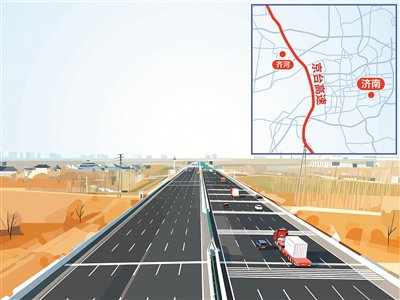
中国首条“六改十二车道”高速公路建成通车
Zhong Guo Xin Wen Wang· 2025-12-28 06:21
中新网济南12月28日电 (记者沙见龙)12月28日,由山东高速集团投资建设的中国首条"六改十二车道"高 速公路——京台高速齐河至济南段(以下简称"京台高速齐济段")建成通车。至此,京台高速山东段全部 完成升级改造。 京台高速齐济段改扩建项目是交通运输部公路水路重点项目、山东省重大项目,起自晏城枢纽,途经济 南齐河县、槐荫区、市中区,止于殷家林枢纽,全长23.999公里。 据了解,京台高速齐济段作为G3京台高速、G35济广高速与济南绕城高速的共线段,既是国家干线动 脉,又是济南都市圈的核心集散通道,常年超负荷运转导致拥堵指数居高不下。原有六车道已无法较好 地满足社会公众通行需求,实施改扩建迫在眉睫。 在智能建造方面,项目深度融合数字化与智能化,自主开发BIM协同管理平台,实现从施工、验收到计 量支付的全流程线上化管理与可视化呈现。围绕跨黄河穿城区绿色协调发展、黄河特大桥安全建造、超 多车道运营交通安全智慧管控三大方向,项目团队开展10项课题研究,形成一系列专利与工法,并通过 机制砂自产、智能张拉、大体积混凝土智能振捣、新型桩基技术等应用,显著提升了施工效率与工程质 量。 山东高速集团党委常委、副总经理李怀峰在 ...
嘉兴“好房子”建设加速推进
Xin Lang Cai Jing· 2025-12-26 23:06
Core Viewpoint - The "Good House" initiative in Jiaxing aims to enhance the quality of housing and urban development, transitioning from "housing for all" to "quality housing" to meet the public's demand for high-quality living spaces [1][4]. Group 1: Initiative Overview - The Jiaxing government has prioritized the "Good House" initiative as a key strategy for improving public welfare and urban development, establishing a unique brand for "Jiaxing Good Houses" [1]. - A set of "Five Good" standards has been introduced, focusing on quality land supply, supporting infrastructure, design leadership, quality construction, and service empowerment [1][2]. - The city is advancing smart construction and prefabricated renovation as part of its pilot projects, with ten projects recognized as high-quality residential trials by Zhejiang Province [1][2]. Group 2: Land Supply and Market Dynamics - In 2023, Jiaxing's residential land market showed a positive trend with a 10% year-on-year increase in land supply to 1,672 acres and a 27% increase in land transfer revenue to 10.398 billion yuan [2]. - The average premium rate for residential land transactions reached 5.9%, with several plots exceeding a 30% premium, indicating strong demand for quality land [2]. - The core urban area accounted for 45% of the land area and 48% of the revenue, highlighting its role as a key driver in the land market [2]. Group 3: Market Performance and Consumer Demand - High-quality residential projects have demonstrated strong market performance, with notable sales figures such as the complete sale of 310 units at Lakeview Yunlu and a 96% sales rate for 905 units at Zhijing Garden [3]. - The successful sales of these projects reflect the robust market demand for quality housing, providing confidence for industry transformation [3]. - Attendees of the conference observed high-quality projects that exemplify urban renewal and innovative design, showcasing the potential for enhancing community living [3]. Group 4: Challenges and Future Directions - The "Good House" initiative responds to the public's expectations for improved living conditions and is essential for the real estate industry's transformation amid market adjustments [4]. - The industry faces challenges such as market volatility, competition, and the need for improved construction standards and innovative development models [4]. - The Jiaxing government plans to continue promoting the construction of "Good Houses," "Good Communities," and "Good Districts" to meet the high-quality living needs of the public [4].
高教路(文一西路—云余东街北)新建工程盾构始发
Hang Zhou Ri Bao· 2025-12-25 02:21
"余杭·先行号"盾构机开挖直径达16.2米,整机全长120米,总重4135吨,体形相当于一排六层楼 房,是浙江省最大直径市政工程泥水盾构。为了适应工程建设,盾构刀盘、盾体等位置应用了多项创新 设计,并装配了智能感知、智能设计、智能预制、智能掘进、智能安装、智能构筑、智能环控、智能运 输、智能管控"九大智能"建造体系。"经过数智升级的'精良装备'将为隧道安全、优质建设赋能。"中铁 隧道局相关负责人介绍,"项目组通过科学统筹、优化工序等方式加快进度,43天就完成了盾构组装, 较国内同尺寸超大直径盾构组装平均工时提前12天。" 接下来,工程建设团队将倒排工期、加快推进,全力确保道路2027年建成。 该工程南起文一西路北侧,沿高教路向北延伸,终于东海港路南侧,全长约3.4千米,设计标准为 双向六车道的城市主干道路,设计速度每小时60千米。道路建成后,将进一步强化未来科技城与云城南 北向空间拓展和功能联动,促进资源的高效流通与共享。 施工过程中,盾构机将长距离穿越上软下硬复杂地层,并与在建地铁12号线长距离并行。此类大直 径盾构隧道与地铁隧道大于1000米的长距离共线叠交在国内尚无建成案例,施工难度和风险极高。针对 工 ...
“现房销售”真的要来了!住建会定调2026楼市方向
Sou Hu Cai Jing· 2025-12-24 16:42
Group 1 - The annual national housing and urban construction work conference serves as a "weather vane" for the real estate market in the upcoming year, summarizing achievements and outlining key focuses for future development [1] - The 2025 annual report highlights significant achievements in urban renewal, including the completion of old community renovations, elevator upgrades, and the elimination of black and odorous water bodies in county-level cities [3][5] - The "guarantee delivery" initiative has been successfully completed, alleviating concerns for homeowners worried about unfinished properties, with 38 cities piloting "self-renovation" of old houses [3][4] Group 2 - The total achievements over the "14th Five-Year Plan" include approximately 5 billion square meters of commercial housing sold and over 11 million units of affordable housing built, providing stable housing for over 30 million people [5][6] - The housing provident fund has facilitated 6.5 trillion yuan in home purchases and 9.4 trillion yuan in rental payments, significantly reducing financial pressure for citizens [6] - Urban infrastructure improvements include the renovation of 840,000 kilometers of underground pipelines and the creation of over 20,000 pocket parks, benefiting around 12 million residents [7] Group 3 - The transition from "firefighting" to "defensive" strategies in real estate is evident, with a focus on risk prevention and the expansion of financing options for reliable real estate companies [9] - Urban renewal efforts have shifted from merely hardware upgrades to cultural preservation, with initiatives to protect historical sites and enhance cultural heritage [10] - The quality of housing has improved from having standards to actual implementation, with new regulations ensuring better construction practices [11] Group 4 - Looking ahead to 2026, key focuses include the detailed advancement of urban renewal projects, such as the renovation of old communities and the construction of pocket parks [13] - The promotion of "existing house sales" aims to ensure that homebuyers can purchase properties they have seen, with stricter regulations on pre-sale funds to prevent fraud [14] - The development of smart construction technologies and new eco-friendly building materials will be prioritized, alongside enhanced quality supervision to eliminate substandard projects [15]
高速公路里程突破9300公里
Xin Lang Cai Jing· 2025-12-24 10:40
Core Viewpoint - Since the beginning of the 14th Five-Year Plan, Shandong's highway construction has accelerated significantly, with total investments exceeding 440 billion yuan, marking a 1.7 times increase compared to the previous five-year period, and the total highway mileage is set to surpass 9,300 kilometers this year [1][2][6]. Investment and Project Completion - A total investment of over 440 billion yuan has been completed, which is 1.7 times that of the 13th Five-Year Plan, with 28 projects completed and put into operation [2][6]. - The total highway mileage will exceed 9,300 kilometers, with the proportion of six-lane highways and above increasing to 41% [2][6]. - Eight-lane highways have reached 1,596 kilometers, leading the nation in scale [2][6]. Network Expansion and Connectivity - The province has implemented a network expansion project, enhancing the road network facilities and ensuring annual improvements and new openings [2]. - Major north-south corridors, including the Beijing-Taiwan, Jinan-Guangzhou, and Shenyang-Hai highways, have been expanded to support efficient connections with key economic regions [2]. - The coverage rate of "double highways" in all counties has reached 97.8%, with the number of inter-provincial exits increasing to 27, up by 5 from the end of the 13th Five-Year Plan [2][6]. Intelligent Construction and Technological Advancements - Shandong has made significant breakthroughs in intelligent construction, focusing on standardized management and industrialized building methods [4]. - The application of prefabricated assembly has shown remarkable results, with the establishment of two fully automated, intelligent bridge precast industrial bases [4]. - The province has pioneered the use of intelligent equipment in tunnel construction, achieving a 45% reduction in workforce for key processes [4]. Digital Transformation and Innovation - The company has developed the first domestic asphalt pavement in-situ thermal regeneration unit, breaking foreign technology monopolies [5]. - A comprehensive digital transformation plan has been implemented, including the establishment of the first "smart highway" pilot project in the country [5]. - The construction of the first zero-carbon smart highway has been completed, showcasing a range of independent intellectual property and internationally leading research outcomes [5].
住房城乡建设部:有序搭建房地产开发、融资、销售基础性制度
Xin Hua Cai Jing· 2025-12-23 07:37
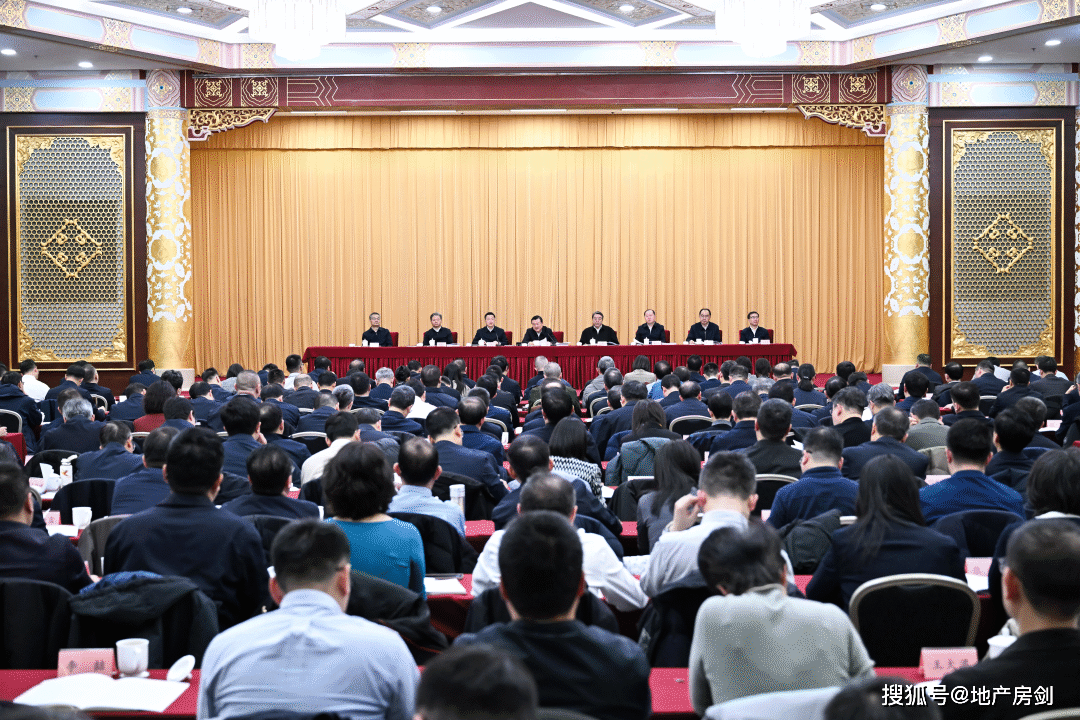
Core Viewpoint - The national housing and urban-rural construction work conference emphasized the importance of high-quality development in the housing and urban-rural construction sector, outlining key tasks for 2026 and the "15th Five-Year Plan" period [1]. Group 1: Key Tasks for 2026 - Focus on four main areas: modernizing urban construction, stabilizing the real estate market, upgrading the construction industry, and strengthening the foundation for high-quality development [2][3]. Group 2: Modernizing Urban Construction - High-quality urban renewal will be prioritized, including the implementation of a special plan for urban renewal during the "15th Five-Year Plan" period, and various community improvement projects [3]. - Emphasis on enhancing urban infrastructure, including drainage systems and safety projects, while promoting effective urban governance and management [3]. Group 3: Stabilizing the Real Estate Market - Policies will be tailored to local conditions to control supply, reduce inventory, and optimize housing supply, with a focus on affordable housing and improving housing quality [4]. - The government will support reasonable financing needs of real estate companies and adjust policies to meet residents' housing demands [4]. Group 4: Upgrading the Construction Industry - The industry will focus on smart and green construction, developing a modern construction industry chain and promoting new building materials [5]. - Strengthening market order and safety management in construction projects will be a priority [5]. Group 5: Strengthening High-Quality Development Foundations - Enhancements in legal frameworks, standard systems, and statistical analysis will be pursued to support the construction sector [6]. - The integration of artificial intelligence in housing and urban construction will be promoted, alongside international cooperation to enhance the competitiveness of "Chinese construction" in global markets [6].
住建部最新发声:房地产仍有较大发展潜力
Di Yi Cai Jing Zi Xun· 2025-12-23 05:09
12月22日至23日,全国住房城乡建设工作会议在北京召开。会议指出,2026年,要着力抓好4方面工 作。 ——推进现代化人民城市建设,重点是:高质量开展城市更新,编制实施"十五五"城市更新专项规划, 抓好城市体检、更新试点,实施一批民生工程、发展工程、安全工程。以"绣花"功夫精细化推进城镇老 旧小区改造、完整社区建设、口袋公园建设、绿地开放共享、"温暖工程"建设、城市小微公共空间改 造,提升无障碍适老化环境品质。高质量实施"两重"、"两新"项目建设,持续开展地下管网改造和综合 管廊建设,常态化推进城市燃气管道老化更新改造,力争完成改造各类燃气管道3万公里。积极开展新 型城市基础设施建设。持续建设城市排水防涝工程体系、城市基础设施生命线安全工程;高效能推进城 市治理,推动建立城市管理统筹协调机制,发挥好"一委一办一平台"作用,深入开展城市管理进社区工 作,运用好"吹哨报到"、"接诉即办"等工作机制,深化城市管理和执法体制改革,持续推进城市管理执 法队伍标准化规范化建设;高标准建设文明城市,完善历史文化保护传承体系,全力抓好老城区和老街 区专项调查,深入开展国家历史文化名城专项评估和监测,完善城市风貌管理制度,以 ...
住建部最新发声:房地产仍有较大发展潜力
第一财经· 2025-12-23 05:04
——夯实高质量发展基础支撑, 重点是:提升法治建设水平,完善标准体系,加快推出一批工作急需 的工程建设标准。加强统计分析,推动优化现行统计指标,强化统计数据分析应用。提升数智化水平, 加力推进城市信息模型(CIM)建设,推进人工智能与住房城乡建设领域深度融合。加强科技人才支 撑,谋划一批重点科技攻关项目,组织开展"建设英才"选拔。强化新闻宣传,统筹发挥中央主流媒体、 部新闻媒体和地方新闻媒体作用,营造良好社会氛围。加强国际交流合作,提升"中国建造"在国际市场 中的地位和竞争力。 12月22日至23日,全国住房城乡建设工作会议在北京召开。会议指出,2026年,要着力抓好4方面工 作。 ——推进现代化人民城市建设, 重点是: 高质量开展城市更新, 编制实施"十五五"城市更新专项规 划,抓好城市体检、更新试点,实施一批民生工程、发展工程、安全工程。以"绣花"功夫精细化推进城 镇老旧小区改造、完整社区建设、口袋公园建设、绿地开放共享、"温暖工程"建设、城市小微公共空间 改造,提升无障碍适老化环境品质。高质量实施"两重"、"两新"项目建设,持续开展地下管网改造和综 合管廊建设,常态化推进城市燃气管道老化更新改造,力争完 ...