
财税体制改革

Search documents
辽宁省人民代表大会财政经济委员会关于2024年省本级决算草案审查结果的报告
Liao Ning Ri Bao· 2025-08-01 01:12
Core Viewpoint - The report outlines the financial results and budget execution for Liaoning Province in 2024, highlighting a balanced budget with total revenues and expenditures both amounting to 5031.3 billion yuan, while also addressing areas for improvement in fiscal management and policy implementation [1][2][3]. Financial Performance Summary - The general public budget revenue for the province was 106.8 billion yuan, achieving 98.1% of the budget target, with total revenue reaching 5031.3 billion yuan when including other income sources [1]. - The general public budget expenditure was 1697.8 billion yuan, completing 98.6% of the budget, with total expenditures also at 5031.3 billion yuan [1]. - The government fund budget revenue was 16.5 billion yuan, exceeding the budget by 10.8%, with total revenue of 1350 billion yuan [2]. - The social insurance fund budget revenue was 3413.3 billion yuan, completing 96.7% of the budget, while expenditures were 3467.2 billion yuan, achieving 97.2% of the budget [2]. Debt Management - The total government debt balance for the province at the end of 2024 was 14019.5 billion yuan, within the limits set by the State Council, with the provincial debt balance at 932.3 billion yuan [2]. Recommendations for Improvement - The Finance and Economic Committee identified issues such as insufficient revenue growth, the need for better expenditure management, and the necessity for enhanced performance management of fiscal funds [4]. - Suggestions include implementing more proactive fiscal policies, advancing tax system reforms, and improving budget management practices [5][6][7]. Performance Management - Emphasis on integrating performance management throughout the budget process to enhance the effectiveness of fiscal spending [8]. - Recommendations for establishing a robust performance evaluation mechanism to ensure efficient use of limited fiscal resources [8]. Risk Management - The report stresses the importance of preventing and mitigating risks in key areas, particularly in maintaining fiscal security and managing hidden debts [9]. - It calls for a comprehensive monitoring system for local debt and the management of state-owned assets to prevent financial risks [9]. Audit and Supervision - The need for strengthened audit and financial supervision is highlighted to ensure compliance and accountability in fiscal management [11]. - Recommendations include rigorous oversight of major projects and policies to ensure effective implementation and financial discipline [11].
省人大常委会组成人员对省政府关于辽宁省2024年财政决算报告的审议意见
Liao Ning Ri Bao· 2025-08-01 01:12
Group 1 - The core viewpoint of the article emphasizes the commitment of the provincial government to implement the central government's decisions and the provincial party's requirements, focusing on effective fiscal policies and management to support the goals of comprehensive revitalization [1] - The provincial government aims to enhance fiscal resource coordination and improve fiscal management levels while preventing risks in key areas, thereby providing solid fiscal support for the year of tackling challenges [1] Group 2 - Suggestions include strengthening budget and final accounts management by improving the budget draft system and enhancing the management of surplus funds [2] - There is a focus on increasing the efficiency of fiscal fund usage through performance evaluations and optimizing budget allocations [2] - The establishment of a comprehensive risk monitoring and early warning system is recommended to prevent systemic financial risks, including hidden debts [2] - The article advocates for advancing fiscal and tax system reforms, including implementing zero-based budgeting to enhance the scientific and effective nature of budget preparation [2]
财政部部长蓝佛安最新发声!
天天基金网· 2025-07-30 05:12
Core Viewpoint - The article emphasizes the importance of utilizing proactive fiscal policies to enhance economic performance and stability, focusing on measures such as issuing long-term special bonds and local government bonds to stimulate growth and improve microeconomic circulation [1][2]. Group 1: Fiscal Policy Measures - The Ministry of Finance plans to accelerate the issuance and utilization of ultra-long-term special bonds and local government special bonds to create tangible work volume as soon as possible [1]. - A total of 14.1 trillion yuan was spent from the national general public budget in the first half of the year, ensuring strong support for key areas [1]. - By the end of June, the central government had allocated 9.29 trillion yuan in transfer payments to local governments, with over 90% of central budget investments disbursed [1]. Group 2: Debt Management and Economic Support - The Ministry of Finance has implemented a one-time increase of 6 trillion yuan in the debt limit for 2024, with 3.8 trillion yuan in new replacement bonds issued by the end of June [2]. - The average interest cost of replaced debt has decreased by over 2.5 percentage points, significantly alleviating repayment pressure and freeing up more funds for development and public needs [2]. - The focus is on promoting consumption to expand domestic demand, with policies aimed at enhancing service consumption in areas such as elderly care, childcare, culture, and tourism [2]. Group 3: Social Spending and Employment Support - In 2025, the budget for education, social security, and employment is set to be nearly 4.5 trillion yuan, with year-on-year growth of 6.1% and 5.9% respectively [3]. - The central government has allocated 1.1 trillion yuan for basic pension insurance subsidies, ensuring timely and full payment of pensions [3]. - Policies to support employment, such as job retention subsidies and tax reductions, are being strengthened to protect key groups in the labor market [3]. Group 4: Fiscal and Tax System Reform - The article discusses the need for a modern budget system and improved budget management practices to enhance local fiscal autonomy [4]. - There are plans to optimize the consumption tax system and improve the value-added tax refund policy to align with new business models [4]. - The Ministry of Finance is promoting zero-based budgeting reforms at the central level to support local governments in similar reforms [4].


财政部部长蓝佛安,最新发声!
Shang Hai Zheng Quan Bao· 2025-07-30 05:11
同时,财政部深入落实2024年一次性增加6万亿元债务限额政策,截至今年6月底,已累计发行新增置换 债券3.8万亿元。各地置换后债务平均利息成本降低超过2.5个百分点,还本付息压力大幅减轻,财政空 间得到释放,腾出更多资金用于发展所需、民生所盼。 财政部部长蓝佛安日前在《学习时报》发表的署名文章《以优良作风凝心聚力为经济持续向新向好贡献 财政力量》提到,用好用足更加积极的财政政策,加大财政逆周期调节力度。 具体举措包括:加快发行和使用超长期特别国债、地方政府专项债券,尽早形成实物工作量。发挥财政 资金引导和带动效应,推动各项政策效能不断释放。落实好助企帮扶各项财税政策,有效改善经济微观 循环。统筹运用专项资金、税收优惠、政府采购和政府投资基金等政策工具,支持传统产业改造提升、 新兴产业发展壮大和未来产业前瞻布局。指导督促地方做好隐性债务置换工作,积极稳妥化解地方政府 债务风险。 财政部数据显示,上半年全国一般公共预算支出14.1万亿元,保持较大强度,重点领域支出得到有力保 障。新增地方政府债券额度4月底已全部下达地方。截至6月底,中央对地方转移支付已下达9.29万亿 元,中央预算内投资下达超过90%,2025年 ...
蓝佛安最新署名文章
中国基金报· 2025-07-30 03:59
Core Viewpoint - The article emphasizes the importance of strengthening the Party's work style to contribute to the sustained improvement of the economy, highlighting the need for a proactive fiscal policy and effective implementation of various measures to support economic growth and stability [2][7][16]. Group 1: Party's Work Style and Governance - The article discusses the significance of enhancing the Party's work style as a response to increasing risks and challenges, with a focus on the implementation of the Central Eight Regulations [2][3]. - It outlines the establishment of a "tower-like" responsibility system to ensure accountability in work style construction, emphasizing the need for strict adherence to Party discipline and responsibilities [4][5]. - The article stresses the importance of continuous learning and self-examination to identify and rectify issues within the Party's work style [5][6]. Group 2: Fiscal Policy and Economic Support - The article highlights the implementation of a more proactive fiscal policy since 2025, aimed at stabilizing employment, businesses, and market expectations, with significant budget allocations [7][8]. - It mentions the issuance of special bonds and the allocation of funds to support consumption and investment, which are crucial for economic recovery [9][10]. - The article notes that the central government's budget for education and social security has seen substantial increases, reflecting a commitment to improving public welfare [11]. Group 3: Modernization and Structural Reform - The article emphasizes the need for a modernized fiscal system that aligns with China's modernization goals, including tax reforms and improved budget management [12][18]. - It discusses the importance of addressing local government debt risks while promoting high-quality development, indicating a balanced approach to fiscal management [13][14]. - The article also highlights the role of fiscal policy in enhancing domestic demand and supporting various sectors, including real estate and social services [16][17].
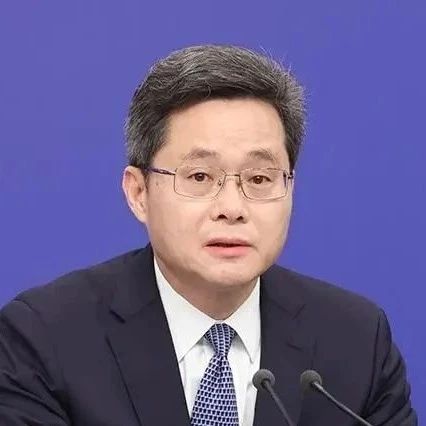
蓝佛安最新署名文章
Zhong Guo Ji Jin Bao· 2025-07-30 03:32
(原标题:蓝佛安最新署名文章) 来源:《学习时报》 《学习时报》7月30日刊发财政部党组书记、部长蓝佛安的署名文章《以优良作风凝心聚力 为经济持续 向新向好贡献财政力量》。 以下为全文: 习近平总书记深刻指出,"风险越大、挑战越多、任务越重,越要加强党的作风建设,以好的作风振奋 精神、激发斗志、树立形象、赢得民心"。在全党开展深入贯彻中央八项规定精神学习教育,是今年党 建工作的重点任务。习近平总书记亲自谋划、亲自部署、亲自推动,多次发表重要讲话,作出重要指 示,为全党开展学习教育提供了行动指南。财政部深入学习习近平总书记关于加强党的作风建设的重要 论述精神,自觉将开展学习教育作为践行"两个维护"的实际行动,坚持学查改贯通发力,切实将作风建 设成效内化为攻坚克难的强大动力,深化为贯彻习近平总书记重要指示精神的坚决行动,转化为实施财 政宏观调控的有力举措,推动经济持续回升向好和高质量发展。 聚焦作风建设的关键,建立"宝塔型"责任体系,推动严的要求一贯到底。全面从严治党,必须牢牢抓住 责任制这个"牛鼻子"。作风建设也必须拧紧责任链条。财政部严格落实全面从严治党主体责任和监督责 任,强化党组织书记"第一责任人"责任, ...
蓝佛安:加大财政逆周期调节力度 加快发行超长期特别国债、专项债
Zheng Quan Shi Bao Wang· 2025-07-30 02:40
Group 1 - The article emphasizes the importance of utilizing more proactive fiscal policies to enhance economic stability and growth, with a focus on accelerating the issuance and use of ultra-long special government bonds and local government special bonds [1][3] - In the first half of the year, the proactive fiscal policy and other macro policies worked in synergy, contributing to a stable and improving economic situation in China [1][2] - The Ministry of Finance has implemented measures to support consumption and investment, including the issuance of 162 billion yuan in ultra-long special government bonds to stimulate consumer spending, resulting in over 1.6 trillion yuan in sales across five major product categories [2][3] Group 2 - The issuance of local government special bonds reached 2.16 trillion yuan in the first half of the year, expanding the scope of investment and supporting major project construction [2] - As of June 30, the cumulative issuance of new replacement bonds was 3.8 trillion yuan, significantly reducing the average interest cost of replaced debts by over 2.5 percentage points, thereby alleviating repayment pressure and freeing up fiscal space for development and public welfare [2] - The article highlights the need for a robust policy framework to support consumption in various sectors, including elderly care, childcare, culture, and tourism, while also promoting the healthy development of the duty-free retail business [3][4] Group 3 - The Ministry of Finance aims to enhance employment stability through policies such as job retention subsidies, tax reductions, and employment support, while also focusing on improving educational resources and implementing childcare subsidies [3] - The article discusses the need for reforms in the fiscal and tax system, including the establishment of a modern budget system and improvements in the fiscal transfer payment system to enhance local financial autonomy [4]
事关育儿补贴,蓝佛安发声
第一财经· 2025-07-30 00:48
Core Viewpoint - The article emphasizes the importance of implementing proactive fiscal policies to support economic recovery and high-quality development, while also addressing social welfare and employment issues [1][16]. Group 1: Fiscal Policy Implementation - The Ministry of Finance will accelerate the issuance and utilization of ultra-long special government bonds and local government special bonds to create tangible work output [1][16]. - A total of 14.1 trillion yuan was spent from the national general public budget in the first half of the year, maintaining a strong expenditure intensity [7][15]. - By the end of June, 9.29 trillion yuan in central transfers to local governments had been disbursed, with over 90% of central budget investments allocated [8][15]. Group 2: Economic Stability and Growth - The article highlights the need to support employment, stabilize enterprises, and maintain market expectations through fiscal measures [7][15]. - Domestic demand is emphasized as a strategic focus, with measures to stimulate consumption and investment, including 1,620 billion yuan in special bond funds to support consumer goods [9][15]. - The GDP grew by 5.3% year-on-year, with domestic demand contributing 68.8% to economic growth, indicating a strong recovery [15]. Group 3: Social Welfare and Employment - The Ministry of Finance plans to enhance social security, healthcare, and education funding, with education and social security expenditures each approaching 4.5 trillion yuan, reflecting a year-on-year increase of 6.1% and 5.9% respectively [11][15]. - Employment support policies will be strengthened, including a 667.4 billion yuan allocation for employment subsidies [11][15]. - The implementation of a childcare subsidy system and gradual promotion of free preschool education are also highlighted to meet the needs of families [17]. Group 4: Fiscal System Reform - The Ministry of Finance is committed to deepening fiscal and tax system reforms to align with modern governance needs, including optimizing tax policies and enhancing budget management [12][18]. - A zero-based budgeting reform pilot is being conducted in 16 central departments to improve financial efficiency [13][18]. - The establishment of a modern budget system and a more effective transfer payment system is also a focus to enhance local fiscal autonomy [18].
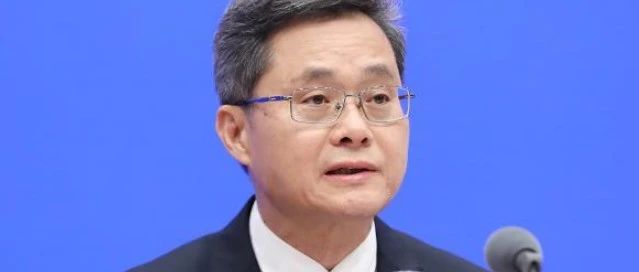
财政部部长蓝佛安:抓紧实施育儿补贴制度 逐步推行免费学前教育
Di Yi Cai Jing· 2025-07-29 23:52
Group 1 - The article emphasizes the need for the Ministry of Finance to align its actions with the central government's analysis of the economic situation, promoting high-quality economic and social development through effective fiscal policies [1][22] - The Ministry plans to implement a childcare subsidy system, gradually promote free preschool education, and provide subsidies for elderly care services for disabled seniors to better meet the service needs of the population [1][23] Group 2 - The Ministry of Finance aims to enhance employment stability through policies such as job retention subsidies, tax reductions, and employment support for key groups [1][23] - There is a focus on increasing educational support and improving the quality of educational resources, alongside the implementation of social security, healthcare, and welfare policies to ensure basic living standards for vulnerable groups [1][23] Group 3 - The Ministry is committed to accelerating the issuance and utilization of long-term special bonds and local government bonds to create tangible work output as part of its fiscal policy [1][22] - The article highlights the importance of using fiscal funds to guide and stimulate economic activity, ensuring that various policy effects are continuously released [1][22]
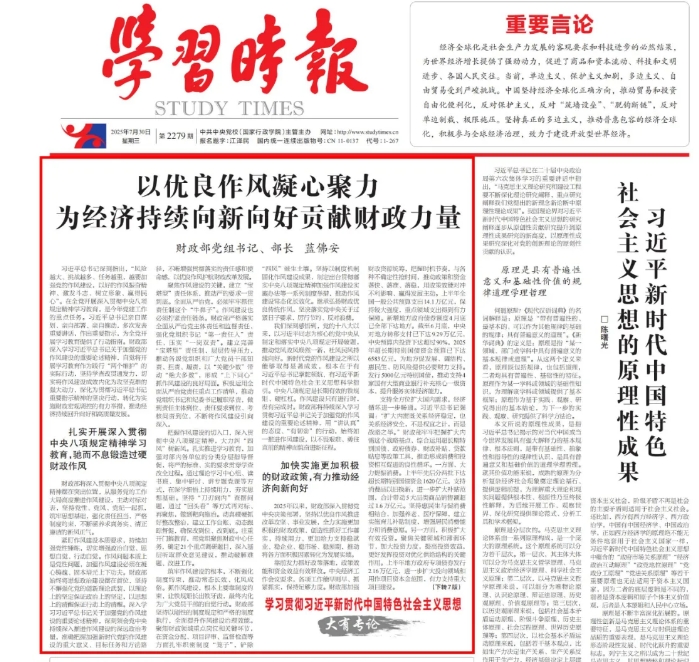
财政部长:用好用足更加积极财政政策 加大财政逆周期调节力度
Zheng Quan Shi Bao· 2025-07-29 23:39
Group 1 - The article emphasizes the need for a more proactive fiscal policy to enhance economic stability and growth through increased fiscal counter-cyclical adjustments [1] - It highlights the importance of issuing and utilizing ultra-long special bonds and local government special bonds to generate tangible work output promptly [1] - The article discusses the role of fiscal funds in guiding and stimulating policy effectiveness, particularly in supporting traditional industry upgrades and the development of emerging industries [1] Group 2 - The article stresses the importance of strengthening social welfare measures to address urgent public concerns, including employment stability and educational support [2] - It advocates for the implementation of a childcare subsidy system and the gradual introduction of free preschool education to better meet the needs of families [2] - The article calls for enhanced social security, healthcare, and assistance policies to ensure basic living standards for vulnerable populations [2] Group 3 - The article outlines the need for continuous reform of the fiscal and tax system to improve governance efficiency and budget management [3] - It suggests optimizing the VAT refund policy and developing tax systems that align with new business models [3] - The article emphasizes the importance of enhancing local fiscal autonomy through improved transfer payment systems [3] Group 4 - The article focuses on promoting consumption to expand domestic demand and unlock market potential [4] - It discusses the need to improve policies supporting service consumption in areas such as elderly care, childcare, culture, and tourism [4] - The article highlights the importance of coordinating fiscal and financial policies to better meet consumer demand and support the real estate market's sustainable development [4]