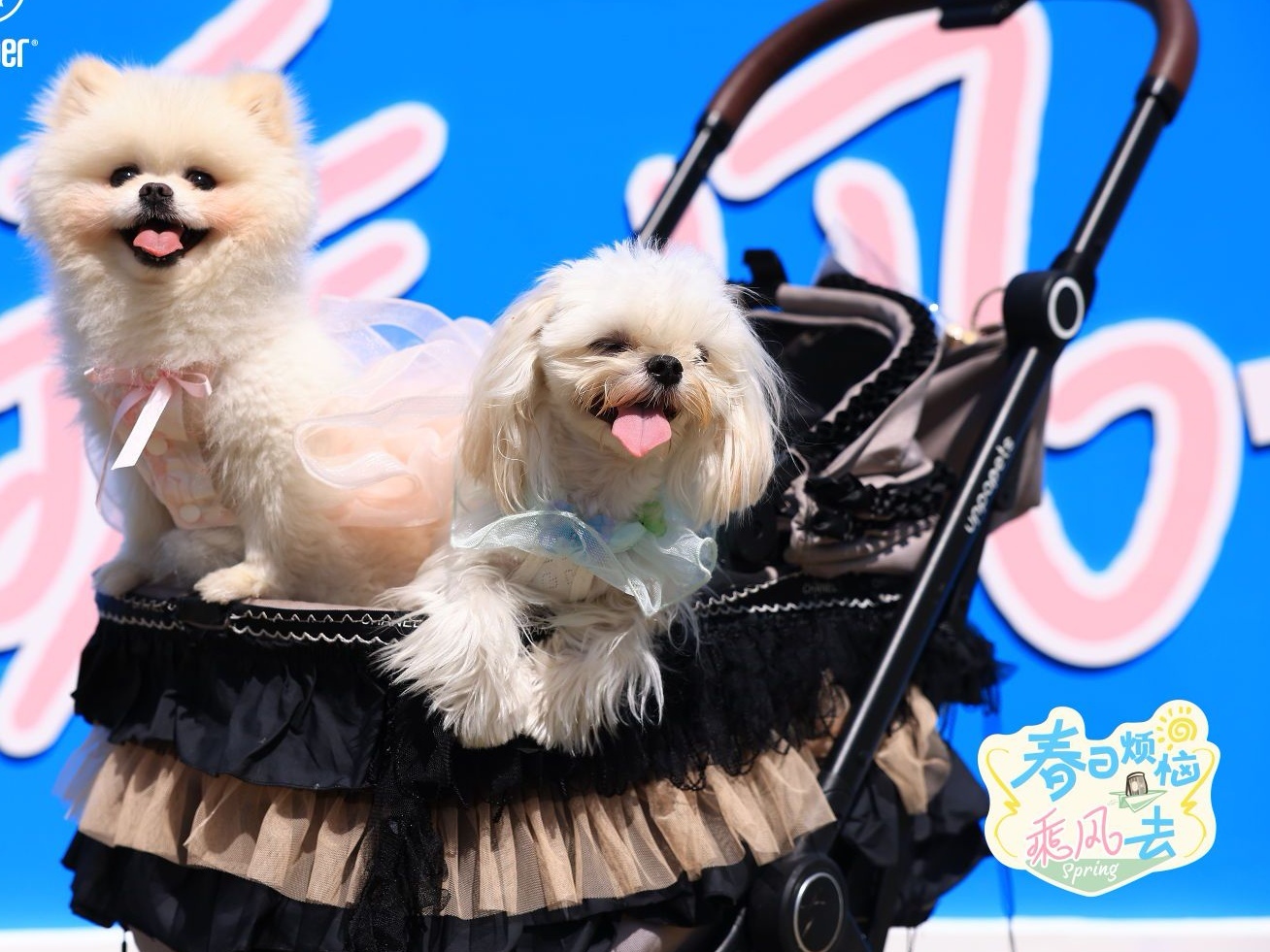
宠物经济

Search documents
百团逐浪, 广交会挥撒黄金网
Zhong Guo Jing Ji Wang· 2025-05-07 23:42
Group 1 - The Canton Fair showcases China's new advantages and resilience in foreign trade, attracting numerous international buyers [1] - Jiangsu Wulong Knitting Co., Ltd. received nearly 2 million yuan in intended orders for its "Yinbenkang" antibacterial fabric, which has garnered interest from over 30 buyers before the fair even started [2] - Shandong Qingguo Food Co., Ltd. attracted over 150 buyers, with half from Belt and Road countries, and secured a long-term supply agreement for frozen vegetables with a buyer from Mauritius [3][6] Group 2 - Shandong Digital Human Technology Co., Ltd. showcased innovative products like a virtual dissection table, attracting over 500 buyers from more than 20 countries and generating nearly 20,000 USD in orders [4] - Yide Home Textiles has tapped into the pet economy, achieving 11 intended orders worth approximately 880,000 USD, primarily from Belt and Road countries [5] - Tianjin Lixing International Trade Co., Ltd. received over 60 buyers on the first day, achieving intended transaction amounts exceeding 7 million USD, highlighting the fair's role in facilitating cross-border business opportunities [6]
2025年AI预测未来10年的创业产业排名
Sou Hu Cai Jing· 2025-05-07 12:10
Core Insights - The report analyzes the entrepreneurial activity and development potential of various industries in China from 2015 to 2025, highlighting key trends and factors influencing growth. Group 1: Wholesale and Retail Industry - The wholesale and retail industry ranks first in entrepreneurial activity, with new registered enterprises consistently leading other sectors. In 2022, the number of new registrations was approximately double that of the manufacturing sector, particularly strong in regional hub cities like Shanghai, Chongqing, and Shenzhen [3]. - Key drivers include consumption upgrades, increased e-commerce penetration (such as cross-border e-commerce), and the rise of online-offline integration models (like community group buying) [3]. - A notable example is Yiwu, which has seen a significantly higher number of new registered enterprises in its wholesale and retail sector compared to other regions [3]. Group 2: Manufacturing Industry - The manufacturing sector has experienced sustained growth in entrepreneurial activity since 2015, driven by the "Made in China 2025" policy, particularly in smart manufacturing and new energy equipment [4]. - Key cities for manufacturing innovation include Shenzhen, Suzhou, and Dongguan [4]. - Emerging subfields such as new energy vehicles, new materials, and industrial internet platforms are gaining traction due to policy support and market demand [5]. Group 3: Information Technology and Artificial Intelligence - The information technology and AI sectors are rapidly growing, with applications in healthcare, finance, and logistics creating numerous entrepreneurial opportunities. By 2025, the AI-related market is expected to exceed $62 billion [6]. - Financial technology (like blockchain) and virtual reality (VR/AR) are becoming significant branches within this sector [6]. - Government reports emphasize the development of "smart industries," promoting the integration of technology with traditional sectors [6]. Group 4: Resident and Life Services - Driven by essential needs, the resident services sector includes areas like housekeeping, repair services, and community elder care. Post-2020, online appointment services and community-based service models have surged [7]. - Cities like Beijing and Chengdu lead in the registration of resident service enterprises, correlating with economic levels and population density [8]. Group 5: New Energy and Environmental Protection - The new energy and environmental protection sectors are hotbeds for entrepreneurship, driven by policies and market demand. The solar, wind, and energy storage technologies, along with waste management, are key focus areas [9]. - The electric vehicle supply chain, including charging stations and battery recycling, is expected to see significant growth due to the "dual carbon" goals [9]. - Companies like CATL in the power battery sector are creating entrepreneurial opportunities across the supply chain [10]. Group 6: Health Care and Life Sciences - The aging population and consumption upgrades are propelling growth in areas like gene editing, telemedicine, and health management devices. The pandemic has led to increased profitability in pharmaceuticals and health products, with some subfields (like medical devices) growing faster than traditional industries [11]. - National policies encourage social capital investment in healthcare and elder care, promoting the "medical-elderly care integration" model [12]. Group 7: Educational Technology (EdTech) - The trend towards online and personalized education is driving rapid growth in K12 online education and vocational training platforms. By 2025, the EdTech market is projected to exceed $10 billion, with significant penetration in third- and fourth-tier cities [13]. Group 8: Logistics and Supply Chain Management - The logistics sector is being propelled by e-commerce and globalization, with companies like Cainiao Network leading the digitalization of logistics. Low-barrier entrepreneurial opportunities are emerging in county-level economies through express delivery and same-city distribution [14]. - Technological advancements such as drone delivery and smart warehousing systems are being piloted in certain regions, indicating substantial future growth potential [15]. Group 9: Summary and Future Trends - There are regional disparities in entrepreneurial activity, with coastal areas (like the Yangtze River Delta and Pearl River Delta) remaining the core hubs, while central and western cities (like Chengdu and Chongqing) are accelerating growth due to policy support [16]. - Industry regulations (such as those in financial technology) and technical standards (like AI ethics) will influence future entrepreneurial directions. Potential future hot areas include IoT security devices, the "single economy" (like virtual companionship services), and the pet economy [17].



易瑞生物(300942) - 2025年5月7日投资者关系活动记录表
2025-05-07 10:38
Group 1: Company Overview and Financial Performance - The company achieved a revenue of 224.25 million RMB in 2024, with the food safety rapid testing business contributing 208.51 million RMB, a year-on-year increase of 5.29% [11] - The animal diagnosis business generated 13.74 million RMB, showing a significant growth of 63.87% year-on-year [11] - The net profit attributable to shareholders was 17.12 million RMB, reflecting a substantial increase of 109.26% compared to the previous year [11] Group 2: Strategic Partnerships and Market Expansion - The partnership with Chr. Hansen is expected to generate sales of 73.06 million EUR (approximately 600.83 million RMB) from 2025 to 2029, with the 2025 sales target accounting for about 42.18% of the company's audited revenue for 2024 [5] - The collaboration aims to enhance the company's market penetration in the global dairy product sector and diversify its business into other areas such as food and beverage, agriculture, and biomedicine [4][8] Group 3: Market Trends and Growth Projections - The global food safety testing market is projected to reach 33.7 billion USD by 2028, with a compound annual growth rate (CAGR) of 8.2% [9] - The domestic animal diagnosis market is expected to grow to 13.1 billion RMB by 2025, driven by the increasing scale of livestock farming and the rising number of pets [11] Group 4: Product Development and Innovation - The company is focusing on developing automated testing solutions to enhance testing quality and efficiency, which will also drive sales of testing reagents [7][14] - The introduction of smart solutions aims to meet customer demands for automation and digital transformation in quality control [13] Group 5: Competitive Landscape - The company holds a leading position in the domestic food safety rapid testing industry, with a revenue of 209 million RMB, while the international market is dominated by established players like IDEXX and Neogen [12] - The company aims to become a world-class leader comparable to IDEXX by expanding its international presence and enhancing its product offerings [12]

重仓额大增5倍!基金看好这类股票
天天基金网· 2025-05-06 05:07
上天天基金APP搜索【777】领 98 元券包 ,优选消费基金10元起投!限量发放!先到先得! 近期,沉寂多年的消费赛道行情触底反弹! 其中,以宠物经济为代表的新兴消费股在二级市场更加耀眼,基于基本面与股价的共振,多只宠物经济相关个 股在上行途中被公募基金持续加仓。 除了在白酒或家电等传统概念股中辗转腾挪,基金经理需挖掘新兴消费股才能获得阿尔法收益。有基金经理指 出,这一轮的消费新周期或会出现一个长周期的走势,它根植于年轻化的人口代际。他们更加重视内心的愉 悦,有着相对较高的付费意愿,这一轮消费新周期的优秀公司特征跟过去中国的消费品大公司特征截然不同, 他们需要更加理解消费者诉求,需要用更加系统化的企业管理来跟上新一代消费客群喜好的变迁。 多只宠物个股近期创新高 截至4月30日,个股方面,年内中宠股份涨幅高达58%,拉长时间来看,自2017年上市以来,中宠股份的股价 由最低的6.52元/股上涨至如今的56.45元/股,股价已上涨超8倍。此外,去年"9·24"行情至今,乖宝宠物已实现 翻倍涨幅,年内还有天元宠物涨约7%。 近期接连披露的年报数据也为二级市场的行情续了把火:4月23日,中宠股份发布业绩报告,202 ...

第137届广交会闭幕 创新拓宽多元市场新航道
Zheng Quan Ri Bao· 2025-05-05 16:43
Group 1 - The 137th China Import and Export Fair (Canton Fair) concluded successfully, attracting 288,938 overseas buyers from 219 countries and regions, a 17.3% increase compared to the previous session [1] - The number of new and returning buyers reached 171,750 and 117,188 respectively, with increases of 14.6% and 21.4% [1] - Buyers from Belt and Road Initiative countries totaled 187,450, accounting for 64.9% of the attendees, marking a 17.4% growth [1] Group 2 - The fair generated an intended export turnover of $25.44 billion, reflecting a 3% increase, with over 60% of transactions coming from Belt and Road countries [1] - Exhibitors reported that products with high quality, strong innovation, and brand recognition were favored by overseas buyers, enhancing confidence in diversifying market expansion [1] Group 3 - The fair showcased over 4.55 million products, including 1.02 million new products, 880,000 green low-carbon products, and 320,000 smart products [2] - A new service robot section featured 46 leading domestic robot companies displaying over 500 types of robots across 60 subfields, with an average of over 300 customer visits per day [2] - Companies optimized production models and enhanced technology development to expand into new markets, resulting in significant order acquisitions during the fair [2] Group 4 - Jiangsu Wulong Knitting Co., Ltd. attracted over 30 buyers through the online platform before the exhibition, securing nearly 2 million yuan in intended orders [3] - Zhejiang Ide Home Textile Co., Ltd. focused on the pet economy, achieving 11 intended orders worth approximately $88,000, primarily from Belt and Road countries [3] - Many buyers expressed admiration for Chinese manufacturing, noting advancements in production processes and materials that often outperform brands from developed countries [3]
新闻有观点·行业洞察|把宠物当人养,“它经济”如何撬动千亿市场?
Yang Guang Wang· 2025-05-04 11:10
Core Insights - The pet economy is rapidly growing, with the number of pets in urban China expected to exceed 120 million by 2024 and the market size surpassing 300 billion yuan, projected to exceed 350 billion yuan by 2025 [1] - The industry faces challenges such as a lack of standards, chaotic medical pricing, and safety concerns in pet boarding services [1] Group 1: New Consumption Trends - The relationship between pets and humans has evolved from functional companionship to treating pets as family members, leading to new consumption scenarios like pet fashion weeks and pet-friendly travel [2] - Young people and the elderly are the primary consumer groups, with studies showing that young individuals are willing to spend more on pets than on themselves [2] - The pet market in China is still in its early stages compared to foreign markets, indicating significant potential for growth and new service offerings [2] Group 2: Industry Standards and Challenges - The pet industry is experiencing a dichotomy between high-end services and a lack of basic service standards, particularly in pet healthcare [4] - Establishing a standard system for medical practices, protecting consumer rights, and introducing pet insurance are essential steps to address these issues [4] - The use of AI and advanced manufacturing technologies in the pet industry is seen as a promising trend, particularly in areas like smart collars and specialized pet medications [4] Group 3: Creating a Pet-Friendly Society - The development of pet-friendly spaces must include boundaries to respect both pet owners and non-pet owners, ensuring mutual understanding [5] - A comprehensive set of standards should be established for shared spaces involving pets, with input from all stakeholders [5] - New services like pet funerals and psychological counseling are emerging, but there are concerns about high pricing and potential market limitations [5][6]

中宠股份(002891):盈利延续高增 全球布局韧性足
Xin Lang Cai Jing· 2025-05-04 08:39
Core Viewpoint - The company has demonstrated strong revenue and profit growth in 2024, driven by both domestic and international business expansion in the pet food sector [1][2]. Group 1: Financial Performance - In 2024, the company achieved a revenue of 4.465 billion yuan, representing a year-on-year increase of 19.15% [1]. - The net profit attributable to shareholders reached 394 million yuan, marking a significant year-on-year growth of 68.89% [1]. - The company's net profit excluding non-recurring items was 386 million yuan, reflecting a year-on-year increase of 71.74% [1]. - For Q1 2025, total revenue was 1.101 billion yuan, up 25.41% year-on-year [1]. - The net profit attributable to shareholders for Q1 2025 was 91.155 million yuan, a year-on-year increase of 62.13% [1]. - The net profit excluding non-recurring items for Q1 2025 was 88.261 million yuan, showing a year-on-year growth of 63.75% [1]. Group 2: Brand and Market Development - The company is a leading player in the pet food industry, with a dual-driven strategy of domestic sales and international expansion, which is expected to support continued rapid growth [2]. - Domestic brand business saw accelerated growth, with revenue reaching 1.414 billion yuan in 2024, a year-on-year increase of 30.26% [2]. - The company capitalized on its brands "WANPY," "TOPTREES," and "ZEAL" to capture the domestic mid-to-high-end market, with staple food product revenue increasing by 91.85% [2]. - The gross margin for domestic operations improved to 35.18% [2]. - Internationally, the company generated 3.051 billion yuan in revenue in 2024, a year-on-year growth of 14.62% [2]. - The OEM/ODM business remained stable, with successful expansion in the European market, contributing to new growth opportunities [2]. - The company has established production bases not only in China but also in the U.S., New Zealand, Canada, and Cambodia, enhancing its global strategic layout [2]. Group 3: Future Outlook - The company is expected to continue its strong performance, with projected net profits of 440 million yuan, 550 million yuan, and 710 million yuan for 2025, 2026, and 2027 respectively [2]. - Corresponding EPS estimates are 1.49 yuan, 1.87 yuan, and 2.42 yuan for the same years, with PE ratios of 32.54, 26.01, and 20.07 [2].
重仓额大增5倍!基金看好这类股票
证券时报· 2025-05-03 23:54
多只宠物个股近期创新高 截至4月30日,个股方面,年内中宠股份涨幅高达58%,拉长时间来看,自2017年上市以来,中宠股份的股价 由最低的6.52元/股上涨至如今的56.45元/股,股价已上涨超8倍。此外,去年"9·24"行情至今,乖宝宠物已实现 翻倍涨幅,年内还有天元宠物涨约7%。 近期接连披露的年报数据也为二级市场的行情续了把火:4月23日,中宠股份发布业绩报告,2024年实现营收 44.6亿元,同比增长19.1%,净利润3.94亿元,同比增长68.9%;今年一季度中宠股份继续保持高增长,实现营 收11.01亿元,同比增长25.41%,净利润9115.53万元,同比增长62.13%。公告披露次日,中宠股份涨停。 此外,乖宝宠物日前也发布了2024年年报及2025年一季报。2024年,公司实现营收52.45亿元,同比增长 21.22%,实现归母净利润6.25亿元,同比增长45.68%。2025年一季度公司实现营收14.8亿元,同比增长 34.82%,实现归母净利润2.04亿元,同比增长37.68%。 近期,沉寂多年的消费赛道行情触底反弹! 其中,以宠物经济为代表的新兴消费股在二级市场更加耀眼,基于基本面与股 ...

重仓额大增5倍!基金看好这类股票
券商中国· 2025-05-03 13:26
近期,沉寂多年的消费赛道行情触底反弹! 其中,以宠物经济为代表的新兴消费股在二级市场更加耀眼,基于基本面与股价的共振,多只宠物经济相关个 股在上行途中被公募基金持续加仓。 除了在白酒或家电等传统概念股中辗转腾挪,基金经理需挖掘新兴消费股才能获得阿尔法收益。有基金经理指 出,这一轮的消费新周期或会出现一个长周期的走势,它根植于年轻化的人口代际。他们更加重视内心的愉 悦,有着相对较高的付费意愿,这一轮消费新周期的优秀公司特征跟过去中国的消费品大公司特征截然不同, 他们需要更加理解消费者诉求,需要用更加系统化的企业管理来跟上新一代消费客群喜好的变迁。 多只宠物个股近期创新高 截至4月30日,个股方面,年内中宠股份涨幅高达58%,拉长时间来看,自2017年上市以来,中宠股份的股价 由最低的6.52元/股,上涨至如今的56.45元/股,股价已上涨超8倍。此外,去年"9·24"行情至今,乖宝宠物已实 现翻倍涨幅,年内还有天元宠物涨约7%。 近期接连披露的年报数据也为二级市场的行情续了把火:4月23日,中宠股份发布业绩报告,2024年实现营收 44.6亿元,同比增长19.1%,净利润3.94亿元,同比增长68.9%;今年一 ...

成都:“它经济”蓬勃发展,引领“宠物友好”新风尚
Mei Ri Jing Ji Xin Wen· 2025-05-03 02:43
Core Insights - The "pet economy" in China is rapidly growing, driven by increasing pet ownership among households, particularly in cities like Chengdu, which is becoming an international consumption center [1][5] - Chengdu's service consumption season, themed "Enjoy Services, Gather in Rongcheng," includes a series of pet-themed events aimed at enhancing consumer engagement and promoting the pet economy [1][2] Group 1: Pet Economy Growth - The pet economy in China is projected to reach 300.2 billion yuan by 2024, with a significant rise in young pet owners, particularly those born in the 1990s and 2000s [5] - Young pet owners represent 41.2% of the market, indicating a shift towards diverse, personalized, and high-quality pet products and services [5] - Chengdu is witnessing the emergence of new consumption scenarios and platforms focused on pet-related services, enhancing the local economy [5][7] Group 2: Events and Activities - The "Cute Pet Mobilization" series of events includes various activities such as pet-themed markets, interactive experiences, and educational sessions, creating immersive consumer environments [2][4] - Events like the "Dog Island Pet Brand Day" and "Chengdu Pet Food Festival" are designed to attract pet owners and promote pet-related products through discounts and special offers [4][5] - The "Cute Pet Mobilization" will feature activities like pet fashion shows and adoption education, further engaging the community in pet-related experiences [4][5] Group 3: Community and Experience - Chengdu's pet-friendly spaces, such as CyPARK and canpet Dog Island Park, are designed to foster community engagement through various activities, enhancing the overall consumer experience [7] - The shift in pet consumption from basic needs to emotional experiences and content services is evident, with a growing demand for interactive and experiential offerings [7] - The trend of "taking pets out" is becoming a new family consumption pattern, particularly during holidays, indicating a rise in pet-related retail and service experiences [7]