
价值投资

Search documents
坚守初心使命 为行业高质量发展贡献“东方”力量
Zhong Guo Zheng Quan Bao· 2025-10-13 20:55
Core Viewpoint - The public fund industry in China is undergoing significant transformation and reform, with a focus on high-quality development to meet diverse wealth management needs and enhance the connection between capital markets and residents' wealth [1][5] Group 1: Industry Development - The China Securities Regulatory Commission issued an action plan in May to promote high-quality development in the public fund industry, providing a clear blueprint for future growth [1] - Public funds are positioned as key players in supporting the real economy, national strategies, and the healthy development of capital markets [1][5] Group 2: Research and Investment Strategy - The company is enhancing its core research and investment capabilities by building a unified research platform and decision support system to facilitate efficient research output and systematic investment decision-making [2] - A diverse investment strategy framework is being developed, focusing on sectors such as total cycle, healthcare consumption, technology, new energy, quantitative investment, multi-asset allocation, and absolute return strategies [2][3] - The investment culture emphasizes long-term and value investing, with a professional and diversified investment approach [2][3] Group 3: Service to Investors - The company prioritizes investor-centric services, aiming to improve investor experience and promote rational investment concepts [3][4] - Educational initiatives are being implemented through collaborations with media and institutions to enhance financial literacy among investors, particularly focusing on retirement planning and asset allocation [4][5] - The company is committed to fostering a culture of long-term investment among younger demographics through outreach programs in educational institutions [4][5] Group 4: Future Outlook - The public fund industry is at a critical juncture for high-quality development, with opportunities and challenges arising from deepening capital market reforms and evolving investor demands [5] - The company aims to continuously improve its internal control systems, research platforms, and industry culture to enhance investment capabilities and investor services [5] - There is a commitment to developing various fund types, including active equity, index, and multi-asset allocation funds, to meet diverse wealth management needs [5]
A股新开户数持续增加透露了哪些利好信息
Zheng Quan Ri Bao· 2025-10-13 16:22
Core Insights - The continuous increase in new A-share accounts indicates growing investor confidence in China's economy and capital market reforms, highlighting the increasing attractiveness of Chinese assets [1][2][3] - The A-share market has shown resilience, with the Shanghai Composite Index reaching a year-to-date increase of 16.04% as of October 13, driven by positive macroeconomic fundamentals and a series of stabilizing measures [1][2] - The deepening reforms in the capital market are providing better investment opportunities, particularly in technology sectors, which are becoming the main focus of the current market rally [2][3] Market Dynamics - The influx of institutional investors, with 10,900 new accounts in September, marks a significant milestone and reflects a growing trend towards long-term and value investing [3] - The shift in residents' asset allocation towards financial assets, particularly A-shares, is becoming evident as traditional investments like real estate face regulatory constraints [3][4] - The trend of asset migration to A-shares is expected to continue, but maintaining investor confidence through protection measures and promoting rational investment practices is crucial for sustaining this trend [4]
投资久了,会不会“认知疲劳”?
集思录· 2025-10-13 14:18
Core Viewpoint - The article discusses the phenomenon of "investment fatigue" among individual investors, highlighting the emotional and mental toll of managing investments alongside other responsibilities [1][2]. Group 1: Investment Fatigue - Individual investors may experience "investment fatigue" after several years of active management, leading to feelings of exhaustion and disinterest in the investment process [1][2]. - Factors contributing to investment fatigue include complex strategies, overwhelming information, busy personal lives, and unsatisfactory investment performance [1][2]. - Some investors choose to simplify their strategies or take breaks when feeling fatigued, while others may feel compelled to continue despite the fatigue [1][2]. Group 2: Investment Strategies - There are two primary investment approaches: event-driven strategies (akin to mining for gold) and growth-oriented strategies (similar to cultivating apple trees) [3]. - The "apple tree" strategy is characterized by simplicity and predictability, allowing investors to manage their portfolios with less frequent oversight [3]. - Long-term holding of well-regarded assets is emphasized as a more effective and less stressful investment approach compared to frequent trading or complex strategies [2][3]. Group 3: Personal Experiences - Many investors report that as they gain experience, their investment returns stabilize while the time and energy they devote to investing decrease [4][5]. - Some investors find that the initial excitement of trading diminishes over time, leading to a more routine and less emotionally charged approach to investing [6][7]. - The psychological impact of losses becomes more pronounced over time, with investors feeling more stressed by drawdowns compared to earlier in their investing careers [8][9]. Group 4: Investment Mindset - Maintaining a comfortable investment zone can help alleviate anxiety and fatigue associated with investing [5]. - The process of learning and accumulating knowledge in investing can be exhausting, but breakthroughs can lead to more effortless and rewarding investment experiences [13]. - For some, investing is viewed as a lifelong hobby, which helps maintain enthusiasm and engagement in the process [12][14].


侃股:可转债价值认可度会越来越高
Bei Jing Shang Bao· 2025-10-13 12:40
数据显示,今年以来,可转债市场整体表现较好,交投活跃,年内成交额同比增长超37%。可转债市场 交投活跃,说明投资者对其价值认可度越来越高,随着价值投资理念的深入人心,这种认可度会继续提 升。 市场的选择往往具有前瞻性。可转债交投活跃度的提升,本质上是资金对可转债价值的重估。当更多投 资者意识到可转债既能捕捉股票市场机会,又能通过债券价值控制风险时,资金自然会向可转债市场聚 集。这种聚集效应进一步强化了市场的流动性,形成价值发现、资金流入、流动性提升、价值再发现的 良性循环。 可转债认可度的提升,与价值投资理念的普及密不可分。过去,部分投资者将可转债视为投机炒作工 具,通过投机小盘可转债以及博弈下修转股价等方式获取短期价差收益。但随着市场成熟度提高,这种 模式逐渐让位于基于公司基本面和转债内在价值的长期投资策略。 随着投资理念日趋成熟,价值投资者开始关注可转债的溢价率、到期收益率、债券价值保护等核心指 标,而非单纯追逐市场热点。例如,当正股估值处于合理区间时,转债的转股溢价率若处于历史低位, 则可能被视为具备配置价值。当市场调整导致转债价格跌破债券价值时,在信用风险可控前提下,可转 债就显得相对安全,反而成为抄 ...
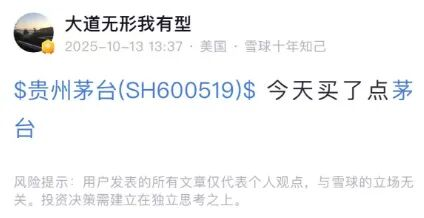
段永平:增持贵州茅台!
Zheng Quan Shi Bao· 2025-10-13 12:33
Core Viewpoint - The stock price of Kweichow Moutai has been fluctuating due to the ongoing deep adjustment in the liquor industry, with notable investment activity from prominent investors like Duan Yongping, who sees long-term value in the company [1][2][5]. Company Performance - Kweichow Moutai reported a total revenue of 91.094 billion yuan for the first half of the year, representing a year-on-year growth of 9.16%, while the net profit attributable to shareholders was 45.403 billion yuan, up 8.89% year-on-year [6]. - Despite a slowdown in growth rates, the company's performance highlights its resilience amid high industry inventory and pressure on main product prices [6]. Market Dynamics - The liquor industry is undergoing a significant transformation, with consumers increasingly focusing on cost-effectiveness and rational consumption, leading to a new round of deep adjustments in the sector [6]. - Recent market research indicates a recovery in terminal sales since August, suggesting a potential improvement in market conditions [6]. Investor Sentiment - Duan Yongping has consistently increased his holdings in Kweichow Moutai, emphasizing the importance of understanding investments without leveraging, as he believes that knowledgeable investors will eventually profit [4][5]. - Public funds have also shown strong support for Kweichow Moutai, with 1,661 funds collectively holding 92.08 million shares, valued at approximately 129.789 billion yuan as of the end of the second quarter [5]. Industry Outlook - Analysts from招商证券 (Zhaoshang Securities) believe that the industry is gradually emerging from a period of underestimated demand, with Kweichow Moutai positioned to lead the recovery [7]. - Long-term growth prospects for Kweichow Moutai remain strong, supported by ongoing marketing reforms and a three-year dividend plan that enhances its attractiveness to investors [7].

段永平:增持贵州茅台!
证券时报· 2025-10-13 12:26
Core Viewpoint - The article discusses the recent fluctuations in the stock price of Kweichow Moutai, particularly in light of its decline to around 1400 yuan, and highlights the investment actions and perspectives of notable investor Duan Yongping, emphasizing the company's resilience and potential for long-term growth despite current market challenges [1][4][6]. Group 1: Stock Performance and Investor Sentiment - Kweichow Moutai's stock price has been volatile, particularly dropping to around 1400 yuan recently [1]. - Notable investor Duan Yongping has publicly expressed his confidence in Kweichow Moutai by purchasing shares at this price point, indicating a belief in the company's long-term value [2][5][6]. - Duan Yongping's investment philosophy focuses on the essence of business, competitive advantages, and long-termism, which aligns with his continued support for Kweichow Moutai [3]. Group 2: Financial Performance - Kweichow Moutai reported a total revenue of 91.094 billion yuan for the first half of the year, reflecting a year-on-year growth of 9.16% [8]. - The company's net profit attributable to shareholders reached 45.403 billion yuan, marking an 8.89% increase year-on-year, showcasing its ability to withstand industry pressures [8]. - Despite a slowdown in growth rates, Kweichow Moutai's performance highlights its strong risk resilience amid high industry inventory and pricing pressures [8]. Group 3: Market Trends and Strategic Initiatives - The white liquor industry is undergoing a significant adjustment phase, with changing consumer preferences towards value and rational consumption [8]. - Kweichow Moutai is actively engaging in market transformation strategies, including enhancing customer outreach and adapting to new market dynamics [8][9]. - Recent market research indicates a recovery in terminal sales, suggesting a potential positive shift in market conditions for Kweichow Moutai and the industry as a whole [9]. Group 4: Institutional Support - Public funds have shown strong support for Kweichow Moutai, with 1661 funds collectively holding approximately 92.08 million shares, valued at around 129.789 billion yuan as of the end of the second quarter [6]. - The company is also focusing on investor returns through share buybacks and dividends, with a payout ratio nearing 4%, which is attractive to investors [9].
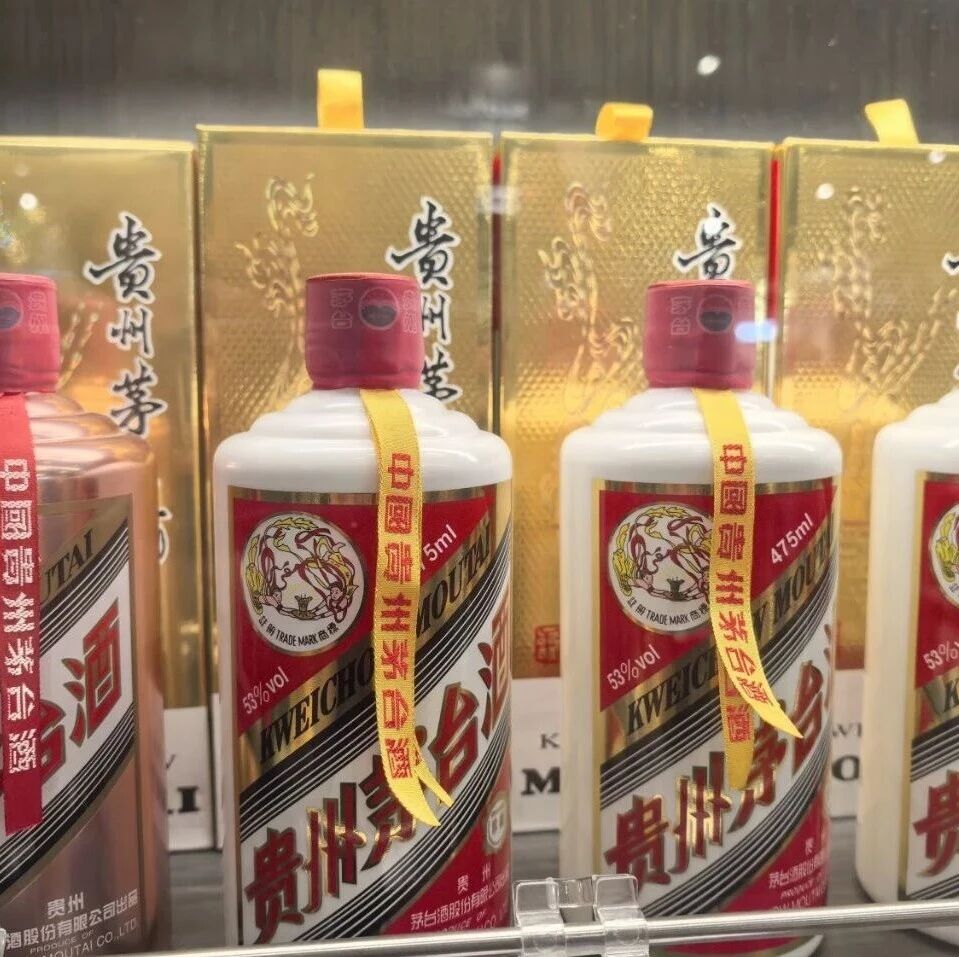
段永平再买贵州茅台(600519.SH)!此前曾发文鼓励投资者:大家在害怕什么呢?
Xin Lang Cai Jing· 2025-10-13 10:35
Core Viewpoint - The recent purchase of Kweichow Moutai shares by prominent investor Duan Yongping has sparked significant market attention, indicating confidence in the company's long-term growth potential despite current industry challenges [1][2]. Company Performance - Kweichow Moutai reported total revenue of 91.094 billion yuan, a year-on-year increase of 9.16%, and a net profit attributable to shareholders of 45.403 billion yuan, up 8.89%, establishing a solid foundation for achieving annual targets [1]. - The production of Moutai base liquor reached approximately 43,700 tons, maintaining a high level of profitability and strong brand pricing power [1]. Market Challenges - The white liquor industry is currently facing challenges such as weak consumer demand, accumulated channel inventory, and downward price pressure, with some distributors reporting increased inventory pressure and risks of price inversion between terminal and wholesale prices [1]. - Despite a cumulative decline of over 5% in Moutai's stock price this year, the company has shown resilience and remains favored due to its scarcity and brand moat [1]. Investor Sentiment - Duan Yongping's recent actions are interpreted as a signal from a leading investor towards a leading white liquor enterprise, suggesting that if Moutai can continue to deliver on its profitability and growth capabilities, it may sustain its leadership in the high-end liquor sector [2].

中邮基金教你读懂基金年报、季报中的“关键信号”
Xin Lang Ji Jin· 2025-10-13 09:55
专题:北京公募基金高质量发展系列活动 新时代、新基金、新价值 引言: 在信息爆炸的投资世界里,每一位基金持有人都手握一份"藏宝图"——基金的定期报告。然而,面对动 辄数十页、充满专业术语的基金年报和季报,许多投资者常常感到无从下手,最终与其中的"价值密 码"失之交臂。 正值北京证监局指导、北京证券业协会携手辖区公募机构启动"高质量发展系列活动"之际,中邮基金秉 承"投资者陪伴"的初心,化身您的"投资解码器",带您穿越信息的迷雾,精准捕捉基金定期报告中的那 些决定投资成败的关键信号。 一、为何要读报告?超越净值波动的"深度体检" 基金的净值波动只是结果的表象,而定期报告则揭示了产生这一结果的内在逻辑。它不仅是基金公司向 持有人进行的一次全面"述职",更是投资者判断基金经理是否"言行一致"、投资策略是否持续有效、基 金运作是否健康规范的唯一法定依据。 ·季报:更注重时效性,像一份"季度战报",帮助我们了解基金经理最新的操作思路、市场观点和仓位 变化。 ·年报/中报:则是一份"全面体检报告",信息最为详尽,尤其是全部持仓和内部人员持有份额等关键数 据,为我们提供了更深度的洞察。 二、五大关键信号,助你快速锁定报告核 ...
段永平再买贵州茅台!此前曾发文鼓励投资者:大家在害怕什么呢?
Zhi Tong Cai Jing· 2025-10-13 09:18
从股价走势看,今年茅台股价累跌超5%,虽然跑输大盘,依旧呈现较强的抗压性。在白酒行业板块整 体承压下,茅台凭借其稀缺性与品牌护城河,在资金流动中依然受到一定青睐。部分机构认为,当前市 场或已对茅台未来业绩的下行预期做出一定消化。 但是,也有市场声音提醒,茅台若再度面临行业或宏观扰动,其高估值或需要更多基本面支撑来论证其 继续上涨空间。 上半年,贵州茅台营业总收入910.94亿元,同比增长9.16%;归属于上市公司股东的净利润454.03亿元, 同比增长8.89%,为完成全年工作任务奠定了坚实基础。茅台酒基酒产量约4.37万吨,系列酒基酒产量 约2.96万吨,各轮次基酒符合轮次特征,生产质量稳中向好。 在业绩层面,茅台仍保持较高的盈利水平、较强的品牌定价权与渠道控制能力。业内注意到其在中报中 主动放宽票据政策、调整渠道回款结构,以缓解短期现金流压力,但整体资本结构健康、经营杠杆不 高。 不过,当前白酒行业面临消费疲软、渠道库存累积、价格下行压力等挑战。部分经销商反映库存压力加 剧,终端价格与批发价格间存在倒挂风险。在这种背景下,茅台能否持续维持高盈利和稳健增长,成为 市场关注的焦点。 10月13日,知名投资人段 ...
段永平再买贵州茅台(600519.SH)!此前曾发文鼓励投资者:大家在害怕什么呢?
智通财经网· 2025-10-13 09:12
智通财经APP获悉,10月13日,知名投资人段永平在社交平台上发布简短一句 "今天买了点茅台!" 随即 在市场引起不小关注。早在6月30日,茅台(600519.SH)在前一日下跌 1.13% 后,段永平就曾发文鼓励茅 台投资者:"大家在害怕什么呢?有点意思!"自那时起的近三个月里,贵州茅台股价由约1403.9元 一路攀 升至最高1538.02元,涨幅约达 9.6%,展现出强劲的市场韧性。 段永平历来以价值投资视角著称,其对贵州茅台的青睐已为业内熟知。6月30日,他在雪球账号上发帖 称:"贵州茅台,大家在害怕什么呢?有点意思!"随后,市场出现追随买盘,推动茅台股价止跌回升。今 日他再次发声"买了点茅台",业内普遍认为,这不仅是对自身判断的自信,也意在向市场传递一种长期 看好信号。 在此前的多次公开发言中,段永平曾表示,即使茅台短期销售有所波动,也只是"被动地多了一些年份 酒"而已,未来仍有增值空间。 不过,当前白酒行业面临消费疲软、渠道库存累积、价格下行压力等挑战。部分经销商反映库存压力加 剧,终端价格与批发价格间存在倒挂风险。在这种背景下,茅台能否持续维持高盈利和稳健增长,成为 市场关注的焦点。 从股价走势看 ...