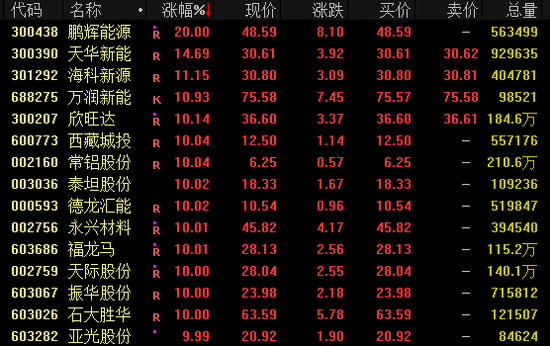
量子科技

Search documents
量子科技概念上涨1.27%,11股主力资金净流入超5000万元
Zheng Quan Shi Bao Wang· 2025-10-30 10:09
Core Insights - The quantum technology sector saw a rise of 1.27%, ranking second among concept sectors, with 53 stocks increasing in value, including notable gainers like Geer Software, Shenzhou Information, and ST Fuhua, which hit the daily limit up [1][2] - The sector experienced a net outflow of 5.579 billion yuan in main funds, with 46 stocks receiving net inflows, and 11 stocks seeing inflows exceeding 50 million yuan [2][3] Sector Performance - The quantum technology sector's performance was highlighted by significant stock movements, with Geer Software rising by 19.85%, Shenzhou Information by 9.98%, and ST Fuhua by 5.08% [1][3] - Conversely, stocks like Tengjing Technology, AVIC Optoelectronics, and Guangku Technology faced declines of 11.60%, 6.88%, and 6.79% respectively [1][6] Fund Flow Analysis - The leading stocks in terms of net inflow included Zhejiang Dongfang with 398.22 million yuan, followed by China Great Wall and Beixin Source with 146.19 million yuan and 135.52 million yuan respectively [2][3] - The net inflow ratios for ST Fuhua, Beixin Source, and Zhejiang Dongfang were 15.96%, 13.77%, and 10.71% respectively, indicating strong interest in these stocks [3][4]



共封装光学(CPO)概念下跌2.87%,主力资金净流出97股
Zheng Quan Shi Bao Wang· 2025-10-30 10:09
Market Performance - The Co-Packaged Optics (CPO) sector declined by 2.87%, ranking among the top losers in the market, with significant drops from companies like Hezhong Intelligent, Tengjing Technology, and Tianfu Communication [1][2] - Among the CPO sector, 16 stocks experienced price increases, with Qiangrui Technology, Shaanxi Huada, and Yuanjie Technology leading with gains of 4.51%, 3.51%, and 2.33% respectively [1][2] Capital Flow - The CPO sector saw a net outflow of 20.595 billion yuan, with 97 stocks experiencing net outflows, and 37 stocks seeing outflows exceeding 1 billion yuan [2] - The stock with the highest net outflow was Xinyi Sheng, with a net outflow of 3.285 billion yuan, followed by Tianfu Communication, Industrial Fulian, and Luxshare Precision with outflows of 2.459 billion yuan, 1.856 billion yuan, and 1.539 billion yuan respectively [2] Notable Stocks - The top losers in the CPO sector included Xinyi Sheng (-7.90%), Tianfu Communication (-11.56%), and Industrial Fulian (-3.50%) [2][3] - Conversely, the stocks with the highest net inflows included Tongfu Microelectronics, Qiangrui Technology, and Changdian Technology, with inflows of 156 million yuan, 95.202 million yuan, and 72.1095 million yuan respectively [5]




「焦点复盘」沪指冲高回落终结7连阳,AI硬件端遭重挫,锂矿股逆势爆发
Sou Hu Cai Jing· 2025-10-30 09:47
Market Overview - A total of 46 stocks hit the daily limit, while 23 stocks faced limit down, resulting in a sealing rate of 67% [1] - The market experienced fluctuations, with the three major indices showing a significant drop; the ChiNext index fell nearly 2%, and the Shanghai Composite Index dropped below 4000 points [1] - The trading volume in the Shanghai and Shenzhen markets reached 2.42 trillion yuan, an increase of 165.6 billion yuan compared to the previous trading day [1] - The Shanghai Composite Index closed down 0.73%, the Shenzhen Component Index down 1.16%, and the ChiNext Index down 1.84% [1] Stock Performance - The consecutive board advancement rate decreased to 41.66%, with notable stocks like Shikong Technology achieving a 7-day limit up and Yashichuangneng reaching a 5-day limit up [3] - Several stocks experienced significant fluctuations in response to their Q3 earnings reports, with some stocks like HaiXing Power hitting the limit up, while others like Guodian Nanzi faced limit down due to poor earnings [3] - High-dividend and small-cap stocks have regained investor interest amid a cooling trend in technology stocks [3] Sector Analysis - Energy metals, steel, quantum technology, and battery sectors showed strong performance, while sectors like CPO, gaming, and coal faced declines [1] - The domestic energy storage leader, Sunshine Power, projected that new installations in the domestic energy storage sector could reach 150GWh to 200GWh next year [5] - The lithium battery supply chain remains robust, with significant price increases in lithium hexafluorophosphate, which has exceeded 110,000 yuan per ton [15] Investment Trends - The launch of a new state-owned strategic emerging industry fund with a scale of 51 billion yuan is expected to support sectors like artificial intelligence and quantum technology, boosting related stocks [12] - Stocks related to quantum technology, such as Geer Software and Shenzhou Information, have seen strong performance due to this fund's initiation [12] - The solid-state battery sector is gaining attention with upcoming industry forums, indicating potential growth opportunities [18] Notable Stocks - Shikong Technology achieved a 7-day limit up with a 10% increase, driven by mergers and acquisitions and storage chip developments [9] - Yashichuangneng also saw a 5-day limit up, attributed to advancements in robotics [9] - Other notable stocks include Geer Software and Shenzhou Information, both benefiting from the quantum technology trend [14]





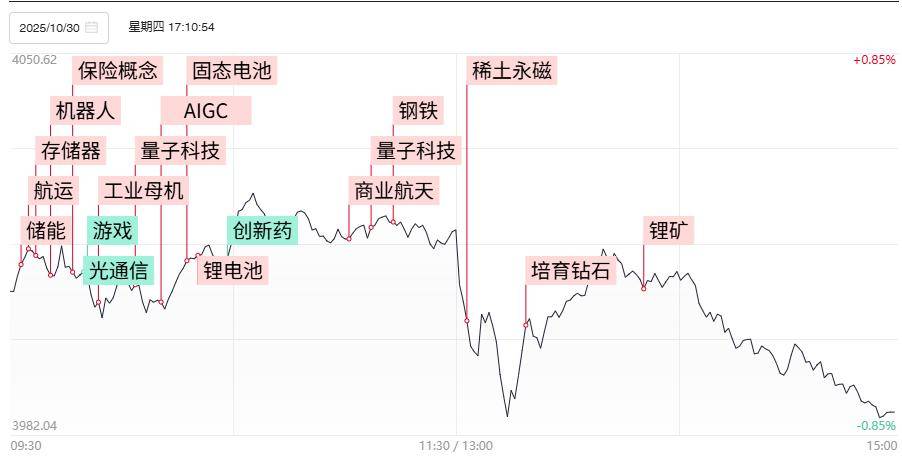
焦点复盘沪指冲高回落终结7连阳,AI硬件端遭重挫,锂矿股逆势爆发
Sou Hu Cai Jing· 2025-10-30 09:40
Market Overview - A total of 46 stocks hit the daily limit, while 23 stocks faced limit down, resulting in a sealing rate of 67% [1] - The market experienced volatility, with the three major indices showing significant declines; the ChiNext index fell nearly 2%, and the Shanghai Composite Index dropped below 4000 points [1] - The trading volume in the Shanghai and Shenzhen markets reached 2.42 trillion yuan, an increase of 165.6 billion yuan compared to the previous trading day [1] Stock Performance - The number of stocks with consecutive limit up decreased to 41.66%, with notable performers including Shikong Technology achieving a 7-day limit up and Yashichuangneng reaching a 5-day limit up [3][4] - The market saw a broad decline, with 4100 stocks falling, while sectors such as energy metals, steel, quantum technology, and batteries showed gains [1][3] - Stocks like Xinhua Insurance and Baosteel Co. demonstrated resilience, rising over 2% despite the overall market downturn [3] Sector Analysis - The domestic energy storage leader, Sunshine Power, projected that new installations in the domestic energy storage sector could reach between 150 GWh and 200 GWh next year [5] - The lithium battery supply chain remains robust, with significant price increases in lithium hexafluorophosphate, which has exceeded 110,000 yuan per ton [17] - The launch of a new central enterprise strategic emerging industry fund with a scale of 51 billion yuan has positively impacted the quantum technology sector, leading to strong performances from stocks like Geer Software and Shenzhou Information [6][15] Future Outlook - The market is expected to see new speculative themes emerge following the completion of the third-quarter earnings disclosures, despite a significant number of stocks facing declines due to poor earnings reports [9] - The shift in market focus from previously leading technology stocks to dividend and consumer sectors indicates a potential reallocation of major funds [9] - The recent surge in oil tanker rates, reaching a five-year high, has led to increased activity in oil shipping stocks, suggesting a favorable outlook for the oil transportation sector [8]
天津自贸区概念下跌2.70%,主力资金净流出11股
Zheng Quan Shi Bao Wang· 2025-10-30 09:39
Group 1 - The Tianjin Free Trade Zone concept declined by 2.70%, ranking among the top declines in the concept sector, with companies like Saixiang Technology hitting the limit down [1] - Major stocks within the Tianjin Free Trade Zone concept that experienced significant declines include HNA Technology, Jintou City Development, and Bohai Chemical [1] - The net outflow of main funds from the Tianjin Free Trade Zone concept reached 276 million yuan, with 11 stocks experiencing net outflows, and 5 stocks seeing outflows exceeding 10 million yuan [2] Group 2 - HNA Technology had the largest net outflow of main funds at 113 million yuan, followed by Saixiang Technology and Jiuan Medical with net outflows of 107 million yuan and 2.52 million yuan respectively [2] - The stocks with the highest net inflows included Youfa Group, Tianjin Port, and Haitai Development, with inflows of 19.56 million yuan, 11.50 million yuan, and 5.79 million yuan respectively [3] - The trading performance of key stocks in the Tianjin Free Trade Zone concept showed significant volatility, with Saixiang Technology down by 10% and HNA Technology down by 5.92% [2][3]


【焦点复盘】沪指冲高回落终结7连阳,AI硬件端遭重挫,锂矿股逆势爆发
Xin Lang Cai Jing· 2025-10-30 09:32
Market Overview - A total of 46 stocks hit the daily limit, while 23 stocks faced limit down, resulting in a sealing rate of 67% [1] - The market experienced fluctuations, with the three major indices showing a significant drop; the ChiNext index fell nearly 2%, and the Shanghai Composite Index dropped below 4000 points [1] - The trading volume in the Shanghai and Shenzhen markets reached 2.42 trillion yuan, an increase of 165.6 billion yuan compared to the previous trading day [1] - The Shanghai Composite Index closed down 0.73%, the Shenzhen Component Index down 1.16%, and the ChiNext Index down 1.84% [1] Stock Performance - The consecutive board advancement rate decreased to 41.66%, with notable stocks like Shikong Technology achieving a 7-day limit up and Yashichuangneng reaching a 5-day limit up [3] - Several stocks experienced significant fluctuations due to the upcoming third-quarter earnings reports, with some stocks like HaiXing Power hitting limit up while others like Guodian Nanzhi faced limit down due to poor earnings [3] - High-dividend and small-cap stocks have regained investor interest amid a cooling trend in technology stocks [3] Sector Highlights - The domestic energy storage leader, Sunshine Power, anticipates new installations to reach 150GWh-200GWh next year, driving continued growth in the lithium battery supply chain [5] - The launch of a new central enterprise strategic emerging industry fund with an initial scale of 51 billion yuan has positively impacted the quantum technology sector, with stocks like Geer Software and Shenzhou Information hitting limit up [6][12] - The lithium battery market remains robust, with the price of lithium hexafluorophosphate exceeding 110,000 yuan per ton, indicating strong demand [16] Notable Stocks - Shikong Technology achieved a 7-day limit up with a 10% increase, driven by mergers and acquisitions and storage chip developments [4] - Yashichuangneng also saw a 5-day limit up, attributed to advancements in robotics [4][24] - Stocks like Geer Software and Shenzhou Information have shown strong performance due to their association with quantum technology [13][15] Emerging Trends - The market is witnessing a shift from technology stocks to dividend-paying and consumer stocks, indicating a potential change in investment strategies [9] - The oil shipping sector is experiencing a surge, with tanker rates reaching a five-year high, benefiting companies like China Merchants Energy and COSCO Shipping Energy [8] - The solid-state battery sector is gaining attention with upcoming industry forums, indicating potential growth opportunities [20]
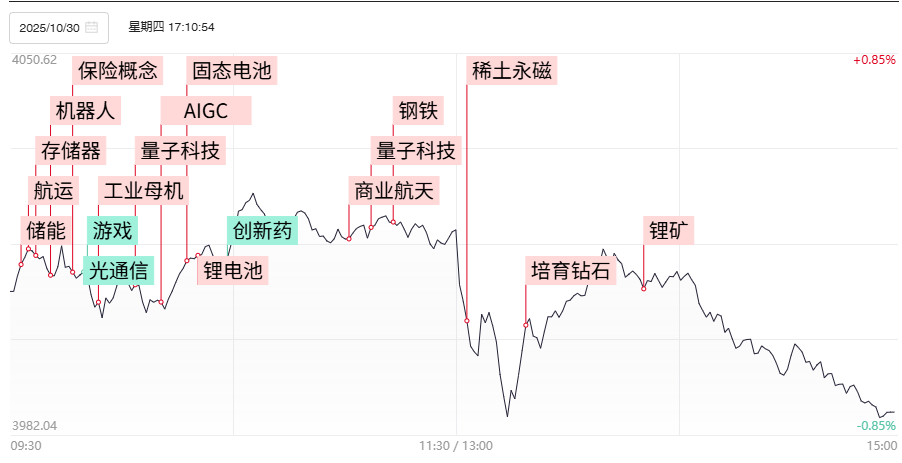
锂矿、量子科技大涨,稀土午后飙升!还有哪些板块有机会?
Mei Ri Jing Ji Xin Wen· 2025-10-30 09:24
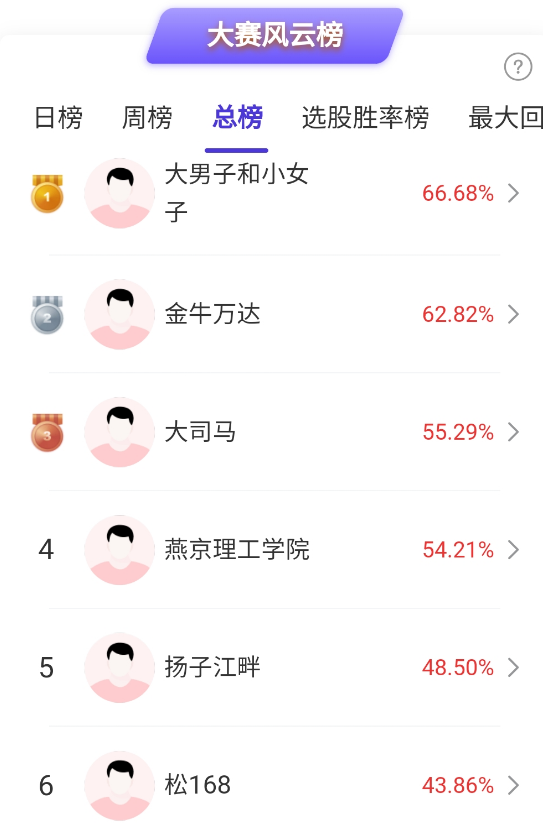
Market Overview - The market experienced a quick pullback in the afternoon on October 30, with the Shanghai Composite Index closing down 0.73% at 3986.90 points. The total trading volume in the Shanghai and Shenzhen markets reached 24.217 trillion yuan, an increase of 165.6 billion yuan compared to Wednesday [1]. Competition Insights - The 76th session of the simulated stock trading competition, hosted by the Daily Economic News App, began on October 20, with several participants achieving impressive results, including two participants with returns exceeding 60%. The competition runs from October 20 to October 31, with a simulated capital of 500,000 yuan [1]. Prize Structure - The pre-tax cash rewards for each competition session are as follows: 688 yuan for the 1st place, 188 yuan for the 2nd to 4th places, and 88 yuan for the 5th to 10th places. Additionally, there is a shared reward of 500 yuan for all other participants with positive returns. Monthly leaderboard prizes include 888 yuan for the 1st place and varying amounts for subsequent ranks [3]. Sector Opportunities - Participants in the competition have expressed optimism about sectors such as brokerage firms, server liquid cooling, humanoid robots, and rare metals, indicating potential investment opportunities in these areas [4]. Brokerage Sector Analysis - Some experts believe that certain companies within the brokerage sector are undervalued, with valuations potentially equivalent to the Shanghai Composite Index at around 3000 points, suggesting an arbitrage opportunity [7].
每日收评创业板指放量跌近2%,全市场4100股收绿,量子科技概念逆势活跃
Sou Hu Cai Jing· 2025-10-30 09:23
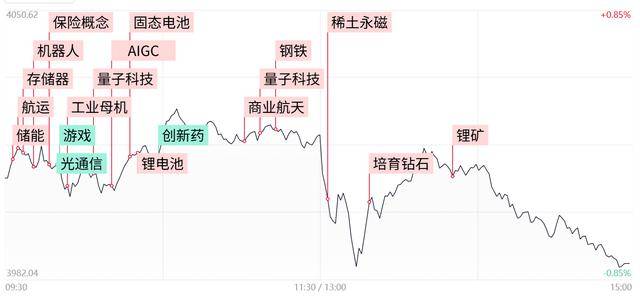
Market Overview - The market experienced volatility with all three major indices showing significant declines, with the ChiNext Index dropping nearly 2% and the Shanghai Composite Index falling below 4000 points [1] - The total trading volume in the Shanghai and Shenzhen markets reached 2.42 trillion yuan, an increase of 165.6 billion yuan compared to the previous trading day [1] - A total of 4100 stocks in the market declined, indicating a broad-based sell-off [1] Sector Performance - The lithium mining sector showed strong performance, with Tianqi Lithium hitting the daily limit up [1][6] - The quantum technology sector was notably active, with stocks like Shenzhou Information and Geer Software achieving consecutive gains [1][2] - The battery sector also saw gains, with companies like Shida Shenghua and Tianji Shares reaching the daily limit up [1][2] - Conversely, the computing hardware sector faced significant declines, with stocks like Tianfu Communication and Xinyi Sheng dropping sharply [1][5] Lithium Industry Insights - Since mid-September, the price of lithium hexafluorophosphate has been on a rapid rise, reaching an average spot price of 97,500 yuan per ton as of October 27, with a daily increase of 4,500 yuan [3] - The lithium battery and energy storage sectors are showing signs of fundamental recovery, attracting more capital as other high-tech sectors face adjustments [3][6] Quantum Technology Developments - NVIDIA launched NVQLink, connecting 17 quantum computing companies and 9 research laboratories, which is expected to enhance the performance of quantum processors [2] - The recent positive news flow has led to a strong continuation in quantum technology stocks, indicating their relative independence from broader market trends [2][6] Future Market Outlook - The market is currently at a critical juncture, with the potential for a rebound if it can maintain support near the 5-day moving average [8] - The performance of previously leading sectors, such as computing hardware, will be crucial in determining overall market sentiment moving forward [8] - The ability of the lithium and energy sectors to sustain their momentum will also be a key focus for investors [8]

「每日收评」创业板指放量跌近2%,全市场4100股收绿,量子科技概念逆势活跃
Sou Hu Cai Jing· 2025-10-30 09:23
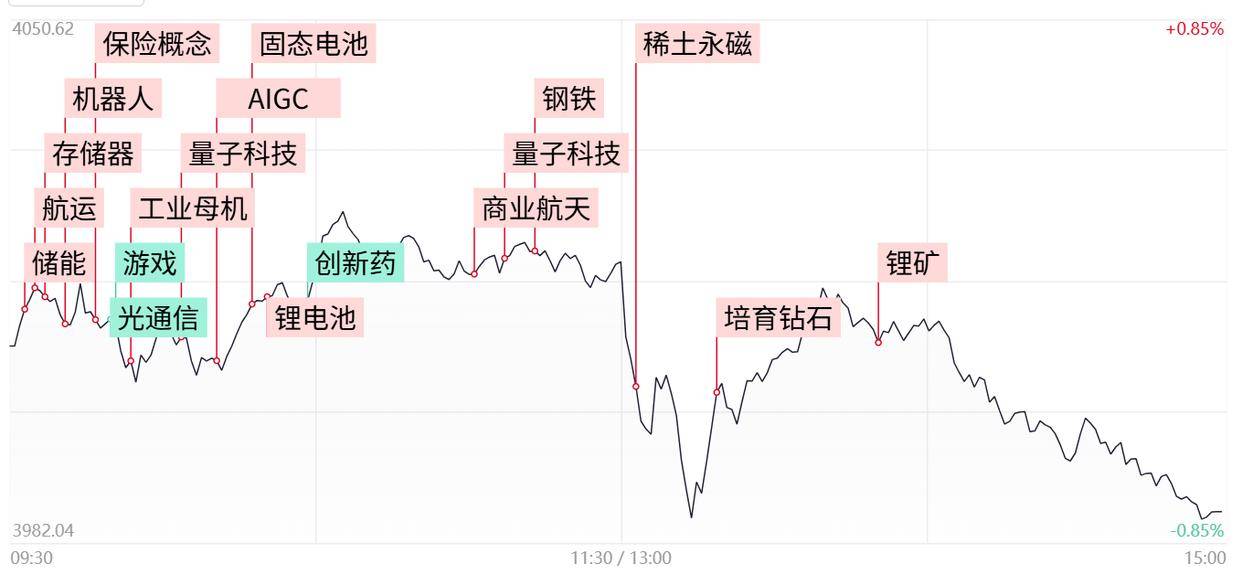
Market Overview - The market experienced volatility with all three major indices showing a significant drop, particularly the ChiNext Index which fell nearly 2% and the Shanghai Composite Index dropping below 4000 points [1] - The total trading volume in the Shanghai and Shenzhen markets reached 2.42 trillion yuan, an increase of 165.6 billion yuan compared to the previous trading day [1] - A total of 4100 stocks in the market declined, indicating a broad-based sell-off [1] Sector Performance - The lithium mining sector showed strong performance, with Tianqi Lithium hitting the daily limit [2][3] - Quantum technology stocks were notably active, with Shenzhou Information achieving consecutive gains and Geer Software performing well over six days [2] - The battery sector also saw gains, with companies like Shida Shenghua and Tianji Shares reaching their daily limits [1][2] - Conversely, the computing hardware sector faced significant declines, with stocks like Tianfu Communication and Xinyi Sheng dropping sharply due to slowing quarterly performance [5] Individual Stock Highlights - In the computing hardware sector, Tianfu Communication fell over 10% and Xinyi Sheng nearly 7%, attributed to a slowdown in quarterly growth [5] - Quantum technology stocks demonstrated strong continuity, with Geer Software achieving four consecutive gains and Shenzhou Information three [5] - The lithium battery sector continued to strengthen, with companies like Tianji Shares and Jiangte Electric hitting their daily limits, driven by rising prices of lithium hexafluorophosphate [5][6] Future Market Outlook - The market's mid-term trend remains bullish, provided there are no significant sell-offs that disrupt the current structure [7] - The performance of the computing hardware sector will be crucial in determining market sentiment moving forward [7] - The ability of the lithium and energy storage sectors to maintain their upward momentum will also be a key focus for future market developments [7]
A股突变!688027,再创新高
Zheng Quan Shi Bao· 2025-10-30 09:08
Market Overview - A-shares experienced a decline on October 30, with the Shanghai Composite Index falling below the 4000-point mark, closing down 0.73% at 3986.9 points, and the Shenzhen Component Index down 1.16% at 13532.13 points [1] - The total trading volume in the Shanghai and Shenzhen markets reached 24.646 billion yuan, an increase of 1.737 billion yuan compared to the previous day [1] Sector Performance - The coal sector saw significant declines, with companies like Kailuan Energy and Antai Group hitting the daily limit down [1] - The brokerage sector weakened, with firms such as China International Capital Corporation and East Money falling over 3% [1] - The AI industry chain stocks plummeted, with companies like Tengjing Technology and Tianfu Communication dropping over 10% [1] - Conversely, the steel and non-ferrous metal sectors experienced gains, with companies like Chang Aluminum and Dazhong Mining hitting the daily limit up [1] Lithium Battery Sector - The lithium battery industry chain stocks surged, with Penghui Energy hitting the daily limit up at 20%, and Tianhua New Energy rising nearly 15% [3][4] - The overall performance of lithium battery stocks indicates a strong market demand, driven by seasonal increases in household energy storage battery needs and the growth of AI computing centers [3][5] Quantum Technology Sector - Quantum technology stocks became active again, with Fujida rising nearly 20% and Guodun Quantum surpassing 600 yuan, setting a new historical high [6][7] - The recent government proposals emphasize the importance of quantum technology as a future industry, suggesting potential for further policy support and investment opportunities [8] Innovative Drug Sector - The innovative drug sector faced a downturn, with Hanyu Pharmaceutical dropping over 10% and WuXi AppTec falling over 8% [9] - Hanyu Pharmaceutical reported a revenue of 683 million yuan for the first three quarters, a year-on-year increase of 82.06%, but reported a net loss in the third quarter [9]