人工智能大模型

Search documents
从7000余家选出15家 “领航级”工厂如何领跑中国智造
Yang Shi Xin Wen Ke Hu Duan· 2025-11-29 04:29
Core Insights - The first batch of leading smart factories has been announced in China, with 15 selected as representatives of the highest level of manufacturing development, showcasing significant benchmark effects for industry transformation and upgrading [1][3] Group 1: Smart Factory Development - A total of over 7,000 advanced factories and 504 excellent factories have been established in China, with 15 identified as leading smart factories [1] - Leading smart factories exhibit core capabilities of "full-process intelligent decision-making," driving collaborative development across upstream and downstream sectors [3] Group 2: Impact on Industry - Each leading smart factory has reportedly replicated and promoted its model to over 100 other factories, becoming a driving force for industry transformation [5] - The smart factories have achieved an intelligent penetration rate exceeding 80% in their construction scenarios, accelerating the adoption of high-value chain links [3] Group 3: Digital Twin Systems - A digital twin system has been implemented in steel production, allowing for detailed tracking of production processes and material relationships, significantly reducing inventory days from 15 to 5 [8][10] - The digital twin system enhances collaboration with upstream suppliers, reducing capital occupancy by two-thirds [10] Group 4: Automation and Efficiency - Advanced models are utilized to automate the steel rolling process, minimizing human intervention and ensuring precise control over material thickness [12] - A comprehensive inspection system, including laser scanning and CT imaging, ensures the quality of produced steel plates, achieving a 98.5% order fulfillment rate and reducing total industry costs by 9% [14][16] Group 5: Cost Reduction and Profit Increase - The implementation of multi-modal data perception has led to 100% digital control of key processes and equipment, resulting in cost savings exceeding 500 million RMB for the company [16]


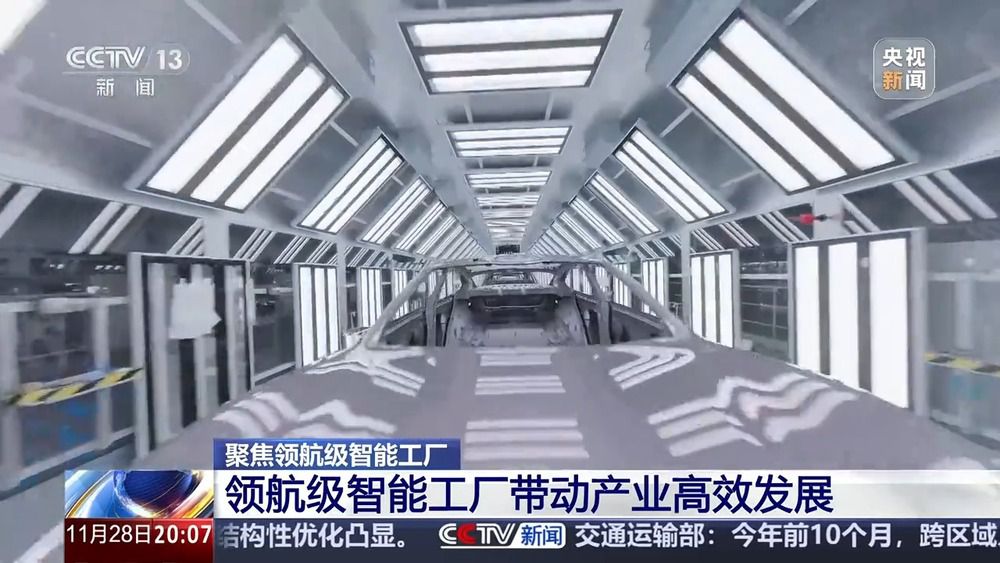
解锁“聪明”的“钢铁丛林” 看全流程智能决策领航传统产业转型升级
Yang Shi Wang· 2025-11-28 13:18
Core Viewpoint - The establishment of the first batch of leading intelligent factories in China marks a significant advancement in the manufacturing sector, showcasing the highest level of development and serving as a benchmark for industry transformation and upgrading [1][3]. Group 1: Intelligent Factory Development - China has built over 7,000 advanced factories and 504 excellent factories, with 15 selected as leading intelligent factories [1]. - Leading intelligent factories demonstrate "full-process intelligent decision-making" capabilities across various sectors, driving collaborative development in the supply chain [5][7]. - Each leading intelligent factory has reportedly replicated and promoted its model to over 100 other factories, becoming a driving force for industry transformation [7]. Group 2: Technological Innovations - The intelligent factories utilize a comprehensive digital twin system that integrates 26 production lines, allowing for detailed tracking of production processes and material relationships [10]. - The digital twin system has significantly reduced inventory days from 15 to 5, alleviating financial burdens associated with excess raw material and finished goods [11]. - Advanced AI models are embedded in production processes, enabling automated control and analysis of material properties, thus enhancing production efficiency [12][16]. Group 3: Quality Control and Efficiency - A multi-modal data perception system has achieved 100% digital control of key processes and equipment, resulting in cost savings exceeding 500 million RMB for companies [16]. - The implementation of 165 different intelligent models across production lines has improved order fulfillment rates to 98.5% and reduced total industry costs by 9% [17].
苹果AI论文太坑了!用GPT写的GT,导致北京程序员通宵加班
量子位· 2025-11-28 08:30
Core Viewpoint - The article discusses a significant incident involving a paper from Apple that was found to have serious flaws, including a Ground Truth (GT) error rate potentially as high as 30%, leading to a researcher publicly calling for its retraction [10][21][31]. Group 1: Incident Overview - The incident began when a researcher from the company, Lei Yang, was excited to adapt a benchmark from an Apple paper that aligned with his recent research [2][12]. - After working on the adaptation, he discovered that the benchmark claimed to outperform GPT-5 but had a substantial GT error rate and official code bugs [3][21]. - Lei Yang's attempts to fix the bugs resulted in even lower performance metrics, prompting him to investigate the errors in the GT data [17][19]. Group 2: Research Findings - Upon reviewing the errors, Lei Yang found that 6 out of 20 questions he checked were clearly incorrect due to issues in the GT data, which seemed to be poorly quality-checked [19][20]. - This led him to estimate that the GT error rate could be as high as 30%, raising concerns about the integrity of the data used in the paper [21][22]. Group 3: Response and Retraction - After reporting the issues to the authors, Lei Yang received a brief response, and the issue was closed without proper resolution [23][25]. - Following his public comments highlighting the data quality issues, the authors eventually retracted the paper and removed the associated GitHub repository [31][32]. - The authors acknowledged the oversight in data quality and expressed regret for their initial handling of the feedback [37][39].


11月28日沪深两市涨停分析
Xin Lang Cai Jing· 2025-11-28 08:04
Group 1: Aerospace and Defense - The company focuses on the development of autonomous chips for satellite applications, including optical remote sensing image processing chips and SSD security storage control chips, achieving 100% domestic production for its eMMC storage controller chip [2] - The controlling shareholder is Shanghai Aerospace Technology Research Institute, which is involved in rocket launch, application satellites, and aerospace technology [2] - The company has completed the launch of the Tianmu-1 satellite constellation, achieving operational network integration [2] Group 2: Renewable Energy - The company has a partnership with Yidao New Energy to invest in a solar module project with an annual capacity of approximately 4.55GW [3] - The company is involved in the development of high-efficiency N-type TOPCon solar cells and has established a 1GW production line [7] - The company is acquiring a solar inverter manufacturer, which specializes in photovoltaic inverters and energy storage converters [7] Group 3: Lithium and Battery Materials - The company has obtained a mining license for a lithium mine with a resource amount of 490 million tons, equivalent to approximately 324.43 million tons of lithium carbonate [3] - The company is focused on the research and production of solid-state battery components and has established a research institute in collaboration with the Chinese Academy of Sciences [3] - The company is acquiring a 100% stake in a high-precision lithium battery structural component manufacturer [3] Group 4: Retail and Consumer Goods - The company is the largest department store retailer in Hunan Province and has made a significant acquisition to enter the power semiconductor sector [4] - The company specializes in liquid milk products, including children's milk and A2 milk [4] - The company is a leading player in the frozen fish ball market and has a strong presence in the frozen meat products sector [4] Group 5: Technology and AI - The company has partnered with Alibaba to develop a new generation of government service platforms and AI products [5] - The company is involved in the development of AI training platforms and has achieved significant progress in various AI applications [5] - The company is focusing on virtual power plant solutions and energy management systems [5] Group 6: Construction and Infrastructure - The company is a major player in the construction sector in Chongqing, focusing on public infrastructure projects [8] - The company has signed a sales contract for generator sets in North America, valued at over $100 million [8] - The company is involved in the construction of water conservancy and hydropower projects [8]

入选概率不及万分之二 阿里千问斩获顶级AI会议最佳论文
Di Yi Cai Jing· 2025-11-28 02:13
Core Insights - The top conference in the artificial intelligence field, NeurIPS 2025, awarded the best paper to the Alibaba Tongyi Qianwen team, marking a significant achievement as the only Chinese team to receive this honor from over 20,000 submissions [1] Group 1 - The awarded paper reveals the impact of attention gate mechanisms on the performance and training of large models, which is considered a breakthrough in overcoming current training bottlenecks [1] - This research is expected to significantly advance the development of AI large model technology [1]

12月4号,大疆的竞争对手来了!| 1127 张博划重点
Hu Xiu· 2025-11-27 14:39
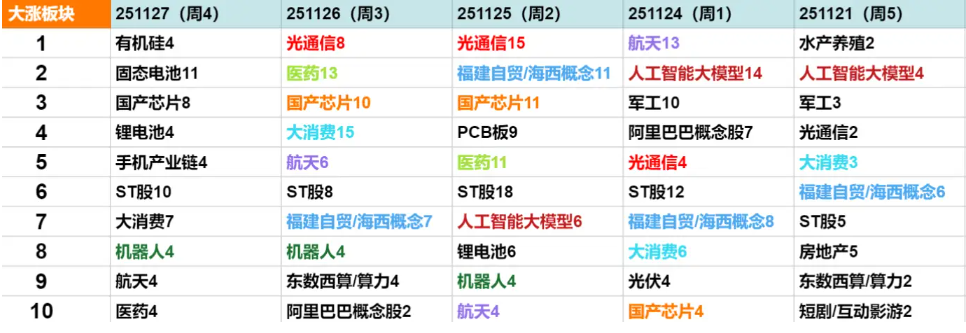
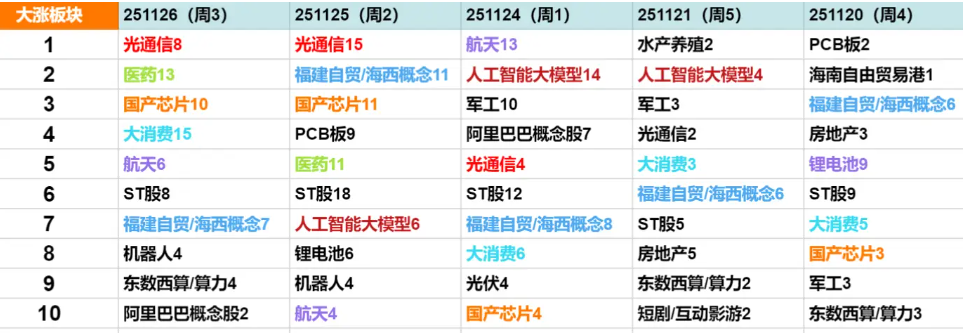
Market Performance - On November 27, the market experienced a pullback after an initial rise, with mixed performance across the three major indices. The ChiNext Index and Shenzhen Component Index turned negative after previously gaining over 2% [1] - The total trading volume in the Shanghai and Shenzhen markets was 1.71 trillion yuan, a decrease of 736 billion yuan compared to the previous trading day [1] - By the end of the trading session, the Shanghai Composite Index rose by 0.29%, while the Shenzhen Component Index fell by 0.25%, and the ChiNext Index declined by 0.44% [1] Sector Performance - The top-performing sectors included organic silicon, solid-state batteries, and domestic chips, with respective gains of 4, 11, and 8 [2] - Other notable sectors included the AI large model and lithium batteries, which also showed positive performance with gains of 14 and 4 [2] - The consumer sector and aerospace also performed well, indicating a diverse range of strong sectors in the market [2]
水稻造血,亏损上市,暴涨暴跌这家公司都占了!| 1126 张博划重点
Hu Xiu· 2025-11-26 14:23
Market Performance - On November 26, the market showed a strong performance in Shanghai but weaker in other areas, with the ChiNext index rising over 3% at one point [1] - More than 3,500 stocks declined, indicating a broad market pullback despite the previous two days of gains [1] - The total trading volume in the Shanghai and Shenzhen markets was 1.78 trillion yuan, a decrease of 28.8 billion yuan compared to the previous trading day [1] Sector Performance - The top-performing sectors included optical communication, artificial intelligence models, and large consumer goods, with significant activity noted in the Fujian Free Trade Zone and aerospace sectors [2] - The optical communication sector showed a notable increase, ranking high in multiple trading days, indicating strong investor interest [2] - Other sectors such as robotics, lithium batteries, and pharmaceuticals also demonstrated resilience, contributing to the overall market dynamics [2]
年轻干部挂帅 百度新设两个大模型研发部
Xin Lang Cai Jing· 2025-11-26 02:52
Core Insights - Baidu has established two new research departments: the Basic Model Research Department and the Application Model Research Department, aimed at enhancing its capabilities in artificial intelligence [1][2] - The restructuring reflects Baidu's commitment to nurturing internal talent and promoting a younger management team, which is crucial for adapting to the rapid evolution of large model technologies [1][2] Group 1: Organizational Changes - The Basic Model Research Department will focus on developing high-intelligence, scalable general AI models, led by Wu Tian, while the Application Model Research Department will specialize in fine-tuning models for specific business applications, led by Jia Lei [1] - Both departments report directly to Baidu's CEO, Li Yanhong, indicating a strategic emphasis on AI development within the company's leadership [1] Group 2: Model Development Strategy - Baidu's large model strategy is characterized by a "two-pronged" approach: the Basic Model focuses on cutting-edge research and general capabilities, while the Application Model targets deep optimization for specific industries and business scenarios [2] - This dual strategy aims to accelerate the deployment of models across various industries, enhancing organizational support for AI applications [2] Group 3: Model Performance and Capabilities - The Wenxin 5.0 model, launched on November 13, features 2.4 trillion parameters and utilizes a unified modeling technique, demonstrating advanced multimodal understanding and generation capabilities across text, images, audio, and video [2][3] - In benchmark evaluations, Wenxin 5.0 has shown competitive performance, ranking second globally in text understanding and first domestically, validating the model's capabilities and potential [3] Group 4: Investment in AI - Baidu has invested over 100 billion yuan in artificial intelligence since the launch of Wenxin Yiyan in 2023, with plans to continue increasing investments in this area [3]

赴美为谷歌建设数据中心,这家公司看点多!| 1125 张博划重点
Hu Xiu· 2025-11-25 16:04
Core Viewpoint - The market experienced fluctuations with the ChiNext Index rising over 3% at one point, but ultimately all three major indices failed to maintain above the 5-day moving average, closing with gains for the day [1] Group 1: Market Performance - The Shanghai Composite Index rose by 0.87%, the Shenzhen Component Index increased by 1.53%, and the ChiNext Index gained 1.77% by the end of the trading day [1] - The total trading volume in the Shanghai and Shenzhen markets reached 1.81 trillion yuan, an increase of 84.4 billion yuan compared to the previous trading day [1] Group 2: Individual Stock Movement - Short-term market sentiment showed further recovery, with over a hundred stocks rising more than 9% for two consecutive days, while the number of stocks hitting the daily limit down decreased to five [1] Group 3: Sector Performance - The top performing sectors included optical communication, artificial intelligence large models, and domestic chips, indicating strong interest in technology and innovation [2] - The presence of ST stocks (special treatment stocks) remained significant, with 18 stocks in this category showing gains, reflecting ongoing market volatility [2]
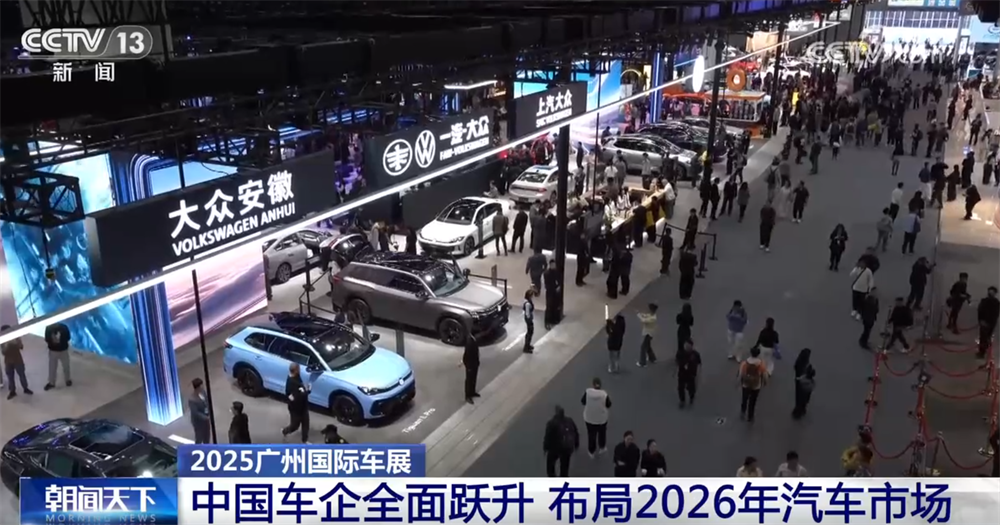
向“智”向“新”成为增长新引擎 中国汽车工业正从“规模引领”迈向“技术引领”
Yang Shi Wang· 2025-11-22 02:32
Core Insights - The 2025 Guangzhou International Auto Show is showcasing over 1,000 vehicles, with more than 60% being new energy vehicles, indicating a significant shift towards electric mobility in China's automotive market [1][3] - The new tax policy for new energy vehicles, effective January 1, 2026, will halve the purchase tax and raise the technical standards for subsidy-eligible models, prompting automakers to focus on high-value models [1] - The integration of AI technology across the automotive industry is driving innovation, with a notable collaboration between Huawei and GAC to launch a high-end smart new energy vehicle in the first half of next year [3][5] Industry Trends - China's new energy vehicle market penetration has surpassed 50%, marking a transition from "catching up" to "leading" in the global automotive industry, with a focus on technological leadership [5][11] - Chinese automakers are increasingly expanding into international markets, with exports accounting for 55% of Jiangqi Group's business during the 14th Five-Year Plan, and plans to deepen international engagement in the upcoming 15th Five-Year Plan [5][9] - The automotive industry is moving from merely exporting products to exporting entire supply chains, with a focus on creating globally adaptable vehicle models [7][9] Export Dynamics - New energy and high-end smart vehicles are becoming the mainstay of exports, gaining rapid recognition in markets such as Europe, Southeast Asia, and Latin America [11] - The push for global presence is not just about brand recognition but also about enhancing the influence of Chinese manufacturing on a global scale [9][11]