
价值创造

Search documents
外资“青睐”上海,企业转型谋新求变
Guo Ji Jin Rong Bao· 2025-09-05 12:18
Core Insights - Shanghai has become a strategic choice for international brands amid global economic challenges, attracting foreign investment and prompting local companies to transform and adapt [1][2][13]. Group 1: Market Trends - Consumer demand is shifting towards rationality, with a focus on intrinsic product quality and actual service value [2]. - The competition landscape is evolving from mere scale expansion to a "value creation" competition, emphasizing who can deliver more value to consumers [2]. Group 2: Foreign Investment and Brand Strategies - From January to May this year, Shanghai attracted 364 new stores, including 10 global and Asian flagship stores, with high-energy flagship stores accounting for over 20% [4]. - IKEA has repositioned its brand in China, focusing on emotional value in home living and launching various local initiatives, including a significant investment of 160 million RMB for over 150 lower-priced products by fiscal year 2026 [4][5]. - Swire Coca-Cola plans to increase its investment in China, with projects like a new factory in Suzhou and an expansion in Zhengzhou, with a total investment of no less than 900 million RMB [11]. Group 3: Economic Performance - Shanghai's retail sales of consumer goods reached 826.04 billion RMB from January to June, showing a year-on-year growth of 1.7% [9]. - The Chinese perfume market is expected to grow significantly, with a projected market size of 24.9 billion RMB in 2024 and an estimated compound annual growth rate of 8% until 2028 [11]. Group 4: Policy and Institutional Support - Shanghai's unique advantages include an open institutional environment and a strong consumer base, with nearly 1,000 multinational company regional headquarters and over 70 international consumer brand headquarters [13]. - The city has introduced policies to encourage the "first launch economy," including a "white list + differentiated qualification assessment" customs model, which has attracted numerous brands to apply for entry [13][14]. - Recommendations have been made to enhance local high-end brand development through policy support, funding, and talent cultivation to boost their international influence [15].

中国建筑:公司将以提升回报股东能力为重点
Zheng Quan Ri Bao Wang· 2025-09-04 07:13
Core Viewpoint - China State Construction Engineering Corporation (601668) emphasizes that its market value performance is influenced by various factors, including market preferences and industry characteristics [1] Group 1: Company Strategy - The company focuses on improving the quality of its development as the foundation for market value management, which includes sustainable development prospects, unique competitive advantages, excellent management, stable profit returns, and long-term steady dividend guarantees [1] - The company aims to enhance its ability to return value to shareholders, making high-quality corporate development the basis for shareholder returns [1] - The company is committed to continuously improving its value creation capability and enhancing its technological attributes while maintaining a stable dividend policy [1] Group 2: Capital Operations - The company plans to adopt capital operation methods such as share buybacks and increases in shareholdings at appropriate times to continuously enhance its investment value [1] - The company is dedicated to safeguarding the interests of investors through these strategic initiatives [1]

Graphic Packaging Holding Company (GPK) Presents At Jefferies Industrials Conference 2025 Transcript
Seeking Alpha· 2025-09-03 15:39
Group 1 - The company has undergone significant transformation over the past seven years, focusing on efficiency and cash flow generation [2] - The final major expenditure related to the Waco investment in recycled paperboard manufacturing is nearing completion, which is expected to enhance cash flow [2] - Capital expenditures (CapEx) are projected to decrease to approximately 5% of sales, contributing to improved EBITDA and working capital reductions [2]


顺丰中期业绩再验证:慢牛行情里最硬的物流核心资产
Ge Long Hui A P P· 2025-09-01 13:18
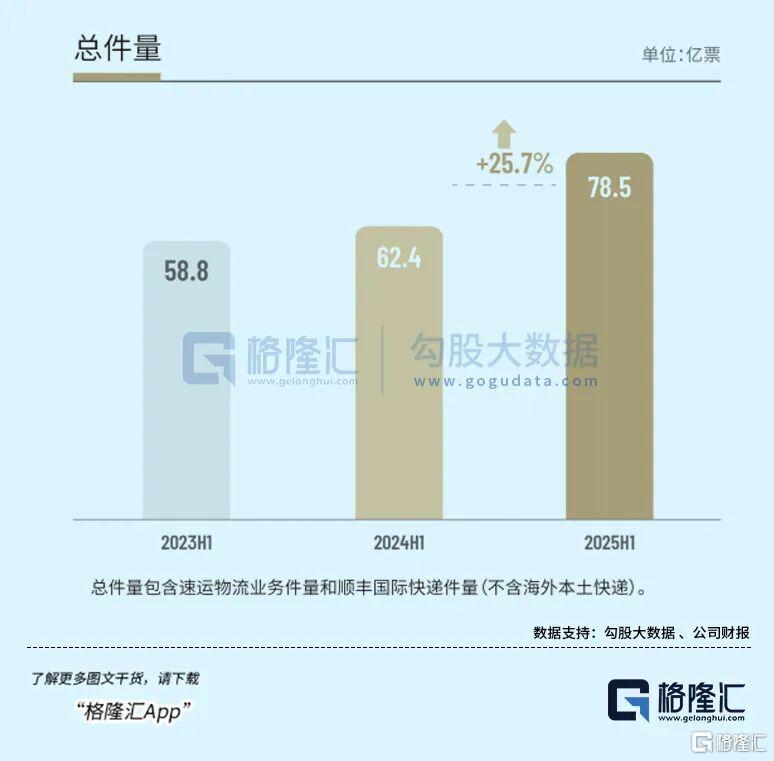
Core Viewpoint - The logistics industry is experiencing a "slow bull" market driven by "anti-involution" and technological innovation, with significant growth in express delivery volumes and a shift from price competition to value competition [1][3]. Industry Overview - As of August 29, 2025, the Shanghai Composite Index has risen by 15.1%, the Shenzhen Component Index by 21.91%, the ChiNext by 34.95%, and the Hang Seng Index by 25.1% [2]. - The express delivery sector saw a total of 956.4 billion packages delivered in the first half of 2025, marking a year-on-year increase of 19.3% [3]. Company Performance - SF Holding reported a revenue of 146.858 billion yuan for the first half of 2025, a year-on-year increase of 9.26%, and a net profit of 5.738 billion yuan, up 19.37% [5][19]. - The company's express logistics business volume reached 7.85 billion packages, growing by 25.7% year-on-year, outperforming the industry average [9][10]. Business Model Transformation - SF Holding's business model has shifted from "scale-driven" to "value-driven," achieving a threefold resonance in volume, revenue, and profit [7][12]. - The company has enhanced its service quality and efficiency, focusing on customer-centric differentiated product strategies [13][14]. Technological Advancements - SF Holding is leveraging technology to enhance operational efficiency, with significant investments in automation and smart logistics systems [20]. - The company has improved its small package transfer efficiency by 12.5% in the first half of 2025, while reducing transfer costs [20]. Market Position and Competitive Advantage - SF Holding has established a comprehensive global supply chain network, covering 339 domestic administrative regions and 95 countries internationally [17]. - The company has a strong brand reputation, with over 95% of Fortune China 500 companies collaborating with SF Holding [19]. Investment Outlook - Short-term prospects are bolstered by improved cyclical performance and the potential of international business [21]. - Mid-term strategies include expanding into REITs and diversifying revenue streams across various logistics sectors [22]. - Long-term growth is expected from continuous value creation and technological advancements, which may redefine the logistics industry landscape [24][25].
顺丰中期业绩再验证:慢牛行情里最硬的物流核心资产
格隆汇APP· 2025-09-01 13:09
Core Viewpoint - The logistics industry is experiencing a transformation driven by "anti-involution" and "technological innovation," which are complementary forces that enhance value investment opportunities [4]. Industry Overview - As of August 29, 2025, the Shanghai Composite Index has risen by 15.1%, the Shenzhen Component Index by 21.91%, the ChiNext Index by 34.95%, and the Hang Seng Index by 25.1% [3]. - The logistics sector is positioned at the intersection of these two driving forces, with a notable increase in express delivery volume, which reached 95.64 billion pieces in the first half of 2025, marking a year-on-year growth of 19.3% [5]. Company Performance - SF Holding's mid-year report for 2025 shows revenue of 146.858 billion yuan, a year-on-year increase of 9.26%, and a net profit of 5.738 billion yuan, up 19.37%, with a net profit margin of 3.9% [6][40]. - The company's express logistics segment has shifted from a "scale-driven" model to a "value-driven" dual-engine model, achieving a threefold resonance in volume, revenue, and profit [11]. Business Segments - The express logistics segment saw a volume of 7.85 billion pieces in the first half of 2025, growing by 25.7%, outpacing the industry average [13]. - The high-value express business has expanded into various sectors, including consumer goods and high-end manufacturing, contributing to a revenue increase of over 20% in these areas [16]. Competitive Advantage - SF Holding is transitioning from volume growth to enhancing service quality and efficiency, establishing a strong competitive edge through a comprehensive ecosystem [24]. - The company has built a robust logistics network, including 59 domestic and 19 international routes from its Ezhou cargo hub, enhancing its service capabilities [26]. Technological Innovation - SF Holding is leveraging technology to improve operational efficiency, with significant investments in automation and smart logistics, resulting in a 12.5% increase in small package transfer efficiency [32]. - The company has implemented intelligent systems that enhance service delivery, achieving a 13.7% improvement in small package collection and delivery efficiency [32]. Investment Outlook - From a short-term perspective, the company's performance indicates cyclical improvements and potential in international business, supported by a strong fundamental outlook [34]. - In the medium term, SF Holding's expansion into REITs and diversified business segments is expected to reshape its asset value and profitability [35]. - Long-term prospects include the continuous enhancement of its global supply chain network and technological advancements that could redefine the logistics industry landscape [38].

玉禾田:公司高度重视市值管理,聚焦价值创造
Zheng Quan Ri Bao· 2025-09-01 09:41
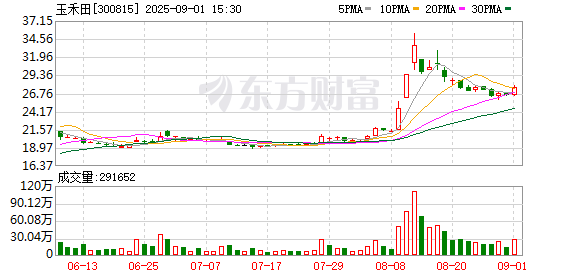
Core Viewpoint - Yuhua Tian emphasizes its commitment to value creation and shareholder returns through enhanced operational efficiency and profitability [2] Group 1: Company Strategy - The company focuses on integrating technology and services, particularly through the use of intelligent unmanned cleaning equipment to create smart sanitation operation scenarios [2] - Yuhua Tian is exploring operational data in specific scenarios such as sanitation, indicating a targeted approach to data utilization [2] Group 2: Market Influence - The company's stock price fluctuations are influenced by multiple factors, including macroeconomic conditions, industry cycles, and market sentiment [2] - Yuhua Tian places a high priority on market capitalization management, reflecting its awareness of external market dynamics [2]

含华量狂飙,车企如何重塑灵魂叙事?
Zhong Guo Qi Che Bao Wang· 2025-09-01 01:09
Core Insights - The increasing adoption of Huawei's QianKun intelligent driving system, surpassing 1 million units, has made "Huawei content" a key marketing highlight for many new car launches [2] - As the performance of vehicles with similar systems becomes increasingly homogeneous, car manufacturers must focus on maintaining brand differentiation to stand out in a competitive market [2][5] Brand Core Value - The core value of a brand is fundamental to its existence, influencing technology choices, product design, and target demographics [3] - For instance, Mercedes-Benz emphasizes "elegance and comfort" in its collaboration with Huawei, focusing on user experience rather than just technical specifications [3] Brand Differentiation - The ultimate goal of brand differentiation is for users to choose a brand based on its identity rather than its offerings [4] - Companies like Audi exemplify long-term strategic brand positioning by integrating digital and mechanical elements, maintaining their status as a luxury car technology benchmark [4] Value Creation - In the era of standardized technology, the essence of brand differentiation lies in "value competition," where companies must translate core values into user-perceptible experiences [5][15] - The shift from "technology stacking" to "value creation" indicates that future competition will focus on user experience rather than just technical specifications [15][16] User-Centric Development - Car manufacturers need to develop scenario-based features that address specific user pain points, enhancing the emotional connection with the brand [12][13] - For example, BYD's "family travel mode" caters to parents by providing features that ensure children's comfort and safety during travel [12] Emotional Connection - The ultimate goal of smart vehicles is to become a "third living space" for users, with emotional connections being crucial for creating a sense of belonging [13] - Features that simulate experiences, such as sound effects during off-road driving, enhance user engagement and brand loyalty [13] Data Utilization - Companies must leverage data not just for algorithm improvement but also for enhancing user experience through personalized services [9] - The integration of user behavior analysis into vehicle systems can create unique user experiences, as seen in GAC's collaboration with Huawei [9] Ecosystem Building - The future of smart vehicles lies in building ecosystems that connect technology with user lifestyles, transforming cars into "mobile life hubs" [16] - Collaborative efforts, such as GAC's "car-home integration" feature, exemplify how technology can enhance daily living beyond transportation [16]

【高端访谈】上海农商银行董事长徐力:廿载筑基向百年,以价值创造书写金融为民答卷
Xin Hua Cai Jing· 2025-08-25 07:34
Core Viewpoint - Shanghai Rural Commercial Bank has evolved over 20 years from rural credit cooperatives to a modern commercial bank, focusing on value creation and serving the public as its core mission [1][2][4]. Group 1: Historical Development - Established in 2005, Shanghai Rural Commercial Bank marked the transformation of rural credit cooperatives into a modern commercial bank, maintaining a commitment to value creation and serving the public [2]. - The bank has expanded its services from rural areas to urban centers, with significant milestones including the opening of its first urban branch in 2006 and its listing on the Shanghai Stock Exchange in 2021, achieving a market capitalization exceeding 85 billion yuan [2][3]. Group 2: Core Mission and Values - The bank's mission, "Inclusive finance to support a better life for the public," and its vision of being a service-oriented bank focused on value creation have remained consistent despite changing times [3][4]. - The bank emphasizes a culture of "integrity and kindness," aiming to create a comprehensive financial service system that includes retail, inclusive, and technology-driven finance [3]. Group 3: Strategic Shift - In response to the new normal of low interest rates and economic uncertainty, the bank is shifting its focus from scale expansion to value creation, emphasizing the importance of serving customers and addressing social needs [4][5]. - The bank aims to create three types of value for customers: functional, exclusive, and emotional, adapting to changing customer demands and moving beyond traditional banking services [5][6]. Group 4: Social Responsibility and Community Engagement - The bank's "Heart Home" public service project exemplifies its commitment to providing emotional value by extending services beyond financial offerings to community support, including health care and educational services [7][8]. - The bank aims to enhance the quality of life for the elderly and address their needs, positioning itself as a socially responsible institution that integrates financial services with community welfare [8][9].
证监会发布实施证券公司分类评价规定 引导券商从规模导向转向价值创造
Shang Hai Zheng Quan Bao· 2025-08-22 22:07
Core Viewpoint - The China Securities Regulatory Commission (CSRC) has implemented the "Securities Company Classification Evaluation Regulations" to shift the focus of securities firms from scale-oriented growth to value creation, promoting high-quality development and enhancing operational efficiency [1][4]. Group 1: Regulatory Changes - The revised regulations aim to correct industry positioning and encourage securities firms to prioritize high-quality development and operational efficiency over mere scale [1][4]. - The classification evaluation system serves as a foundational regulatory framework, allowing for differentiated supervision based on the classification results, thereby enhancing the effectiveness of regulatory measures [2][3]. Group 2: Emphasis on Functionality - The new regulations incorporate the functionality of securities firms into the evaluation framework, urging them to improve their professional capabilities and better serve the real economy and national strategies [3][4]. - A specialized evaluation of "functionality" will be conducted by the Securities Association, focusing on the effectiveness of firms in implementing key financial initiatives [3][4]. Group 3: Support for Smaller Firms - The regulations support differentiated and specialized development for smaller institutions, encouraging them to explore unique business paths while optimizing their operational indicators [4][5]. - Specific indicators have been added to promote the development of long-term capital and wealth management services, enhancing the service capabilities of securities firms [5][6]. Group 4: Compliance and Accountability - The regulations emphasize strict compliance and accountability, with increased penalties for major violations, thereby enhancing market fairness and protecting investor interests [6][7]. - The revised rules encourage firms to apply for administrative commitments or advance compensation in cases of suspected violations, with a structured penalty system to deter misconduct [7].
证监会发布实施券商分类评价规定:引导证券公司聚焦高质量发展 从规模导向转向价值创造
Shang Hai Zheng Quan Bao· 2025-08-22 12:53
Core Viewpoint - The revised "Securities Company Classification Evaluation Regulations" by the China Securities Regulatory Commission (CSRC) aims to shift the focus of securities firms from scale-oriented growth to high-quality development, emphasizing operational efficiency and compliance [1][2][3]. Group 1: Regulatory Framework - The classification evaluation system is a foundational regulatory framework for securities companies, allowing for differentiated supervision based on classification results [2]. - The regulations have undergone multiple revisions since their initial implementation in 2009, with the latest changes reflecting the need to align with new national policies aimed at enhancing the service to the real economy [2][3]. Group 2: Focus on Functionality and Quality - The revised regulations emphasize the importance of securities firms enhancing their functional roles and professional capabilities, integrating these aspects into the evaluation framework [3][4]. - The regulations encourage firms to prioritize service to the real economy and national strategies, moving away from a focus solely on profitability [3][5]. Group 3: Support for Small and Medium-sized Institutions - The regulations promote high-quality development by optimizing business development indicators, supporting differentiated and specialized operations for small and medium-sized institutions [4][5]. - Specific adjustments include the cancellation of certain revenue-based incentives and an increased focus on net asset return rates, encouraging firms to adopt a more efficient operational model [4][5]. Group 4: Compliance and Accountability - The revised regulations enhance the accountability measures for securities firms, increasing penalties for major violations and ensuring a more stringent evaluation process [6][7]. - The regulations aim to create a virtuous cycle of compliance, rating, and business performance, thereby improving the overall integrity of the securities market [6][7].