创造性破坏

Search documents
诺贝尔经济学奖获得者阿吉翁曾接受一财独家专访
Di Yi Cai Jing Zi Xun· 2025-10-13 12:58
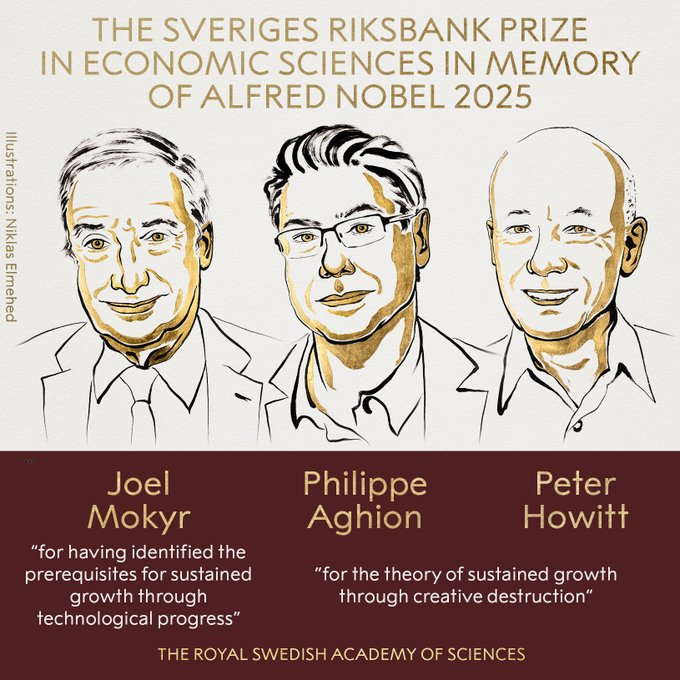
Core Insights - The 2025 Nobel Prize in Economic Sciences was awarded to Joel Mokyr, Philippe Aghion, and Peter Howitt for their contributions to understanding innovation-driven economic growth [2] - Mokyr received half of the prize for identifying prerequisites for sustained growth through technological advancement, while Aghion and Howitt shared the other half for their theory on sustained growth through creative destruction [2] Group 1: Contributions to Economic Theory - Aghion is recognized as a leading figure in economic growth theory, having reintroduced Schumpeter's paradigm of creative destruction into mainstream macroeconomic theory through the Aghion-Howitt model [2] - The concept of creative destruction suggests that large-scale innovations replace outdated technologies and production systems, leading to new economic structures [5] Group 2: Policy Recommendations - Aghion emphasized the importance of government support for employees and businesses to adapt to new economic environments, advocating for education, training, and income insurance [5][6] - He highlighted the "Danish model," where individuals losing jobs can receive nearly 90% of their salary for two years, coupled with retraining programs, contrasting it with the lack of such protections in the U.S. [5] Group 3: U.S. Economic Measures - Aghion critiqued the U.S. response to the pandemic, noting that while the Biden administration attempted to provide relief, the absence of a robust social safety net remains a significant issue [7][8] - He suggested that the pandemic may shift public opinion towards more supportive social policies in the U.S., creating opportunities for new social safety measures [8] Group 4: European Innovation Challenges - Aghion pointed out that Europe lacks leading players in the information and communication technology (ICT) sector due to insufficient investment in innovation [9] - He called for European countries to unite and promote large-scale projects, arguing that the current regulatory environment hinders investment and innovation [10]

诺贝尔经济学奖:创新是如何驱动经济增长
Zheng Quan Shi Bao Wang· 2025-10-13 12:39
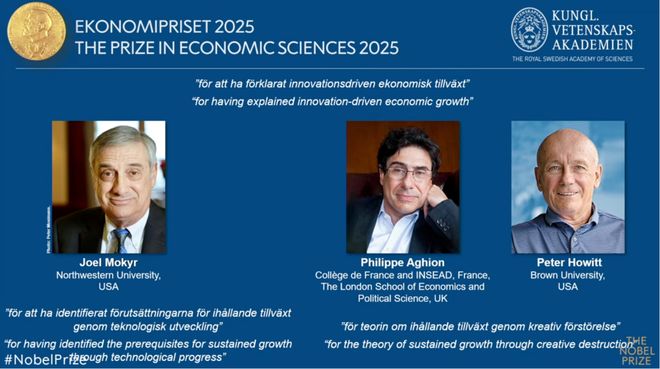
Core Points - The Royal Swedish Academy of Sciences awarded the 2025 Economic Sciences Prize to Joel Mokyr, Philippe Aghion, and Peter Howitt for their contributions to understanding economic growth driven by innovation and creative destruction [1][2] - The total prize amount is 11 million Swedish Krona (approximately 8.25 million RMB), with half awarded to Mokyr and the other half shared between Aghion and Howitt [1] Group 1 - Joel Mokyr's work explains how innovation drives economic growth and identifies technological progress as a prerequisite for sustained growth [1] - Philippe Aghion and Peter Howitt are recognized for their theories on achieving sustained growth through creative destruction [1] - The Nobel Committee highlights that the past two centuries have seen unprecedented continuous economic growth, lifting many out of poverty and laying the foundation for global prosperity [2] Group 2 - The committee emphasizes that technological advancements rapidly influence all aspects of life, replacing old products and methods, which is fundamental to ongoing economic growth [2] - It is noted that stagnation has been the norm throughout human history, with significant technological advancements occurring sporadically [2] - The committee warns that creative destruction can create conflicts that must be managed constructively to prevent innovation from being hindered by established companies and interest groups [2]
诺贝尔经济学奖:创新是如何驱动经济增长
证券时报· 2025-10-13 12:26
Core Viewpoint - The 2025 Nobel Prize in Economic Sciences has been awarded to Joel Mokyr, Philippe Aghion, and Peter Howitt for their contributions to understanding innovation-driven economic growth and the theory of creative destruction [6][7]. Group 1: Award Recipients - Joel Mokyr, born in 1946 in the Netherlands, is a professor at Northwestern University and received his PhD from Yale University in 1974 [1]. - Philippe Aghion, born in 1956 in Paris, is a professor at the Collège de France, INSEAD, and the London School of Economics, having obtained his PhD from Harvard University in 1987 [3]. - Peter Howitt, born in 1946 in Canada, is a professor at Brown University and received his PhD from Northwestern University in 1973 [5]. Group 2: Prize Details - The total prize amount is 11 million Swedish Krona (approximately 8.25 million RMB), with half awarded to Mokyr and the other half shared between Aghion and Howitt [6]. Group 3: Contributions to Economic Theory - Mokyr's work emphasizes that innovation is a prerequisite for sustained economic growth, while Aghion and Howitt focus on how creative destruction facilitates this growth [6]. - The Nobel Committee highlights that the past two centuries have seen unprecedented continuous economic growth, lifting many out of poverty and laying the foundation for global prosperity [6]. - The committee notes that technological advancements rapidly influence all aspects of life, replacing old products and methods, which is essential for ongoing economic growth and improved living standards [6]. Group 4: Challenges and Management - The Nobel laureates illustrate that economic growth should not be taken for granted and that the mechanisms behind creative destruction must be maintained to avoid stagnation [7]. - John Hassler, chairman of the Economic Sciences Prize Committee, stresses the importance of managing the conflicts created by creative destruction constructively to prevent innovation from being hindered by established companies and interest groups [6][7].

周文| 诺贝尔经济学奖:回避真问题,正滑向自娱自乐困境
Sou Hu Cai Jing· 2025-10-13 12:14
【文/观察者网专栏作者 周文】 阿吉翁与豪伊特的 "创造性破坏" 模型同样暴露了理论与现实的割裂。他们构建的数学模型完美演绎了 "新企业淘汰旧企业" 的抽象逻辑,却对当代 "破坏性停滞" 现象视而不见:全球范围内,科技巨头通过 专利壁垒阻碍创新、金融资本脱离实体空转套利,这些违背 "创造性破坏" 规律的现实,在经济学诺奖 表彰的理论体系中找不到解答。 当发展中国家面临技术卡脖子、发达国家陷入增长停滞时,诺奖评委们仍在为半个世纪前就已萌芽的理 论框架欢呼,这种对真问题的集体回避,正是自娱自乐的典型表征。 当瑞典皇家科学院将2025年诺贝尔经济学奖授予莫基尔、阿吉翁和豪伊特,表彰他们对 "创新驱动型经 济增长的阐释" 时,全球经济学界响起的并非一致喝彩,而是越来越清晰的质疑: 这个号称 "社会科学皇冠上的明珠" 的奖项,正在逐步退化为封闭圈子里的智力游戏,其自娱自乐的倾 向在当下全球经济困局中愈发刺眼。 现实脱节:无法回应真问题的理论狂欢 2025年诺奖得主的核心贡献被概括为 "揭示创新如何推动持续增长",但这种看似深刻的阐释,实则回 避了当前全球经济最迫切的现实命题。 莫基尔强调的 "科学解释与社会开放是技术进 ...
2025年诺贝尔经济学奖,揭晓!
Zhong Guo Zheng Quan Bao· 2025-10-13 12:09
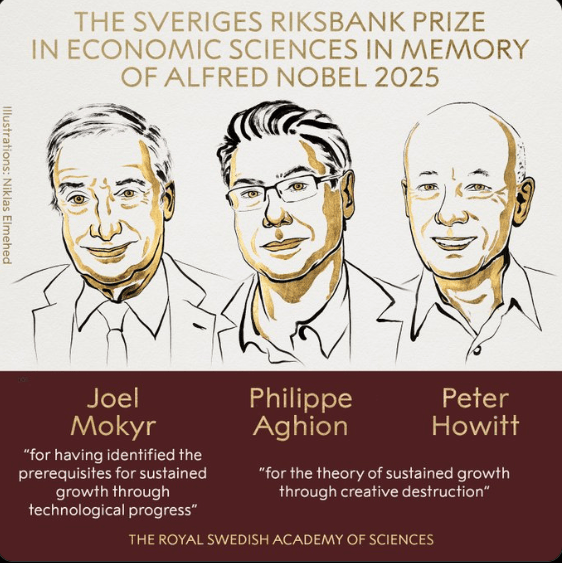
Core Points - The 2025 Nobel Prize in Economic Sciences has been awarded to Joel Mokyr, Philippe Aghion, and Peter Howitt for their contributions to understanding innovation-driven economic growth [1][3] - The prize amount is 11 million Swedish Krona, equivalent to over 8.3 million RMB [1] - The laureates' work emphasizes the role of new technologies in sustaining economic growth and the necessity of managing "creative destruction" constructively to avoid hindrances from companies and interest groups that may be disadvantaged by innovation [3] Summary by Sections - **Award Announcement** - The Nobel Prize in Economic Sciences for 2025 has been jointly awarded to three economists [1] - The prize recognizes their insights into innovation and economic growth [1] - **Significance of Work** - The laureates illustrate how new technologies can drive continuous economic growth [3] - Their research highlights the importance of managing the conflicts arising from "creative destruction" to ensure that innovation is not obstructed by existing companies [3] - **Historical Context** - The Nobel Prize in Economic Sciences was established in 1968, and since then, it has been awarded 56 times to over 90 laureates [3] - The previous year's award was given to three American economists for their work on the impact of institutions on economic prosperity [3]
诺贝尔经济学奖获得者阿吉翁曾接受一财独家专访
第一财经· 2025-10-13 11:58
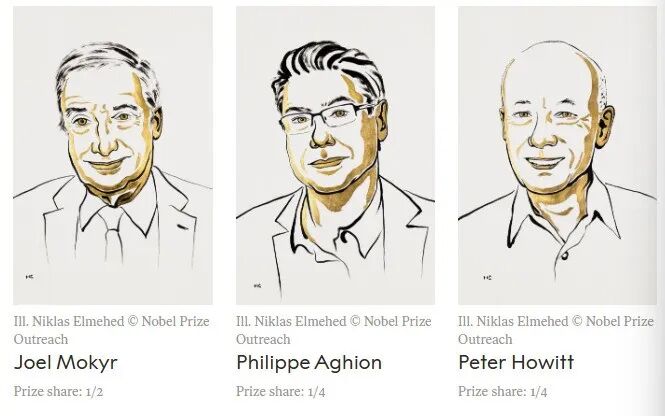
Core Viewpoint - The 2025 Nobel Prize in Economic Sciences was awarded to Joel Mokyr, Philippe Aghion, and Peter Howitt for their contributions to understanding innovation-driven economic growth, highlighting the importance of technological progress and creative destruction in sustaining economic growth [3]. Group 1: Nobel Prize Winners and Their Contributions - Joel Mokyr received half of the prize for identifying prerequisites for sustained growth through technological advancements [3]. - Philippe Aghion and Peter Howitt jointly received the other half for their theoretical work on achieving sustained growth through creative destruction [3]. - Aghion is recognized as a leading figure in economic growth theory, having revitalized Schumpeter's paradigm of economic growth through the Aghion-Howitt model [3]. Group 2: Insights from Aghion's Previous Interview - Aghion emphasized the importance of government support for employees and businesses to adapt to new economic environments, particularly through education, training, and income insurance [7]. - He highlighted the "Danish model," where individuals losing jobs can receive nearly 90% of their salary for two years, coupled with retraining programs, contrasting it with the lack of such support in the U.S. [7][8]. - Aghion noted that while the U.S. excels in innovation, it lacks adequate social protection for its citizens, suggesting a combination of U.S. innovation and Scandinavian-style social safety nets as an ideal model [8]. Group 3: Economic Measures and European Innovation - Aghion critiqued the U.S. government's pandemic response, indicating that while efforts were made, the absence of a robust social safety net remains a significant issue [9]. - He observed a potential shift in American attitudes towards welfare state concepts post-pandemic, suggesting an opportunity for change in social protection measures [10]. - Aghion pointed out that Europe is currently underinvesting in innovation and needs to unite to promote significant projects, advocating for a more investment-oriented approach rather than a restrictive regulatory one [11].
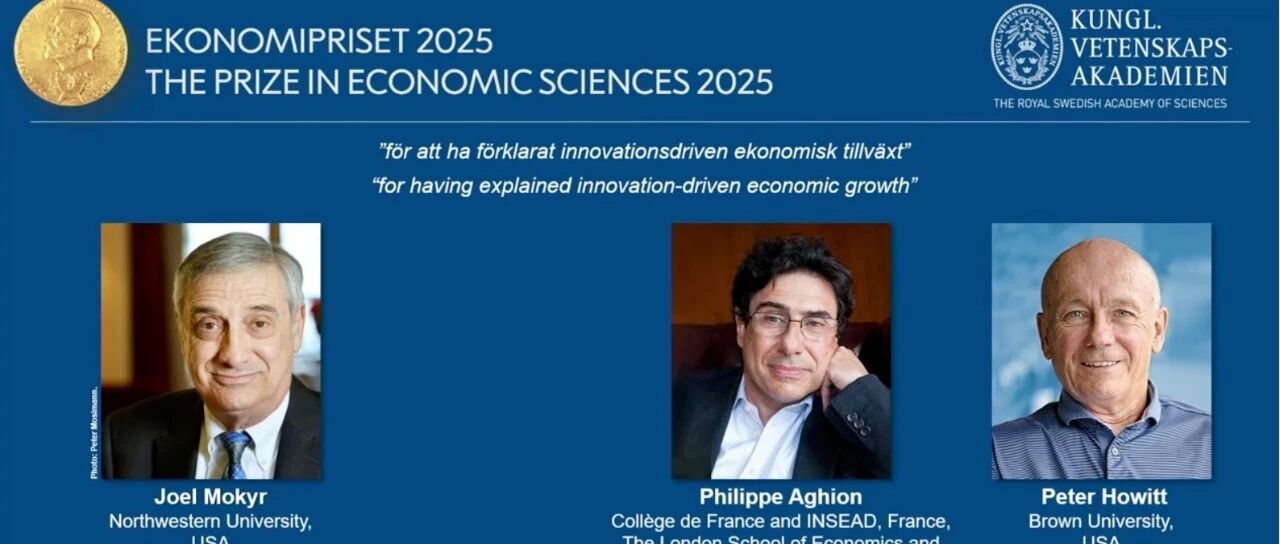
2025年诺贝尔经济学奖:以“创造性破坏”重释增长内核
智通财经网· 2025-10-13 11:49
Group 1 - The Nobel Prize in Economic Sciences for 2025 was awarded to three scholars for their research on "creative destruction as a means to achieve sustained growth" [1] - The winners are Joel Mokyr from Northwestern University, Philippe Aghion from the London School of Economics and the European Business School in Paris, and Peter Howitt from Brown University [1][2] - The prize amount is 11 million Swedish Krona (approximately 1.2 million USD), with Mokyr receiving half and Aghion and Howitt sharing the remaining half [1] Group 2 - Mokyr's research focuses on the Industrial Revolution and subsequent phases, demonstrating that "sustained economic growth" was initially fueled by waves of technological innovations [2] - Aghion and Howitt developed a measurable "creative destruction" growth model in 1992, which illustrates the historical process of new technologies replacing old ones [2] - Aghion expressed concerns about American protectionism, stating it is detrimental to growth and innovation, and emphasized the need for Europe to not fall behind in technology [2] Group 3 - The 2025 award marks the third time the Nobel Prize in Economic Sciences has been shared by three scholars, with the previous instance occurring in 2024 [2] - The Nobel Prize in Economic Sciences has a history of gender inequality, with only three female laureates, making it one of the awards with the highest male-to-female ratio [3]
诺贝尔经济学奖获得者阿吉翁曾说过什么?
Di Yi Cai Jing· 2025-10-13 11:37
Core Insights - The 2025 Nobel Prize in Economic Sciences was awarded to Joel Mokyr, Philippe Aghion, and Peter Howitt for their contributions to understanding innovation-driven economic growth [1] - Aghion's work, particularly the Aghion-Howitt model based on "creative destruction," has reintegrated Schumpeter's economic growth paradigm into mainstream macroeconomic theory [1] Group 1: Nobel Prize Winners - Joel Mokyr received half of the prize for identifying prerequisites for sustained growth through technological advancement [1] - Philippe Aghion and Peter Howitt jointly received the other half for their theoretical work on achieving sustained growth through creative destruction [1] - Aghion is recognized as a leading figure in economic growth theory and has been a strong candidate for the Nobel Prize for years [1] Group 2: Economic Theories and Policies - The concept of "creative destruction," originally proposed by economist Schumpeter, suggests that large-scale innovations replace outdated technologies and production systems [4] - Aghion emphasizes the importance of government support in helping employees and businesses adapt to new economic environments, particularly through education, training, and income insurance [4] - Aghion's analysis of the "Danish model" highlights how effective social protection can mitigate the negative impacts of job loss, contrasting it with the less supportive system in the U.S. [4] Group 3: U.S. Economic Measures - The Biden administration has attempted to address economic challenges through a series of relief measures, but the lack of a robust social safety net remains a significant issue [6] - Aghion notes that the U.S. needs to rethink its social system to better protect individuals from unemployment and economic crises [6] - There is a potential shift in American attitudes towards social welfare, especially following the pandemic, which may create opportunities for new social safety measures [7] Group 4: European Innovation Challenges - Aghion points out that Europe is underinvesting in innovation and needs to unite to promote large-scale projects [8] - He criticizes Europe's regulatory environment for being overly focused on preventing anti-competitive practices rather than fostering investment [8] - The current crisis has highlighted Europe's inefficiencies in innovation, indicating a need for a more proactive investment approach [8]
2025年诺贝尔经济学奖揭晓,关注创新驱动型经济增长!
清华金融评论· 2025-10-13 11:34
文/《清华金融评论》 周茗一 20 25 年 北 京 时 间 1 0 月 1 3 日 晚 , 诺 贝 尔 经 济 学 奖 得 主 揭 晓 。 乔 尔 · 莫 基 尔 (J oe l Mokyr)、菲利普·阿吉翁(Ph ili ppe Agh i on)和彼得·豪伊特( Pe t e r Howitt)获得这一奖项,以表彰他们"对创新驱动型经济增长的阐 释"。其中,一半奖金授予莫基尔,以表彰他们"发现了通过技术进步实现 持续增长的先决条件",另一半奖金则共同授予阿吉翁和豪伊特,以表彰 他们"通过创造性破坏实现持续增长的理论"。 北京时间 10 月 13日 晚,诺贝尔经济学奖得主揭晓。瑞典皇家科学院决定将 2025 年度瑞典中央银行纪念阿尔弗雷德·诺贝尔经济学奖授予乔尔·莫基尔( Joel Mokyr )、菲利普·阿吉翁( Philippe Aghion )和彼得·豪伊特( Peter Howitt ),以表彰他们"对创新驱动型经济增长的阐释"。 诺贝尔经济科学奖委员会表示,获奖者以不同的方式展示了创造性破坏如何制造冲突,必须以建设性的方式进行管理。否则,创新将受到老牌公司和利益 集团的阻碍,这些公司和利益集团可 ...
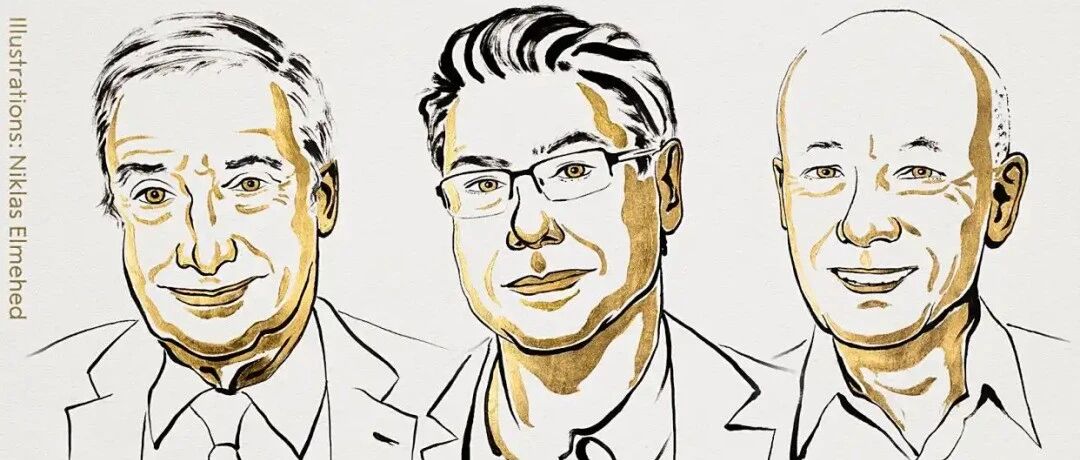
2025年诺贝尔经济学奖揭晓:表彰“对创新驱动型经济增长的阐释”
Hu Xiu· 2025-10-13 11:16
本文来自:华尔街见闻,作者:张雅琦,原文标题:《2025年诺贝尔经济学奖揭晓:表彰"对创新驱动 型经济增长的阐释",三位经济学家获奖》,头图来自:视觉中国 三位经济学家因"解释了创新驱动的经济增长"获得2025年诺贝尔经济学奖,总奖金1100万瑞典克朗。 据瑞典皇家科学院周一发表的声明,乔尔·莫基尔(Joel Mokyr)将获得奖金的一半,以表彰其"对通过 技术进步实现持续增长所需条件的识别";菲利普·阿吉翁(Philippe Aghion)和彼得·豪伊特( Peter Howitt)将平分剩余部分,以表彰他们提出了"通过创造性破坏实现持续增长的理论"。 官网信息显示,在1992年的一篇文章中,他们构建了一个数学模型,用于解释所谓的"创造性破坏":当 一种新的、更好的产品进入市场时,销售旧产品的公司就会遭遇损失。 创新驱动增长研究获认可,三位经济学家共享2025年诺贝尔经济学奖 去年,三位美国学者因研究欧洲前殖民帝国对经济增长影响而分享了该奖项。其他著名获奖者包括前美 联储主席本·伯南克(Ben Bernanke),他于2022年与Douglas Diamond和Philip Dybvig因银行和金融危机 研 ...