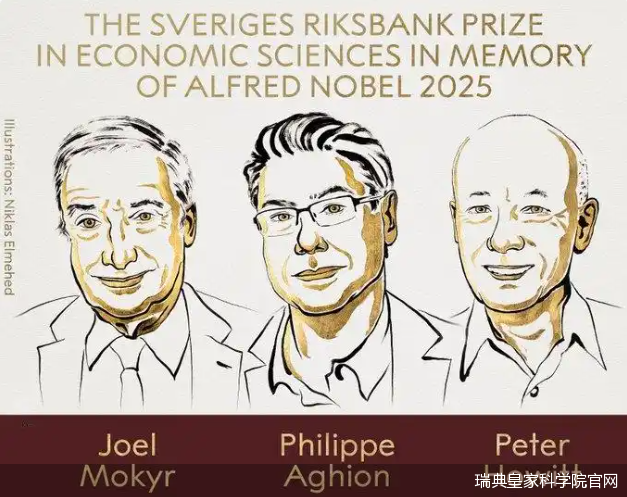
创新驱动经济增长

Search documents
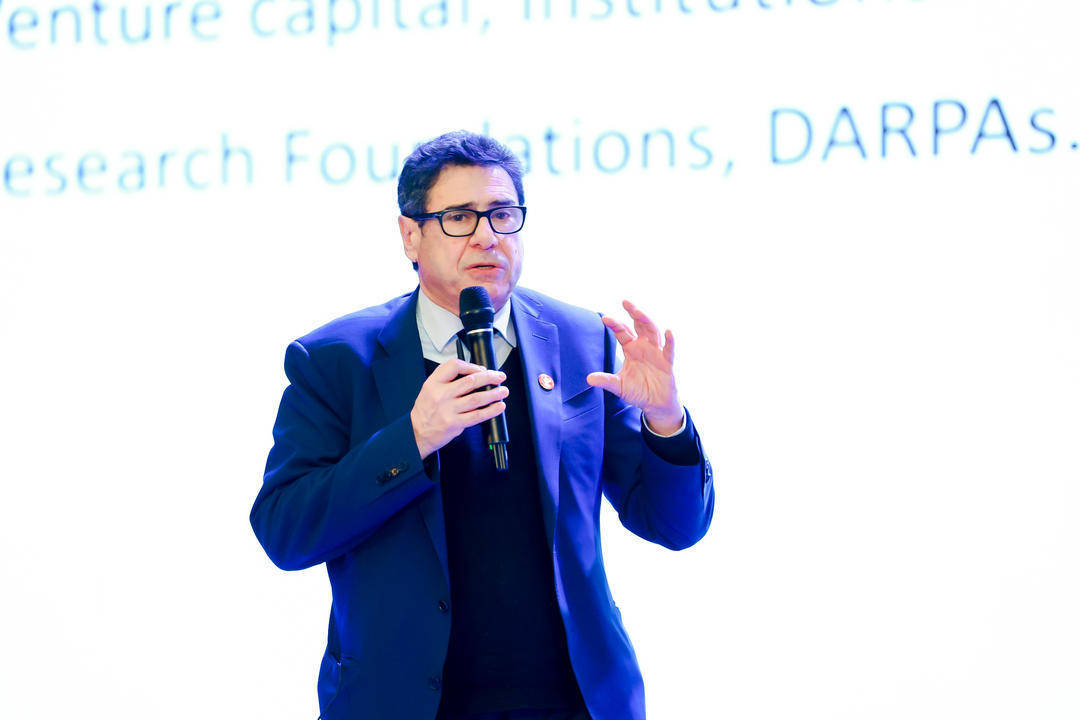
专访2025诺贝尔经济学奖得主菲利普·阿吉翁:中国在多个领域展现出前沿创新能力|封面头条
Sou Hu Cai Jing· 2025-11-19 03:27
Core Insights - Philippe Aghion, Peter Howitt, and Joel Mokyr were awarded the 2025 Nobel Prize in Economic Sciences for their contributions to the theory of "innovation-driven economic growth" [2] - Aghion and Howitt were recognized for their theory of "creative destruction," which explains how innovation disrupts old orders and drives economic vitality through continuous upheaval and reconstruction [2][3] - Aghion emphasizes the importance of balancing competition and protection for those affected by "creative destruction," using examples like artificial intelligence to illustrate both job displacement and job creation [11][13] Group 1: Creative Destruction Theory - The "creative destruction" theory, initially proposed by Joseph Schumpeter, posits that new innovations replace old technologies, with economic growth driven by new firms entering the market through innovation [7] - Aghion's optimistic view contrasts with Schumpeter's more pessimistic outlook, as he believes effective competition policies can prevent established firms from creating barriers to market entry [8] - The theory's three core components include cumulative innovation, entrepreneurial drive for temporary monopoly profits, and the paradox of innovation needing monopoly profits while also potentially stifling new innovations [7][8] Group 2: China's Economic Landscape - Aghion notes that China has made significant strides in areas like blockchain, solar panels, electric vehicles, and autonomous driving, showcasing its true innovative capabilities [13] - He identifies China's large domestic market, skilled labor force, and governance that combines market competition with industrial policy as key advantages for future growth [13] - Aghion highlights the need for improvements in China's financial ecosystem, particularly in venture capital and institutional investment, to support frontier innovation [13] Group 3: Global Innovation and Protectionism - Aghion expresses concern over the rise of protectionism, particularly in the U.S., arguing that it hinders innovation by limiting global market access and competition [16][17] - He advocates for free trade as a crucial driver of innovation, enabling cross-border flow of technology and competition [16] - Aghion suggests that China should strengthen its domestic competition mechanisms and seek long-term partnerships with Europe to maintain its competitive edge amid rising protectionism [18] Group 4: Personal Insights and Future Plans - Aghion reflects on the impact of receiving the Nobel Prize, noting it has changed how he is perceived and increased the scrutiny of his statements [24][25] - He plans to continue his research in economic growth, artificial intelligence, green transition, and effective social security systems, particularly in the context of China [25] - Aghion emphasizes the importance of young people asking fundamental questions and maintaining resilience in the face of challenges [28][30]

“瞪羚”挑战“大象”:日本经济复苏背后的企业战争
3 6 Ke· 2025-10-26 00:07
Core Insights - The article discusses the transformation of Japan's economic recovery and the challenges it faces, particularly in the context of the competition between emerging entrepreneurial firms (referred to as "gazelles") and established corporate giants (referred to as "elephants") [12][14] - It highlights the historical context of Japan's economic struggles since the burst of the asset bubble in the early 1990s and the recent signs of recovery post-COVID-19, including a consistent positive growth rate since 2021 and inflation surpassing the central bank's target [2][5] Economic Context - Japan's GDP, when adjusted for purchasing power parity, is projected to be approximately six times that of China by 2024, although on a per capita basis, it remains only half of Japan's [1] - The long-standing economic stagnation, termed the "lost decades," has led to a perception of Japan as a country that has been surpassed by others, particularly China [1] Recovery Indicators - Since 2021, Japan has maintained an average annual growth rate of nearly 1%, with an unemployment rate consistently below 3% [2] - The Consumer Price Index (CPI) inflation rate has approached 3%, indicating an end to the long-standing deflationary pressures that have plagued the economy [2] Structural Changes - The book by Richard Katz emphasizes the need for Japan to adapt its economic and social systems to new development stages, moving away from rigid employment practices like lifetime employment and seniority-based pay [5][6] - The labor market is becoming more competitive, with a significant increase in the proportion of non-regular employees from 15% in the 1980s to nearly 40% currently, reflecting a shift towards performance-based advancement [5] Challenges to Innovation - The entrenched interests of large corporations hinder the growth of innovative small and medium-sized enterprises (SMEs), which are crucial for economic dynamism [6][9] - The historical reliance on government policies that favored large firms has created a barrier for "gazelle" companies to thrive, as their success could undermine the market position of established "elephant" firms [6] Policy and Institutional Shifts - The relationship between the government and the market has evolved, with a shift from direct industrial policy to a focus on competition policy, reflecting the need for a more market-driven resource allocation [7] - The reforms in the banking sector and real estate market post-bubble have been essential for creating conditions conducive to economic recovery [8] Comparative Analysis - Katz's work complements other literature on Japan's economy by focusing on recent developments and the micro-level changes within firms, contrasting with broader historical analyses [11]

黄金上演“过山车”行情,金价多空对决何时落幕 | 一财号每周思想荟(第39期)
Di Yi Cai Jing· 2025-10-24 05:21
Group 1 - The core viewpoint of the article highlights a significant restructuring in global gold demand, characterized by a decline in traditional consumption and a surge in investment and functional demand, reshaping the market ecology [1][2] - The World Gold Council reports a 28% year-on-year drop in domestic gold jewelry consumption in the first half of 2025, marking the lowest level since 2009, indicating a shift in consumer behavior [1] - The article emphasizes the urgent need for traditional gold retailers to transform by increasing the proportion of lightweight and design-oriented products, reducing premiums, and connecting with source supply chains [1] Group 2 - The recent sharp decline in gold prices is attributed to multiple factors, including a significant easing of geopolitical risks and a reassessment of U.S. monetary policy expectations, which fundamentally altered the core logic supporting gold's price increase [3] - The article notes that the internal structural weaknesses of the market amplified the negative impacts of these fundamental changes, leading to panic selling among bullish investors and triggering a typical "long squeeze" scenario [3] - Despite the recent volatility, the long-term fundamental factors supporting gold prices remain intact, with ongoing geopolitical changes enhancing gold's safe-haven appeal and a loose monetary policy environment bolstering its value retention [4]
诺贝尔经济学奖背后的 AI 投资主线|AGIX PM Notes
海外独角兽· 2025-10-20 12:05
Core Insights - The AGIX index aims to capture the beta and alphas of the AGI era, which is expected to be a significant technological paradigm shift over the next 20 years, similar to the impact of the internet on society [2] - The article discusses the importance of learning from legendary investors like Warren Buffett and Ray Dalio to navigate the AGI revolution [2] Market Performance Summary - AGIX has shown a weekly performance of 0.92%, a year-to-date return of 31.87%, and an impressive return of 81.64% since 2024 [5] - In comparison, the S&P 500 has a weekly performance of 2.45%, a year-to-date return of 18.13%, and a return of 47.47% since 2024 [5] Sector Performance Overview - The semi & hardware sector had a weekly performance of 0.16% with an index weight of 30.11% - The infrastructure sector performed at 0.97% with a weight of 24.74% - The application sector saw a decline of 0.21% with a weight of 39.73% [6] Innovation-Driven Growth Paradigm - The 2025 Nobel Prize in Economic Sciences was awarded to economists who elaborated on the theory of "innovation-driven economic growth," contrasting traditional growth theories that focus on diminishing returns from capital and labor [9] - The article emphasizes that AI, as a collection of technology and knowledge, can be replicated and innovated upon without the diminishing returns seen in traditional capital [10] AI Productivity and Business Models - AI tools are currently in the "AI for productivity" phase, with a potential market space of approximately $6.2 trillion in sales and administrative expenses for S&P 500 companies in 2024 [10] - The article highlights the shift from traditional licensing models to microtransaction models in copyright, exemplified by OpenAI's Sora, which allows for dynamic resource utilization [11][12] AI Implementation and Metrics - Companies should express their AI productivity capabilities through specific KPIs, with a focus on "Dogfooding" as a measure of AI productivity [13] - The potential of a company’s AI can be summarized as Agent Density, Context Tokenization, and Agent Capability, which together accelerate the capitalization of knowledge [14][15] Global Market Trends - The article notes a significant de-leveraging in global stock markets, particularly in North America, with a focus on reducing directional risk [16] - The TMT sector faced selling pressure, while semiconductor stocks received some buying interest, indicating ongoing confidence in the AI industry [16] AI Infrastructure Developments - Meta and Oracle are deploying NVIDIA Spectrum-X Ethernet solutions in AI data centers, indicating a shift towards Ethernet for large-scale AI training and inference [17] - Anthropic introduced Skills functionality for Claude, enhancing its modular task capabilities for enterprise workflows [18] Strategic Partnerships and Acquisitions - Microsoft and NVIDIA, along with BlackRock, are leading an AI infrastructure consortium aiming to acquire Aligned Data Centers for approximately $40 billion [19] - Snowflake and Palantir announced a bidirectional integration to enhance enterprise-level AI applications [20] Future AI Cloud Developments - Microsoft signed a $17.4 billion long-term GPU infrastructure contract with Nebius, indicating a strategic move towards a new AI cloud ecosystem [23]




【首席观察】当“创造性破坏”遇见黄金:市场在博弈一个怎样的未来?
Sou Hu Cai Jing· 2025-10-18 10:40
Core Insights - The recent surge in gold prices reflects a collective emotional response and institutional expectations, indicating a market grappling with a future characterized by "innovation-driven growth" and "creative destruction" [3][4][5] - The Nobel Prize in Economic Sciences awarded in 2025 highlights the importance of innovation and institutional stability in driving economic growth, which is relevant to the current dynamics in the gold market [4][12] Group 1: Market Dynamics - Gold prices reached historical highs, with London spot gold at $4,360 per ounce and New York futures at $4,383 per ounce on October 17, 2025, marking increases of 3.58% and 1.82% respectively [2] - The gold market has seen a 5-day increase of 5.32%, a 1-month increase of 13.11%, and a year-to-date increase of 60%, indicating a strong upward trend despite short-term fluctuations [4][6] - Global gold demand reached 1,249 tons in Q2 2025, a 3% year-on-year increase, with total value rising to $132 billion, a 45% increase, driven by geopolitical tensions and persistent risk aversion [8] Group 2: Investment Strategies - The current gold price surge is driven by both short-term risk aversion and long-term reallocation strategies, raising concerns about potential asset bubbles [6][9] - Investors are increasingly viewing gold as a hedge against institutional uncertainty, with the market exhibiting a strong preference for assets that do not rely on any single counterparty [9][15] - The actual interest rate is identified as a key variable for gold price movements, with favorable conditions for gold when the rate is below 1.5% and adverse effects when it exceeds 2.0% [15][16] Group 3: Behavioral Insights - Investor sentiment is characterized by a mix of fear and greed, with a tendency to overreact to negative signals while hoping for favorable monetary policy changes [16][17] - Behavioral finance suggests avoiding linear predictions and being cautious of short-term volatility traps, emphasizing the cyclical nature of market movements [17]

创新如何驱动经济增长?2025诺贝尔经济学奖的启示
高毅资产管理· 2025-10-17 07:04
Core Insights - The article discusses the paradox of increasing competition leading to "involution" in various industries, despite advancements in technology and innovation [5][6]. - The 2025 Nobel Prize in Economic Sciences awarded to Joel Mokyr, Philippe Aghion, and Peter Howitt highlights the importance of innovation in driving economic growth and addresses the challenges faced by the Chinese economy [6]. Group 1: Mokyr's Insights - Mokyr emphasizes that an innovation ecosystem, consisting of knowledge enlightenment and institutional support, is crucial to countering involution [9][11]. - Historical examples, such as the "Bacon Plan" in the 17th century, illustrate how the dissemination of useful knowledge can spur technological breakthroughs, paralleling China's recent shift towards investing in human capital [10]. - The lack of knowledge dissemination and skill accumulation in certain Chinese industries contributes to low-level repetitive competition, while successful clusters like Zhongguancun and Hangzhou demonstrate the benefits of a supportive innovation ecosystem [10]. Group 2: Aghion and Howitt's Contributions - Aghion and Howitt propose a "U-shaped relationship" between competition and innovation, suggesting that moderate competition can stimulate innovation, while excessive competition can stifle it [12]. - The challenges faced by the Chinese electric vehicle industry exemplify this theory, where excessive price competition has led to reduced R&D investment and innovation [12][13]. - Their research indicates that non-frontier firms are more susceptible to losing motivation in highly competitive environments, highlighting the need for policy interventions to encourage technological advancement [13]. Group 3: Creative Destruction - Aghion and Howitt's "creative destruction" theory posits that innovation must replace outdated capacities to escape the cycle of involution, aligning with the central government's advocacy for new productive forces [14][15]. - The disparity between the largest U.S. companies, which are predominantly tech innovators, and China's A-share market, which lacks significant tech-driven firms, underscores the need for a robust creative destruction mechanism [15]. - Policies should focus on fostering an innovation ecosystem rather than engaging in subsidy competitions, ensuring that subpar capacities exit the market while promoting high-quality competition [15]. Group 4: Conclusion - The insights from the 2025 Nobel Prize in Economic Sciences suggest that countering involution requires competition to return to a reasonable range to stimulate innovation [16]. - Key strategies include establishing supportive institutions, regulating competition to maintain optimal levels, and encouraging deep technological and model innovation to transition from stagnant markets to new growth opportunities [16][17].
创新,市场繁荣的真正秘诀
Sou Hu Cai Jing· 2025-10-16 07:39
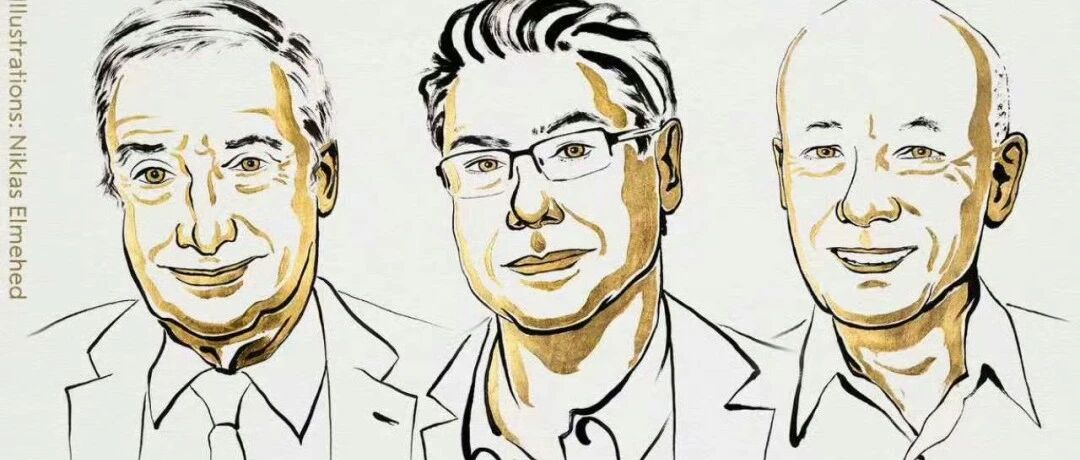
Core Insights - The Nobel Prize in Economic Sciences for 2025 was awarded to economists Joel Mokyr, Philippe Aghion, and Peter Howitt for their contributions to the theory of innovation-driven economic growth [1][2] - Their research emphasizes that the true secret to market prosperity lies in innovation and entrepreneurship, challenging the prevailing focus on wealth distribution and regulation [1][3] Group 1: Innovation and Economic Growth - The Nobel laureates highlighted that economic growth is fundamentally driven by continuous technological innovation, a process referred to as "creative destruction" [1][2] - Creative destruction involves entrepreneurs disrupting old products and systems with new and improved alternatives, a concept originally introduced by economist Joseph Schumpeter [2][3] Group 2: Challenges to Entrepreneurship - The article notes a decline in entrepreneurial spirit, particularly in Europe, where it is described as "endangered" due to regulatory and tax burdens [3][4] - In the U.S., there has been a steady decrease in the number of startups since the 1970s, indicating a worrying trend in support for new ventures [3][4] Group 3: Policy Implications - The Nobel winners advocate for policies that encourage solitary innovators and entrepreneurs, suggesting that their ideas could lead to significant breakthroughs if supported adequately [4]
2025诺贝尔奖得主揭示经济学最重要因素:创新,市场繁荣的真正秘诀
Sou Hu Cai Jing· 2025-10-15 23:00
Core Insights - The Nobel Prize in Economic Sciences for 2025 was awarded to economists Joel Mokyr, Philippe Aghion, and Peter Howitt for their contributions to the theory of innovation-driven economic growth [1][3] - Their research emphasizes that the true secret to market prosperity lies in innovation and entrepreneurship, challenging the notion that stronger distribution methods are the solution to current economic challenges [1][3] Economic Growth and Innovation - The past 200 years have seen unprecedented economic growth, primarily driven by continuous technological innovation, with the process of "creative destruction" being central to this growth [3] - Mokyr, Aghion, and Howitt have expanded on the concept of creative destruction, demonstrating that it can be quantitatively measured and is constantly occurring in the economy [3][4] Challenges to Entrepreneurship - There is a growing concern that entrepreneurial spirit is declining, particularly in Europe, where it is described as "endangered" due to regulatory and tax burdens [5] - In the United States, the number of startups has been steadily decreasing since the 1970s, indicating a worrying trend in support for new ventures [5] - The current U.S. administrations have been criticized for their reliance on bureaucratic industrial strategies and trade policies, which may stifle innovation [5] Importance of Encouraging Innovation - The Nobel laureates highlight the importance of encouraging solitary founders who experiment with ideas, as they are the true drivers of economic prosperity [5]
诺贝尔经济学奖授予3人 ,表彰他们阐释了“创新驱动经济增长”
Yang Zi Wan Bao Wang· 2025-10-13 14:40
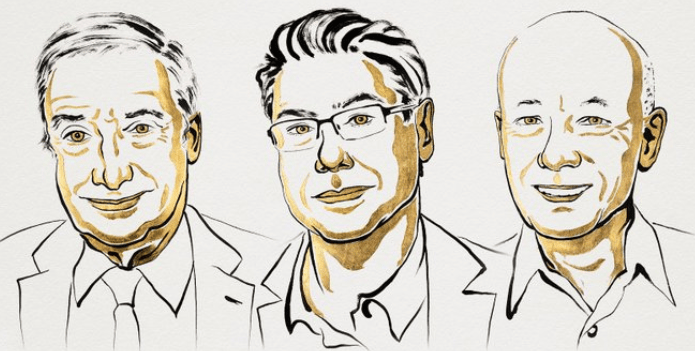
Core Points - The 2025 Nobel Prize in Economic Sciences is awarded to economists Joel Mokyr, Philippe Aghion, and Peter Howitt for their contributions to the theory of innovation-driven economic growth [1][6] - The total prize amount is 11 million Swedish Krona, approximately 8.25 million RMB, with half awarded to Mokyr and the other half shared between Aghion and Howitt [6] Group 1: Achievements of the Laureates - Joel Mokyr focuses on the economic and knowledge roots of technological progress and its impact on industrialization and social welfare, particularly during the period from 1750 to 1914 [7] - Philippe Aghion is a leading scholar in innovation economics, studying how innovation drives long-term growth and its effects on labor, environment, and finance [7] - Peter Howitt is one of the founders of the modern "Schumpeterian" framework for economic growth, emphasizing the causes and effects of inflation and the role of monetary policy in economic stability [8] Group 2: Impact of Research Findings - The award highlights the importance of innovation in socio-economic development and clarifies the mechanisms linking technological development to sustainable growth [8] - The research outcomes provide guidance for industrial policy and corporate strategic development, especially in the context of the current technological and industrial revolution [8]
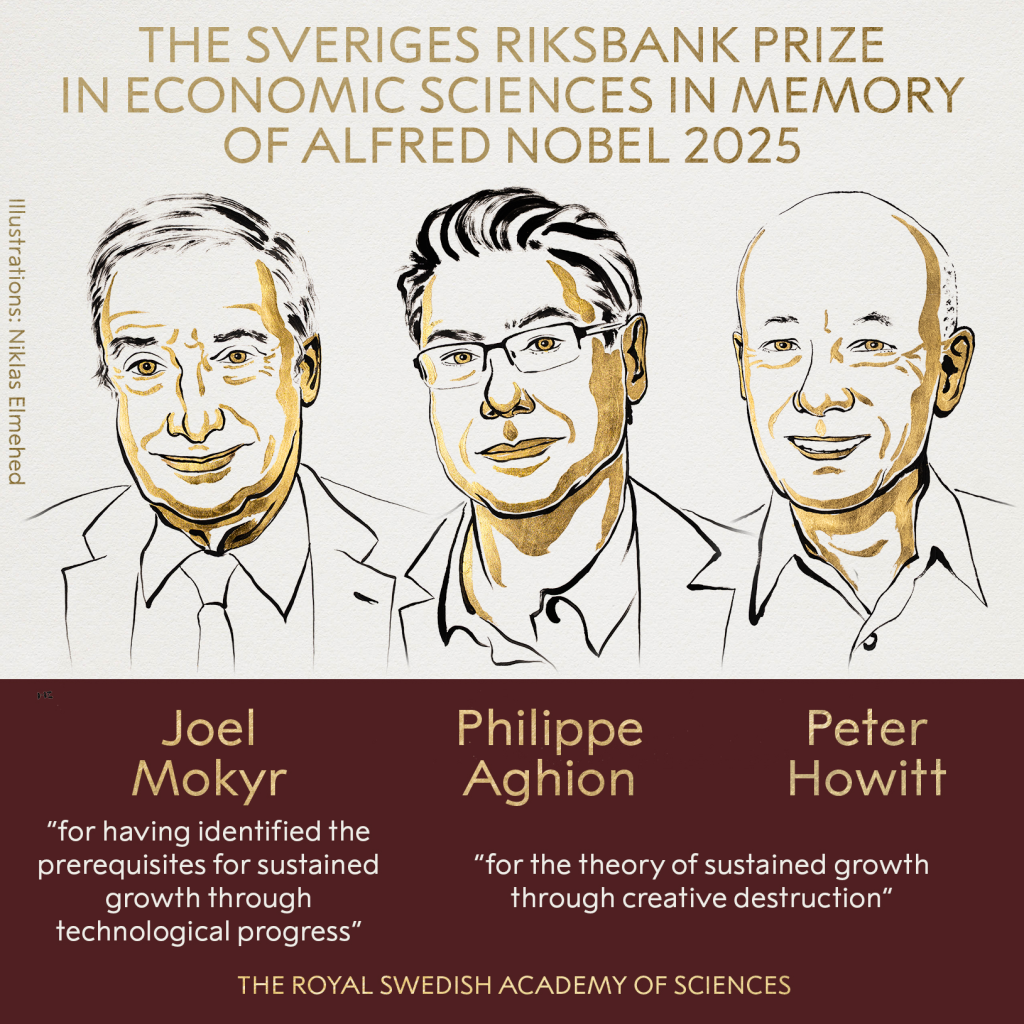
2025年诺奖:经济增长并非理所当然
Bei Jing Shang Bao· 2025-10-13 14:27
Core Insights - The 2025 Nobel Prize in Economic Sciences was awarded to Joel Mokyr, Philippe Aghion, and Peter Howitt for their contributions to the theory of innovation-driven economic growth, emphasizing the importance of the environment and mechanisms supporting innovation [3][4][5] Group 1: Innovation and Economic Growth - The laureates' research highlights that economic growth is not a given and requires supportive institutions and policies to prevent stagnation [5][6] - Mokyr's work focuses on the historical relationship between technology, culture, and institutions, while Aghion and Howitt developed a theoretical model explaining how technological innovation drives long-term growth through "creative destruction" [6][7] Group 2: Implications for Policy - The findings suggest that understanding the dynamics of innovation and competition is crucial for policymakers to foster sustainable economic growth [7][8] - The research also addresses contemporary issues, such as the potential negative impacts of technological advancements like artificial intelligence, which necessitate effective policy responses [8] Group 3: Trends in Economic Research - Recent Nobel Prize winners reflect a shift towards recognizing contributions that address real-world issues and have significant public policy implications, rather than solely theoretical advancements [9]