
反倾销

Search documents
新华财经早报:9月6日
Xin Hua Cai Jing· 2025-09-06 01:17
Group 1 - The new regulations for public fund sales expenses have been released, which will reduce sales fees by approximately 30 billion yuan annually, representing a reduction of about 34% [1] - The China Securities Regulatory Commission (CSRC) has approved the launch of the Fund Industry Service Platform (FISP), aimed at enhancing direct sales services for institutional investors [1] - The Ministry of Commerce has initiated preliminary anti-dumping investigations on imported pork and pork products from the EU, confirming substantial damage to the domestic industry [1] Group 2 - In the first seven months of 2025, China's service trade grew steadily, with total service trade reaching 45,781.6 billion yuan, an increase of 8.2% year-on-year [1] - The National Financial Regulatory Administration has issued new guidelines for insurance company capital margin management, mandating a minimum deposit of 20 million yuan for each capital margin [1] - In 2024, the compulsory traffic accident insurance (CTI) sector reported a premium income of 271.06 billion yuan, with a loss of 15.27 billion yuan from underwriting [1] Group 3 - Shenzhen has optimized its real estate policies, allowing residents to purchase an unlimited number of homes in certain districts, and banks will no longer differentiate interest rates between first and second homes [1] - The Hangzhou Yuhang District has announced subsidies for families purchasing new residential properties, providing a one-time subsidy of 40,000 yuan [1] Group 4 - The draft of the Hainan Free Trade Port Tourism Regulations proposes broader visa-free entry policies for tourists, enhancing the attractiveness of the region [2] - Kweichow Moutai announced that its controlling shareholder has received a loan commitment of up to 2.7 billion yuan to support stock repurchase plans [2] Group 5 - The Shanghai Stock Exchange has taken self-regulatory measures against 174 cases of abnormal trading behavior, including monitoring stocks with significant price fluctuations [2] - The U.S. non-farm payrolls increased by only 22,000 in August, significantly below market expectations, while the unemployment rate rose to 4.3% [2] Group 6 - Japan's labor ministry announced an average increase of 66 yen in the minimum hourly wage, marking a 6.3% rise, the largest increase since 1978 [2]

基金销售相关费用全线下调;深圳发布楼市新政,优化限购和房贷利率等|南财早新闻
2 1 Shi Ji Jing Ji Bao Dao· 2025-09-05 23:55
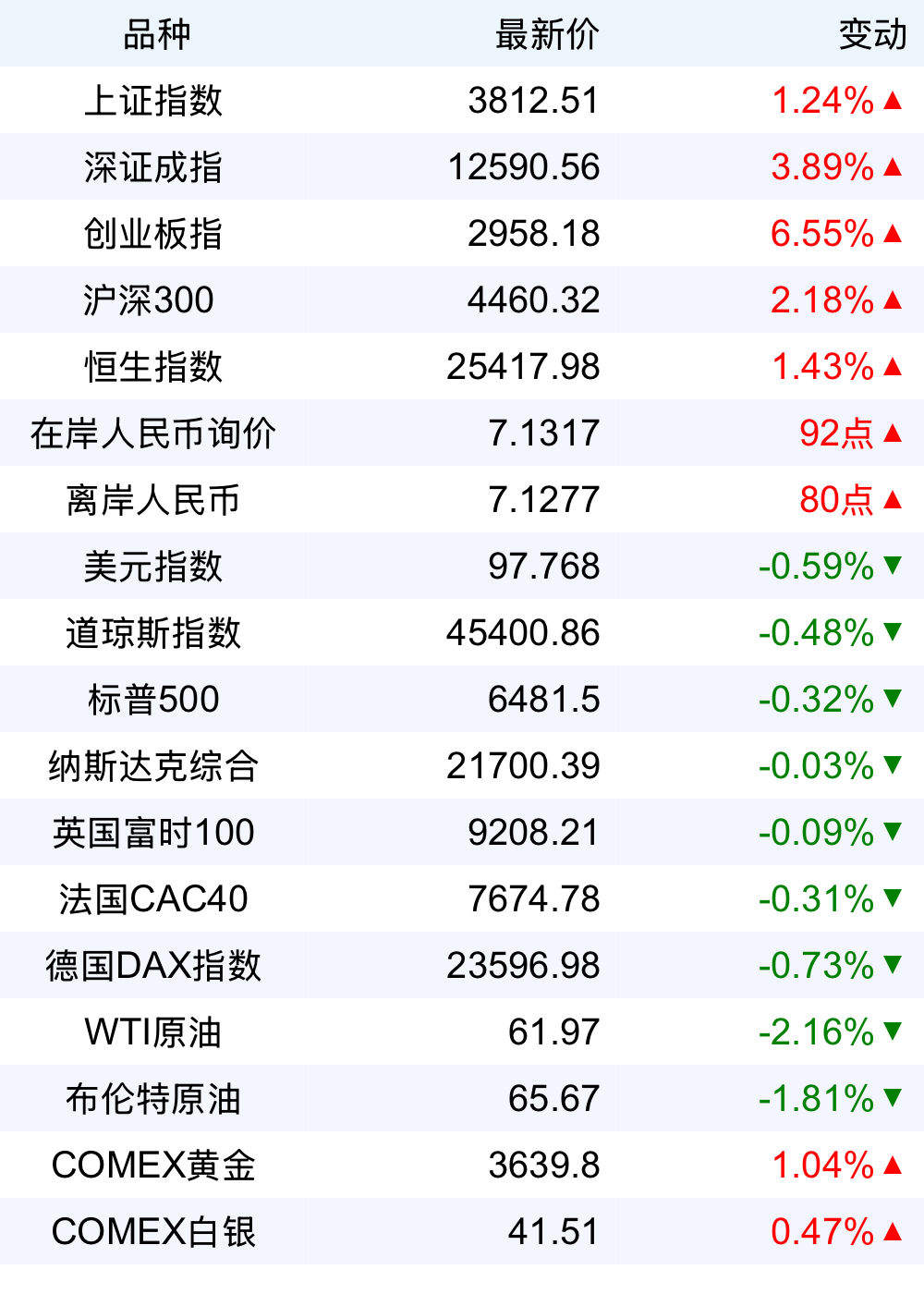
Company Movements - Kweichow Moutai announced that its controlling shareholder, Moutai Group, has received a commitment letter for a loan of no more than 2.7 billion yuan from Agricultural Bank, with plans to increase holdings between 3 billion and 3.3 billion yuan within six months starting from September 5 [7] - Tesla announced a new compensation plan for CEO Elon Musk, potentially leading to a record compensation of 1 trillion dollars, contingent on performance targets. The plan could grant Musk up to 12% of Tesla's stock if the company reaches a market value of 8.6 trillion dollars, requiring an increase in valuation by nearly eight times over the next decade [7] - Geely Automobile announced that its subsidiary, Zeekr Intelligent Technology Co., Ltd., has passed a privatization proposal with a 95.14% approval rate from independent shareholders, with completion expected by the end of 2025 [7] - In response to the controversy over the advertisement for "Peach Li Mooncake," the company publicly apologized and stated that future promotional activities will be managed by a younger team starting from September 5 [7] - Baillie Gifford announced that its self-developed global first EGFR×HER3 dual-target ADC drug, iza-bren, has been included in the priority review process [7] - Kuanda Technology announced that the Zhuzhou State-owned Assets Supervision and Administration Commission will become the actual controller of the company, with its stock resuming trading on September 8 [8] Investment News - On Friday, the Shanghai Composite Index closed at 3,812.51 points, up 1.24%, with a trading volume of 979.06 billion yuan. The Shenzhen Component Index rose 3.89% to 12,590.56 points, with a trading volume of 1,325.6 billion yuan. The ChiNext Index increased by 6.55% to 2,958.18 points, with a trading volume of 676.09 billion yuan. Overall, more than 4,800 stocks rose while fewer than 500 fell, with total market turnover at 2.3 trillion yuan, a decrease of 239.6 billion yuan from the previous trading day. Sectors such as solid-state batteries, photovoltaics, CPO, and third-generation semiconductors saw significant gains, while a few sectors like banking and dairy experienced declines [5] - On September 5, the China Securities Regulatory Commission approved the launch of a direct sales service platform for institutional investors in the public fund industry, which is authorized to be built and operated by China Securities Depository and Clearing Corporation [6] - The Shanghai Stock Exchange took self-regulatory measures against 174 cases of abnormal trading behavior, including stock price manipulation and false declarations, and is closely monitoring stocks with significant abnormal fluctuations [6] - After adjustments in the A-share market, the margin trading balance significantly decreased, with a balance of 2.2795 trillion yuan as of September 4, a reduction of 10.317 billion yuan from September 3, marking the largest decrease in adjacent days since August [6]

基金销售相关费用全线下调;深圳发布楼市新政 优化限购和房贷利率等|南财早新闻
2 1 Shi Ji Jing Ji Bao Dao· 2025-09-05 23:51
Company Movements - Kweichow Moutai announced that its controlling shareholder, Moutai Group, has received a commitment letter for a loan of up to 2.7 billion yuan from Agricultural Bank, with plans to increase its holdings by no less than 3 billion yuan and no more than 3.3 billion yuan within six months starting from September 5 [6] - Tesla announced a new compensation plan for CEO Elon Musk, potentially worth a record 1 trillion dollars, linked to performance targets. The plan could grant Musk up to 12% of Tesla's stock if the company reaches a market value of 8.6 trillion dollars, requiring an increase of nearly eight times its current valuation [6] - Geely Automobile announced that its shareholders approved the privatization proposal for Zeekr Intelligent Technology with a high vote rate of 95.14%. The merger between Geely and Zeekr is expected to be completed by the end of 2025 [6] - In response to the controversy over its advertising, Tao Li Bread officially apologized, stating that the decision was made by leadership, and the subsequent promotional efforts will be managed by younger team members [6] - Baillie Gifford announced that its self-developed global first EGFR×HER3 dual-target ADC drug, iza-bren, has been included in the priority review process [6] - Kuangda Technology announced that the Zhuzhou State-owned Assets Supervision and Administration Commission will become the actual controller of the company, with its stock resuming trading on September 8 [7] Investment News - On Friday, the Shanghai Composite Index closed at 3,812.51 points, up 1.24%, with a trading volume of 979.06 billion yuan. The Shenzhen Component Index rose 3.89% to 12,590.56 points, with a trading volume of 1,325.6 billion yuan. The ChiNext Index increased by 6.55% to 2,958.18 points, with a trading volume of 676.09 billion yuan. Overall, more than 4,800 stocks rose, while fewer than 500 fell, with total market turnover at 2.3 trillion yuan, a decrease of 239.6 billion yuan from the previous trading day [4] - On September 5, the China Securities Regulatory Commission approved the official launch of the direct sales service platform for public fund industry institutional investors. The FISP platform is authorized by the CSRC and operated by China Securities Depository and Clearing Corporation, requiring fund managers and custodians to connect to the platform for direct sales [4] - The Shanghai Stock Exchange took self-regulatory measures against 174 cases of abnormal trading behavior, including price manipulation and false declarations, and is closely monitoring stocks with abnormal fluctuations [4] - After adjustments in the A-share market, the margin trading balance significantly decreased. As of September 4, the margin trading balance was 2.2795 trillion yuan, a reduction of 10.317 billion yuan from September 3, marking the largest decrease in consecutive days since August [4]
原产于欧盟的进口猪肉及猪副产品存在倾销,商务部介绍情况
Bei Jing Ri Bao Ke Hu Duan· 2025-09-05 09:25
Core Viewpoint - The Ministry of Commerce of China has initiated an anti-dumping investigation into imported pork and pork products from the European Union, indicating preliminary evidence of dumping and substantial harm to the domestic industry [1] Group 1: Investigation Timeline - On June 17, 2024, the Ministry of Commerce launched the anti-dumping investigation following a request from the China Animal Husbandry Association [1] - The investigation deadline was extended to December 16, 2025, as announced on June 10, 2025 [1] Group 2: Findings and Initial Ruling - Preliminary evidence suggests that imported pork and pork products from the EU are being dumped, causing substantial damage to the domestic industry [1] - The Ministry of Commerce announced on September 5, 2025, that the dumping margin for EU companies is between 15.6% and 62.4% [1] - Temporary anti-dumping measures will be implemented based on the initial ruling [1]
商务部:愿与欧方通过对话协商妥善处理贸易摩擦
Yang Shi Wang· 2025-09-05 08:46
Core Viewpoint - The Chinese Ministry of Commerce has initiated a preliminary anti-dumping investigation into imported pork and pork products from the European Union, deciding to implement temporary anti-dumping measures based on initial findings [1][2] Group 1: Investigation Details - The investigation was launched on June 17, 2024, following a request from the domestic industry, and the deadline for the investigation has been extended to December 16, 2025 [1] - The investigation process included issuing questionnaires, gathering opinions, visiting domestic enterprises, and conducting on-site checks of EU companies, ensuring transparency and protection of stakeholders' rights [1] - Preliminary results indicate that dumping behavior by EU products has been established, along with damage to the domestic industry and a causal relationship between the two [1] Group 2: Preliminary Ruling and Tariffs - The preliminary ruling announced on September 5, 2025, includes temporary anti-dumping measures in the form of a cash deposit [1] - The determined tax rates for sampled companies are as follows: 15.6% for Spain's Litera Meat Company, 31.3% for Denmark's Crown Company, and 32.7% for the Netherlands' Vion Boxtel Company [1] - Other cooperating EU companies will face a uniform tax rate of 20.0%, while non-cooperating companies will be subjected to a rate of 62.4% [1] Group 3: Trade Relations and Future Actions - The Chinese side emphasizes a cautious and restrained approach to trade remedy measures, having not initiated any new investigations against the EU since 2025, except for two cases [2] - The EU has initiated six anti-dumping investigations against China during the same period, leading to multiple preliminary rulings and the imposition of temporary anti-dumping duties [2] - The Chinese Ministry of Commerce expresses a willingness to resolve trade frictions through dialogue and cooperation, while committing to conduct investigations in accordance with relevant laws and WTO rules [2]
商务部:调查机关初步认定,原产于欧盟的进口相关猪肉及猪副产品存在倾销,国内产业受到实质损害,而且倾销与实质损害之间存在因果关系
Sou Hu Cai Jing· 2025-09-05 08:40
Core Viewpoint - The Ministry of Commerce has preliminarily determined that imported pork and pork by-products from the European Union are being dumped, causing substantial damage to the domestic industry, with a causal relationship established between dumping and the damage [1] Group 1: Investigation Findings - The investigation agency has found that there is dumping of relevant pork products from the EU [1] - Substantial damage to the domestic industry has been confirmed as a result of this dumping [1] - A causal relationship between the dumping and the substantial damage has been established [1] Group 2: Regulatory Actions - According to Articles 28 and 29 of the Anti-Dumping Regulations, the investigation agency has decided to implement temporary anti-dumping measures in the form of a cash deposit [1] - Starting from September 10, 2025, importers of the investigated products will be required to provide corresponding cash deposits to the Customs of the People's Republic of China based on the determined rates for each company [1]
商务部:原产于欧盟的进口猪肉及猪副产品存在倾销,国内产业受到实质损害
Mei Ri Jing Ji Xin Wen· 2025-09-05 08:31
Core Viewpoint - The Ministry of Commerce of China has initiated an anti-dumping investigation against imported pork and pig by-products from the European Union, concluding that dumping exists and has caused substantial damage to the domestic industry, with a causal relationship established between dumping and damage [1]. Group 1: Preliminary Ruling - The preliminary ruling indicates that imported pork and pig by-products from the EU are being dumped, causing substantial harm to the domestic industry, and a causal relationship between dumping and harm has been identified [1]. Group 2: Imposition of Security Deposits - Starting from September 10, 2025, importers of the investigated products must provide corresponding security deposits to the Customs of the People's Republic of China based on the determined rates for each company as per the preliminary ruling [2][8]. Group 3: Product Description - The investigated products include fresh, chilled, frozen pork, edible offal, and various forms of pig fat and intestines, which are suitable for human consumption [5][6]. Group 4: Tariff Classification - The products fall under specific tariff codes in the People's Republic of China, with certain non-pork products excluded from this investigation [6]. Group 5: Comments from Stakeholders - Stakeholders have a 10-day period from the announcement date to submit written comments to the investigating authority [9].

商务部:原产于欧盟的进口相关猪肉及猪副产品存在倾销 国内产业受到实质损害
智通财经网· 2025-09-05 08:12
Core Viewpoint - The Ministry of Commerce has announced a preliminary ruling on anti-dumping investigations regarding imported pork and pig by-products from the European Union, confirming the existence of dumping and substantial damage to the domestic industry, along with a causal relationship between the two [1][2]. Group 1: Preliminary Ruling - The investigation found that imported pork and pig by-products from the EU are being dumped, causing substantial harm to the domestic industry, with a confirmed causal link between dumping and damage [2]. Group 2: Imposition of Deposit - The Ministry has decided to implement temporary anti-dumping measures in the form of a deposit, effective from September 10, 2025, requiring importers to provide a corresponding deposit based on the determined rates for each company [3][9]. Group 3: Product Description - The products under investigation include various forms of pork and pig by-products, such as fresh, chilled, frozen pork, and edible offal, among others [4][6][7]. Group 4: Deposit Calculation Method - The deposit will be calculated based on the customs-determined taxable price of the imported goods, using the formula: Deposit Amount = (Customs-determined taxable price × Deposit rate) × (1 + VAT rate) [9]. Group 5: Stakeholder Comments - Stakeholders have a 10-day window from the announcement date to submit written comments to the investigating authority [10].
商务部:调查机关初步认定,原产于欧盟的进口相关猪肉及猪副产品存在倾销
Zheng Quan Shi Bao Wang· 2025-09-05 08:08
Core Viewpoint - The Ministry of Commerce has announced a preliminary ruling on the anti-dumping investigation of imported pork and pork products from the European Union, indicating that such imports are being sold at dumped prices, causing substantial harm to the domestic industry, with a causal relationship established between dumping and the harm [1] Group 1: Investigation Findings - The investigation agency has preliminarily determined that imported pork and pork products from the EU are being dumped [1] - There is substantial damage to the domestic industry due to these dumped imports [1] - A causal relationship exists between the dumping practices and the substantial harm experienced by the domestic industry [1] Group 2: Regulatory Actions - The investigation agency has decided to implement temporary anti-dumping measures in the form of a cash deposit [1] - Starting from September 10, 2025, importers of the investigated products will be required to provide a cash deposit to the Customs of the People's Republic of China based on the determined rates for each company [1]
商务部:原产于欧盟的进口相关猪肉及猪副产品存在倾销 决定采用保证金形式实施临时反倾销措施
Shang Wu Bu Wang Zhan· 2025-09-05 08:02
(文章来源:商务部网站) 商务部:调查机关初步认定,原产于欧盟的进口相关猪肉及猪副产品存在倾销,国内产业受到实质损 害,而且倾销与实质损害之间存在因果关系。根据《反倾销条例》第二十八条和第二十九条的规定,调 查机关决定采用保证金形式实施临时反倾销措施。自2025年9月10日起,进口经营者在进口被调查产品 时,应依据本初裁决定所确定的各公司的保证金比率向中华人民共和国海关提供相应的保证金。 ...