
智慧港口

Search documents
“钱凯港既是‘金色’的,也是‘绿色’的”(共建“一带一路”·第一现场)
Ren Min Ri Bao· 2025-08-05 22:02
Core Points - The opening of the Chancay Port in Peru marks a significant milestone in the Belt and Road Initiative, being the first smart and green port in South America, with impressive operational metrics since its launch [1][6] - The project showcases advanced Chinese construction technology, significantly improving efficiency and reducing environmental impact during the construction phase [2][3] - The port's operations are expected to enhance trade between China and Peru, contributing 1.8% to Peru's GDP annually and creating thousands of jobs [6][7] Group 1: Project Overview - Chancay Port officially opened in November 2024, with a total import and export value exceeding $777 million and a container throughput of 94,400 TEUs in the first five months [1] - The port is strategically positioned to connect land and sea, linking Asia and Latin America [1] Group 2: Technological Innovations - The project team developed a high-tech self-moving pile-driving platform, increasing efficiency to 7 piles every 3 days, which is 4.7 times faster than traditional methods [2] - Innovative construction techniques reduced noise and dust pollution by 40% and saved over 25% in water usage [3] Group 3: Environmental Considerations - The project maintained ecological balance, with no disturbance to local wildlife during construction, showcasing a commitment to sustainable development [3] Group 4: Workforce Development - Over 3,000 local workers were employed during the construction, with 75% of the workforce being Peruvian, enhancing local employment and skills [4] - Training programs were established, allowing local employees to gain hands-on experience and technical knowledge from Chinese engineers [4][5] Group 5: Economic Impact - The port has opened six shipping routes, significantly reducing logistics costs and enhancing the export competitiveness of South American countries [6][7] - The establishment of direct shipping routes has cut shipping time from Ecuador to China from 35-55 days to 27 days, benefiting the freshness of perishable goods [7]
整合港口资源 厦门港务拟61.78亿元购买集装箱码头集团70%股权
Zheng Quan Shi Bao Wang· 2025-08-05 14:43
Core Viewpoint - Xiamen Port Authority plans to acquire 70% equity of Container Terminal Group from International Port Authority for a transaction price of 6.178 billion yuan, constituting a major asset restructuring and related party transaction [1][2]. Company Summary - Xiamen Port Authority is the only publicly listed port platform under Fujian Port Group, primarily engaged in bulk cargo terminal investment and operation, as well as comprehensive logistics services [1]. - The Container Terminal Group, established in 2013 with a registered capital of 2.437 billion yuan, is wholly owned by International Port Authority and focuses on container terminal loading and storage operations [1][2]. Business Synergy - The acquisition is expected to create synergies between the Container Terminal Group's operations and Xiamen Port Authority's existing bulk cargo terminal and logistics services, enhancing the company's overall business structure [2]. - Post-restructuring, the company aims to position itself as a comprehensive modern port logistics service provider covering multiple segments, including container terminals and supply chain services [2]. Financial Performance - Projected net profits for the Container Terminal Group are 491 million yuan, 567 million yuan, and 154 million yuan for the years 2023, 2024, and the first quarter of 2025, respectively [2]. - The transaction is anticipated to significantly enhance the asset scale and profitability of Xiamen Port Authority, while maintaining the control structure under International Port Authority and Fujian State-owned Assets Supervision and Administration Commission [2]. Industry Outlook - According to the Ministry of Transport's Water Transport Research Institute, coastal port cargo throughput is expected to grow by approximately 2% year-on-year by 2025, with a stable growth outlook for the first quarter and a rebound in growth during the second and third quarters [3].

全球首个单体千万箱级“混行码头”如何炼成?|活力中国调研行
2 1 Shi Ji Jing Ji Bao Dao· 2025-08-05 09:00
21世纪经济报道记者柳宁馨 宁波报道 在宁波舟山港梅山港区,无人驾驶的智能集卡、人工集卡在作业区各行其道、井然有序。 不远处,梅山港区码头和堆场上的桥吊与龙门吊也大部分实现了远程操控,司机坐在办公室里,仅需远程操作手柄就能完成装卸作业。 人工卡车和智能卡车"和平共处"、司机在办公室操控千万级集装箱背后,是梅山港区近十年的转型改造探索。 梅山港区是世界第一大港——宁波舟山港20个港区中的其中一个,也是宁波舟山港双千万箱级单体集装箱码头——梅山港区集装箱码头的所在地。 梅山港区的传统码头数智化改造升级已成为样板工程。 宁波梅东集装箱码头有限公司党委委员、副总经理彭捷向记者介绍,梅山港区2016年左右开始转型,主要方向是智慧化和绿色化,目前是全球唯一单体超千 万混线作业自动化集装箱码头,创新性地实现了人工集卡与智能集卡的协同作业,解决了自动化与安全有序作业的难题。 经过多年探索实践,梅山港区实现一脑统领("双芯大脑")、一网覆盖(感知物联网络)、一链作业(桥龙吊远程操控、集卡混行作业链)、一区示范(自 动驾驶试验区)的"四个一"智慧港口建设创新模式。 梅山港区的转型经验成为国内外智慧与绿色港口建设的典范。 彭捷介绍 ...
全球首个单体千万箱级“混行码头”如何炼成?
2 1 Shi Ji Jing Ji Bao Dao· 2025-08-05 08:43
关联内容收入水平全国第三,浙江如何提振消费?|活力中国调研行 在宁波舟山港梅山港区,无人驾驶的智能集卡、人工集卡在作业区各行其道、井然有序。 不远处,梅山港区码头和堆场上的桥吊与龙门吊也大部分实现了远程操控,司机坐在办公室里,仅需远 程操作手柄就能完成装卸作业。 人工卡车和智能卡车"和平共处"、司机在办公室操控千万级集装箱背后,是梅山港区近十年的转型改造 探索。 梅山港区是世界第一大港——宁波舟山港20个港区中的其中一个,也是宁波舟山港双千万箱级单体集装 箱码头——梅山港区集装箱码头的所在地。 在绿色化方面,梅山港区通过风光储一体化项目提高了清洁能源使用效率,达成降本增效和减排目标。 梅山港区以源端清洁化、终端电气化、调控智慧化的"三化"建设为核心,积极打造低碳码头示范工程。 宁波梅东集装箱码头有限公司供配电技术员陈子豪介绍,从2021年起,梅山港区开始实行节能减排的战 略,至2024年清洁能源的消耗量占总能源消耗量的大约77%。 视频剪辑:实习生钟均均 梅山港区的转型经验成为国内外智慧与绿色港口建设的典范。 彭捷介绍道,"近十年间,中国港口发展非常迅猛。以梅山港区为例,不仅吞吐量大,我们在智慧港 口、绿色港 ...
世界级港口群基本建成 货物吞吐量稳居全球首位
Zhong Yang Ji Wei Guo Jia Jian Wei Wang Zhan· 2025-08-04 01:25
Core Insights - The article emphasizes the importance of ports as foundational and hub facilities for economic development, highlighting China's goal to build world-class ports and the achievements made since the 18th National Congress of the Communist Party [1] - China's port construction has accelerated, with world-class port clusters established, including the Bohai Rim, Yangtze River Delta, and Guangdong-Hong Kong-Macau Greater Bay Area, showcasing significant advancements in automation and infrastructure [1][5] - By 2024, China's total port cargo throughput is projected to reach 17.6 billion tons, with container throughput at 330 million TEUs, maintaining the world's leading position [1] Port Development and Efficiency - The Yangshan Port in the Yangtze River Delta has improved logistics efficiency through a "joint unloading" model, allowing for streamlined customs processes across multiple ports [3][4] - The "joint unloading" model has led to a 12.7% year-on-year increase in container throughput at Yangshan Port, with 567,000 TEUs processed in 2024 [4] - Ningbo-Zhoushan Port complements Shanghai's Yangshan Port, enhancing trade facilitation for inland foreign trade enterprises [5] Automation and Technology - The Haijun Port's automation has significantly improved operational efficiency, with a 10% increase in overall efficiency and a 20% boost in customs clearance efficiency following a complete digital transformation [9][10] - The automated terminal at Qingdao Port has set a world record for container handling efficiency, achieving an average of 62.62 natural boxes per hour [11] Green and Low-Carbon Initiatives - China's ports are transitioning towards low-carbon operations, with Qingdao Port implementing comprehensive shore power facilities to reduce emissions and improve environmental quality [13][14] - The "smart zero-carbon" terminal in Tianjin Port operates entirely on renewable energy, achieving 100% self-sufficiency in green electricity, significantly reducing carbon emissions [15]
世界级港口群基本建成 货物吞吐量稳居全球首位踔厉奋发新征程 | 港埠星罗 畅达四海
Zhong Yang Ji Wei Guo Jia Jian Wei Wang Zhan· 2025-08-03 23:49
Core Insights - China's port infrastructure has significantly advanced, with the establishment of world-class port clusters and a focus on modernizing port facilities to support economic development [2][4][8] Group 1: Port Development and Infrastructure - China has formed world-class port clusters in regions such as Bohai Rim, Yangtze River Delta, and Guangdong-Hong Kong-Macau Greater Bay Area, with a leading number of automated terminals globally [2][4] - The total cargo throughput of Chinese ports is projected to reach 1.76 billion tons in 2024, maintaining the world's highest volume, with container throughput expected to hit 33 million TEUs [2][4] - The construction of near-zero carbon ports is accelerating, showcasing China's commitment to sustainable port development [2] Group 2: Logistics Efficiency and Coordination - The "joint unloading" model in the Yangtze River Delta allows for streamlined logistics, enabling goods to be processed through multiple ports with a single declaration and inspection [4][5] - The Yangshan Port has developed "joint unloading" services with 13 other ports in the region, achieving a business volume of 567,000 TEUs in 2024, a 12.7% increase year-on-year [5] Group 3: Automation and Technology - The automation of ports is advancing, with facilities like the Xiamen Port's automated terminal achieving a 10% increase in overall efficiency and a 20% improvement in customs clearance efficiency [10][12] - The Ningbo-Zhoushan Port has implemented a "dual-core brain" system for efficient scheduling and management of port operations, resulting in a throughput of 11.19 million TEUs last year [13][14] Group 4: Green and Low-Carbon Initiatives - Ports are increasingly adopting green technologies, with Qingdao Port achieving 100% coverage of shore power facilities, reducing carbon emissions by approximately 8,000 tons in 2024 [15][16] - The Tianjin Port's "smart zero-carbon" terminal operates entirely on renewable energy, with a total installed capacity of 146.5 MW, significantly contributing to carbon reduction efforts [17]

记者手记|钱凯港24小时
Xin Hua Wang· 2025-08-01 21:15
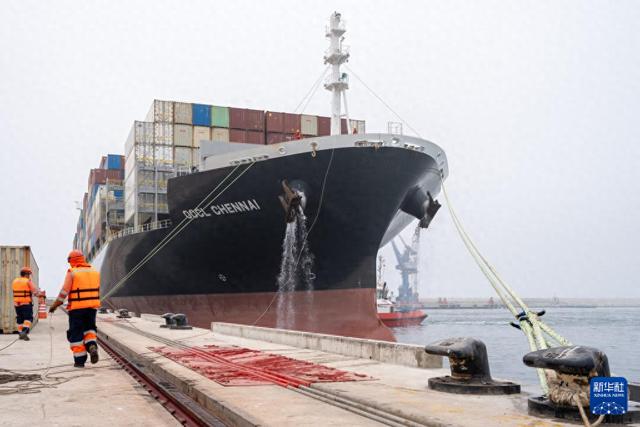
Core Insights - The Chancay Port in Peru is a significant project under the Belt and Road Initiative, officially opening in November 2024, and is set to become a crucial shipping hub connecting Asia and Latin America [3][10]. Group 1: Port Operations - The Chancay Port features advanced automated operations, including smart driving container trucks that reduce energy consumption by over 25% compared to traditional trucks, achieving zero carbon emissions [6][10]. - The port's operations are highly efficient, with approximately 80% of loading and unloading tasks being automated, enhancing safety and reducing accident risks [13][10]. - The port's central control area coordinates operations, distributing work plans to various equipment, showcasing the efficiency of a smart port [10][8]. Group 2: Economic Impact - The opening of Chancay Port has significantly reduced shipping times, with the one-way sea transport duration between China and Peru now approximately 23 days, leading to over 20% savings in logistics costs [10][17]. - Peru's fishmeal exports have surged, with a 605.3% increase in April compared to the same period last year, highlighting the port's role in boosting key export industries [15][10]. - Local businesses, including fruit growers and fishmeal factories, have seen substantial order increases due to improved shipping capabilities, enhancing their competitiveness in international markets [17][19]. Group 3: Future Prospects - The port is expected to facilitate further growth in trade, with companies like Indurama planning to leverage the port for importing appliances, significantly reducing logistics cycles from 50 days to around 30 days [20][19]. - The rapid growth in transportation demand presents both challenges and opportunities for the port, indicating its potential to drive regional economic development and support small and medium enterprises [24][10].
河南省迎来首台码头“智慧装卸工”
He Nan Ri Bao· 2025-07-28 23:16
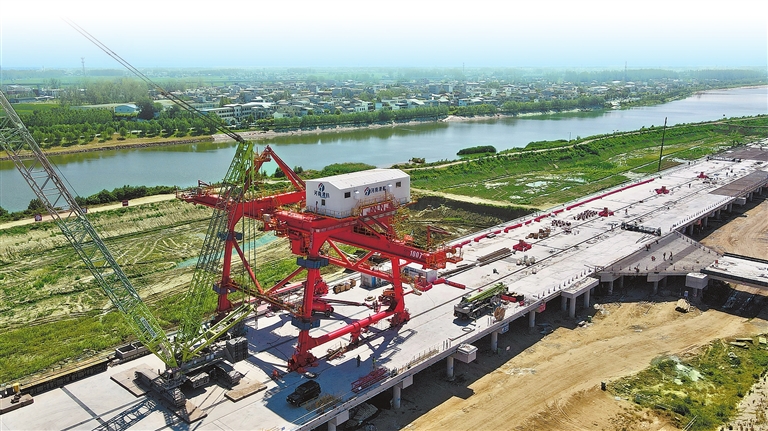
Group 1 - The completion of the first automated container quay crane in Henan province marks a significant advancement in the region's port automation and modernization efforts [2] - The crane, standing at 32 meters tall, will work in conjunction with fully automated gantry cranes and unmanned container trucks to achieve full-process automation in container handling and transportation [2] - The Zhoukou Port Central Port Area is a key project under the "11246" initiative for inland waterway transportation in Henan, with a planned capacity of 1.76 million TEUs annually and 22 berths [2] Group 2 - The project is currently in its final stages, with 73.91% of the planned annual investment completed by 2025 and an overall construction progress of approximately 86% [2] - The transportation of oversized components from Shanghai to Zhoukou Port was conducted entirely via water transport, which significantly reduced transportation costs and carbon emissions while ensuring the integrity of the components [3]
探访ZPMC“交筑・智慧港口”媒体开放日 看中国智造如何重塑港口未来
Huan Qiu Wang· 2025-07-25 03:25
Core Viewpoint - Shanghai Zhenhua Heavy Industries Group (ZPMC) showcased its technological breakthroughs and innovations in the smart port sector during the "Smart Port Construction" media open day, emphasizing advancements in automation and intelligent management systems [1][5]. Group 1: New Technologies - ZPMC has made significant advancements in automation terminal technologies over the past three years, including fully automated quay cranes and intelligent visual perception technology, achieving over 90% success in automated container handling [2]. - The new generation ZPMC-TOS integrates planning and equipment control, adaptable to various port scenarios, and has been operational at the Zhonggu Logistics Base [2]. - An intelligent operation and maintenance platform has been implemented in multiple ports, enhancing equipment visibility and process control [2]. Group 2: New Products - ZPMC introduced several innovative products, such as the Model S yard bridge, which reduces energy consumption by 15% and is designed for high-speed automated yards [3]. - The world's first semi-circular beam quay crane reduces wind resistance by over 30%, showcasing significant energy efficiency [3]. - The electric-hydraulic dual-box lifting device, which reduces energy consumption by over 95%, represents a shift towards intelligent operational units [3]. Group 3: New Standards - ZPMC is actively involved in international standard-setting, with its experts leading ISO committees, marking a transition from participant to leader in the port machinery sector [4]. - The company has developed the first corporate-level carbon footprint accounting standard for port cranes, contributing to the industry's green development [4]. Group 4: New Achievements - ZPMC has successfully exported products to Laos, expanding its international presence to 110 countries and regions, with overseas orders constituting nearly 80% of total orders, reflecting a growth of over 30% compared to the previous year [5]. - As the largest port machinery manufacturer and automation terminal system solution provider globally, ZPMC continues to drive the development of smart ports through its innovative technologies and products [5].

山东东平港区跃升记:从运河节点到双向物流“黄金枢纽”
Qi Lu Wan Bao Wang· 2025-07-23 14:46
Core Insights - The article highlights the bustling activity at the Tai'an Port Pengji operation area, emphasizing its focus on logistics cost reduction and quality improvement through diversified development strategies [1] - The Tai'an Port serves as a crucial hub for coal transportation, linking the western coal supply to eastern markets, and has enhanced its operational capacity with the completion of the "three upgrades to two" project on the Grand Canal [1][2] Group 1 - The Tai'an Port Pengji operation area has opened various transportation services, including heavy-load trains and container shipping, significantly improving regional shipping conditions [1] - The Yanzhou Mining Tai'an Port Logistics Park is a key coal reserve base in Shandong Province, facilitating the transportation of coal from northern to southern regions through the Grand Canal [1] - The port's operational efficiency has been boosted by advanced smart production networks and digital monitoring systems, allowing for rapid response to operational anomalies [2] Group 2 - The port has implemented innovative transportation models such as "bulk to container" and "combined transport" to enhance logistics efficiency [2] - The economic benefits of the Grand Canal's "golden waterway" are becoming increasingly evident, positioning Tai'an Port as a vital transportation hub for coal and goods [2] - The port's infrastructure includes high-efficiency loading machines capable of loading 2000 tons per hour, ensuring quick turnaround for vessels [2]