端到端自动驾驶

Search documents
自动驾驶现在关注哪些技术方向?应该如何入门?
自动驾驶之心· 2025-08-14 23:33
Core Viewpoint - The article emphasizes the establishment of a comprehensive community for autonomous driving, aiming to bridge communication between enterprises and academic institutions, while providing resources and support for individuals interested in the field [1][12]. Group 1: Community and Resources - The community has organized over 40 technical routes, offering resources for both beginners and advanced researchers in autonomous driving [1][13]. - Members include individuals from renowned universities and leading companies in the autonomous driving sector, fostering a collaborative environment for knowledge sharing [13][21]. - The community provides a complete entry-level technical stack and roadmap for newcomers, as well as valuable industry frameworks and project proposals for those already engaged in research [7][9]. Group 2: Learning and Development - The community offers a variety of learning routes, including perception, simulation, and planning control, to facilitate quick onboarding for newcomers and further development for those already familiar with the field [13][31]. - There are numerous open-source projects and datasets available, covering areas such as 3D object detection, BEV perception, and world models, which are essential for practical applications in autonomous driving [27][29][35]. Group 3: Job Opportunities and Networking - The community actively shares job postings and career opportunities, helping members connect with potential employers in the autonomous driving industry [11][18]. - Members can engage in discussions about career choices and research directions, receiving guidance from experienced professionals in the field [77][80]. Group 4: Technical Discussions and Innovations - The community hosts discussions on cutting-edge topics such as end-to-end driving, multi-modal models, and the integration of various technologies in autonomous systems [20][39][42]. - Regular live sessions with industry leaders are conducted, allowing members to gain insights into the latest advancements and practical applications in autonomous driving [76][80].

正式开课!端到端与VLA自动驾驶小班课,优惠今日截止~
自动驾驶之心· 2025-08-13 23:33
Core Viewpoint - The article emphasizes the significance of VLA (Vision-Language Alignment) as a new milestone in the mass production of autonomous driving technology, highlighting the progressive development from E2E (End-to-End) to VLA, and the growing interest from professionals in transitioning to this field [1][11]. Course Overview - The course titled "End-to-End and VLA Autonomous Driving Small Class" aims to provide in-depth knowledge of E2E and VLA algorithms, addressing the challenges faced by individuals looking to transition into this area [1][12]. - The curriculum is designed to cover various aspects of autonomous driving technology, including foundational knowledge, advanced models, and practical applications [5][15]. Course Structure - **Chapter 1**: Introduction to End-to-End Algorithms, covering the historical development and the transition from modular to end-to-end approaches, including the advantages and challenges of each paradigm [17]. - **Chapter 2**: Background knowledge on E2E technology stacks, focusing on key areas such as VLA, diffusion models, and reinforcement learning, which are crucial for future job interviews [18]. - **Chapter 3**: Exploration of two-stage end-to-end methods, discussing notable algorithms and their advantages compared to one-stage methods [18]. - **Chapter 4**: In-depth analysis of one-stage end-to-end methods, including various subfields like perception-based and world model-based approaches, culminating in the latest VLA techniques [19]. - **Chapter 5**: Practical assignment focusing on RLHF (Reinforcement Learning from Human Feedback) fine-tuning, providing hands-on experience with pre-training and reinforcement learning modules [21]. Target Audience and Learning Outcomes - The course is aimed at individuals with a foundational understanding of autonomous driving and related technologies, such as transformer models and reinforcement learning [28]. - Upon completion, participants are expected to achieve a level equivalent to one year of experience as an end-to-end autonomous driving algorithm engineer, mastering various methodologies and being able to apply learned concepts to real-world projects [28].
全面超越DiffusionDrive!中科大GMF-Drive:全球首个Mamba端到端SOTA方案
自动驾驶之心· 2025-08-13 23:33
Core Viewpoint - The article discusses the GMF-Drive framework developed by the University of Science and Technology of China, which addresses the limitations of existing multi-modal fusion architectures in end-to-end autonomous driving by integrating gated Mamba fusion with spatial-aware BEV representation [2][7]. Summary by Sections End-to-End Autonomous Driving - End-to-end autonomous driving has gained recognition as a viable solution, directly mapping raw sensor inputs to driving actions, thus minimizing reliance on intermediate representations and information loss [2]. - Recent models like DiffusionDrive and GoalFlow have demonstrated strong capabilities in generating diverse and high-quality driving trajectories [2][8]. Multi-Modal Fusion Challenges - A key bottleneck in current systems is the multi-modal fusion architecture, which struggles to effectively integrate heterogeneous inputs from different sensors [3]. - Existing methods, primarily based on the TransFuser style, often result in limited performance improvements, indicating a simplistic feature concatenation rather than structured information integration [5]. GMF-Drive Framework - GMF-Drive consists of three modules: a data preprocessing module that enhances geometric information, a perception module utilizing a spatial-aware state space model (SSM), and a trajectory planning module employing a truncated diffusion strategy [7][13]. - The framework aims to retain critical 3D geometric features while improving computational efficiency compared to traditional transformer-based methods [11][16]. Experimental Results - GMF-Drive achieved a PDMS score of 88.9 on the NAVSIM dataset, outperforming the previous best model, DiffusionDrive, by 0.8 points [32]. - The framework demonstrated significant improvements in key metrics, including a 1.1 point increase in the driving area compliance score (DAC) and a maximum score of 83.3 in the ego vehicle progression (EP) [32][34]. Component Analysis - The study conducted ablation experiments to assess the contributions of various components, confirming that the integration of geometric representations and the GM-Fusion architecture is crucial for optimal performance [39][40]. - The GM-Fusion module, which includes gated channel attention, BEV-SSM, and hierarchical deformable cross-attention, significantly enhances the model's ability to process multi-modal data effectively [22][44]. Conclusion - GMF-Drive represents a novel end-to-end autonomous driving framework that effectively combines geometric-enhanced pillar representation with a spatial-aware fusion model, achieving superior performance compared to existing transformer-based architectures [51].
双非硕多传感融合方向,技术不精算法岗学历受限,求学习建议。。。
自动驾驶之心· 2025-08-13 13:06
Core Viewpoint - The article emphasizes the importance of building a supportive community for students and professionals in the autonomous driving field, highlighting the establishment of the "Autonomous Driving Heart Knowledge Planet" as a platform for knowledge sharing and collaboration [6][16][17]. Group 1: Community and Learning Resources - The "Autonomous Driving Heart Knowledge Planet" aims to provide a comprehensive technical exchange platform for academic and engineering issues related to autonomous driving [17]. - The community has gathered members from renowned universities and leading companies in the autonomous driving sector, facilitating knowledge sharing and collaboration [17]. - The platform offers nearly 40 technical routes and access to over 60 datasets related to autonomous driving, significantly reducing the time needed for research and learning [17][31][33]. Group 2: Technical Learning Paths - The community has organized various learning paths for beginners, intermediate researchers, and advanced professionals, covering topics such as perception, simulation, and planning control in autonomous driving [11][13][16]. - Specific learning routes include end-to-end learning, multi-modal large models, and occupancy networks, catering to different levels of expertise [17]. - The platform also provides resources for practical implementation, including open-source projects and datasets, to help users quickly get started in the field [31][33]. Group 3: Industry Insights and Networking - The community facilitates job sharing and career advice, helping members navigate the job market in the autonomous driving industry [15][19]. - Members can engage in discussions about industry trends, job opportunities, and technical challenges, fostering a collaborative environment for professional growth [18][81]. - The platform regularly invites industry experts for live sessions, providing members with insights into the latest advancements and applications in autonomous driving [80].

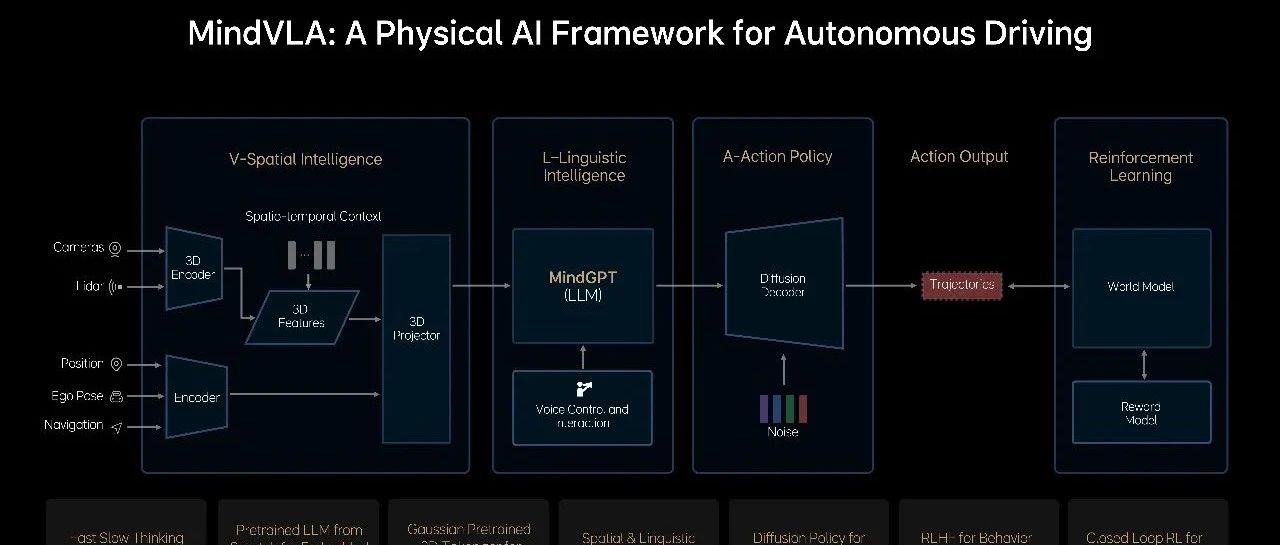
传统感知逐渐被嫌弃,VLA已经上车了?!
自动驾驶之心· 2025-08-13 06:04
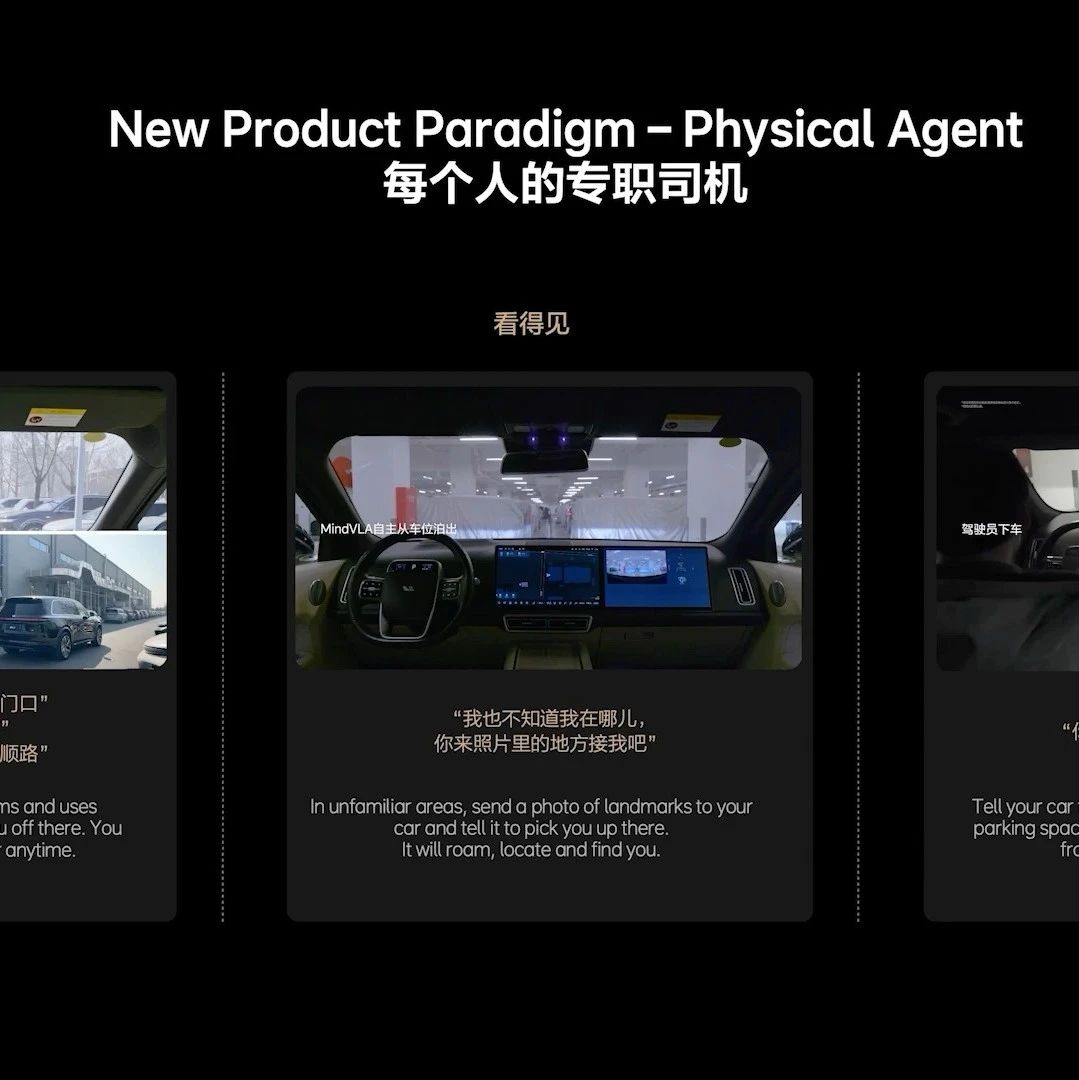
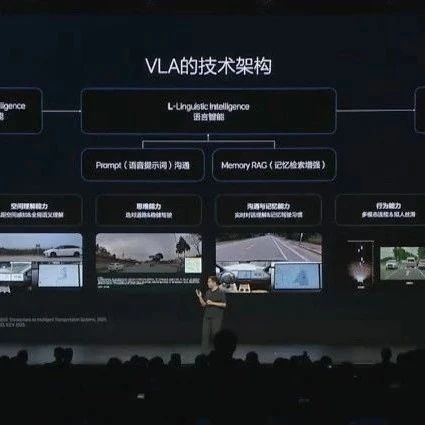
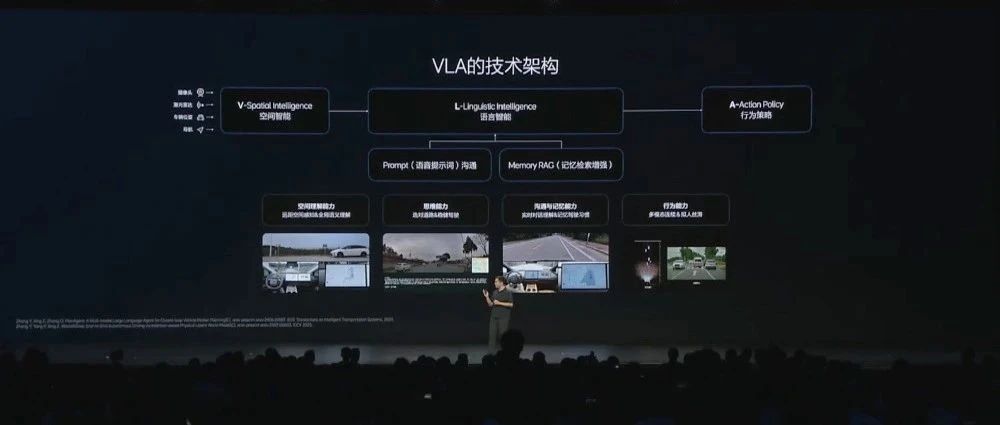
Core Viewpoint - The article discusses the launch of the Li Auto i8, which is the first model equipped with the VLA driver model, highlighting its advancements in understanding semantics, reasoning, and human-like driving intuition [2][7]. Summary by Sections VLA Driver Model Capabilities - The VLA model enhances four core capabilities: spatial understanding, reasoning ability, communication and memory, and behavioral ability [2]. - It can comprehend natural language commands during driving, set specific speeds based on past memories, and navigate complex road conditions while avoiding obstacles [5]. Industry Trends and Educational Initiatives - The VLA model represents a new milestone in the mass production of autonomous driving technology, prompting many professionals from traditional fields to seek transition into VLA-related roles [7]. - The article introduces a new course titled "End-to-End and VLA Autonomous Driving," designed to help individuals transition into this field by providing in-depth knowledge and practical skills [21][22]. Course Structure and Content - The course covers various topics, including end-to-end background knowledge, large language models, BEV perception, diffusion model theory, and reinforcement learning [12][26]. - It aims to build a comprehensive understanding of the research landscape in autonomous driving, focusing on both theoretical and practical applications [22][23]. Job Market and Salary Insights - The demand for VLA/VLM algorithm experts is high, with salary ranges for positions such as VLA model quantization deployment engineers and VLM algorithm engineers varying from 40K to 120K [15]. - The course is tailored for individuals looking to enhance their skills or transition into the autonomous driving sector, emphasizing the importance of mastering multiple technical domains [19][41].
闭环碰撞率爆降50%!DistillDrive:异构多模态蒸馏端到端新方案
自动驾驶之心· 2025-08-11 23:33
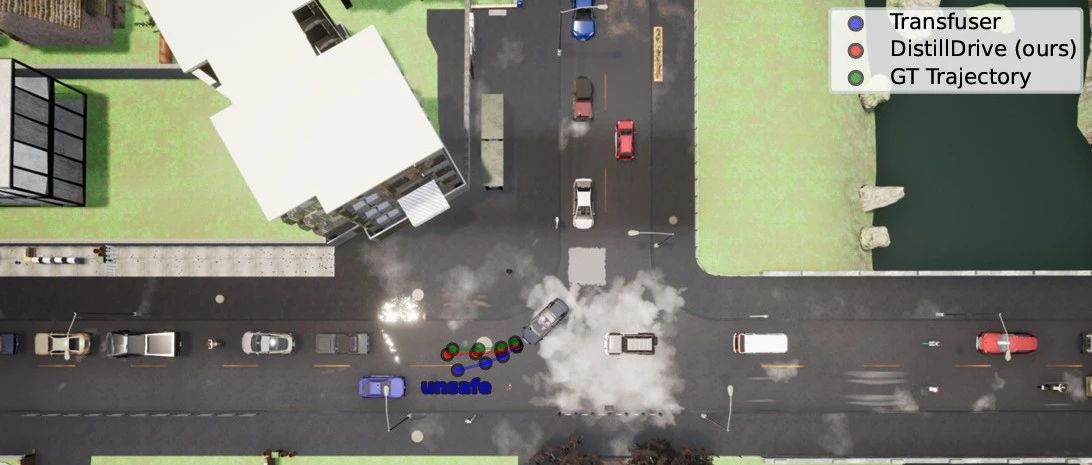
Core Insights - The article discusses the development of DistillDrive, an end-to-end autonomous driving model that significantly reduces collision rates by 50% and improves closed-loop performance by 3 percentage points compared to baseline models [2][7]. Group 1: Model Overview - DistillDrive utilizes a knowledge distillation framework to enhance multi-modal motion feature learning, addressing the limitations of existing models that overly focus on ego-vehicle status [2][6]. - The model incorporates a structured scene representation as a teacher model, leveraging diverse planning instances for multi-objective learning [2][6]. - Reinforcement learning is introduced to optimize the mapping from states to decisions, while generative modeling is used to construct planning-oriented instances [2][6]. Group 2: Experimental Validation - The model was validated on the nuScenes and NAVSIM datasets, demonstrating a 50% reduction in collision rates and a 3-point improvement in performance metrics [7][37]. - The nuScenes dataset consists of 1,000 driving scenes, while the NAVSIM dataset enhances perception capabilities with high-quality annotations and complex scenarios [33][36]. Group 3: Performance Metrics - DistillDrive outperformed existing models, achieving lower collision rates and reduced L2 error compared to SparseDrive, indicating the effectiveness of diversified imitation learning [37][38]. - The teacher model exhibited superior performance, confirming the effectiveness of reinforcement learning in optimizing state space [37][39]. Group 4: Future Directions - Future work aims to integrate world models with language models to further enhance planning performance and employ more effective reinforcement learning methods [54][55].
本来决定去具身,现在有点犹豫了。。。
自动驾驶之心· 2025-08-11 12:17
Core Insights - Embodied intelligence is a hot topic this year, transitioning from previous years' silence to last year's frenzy, and now gradually cooling down as the industry realizes that embodied robots are far from being productive [1] Group 1: Industry Trends - The demand for multi-sensor fusion and positioning in robotics is significant, with a focus on SLAM and ROS technologies [3] - Many robotics companies are rapidly developing and have secured considerable funding, indicating a promising future for the sector [3] - Traditional robotics remains the main product line, despite the excitement around embodied intelligence [3] Group 2: Community and Resources - The community has established a closed loop across various fields including industry, academia, and job seeking, aiming to create a valuable exchange platform [4][6] - The community offers access to over 40 technical routes and invites industry leaders for discussions, enhancing learning and networking opportunities [6][20] - Members can freely ask questions regarding job choices or research directions, receiving guidance from experienced professionals [83] Group 3: Educational Content - Comprehensive resources for beginners and advanced learners are available, including technical stacks and learning roadmaps for autonomous driving and robotics [13][16] - The community has compiled a list of notable domestic and international research labs and companies in the autonomous driving and robotics sectors, aiding members in their academic and career pursuits [27][29]
即将开课!端到端与VLA自动驾驶小班课来啦(扩散模型/VLA等)
自动驾驶之心· 2025-08-10 23:32
Core Viewpoint - End-to-End Autonomous Driving (E2E) is identified as the core algorithm for intelligent driving mass production, with significant advancements and competition emerging in the industry following the recognition of UniAD at CVPR [2][3] Group 1: E2E Autonomous Driving Overview - E2E systems directly model the relationship between sensor inputs and vehicle control information, avoiding error accumulation seen in traditional modular approaches [2] - The introduction of BEV perception has bridged gaps between modular methods, leading to a significant technological leap [2] - The emergence of various algorithms indicates that UniAD is not the ultimate solution for E2E, highlighting the rapid development in this field [2] Group 2: Learning Challenges in E2E - The fast-paced development in E2E technology has made previous educational resources inadequate, necessitating a comprehensive understanding of multiple domains such as multimodal large models, BEV perception, and reinforcement learning [3][4] - Beginners face challenges due to fragmented knowledge and the overwhelming volume of literature, often leading to abandonment before mastering the concepts [3] Group 3: Course Development - A new course titled "End-to-End and VLA Autonomous Driving" has been developed to address learning challenges, focusing on practical and theoretical integration [4][5][6] - The course aims to provide a structured framework for understanding E2E research and enhance research capabilities by categorizing papers and extracting innovative points [5] Group 4: Course Structure - The course includes five chapters covering topics from the introduction of E2E algorithms to practical applications involving RLHF fine-tuning [9][10][11][12][13] - Key areas of focus include the evolution of E2E paradigms, the significance of VLA in the current landscape, and practical implementations of diffusion models [11][12] Group 5: Expected Outcomes - Participants are expected to achieve a level equivalent to one year of experience as an E2E autonomous driving algorithm engineer, mastering various methodologies and key technologies [18] - The course aims to facilitate the application of learned concepts in real-world projects, enhancing employability in the autonomous driving sector [18]
自动驾驶二十年,这个自动驾驶黄埔军校一直在精打细磨...
自动驾驶之心· 2025-08-09 16:03
Core Viewpoint - The article emphasizes the ongoing evolution and critical phase of the autonomous driving industry, highlighting the transition from modular approaches to end-to-end/VLA methods, and the community's commitment to fostering knowledge and collaboration in this field [2][4]. Group 1: Industry Development - Since Google's initiation of autonomous driving technology research in 2009, the industry has progressed significantly, now entering a crucial phase of development [2]. - The community aims to integrate intelligent driving into daily transportation, reflecting a growing expectation for advancements in autonomous driving capabilities [2]. Group 2: Community Initiatives - The community has established a knowledge-sharing platform, offering resources across various domains such as industry insights, academic research, and job opportunities [2][4]. - Plans to enhance community engagement include monthly online discussions and roundtable interviews with industry and academic leaders [2]. Group 3: Educational Resources - The community has compiled over 40 technical routes to assist individuals at different levels, from beginners to those seeking advanced knowledge in autonomous driving [4][16]. - A comprehensive entry-level technical stack and roadmap have been developed for newcomers to the field [9]. Group 4: Job Opportunities and Networking - The community has established internal referral mechanisms with multiple autonomous driving companies, facilitating job placements for members [7][14]. - Continuous job sharing and networking opportunities are provided to create a complete ecosystem for autonomous driving professionals [14][80]. Group 5: Research and Technical Focus - The community has gathered extensive resources on various research areas, including 3D target detection, BEV perception, and multi-sensor fusion, to support practical applications in autonomous driving [16][30][32]. - Detailed summaries of cutting-edge topics such as end-to-end driving, world models, and visual language models (VLM) have been compiled to keep members informed about the latest advancements [34][40][42].
即将开课!彻底搞懂端到端与VLA全栈技术(一段式/二段式/VLA/扩散模型)
自动驾驶之心· 2025-08-05 23:32
Core Viewpoint - The article highlights the launch of the Li Auto i8, which features significant upgrades in its driver assistance capabilities, particularly through the integration of the VLA (Vision-Language-Action) model, marking a milestone in the mass production of autonomous driving technology [2][3]. Summary by Sections VLA Model Capabilities - The VLA model enhances understanding of semantics through multimodal input, improves reasoning with a thinking chain, and aligns more closely with human driving intuition. Its four core capabilities include spatial understanding, reasoning ability, communication and memory, and behavioral ability [3][6]. Industry Development - The VLA represents a new milestone in the mass production of autonomous driving, with many companies investing in human resources for research and development. The transition from E2E (End-to-End) and VLM (Vision-Language Model) to VLA indicates a progressive technological evolution [5][8]. Educational Initiatives - In response to the growing interest in transitioning to VLA-related roles, the industry has launched a specialized course titled "End-to-End and VLA Autonomous Driving Small Class," aimed at providing in-depth knowledge of the algorithms and technical development in this field [7][15]. Course Structure and Content - The course covers various aspects of end-to-end algorithms, including historical development, background knowledge, and specific methodologies such as two-stage and one-stage end-to-end approaches. It emphasizes practical applications and theoretical foundations [21][22][23][24]. Job Market Insights - The demand for VLA/VLM algorithm experts is high, with salary ranges for positions varying based on experience and educational background. For instance, positions for VLA/VLM algorithm engineers typically offer salaries between 35K to 70K for those with 3-5 years of experience [11]. Learning Outcomes - Participants in the course are expected to achieve a level of understanding equivalent to that of an autonomous driving algorithm engineer with one year of experience, covering key technologies such as BEV perception, multimodal models, and reinforcement learning [32].