长期护理保险制度

Search documents
服务民生保障走在前 看中国人寿长护险的“济宁实践”
Qi Lu Wan Bao· 2025-06-25 13:13
Core Insights - The aging population in China is increasing, leading to a rise in the number of disabled elderly individuals, which places a heavy burden on family caregiving and highlights the inadequacy of traditional social security models [1][3] - Long-term care insurance is essential for improving the quality of life for families and is a significant aspect of enhancing the social security system and promoting social harmony [1][3] Group 1: Long-term Care Insurance Implementation - The "Jining Long-term Care Insurance Main Urban Area Service Project" by China Life Insurance Shandong Branch has been recognized as a typical case in the "Good Financial Products - Elderly Care Finance" list [1] - China Life Insurance actively participates in the national long-term care insurance pilot program, focusing on serving local development and ensuring social stability [3] - As of May 2025, China Life Insurance Shandong Branch has covered over 7.3 million insured individuals through various long-term care insurance projects [3] Group 2: Jining's Long-term Care Insurance Model - Jining initiated its long-term care insurance pilot program in late 2018, expanding its scope and formalizing the implementation with the "Jining Long-term Care Insurance Implementation Measures" in 2023 [4] - China Life Insurance Jining Branch won the bid for the city's long-term care insurance project, covering 1.49 million insured residents [4] - The Jining Long-term Care Service Center was established with five functional areas to provide comprehensive services, officially opening on June 28, 2024 [4][6] Group 3: Service Quality and Community Engagement - The Jining Long-term Care Center employs a stratified management approach and has established mechanisms for policy communication and service evaluation [6] - The center collaborates with local health departments to form the Jining Long-term Care Association, enhancing community engagement and feedback collection [6] - As of May 2025, the center has processed over 18,900 registrations and conducted nearly 13,890 on-site disability assessments, significantly improving service accessibility for disabled individuals [7] Group 4: Impact on Families and Caregivers - The long-term care insurance policy has alleviated the burden on families, providing essential support for disabled individuals and enhancing their quality of life [8][9] - Families like that of Mr. Li have benefited from regular home visits by healthcare professionals, allowing caregivers to balance work and family responsibilities more effectively [8][9] - The insurance program aims to ensure dignified care for disabled elderly individuals while reducing the caregiving burden on their families [9]



山城上的守护者:中国大地保险重庆长护险为失能群体点亮希望
Cai Fu Zai Xian· 2025-06-11 04:50
Core Viewpoint - The aging population in China has heightened the focus on care for disabled individuals, leading to increased demands on the social security system. The long-term care insurance (LTCI) pilot program in Chongqing, initiated in 2019, aims to provide comprehensive support for disabled groups across urban workers in the city [1][19]. Group 1: Long-term Care Insurance Implementation - Chongqing has fully implemented LTCI coverage for urban workers since 2022, enhancing the social safety net for disabled individuals [1]. - The collaboration between Chongqing's medical insurance department and China Pacific Insurance has facilitated the inclusion of eligible elderly care institutions as designated care providers under the LTCI program [7][17]. - The LTCI program has already served over 6000 individuals in Chongqing, with a national coverage of nearly 15 million elderly people and approximately 900,000 enjoying benefits [19]. Group 2: Beneficiary Experiences - Huang Bing, a 54-year-old man with a rare vascular condition, successfully applied for LTCI and became one of the first beneficiaries, receiving home care support [3]. - Zhang Mingfu, an 85-year-old retired teacher, has benefited from home care services through LTCI, which has improved his health and well-being [12]. - The program has instilled hope in many suffering from illnesses, showcasing the collective efforts of society to provide care and support [14]. Group 3: Service Innovations and Management - The Liangping District Medical Insurance Bureau, in collaboration with China Pacific Insurance, has introduced a "one-person-one-file" management system for disabled individuals, ensuring streamlined services from application to assessment [15]. - The insurance company has actively participated in the full-process management of LTCI in four districts, serving over 700,000 people [17]. - The initiative aims to enhance the happiness and satisfaction of insured individuals while contributing to the high-quality development of medical insurance in Chongqing [19].

人口老龄化加速,银发经济如何破局?|聪明的钱
3 6 Ke· 2025-06-06 05:30
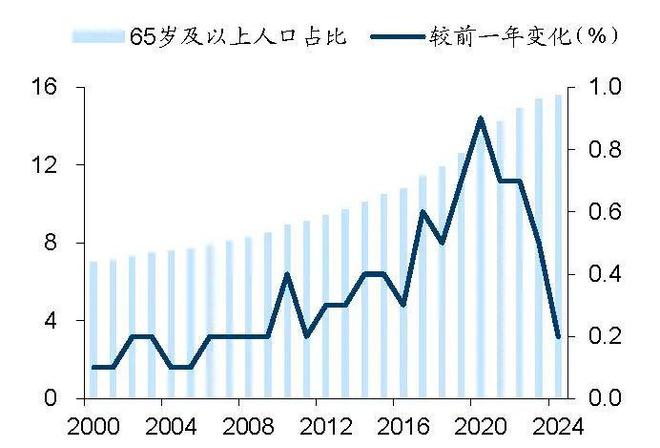
Group 1: Aging Population and Economic Impact - The aging population in China is accelerating, with the proportion of individuals aged 65 and above increasing by approximately 0.6 percentage points annually from 2020 to 2024, faster than previous periods [3][5] - By the end of 2023, the 50-60 age group will be a significant demographic, indicating a strong demand for services such as healthcare and tourism, marking the next 5-10 years as crucial for the development of the silver economy [5][14] - Japan's experience with aging has shown a significant shift in consumption patterns, with a decline in discretionary spending and an increase in essential spending such as food and healthcare [9][11] Group 2: Policy Recommendations and Economic Strategies - Japan's silver economy evolved through three key phases, with the implementation of the Long-Term Care Insurance Law in 2000 being pivotal in marketizing elderly care services and alleviating financial burdens [19][21] - China can learn from Japan by establishing a comprehensive long-term care insurance system that adjusts based on demographic and income differences, thereby easing the pressure on healthcare funding [23] - Enhancing re-employment opportunities for younger seniors can stimulate consumption, as older individuals tend to spend more of their income compared to younger counterparts [23]
30万护理员 VS 3500万失能老人,“人才荒”如何解
第一财经· 2025-05-18 13:50
Core Viewpoint - The long-term care insurance (LTCI) system in China has created a new workforce of 300,000 long-term care professionals over the past nine years, but there is a significant gap between the demand for care services and the supply of qualified personnel, which poses a challenge for the system's development [1][2][3]. Group 1: Current Situation and Demand - There are approximately 35 million disabled elderly individuals in China, representing 11.6% of the total elderly population, leading to a projected demand for around 10 million long-term care workers [2][3]. - Research indicates that the labor demand gap for socialized elderly care services could reach between 3.6 million and 5.8 million, with future needs potentially rising to 10.9 million to 14 million by mid-century [3]. Group 2: Workforce Challenges - The long-term care workforce is characterized by low educational levels, low pay, low professional recognition, high average age, high work intensity, and high turnover rates [4]. - The average age of long-term care workers in certain regions is around 50, with a significant portion of the workforce being over 50 years old, making recruitment of younger staff a major challenge [4][5]. Group 3: Policy and Training Initiatives - The National Healthcare Security Administration has initiated training programs for long-term care professionals, aiming to enhance talent cultivation and attract more individuals to the industry [2][7]. - The introduction of the long-term care worker certification system is expected to improve the professionalization and attractiveness of the industry, as well as enhance public recognition of the role [9][13]. Group 4: International Comparisons and Best Practices - Learning from Japan and South Korea, the development of the long-term care workforce is closely linked to the establishment and improvement of long-term care insurance systems, which include measures to attract and retain talent [7][12]. - Japan's experience shows that despite efforts to improve working conditions and recognition, high turnover rates persist, indicating the need for ongoing efforts to enhance the appeal of the profession [12]. Group 5: Future Outlook - The professionalization of long-term care workers is seen as a critical step towards addressing the industry's challenges, with a focus on creating a supportive environment that recognizes the value of care work [11][14]. - The ongoing development of training programs and certification standards is expected to facilitate a younger and more skilled workforce in the long-term care sector [13][14].

镇江长护险即将“扩围” 城乡同享,为更多家庭破解“照护难”
Zhen Jiang Ri Bao· 2025-05-14 23:25
Core Insights - The implementation of long-term care insurance (LTCI) in the city has significantly improved the quality of life for families with severely disabled members, providing essential services such as home bathing assistance and financial support for caregiving [1][2]. Group 1: Long-term Care Insurance Implementation - The LTCI system was officially launched on October 1, 2023, offering five types of services: institutional care, family caregiving subsidies, home care services, basic care services, and specialized care services, including bathing assistance [2]. - As of April 2024, 3,306 severely disabled individuals have benefited from the LTCI, with over 32 million yuan in financial relief provided to families and nearly 3.8 million yuan in caregiving subsidies distributed [2]. Group 2: Impact on Families - The case of a family with three severely disabled members illustrates the transformative effect of the LTCI, where professional caregivers provide home bathing services and monitor vital signs, significantly easing the burden on family caregivers [1]. - The family has received 80 specialized bathing services and 8,000 yuan in caregiving subsidies, highlighting the financial and emotional relief provided by the LTCI [1]. Group 3: Future Expansion - Starting July 1, 2024, the LTCI will expand to include urban and rural residents under basic medical insurance, ensuring equal benefits for all disabled individuals and further enhancing the quality of life for more families [3].
中国人寿长护险服务“解困”又“提质”
Qi Lu Wan Bao Wang· 2025-05-07 06:16
Core Viewpoint - China Life Insurance is actively participating in the national long-term care insurance system pilot, integrating insurance products with health management services to build an inclusive elderly care security system, providing valuable experience for the national long-term care insurance plan [1] Group 1: Long-term Care Insurance Impact - The long-term care insurance has covered over 44 million people nationwide, with 80 projects in operation, aimed at alleviating the pressure on families of disabled individuals [1] - Beneficiaries like Zhang, who cares for her elderly mother and mother-in-law, have reported significant improvements in their quality of life due to the services provided under the long-term care insurance [2] - The insurance has been crucial in reducing the burden on families, as evidenced by the case of Chen, who received personalized care plans and services after being assessed as severely disabled [3][5] Group 2: Service Accessibility and Innovations - China Life has implemented home visit services for signing contracts, addressing the challenges faced by caregivers who cannot leave their homes due to the health conditions of their loved ones [6] - The company is developing an online signing platform to further enhance convenience for families, allowing them to complete contracts without needing to visit service points [6] - The company is expanding its elderly care projects across 26 major cities, focusing on various models such as community and home-based care, while also launching travel products to meet diverse elderly care needs [7]
首批长期照护师爆火,银发产业风口带动千万就业
Di Yi Cai Jing· 2025-04-29 13:35
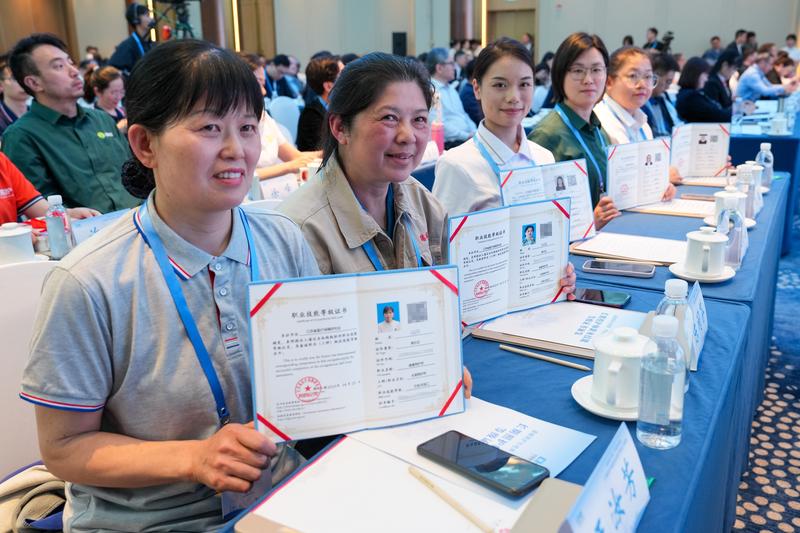
Group 1 - The current number of long-term care practitioners in China is over 300,000, and the demand for caregivers is expected to reach millions after the comprehensive rollout of long-term care insurance (LTCI) [1][10] - The first national examination for long-term care practitioners saw an unexpected registration of 909 candidates, significantly exceeding the initial expectation of 100 participants [1][4] - The LTCI has been included in government work reports for five consecutive years, with a renewed emphasis on accelerating its establishment in the latest report [3][10] Group 2 - The establishment of the long-term care practitioner certification is seen as a crucial step in addressing the shortage of qualified caregivers and enhancing the professionalization of the industry [7][11] - The long-term care practitioner certification is expected to improve service quality and attract more individuals to the profession, creating a complete career development ladder from junior to senior levels [8][11] - The industry is facing challenges in recruiting younger workers, and the introduction of the long-term care practitioner certification is anticipated to enhance the attractiveness of the profession [10][11] Group 3 - The first batch of long-term care practitioners received their certificates, with 81 candidates passing the examination, marking a significant milestone in the professionalization of the sector [1][4] - The long-term care insurance system is projected to create nearly 10 million jobs, highlighting the urgent need for skilled caregivers as the aging population increases [10][12] - The Jiangsu Provincial Medical Insurance Bureau is implementing policies to incentivize the hiring of certified long-term care practitioners, including salary adjustments and training subsidies [11][12]
2025年政府工作报告解读!加大政策工具调节力度,提升金融支持实体质效
证券时报· 2025-03-06 00:14
Financial Policy Insights - The government report emphasizes the implementation of a moderately loose monetary policy, highlighting the dual function of monetary policy tools in terms of both quantity and structure [3] - Structural monetary policy tools will receive more attention, with a focus on promoting healthy development in the real estate and stock markets, as well as supporting technology innovation, green development, and small and micro enterprises [3][4] - The central bank is expected to expand the operational limits of macro-prudential and financial stability tools, with a combined total likely to exceed 300 billion [4] Capital Market Outlook - The report maintains a GDP growth target of 5% and lowers the CPI growth target to 2%, indicating a heightened focus on price stability [6] - Key themes include boosting consumption and expanding domestic demand, with significant mentions of sectors like biomanufacturing, quantum technology, and AI, which are expected to drive future industrial development [6] - The report suggests that the capital market environment will continue to improve, driven by government support for the real estate and stock markets [6] Insurance Sector Developments - The report mentions "insurance" seven times, with a focus on accelerating the establishment of a long-term care insurance system and enhancing the third pillar of pension insurance [8] - The government aims to create a national framework for long-term care insurance, ensuring fairness and sustainability in the system [8] Investment and Financing Strategies - The report calls for deepening capital market reforms and promoting long-term capital inflows, which is seen as crucial for maintaining market stability [10] - There is an emphasis on optimizing the structure of listed companies and encouraging the return of leading firms in emerging industries to the A-share market [10] Venture Capital Support - The report highlights the need for enhanced policy support for venture capital and the growth of patient capital, indicating the government's commitment to fostering innovation [12] - The focus is on attracting long-term, low-cost funding into the venture capital sector to address the challenges of long cycles in technology innovation [13]

"保险"被提及7次!行业最新解读!
券商中国· 2025-03-05 15:12
Core Viewpoint - The insurance industry is positioned as a "social stabilizer" and "economic shock absorber" in the context of the 14th Five-Year Plan, with specific goals outlined in the 2025 Government Work Report, emphasizing the importance of various insurance sectors such as export credit insurance, basic medical insurance, third-pillar pension insurance, and long-term care insurance [1][14]. Group 1: Capital Market and Investment - The report emphasizes the need to "vigorously promote the entry of medium- and long-term funds into the market," which is expected to improve the supply and structure of capital market funds, fostering a virtuous cycle of capital preservation and appreciation, stable capital market operation, and high-quality development of the real economy [2][4]. - The Human Insurance Asset Management believes that the large scale, long cycle, and stable source of insurance funds can be leveraged for value investment, aiming for long-term stable returns [2]. - The report indicates that public funds are expected to increase their holdings of A-shares by at least 10% annually over the next three years, with state-owned insurance companies targeting 30% of new premiums for A-share investments starting in 2025 [2][3]. Group 2: Pension and Long-Term Care Insurance - The report calls for accelerating the development of the third-pillar pension insurance and the establishment of a long-term care insurance system, reflecting the urgent need for improved pension security amid increasing aging populations [6][7]. - Experts suggest that the insurance industry should innovate pension products suitable for the current low-interest-rate environment and ensure the preservation and appreciation of pension assets [7][8]. - Recommendations include establishing a national framework for long-term care insurance to ensure fairness and sustainability, as well as clarifying its functions and payment methods [8][9]. Group 3: Export Credit Insurance - The report highlights the need to expand the scale and coverage of export credit insurance, which is crucial for reducing risks in international trade and supporting the stability of foreign trade [11][12]. - Suggestions have been made to enhance the export credit insurance system in Hong Kong and Macau to better integrate these regions into the national economic framework [11]. Group 4: Financial Sector and Risk Management - The report mentions the importance of improving the financial sector's standards and systems, including technology finance, green finance, and inclusive finance, which are directly related to the insurance industry [13][15]. - The insurance sector is encouraged to play a significant role in risk reduction management and to support national strategic directions and industry development through its long-term capital advantages [13].