资产配置

Search documents
今天、明天、未来做什么……吴清:进一步深化投融资综合改革
Jing Ji Guan Cha Wang· 2025-10-27 13:44
Group 1 - The core viewpoint emphasizes the increasing importance of stability and balance in asset allocation, with a growing consensus among international investors to diversify investments [1] - In the first nine months of this year, international funds flowing into emerging markets exceeded $150 billion, highlighting the revaluation of Chinese assets such as A-shares and Hong Kong stocks [1] - The China Securities Regulatory Commission (CSRC) has launched the "Qualified Foreign Investor System Optimization Work Plan," which includes measures to enhance access management, improve investment operation efficiency, and expand investment scope [1] Group 2 - The CSRC will release several opinions aimed at strengthening the protection of small and medium investors in the capital market, introducing 23 practical measures to enhance investor protection [1] - The first batch of newly registered companies will be listed on the Sci-Tech Innovation Board, with reforms such as the introduction of professional institutional investors and pre-review processes already implemented [2] - The CSRC plans to deepen the reform of the Growth Enterprise Market, setting listing standards that better align with the characteristics of emerging industries and future technological enterprises [2] Group 3 - The CSRC acknowledges that the internal and external environment for capital market development will face complex changes over the next five years, presenting both challenges and opportunities [3] - The focus will be on risk prevention, strong regulation, and promoting high-quality development, with an emphasis on serving new productive forces and balancing development with safety [3] - The CSRC aims to enhance the inclusiveness, adaptability, attractiveness, and competitiveness of China's capital market to better serve economic and social development [3]
中证A500指数走出三连阳,A500ETF易方达(159361)获资金大幅加仓
Sou Hu Cai Jing· 2025-10-27 13:17
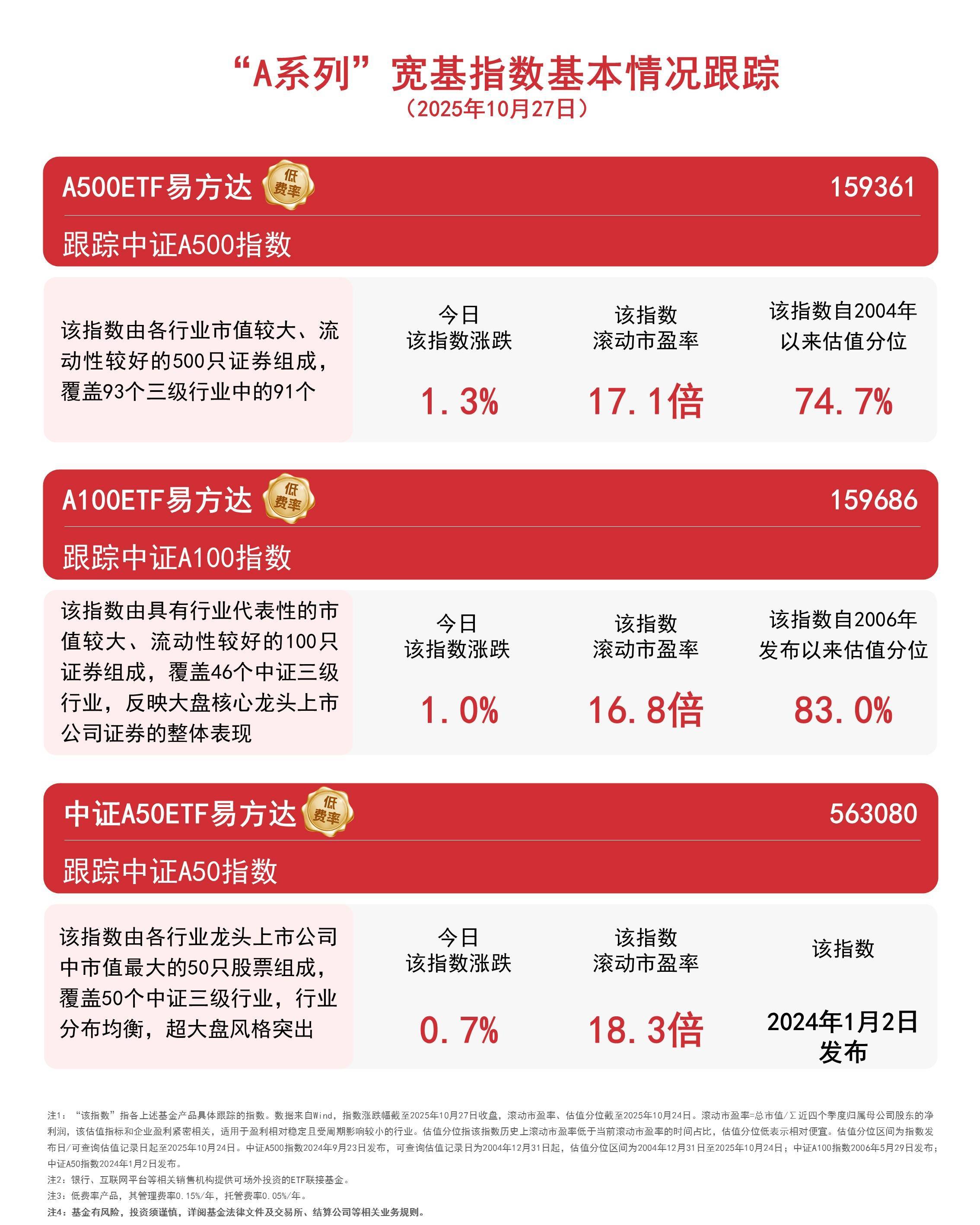
Group 1 - The core viewpoint of the article highlights the positive performance of Chinese stock indices, with the CSI A500 index rising by 1.3%, the CSI A100 index by 1.0%, and the CSI A50 index by 0.7%, all achieving three consecutive days of gains [1] - The trading volume of the E Fund A500 ETF (159361) reached nearly 4 billion yuan, marking a new high since March, with a net subscription of 378 million units [1] - The Chairman of the China Securities Regulatory Commission, Wu Qing, emphasized at the 2025 Financial Street Forum that stability and balance are becoming priority options for asset allocation amid risk repricing and asset rebalancing [1] Group 2 - Wu Qing noted that Chinese assets, including A-shares and Hong Kong stocks, are undergoing continuous revaluation, with their allocation value becoming more apparent [1]

证监会主席:将启动实施深化创业板改革,设置更契合上市标准
Nan Fang Du Shi Bao· 2025-10-27 12:15
Core Insights - The 2025 Financial Street Forum in Beijing focuses on "Innovation, Transformation, and Reshaping Global Financial Development" [2] - The Chairman of the China Securities Regulatory Commission (CSRC), Wu Qing, emphasizes the importance of risk repricing and asset rebalancing, advocating for diversified asset allocation among international investors [2] - The CSRC plans to deepen comprehensive reforms in investment and financing, enhancing the inclusiveness, adaptability, attractiveness, and competitiveness of China's capital markets [2] Group 1 - Wu Qing highlights the need for a multi-layered capital market system that is inclusive and covers a broader range of sectors, with plans to reform the Growth Enterprise Market to better serve emerging industries [2] - The CSRC aims to solidify the internal foundation for market stability and will introduce a refinancing framework at an appropriate time, encouraging listed companies to improve governance and increase dividends and buybacks [2] - The focus is on establishing a "long money, long investment" market ecosystem to stabilize the market [2] Group 2 - Wu Qing announces the optimization of the Qualified Foreign Institutional Investor (QFII) system to provide a more transparent, convenient, and efficient environment for foreign investors [3] - The CSRC aims to strengthen risk prevention and regulatory measures while enhancing the protection of investors' rights, with plans to release several opinions and practical measures for investor protection [3] - Beijing is positioned as a key window for capital market reform and opening up, with initiatives to attract quality industry institutions and long-term capital to enhance the capital market's capabilities [3]


Gold price today, Friday, October 31: Gold opens above $4,000 once again
Yahoo Finance· 2025-10-27 12:01
Gold (GC=F) futures opened at $4,038.20 per ounce on Friday, up 0.9% from Thursday’s close of $4,001.30. The price of gold eclipsed $4,000 on Thursday — after falling below that level on Monday — and has remained above $4,000 since. According to a new report from the World Gold Council, central bank gold buying rose 28% in the third quarter compared to the prior period. This activity drove higher gold prices through the end of September. Investors contributed to the price run-up with purchases of ETFs a ...
证监会主席吴清:中国资产配置价值显现
Zhong Guo Jing Ying Bao· 2025-10-27 11:21
Core Viewpoint - The Chairman of the China Securities Regulatory Commission, Wu Qing, emphasized that during the processes of risk repricing and asset rebalancing, stability and balance are increasingly becoming priority options for asset allocation [1] Group 1: Asset Revaluation - Chinese assets, including A-shares and Hong Kong stocks, are undergoing continuous revaluation, highlighting their increasing allocation value [1]
证监会主席吴清最新发声:将进一步深化投融资综合改革
Qi Huo Ri Bao Wang· 2025-10-27 11:15
Group 1 - The core viewpoint emphasizes the importance of stability and balance in asset allocation during the processes of risk repricing and asset rebalancing, highlighting the increasing value of Chinese assets such as A-shares and Hong Kong stocks [1] - The China Securities Regulatory Commission (CSRC) aims to deepen comprehensive reforms in investment and financing, enhancing the inclusiveness, adaptability, attractiveness, and competitiveness of the capital market to better serve economic and social development [1] - The CSRC plans to introduce a new registration system for the first batch of companies on the Sci-Tech Innovation Board, implementing measures such as the introduction of experienced institutional investors and pre-review processes [1] Group 2 - High-quality listed companies are deemed the cornerstone for the stable operation of the capital market, with the CSRC planning to launch a refinancing framework to support mergers and acquisitions, thereby promoting industry consolidation [2] - The CSRC has introduced the "Qualified Foreign Investor System Optimization Work Plan," which includes measures to optimize access management and improve investment efficiency for foreign investors [2] - The CSRC aims to enhance the protection of investors' rights and interests, focusing on risk prevention and regulatory enforcement against financial fraud and market manipulation [3] Group 3 - The CSRC will release several opinions to strengthen the protection of small and medium investors, introducing 23 practical measures to create a fair trading environment and improve service levels in the industry [3] - Beijing is positioned as a key window for capital market reform and opening up, with initiatives aimed at attracting high-quality industry institutions and long-term capital to enhance the capital market's capabilities [3]
2025“银华基金杯”新浪理财师大赛团队复赛答辩(北京场)成功举办
Xin Lang Cai Jing· 2025-10-27 11:02
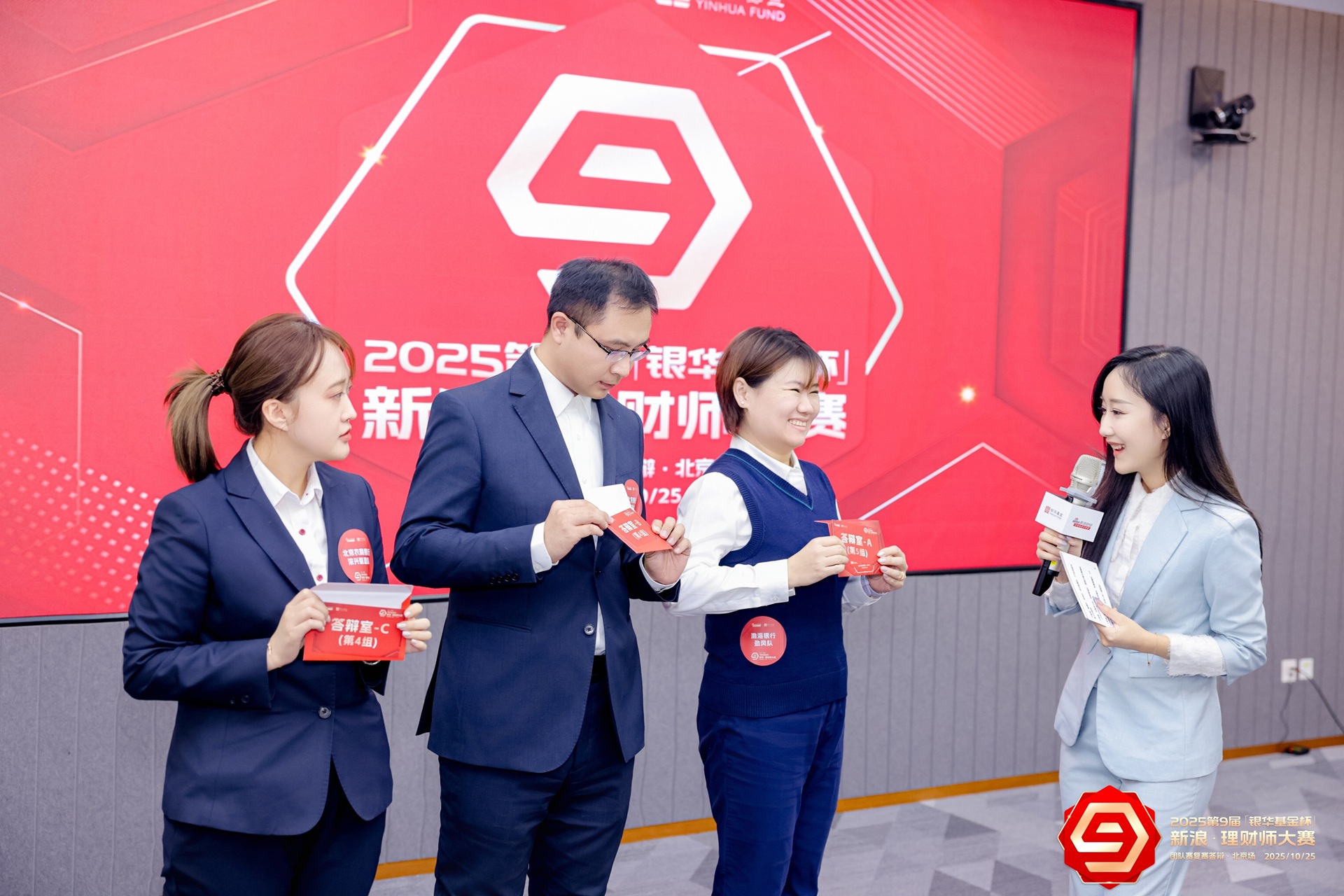
专题:2025第9届"银华基金杯"新浪·理财师大赛 10月25日,2025"银华基金杯"新浪理财师大赛团队复赛答辩(北京场)成功举办。全国15支优秀理财团队参与本场复赛,通过资产配置方案讲演展现专业能 力与职业素养。他们将与上海场、深圳场共计45支理财团队角逐产生全国总决赛的十强团队。答辩结束后,在现场理财分享会上,来自银华基金的两位投顾 和资产配置专家聚焦未来理财趋势、投资方向及理财师的能力提升与职业成长等热点话题进行分享。 银卡基金 體現华基食 sina新浪财经 坚持做 0 长期工 in TITLE 全牌照、综合型资产管 公司奖 2025第9届 [银华基金杯] N 新浪 · 理财师大赛 8月份是10次日 图银华基金 e 本次大赛由新浪财经和银华基金联合主办,今年已是第9届,已成为业内极具影响力、前沿性、权威性的专业赛事。 经过线上报名的踊跃参与和初赛答题的筛选,45 支实力突出的理财团队成功突围,顺利晋级本次理财大赛复赛阶段。45支理财团队,按照初赛成绩和团队 所在地域等综合评估,分成北京、上海、深圳三场复赛答辩。 复赛以团队答辩为核心考核形式,重点聚焦选手的资产配置专业能力、风险预判素养与方案落地可行性 ...
证监会主席吴清最新主题演讲!
Xin Hua Cai Jing· 2025-10-27 10:58
Group 1 - The core theme of the 2025 Financial Street Forum is "Innovation, Transformation, and Reshaping of Global Financial Development" [1] - The Chairman of the China Securities Regulatory Commission (CSRC), Wu Qing, emphasized the importance of stability and balance in asset allocation, highlighting the consensus among international investors to diversify investments [1] - The CSRC plans to deepen comprehensive reforms in investment and financing, enhancing the inclusiveness, adaptability, attractiveness, and competitiveness of China's capital markets to better serve economic and social development [1] Group 2 - Wu Qing announced the launch of the "Qualified Foreign Investor System Optimization Work Plan" to provide a more transparent, convenient, and efficient institutional environment for foreign investors [2] - The CSRC aims to strengthen risk prevention and regulatory measures, enhancing the protection of investors' rights and interests with the introduction of 23 practical measures [2] - Beijing is positioned as a key window for capital market reform and opening up, encouraging high-quality industry institutions and long-term capital to gather and develop in the capital [2]
证监会主席吴清重磅发声!将启动实施深化创业板改革
智通财经网· 2025-10-27 10:29
Group 1 - The 2025 Financial Street Forum Annual Conference opened in Beijing with the theme "Innovation, Transformation, and Reshaping Global Financial Development" [1] - The Chairman of the China Securities Regulatory Commission (CSRC), Wu Qing, announced the launch of reforms for the Growth Enterprise Market (GEM) to establish listing standards that better align with the characteristics of emerging industries and innovative enterprises [1] - Wu emphasized the importance of solidifying the internal foundation for market stability and indicated plans to introduce a refinancing framework to broaden support channels for mergers and acquisitions [1] Group 2 - Wu highlighted the need for a robust regulatory framework to enhance investor protection, announcing the release of several opinions aimed at strengthening the protection of small and medium investors in the capital market [2] - The newly launched "Qualified Foreign Investor System Optimization Work Plan" aims to improve access management, increase operational efficiency, and expand investment scope for foreign investors [2] - Beijing is positioned as a key window for capital market reform and opening up, with initiatives to attract high-quality industry institutions and long-term capital to enhance the capital market's capabilities [2]
证监会主席吴清:证监会将深化创业板改革,设置更契合新兴领域和未来产业的上市标准
FOFWEEKLY· 2025-10-27 10:28
Group 1 - The core viewpoint of the articles emphasizes the initiation of reforms in the ChiNext board to better align with the characteristics of emerging industries and innovative enterprises, providing more precise and inclusive financial services for new industries, new business formats, and new technologies [1] - The Chairman of the China Securities Regulatory Commission (CSRC) highlighted that during the process of risk repricing and asset rebalancing, stability and balance are becoming priority options for asset allocation, indicating a continuous revaluation of Chinese assets such as A-shares and H-shares, with their allocation value becoming more apparent [1] - The CSRC plans to further strengthen the internal foundation for market stability, with potential introduction of a refinancing framework and expanded support channels for mergers and acquisitions, while urging listed companies to improve governance and increase dividends, buybacks, and shareholdings to reward shareholders [1]