
合格境外投资者制度优化

Search documents
坚持做强主场 推进资本市场高水平双向开放
Shang Hai Zheng Quan Bao· 2026-01-26 19:16
Group 1 - The China Securities Regulatory Commission (CSRC) emphasizes the importance of strengthening the domestic market while promoting high-level two-way opening of the capital market, including optimizing the Qualified Foreign Institutional Investor (QFII) system and enhancing cross-border investment and financing convenience [1] - The capital market in China is becoming more open and inclusive, attracting foreign capital through improved access conditions and encouraging long-term investments, which enhances the market's vitality and resilience [1] - The launch of the first interconnectivity China Securities Index A500 ETF on the Singapore Exchange in January 2026 provides foreign investors with direct access to core A-share assets, while the expansion of the Shanghai-Hong Kong and Shenzhen-Hong Kong ETF interconnectivity has increased the number of products significantly [1] Group 2 - The CSRC has approved the QFII qualifications for Lianqiao Bank and Castle Advisors Singapore, and has expanded the range of futures options available for foreign investors, indicating a shift towards a more diversified asset allocation strategy [2] - Experts believe that the optimization of the QFII system and the expansion of specific futures products will significantly alter the structure and depth of foreign capital participation in the Chinese capital market, leading to a shift from a focus on stocks and bonds to a more comprehensive asset allocation including spot, futures, and derivatives [2] - The regulatory framework for overseas listings is being standardized and streamlined, which reduces compliance costs for companies and mitigates risks related to data security and technology outflow [3] Group 3 - The dual opening of the capital market is reshaping China's international role, with active participation in international financial governance and efforts to align rules in areas such as information disclosure and risk prevention [3] - The establishment of a transparent and unified process for overseas listing management is expected to eliminate policy uncertainties and provide a stable international regulatory environment for companies seeking to list abroad [3] - Cross-border regulatory cooperation is essential for maintaining market fairness and providing a predictable environment for overseas listings, focusing on audit regulation, law enforcement collaboration, and information sharing [3]
高效办成一件事,中行上海市分行持续助力合格境外投资者制度优化工作
Di Yi Cai Jing· 2026-01-15 06:01
Group 1 - The core viewpoint of the news is the significant improvement in the processing time for Qualified Foreign Investor (QFI) applications by the Bank of China Shanghai Branch, reducing it from approximately two months to just 15 days, showcasing the bank's execution capability and professionalism in cross-border operations [1][2] Group 2 - The "Optimization Work Plan for Qualified Foreign Investors" includes specific measures to enhance access management, facilitate investment operations, and strengthen service support [2] - The Bank of China Shanghai Branch has proactively identified global client needs and implemented the favorable measures from the plan, exemplified by their rapid response to a Hong Kong metal trader's interest in QFI channel investments [2] - A specialized service mechanism was established, involving a cross-departmental team to optimize the QFI process by reducing steps, materials, time, and movement, thereby enhancing financial service quality [2][3] Group 3 - Since the opening of commodity futures and options for investment in 2022, the Bank of China Shanghai Branch has assisted multiple global commodity traders in obtaining QFI qualifications and successfully engaging in investments in China [3] - The bank supports the construction of the Shanghai International Financial Center by leveraging its global competitive advantages to provide comprehensive financial services to well-known asset management institutions [3] - The Bank of China Shanghai Branch aims to continue enhancing its cross-border financial services and contribute to building a strong financial nation by creating a "golden bridge" for global investors to invest in China [3]

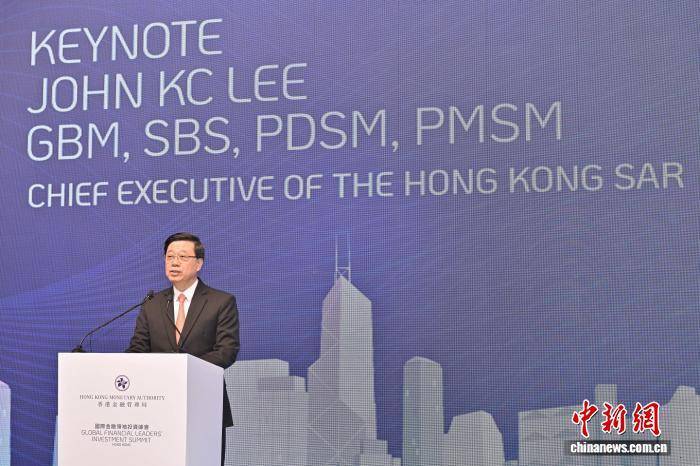
香港国际金融领袖投资峰会举行 彰显香港金融枢纽优势
Sou Hu Cai Jing· 2025-11-04 09:47
Core Insights - The Hong Kong International Financial Leaders Investment Summit is taking place from November 3 to 5, focusing on global financial market characteristics and investment opportunities and risks [1] Group 1: Hong Kong's Financial Market - Hong Kong's unique "One Country, Two Systems" advantage allows it to connect global opportunities while maintaining close ties with mainland China, providing unmatched market access [3] - Despite uncertain global economic prospects, Hong Kong's financial market remains vibrant, with the Hang Seng Index up over 30% this year and average daily trading volume exceeding $32 billion, nearly doubling from last year [3] - The China Securities Regulatory Commission is enhancing the stability, transparency, and predictability of policies to provide a more efficient environment for foreign investors [3] Group 2: Financial Innovations and Trends - The People's Bank of China supports the Hong Kong Monetary Authority in launching a trade financing liquidity arrangement with a total scale of 100 billion RMB, aimed at providing stable, low-cost RMB funding for commercial banks in Hong Kong [4] - Financial leaders are encouraged to closely monitor market changes and plan ahead, emphasizing the importance of collective wisdom in navigating unknown territories [4] - Representatives from major financial institutions like HSBC, Goldman Sachs, Morgan Stanley, and UBS discussed investment opportunities and the impact of emerging financial technologies on the industry [4] Group 3: Emerging Industries - Morgan Stanley's CEO highlighted that sectors such as artificial intelligence, robotics, electric vehicles, and biotechnology are producing companies that are not only champions in China but also global winners, many of which are raising capital in Hong Kong [5]

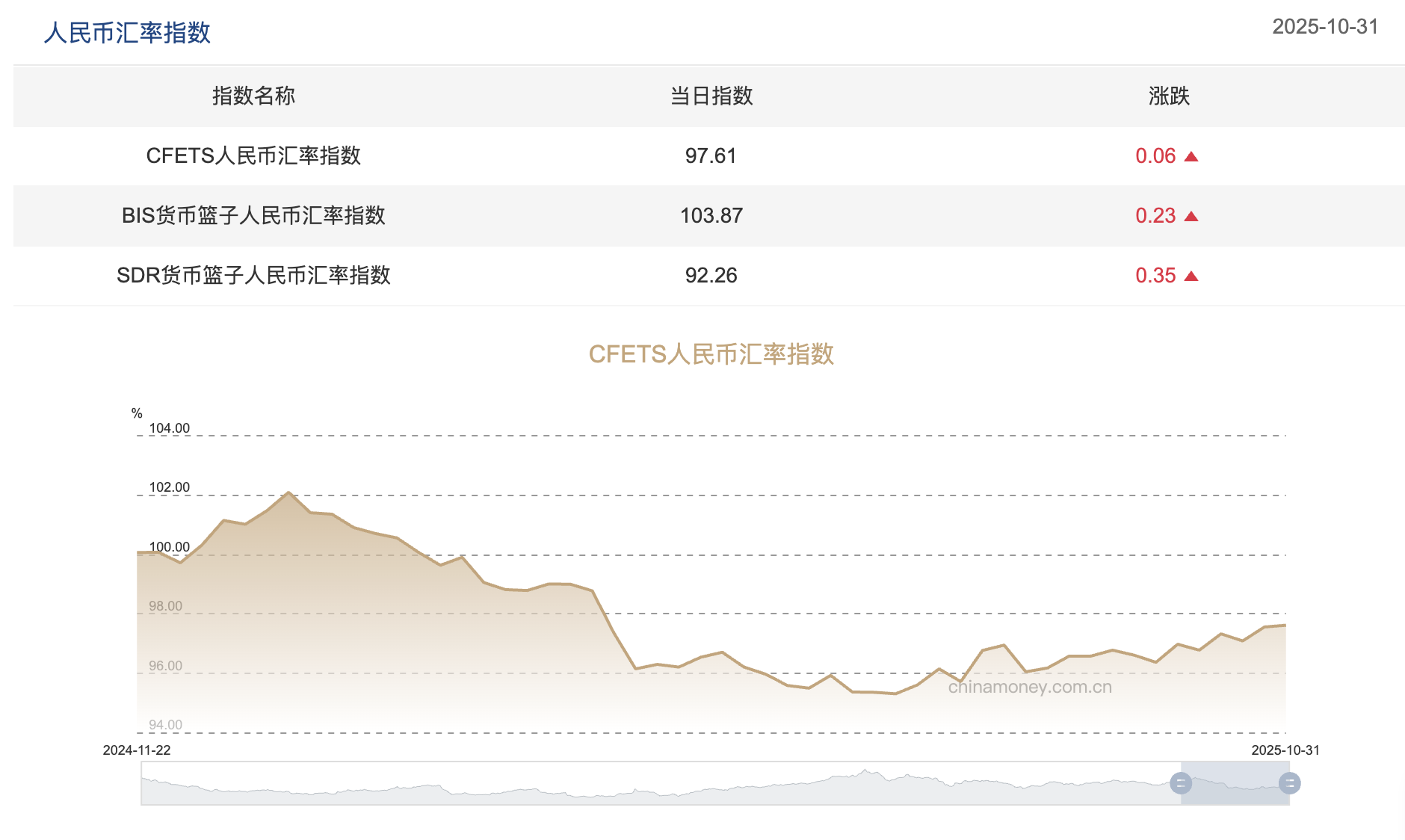
三大人民币汇率指数全线上行,人民币逐渐走出“独立行情”
Xin Hua Cai Jing· 2025-11-03 03:04
Core Viewpoint - The recent data from the China Foreign Exchange Trading Center indicates a significant appreciation of the Renminbi (RMB) against various currency indices, marking a trend of independent appreciation that is not solely reliant on the depreciation of the US dollar [1][5][6]. Currency Indices Summary - The CFETS RMB Index reached 97.61, up 0.06 week-on-week, the highest since April 2025 [1][2]. - The BIS currency basket RMB Index reported 103.87, increasing by 0.23 week-on-week, also a peak since April 2025 [1][2]. - The SDR currency basket RMB Index stood at 92.26, with a week-on-week rise of 0.35, marking a new high since April 2025 [1][2]. RMB Exchange Rate Trends - The RMB exchange rate exhibited a mixed trend, with a slight increase of 0.04% for onshore RMB and 0.05% for offshore RMB over the week [5]. - The onshore RMB reached a peak of 7.0955 against the US dollar, the highest since November 2024 [5]. - The RMB's appreciation trend is becoming clearer, with a year-to-date depreciation of the US dollar by 8% and a 2.9% appreciation of the offshore RMB against the US dollar [5][6]. Catalysts for RMB Appreciation - Key factors driving the recent RMB appreciation include positive developments in US-China trade negotiations, narrowing interest rate differentials, and stronger-than-expected export performance [6]. - The effective RMB exchange rate is seen as returning to a "reasonable" range, supported by low inflation and strong nominal exchange rate competitiveness [6]. Future Outlook - Analysts predict that the RMB may continue to appreciate, with potential targets for the USD/RMB exchange rate at around 7.0 under baseline scenarios and 6.7 in optimistic scenarios [6][8]. - The People's Bank of China is expected to maintain a flexible approach to exchange rate policies, which could further support the RMB's strength [8].
利好来了!合格境外投资者制度优化 外资投资A股更便利
Mei Ri Jing Ji Xin Wen· 2025-10-29 15:28
Core Viewpoint - The China Securities Regulatory Commission (CSRC) has issued a comprehensive reform plan to optimize the Qualified Foreign Institutional Investor (QFII) system, aiming to enhance the operational convenience and risk hedging capabilities of foreign asset management institutions in the Chinese market, thereby promoting the institutional opening of the capital market [1] Group 1: Admission Management - The reform plan includes optimizing the admission process for foreign investors, allowing domestic institutions to provide investment advisory services to foreign capital, and expanding ETF options for investment [1][5] - The new rules will unify short-term trading regulations for foreign public funds, granting them the same treatment as domestic public funds, which will facilitate investment by large foreign asset management institutions [2][3] Group 2: Short-term Trading Rules - The plan clarifies that foreign public funds will be treated equally to domestic funds regarding short-term trading, addressing previous issues where foreign institutions faced combined holding calculations that restricted their trading flexibility [2] - The previous requirement for foreign institutions to maintain a holding below 4.9% to avoid compliance risks will be alleviated, allowing for more strategic investment decisions [2][3] Group 3: Risk Management Tools - The reform will expand the range of risk management tools available to qualified foreign investors, including the use of ETF options and a gradual opening of more commodity futures options [5][6] - This expansion will provide asset managers with more direct and efficient risk management tools, enhancing their ability to hedge against market volatility [5][6] Group 4: Current Status - It is important to note that the policy is still in the stage of regulatory expression and rule revision, and has not yet taken immediate effect, although the direction of the reforms is clear [4]
“十五五”规划建议全文发布 资本市场五年发展重点明确
Di Yi Cai Jing· 2025-10-28 10:59
Core Points - The "15th Five-Year Plan" emphasizes the establishment of a well-functioning capital market, focusing on enhancing inclusivity and adaptability of market systems, and promoting direct financing through equity and bonds [1] - The China Securities Regulatory Commission (CSRC) outlined four key areas for implementing the capital market reforms during the 2025 Financial Street Forum [1][3] Group 1: Capital Market Development - The plan aims to deepen sector reforms and enhance the inclusivity and coverage of the multi-tiered market system, with specific initiatives for the Sci-Tech Innovation Board and the Growth Enterprise Market [1][2] - The CSRC will implement reforms in the Growth Enterprise Market to better align listing standards with the characteristics of emerging industries and innovative enterprises [2] Group 2: Market Stability - High-quality listed companies are identified as the cornerstone for stable market operations, with plans to introduce a refinancing framework and broaden support channels for mergers and acquisitions [3] - The CSRC will encourage listed companies to improve governance and increase shareholder returns through dividends and buybacks, thereby solidifying their value foundation [3] Group 3: Opening Up the Market - The introduction of the optimized Qualified Foreign Institutional Investor (QFII) scheme aims to enhance investment efficiency and expand investment scope, with measures already implemented for efficient approval and access [4] - The CSRC plans to improve the mutual market access mechanisms and deepen cooperation between mainland and Hong Kong markets [4] Group 4: Risk Management and Investor Protection - The CSRC has released guidelines to strengthen the protection of small and medium investors, focusing on enhancing fairness in trading and improving service levels of industry institutions [5] - The first batch of newly registered companies on the Sci-Tech Innovation Board was listed, marking a significant step in the implementation of the "15th Five-Year Plan" [5]
2025金融街论坛年会,透露这些重要政策信号
Ren Min Wang· 2025-10-28 09:32
Core Viewpoint - The 2025 Financial Street Forum in Beijing highlighted key policy signals from the People's Bank of China, the Financial Regulatory Administration, the China Securities Regulatory Commission, and the State Administration of Foreign Exchange, focusing on supportive monetary policies, financial reforms, and enhanced investor protection measures [1]. Group 1: People's Bank of China - The People's Bank of China will maintain a supportive monetary policy stance, implementing moderately loose monetary policies and providing liquidity arrangements across short, medium, and long terms [2]. - The central bank plans to resume public market operations for government bonds after a pause due to market imbalances, indicating a positive outlook for the bond market [3]. - The bank will continue to combat domestic virtual currency operations and speculation, reinforcing existing policies to maintain economic and financial order [4]. - A one-time personal credit relief policy is under consideration to help individuals restore credit records, with plans to exclude certain default information from credit reports starting next year [5]. Group 2: Financial Regulatory Administration - The Financial Regulatory Administration aims to enhance economic and financial adaptability by promoting a new financial service model that balances direct and indirect financing, and aligns financing terms with industry development [6]. - The administration is committed to deepening reforms and expanding openness in the financial sector, focusing on structural reforms to improve institutional layout and enhance international influence [7]. - Efforts will be made to ensure financial development and security are well-coordinated, including managing risks and restructuring small financial institutions [8]. Group 3: China Securities Regulatory Commission - The China Securities Regulatory Commission is advancing sector reforms, including the introduction of new companies to the Sci-Tech Innovation Board [9][10]. - The commission plans to introduce a refinancing framework to support mergers and acquisitions, encouraging companies to enhance governance and return value to shareholders [11]. - A new scheme to optimize the Qualified Foreign Institutional Investor system has been launched to improve transparency and efficiency for foreign investors [12]. - Measures to strengthen the protection of small and medium investors have been announced, focusing on enhancing fairness in trading and improving service levels [13]. Group 4: State Administration of Foreign Exchange - The State Administration of Foreign Exchange is set to introduce nine new policies aimed at facilitating trade and optimizing foreign exchange management for new business models [14]. - Recent policies have been launched to support cross-border investment and financing, including integrated foreign exchange management reforms in pilot free trade zones [15]. - The administration is enhancing foreign exchange regulation and risk prevention capabilities through advanced technologies like AI and big data [16].

证监会最新发布,事关中小投资者保护、境外投资者制度优化
Sou Hu Cai Jing· 2025-10-28 08:25
Core Viewpoint - The China Securities Regulatory Commission (CSRC) emphasizes the importance of enhancing investor protection and expanding high-level institutional openness in the capital market during the 2025 Financial Street Forum [1] Group 1: Investor Protection Measures - The CSRC has introduced 23 specific measures across eight areas to strengthen the institutional foundation for protecting small and medium-sized investors [2] - The measures include strict enforcement against market misconduct, such as insider trading, market manipulation, and the dissemination of false information through social media [4] - The CSRC encourages the implementation of "advance compensation" commitments by issuers to ensure timely and effective compensation for investors [5] Group 2: Optimizing Foreign Investor Access - The "Qualified Foreign Institutional Investor (QFII)" system is recognized as a key channel for foreign investment in China, and the CSRC aims to enhance its attractiveness [6] - The newly released "Work Plan" outlines two main areas for optimizing access management: improving pre-investment access processes and implementing classified management for access [7] - The CSRC, along with the People's Bank of China and the State Administration of Foreign Exchange, is working to streamline the qualification approval and account opening processes for foreign investors [10][12]
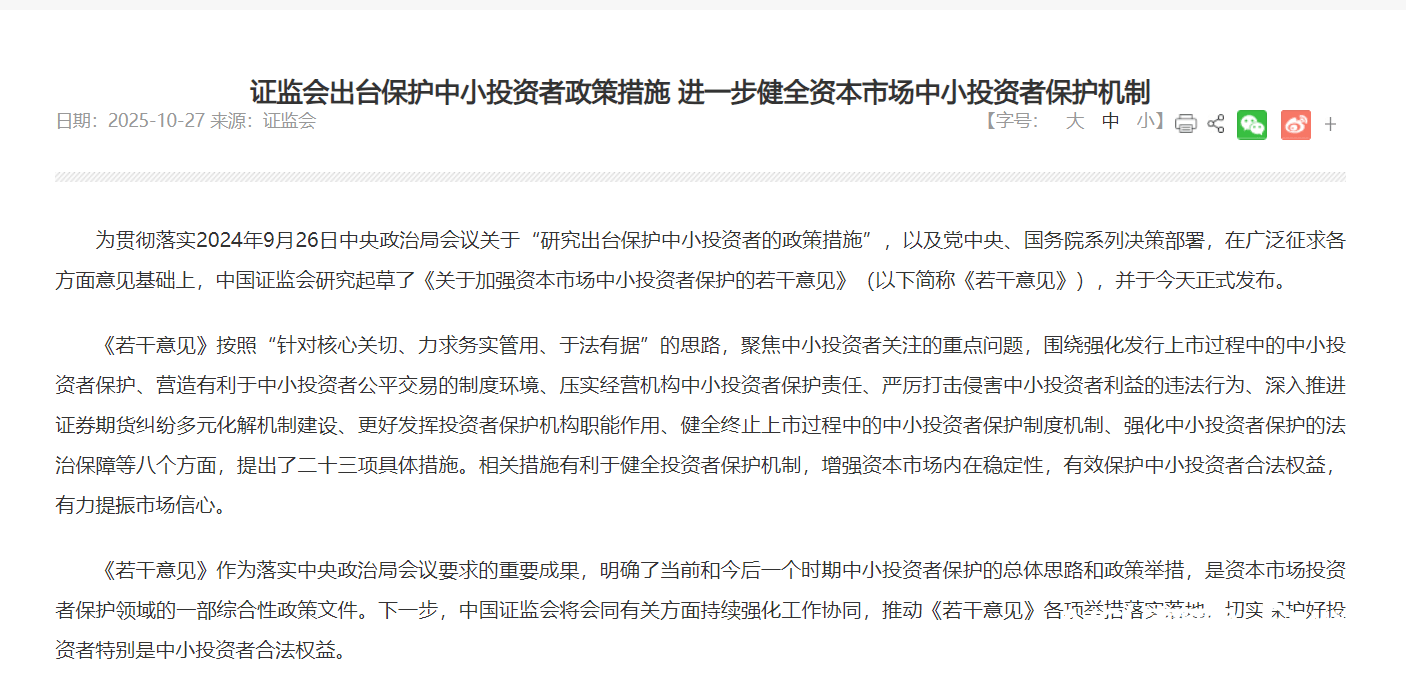
《合格境外投资者制度优化工作方案》正式推出
Jing Ji Guan Cha Wang· 2025-10-28 06:29
Core Viewpoint - The China Securities Regulatory Commission (CSRC) has officially launched the "Qualified Foreign Institutional Investor (QFII) System Optimization Work Plan" aimed at providing a more transparent, convenient, and efficient institutional environment for various foreign investors [1] Group 1: Policy Changes - The new plan includes optimizing access management, improving investment operation efficiency, and expanding the scope of investment [1] - Two key measures that were implemented immediately include efficient handling of qualification approval and account opening as a single process, and the establishment of a green channel for the access of allocation-type foreign capital [1]
证监会“一日双发”重磅文件 聚焦中小投资者全链条保护和合格境外投资者制度优化
Zhong Guo Jing Ying Bao· 2025-10-28 04:35
Core Viewpoint - The China Securities Regulatory Commission (CSRC) has introduced two documents aimed at enhancing the protection of small and medium-sized investors and optimizing the Qualified Foreign Institutional Investor (QFII) system, thereby boosting market confidence and international participation in China's financial markets [1][6]. Group 1: Protection of Small and Medium-sized Investors - The "Opinions" document outlines 23 specific measures focusing on eight key areas to strengthen the protection of small and medium-sized investors, including enhancing the issuance and listing process, ensuring fair trading environments, and increasing legal protections [2][3]. - The measures include optimizing the new stock issuance pricing mechanism, improving the quality of prospectus disclosures, and encouraging companies to adopt stable dividend policies [3][4]. - The CSRC aims to enhance investor education and ensure that financial institutions adequately inform investors about risks associated with high-risk products [4][5]. Group 2: QFII System Optimization - The "Work Plan" aims to improve the QFII system by streamlining the approval process, expanding investment scope, and clarifying policy expectations to create a more transparent and efficient environment for foreign investors [6][7]. - As of now, there are 913 qualified foreign investors in China's capital market, with total domestic asset scale exceeding 1 trillion RMB [6]. - The plan includes allowing the use of ETF options for risk management and providing equal treatment for foreign public funds in short-term trading [7][8]. Group 3: Implementation and Future Goals - The CSRC plans to implement these measures within two years, aiming to enhance the attractiveness of the QFII system and promote a balanced development of onshore and offshore investment channels [6][7]. - The optimization of the QFII system is expected to significantly increase foreign participation in China's capital markets, contributing to the overall internationalization and marketization of the financial sector [8][9].