两山理念

Search documents
希望把好经验引入非洲(我眼中的中国)
Ren Min Ri Bao· 2025-09-29 22:30
Core Insights - The article highlights China's successful implementation of the "Green Mountains and Clear Water are Golden Mountains and Silver Mountains" philosophy, which aligns with sustainable development goals and offers valuable lessons for Africa [2][3]. Group 1: Environmental Management Practices - China has achieved significant results in environmental management, particularly through innovative practices like the "River Chief System," where local leaders are responsible for water quality and environmental protection [2]. - The article emphasizes the importance of adapting China's environmental governance strategies to the unique challenges faced by African nations, such as desertification and water scarcity [3]. Group 2: Global Water Crisis - Approximately 2 billion people globally lack access to safe drinking water, and 3.6 billion experience water shortages for at least one month each year, with Africa being the most affected region [2]. - The article suggests that effective environmental governance can transform ecological resources into economic advantages, helping millions escape poverty and achieve sustainable development [3]. Group 3: Economic Impact of Ecological Initiatives - Ecotourism in China is on the rise, with an expected 2.761 billion visitors in 2024, contributing hundreds of billions of dollars to economic growth and creating numerous job opportunities [3]. - The article argues that the success of China's ecological initiatives can serve as a model for other developing countries, demonstrating that environmental protection can coexist with economic development [3].
我国水安全保障能力全面提升 “十四五”以来新开工重大水利工程172项
Jing Ji Ri Bao· 2025-09-29 22:17
Core Insights - The "14th Five-Year Plan" has led to significant advancements in China's water conservancy sector, with investments exceeding 1 trillion yuan in 2022, marking a historical record and a projected total investment of over 5.4 trillion yuan during the plan period, which is 1.6 times that of the previous five years [1] Investment and Infrastructure Development - The number of major water conservancy projects initiated during the "14th Five-Year Plan" reached 172, optimizing the layout, structure, function, and system integration of water infrastructure [1] - By the end of last year, China had constructed 95,000 reservoirs, 200 large and medium-sized water diversion projects, 6,924 large and medium-sized irrigation areas, and 318,000 kilometers of embankments, creating the world's largest and most comprehensive water conservancy infrastructure system [1] Flood Control and Disaster Management - The water and drought disaster prevention system has been continuously improved, successfully managing floods on 3,981 rivers that exceeded warning levels, reducing the economic loss from flood disasters as a percentage of GDP from 0.28% during the "13th Five-Year Plan" to 0.18% [1] Agricultural Support and Food Security - The water conservancy sector has reinforced water security for food production, focusing on major grain-producing areas with the construction of 30 significant water diversion and key water source projects, along with the modernization of 1,959 large and medium-sized irrigation areas, adding over 20 million acres of irrigated land [2] Ecological Restoration and Environmental Protection - The "Mother River Revival Action" has been implemented, restoring several rivers that had been dry for decades, achieving a compliance rate of 98.6% for ecological flow in key rivers and lakes [2] - The normalization of the "Four Chaos" rectification in rivers and lakes has addressed 140,000 issues related to illegal occupation, mining, dumping, and construction, effectively maintaining the flood storage capacity of rivers and lakes [2] Economic Impact and Community Benefits - The implementation of 122 "Happy Rivers and Lakes" construction projects has fostered green industrial chains and ecological agriculture, enhancing the quality of life for communities, as evidenced by the 18.7% year-on-year revenue growth in the Huxi River Basin, which exceeded 13 billion yuan last year [3]
一线调研:商业银行如何破解绿色金融三大难题?
Xin Lang Cai Jing· 2025-09-29 10:17
Core Viewpoint - The transformation of Longjiang River in Fuzhou City, from an ecologically challenged state to a clean and green environment, is significantly attributed to the continuous support of green finance, particularly through the provision of preferential loans by Industrial Bank [1][2] Group 1: Green Finance Development - Since 2022, Industrial Bank has provided a total of 217 million yuan in green preferential loans for the comprehensive governance project of Longjiang River, significantly reducing financing costs and ensuring project progress [1] - As of June 2025, the balance of green loans at Industrial Bank reached 1,075.6 billion yuan, maintaining the leading position among joint-stock banks, with projects supported achieving annual CO2 emissions reduction of 27.86 million tons and annual water savings of 18.36 million tons [2] - Industrial Bank is the only domestic bank to receive the highest ESG rating for six consecutive years from MSCI, reflecting its strong commitment to green finance [2] Group 2: Challenges in Green Finance - The transformation of ecological value into economic value remains a challenge, particularly in terms of valuation and financial recognition [3] - There is a need for effective mechanisms to track funds and assess benefits to ensure that green funds are used appropriately and to incentivize borrowers to maintain low-carbon practices [6][8] - Industrial Bank has actively explored solutions to these challenges, including the establishment of risk-sharing mechanisms in collaboration with government and enterprises [8] Group 3: Innovative Loan Models - Industrial Bank has pioneered various types of loans linked to ecological performance, such as a 270 million yuan loan for the ecological protection project at Xiazhu Lake, which incorporates future carbon credit sales as a repayment source [5][6] - The bank has developed a loan mechanism where interest rates are tied to the ecological performance of projects, providing incentives for borrowers to achieve green performance targets [7] - The bank emphasizes that it will not lower risk standards for projects labeled as "green," ensuring that all projects meet stringent risk control requirements [9]

广西加大秋冬季大气污染防治攻坚力度
Guang Xi Ri Bao· 2025-09-28 00:05
Core Viewpoint - The leadership in Guangxi Zhuang Autonomous Region emphasizes the importance of enhancing air pollution prevention efforts, particularly during the autumn and winter seasons, which are critical for addressing pollution issues [1][2]. Group 1: Air Pollution Prevention Efforts - The leaders acknowledged the achievements in air pollution prevention and stressed the need for practical actions and innovative approaches to maintain a good ecological environment [1]. - There is a call for comprehensive measures to tackle air pollution, including monitoring, pollution forecasting, and response strategies for severe pollution events [1]. Group 2: Key Strategies for Pollution Control - Increased efforts are required for pollution control during the autumn and winter seasons, focusing on end-of-pipe management and source control [2]. - The strategy includes addressing specific pollution sources such as straw burning, firework emissions, and mobile source pollution [2]. - The leaders highlighted the need for structural adjustments in industry, energy, and transportation to reduce emissions, including the elimination of high-emission vehicles and the promotion of ultra-low emission upgrades in key industries [2]. Group 3: Accountability and Monitoring - There is an emphasis on strengthening environmental supervision and implementing automatic and smart monitoring systems to combat illegal emissions [2]. - The commitment to meet national air quality targets is reinforced, aiming to enhance the green development foundation of Guangxi [2].
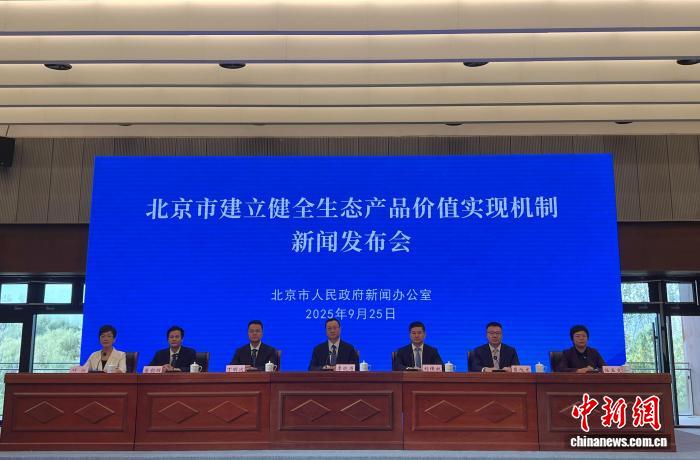
北京创新构建生态产品价值核算体系 凝聚绿色发展合力
Zhong Guo Xin Wen Wang· 2025-09-25 18:31
Core Viewpoint - Beijing is innovating in establishing a mechanism for realizing the value of ecological products, focusing on green development and ecological conservation in areas like Yanqing [1][3]. Policy and Legal Framework - Beijing has introduced a series of laws and policies to support ecological protection and green development, including the "Beijing Ecological Conservation and Green Development Regulations" which outlines the functions and goals of ecological conservation areas [3]. - The implementation of the "Implementation Plan for Establishing and Improving the Mechanism for Realizing the Value of Ecological Products" aims to create a comprehensive accounting system for ecological product value [3]. Ecological Compensation Mechanism - A comprehensive ecological compensation mechanism has been established to financially support ecological conservation and green development in ecological conservation areas [4]. - Cross-regional ecological compensation mechanisms have been set up to protect important water sources, incentivizing various stakeholders to engage in ecological protection [4]. Measurement and Valuation of Ecological Products - Beijing has developed a local standard for the accounting of Gross Ecosystem Product (GEP) and has completed provincial-level accounting, addressing subjective evaluations of ecological quality [4][5]. - The introduction of the GEP-R accounting scheme allows for a clearer representation of the benefits provided by ecosystems to human survival [5]. Market and Project Initiatives - The first specific regional ecological product value (VEP) accounting standard has been released, facilitating the measurement and monetization of regional ecological product value [5]. - The "Xiwangping Village" project in Beijing serves as a model for realizing ecological product value through community involvement and sustainable practices [5]. Innovative Compensation Mechanisms - Beijing has pioneered a compensation mechanism that exchanges GEP-R for GDP, allowing districts to purchase GEP-R values from those exceeding their annual growth targets [6]. - An ecological product certification system has been established to enhance the value of ecological products, ensuring quality and safety throughout the production process [6]. Ecological Restoration and Tourism Development - Efforts are being made to restore former mining sites into ecological tourism destinations, promoting rural tourism and generating significant income for local communities [7]. - The income disparity between urban and rural residents is decreasing, with rural residents' disposable income projected to reach nearly 40,000 yuan by 2024 [7].

陈刚韦韬调研大气污染防治攻坚工作
Guang Xi Ri Bao· 2025-09-25 01:35
Core Viewpoint - The article emphasizes the importance of enhancing air pollution prevention efforts during the autumn and winter seasons, which are critical periods for pollution control, and highlights the commitment to achieving better ecological outcomes in Guangxi [1][2]. Group 1: Key Actions and Strategies - The government plans to intensify efforts in air pollution prevention during the autumn and winter, focusing on end-of-pipe control and source management [2]. - There will be a comprehensive approach to address pollution from key industries, including the management of straw burning and firework emissions, as well as mobile source pollution [2]. - The strategy includes optimizing industrial, energy, and transportation structures, promoting ultra-low emissions in key industries, and phasing out high-emission vehicles [2]. Group 2: Monitoring and Accountability - The government aims to strengthen environmental supervision and implement automatic and smart monitoring systems to combat illegal emissions [2]. - There is a commitment to meet national air quality targets and enhance the green development foundation in Guangxi [2].
张永生:“两山”理念重新定义可持续发展
Zhong Guo Jing Ying Bao· 2025-09-24 07:08
Core Viewpoint - The "Two Mountains" concept emphasizes the integration of environmental protection and economic development, proposing that they are mutually reinforcing rather than conflicting, which marks a significant shift in development philosophy [2][4]. Group 1: Concept and Philosophy - The "Two Mountains" concept is a distinctive element of Xi Jinping's ecological civilization thought, advocating for a harmonious relationship between environmental protection and economic growth [2]. - This concept challenges the traditional view that sees environmental protection and economic development as opposing forces, suggesting instead that protecting the environment enhances productivity [2][4]. - The "Two Mountains" concept serves as a benchmark for distinguishing between old and new development philosophies, where a belief in conflict indicates traditional thinking, while a belief in mutual promotion indicates a new approach [2]. Group 2: Sustainable Development Redefined - The "Two Mountains" concept redefines sustainable development, proposing that protecting the environment equates to enhancing productivity, thus providing a fundamental solution for sustainable development [4]. - The original definition of sustainable development, as proposed by the UN in 1987, is seen as flawed because it implies an inherent conflict between current and future development [4]. - Achieving the UN's Sustainable Development Goals (SDGs) is viewed as challenging under traditional development paradigms, necessitating a return to ecological civilization principles and the "Two Mountains" framework for effective implementation [4]. Group 3: Economic Implications - The current phase of sustainable development is described as a critical juncture, with some nations attributing domestic crises to environmental protection and climate change, which contradicts the principles of green development [5]. - Emphasizing energy conservation and emissions reduction is seen as a pathway to elevate economic structures rather than a hindrance [6]. - The transition from narrow environmental protection to broader ecological civilization construction represents a fundamental shift in development logic, moving beyond traditional industrial civilization frameworks [6]. Group 4: Business Opportunities - Sustainable development is positioned as a significant opportunity for businesses, with the notion that it should not rely solely on moral imperatives but should create substantial commercial prospects [7]. - The integration of Environmental, Social, and Governance (ESG) criteria is increasingly recognized as a means for companies to discover new technologies and business models, potentially enhancing profitability rather than diminishing it [7]. - Companies are urged to align with the trend of green development, which is seen as a major opportunity, and to redefine the roles of government and market within the context of the "Two Mountains" concept [7].
金融践行“两山”理念 兴业银行绿色金融样本调研:“快”与“新”双支撑
Zhong Guo Jing Ying Bao· 2025-09-24 02:53
Core Insights - The article emphasizes the importance of green finance in the banking sector, particularly in the context of China's "Two Mountains" theory and the 20th anniversary of its proposal [1] - Industrial Bank has been a pioneer in green finance, launching the first energy efficiency project financing product in 2006 and achieving significant growth in green loans and bond underwriting [1][2] - The bank's green loan balance reached 1,075.6 billion yuan by June 2025, with a cumulative increase of 756.2 billion yuan since the end of 2020, reflecting a 237% growth [2] Group 1: Organizational Structure and Digitalization - Industrial Bank has established a robust organizational structure and digital initiatives to support its green finance operations, including a dedicated green finance department and a digital platform for managing green projects [4][5] - The bank's digital platform, "Point Green to Gold," was launched in 2017 and has been enhanced to include a comprehensive carbon management service platform in 2023, aiding in project identification and environmental impact assessment [5][6] Group 2: Product Innovation and Service Models - The bank has developed a three-tiered product and service system for green finance, which includes diverse group products, specialized "dual carbon" services, and targeted industry solutions [6][8] - In the first half of the year, Industrial Bank launched over 340 innovative green finance products, amounting to more than 25.9 billion yuan [6] Group 3: Case Studies and Partnerships - The bank has successfully partnered with Huafeng Group, a leader in green textiles, providing financial support for multiple projects and demonstrating its competitive advantages in approval efficiency and interest rate discounts [2][3] - For the "Fuqing Longjiang River Comprehensive Governance Project," the bank approved loans of 217 million yuan in under a month, showcasing its effective operational capabilities in green finance [4][8] Group 4: Climate-Friendly Financing Mechanisms - Industrial Bank has introduced a mechanism linking loan interest rates to borrowers' environmental performance, incentivizing companies to enhance their green practices [3][7] - The bank's climate-friendly project scoring system evaluates projects based on various environmental criteria, influencing loan terms and promoting sustainable practices [7][8] Group 5: Commitment to Carbon Reduction - Since 2025, the bank has facilitated carbon reduction-linked loans totaling 65.52 billion yuan and has developed various carbon financial products to support enterprises in their low-carbon transitions [9]
在生态底色上书写创富新篇
Jin Rong Shi Bao· 2025-09-24 02:28
Core Viewpoint - The transformation of Yucun village from a mining economy to a tourism-driven economy exemplifies the successful implementation of green finance, significantly enhancing local economic development and environmental sustainability [1][3][4]. Group 1: Economic Transformation - Yucun village, once reliant on mining, has shifted to eco-tourism, attracting over a million visitors annually and becoming a "net celebrity village" [1][2]. - The village's collective economic income peaked at nearly 3 million yuan during its mining heyday, but environmental degradation prompted a shift towards sustainable practices [3]. - The local government initiated the "Anji County Bamboo Garden Yucun Two Mountains 5A Scenic Area Creation Project" to enhance tourism infrastructure and promote eco-friendly development [3][4]. Group 2: Financial Support and Innovation - In 2023, a syndicate loan of 500 million yuan was issued to support the scenic area project, streamlining financing processes and enhancing business efficiency [4]. - The integration of green finance with meteorological data has led to innovative financial solutions, such as project loans linked to climate ecological product assessments [5][6]. - The first "climate loan" in Huzhou was issued for the Moganshan International Tourism Resort, with a credit line of 250 million yuan aimed at enhancing tourism and environmental sustainability [6]. Group 3: Green Finance Leadership - Industrial Bank has been a pioneer in green finance for nearly two decades, offering a range of innovative financial products, including carbon credits and environmental loans [8][9]. - As of mid-2023, the bank's green financing scale reached 2.43 trillion yuan, maintaining its position as the leading bank in green loans [8]. - The bank has developed digital platforms to support green finance initiatives, enhancing the efficiency and effectiveness of its services [9].
(农民丰收节)“只此青绿”成“美丽山东”鲜明底色
Zhong Guo Xin Wen Wang· 2025-09-24 02:00
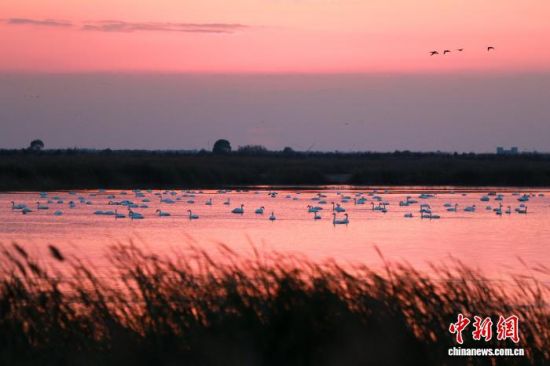
Core Concept - The article emphasizes Shandong's commitment to ecological development, highlighting the integration of environmental protection with economic growth through the "Green Mountains and Clear Water are as Valuable as Mountains of Gold and Silver" philosophy, which has been guiding the region for 20 years [1][8]. Group 1: Ecological Practices - Shandong has established 32 national ecological civilization demonstration zones and 11 innovation bases for the "Green Mountains and Clear Water" philosophy, showcasing its commitment to environmental sustainability [3]. - The province has implemented extensive ecological restoration projects, such as the conversion of 72,500 acres of farmland back to wetlands in the Yellow River Delta, creating habitats for endangered bird species [3]. - Local initiatives, like the "Guarding the Jujube Forest" action in Leiling, focus on protecting and enhancing the region's natural resources through comprehensive management practices [3]. Group 2: Green Energy Transition - Shandong is advancing its energy structure by increasing the share of renewable energy, with plans for 115 million kilowatts of installed capacity in new and renewable energy by 2024, surpassing coal power for new electricity supply [7]. - The province aims to reduce coal production capacity by 4.5 million tons and oil refining capacity by 2 million tons by 2024, while ensuring that over 53% of crude steel production capacity is located along the coast [7]. - The average PM2.5 concentration in Shandong is projected to reach 35.5 micrograms per cubic meter in 2024, marking the best level since monitoring began [7]. Group 3: Economic Transformation - Shandong is exploring innovative mechanisms to convert ecological value into economic benefits, such as the issuance of "forest tickets" in villages to leverage ecological resources for financial support [9]. - The development of eco-tourism and related industries in areas like Baihuayu Village has led to increased local income and job creation, demonstrating the economic potential of ecological resources [10]. - The province is also focusing on the development of eco-friendly products and services, enhancing the value of its natural resources while promoting sustainable economic growth [12].