产业互联网

Search documents
即时零售:产业互联网浪潮中的先锋力量
Sou Hu Cai Jing· 2025-08-24 16:37
Core Insights - The internet industry is undergoing unprecedented changes driven by technological advancements and innovative business models, with instant retail emerging as a significant force [1] - Instant retail represents an evolution of business models, moving beyond simple cash subsidies to rely on new models, technologies, and strategies [1][3] Group 1: Impact on B-end Industries - Instant retail is shifting focus from C-end user transformation to profound changes in B-end industries, affecting internal elements, production methods, and business models [3] - The integration of instant retail is leading to a reconstruction of the entire supply chain and ecosystem, laying a solid foundation for the implementation of industrial internet [3] Group 2: Integration of Virtual and Physical Economies - Instant retail facilitates deep integration between virtual and physical economies, addressing inefficiencies in resource allocation that existed in the consumer internet era [3] - By connecting online and offline resources, instant retail enhances efficiency and promotes collaborative development between virtual and physical economies [3] Group 3: New Supply-Demand Dynamics - Instant retail establishes a new balance in supply-demand relationships, overcoming challenges faced in the latter part of the consumer internet era as traffic dividends diminish [3][4] - This new balance not only meets consumers' immediate needs but also drives upgrades and transformations on the supply side [3][4] Group 4: Technological Advancements and Future Trends - The rise of AI technology and decentralized business models in the supply side is evident due to the influence of instant retail, enhancing overall industry efficiency [4] - The ongoing development of instant retail is expected to bring new opportunities and challenges to the industrial internet, with future advancements likely to introduce more phenomena and trends [4]


时代的源码,和它的进退两难
Sou Hu Cai Jing· 2025-08-23 02:42
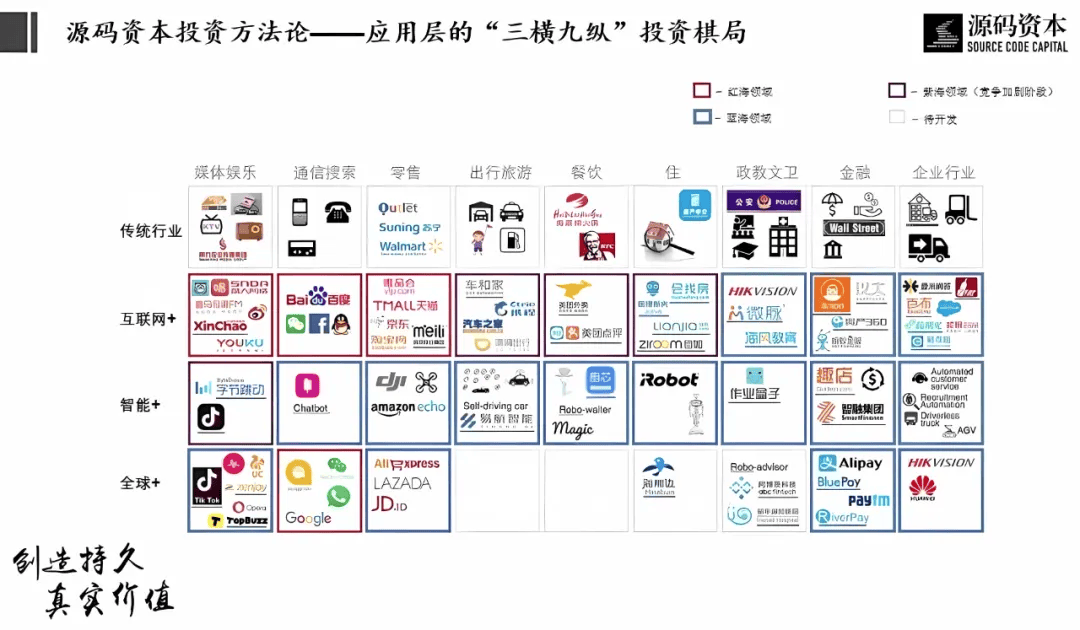
Core Insights - Source Code Capital (SCC) has evolved significantly since its establishment in 2014, reflecting the dynamics of China's primary market over the past decade [1][2][3] - The firm has introduced innovative investment strategies, such as the Founders' Fund and the "Code Community," which have redefined venture capital practices in China [5][6][7] Investment Evolution - SCC's fundraising capabilities have progressed from an initial fund of $100 million in 2014 to a fifth fund of 7 billion RMB in 2021, with a diverse range of Limited Partners (LPs) including prominent entrepreneurs and state-owned enterprises [9][10][11] - The firm has shifted its investment focus from internet finance to industrial internet and, more recently, hard technology, aligning with market trends and policy directions [13][15][22] Founders' Fund and Code Community - The Founders' Fund was a groundbreaking initiative that allowed founder capital to support entrepreneurs, resulting in significant returns from early investments in companies like ByteDance and Meituan [5][6] - The Code Community, comprising over 300 member companies and LPs, facilitates resource sharing and collaboration among entrepreneurs, enhancing post-investment support [6][7] Strategic Shifts and Challenges - SCC has faced challenges in recent years, including a significant reduction in staff from over 160 to around 50, reflecting broader industry trends of layoffs and restructuring [26][28] - The firm has struggled with the performance of its funds, particularly the third fund, which did not meet expectations, leading to a reevaluation of its investment strategies [30][31] Market Context and Future Outlook - The venture capital landscape in China is undergoing a transformation, with increasing pressure on firms to balance financial returns with broader societal and policy objectives [35][36] - SCC's evolution from a "single-core" to a more diversified operational model indicates a response to the changing market dynamics and the need for adaptability in investment strategies [38][40]
猎豹移动上涨2.66%,报5.749美元/股,总市值1.76亿美元
Jin Rong Jie· 2025-08-22 13:52
Group 1 - Cheetah Mobile (CMCM) opened with a 2.66% increase, reaching $5.749 per share, with a total market capitalization of $176 million as of August 22 [1] - As of March 31, 2025, Cheetah Mobile reported total revenue of 259 million RMB, representing a year-on-year growth of 36.11%, and a net profit attributable to shareholders of -33.357 million RMB, showing a year-on-year increase of 58.32% [1] - The company is scheduled to disclose its fiscal year 2025 interim report on September 12, with the actual disclosure date subject to company announcements [1] Group 2 - Cheetah Mobile is a leading global mobile internet company focused on enhancing life through technology in a world of human-machine coexistence [2] - The company is transitioning from mobile internet to AI-driven industrial internet, building a vertically integrated AI capability that includes self-developed chip computing power, algorithm capabilities, system capabilities, application capabilities, and a commercial brain [2] - Cheetah Mobile has developed three open systems: Orion Star Voice OS, Orion Star Robot OS, and Orion Star Arm OS, and offers intelligent service robot solutions based on AI empowerment, aiming for non-continuous growth and becoming a leading global AI industrial internet company [2]

猎豹移动上涨4.77%,报5.71美元/股,总市值1.75亿美元
Jin Rong Jie· 2025-08-21 15:53
Group 1 - Cheetah Mobile's stock increased by 4.77% to $5.71 per share, with a total market capitalization of $175 million as of August 21 [1] - For the fiscal year ending March 31, 2025, Cheetah Mobile reported total revenue of 259 million RMB, representing a year-on-year growth of 36.11%, and a net profit attributable to shareholders of -33.36 million RMB, showing a year-on-year increase of 58.32% [1] - The company is scheduled to release its mid-year report for the fiscal year 2025 on September 12, with the actual disclosure date subject to company announcement [1] Group 2 - Cheetah Mobile is a leading global mobile internet company focused on enhancing life through technology, and it transitioned from mobile internet to AI-driven industrial internet [2] - The company has developed a vertically integrated AI capability, including self-developed chip computing power, algorithm capabilities, system capabilities, application capabilities, and a commercial brain [2] - Cheetah Mobile aims to achieve non-continuous growth and become a leading global AI industrial internet company by leveraging its two main business segments: intelligent service robots and AI empowerment solutions [2]
从白领到巨头,AI镰刀为什么先割美国?
Tai Mei Ti A P P· 2025-08-21 02:24
Group 1 - The core argument highlights the disparity in job opportunities for computer graduates in the US, with a significant drop in enrollment in computer science courses and a projected unemployment rate of 5.7% for computer science graduates by 2025, compared to a national rate of 4% [4][5] - AI is significantly impacting white-collar jobs in the US, with companies like Anthropic and Shopify automating tasks traditionally performed by financial teams and requiring proof that AI cannot perform a job before hiring [4][5] - The US has a more advanced industrial internet, leading to a greater reliance on software to replace human labor, which is not as prevalent in China due to its competitive consumer internet landscape [5][7] Group 2 - Major US tech companies are facing substantial challenges due to AI advancements, with Adobe experiencing a significant stock drop and Salesforce seeing a slowdown in core module growth as AI tools replace traditional software functions [5][6] - Google's search business is particularly affected, with its global market share dropping below 90% and a significant decline in click-through rates for AI-generated search results [6] - In contrast, Chinese companies like Baidu are less impacted by AI disruptions, as they have already adapted to a competitive consumer internet environment, and their AI business is growing, with Baidu reporting over 10 billion yuan in new AI revenue [8][9] Group 3 - The capital expenditure on AI infrastructure is projected to be significantly higher for US tech giants, with estimates exceeding $400 billion by 2025, compared to $51 billion for China's top four internet companies [9] - The US government is adopting a more aggressive stance on AI development, while China is taking a more cautious approach focused on macroeconomic stability and safety [10] - The competitive landscape is shifting, with the US leading in closed-source technology development while China is focusing on open-source initiatives to build a robust ecosystem [11][12] Group 4 - ByteDance plans to invest approximately $12 billion in AI infrastructure by 2025, while Baidu continues to lead in AI investments across various sectors [13] - Alibaba and Tencent are primarily focusing their AI investments on cloud services, e-commerce, and social business [13]





北京市数字经济标准化技术委员会工作组成立
Bei Jing Ri Bao Ke Hu Duan· 2025-08-20 14:17
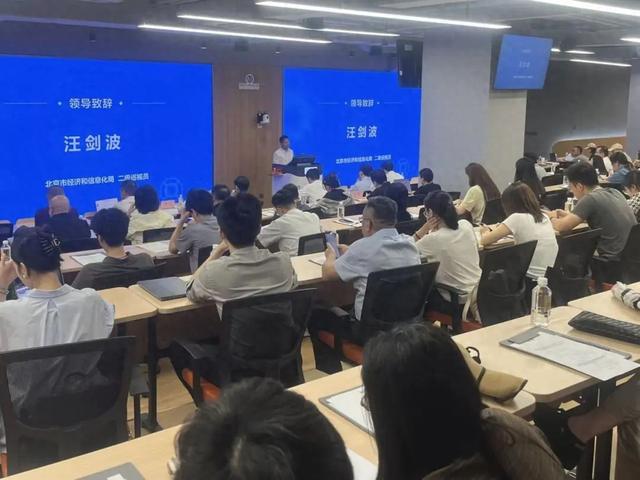
Group 1 - The establishment of the Beijing Digital Economy Standardization Technical Committee aims to accelerate the construction of a standardized system for the digital economy in Beijing [1][3] - The committee emphasizes the importance of developing leading standards in key areas such as autonomous driving, embodied intelligence, digital consumption, industrial internet, and intelligent agents [3][4] - The initiative seeks to enhance industry integration by leveraging digital technologies to empower various industries and create a platform for standard development and application [3][5] Group 2 - The meeting highlighted the need for collaboration among government, research institutions, enterprises, and industry associations to transform advanced local standards into industry and national standards [4][5] - The committee plans to focus on industry needs and practical application scenarios to create a dynamic and adaptable standard system [5] - Two significant outcomes were announced: a research report on intelligent driving data platforms and a compliance management platform for personal information protection in digital consumption [7]
首家中国农产全链互联网股来了!一亩田剑指全球农业数字化
美股研究社· 2025-08-20 12:28
Core Viewpoint - Yimutian, a digital agriculture service company, has become the first Chinese agricultural internet enterprise to be listed on NASDAQ, highlighting its unique position in the global capital market [1] Group 1: Industry Context - China's agricultural sector faces challenges such as production fragmentation and inefficient circulation, with 98% of farmers managing 70% of the land and an average of 0.5 acres per person [3] - The founder's vision for Yimutian is to leverage digital solutions to streamline the entire agricultural supply chain [4] Group 2: Company Development - Yimutian's journey began with the launch of its app in 2011, initially focusing on B2B transactions to address information asymmetry between farmers and buyers [5] - The company has expanded its services to include procurement, logistics, digital planting bases, and AI marketing, creating a comprehensive digital service model for the agricultural supply chain [5] - By the end of 2024, Yimutian aims to cover 56 million agricultural businesses and has built a vast database of procurement resources and market data [5] Group 3: Business Model and Financials - Yimutian's revenue model is distinct from traditional internet platforms, with 94.7% of its revenue in 2024 coming from digital agricultural business services [10] - The company has achieved a gross margin of over 80%, with a revenue of 161 million yuan in 2024, reflecting a 7.3 percentage point increase from 2023 [10][11] - Yimutian's operational model minimizes heavy asset costs, focusing on technology development and service network expansion [11] Group 4: Market Potential - The total value of China's primary agricultural product circulation reached 9 trillion yuan in 2023, with a theoretical commission market space of 450 billion yuan based on a 5% commission rate [7] - The digital agriculture B2B service market in China is projected to grow significantly, with a compound annual growth rate of 37.6% expected from 2024 to 2029 [12] Group 5: Global Strategy - Yimutian is expanding its international operations, aiming to integrate global agricultural resources and provide high-quality products to consumers worldwide [13] - The company plans to replicate its successful model of integrating agents and standardized services in international markets, particularly in regions like Southeast Asia and Africa [15] Group 6: Competitive Advantage - Yimutian's competitive edge lies in its established "data + users + services" barrier and its deep understanding of the agricultural industry [15] - The company is positioned to benefit from the increasing digitalization of agriculture, with a focus on meeting the practical needs of farmers and agents [16]

猎豹移动上涨3.21%,报4.83美元/股,总市值1.48亿美元
Jin Rong Jie· 2025-08-14 15:47
Group 1 - The core viewpoint of the news is that Cheetah Mobile (CMCM) has shown a positive financial performance with a significant increase in revenue and net profit, alongside a strategic shift towards AI-driven industrial internet solutions [1][2][3] Group 2 - As of August 14, Cheetah Mobile's stock price increased by 3.21% to $4.83 per share, with a total market capitalization of $148 million [1] - Financial data indicates that by March 31, 2025, Cheetah Mobile's total revenue is projected to be 259 million RMB, representing a year-on-year growth of 36.11%, while the net profit attributable to shareholders is expected to be -33.357 million RMB, reflecting a year-on-year increase of 58.32% [1] - Cheetah Mobile is transitioning from mobile internet to AI-driven industrial internet, developing integrated AI capabilities including self-developed chip computing power, algorithm capabilities, system capabilities, application capabilities, and a commercial brain [2] - The company has created three open systems: Orion Star Voice OS, Orion Star Robot OS, and Orion Star Arm OS, and is focusing on intelligent service robots and AI empowerment solutions to adapt to the AI and 5G era [2]
智能合同2.0新纪元:数商云B2B电商如何重塑产业互联网法律与信任?
Sou Hu Cai Jing· 2025-08-14 09:26
Core Insights - The article discusses the evolution of smart contracts from the 1.0 to the 2.0 era, highlighting the transition from theoretical exploration to deep application in the context of industrial internet [1][4] - A specific B2B e-commerce system is leading the innovation in this space, promoting the concept of "code as law" to reshape trust and efficiency in B2B transactions [1][4] Group 1: Smart Contract Development - In the 1.0 era, smart contracts primarily focused on the codification of contract terms, achieving basic automation in execution, such as triggering payment conditions and confirming delivery of goods [1] - The limitations of 1.0 smart contracts include inadequate adaptability to complex legal scenarios, difficulties in cross-chain collaboration, and a lack of flexible dynamic adjustment mechanisms [1] - The B2B e-commerce system has adopted advanced blockchain architecture to provide a solid trust foundation for smart contract operations, ensuring data integrity and preventing tampering [1] Group 2: Integration of Advanced Technologies - The B2B e-commerce system integrates artificial intelligence, big data, and the Internet of Things (IoT) to enhance the interactive capabilities of smart contracts [3] - AI technology is utilized to intelligently analyze contract texts, extract key terms, and convert them into executable code, providing optimization suggestions for contract negotiations [3] - Big data technology monitors contract performance in real-time and predicts potential risks, while IoT enables real-time interaction between smart contracts and physical goods logistics and storage [3] Group 3: Legal and Industry Standards Integration - To ensure the legal validity of smart contracts, the B2B e-commerce system has established a close connection with the judicial system, allowing for rapid synchronization of evidence to a judicial blockchain in case of disputes [3] - This mechanism significantly shortens the dispute resolution cycle and enhances judicial efficiency [3] - The system actively participates in the formulation of industry standards, converting these standards into code specifications for smart contracts, ensuring strict adherence to quality and delivery standards in sectors like electronic components [3][4] Group 4: Impact on B2B Transactions - Through these innovative measures, the B2B e-commerce system not only promotes the deep application of smart contracts in the industrial internet but also strengthens the practical guarantee of "code as law" [4] - This advancement enhances trust and efficiency in B2B transactions and lays a solid foundation for the standardized development of the industrial internet [4]

智能合同2.0时代:数商云B2B电商系统如何让“代码即法律”落地产业互联网?
Sou Hu Cai Jing· 2025-08-13 11:08
Group 1 - The core idea of the article is the transition of smart contracts from concept to deep application in the 2.0 era, with Shushangyun leading the way in the industrial internet sector by implementing the "code as law" concept to enhance trust and efficiency in B2B transactions [2] - The 1.0 era of smart contracts focused on basic automation, but faced limitations in complex industrial environments, such as insufficient adaptability to complex legal scenarios and difficulties in cross-chain collaboration [3] - Shushangyun's B2B e-commerce system is built on an advanced blockchain architecture, providing a solid trust foundation for smart contract operations, ensuring data integrity and authenticity through decentralization [3][5] Group 2 - The integration of multiple technologies, including artificial intelligence, big data, and the Internet of Things, enhances the intelligent interaction capabilities of smart contracts within Shushangyun's B2B e-commerce system [4] - AI technology enables intelligent parsing of contract texts, while big data analyzes execution processes to predict potential risks, and IoT facilitates real-time interaction with physical goods [4] - The system's connection with the judicial framework allows for automatic submission of contract data to a judicial blockchain in case of disputes, providing irrefutable evidence for legal proceedings [5][7] Group 3 - The practical implementation of "code as law" in the industrial internet includes legal compliance mapping of contract terms and judicial connection guarantees during execution [6] - Shushangyun actively participates in the formulation of industry standards, converting these standards into code specifications for smart contracts, thereby promoting their application in B2B transactions [8] - This approach ensures that industry standards are strictly enforced in every B2B transaction, enhancing the influence of "code as law" in the industrial internet and promoting standardized development [8]