
公司治理

Search documents
2025年度中国上市公司治理和ESG优秀企业榜单
Sou Hu Cai Jing· 2026-01-25 08:10
Core Insights - The CCG50 Forum released the 2025 annual rankings of Chinese listed companies' governance and ESG performance, evaluating 5,292 companies based on various governance indices and ESG criteria [1][3][13]. Governance Rankings - The governance rankings include 11 core lists, with the top 100 companies ranked based on a comprehensive index. Notable companies include: - Health元, 唐山港, and 西部证券 leading the overall governance list [2][8]. - 中煤能源 topped the small investor protection list, evaluated on 36 indicators across four dimensions [2][15]. - 唐山港 ranked first in the board governance category, assessed on 38 indicators [2][21]. - 埃斯顿 led the financial governance list, evaluated on 31 indicators [2][39]. ESG Rankings - The ESG rankings are divided into non-financial and financial sectors: - In the non-financial sector, 中国石油, 中国石化, and 中国中铁 ranked highest, evaluated on 132 indicators with weights of 55% for governance, 35% for social responsibility, and 10% for environmental protection [3]. - The financial sector's top ten ESG companies include 工商银行 and 农业银行, evaluated based on industry-specific criteria [3]. Risk Awareness - The forum also published a list of 50 companies with governance risks, including *ST 广道 and ST 中迪, providing a reference for investors [3][19]. Methodology - The rankings were developed using scientific modeling and quantitative calculations rather than traditional voting methods, referencing international standards to showcase the differences in governance levels and ESG performance among Chinese listed companies [3][13][19].








每周股票复盘:聚辰股份(688123)拟推董事会多元化政策
Sou Hu Cai Jing· 2026-01-24 17:31
Core Viewpoint - The company, Jucheng Semiconductor Co., Ltd., has implemented various policies and management systems in preparation for its H-share listing, focusing on diversity, communication with shareholders, information disclosure, and internal auditing. Group 1: Company Policies - The company has established a board and employee diversity policy aimed at enhancing diversity in the boardroom and workforce, ensuring at least one female board member [1] - A shareholder communication policy has been developed to promote effective communication with shareholders and stakeholders, allowing for electronic receipt of company communications [2] - The company has created an information disclosure management system to ensure accurate and complete reporting, with the board of directors responsible for managing disclosure matters [3] Group 2: Internal Management Systems - The company has revised and established 25 internal management systems to comply with H-share listing requirements, covering areas such as information disclosure and fundraising management [2][5] - An information disclosure deferral and exemption management system has been formulated, allowing for legal deferral of disclosures related to state or commercial secrets [4] - An internal audit management system has been established to enhance audit quality and promote corporate governance, with a dedicated audit and risk management committee overseeing the internal audit department [4]

1.8亿关店损失未平,八年财报失实又起 中百集团遭监管警示
Jing Ji Guan Cha Wang· 2026-01-24 12:04
Core Viewpoint - The financial reporting discrepancies of Zhongbai Group have been exposed, leading to regulatory actions and raising questions about the company's governance and internal controls over the past eight years [1][5]. Financial Reporting Issues - Zhongbai Group has been found to have significant inaccuracies in its financial statements from 2016 to 2023, resulting in a warning letter from the Hubei Securities Regulatory Bureau [1][2]. - The company has made retrospective adjustments to its financial reports for the years 2016 to 2023, indicating that all consolidated financial statements during this period contained major misstatements [2][3]. Governance and Management Accountability - Key executives, including the former chairman and general manager, have been held primarily responsible for the financial misreporting and delayed disclosures of litigation [2][3]. - The company has experienced frequent changes in its management team, with the new general manager also serving as the board secretary, raising concerns about governance structure [3][4]. Store Closures and Financial Impact - In 2025, Zhongbai Group announced the closure of 30 stores, which is expected to incur a loss of approximately 180 million yuan due to long-term losses and the need for strategic transformation [1][3]. - The closures are part of a broader strategy to optimize operations, but they also highlight the company's reactive approach to market changes [3][5]. Legal and Compliance Risks - The company faces potential legal risks associated with the store closures, including compensation claims and asset disposal issues, which may not be fully accounted for in the previously disclosed litigation amounts [4][5]. - The warning letter emphasizes the inadequacies in the company's internal controls and mandates a corrective action report to be submitted within 30 days [4][5]. Future Outlook and Challenges - Zhongbai Group is under dual pressure from the financial losses due to store closures and the regulatory scrutiny of its governance practices [5]. - The company must not only submit a compliant corrective report but also establish a robust mechanism to prevent future issues, which is critical for regaining market trust and competitive advantage [5].

昔日“疫苗之王”科兴控股大消息:美股上市地位保住了
凤凰网财经· 2026-01-24 09:07
Core Viewpoint - The recent decision by the Nasdaq Hearing Committee allows Sinovac Biotech Ltd. to maintain its listing status on the Nasdaq Global Market, contingent upon the timely submission of financial reports by May 11, 2026 [5][6]. Group 1: Financial Reporting and Compliance - Sinovac must complete the submission of its annual financial report for the fiscal year ending December 31, 2024, and the interim financial report for the second quarter of 2025 by May 11, 2026 [6][7]. - The company has engaged Zhonghua Certified Public Accountants to conduct independent audits and is working collaboratively to meet the reporting requirements [7][8]. Group 2: Historical Performance and Challenges - Sinovac's revenue peaked in 2021 with a total revenue of 135.49 billion yuan, reflecting a year-on-year increase of 3694.36%, and a net profit of 59.21 billion yuan, up 7571.97% [9]. - However, the demand for COVID-19 vaccines has sharply declined, leading to significant revenue drops of 92.30% in 2022 and 69.97% in 2023, with net profits decreasing by 98.66% and 187.75% respectively [9]. Group 3: Product Pipeline and Market Expansion - Sinovac has a diverse product pipeline beyond COVID-19 vaccines, including vaccines for hepatitis A, influenza, varicella, and inactivated polio vaccines [9]. - Recent approvals for new products, such as the 23-valent pneumococcal polysaccharide vaccine, and successful bids for international orders, indicate a potential for growth in international markets [9]. Group 4: Governance Issues - Sinovac has faced ongoing internal governance challenges, stemming from a power struggle between co-founders, which has led to significant operational disruptions [10][11]. - The company has been under scrutiny for governance failures, resulting in its stock being suspended by Nasdaq in 2019 [12].

华泰证券股份有限公司2026年第一次临时股东会完成董事会换届并获股份发行一般性授权
Xin Lang Cai Jing· 2026-01-23 16:48
Core Viewpoint - Huatai Securities successfully held its first extraordinary general meeting of shareholders in 2026, passing several important resolutions, including granting the board general authority to issue shares, which received 89.81% approval [1] Group 1: Shareholder Meeting Outcomes - The extraordinary general meeting was attended by 1,429 shareholders and proxies, representing 5,245,467,179 voting shares, which is 58.11% of the total voting shares [1] - The support rate for the general authority resolution among retail investors was 89.67% [1] - The newly elected seventh board of directors includes both non-independent and independent directors, which will influence the company's governance structure and strategic direction [1] Group 2: Future Implications - The board's general authority to issue shares will provide flexibility for potential equity financing in the future [1] - The decisions made during this meeting are expected to impact the company's future governance and strategic development [1]

家居要闻丨新智家周刊(1.19-1.23)
Cai Jing Wang· 2026-01-23 08:52
Industry - In December 2025, the total retail sales of consumer goods reached 45,136 billion yuan, a year-on-year increase of 0.9% [1] - The total retail sales of consumer goods for the entire year of 2025 amounted to 501,202 billion yuan, growing by 3.7% compared to the previous year [1] - The retail sales of furniture products in December were 20.7 billion yuan, showing a year-on-year decline of 2.2%; the cumulative retail sales for the year reached 209.2 billion yuan, an increase of 14.6% year-on-year [1] - The retail sales of building and decoration materials in December were 17.2 billion yuan, down 11.8% year-on-year; the cumulative retail sales for the year were 167.1 billion yuan, a decrease of 2.7% year-on-year [1] Company - Chasing Technology established two new companies, Chasing Yaochen Technology (Suzhou) Co., Ltd. and Chasing Chichen Technology (Suzhou) Co., Ltd., both with a registered capital of 2 billion yuan, focusing on the research and development of intelligent robots [1] - Wan Hua He Xiang Group's IPO counseling report indicates that the company needs to further improve its corporate governance, with a focus on enhancing the execution of governance systems [2] - The report also highlights an oversupply in the domestic man-made board industry, prompting the company to control product quality while expanding into high-end product markets [2] - Dream Home announced the use of 372 million yuan of idle fundraising to purchase structured deposit products for capital preservation and appreciation [3] - Haier Smart Home plans to repurchase up to 1 million D-shares with a total fund not exceeding 2 million euros, which will be canceled to reduce registered capital [4][5] - Fusenmei announced that the chairman Liu Bing's detention has been changed to a directive for supervision, allowing him to resume his duties as chairman and legal representative [6]



深交所向江西万年青水泥股份有限公司、李世锋、熊汉南发出监管函
Sou Hu Cai Jing· 2026-01-23 08:17
Core Viewpoint - The Shenzhen Stock Exchange issued a regulatory letter to Jiangxi Wannianqing Cement Co., Ltd. and its executives due to issues related to corporate governance and financial reporting irregularities [1][2][3] Group 1: Corporate Governance Issues - The position of the board secretary has been vacant since January 2023, with responsibilities being temporarily handled by the deputy general manager [1] - The company has been found to have inadequate governance practices, leading to non-compliance with the Stock Listing Rules [3] Group 2: Financial Reporting Irregularities - There are discrepancies in the financial accounting of trade business, particularly in the coal trading services conducted by subsidiaries, resulting in inaccurate revenue and cost disclosures for the fiscal year 2024 [1][2] - The company failed to accurately disclose customer revenue, including not consolidating clients controlled by the same actual person [2] - Incomplete disclosure of restricted cash and inaccuracies in the cash flow statement were noted, as certain bank acceptance bill guarantees and restricted cash accounts were not included in the reporting [2]

直击达沃斯|诺奖得主吐槽波音:公司文化变了,多起空难是因董事会失职
Xin Lang Cai Jing· 2026-01-23 00:04
Group 1 - The core theme of the 2026 World Economic Forum is "dialogue," emphasizing the importance of trust and integrity in maintaining international order amidst rising global trade tensions and competition [1][10] - Nobel laureate Oliver Hart highlights that the crisis is not just about rules but the norms and trust that support them, suggesting that without these foundations, dialogue becomes meaningless [1][10] - Hart's observations during the forum included discussions on corruption, where CEOs debated the ethical implications of engaging in bribery in countries with weak legal systems [3][12] Group 2 - Hart expressed skepticism about the effectiveness of CEOs' claims that they would not engage in corrupt practices, citing examples of companies like McKinsey and Boeing that have faced significant ethical challenges yet continued to operate [4][12] - He noted that the current political climate in the U.S. is concerning, as it reflects a breakdown of norms and trust, which are essential for effective dialogue and governance [5][13] - Hart argues that effective dialogue requires mutual trust and integrity, and without these, discussions can only serve as a means of information exchange rather than fostering genuine understanding [5][13] Group 3 - To maintain reliable business relationships in uncertain environments, Hart suggests incorporating principles of honesty, fairness, and integrity into contracts, along with establishing regular communication mechanisms [6][14] - He emphasizes that while this approach may not work for everyone, identifying unsuitable partners early can help businesses avoid unproductive collaborations [6][14] - Hart's recent research focus has shifted towards "shareholder democracy," challenging the notion that shareholders only prioritize profit maximization [7][8] Group 4 - He argues that individuals often consider ethical and environmental factors in their decisions, and this should also apply to corporate governance [8][15] - Hart proposes a mechanism for companies to genuinely gauge shareholder preferences on ethical issues by randomly selecting shareholders to participate in informed discussions on significant corporate decisions [8][15] - He believes that returning decision-making power to shareholders could reduce the influence of political pressures on corporate sustainability initiatives [9][16]
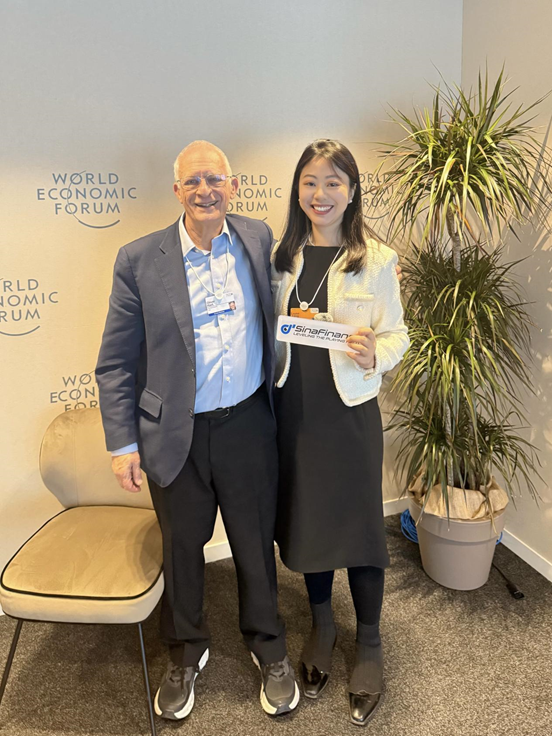
直击达沃斯|对话诺奖得主哈特:当规范开始崩塌时,对话如何进行?
Xin Lang Cai Jing· 2026-01-22 23:59
Core Viewpoint - The 2026 World Economic Forum emphasizes the importance of "dialogue" amidst increasing global trade tensions and competition among major powers, highlighting that the crisis is not just about rules but also about the norms, trust, and integrity that support these rules [1][10]. Group 1: Corruption and Business Ethics - A significant discussion at the forum focused on how companies, particularly from countries with strong legal systems, should navigate corruption in countries where bribery is common [3][12]. - Some CEOs expressed a firm stance against participating in corrupt practices, fearing it would lead to a "race to the bottom," while others, including Hart, questioned the sustainability of such ethical positions in practice [4][12]. - Hart cited examples of companies like McKinsey and Boeing, which, despite past ethical failures, have managed to survive and recover, suggesting that the reality of corporate behavior often contradicts idealistic views [4][12]. Group 2: Trust and Dialogue - Hart emphasized that without trust, dialogue becomes meaningless, and effective dialogue relies on the integrity and baseline ethics of the parties involved [5][13]. - He noted that the current political climate lacks empathetic dialogue, which is essential for genuine understanding and respect among parties [5][13]. - In contrast, the business sector is less affected by political changes, as businesspeople tend to prioritize cooperation and mutual needs [5][13]. Group 3: Contractual Integrity - Hart proposed that in uncertain environments, businesses should incorporate guiding principles of honesty, fairness, and integrity into contracts, along with establishing regular communication mechanisms [6][14]. - He suggested that dialogue should be explicitly included in contracts to foster transparency and proactive communication about potential risks [6][14]. Group 4: Shareholder Democracy - Hart's recent research focuses on "shareholder democracy," challenging the notion that shareholders only seek profit maximization [7][8]. - He argued that individuals often consider ethical and environmental factors in their decisions, and companies should genuinely inquire about shareholders' preferences regarding these issues [8][15]. - Hart proposed a mechanism for collective decision-making among shareholders, which would differ from traditional voting processes, allowing for more thoughtful deliberation on significant corporate values [8][16].
锚定“固本强基” 上市公司提质前行
Zhong Guo Zheng Quan Bao· 2026-01-22 20:56
Core Viewpoint - The China Securities Regulatory Commission (CSRC) has outlined multiple reform tasks aimed at invigorating the merger and acquisition (M&A) market, enhancing dividend repurchase, equity incentives, and employee stock ownership systems, and expediting the introduction of regulatory guidelines for listed companies, marking a new phase of value growth and governance improvement for listed companies [1] Group 1: M&A and Restructuring - M&A activities are increasingly seen as a key strategy for listed companies to overcome development bottlenecks, with examples including Kailong High-Tech's acquisition of Shenzhen Jinwangda and Aidi Pharmaceutical's purchase of Nanda Pharmaceutical [1][2] - The future direction of reforms is expected to focus on supporting the transformation and upgrading of listed companies, fostering new productive forces, and cultivating world-class enterprises [2] - The M&A market is becoming more inclusive, with innovative transaction structures such as dynamic valuation adjustments and composite payment methods to meet the needs of high-growth targets [2] Group 2: Investor Returns - To enhance investment value, there is a need for stronger policy guidance and institutional constraints, encouraging companies to adopt a long-term shareholder return philosophy [3] - High-frequency and high-proportion cash dividends reflect the steady improvement in companies' profitability and the awakening of shareholder return awareness [3] - Share buybacks and increases in shareholding are important methods for companies to optimize their equity structure and convey confidence in long-term development [3][4] Group 3: Governance Improvement - The CSRC has initiated a new round of corporate governance special actions, focusing on transparency of equity structure, board independence, internal control systems, and quality of information disclosure [4][5] - Strengthening information disclosure regulation and improving the delisting investor protection mechanism are essential for enhancing corporate governance and boosting shareholder confidence [5] - Recent regulatory drafts have detailed the behavior of controlling shareholders and actual controllers, prohibiting fund occupation and irregular guarantees, and strictly regulating related transactions and competition [5]