文化遗产保护

Search documents
第四次全国文物普查工作推进会暨普查领导小组第三次会议在京召开
Xin Hua Wang· 2025-10-30 11:40
Core Points - The fourth national cultural relics census is a crucial foundational work for continuing the historical context of Chinese culture and promoting high-quality development in the cultural relics sector [1] - The second phase of the census has consolidated previous achievements and expanded the connotation of immovable cultural relics, laying an important foundation for enhancing the protection and inheritance of cultural heritage [1] Group 1 - The meeting emphasized the importance of deepening the understanding and practice of Xi Jinping's cultural thought to enhance the sense of responsibility and mission in conducting the cultural relics census [1] - The third phase of the census will focus on solidifying the results of the previous phases, increasing the discovery of new cultural relics, and promoting systematic protection of cultural heritage [1][2] - The meeting called for public participation and collaboration in the census work, strengthening the workforce of cultural relics protection institutions at all levels [1] Group 2 - The third phase of the national cultural relics census will involve a step-by-step review and acceptance process, legally identifying, registering, and publishing immovable cultural relics [2] - A national directory of immovable cultural relics resources will be established and the results of the census will be made public [2]
联合国教科文组织东亚地区办事处主任:文化遗产保护需全球协作
Zhong Guo Xin Wen Wang· 2025-10-30 07:55
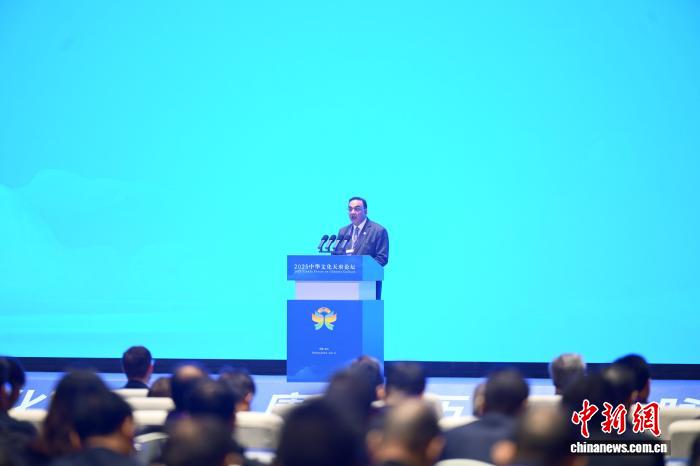
Core Points - The Director of UNESCO's East Asia Regional Office emphasized the need for global collaboration in cultural heritage protection during the 2025 China Cultural Tianfu Forum in Chengdu [1][3] - Cultural heritage faces multiple challenges such as urbanization and climate change, but these challenges also present opportunities for innovation through digital technology and artificial intelligence [1][3] - Establishing an ethical framework for digital transformation is crucial to ensure the proper application of technology in cultural heritage preservation [1][3] Summary by Categories Global Collaboration - Cultural heritage protection is a shared responsibility that requires global cooperation, cross-cultural dialogue, and intergenerational transmission [3] - The current complex international situation necessitates a focus on mutual learning and cultural exchange to build trust and promote social progress [3] Role of Technology - Rapid advancements in digital technology and AI provide unprecedented tools for recording, preserving, and disseminating cultural values [1][3] - Digital technologies can revitalize cultural heritage, as exemplified by projects like the Dujiangyan irrigation system, showcasing the innovation and wisdom of Chinese culture [3] Community Involvement - Communities play a critical role in heritage protection, as cultural heritage can empower local communities and foster cultural identity and pride [3] - The aim is to create sustainable models for heritage activation that benefit future generations [3]

二十国集团文化工作组南非会议通过《夸杜库扎文化宣言》
Xin Hua She· 2025-10-30 06:34
Core Viewpoint - The G20 Cultural Working Group Ministerial Meeting concluded in KwaDukuza, South Africa, adopting the KwaDukuza Cultural Declaration, which provides a framework for cooperation among members in areas such as cultural heritage protection, creative industry development, cultural diversity promotion, and international dialogue [1] Group 1: Declaration Highlights - The declaration establishes four priority guiding principles: enhancing cultural heritage protection and restitution, integrating cultural policies with socio-economic strategies, leveraging digital technology for cultural development, and addressing the interplay between culture and climate change [1] - It emphasizes that culture is a key force in bridging social divides, promoting inclusive development, and driving sustainable growth [1] Group 2: Global Cooperation and Policy Recommendations - The declaration calls for strengthened global collaboration to combat the illegal trafficking of cultural property, improvement of national policy frameworks, and increased public investment in the cultural sector to enhance heritage protection and development vitality [1] - It encourages the innovative use of digital technology to transform cultural exchange methods and align cultural policies with socio-economic and climate action strategies, providing insights and solutions for global challenges [1] Group 3: Future Implications - The outcomes of this meeting will be incorporated into the agenda of the upcoming G20 Leaders' Summit scheduled for November in Johannesburg [1]
“十四五”期间北京持续开展长城抢险加固工程60余项
Xin Hua She· 2025-10-29 12:09
Core Points - During the "14th Five-Year Plan" period, Beijing has undertaken over 60 projects for the reinforcement and repair of the Great Wall, restoring more than 20 kilometers of the wall [1] Group 1: Cultural Heritage Protection - Beijing is promoting a "big protection" framework for cultural heritage through the coordinated development of "one city and three belts" [1] - The application of the "Great Wall Culture+" model aims to integrate cultural heritage with modern development [1] Group 2: Research and Management - The city is implementing a research-based restoration model for the Great Wall, incorporating archaeological work throughout the restoration process [1] - Adjustments to the protection scope and construction control zones for the Great Wall are being researched to enhance management [1] Group 3: Tourism Development - Key projects such as the renovation of the Badaling Great Wall scenic area and the China Great Wall Museum are being advanced to create a high-quality cultural tourism brand [1] - The outcomes of the Great Wall protection efforts are intended to benefit regional development and improve people's livelihoods [1] Group 4: Monitoring and Technology - Beijing is establishing a resource information and monitoring platform for the Great Wall, utilizing drones for regular inspections and trialing four-legged robots for enhanced inspection efficiency [1]
“数字技术活化千年古城”案例亮相联合国会议
Su Zhou Ri Bao· 2025-10-29 00:26
Core Insights - The "Digital Technology Revitalization of the Millennium Ancient City" case from Gusu District has been included in the 2025 edition of the "Shanghai Manual," showcasing China's experience in historical and cultural preservation at the World Cities Day Global Conference on Sustainable Urban Development [1] - The conference, co-hosted by UN-Habitat and the Shanghai Municipal Government, took place from October 26 to 27, 2023, and highlighted sustainable development cases from 242 cities globally, including 52 from China [1] Group 1 - The case constructs a closed-loop framework of "platform construction - protection and inheritance - revitalization and utilization," utilizing digital technology for the digital preservation, protection, maintenance, and display of cultural heritage [1] - Gusu District implemented the "Ancient City Cell Dissection Project" in December 2020, achieving over 95% household survey coverage of traditional residences, employing laser scanning and drones to create 3D models of cultural relics [2] - The "CIM+ Digital Twin Ancient City" platform was launched in October 2021, featuring multi-scale modeling with a resolution of 3 cm, integrating cross-departmental resources and supporting applications across 17 municipal and district departments with an average daily data call exceeding 20,000 times [2] Group 2 - The platform enables cross-departmental data sharing, enhancing the precision and efficiency of preservation efforts, and supports multi-temporal displays to aid planning and decision-making [2] - Gusu District has initiated the "Ancient City Protection and Renewal Partner Program," encouraging social capital participation in revitalization projects, such as transforming historical residences into boutique hotels and cultural museums [2] - Future plans include deepening the application of digital technology in health monitoring of ancient buildings, cultural tourism consumption, safety protection, and community elder care, aiming to extend the benefits of digital innovation to more residents and share the "Gusu experience" internationally [3]
2025同里“遗产之村”驻地项目启动
Su Zhou Ri Bao· 2025-10-28 00:22
Core Viewpoint - The article highlights the launch of the "Heritage Village" residency project in Tongli, China, which aims to enhance cultural heritage protection and community development through international collaboration between Chinese and French professionals [1] Group 1: Project Overview - The "Heritage Village" residency project commenced on October 27, 2023, and will last for three months, focusing on the preservation of the ancient water town's heritage [1] - The project brings together young professionals and scholars from both China and France to inject new energy into heritage protection and community development [1] Group 2: Historical Context - Since the 1990s, a Chinese team led by figures such as Ruan Yisan, Zhou Jian, Zhang Kai, and Shao Yong has collaborated with French experts in Tongli, establishing a foundation for international cooperation in heritage protection [1] Group 3: Participants and Focus Areas - The project includes four young members: Chinese anthropologist Xia Zikui, landscape architect Dong Yilin, and French architects Elisa Guarnieri and Julian Quame [1] - The focus areas of the project are community engagement, public space research, and the renovation of traditional residences, aiming to continue the tradition of heritage protection collaboration while involving the younger generation [1]
文明互鉴看良渚
Ren Min Ri Bao Hai Wai Ban· 2025-10-26 23:07
Core Points - The third "Liangzhu Forum" was held in Hangzhou, Zhejiang Province, focusing on the theme "Civilization Rejuvenation: Cultural Heritage and Human Cultural Diversity" [3][8] - Over 300 guests from more than 60 countries and regions participated in discussions about cultural heritage and its role in enhancing human civilization [7][11] - The forum highlighted the importance of archaeological discoveries in understanding early civilizations, with significant findings from sites like Liangzhu and Nanzhao being shared [9][10] Group 1: Forum Overview - The forum served as a platform for dialogue among scholars, archaeologists, and cultural heritage managers, emphasizing the need for cross-cultural exchanges [8][11] - Discussions included the latest archaeological findings from various civilizations, including ancient Egypt and Mediterranean cultures, showcasing the interconnectedness of human history [8][9] - The event aimed to deepen understanding of cultural diversity and promote collaborative efforts in heritage preservation [15][18] Group 2: Archaeological Discoveries - Significant archaeological findings from Liangzhu, such as the discovery of burial sites and water management systems, were presented, indicating advanced societal organization [9][10] - The Nanzhao site was highlighted for its evidence of early state formation and cross-regional communication, contributing to the understanding of Chinese civilization origins [9][10] - The forum emphasized the application of interdisciplinary research methods in archaeology, enhancing the understanding of ancient civilizations [10][20] Group 3: Cultural Exchange and Future Directions - The forum underscored the role of cultural heritage as a bridge for dialogue among civilizations, promoting mutual understanding and cooperation [15][18] - Experts called for sustainable development practices in heritage management, integrating social, economic, and environmental dimensions [17][18] - The event marked a commitment to ongoing international collaboration in cultural heritage protection and archaeological research [18][19]
坎布拉跻身世界级地质公园 民众端稳“生态碗”吃好“旅游饭”
Zhong Guo Xin Wen Wang· 2025-10-26 07:08
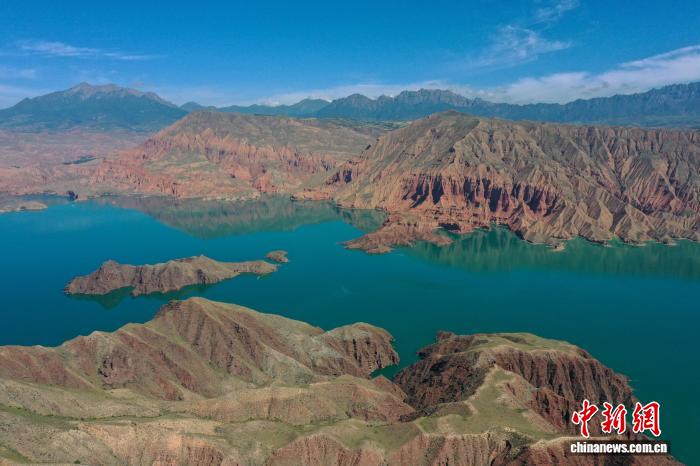
Core Points - The establishment of the Kanbula World Geopark is a significant achievement for Qinghai Province, marking it as the second UNESCO World Geopark in the region after Kunlun Mountain, increasing the total number of world-class natural protected areas in Qinghai to seven [1][3] Group 1: Economic Impact - The Kanbula Geopark has created job opportunities for 236 local residents as ecological forest rangers, with an average annual salary of 21,600 yuan, providing them with stable income [1] - The park is expected to enhance tourism development, with plans to implement six major strategies, including striving for national 5A tourism status and deepening the integration of culture and tourism [6] Group 2: Geological Significance - The park features over 160 identified geological relics, including Danxia landforms, volcanic landforms, and large landslide groups, showcasing a rich and unique geological heritage [3] - The Longwu Gorge within the park reveals a Triassic deep-sea sediment profile over 6,000 meters thick, serving as a testament to geological history [3] Group 3: Cultural Heritage - The region is home to the "Regong" culture, known for its unique art forms such as Thangka and murals, which are recognized as UNESCO intangible cultural heritage [4] - The park contains 701 items of intangible cultural heritage and 27 national traditional villages, forming a unique resource system of "geological wonders + cultural treasures" [4] Group 4: Sustainable Development - A management mechanism combining rigid constraints and precise control has been established to balance protection and development, with local regulations and targeted protection measures for core relics [6] - The local government aims to create a comprehensive protection system, a high-level research system, and a sustainable development system to position Kanbula as a benchmark for global geopark construction [6]
文化勃兴·文化遗产保护浓墨重彩 文化家底前所未有清晰
Yang Shi Wang· 2025-10-22 22:19
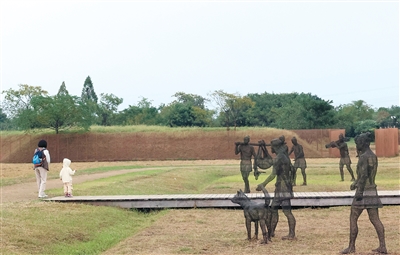
Core Insights - The article emphasizes the significance of cultural heritage protection in China during the "14th Five-Year Plan" period, highlighting the clarity of the nation's cultural assets and the ongoing exploration of Chinese civilization through artifacts [1]. Group 1: Archaeological Discoveries - Recent archaeological findings at the Liangzhu Ancient City site demonstrate that the Liangzhu people were capable of constructing "anti-seepage walls," showcasing advanced engineering techniques similar to modern practices [2]. - The Liangzhu water conservancy system is recognized as the earliest large-scale water conservancy project in China and one of the oldest dam systems in the world, forming a comprehensive "water city" network that managed floods and facilitated transportation of essential goods [2][3]. Group 2: Cultural Heritage and International Recognition - The Sanxingdui and Jinsha sites, significant to ancient Shu civilization, are set to jointly apply for UNESCO World Heritage status, with the Jinsha site housing numerous valuable artifacts, including the renowned Sun Bird gold ornament [4]. - The Jinsha site museum has actively promoted cultural exchange by hosting exhibitions in 31 cities across 17 countries and regions, enhancing the global visibility of ancient Shu civilization [5]. Group 3: Inventory of Cultural Resources - During the "14th Five-Year Plan" period, China has achieved a comprehensive understanding of its cultural heritage resources, with statistics indicating 767,000 immovable cultural relics and over 108 million movable cultural relics, alongside more than 100,000 intangible cultural heritage projects [6]. - The "Archaeology China" initiative has advanced 21 major projects and implemented over 7,700 archaeological excavation projects, deepening the understanding of human, cultural, and civilizational history [6].
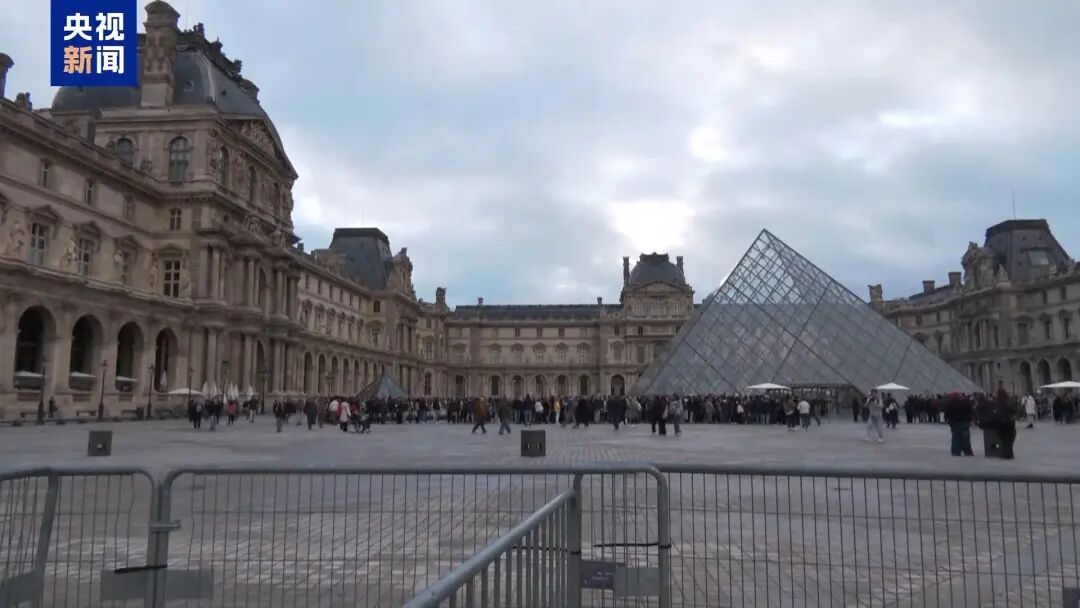
大劫案3天之后,卢浮宫重新开放!损失文物价值7.2亿元,没买保险
Mei Ri Jing Ji Xin Wen· 2025-10-22 09:16
Core Viewpoint - The Louvre Museum in Paris reopened to visitors after a robbery incident, with significant economic losses estimated at €88 million (approximately ¥720 million) due to the theft of eight pieces of jewelry, which remain missing [3][11]. Summary by Relevant Sections Incident Details - On September 19, four masked individuals executed a coordinated robbery at the Louvre, using a lift to access the museum's interior and threatening security personnel with a grinder. Within minutes, nine pieces of jewelry were stolen, including a crown belonging to Empress Eugénie, which has since been recovered [3][12]. - The stolen items include various crowns and jewelry sets associated with historical figures, such as Queen Marie-Amélie and Queen Marie-Louise [3][11]. Economic Impact - The estimated economic loss from the robbery is €88 million, which does not account for the historical value of the stolen items, deemed incalculable by authorities [3][11]. - The French Ministry of Culture stated that the stolen items were not insured due to legal restrictions, meaning that the Louvre and the French government cannot claim insurance compensation for the loss [11]. Security Concerns - Following the robbery, there has been increased scrutiny regarding the security measures at the Louvre. The French Minister of Culture defended the museum's security, stating that recent upgrades had been made [12][14]. - Historical context reveals that the Louvre has experienced multiple thefts over the past century, raising concerns about the adequacy of its security protocols [12][13]. Government Response - French President Emmanuel Macron condemned the robbery as a serious violation of cultural heritage and pledged efforts to recover the stolen items. He also announced a new initiative aimed at enhancing security at the Louvre, with an estimated budget of $930 million [14].