民营经济促进法

Search documents
洞见 | 以法治之力保障民营经济公平竞争和创新
申万宏源证券上海北京西路营业部· 2025-05-23 01:54
推推荐荐语语 《民营经济促进法》于5月20日起正式施行,这是我国第一部专门关于民营经济发展的基础性法律。 以法治之力保障民营经济公平竞争和创新 作者杨成长系申万宏源研究首席经济学家,全国政协委员;龚芳系申万宏源研究政策研究室主任,首席研究员;方思元系 申万宏源研究高级研究员;曾培春系申万宏源研究研究员 □民营经济促进法,以公平竞争作为制度的核心主线,将公平、公正、平等的市场原则贯穿 于各章节、各条款之中,系统构建了保障民营企业公平参与市场竞争的法律框架,清晰回应 了民营企业的普遍关切,为民营经济持续健康发展提供更加坚实的法律基础 □民营经济促进法,不仅以法治手段打破制约民营经济发展的公平竞争障碍,还以"促进"为 核心导向,从投融资支持、科技创新引领等方面搭建起全方位的支持体系,全面释放了国家 坚定支持民营经济发展壮大的强烈信号,为推动民营经济迈向高质量发展提供了坚实有力的 法治保障 □民营经济促进法,除了聚焦公平竞争和企业发展,还将推动民营企业经营管理规范化、制 度化作为重要着力点,通过外部制度体系的建设引导企业内生机制优化,提升企业综合竞争 力 □民营经济促进法,为金融支持民营企业发展提供重要指引,从三方面 ...


良好法治环境力促民企做强做优
Jing Ji Ri Bao· 2025-05-22 21:58
这是一部发展促进法,也是一部权益保障法。贯彻民营经济促进法,以良法促进发展、保证善治,还需 要做好衔接、配套、监督等各项工作。例如,及时废止、修订被改革实践所证明的不合时宜、阻碍民营 经济发展的法规和政策,增强系统性、整体性、协同性、时效性;推进政策措施配套,在破除障碍、治 理拖欠、依法保护合法权益、落实纾困政策、加强政企沟通等方面下功夫,协调推动各种支持保障措施 落实落细;强化行政执法监督,加大对行政执法违法行为查处力度,加强问题查纠整改、坚决纠治到 位,建立完善涉企行政执法监督长效机制。 近段时间,国家发展改革委会同商务部、市场监管总局发布《关于开展市场准入壁垒清理整治行动促进 全国统一大市场建设的通知》,全面清理和整改违规设置市场准入壁垒的各类不合理规定和做法, 让"非禁即入"落地生根;八部门联合发文支持小微企业融资,明确要求提高支持精准性;中央网信办决 定,在全国范围内启动为期2个月的"清朗·优化营商网络环境—整治涉企网络'黑嘴'"专项行动……切实 把法律红利转化为发展民营经济的推动力,更多举措还在加快落地。 市场规则越清晰,企业信心越坚定。民营经济促进法为民营企业大显身手创造了良好法治环境,也鼓舞 ...
国家发展改革委举行“民营经济促进法面对面”活动 一场政企会面里的“三种期待”
Ren Min Ri Bao· 2025-05-22 21:48
Core Points - The implementation of the Private Economy Promotion Law signifies a supportive shift towards private enterprises in China, as expressed by various entrepreneurs during a recent event [1] Group 1: Efficient Policy Implementation - Entrepreneurs expect more efficient policy implementation, citing examples of rapid certification processes that demonstrate government support for private enterprises [2] - The law encourages private enterprises to participate in national technology projects, enhancing their competitiveness [2] - Financial institutions are expected to provide more tailored support for small and micro enterprises, including reduced loan risk weights and improved access to credit [2] Group 2: Standardized Law Enforcement - The law aims to standardize law enforcement related to enterprises, addressing issues such as inconsistent enforcement and arbitrary fees [3] - The government is taking steps to facilitate the transformation of individual businesses into enterprises, providing guidance and support [3] Group 3: Improved Government-Enterprise Communication - The law establishes mechanisms for effective communication between government and enterprises, ensuring that the voices of private businesses are heard [5] - The National Development and Reform Commission has conducted numerous meetings with private enterprises to address their concerns and improve policy implementation [5] - The All-China Federation of Industry and Commerce aims to enhance its role in representing private enterprises and facilitating communication with government bodies [5]
国经中心“经济每月谈”热议《民营经济促进法》—— 用法律为民营经济健康发展保驾护航
Zhong Guo Jing Ji Wang· 2025-05-22 01:48
党中央、国务院高度重视发展民营经济。作为我国第一部专门关于民营经济发展的基础性法律,《民营 经济促进法》积极回应民营经济发展中的重点关切,围绕公平竞争、投资融资促进、科技创新、规范经 营、服务保障、权益保护等方面建立完善相关制度机制,将党中央对民营经济平等对待、平等保护的要 求落下来,持续优化稳定、公平、透明、可预期的民营经济发展环境。 庄聪生表示,《民营经济促进法》在民营经济发展史上具有里程碑意义,将坚持"两个毫不动摇"写入法 律,上升为国家意志,充分体现出党和国家促进民营经济发展的坚定决心、战略定力和鲜明立场,给广 大民营企业吃下了"定心丸"。《民营经济促进法》的施行,将更好发挥法治固根本、稳预期、利长远的 保障作用。 5月20日,《中华人民共和国民营经济促进法》正式施行。中国国际经济交流中心当天举办第185期"经 济每月谈",以"落实《民营经济促进法》更好激发民营经济活力"为主题,邀请全国工商联原党组成 员、专职副主席庄聪生,中国电子信息行业联合会常务副会长周子学,浙江大学文科学术咨询委员会主 任史晋川,中国政法大学教授李曙光发表主旨演讲,国经中心副理事长胡晓炼主持会议。 融资难、融资贵一直是我国民营企 ...
洞见 | 以法治之力保障民营经济公平竞争和创新
申万宏源证券上海北京西路营业部· 2025-05-22 01:34
推荐语 《民营经济促进法》于5月20日起正式施行,这是我国第一部专门关于民营经济发展的基础性法律。 以法治之力保障民营经济公平竞争和创新 作者杨成长系申万宏源研究首席经济学家,全国政协委员;龚芳系申万宏源研究政策研究室主任,首席研究员;方思元系申万 宏源研究高级研究员;曾培春系申万宏源研究研究员 □民营经济促进法,以公平竞争作为制度的核心主线,将公平、公正、平等的市场原则贯穿于各 章节、各条款之中,系统构建了保障民营企业公平参与市场竞争的法律框架,清晰回应了民营 企业的普遍关切,为民营经济持续健康发展提供更加坚实的法律基础 □民营经济促进法,不仅以法治手段打破制约民营经济发展的公平竞争障碍,还以"促进"为核心 导向,从投融资支持、科技创新引领等方面搭建起全方位的支持体系,全面释放了国家坚定支 持民营经济发展壮大的强烈信号,为推动民营经济迈向高质量发展提供了坚实有力的法治保障 □民营经济促进法,除了聚焦公平竞争和企业发展,还将推动民营企业经营管理规范化、制度化 作为重要着力点,通过外部制度体系的建设引导企业内生机制优化,提升企业综合竞争力 □民营经济促进法,为金融支持民营企业发展提供重要指引,从三方面对金融服务 ...

从政策支持转向法治保障的新阶段良法善治促民营经济高质量发展
Zhong Yang Ji Wei Guo Jia Jian Wei Wang Zhan· 2025-05-22 00:09
中央纪委国家监委网站 王霞 慕振东 近日,在内蒙古自治区鄂尔多斯市东胜区政务服务中心,工作人员正在办理民营企业相关业务。 新华 社记者 李志鹏 摄 特邀嘉宾 李兆前 中国民营经济研究会会长 王利明 中国法学会副会长 田 轩 清华大学国家金融研究院院长 5月20日,《中华人民共和国民营经济促进法》(以下简称"民营经济促进法")正式施行。作为第一部 专门关于民营经济发展的基础性法律,民营经济促进法的制定出台是贯彻落实党的二十届三中全会《决 定》和习近平总书记在民营企业座谈会上的重要讲话精神的重大举措,在我国民营经济发展历程中具有 里程碑意义。 记者:民营经济促进法的出台,有怎样的背景,释放了怎样的信号和信心? 田轩:改革开放以来,在党的理论和路线方针政策指引下,我国民营经济从小到大、由弱到强,不断发 展壮大,成为国民经济的重要组成部分。党和国家一贯坚持"两个毫不动摇",坚持"公有制为主体、多 种所有制经济共同发展"的基本经济制度,强调民营经济是社会主义市场经济的重要组成部分。民营经 济促进法的出台,是对一贯方针政策的延续和深化,并通过法律形式进一步明确了民营经济的地位和作 用,以稳定性法律来替代阶段性政策,明确规 ...

每日债市速递 | 银行间市场资金供给充裕
Wind万得· 2025-05-21 22:45
Group 1: Monetary Policy and Market Operations - The central bank conducted a 7-day reverse repurchase operation on May 21, with a fixed rate of 1.40%, totaling 157 billion yuan, resulting in a net injection of 65 billion yuan for the day after accounting for maturing reverse repos [2][3] - The interbank market remains liquid as the central bank continues to inject liquidity ahead of tax deadlines, leading to a slight decrease in overnight and 7-day pledged repo rates by approximately 1 basis point [4] Group 2: Interest Rates and Bonds - The latest one-year interbank certificates of deposit are trading around 1.69%, showing a slight increase from the previous day [8] - The yields on major interbank government bonds have shown varied movements, with the 1-year yield at 1.4450%, 2-year at 1.4725%, and 10-year at 1.6760%, reflecting changes in market sentiment [10] - The closing prices for government bond futures indicate a slight decline in the 30-year contract by 0.08%, while the 5-year and 2-year contracts saw minor increases [13] Group 3: Economic and Trade Developments - The National Development and Reform Commission, along with other ministries, held a face-to-face event discussing the "Private Economy Promotion Law" with representatives from 29 private enterprises, focusing on financing support and technology collaboration [14] - China and ASEAN countries have completed negotiations on the 3.0 version of the China-ASEAN Free Trade Area, which includes new chapters on digital economy, green economy, and supply chain connectivity [14] Group 4: Global Economic Insights - The Trump administration is considering an executive order to explore the feasibility of allowing private capital groups to participate in 401k plans, although no decisions have been made yet [16] - Recent negative events in the bond market include downgrades in ratings for several companies, indicating potential risks in the bond sector [17]

如何读懂民营经济促进法的“含金量”?
Ren Min Ri Bao· 2025-05-21 22:12
5月20日起,民营经济促进法正式施行。作为第一部专门关于民营经济发展的基础性法律,民营经济促 进法把党和国家对民营经济平等对待、平等保护的要求用法律制度落实下来,其制定出台是民营经济发 展的一块里程碑。 读懂这部法律的"含金量",可以先看看其创下的众多"第一次"—— 第一次将"毫不动摇巩固和发展公有制经济,毫不动摇鼓励、支持、引导非公有制经济发展"写入法律; 第一次明确民营经济的法律地位;第一次明确规定"促进民营经济持续、健康、高质量发展,是国家长 期坚持的重大方针政策";等等。 这些"第一次"分量有多重? 占企业总量超九成,对进出口和税收的贡献达到五成以上,对城镇就业的贡献达到八成以上……中国经 济社会发展创造"两大奇迹",民营经济功不可没。同时,受内外因素交织影响,当前民营经济发展也面 临一些困难和挑战,甚至有段时间,社会上还有些诸如"民营经济离场论"的奇谈怪论,混淆视听、干扰 信心。 党和国家对民营经济发展的基本方针政策,不能变,也不会变。制定出台民营经济促进法,充分彰显党 中央促进民营经济发展壮大的坚定决心,可以说是民营企业安心谋发展的"定心丸"。 民营经济促进法的"含金量",还体现在现实针对性上。 ...

全国政协委员、广东高科技产业商会会长王理宗: 深圳应成为落实民营经济促进法的先锋
Shen Zhen Shang Bao· 2025-05-21 20:26
《中华人民共和国民营经济促进法》5月20日起正式施行,备受广大民营经济组织关注,在社会各界引 起强烈反响。民营企业家对这部新法怎么看?新法施行对民营经济发展将起到哪些作用?记者近日专访 了全国政协委员、广东高科技产业商会会长王理宗。他认为,民营经济促进法为民营经济组织送来 了"身份证"和"通行证",是民营经济进入新阶段的宣言书,更是一座中国经济发展和法治建设的里程 碑。 肯定民营经济组织平等法律地位的"身份证" 谈到新法施行,王理宗表示,《中华人民共和国民营经济促进法》的施行在中国大地上响起阵阵春雷, 其意义非常重大。这部法律让无数民营企业家如释重负,让更多企业家对未来发展奠定了可持续性的良 好预期。他认为,这是为民营经济组织发放了一张和其他各类经济组织具有同等法律效力的"身份证"。 王理宗表示,改革开放以来,民营经济为中国经济社会建设作出了巨大贡献。《中华人民共和国民营经 济促进法》的出台。体现了党和政府对民营经济发展的高度重视,充分肯定了民营经济在中国经济社会 发展过程中的地位、作用和价值,也足以说明"民营企业、民营企业家是自己人"。"这张'身份证'打消了 很多民营企业家的顾虑,真正让他们能放下包袱、轻装 ...
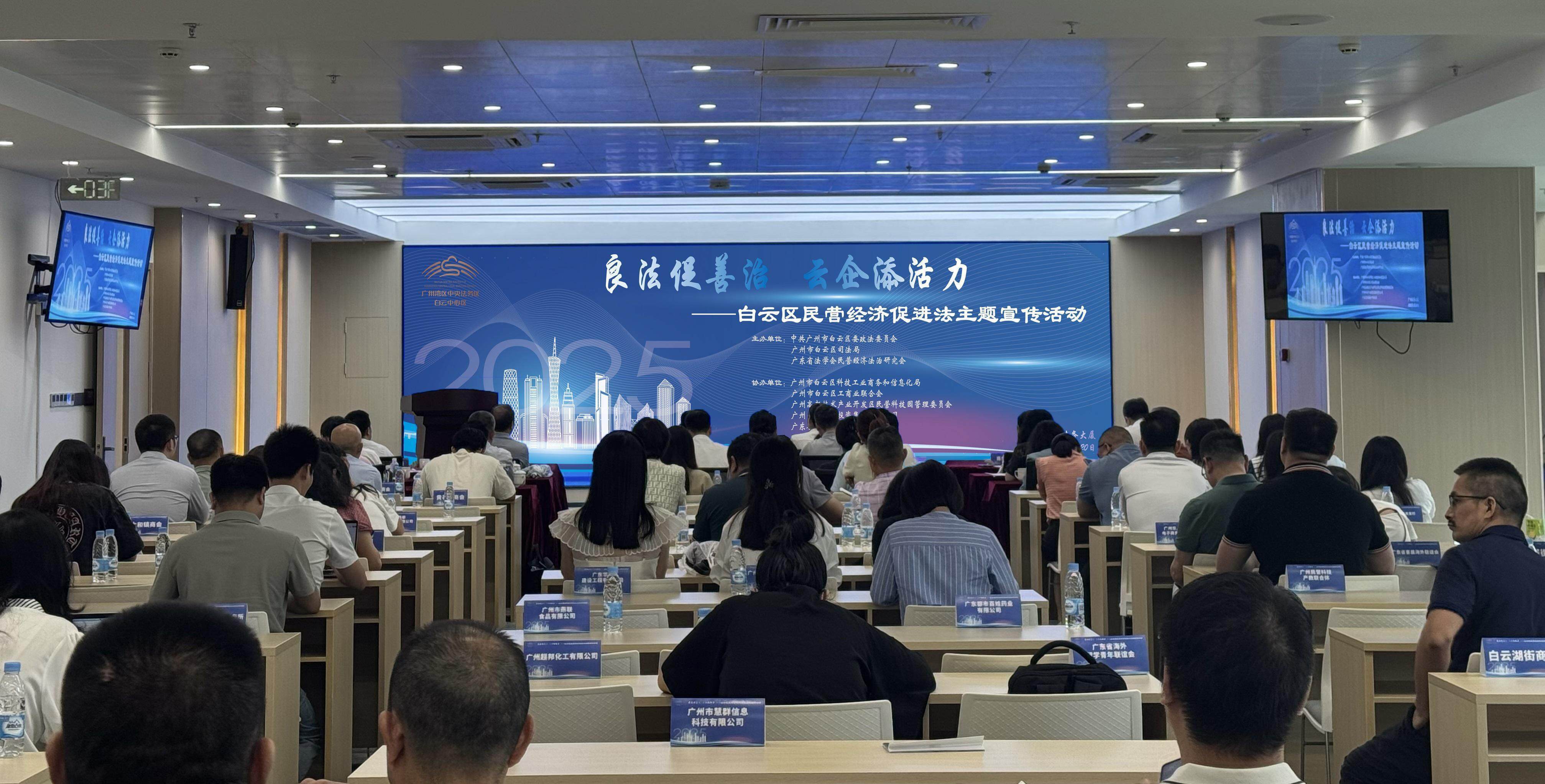
全国首场民营经济促进法主题宣传活动在广州白云举办
Sou Hu Cai Jing· 2025-05-21 18:55
� ty � . � ◆ . ◆ . . 5月20日,《中华人民共和国民营经济促进法》正式实施。当天,广州市白云区司法局联合广东省法学会民营经济法治研究会、白云区工商联、民科园管委 会、白云产业投资集团,在广州法务大厦举办"良法促善治 云企添活力"主题宣传活动。 据悉,这是《中华人民共和国民营经济促进法》实施首日、全国首场民营经济促进法专题宣传活动。 当天,活动通过"政策+法律+实务"三重解读,为来自智能制造、新能源、建筑工程等领域的100余家企业送上法治"大礼包"。 其中,广东省法学会民营经济法治研究会会长陈云良从民营经济促进法的立法背景、立法目的、重要意义、核心要义等方面,进行专题解读;广州知识产权 法院商标及不正当竞争审判庭副庭长蒋华胜结合知识产权司法保护公平竞争典型案例,分析权益保护的关键要素和有效路径,鼓励企业提升知识产权重视程 度和保护意识,增强创新创造能力。 在打造法治化营商环境新标准方面,白云区探索行政执法包容审慎监管机制,推动涉企行政检查"亮码入企",设立行政执法监督企业联系点。目前白云区市 场主体超63万户,其中95%以上是民营企业,区内建有国家级民营科技园。 在构建政企联动营商新生态方面 ...