长三角一体化发展

Search documents
协同筑“芯”链 沪宜集成电路产业融合创新迈新步
Zhong Guo Jing Ji Wang· 2025-10-23 09:05
Core Viewpoint - The event themed "Chip Surge in Pujiang, Chain Formation in Taodu" aims to promote the collaborative development of the integrated circuit industry between Shanghai and Yixing, aligning with the national strategy for the integrated development of the Yangtze River Delta [1][2]. Group 1: Industry Development - Shanghai is recognized as a core area for the development of the national integrated circuit industry, ranking among the top globally in terms of industrial competitiveness [2]. - Yixing has established a development framework for the integrated circuit industry, focusing on materials while supporting design, manufacturing, and packaging [2]. - The Yixing Economic Development Zone has implemented a "ranking and leadership" mechanism to enhance the high-quality development of the integrated circuit industry chain [2]. Group 2: Collaborative Initiatives - The Yixing Economic Development Zone has engaged with 226 key enterprises to optimize services and has created three lists detailing needs, resources, and projects, totaling 93 items [2]. - A partnership was formed between Shanghai Science and Technology Innovation Group and Yixing Industrial Fund to launch the "Shanghai Chenyao Yichuang Private Investment Fund," with a total scale of 1 billion yuan, focusing on integrated circuits, new energy, and health sectors [3]. - Various project cooperation intentions were established during the event, facilitating a full-chain cooperation loop through project matching, ecological integration, and supply chain collaboration [3].
“3个3000亿”!上海嘉定“十四五”跑出“嘉速度”
Guo Ji Jin Rong Bao· 2025-10-22 15:09
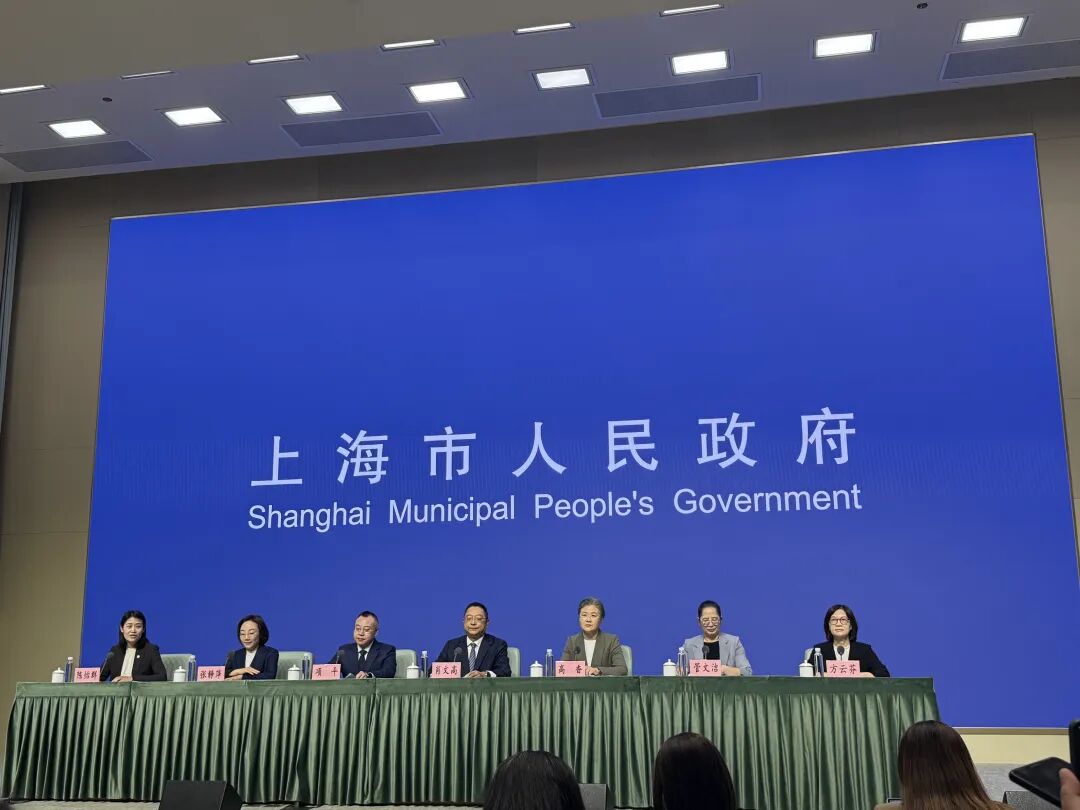
Core Insights - The press conference highlighted the achievements of Jiading District during the "14th Five-Year Plan" period, focusing on its development as a modern new-type city with strong innovation and industrial capabilities [1][3][10] Economic Development - Jiading's GDP is projected to exceed 300 billion yuan in 2024, with a 20% increase in GDP per unit of construction land compared to the end of the "13th Five-Year Plan" [3][4] - Fixed asset investment during the "14th Five-Year Plan" is expected to surpass 300 billion yuan, exceeding the initial target of 250 billion yuan [3][4] - The automotive industry has seen significant growth, with industrial output surpassing 300 billion yuan last year [3][4] Industrial Growth - Emerging industries such as automotive "new four modernizations," integrated circuits, and biomedicine have shown robust growth, averaging an annual increase of 13.8%, with total output reaching 360.3 billion yuan [4][5] - The proportion of strategic emerging industries in the industrial output has increased by 13.4 percentage points compared to the end of the "13th Five-Year Plan" [4] Innovation and Technology - Jiading has 2,578 high-tech enterprises and 1,343 specialized and innovative enterprises, ranking third in the city [5] - Research and development expenditure accounts for 6.22% of the added value, maintaining a leading position in the city [5] Urban Development - The district has initiated 265 major projects, enhancing urban functionality and quality [6] - Jiading has become the fastest-growing new city in terms of population over the past decade [6] Rural Development - The district has created 14 city-level rural revitalization demonstration villages and has implemented significant housing improvements for farmers [7] - Jiading is actively participating in the Yangtze River Delta integration, collaborating with neighboring cities on innovation and development [7] Quality of Life - The average disposable income of residents has grown at a rate 2.4 percentage points higher than the economic growth rate [8] - The district has established 40 high-quality schools and improved healthcare facilities, contributing to a higher average life expectancy than the city average [8] Environmental Sustainability - Jiading has achieved a 11.37% reduction in energy consumption per unit of added value over the past four years [8] - The forest coverage rate has reached 17.44%, with ongoing efforts to enhance green spaces and public satisfaction with environmental quality [8] Governance and Community Engagement - Jiading has established 143 regional party organizations to enhance community governance and service delivery [9] - The district has developed a network of 63 "I Jia" neighborhood centers to improve public services [9]

投资热土 “宿”造未来——上证报组织上市公司优强企业考察团走进宿州
Shang Hai Zheng Quan Bao· 2025-10-21 18:17
Group 1 - The investment event in Suzhou highlighted the city's ambition to become a top 100 city in China, with a projected GDP of 128.91 billion yuan and a 5% year-on-year growth by mid-2025 [2] - High-tech manufacturing in Suzhou saw an impressive increase of 32.8%, while total import and export volume also grew by 32%, both ranking first in Anhui province [2] - The city is focusing on key industries such as pharmaceuticals, textiles, high-end equipment manufacturing, and new materials, while also nurturing emerging sectors like outdoor economy and e-commerce [2] Group 2 - The "5512" project aims to develop five leading industries, five traditional industries, and twelve characteristic industrial clusters, aligning with the interests of visiting companies [3] - Suzhou's strategic location and favorable business environment are emphasized as key factors for attracting investment [5][6] - Local government officials expressed commitment to providing optimal services for businesses, ensuring a supportive environment for entrepreneurs [6][7] Group 3 - Local companies like Jialiqi and Zijin New Materials have demonstrated significant growth, benefiting from the supportive policies and services provided by the Suzhou government [8][9] - The hydrogen energy equipment manufacturing project in Suzhou is expected to be completed by June 2026, with a total investment of 2 billion yuan [11][12] - Companies such as Nuward New Materials are exploring opportunities to apply their innovative products in Suzhou's local industries, indicating a strong interest in collaboration [13]
深入推进长三角一体化发展
Jing Ji Ri Bao· 2025-10-18 22:11
Core Insights - The Yangtze River Delta (YRD) region has seen continuous improvement in overall strength and competitiveness since the implementation of the integration development strategy, with a GDP of 33.1691 trillion yuan in 2024, reflecting a growth of 5.5% year-on-year [1][2][3]. Economic Performance - In 2024, the YRD's GDP reached 33.1691 trillion yuan, accounting for 24.6% of the national total, with a contribution rate of approximately 30% to national economic growth [2][3]. - The YRD's total import and export value was 16.01 trillion yuan in 2024, marking a year-on-year increase of 5.6%, contributing 52.3% to national export growth in the first eight months of the year [3][13]. Innovation and Industry Development - The YRD has strengthened its technological innovation and industrial collaboration, becoming a key driver of high-quality national economic development, with significant advancements in quantum computing, domestic aircraft, and industries like integrated circuits and biomedicine [3][4]. - The region has established a collaborative innovation system, focusing on key technology research and development in fields such as integrated circuits, biomedicine, and artificial intelligence [4][11]. Infrastructure and Platform Development - The YRD has implemented a series of institutional innovations through major functional platforms, enhancing systemic mechanisms and achieving significant breakthroughs in key areas [5][12]. - The Shanghai Free Trade Zone has seen an average GDP growth of 17.6% from 2019 to 2024, with industrial output value growing at an average of 28.4% [5]. Environmental Cooperation - The YRD has made progress in ecological environment cooperation, focusing on joint governance of air and water quality, with PM2.5 levels averaging 33.0 micrograms per cubic meter in 2024, a 31.4% decrease from 2017 [18][20]. - The region has established a collaborative ecological protection mechanism, promoting biodiversity and enhancing ecological system integrity [19][20]. Open Cooperation and Trade - The YRD has become a model for collaborative openness, achieving a total import and export value of 16.01 trillion yuan in 2024, which accounts for 36.5% of the national total [13][14]. - The region has actively participated in international trade, with exports to Belt and Road countries reaching 7.7 trillion yuan, representing 34.9% of the national total [15].
北沿江高铁崇启公铁长江大桥南引桥连续梁施工有新进展
Yang Zi Wan Bao Wang· 2025-10-18 07:01
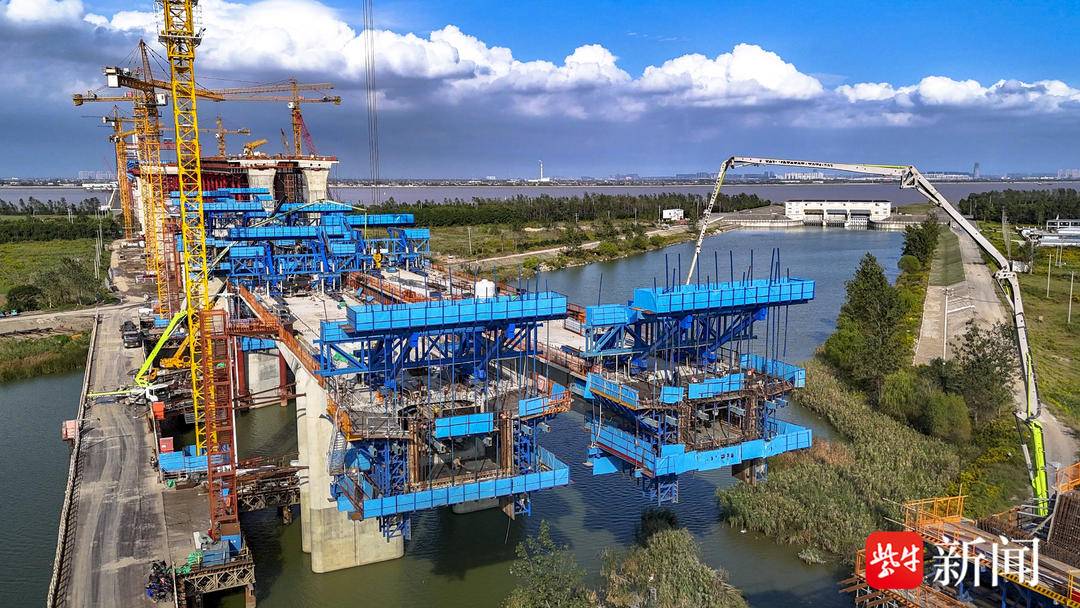
Core Points - The construction of the South Approach Bridge of the Chongqi Railway and Highway Yangtze River Bridge has reached a significant milestone with the completion of the pouring of the 8th segment of the continuous beam on October 17 [1][3] - The bridge is a critical node in the high-speed rail network connecting Shanghai, Nanjing, and Hefei, spanning a total length of 4.09 kilometers and crossing the northern channel of the Yangtze River estuary [7] Construction Details - The South Approach Bridge is located in Qidong City, Jiangsu Province, featuring an upper layer for highways and a lower layer for high-speed and intercity rail lines, with a total length of 830.05 meters for both rail lines [3] - The continuous beam over the South Chao River consists of 11 segments, with the 8th segment recently completed, and the total length of the span is 256 meters, constructed using the cantilever method [3] - The entire construction of the intercity line's continuous beam is expected to be completed by December of this year [3] Strategic Importance - The completion of the Chongqi Railway and Highway Yangtze River Bridge will establish a new rapid transit corridor between the Shanghai metropolitan area, Nanjing metropolitan area, and Hefei metropolitan area [7] - This project is significant for optimizing the railway network layout along the Yangtze River and supporting the coordinated development of the Yangtze Economic Belt, contributing to the high-quality integration of the Yangtze River Delta [7]
有章有法一笔一划把蓝图描实 市规划委员会全体会议召开
Jie Fang Ri Bao· 2025-10-18 02:05
Core Insights - The Shanghai Municipal Planning Committee held a meeting to review the five-year implementation assessment report of the "Shanghai 2035" master plan and the dynamic maintenance planning proposal [1][2] - The city aims to transform new directives from President Xi Jinping into actionable plans to contribute to China's modernization efforts [1] Group 1: Implementation and Planning - The assessment report summarizes the effectiveness of the "Shanghai 2035" master plan and outlines key issues for the next phase [1] - The dynamic maintenance planning proposal presents strategies and action tasks for urban planning and construction during the "14th Five-Year Plan" period [1][2] - The city emphasizes the importance of maintaining the integrity and authority of the overall urban planning [2] Group 2: Development Strategies - The city plans to balance high-quality production and consumption spaces to foster technological and industrial innovation [2] - There is a focus on urban renewal, including the transformation of old residential areas and outdated commercial buildings [2] - The planning includes enhancing regional development patterns, particularly in relation to the Yangtze River Delta integration [2]
发挥“上海2035”总规引领作用!上海市规划委员会全体会议召开
Di Yi Cai Jing· 2025-10-17 11:47
Core Points - The Shanghai Planning Committee held a meeting to review the "Shanghai 2035" overall plan five-year implementation assessment report and dynamic maintenance planning scheme [1][2] - The city aims to become a world-class socialist modern international metropolis, guided by the principles outlined by General Secretary Xi Jinping [1] - The overall urban planning plays a crucial role in the city's development, with a focus on implementing strategies and action tasks for the "14th Five-Year Plan" period [2] Group 1 - The assessment report summarizes the effectiveness of the "Shanghai 2035" overall plan implementation and outlines key issues for the next phase [1] - The dynamic maintenance planning scheme emphasizes the importance of maintaining the integrity and authority of the overall urban planning [2] - The city is committed to a balanced development approach, integrating high-quality production and consumption spaces to foster innovation [2] Group 2 - The city will focus on urban renewal projects, including the transformation of old neighborhoods and upgrading outdated commercial buildings [2] - There is a strategic emphasis on regional development, particularly in relation to the Yangtze River Delta integration [2] - Infrastructure planning will prioritize safety and functionality to support high-quality development [2]
申万宏源助力上海金桥集团19.8亿公司债成功发行
申万宏源证券上海北京西路营业部· 2025-10-15 02:51
Core Viewpoint - The successful issuance of corporate bonds by Shanghai Jinqiao (Group) Co., Ltd. is a significant step in supporting the integrated development of the Yangtze River Delta region, enhancing the company's operational capabilities and optimizing its financing structure [3][4]. Group 1: Bond Issuance Details - The bond issuance consists of two varieties: - Variety one has a scale of 1.16 billion yuan, a term of 9 years (3+3+3), and a coupon rate of 2.05%, with a subscription multiple of 3.05 times - Variety two has a scale of 820 million yuan, a term of 10 years (5+5), and a coupon rate of 2.29%, with a subscription multiple of 2.61 times [3]. Group 2: Company Background - Shanghai Jinqiao (Group) Co., Ltd. was established in 1997 and is a large state-owned enterprise responsible for the development and construction of the Shanghai Jinqiao Economic and Technological Development Zone, approved by the State Council [3]. - The company is the main operator of the Jinqiao Development Zone and is also involved in the development and operation of the Lingang Comprehensive Area and Nanhui Industrial Park [3]. Group 3: Role of Shenwan Hongyuan - Shenwan Hongyuan Securities, a leading financial institution based in Shanghai, has played a crucial role in facilitating multiple fixed-income financing efforts for Shanghai's real economy in recent years [3]. - The firm adheres to the principle of serving the real economy and aims to enhance its service capabilities to support national strategies and contribute to the high-quality development of Shanghai's economy [4].

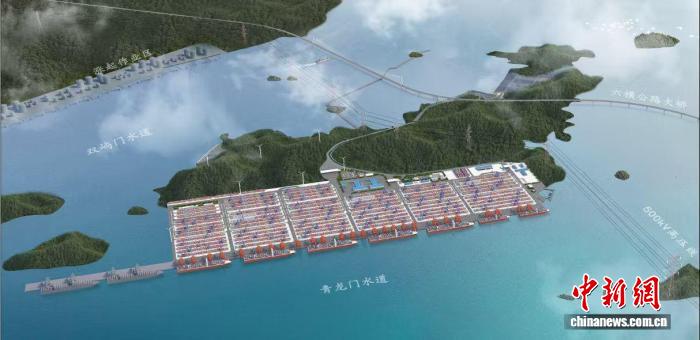
宁波舟山港第三个千万箱级集装箱泊位群开工
Zhong Guo Xin Wen Wang· 2025-10-11 09:50
Core Insights - The construction of the first phase of the Fodu Container Terminal project at Ningbo-Zhoushan Port has officially commenced, marking a significant milestone in the development of a world-class port in Zhejiang Province [1][3]. Project Overview - The Fodu Container Terminal project is part of the ten landmark projects for building a world-class strong port in Zhejiang, featuring seven container berths of 200,000 tons and a planned annual throughput of 6.5 million TEUs [3]. - This project is the first hundred-billion-level terminal project initiated after the approval of the "Ningbo-Zhoushan Port Overall Planning (2035)" [3]. - The first phase includes the construction of two 200,000-ton container berths and related land facilities, with a designed annual throughput capacity of 2.01 million TEUs, expected to be completed by the end of 2027 [3][5]. Strategic Importance - The project aims to alleviate the bottleneck in container throughput capacity at Ningbo-Zhoushan Port, enhancing its ability to service ultra-large container ships and solidifying its position as a core global container hub [5]. - It is expected to stimulate the development of high-end shipping services, port manufacturing, and clean energy industries on Liuhong Island, attracting more upstream and downstream enterprises [5]. - The terminal will support the integrated development of the Yangtze River Delta and the construction of the Yangtze Economic Belt, providing more efficient maritime logistics channels for coastal and riverine areas [5].

激活“邻”聚力 “毗邻统战”助力区域高质量发展
Zhong Guo Xin Wen Wang· 2025-10-10 04:07
Core Insights - The article discusses the increasing collaboration among neighboring regions in the context of the United Front Work, highlighting the establishment of various alliances and initiatives aimed at regional development and integration [1][4][11]. Group 1: Regional Collaboration Initiatives - The "Qingwu Jia United Front Alliance" was established in 2019 among Shanghai Qingpu, Jiangsu Wujiang, and Zhejiang Jiashan to empower regional development through united front work [1][7]. - The "Jinpingguo" brand was created in 2018 to facilitate interactions between overseas Chinese communities in the neighboring regions of Shanghai and Zhejiang, leading to over 50 events aimed at fostering connections [3][4]. - The "Entrepreneurship China: Overseas Chinese Gather in Jiaxing" investment exchange conference in 2023 resulted in multiple investment projects being signed, showcasing the effectiveness of cross-regional collaboration [5][10]. Group 2: Challenges and Solutions - Despite geographical proximity and cultural similarities, neighboring regions face challenges such as overlapping resource advantages and administrative discrepancies [7][9]. - The three regions have adopted a collaborative approach that emphasizes consultation and consensus-building to overcome administrative barriers and enhance resource sharing [9][10]. - The establishment of a "six-party cooperation mechanism" among key areas in the Yangtze River Delta aims to streamline services and improve the efficiency of united front work [4][5]. Group 3: Broader Implications and Recommendations - The article suggests that the successful models of collaboration in the Yangtze River Delta can serve as a reference for other regions, such as Beijing-Tianjin-Hebei and Chengdu-Chongqing, to enhance their united front work [11][12]. - It emphasizes the importance of creating smaller, localized brands and cooperation models to invigorate regional united front efforts, which could lead to more effective resource sharing and economic development [12].