非遗传承

Search documents
大唐风韵助力“星光熠熠·春之序曲”2026新年慈善艺术展演
Zhong Guo Qi Che Bao Wang· 2026-02-05 04:27
Core Insights - The event "Starlight Shining: Spring Overture - 2026 Starlight New Year Charity Art Performance" was held at the Beijing Starlight Art Center, combining art exhibition, intangible cultural heritage display, and charity live streaming to create a multi-dimensional platform for love and support [2][4]. Group 1: Event Overview - The event attracted various caring individuals from different sectors, showcasing a deep integration of art and charity [2]. - The participation of the intangible cultural heritage brand "Chinese Embroiderers" was a significant highlight, featuring creative products that reflect traditional craftsmanship and rural cultural revitalization [4]. Group 2: Charity Initiatives - The event raised funds through 53 donations, which will be used for the "100 Yuan Assistance" project, providing monthly living subsidies for children in need from Hebei, Henan, Shaanxi, and Gansu provinces [6]. - The charity live streaming by Chinese Embroiderers allowed online viewers to engage with traditional techniques and contribute to fundraising efforts, expanding the reach of charity beyond physical attendance [6]. Group 3: Collaborative Efforts - The event demonstrated mutual support among various charitable entities, with local businesses like Aixi Bakery providing support and enhancing the warm atmosphere [6]. - The integration of art education and charity was emphasized, with performances by students serving as a medium for spreading charitable messages [6].


李子柒在人民日报撰文,回应为何将工作重心转幕后
新华网财经· 2026-02-04 07:52
2月4日,李子柒非遗工作站负责人李子柒在《人民日报》文化版撰文《生活因文艺而改变》。 李子柒写道,不只村民的生活因文艺而改变,影视剧取景带动乡村文旅,许多短视频创作者让非遗技艺被更多人看见,主播卖出土特产的 同时还宣介了乡村……你看,当文艺扎根泥土,它便不再悬于空中。 李子柒说:" 这也是我将工作重心逐步转向幕后的原因 。以前,我思考的是如何把视频拍得美,如何把手艺展现得好。可现在我更关心这些文艺,能不能 让更多与之相关的人得到实实在在的收益,能不能让手艺传承发展下去。" 以下为全文—— 前段时间,四川绵阳平武县下了大雪。第二天一早,我和舅舅出门采空镜,特意去了趟白马藏族乡的甘海子景区。时间过得真快,此前我曾去那里弹琴。 雪宝顶终年积雪,大夏天都得穿棉服。我穿着蜀锦制作的裙子,在雪山前弹钢琴,手冻得僵硬,"叮叮哐哐",音符似乎也被冻僵了,只能后期补录了一 版。没想到,视频发出后甘海子火了,网友纷纷奔赴那片雪山林海,与岷山的皑皑白雪"撞个满怀"。 来源: 人民日报客户端 如今,访客不少,这里却依然安静、纯粹。快到草甸时,我忽然听到一阵清亮的旋律,像是冰凌在阳光下碎裂一般。循声走近,我才看见是一名穿着传统 服饰的 ...

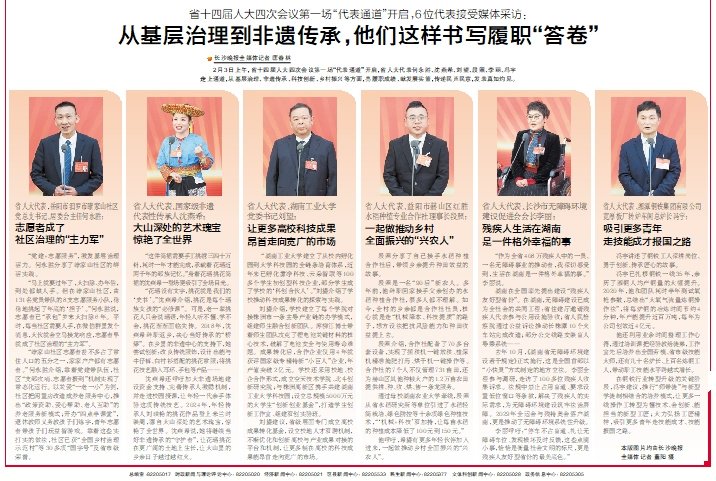
从基层治理到非遗传承,他们这样书写履职“答卷”
Chang Sha Wan Bao· 2026-02-04 00:13
Group 1: Community Governance and Volunteerism - The community of Liaojiashan has effectively utilized volunteers, with 131 party members leading 8 volunteer teams, significantly contributing to community governance and activities such as year-end cleaning [5] - Approximately 20% of the community's permanent residents are volunteers, showcasing a strong culture of volunteerism and community engagement [5] - The community has received over 30 national and provincial honors, including being recognized as a "National Rural Governance Demonstration Village" [5] Group 2: Cultural Heritage and Non-material Cultural Inheritance - The art of embroidery in the Hmong culture, which requires extensive manual labor, is at risk of being lost as younger generations struggle to learn the craft [7] - Efforts to innovate traditional clothing and integrate embroidery techniques into modern products have been initiated to preserve this cultural heritage [7] - The call for increased funding for cultural heritage sites and improved incentive mechanisms for inheritors has been emphasized to ensure the continuation of these traditions [7] Group 3: Technology and Innovation in Education - Hunan University of Technology has established a comprehensive incubation system, resulting in the creation of over 100 student-led tech startups [9] - The university's collaboration with local industries has led to significant advancements in lithium battery technology, with a partner company achieving an annual output value exceeding 200 million yuan [9] - A proposal for a provincial-level fund to support the commercialization of university research outcomes has been made to enhance the connection between academia and industry [9] Group 4: Agricultural Innovation and Rural Revitalization - The rice planting cooperative led by a young entrepreneur has adopted mechanization and technology to improve farming efficiency and reduce costs by 100 to 150 yuan per mu [11] - The cooperative provides comprehensive agricultural services to local farmers, enhancing productivity across 12,000 mu of farmland [11] - There is a call for more young individuals to engage in agriculture and contribute to rural revitalization efforts [11] Group 5: Accessibility and Disability Rights - Hunan has taken the lead in establishing a "disability-friendly province," with initiatives involving disabled representatives in public facility assessments [13] - The implementation of local legislation aimed at improving accessibility for disabled individuals has been highlighted, addressing practical needs such as the prohibition of occupying blind paths [13] - The upcoming 2029 National Games and Special Olympics in Hunan is expected to further enhance the systematic upgrade of accessibility environments [13] Group 6: Skills Development in the Steel Industry - The steel industry has seen significant productivity improvements, with innovative practices leading to an annual increase in production capacity by nearly one million tons [16] - A focus on training and mentoring has resulted in the development of skilled workers, including national role models and skilled masters [16] - Recommendations for combining traditional apprenticeship models with modern training methods have been made to attract youth to skilled trades [16]
非遗逢春,“马”上新生
Xin Lang Cai Jing· 2026-02-03 21:52
Group 1 - The article highlights the creative works of young inheritors of intangible cultural heritage, focusing on the theme of "horses" as a symbol of good fortune for the upcoming Spring Festival [1][2] - Liu Guanyu, a 33-year-old paper-cutting artist, aims to create 100 unique horse-themed paper cuts each year, inspired by traditional techniques and personal memories [3][4] - Zhang Xue, a Suzhou embroidery inheritor, has completed two horse-themed embroidery pieces, incorporating traditional and innovative techniques to revitalize the art form [5][6] Group 2 - The popularity of the "Ma Shang Ping An" clay horse from the Huishan Mud Figurine Factory has surged, with orders extending into April, showcasing the appeal of traditional crafts among younger generations [7][8] - The success of the clay horse design, created by a young artisan, reflects a growing recognition and appreciation for traditional craftsmanship in contemporary markets [8]
湟源排灯:老技艺抱团焕新生
Xin Lang Cai Jing· 2026-02-03 19:46
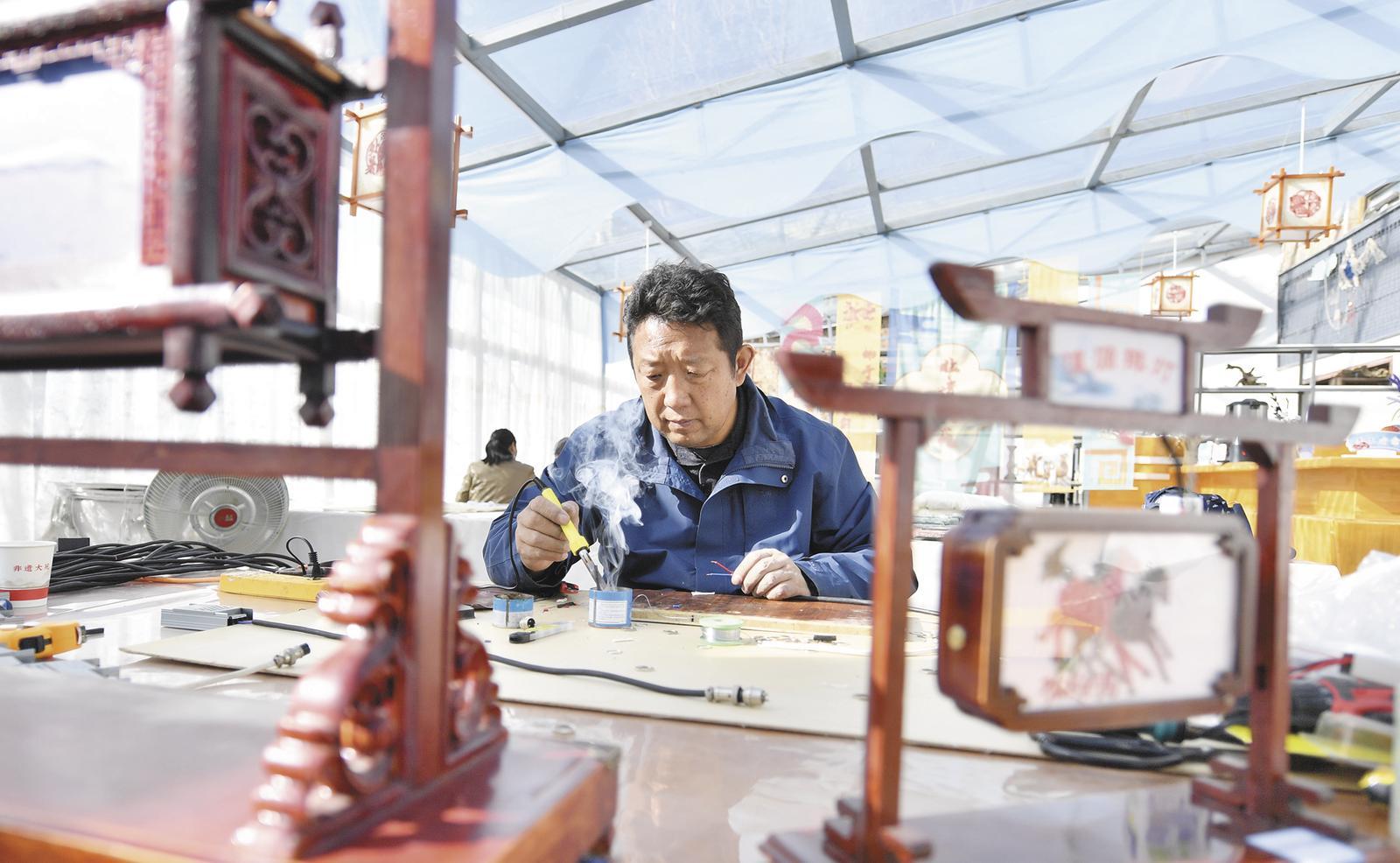
组装。 焊接。 皮影的灵动、剪纸的精巧与绘画的雅致在此交融,每一盏都饱含匠心,既是多元文化碰撞的结晶,更是湟源非遗大院内非物质文化遗产传承人们"抱团取 暖"传播河湟文化的生动实践。 "非遗大院藏着老技艺的新生密码。"李永清笑着介绍。这里群英汇聚,研学活动、非遗进校园、景区展演等活动接连不断,为传承人搭建起广阔的展示交流 舞台。大院量身定制培训,从授课技巧、自我营销到网络运营手把手教学,更联合青海省人力资源和社会保障厅制定技艺标准、颁发职业证书,让传承人的 手艺有了"硬背书",就业路越走越宽。线上直播吸粉无数,线下体验课程火爆,"理论+实践"的模式既传扬了文化,又带动了销售,让传承人们收获了增收 与自信。 绘画。 "这灯里藏着我们一辈子的坚守。"党青云凝视着排灯感慨道。受家传影响,他自幼学画,涉猎古建、唐卡等多项技艺,1996年起专注排灯绘画,已创作数百 个排灯、上千幅画面。如今的排灯在传承中不断创新,以明快画面、讲究上色为核心,融入多种非遗技艺,结合导光板技术优化灯光效果。回想早年经费短 缺、作品遭破坏的困境,党青云满心感慨:"如今抱团发展,用本土材料坚守古朴特质,才让这国家级非物质文化遗产重焕生机。" 皮绣 ...
转型中的坚守与突破:王麻子的传承、创新与市场引领
Zhong Guo Shi Pin Wang· 2026-02-03 07:48
兼具非遗传承与市场引领双重身份的王麻子,正以技术创新、品质升级、文化出海等多元实践,成为行业转型 升级的典型样本。在新的时代命题下,王麻子致力于将三百多年的匠心传承,变成品牌和产品创新的内核—— 在产业升级的"硬实力"背后,融入文化传承的"软价值"。 设计驱动:全球奖项,锚定价值新高度 2025年,中国刀剪产业在品质消费崛起与制造转型的双重驱动下,步入深度整合与价值重塑的关键阶段。与此 同时,2025年政府工作报告中"推进文化遗产系统性保护,提升非物质文化遗产保护利用水平"的要求,与产业 升级趋势形成战略呼应,为拥有深厚历史底蕴的行业指明了"守正创新",实现高质量发展的根本路径。 纵观2025年的中国厨刀市场,一场深刻的消费变革已然发生。沙利文(Frost & Sullivan)在2025年发布的《中 国主厨用刀白皮书》中指出,中国消费者的需求已发生根本性变迁——他们对菜刀的期待"不再局限于基本的 切割功能",而是全面转向对专业化、健康安全、设计美学与极致体验等综合追求。这一变迁清晰表明,"体 验"已成为刀剪行业消费决策中日益关键的价值维度,正推动整个行业迈向以用户深度需求为导向的新发展阶 段。 这一成果的背 ...

光影穿梭千年 戏台青春洋溢(为梦想奔跑)
Ren Min Ri Bao· 2026-02-03 03:35
一束暖光洒向幕布,音乐渐强。幕后,李玮手持竹竿,熟练地操控着皮影;幕上,蝴蝶翩翩起舞,荷花 亭亭玉立,池塘里的乌龟与从天而降的仙鹤缠斗,逗得小朋友们哈哈大笑。 周末,在新疆维吾尔自治区昌吉市,皮影戏《仙鹤与乌龟》在"昌吉有戏"盖碗茶皮影戏剧场精彩上演。 剧场负责人李玮刚表演完,就匆忙准备起第二天到乡镇小学展演所需的道具,还抽空接待前来选购皮影 文创的顾客。 最近,剧场来了一位92岁高龄的顾客,他告诉李玮,自己第一次看皮影戏时才5岁,"80多年过去了,真 高兴能在家乡再次看到"。越来越多年轻人带着长辈来到剧场,边喝茶边看戏,李玮还为他们免费拍全 家福。"能感受到这样温馨的生活,就是我坚持做皮影戏的意义。"李玮说。(记者 尚嵘峥) 她找到济南皮影戏省级非遗代表性传承人李娟,利用课余时间从零学起。"刚开始以为很简单,结果一 上手,才发现难度不小。不同的人物、动物,表演风格都不尽相同。"李玮说,"比如走路姿态,小女孩 走起来活泼轻快;老人要佝偻着背,颤颤巍巍地走;壮士走起来要铿锵有力,这些都要在生活中多观 察。"大学4年,在李娟的指导下,李玮逐渐掌握了皮影戏的入门级表演和基础的道具制作。 毕业后,李玮听从父母的建议, ...
90后小伙返乡创业“绣”出非遗新牧歌
Xin Lang Cai Jing· 2026-02-02 20:06
Core Insights - The article highlights the success of a non-heritage workshop in Inner Mongolia, led by a young entrepreneur, Wang Tugulin, who returned to his hometown to promote local craftsmanship and support community development [1][2]. Group 1: Company Overview - The workshop was established in 2019 with a total investment of 1 million yuan, combining 600,000 yuan from poverty alleviation funds and 400,000 yuan from Wang Tugulin's personal savings [2]. - The workshop specializes in high-end ethnic clothing, Mongolian hand embroidery, and ethnic bedding products, contributing to the economic upliftment of local farmers and herders [2]. Group 2: Community Impact - The workshop employs over 30 workers, with more than 10 previously classified as "poor households," providing them with stable income opportunities [1][2]. - Workers can earn over 40,000 yuan annually while managing household responsibilities, showcasing the workshop's role in improving local livelihoods [1]. Group 3: Product and Market Strategy - The workshop has integrated modern design elements into traditional crafts, targeting a younger demographic and enhancing product appeal [2]. - The company has successfully built a social media presence with over 40,000 followers, expanding its market reach to regions like Xinjiang and Qinghai, with annual sales exceeding 3 million pieces [2]. Group 4: Cultural Significance - The workshop emphasizes the importance of cultural heritage, aiming to blend traditional craftsmanship with contemporary trends, thus preserving and promoting local culture [2][3]. - The slogan "Non-heritage is not 'forgotten', the future is promising" reflects the workshop's commitment to revitalizing traditional skills and contributing to rural revitalization efforts [3].

300年非遗“活”起来!老中青三代共舞新春
Xin Lang Cai Jing· 2026-02-02 14:55
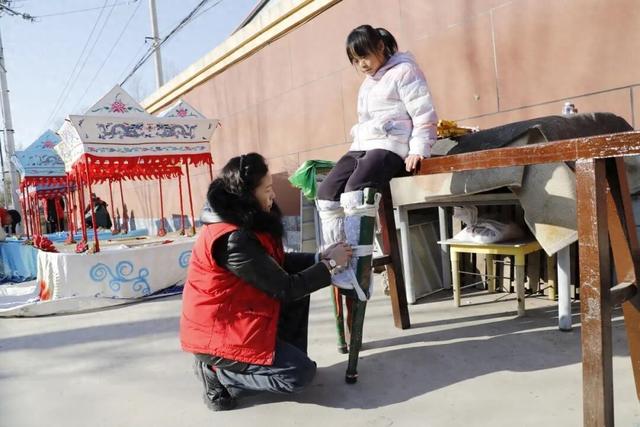
春节未至,喜庆的氛围已然在顺义涌动,在仁和镇吴家营村万一善老会的排练场上,铿锵的鼓点与悠扬 的海笛交织出热烈的序曲,老中青三代队员正为一年一度的走会加紧排练、打磨细节。在这里,老艺人 将传承了300多年的非遗技艺倾囊传承,年轻一代则潜心琢磨,让古老技艺在跃动的身影间焕发新生。 万一善老会会长付莉(左)传授高跷的系法。 排练场内,大家熟络的招呼声此起彼伏,老艺人给小朋友们绑高跷,小队员的眼中满是跃跃欲试的神 采。踩上高跷的小队员们立即起身,如履平地。儿童高跷高约90厘米,脚踏处离地40厘米左右,成人高 跷高约1.5米,脚踏处离地1米,掌握平衡至关重要。而对他们来说学会行走只是第一步,在高跷上打腰 鼓、完成高难度动作,才是小成员们进一步学习的必修课。 付莉(右二)指导徒弟。 "扇子打直,抖起来。腿要蹲一下,注意平衡……"万一善老会会长付莉正在一遍遍纠正着两个徒弟的动 作。徒弟刘宇珊从5岁开始学高跷,两三个月便能走得稳稳当当。"我也摔倒过很多次,很疼,但是我不 想放弃,就是想让更多人看见这门技艺,看见坚持的精神。"刘宇珊说。 付金贵(右一)传授高跷腰鼓技艺。 老中青三代传承人乐在其中。 吴家营万一善老会起源于清康熙 ...
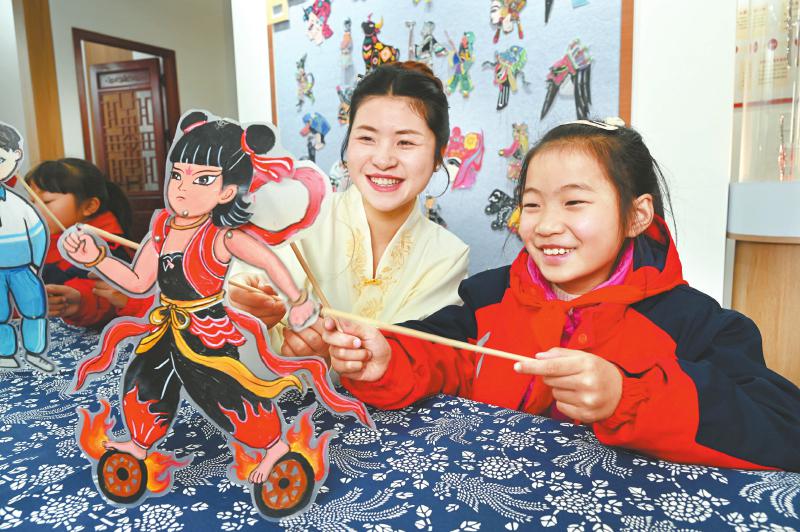
皮影进校园
Xin Lang Cai Jing· 2026-02-01 22:24
Core Viewpoint - The article highlights the integration of the "double reduction" policy with the preservation of intangible cultural heritage through the establishment of a shadow play club at a primary school in Neijiang City, promoting student engagement with traditional art forms [1] Group 1 - The primary school in Neijiang City has initiated a shadow play club to enhance students' understanding and appreciation of this traditional art form [1] - The school conducts regular training sessions on shadow play production and performance, allowing students to engage closely with the art [1] - This initiative reflects a broader effort to combine educational reforms with cultural heritage preservation, aligning with national policies [1]