对等关税
Search documents
对等关税方案落地,外围走衰退逻辑
Chuang Yuan Qi Huo· 2025-04-03 08:34
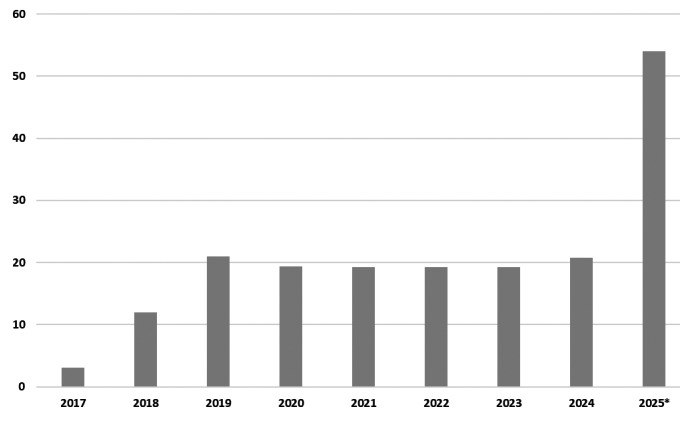
1. Report Industry Investment Rating No relevant information provided. 2. Core View of the Report - After the US announced the global reciprocal tariff plan, the overseas market followed a recession logic. It is necessary to observe the trade game among countries in the next 6 days. Only after the game reaches a balance will the market have new opportunities. Attention should be paid to the impact of the tariff increase on exports, possible production capacity backflow, and potential domestic policy support. In the short - term, the A - share index will test the lower support around 3300 points, and the trend is expected to bottom out and rebound. In terms of structure, the role of dividend - weighted stocks in stabilizing the market should be emphasized [1][2][9] 3. Summary According to the Directory 3.1 Market Viewpoint 3.1.1 Overseas Overnight - Trump announced a global reciprocal tariff plan with a higher - than - expected tariff. A 10% universal benchmark tariff on all imported goods will take effect on April 5, and the reciprocal tariffs for different countries will take effect on April 9. For China, the tariff increase this year will reach 54%. After the plan was announced, the financial market clearly followed a recession logic, with US stock index futures dropping significantly, the yield of 10 - year US Treasury bonds falling, the US dollar index fluctuating, and gold prices rising [1][4] 3.1.2 Domestic Market Review - On Wednesday, the broader market opened lower, fluctuated slightly, and closed up 0.05%. The Shenzhen Component Index rose 0.09%, and the ChiNext Index rose 0.13%. The market showed a narrow - range oscillation. Due to the shrinking trading volume, there was no sector effect. The previously rising pharmaceutical sector was weak at the opening. The market turnover fell below one trillion, reaching the lowest level since January 13. Funds were waiting for the US tariff decision, showing obvious caution. In terms of sectors, textile and apparel, beauty care, communication, and banking led the gains, while military industry, non - ferrous metals, public utilities, and steel led the losses. There were 2755 rising stocks and 2425 falling stocks in the whole market [2][5] 3.1.3 Important News - **US Trade Policy**: Trump signed an executive order to set a 10% "minimum benchmark tariff" on all countries and impose reciprocal tariffs. The reciprocal tariff for the EU is 20%, Japan 24%, Vietnam 46%, and South Korea 25%. Goods under the US - Mexico - Canada Agreement will continue to be tariff - exempt, and those not meeting the criteria will maintain a 25% tariff. The US Treasury Secretary called on countries not to retaliate. The benchmark tariff will take effect on April 5, and the reciprocal tariff on April 9. Additionally, a 25% automobile tariff will take effect on April 3, and the tariff on auto parts will take effect on May 3. Gold bars, copper, pharmaceuticals, semiconductors, and wood products are not subject to the "reciprocal tariff" [6] - **Countermeasures**: Many countries have stated that they will take countermeasures against US tariffs [7] - **Domestic Policies**: The General Office of the CPC Central Committee and the General Office of the State Council issued the "Opinions on Improving the Price Governance Mechanism", promoting the construction of important commodity spot and futures markets, optimizing rules for futures variety listing, trading, and supervision, and laying a foundation for market - determined prices. The trading markets for oil, gas, coal, etc. will be developed in an orderly manner [7] - **Stock Market New Accounts**: In the first quarter of this year, 7.47 million new A - share accounts were opened, a year - on - year increase of 31.74% [8] - **Military Exercises**: The Eastern Theater Command successfully completed joint military exercises around the Taiwan Island. The spokesperson of the Ministry of National Defense stated that they will resolutely crush all "Taiwan independence" separatist acts and firmly promote the process of national reunification [8] - **Anti - Dumping Investigation**: The Ministry of Commerce extended the anti - dumping investigation on imported related brandy from the EU until July 5, 2025 [8] - **Pilot Projects**: Nine cities including Shanghai were included in the first - batch pilot scope for large - scale vehicle - grid interaction applications [8] 3.1.4 Today's Strategy - After the US reciprocal tariff plan was announced, the overseas market followed a recession logic. It is necessary to observe the trade game among countries in the next 6 days. Only after the game reaches a balance will the market have new opportunities. Attention should be paid to the impact of the tariff increase on exports, possible production capacity backflow, and potential domestic policy support. In the short - term, the A - share index will test the lower support around 3300 points, and the trend is expected to bottom out and rebound. Investors should maintain a calm attitude and pay attention to the stabilizing role of dividend - weighted stocks [9] 3.2 Futures Market Tracking - The report provides detailed data on the performance, trading volume, and positions of the Shanghai 50 Index, CSI 300 Index, CSI 500 Index, and CSI 1000 Index futures contracts, including closing prices, settlement prices, price changes, trading volume changes, position changes, etc. It also presents multiple charts related to the basis and inter - period spreads of these index futures [11][12] 3.3 Spot Market Tracking - **Market Performance**: The data shows the current points, daily, weekly, and monthly price changes, trading volumes, and valuations of various major A - share indexes and sectors, including the Wind All - A Index, Shanghai Composite Index, Shenzhen Component Index, etc. [30] - **Market Style Impact**: Analyzes the impact of different market styles (cyclical, consumer, growth, financial, and stable) on the Shanghai 50 Index, CSI 300 Index, CSI 500 Index, and CSI 1000 Index in terms of daily, weekly, monthly, and annual contributions [31][32][33] - **Valuation Charts**: Presents charts on the valuations of important indexes and Shenwan sectors, as well as data and charts on market trading volume, turnover rate, the number of rising and falling stocks, index trading volume changes, northbound funds, Hong Kong Stock Connect, margin trading balances, etc. [34][37][40] 3.4 Liquidity Tracking - The report provides charts on the central bank's open - market operations and Shibor interest rates, reflecting the liquidity situation in the market [51]
美国“对等关税”影响分析
Minmetals Securities· 2025-04-03 08:14
Impact on U.S. CPI - The implementation of the "reciprocal tariffs" is expected to increase the U.S. Consumer Price Index (CPI) by approximately 3%[2] - In 2024, the total U.S. imports are projected to be $4.1 trillion, with the newly announced tariffs affecting about $2.5 trillion of imports[2] - The average tariff level on the $2.5 trillion of imports is estimated to reach 34%, while the overall tariff impact on total imports could be around 24%[2] Tariff Details - Tariffs on China will reach 54% when combined with previous tariffs, while tariffs on the EU will be set at 20%[8] - Specific tariffs include 34% on China, 31% on Switzerland, 36% on Thailand, and 46% on Vietnam, among others[8] - A basic tariff of 10% will be applied to all countries, exceeding market expectations[8] Negotiation and Actual Rates - The announced tariffs are considered a maximum limit, with potential for negotiation to lower actual rates[3] - If negotiations with key trading partners succeed, the effective tariff rate could drop to around 3%, leading to a minimal CPI impact of approximately 0.5%[3] - Under neutral scenarios, the actual impact on CPI is estimated to be between 1% and 1.8%[3] Market Outlook - The financial market may have already priced in the negative impacts of the tariffs, suggesting limited room for further declines[4] - The likelihood of significant additional tariff increases is low, as current rates have approached the maximum levels previously suggested by Trump[4] - China's potential domestic policies to stimulate demand may mitigate some negative impacts from U.S. tariffs[4]
国内贵金属期货涨跌不一 沪金主力上涨0.49%
Jin Tou Wang· 2025-04-03 08:05
Market Overview - Domestic precious metal futures showed mixed results, with Shanghai gold futures at 739.04 CNY per gram, up 0.49%, while Shanghai silver futures were at 8286.00 CNY per kilogram, down 1.44% [1] - International precious metal futures both declined, with COMEX gold at 3143.90 USD per ounce, down 1.45%, and COMEX silver at 33.28 USD per ounce, down 4.90% [1] Price Data - Shanghai gold futures opened at 735.88 CNY, reached a high of 747.98 CNY, and a low of 731.90 CNY per gram [2] - Shanghai silver futures opened at 8418.00 CNY, peaked at 8461.00 CNY, and dropped to a low of 8260.00 CNY per kilogram [2] - COMEX gold opened at 3196.60 USD, with a high of 3196.60 USD and a low of 3138.20 USD per ounce [2] - COMEX silver opened at 34.95 USD, with a high of 34.95 USD and a low of 33.27 USD per ounce [2] Economic Impact - Donald Trump's new tariff policy is viewed as a potential "tsunami" impacting the global economy, likely to raise U.S. prices, suppress consumption, and disrupt the global trade system [3] - The impact of the tariff policy varies by region, with Canada and Mexico facing lighter effects, while countries like Vietnam may experience severe consequences [3] - The IMF's former chief economist warned that differentiated tariff rates could lead to "trade diversion" issues, undermining existing trade rules [3] Market Analysis - On April 2, COMEX gold prices rose by 1.41% to 3190.30 USD per ounce, while Shanghai gold futures fell by 0.14% to 734.40 CNY per gram [4] - The U.S. President signed two executive orders regarding "reciprocal tariffs," establishing a 10% minimum baseline tariff, effective April 5, with reciprocal tariffs starting on April 9 [4]
特朗普对等关税的八大估算
Huachuang Securities· 2025-04-03 08:03
Group 1: Tariff Increases - The overall tariff rate for the U.S. is estimated to increase by 18.2% due to the new reciprocal tariffs[3] - Excluding products under Section 232, the effective tariff increase is approximately 13.9%[3] - The highest tariff rates are imposed on Cambodia (49%), Vietnam (46%), and Iraq (39%), with China facing a 34% increase[3] Group 2: Inflation Impact - The short-term inflation impact in the U.S. from the tariff increase is estimated to be between 0.7% and 1.6%, with a median of 1.2%[4] - In China, the tariffs could lead to a decline in export growth by 3.5% to 11%, potentially reducing the Producer Price Index (PPI) by 0.7% to 2.2%[5] Group 3: Fiscal Revenue - The tariffs are expected to generate annual fiscal revenue of approximately $349.9 billion to $503.5 billion, totaling $3.5 trillion to $5 trillion over the next decade[6] Group 4: GDP Impact - The tariffs may reduce U.S. GDP by approximately 0.2% to 1.5%, considering financial shocks[9] - The impact on the Eurozone GDP is estimated to be between -0.06% and -1%, with a median of around 0.5%[10] Group 5: Export and Economic Structure - The cumulative tariff increase on China amounts to 54% when considering previous tariffs[11] - The share of Chinese exports that still maintain a comparative advantage is projected to drop to 25.2% post-tariff[14]
“对等关税”,美国“滞胀”风险显著
SINOLINK SECURITIES· 2025-04-03 06:59
Core Insights - The implementation of "reciprocal tariffs" is significantly stronger than market expectations, with a baseline tariff of 10% and additional tariffs based on the perceived tariff levels of trading partners, leading to potential increases in average import tariffs in the U.S. by approximately 17 percentage points to around 22% [2][4] - The tariffs are particularly high for countries with significant trade surpluses with the U.S., such as China (34%), Vietnam (46%), and Japan (24%), indicating a strategic aim to reduce trade deficits and promote domestic manufacturing [3][4] - The unexpected introduction of these tariffs may serve as a starting point for new trade negotiations, with a more lenient approach towards Canada and Mexico, suggesting that countries willing to negotiate may avoid the highest tariffs [3] Industry Implications - The new tariff measures are likely to accelerate the risk of "stagflation" in the U.S., with inflationary pressures and economic growth risks expected to be more pronounced than during previous trade disputes [4] - The broader scope and magnitude of the tariffs could lead to retaliatory measures from trade partners, further exacerbating negative economic impacts on the U.S. economy [4] - The U.S. stock market is anticipated to enter a comprehensive downward trend, influenced by the global trade disruptions and the potential for an economic recession [4]
美国对等关税政策第一时间联合专家解读
2025-04-03 06:35
Summary of Key Points from the Conference Call Industry or Company Involved - The discussion primarily revolves around the **U.S. tariff policy** and its implications on **global trade**, particularly focusing on the **U.S.-China trade relationship** and the impact on various industries. Core Points and Arguments - The U.S. government has announced a **10% baseline tariff** effective from **April 5, 2025**, projected to generate **$1.9 trillion** in revenue from **2025 to 2034** [2][4] - The tariff policy is based on a **reciprocal principle**, with varying rates for different countries, notably a **34% additional tariff** on Chinese goods, despite claims of a **67% tariff** by the Trump administration [2][3] - The new tariffs are expected to significantly impact **domestic supply chains** and **export trade**, particularly affecting **labor-intensive industries** and companies reliant on **supply chains in Southeast Asia** [2][5] - **Chinese electrical products** face a **66% weighted average tariff**, undermining their cost advantage, while the **textile and apparel sector** may pass costs onto U.S. consumers due to low profit margins [2][7][8] - The Trump administration plans to impose a **25% tariff on automobile imports** and has eliminated the **de minimis exemption** for small packages, introducing a **30% import value-added tax** [9][10] - The high tariffs are likely to increase **global supply chain costs**, affecting U.S. buyers and consumers, and may lead to a reconsideration of production bases, potentially encouraging **reshoring** [12][20] - China may respond with **targeted countermeasures** rather than broad retaliation, focusing on specific sectors to mitigate negative impacts [15][17] - The agricultural sector's tariffs are expected to contribute to rising **U.S. inflation**, with projections of a **1% increase in CPI**, potentially leading to **stagflation** risks [16][20] - The Trump administration's policies are politically motivated, with tariffs potentially serving as leverage in **midterm elections** [22][23] - Future negotiations may allow for **product exemptions** or tariff delays, particularly in sectors like **pharmaceuticals and semiconductors** [13][14] Other Important but Possibly Overlooked Content - The **dynamic adjustment** of tariffs based on China's export levels to the U.S. indicates a flexible approach to trade policy [23] - The potential for **non-tariff barriers** as a response to U.S. pressures, with China possibly increasing scrutiny on U.S. imports [19] - The **long-term implications** of the U.S. tariff strategy on global trade relations and the potential for a **shift in supply chains** away from traditional partners [12][24] - The **most-favored-nation status** for China could be at risk, with strategic goods facing **100% tariffs** and non-strategic goods potentially facing high tariffs as well [25]
突然,盘中大跳水!超16万爆仓!
券商中国· 2025-04-03 06:26
Core Viewpoint - The article discusses the significant impact of President Trump's new tariff policy on risk assets, particularly the cryptocurrency market, leading to a sharp decline in prices and a surge in gold prices as investors seek safe-haven assets [1][4][7]. Group 1: Cryptocurrency Market Reaction - On April 2, President Trump announced "reciprocal tariffs," exceeding market expectations, which led to a massive sell-off in risk assets, including cryptocurrencies [1][4]. - Bitcoin plummeted over $4,000, dropping from $86,900 to $82,100, while Ethereum fell from $1,950 to $1,790 [1][4]. - The total liquidation in the cryptocurrency market reached $500 million within 24 hours, affecting over 160,000 traders [1][5]. Group 2: Gold Market Surge - Concurrently, funds flowed into the gold market, with spot gold prices surpassing $3,160 per ounce, setting a new historical high [2][7]. - Analysts suggest that Trump's aggressive tariff policies may slow U.S. economic growth and increase inflation, driving investors towards gold as a hedge against instability [7][8]. Group 3: Economic Implications of Tariffs - Trump's tariffs, which include a 10% baseline tariff and higher rates for specific countries, are expected to raise consumer prices and potentially lead to a recession, with a 40% probability of economic downturn predicted by JPMorgan [4][8]. - The tariffs could increase U.S. personal consumption expenditure prices by 1.7% to 2.1%, depending on retaliatory measures from other countries, and could reduce actual GDP growth by 0.6% to 1% [8]. Group 4: Global Reactions to Tariffs - The European Union and various trade partners have expressed intentions to retaliate against the U.S. tariffs, indicating a potential escalation in trade tensions [9][10][11]. - Leaders from Australia, Japan, and South Korea have voiced concerns over the implications of the tariffs on their economies and are considering countermeasures [10][11].
券商火速解读美国加征关税!
券商中国· 2025-04-03 06:26
当地时间4月2日,特朗普援引《国际紧急经济权力法》(IEEPA),宣布对全球进口商品加征10%的基准关税, 并对部分经济体征收更高的税率。由于对等关税加征幅度远超市场预期,消息一出,全球资产价格剧烈动荡,美 股期货下跌,美元指数下跌,黄金价格上涨。 与此同时,多家券商研究所火线分析认为,特朗普在超预期加征关税的同时,设定了缓和生效时间,谈判意图明 显。尤其加征关税不仅影响全球经济增长,还将给美国经济本身带来伤害,预计最终政策执行力度还有减免空间。 短期市场避险情绪突显,建议可寻找黄金避险、政策对冲等方向的投资机会。 金晓雯也提到,不同寻常的高关税税率或许不会长期执行。"对等关税"一定程度上是特朗普和其他国家进行政治和 经济谈判的筹码,考虑到对美国经济本身的伤害,特朗普有可能在和重要贸易伙伴进行双边磋商之后暂缓或者降低 某些国家的"对等关税",不过10%的"最低基准关税"或将对大多数国家保留。 加征幅度远超预期 从政策细节来看,美国将对所有国家设立10%的"最低基准关税",同时对美国贸易逆差最大的国家征收个性化的更 高"对等关税"。包括对越南、泰国分别加征46%、36%,以及对印度、日本和欧盟分别加征26%、2 ...
对等关税对全球贸易和中国经济的冲击有多大?
Soochow Securities· 2025-04-03 04:39
Group 1: Tariff Implementation - Trump announced a 10% baseline tariff on global trade, effective April 5, 2025, with additional tariffs on specific countries ranging from 10% to 49%[3] - China faces an additional 34% tariff, leading to a cumulative tariff rate of 64.66% on average[4] - The exemption for small imports (under $800) has been eliminated, increasing the tax burden on low-value goods[4] Group 2: Economic Impact - The new tariffs are expected to reduce China's GDP growth by approximately 1.5% due to the cumulative tariff impact[4] - China's exports to the U.S. are projected to decline by 31.5%, contributing to an overall export decrease of 4.6%[4] - The weighted average tariff rate on U.S. imports is estimated to rise by 16.7%, potentially reaching 26.4% when considering previous tariffs on China and other countries[4] Group 3: Global Trade Dynamics - The implementation of these tariffs challenges the Most-Favored-Nation (MFN) principle, potentially shifting the global trade system from multilateral to bilateral agreements[4] - Historical context suggests that significant tariff increases, like those from the Smoot-Hawley Tariff Act, led to a 29.7% reduction in global trade during the Great Depression[4] - The current tariff measures may lead to a 25.1% contraction in global trade, reflecting heightened sensitivity to tariff changes[4]
日元升值至147 ,对等关税引发美元抛售
日经中文网· 2025-04-03 03:45
日元升值至147日元区间是自3月中旬以来首次。由于各国的关税税率高于预期,市场对全球经济 放缓的担忧加剧,导致广泛投资者抛售美元,转而购买被认为相对低风险的日元…… 在4月3日的东京外汇市场,日元兑美元汇率一度升至147日元区间,这是自3月中旬以来首次。日 本时间当日清晨,美国总统特朗普公布了关于进口商品的对等关税的详细内容。由于各国的关税 税率高于预期,市场对全球经济放缓的担忧加剧,导致广泛投资者抛售美元,转而购买被认为相 对低风险的日元。 特朗普公布的对等关税将原则上对各国征收10%的关税,并在此基础上对不同国家或地区加征不 同的税率。对日本适用的附加关税合计为24%。 外汇市场上,尤其是对美国经济前景的担忧加剧,导致美元兑主要货币普遍走弱。 在对等关税宣布前,日元一度跌至1美元兑150.5日元区间。美国财政部长贝森特解释称,对等关 税基本上起到"上限"作用,导致市场的风险回避情绪一度有所减弱。不过,在特朗普正式发布声 明后,日元买盘和美元卖盘加速。 版权声明:日本经济新闻社版权所有,未经授权不得转载或部分复制,违者必究。 日经中文网 https://cn.nikkei.com ...