
普惠金融

Search documents
建设银行(00939) - 2025年A股第三季度报告
2025-10-30 09:24
香港交易及結算所有限公司及香港聯合交易所有限公司對本公告之內容概不負責,對其準確性 或完整性亦不發表任何聲明,並明確表示,概不對因本公告全部或任何部分內容而產生或因依 賴該等內容而引致之任何損失承擔任何責任。 本公告乃根據《香港聯合交易所有限公司證券上市規則》第13.10B條刊登。茲載列 該公告(於上海證券交易所網站刊登)如下,僅供參閱。 特此公告。 中國建設銀行股份有限公司 董事會 2025年10月30日 於本公告日期,本行的執行董事為張金良先生、張毅先生和紀志宏先生,本行的 非執行董事為辛曉岱女士、劉芳女士、李璐女士、李莉女士和竇洪權先生,本行 的獨立非執行董事為威廉 • 科恩先生、梁錦松先生、詹誠信勛爵、林志軍先生和 張為國先生。 ( 於 中 華 人 民 共 和 國 註 冊 成 立 的 股 份 有 限 公 司 ) (A joint stock company incorporated in the People's Republic of China with limited liability) (股份代號:00939) 2025年第三季度報告 中国建设银行股份有限公司("本行")董事会及全体董事保证 ...
渤海银行创新金融服务与产品 扎根农村普惠“沃土”
Zhong Jin Zai Xian· 2025-10-30 06:48
Core Viewpoint - The article emphasizes the role of "inclusive finance" in supporting the real economy and promoting common prosperity, as outlined in the central financial work conference's blueprint for a financial powerhouse [1]. Group 1: Company Initiatives - Bohai Bank actively implements the national rural revitalization strategy by enhancing inclusive financial services in rural areas, addressing challenges such as cumbersome procedures, high thresholds, and insufficient coverage [1]. - The bank has developed a tailored credit solution of 3 million yuan for the Laofulai Vegetable Cooperative, utilizing an innovative model of "policy agricultural guarantee + cooperative mutual guarantee" to overcome financing bottlenecks due to lack of collateral [5]. - Bohai Bank's "Bohai Agricultural Loan" product leverages financial technology to provide efficient, convenient, and affordable credit support to farmers, significantly reducing barriers to agricultural loans [8][10]. Group 2: Financial Product Impact - Since its launch in 2019, the "Bohai Agricultural Loan" has seen a cumulative interest rate reduction of 73 basis points, with the maximum loan amount increased from 150,000 yuan to 200,000 yuan, alleviating the financial burden on farmers [10]. - The total disbursement of the "Bohai Agricultural Loan" has exceeded 1.3 million transactions, amounting to nearly 900 million yuan, benefiting over 9,000 farmers and establishing itself as a key financial brand for the bank in supporting rural revitalization [10]. - The bank aims to continue enhancing the quality and efficiency of inclusive financial services, contributing to high-quality economic and social development during the 14th Five-Year Plan period [11].

山西前三季度金融运行稳健 信贷“活水”精准润泽实体经济
Zhong Guo Xin Wen Wang· 2025-10-30 06:12
Core Insights - Shanxi Province's financial market shows stable operation with increased scale, steady growth rate, and improved structure, enhancing support for the real economy [1][2] Financial Performance - As of the end of September, the total social financing stock in Shanxi reached 7 trillion yuan, a year-on-year increase of 8.1% [1] - In the first three quarters, the increment of social financing was 471.93 billion yuan, with loans and net financing of government bonds to the real economy accounting for 93.6% [1] Loan Growth and Structure - The balance of various loans from financial institutions in Shanxi was 4.9 trillion yuan by the end of September, reflecting a year-on-year growth of 6.7%, surpassing the national average [1] - In the first three quarters, loans increased by 316.2 billion yuan, with a focus on key areas and weak links, indicating a clear optimization in structure [1] Green and Inclusive Finance - The balance of green loans reached 567.05 billion yuan by the end of September, showing significant growth since the beginning of the year [2] - Inclusive finance services improved, with micro-loans for small businesses growing by 21.5% year-on-year [2] - Loans to technology enterprises increased by 10.3% year-on-year as of the end of August [2] Manufacturing Sector Support - Long-term loans for the manufacturing sector grew by 12.7% year-on-year, providing strong financial support for the revitalization and upgrading of manufacturing in Shanxi [2] Deposit Growth - The balance of various deposits in financial institutions was 6.5 trillion yuan by the end of September, with a year-on-year increase of 6% [2] - Household deposits reached 4.3 trillion yuan, growing by 8.3% year-on-year, contributing 75.5% to the total deposit increment [2] Overall Financial Environment - The financial system in Shanxi operated steadily in the first three quarters, with an improved credit structure effectively meeting the diverse financing needs of the real economy, fostering a conducive monetary and financial environment for high-quality economic development [2]
山西金融“五篇大文章”成效显著 贷款余额同比增长14.7%
Sou Hu Cai Jing· 2025-10-30 05:58
中新网太原10月30日电 (记者 杨杰英)记者从中国人民银行山西省分行获悉,截至2025年8月末,全省科 技金融、绿色金融、普惠金融、养老金融、数字金融"五篇大文章"贷款余额达1.56万亿元,同比增长 14.7%,高于同期各项贷款增速7.4个百分点,金融服务实体经济质效持续提升。 今年以来,中国人民银行山西省分行着力构建金融"五篇大文章"政策体系,形成了具有山西特色 的"1+5"政策框架。该行信贷政策管理处副处长张旭梅表示,这一政策体系为金融服务山西经济转型高 质量发展提供了明确指引和有力保障。 在结构性货币政策工具的精准引导下,山西省金融机构积极运用科技创新和技术改造再贷款、碳减排支 持工具等多种政策工具,带动相关领域贷款投放约645亿元。推动央行资金与地方财政资金协同支持, 有效发挥财政补贴和风险补偿作用,切实带动金融"五篇大文章"相关领域信贷投放。 各重点领域信贷投放呈现齐头并进的良好态势。数据显示,科技金融、绿色金融、普惠金融、养老金融 和数字金融贷款均保持较快增长,同比增速分别达到10.6%、18.4%、17.9%、13.7%和31%,展现出金 融对经济转型升级的全面支撑作用。 为提升金融服务精准度 ...
厦门银行前三季度资产质量保持稳健 拟每10股派发1.40元持续回报投资者
2 1 Shi Ji Jing Ji Bao Dao· 2025-10-30 04:17
Core Viewpoint - Xiamen Bank reported a steady growth in its financial performance for the third quarter of 2025, with total assets reaching 442.558 billion yuan, a year-on-year increase of 8.52% [1][2]. Financial Performance - As of the end of September, total loans and advances amounted to 234.524 billion yuan, up 14.15% from the end of the previous year, and total deposits reached 238.098 billion yuan, reflecting an 11.18% increase [1][2]. - The bank's operating income for the third quarter was 4.287 billion yuan, a year-on-year growth of 3.02%, while net profit attributable to shareholders was 1.939 billion yuan, up 0.25% [2][3]. - The net interest income was 3.091 billion yuan, showing a year-on-year increase of 3.63%, and net commission income reached 332 million yuan, with a growth rate of 16.04% [2]. Risk Management - Xiamen Bank maintained a low non-performing loan ratio of 0.80% and a provision coverage ratio of 304.39%, indicating strong asset quality and risk management capabilities [3]. - The bank's total liabilities were 409.452 billion yuan, reflecting a 9.06% increase from the previous year [2]. Shareholder Returns - The bank announced a mid-term dividend plan, proposing a cash dividend of 1.40 yuan per 10 shares, totaling 369 million yuan, which represents 31.91% of the net profit for the first half of 2025 [1][3]. - Since its listing, Xiamen Bank has consistently maintained a dividend payout ratio exceeding 30% for four consecutive years [3]. Strategic Focus - Xiamen Bank has emphasized its commitment to supporting the real economy, focusing on inclusive finance, technology finance, and green finance to enhance service quality and efficiency [4][5][6]. - The bank has actively supported small and micro enterprises, with over 4900 clients benefiting from its financing initiatives [5]. - In the green finance sector, the bank has increased its lending to sustainable projects and achieved a 10.7% year-on-year growth in green credit clients [6]. Future Outlook - Xiamen Bank aims to continue its high-quality development path by deepening its market segmentation and enhancing its financial services to contribute to regional economic growth [6].
浙商银行合肥分行:以金融担当赋能小微企业 用精准服务激活发展动能
Zhong Guo Jin Rong Xin Xi Wang· 2025-10-30 02:58
Core Viewpoint - The article emphasizes the role of small and micro enterprises as vital components of the national economy, highlighting the efforts of Zheshang Bank's Hefei branch in providing tailored financial services to support their development and address financing challenges [1]. Group 1: Service Approach - Zheshang Bank's Hefei branch adopts a proactive service model by engaging directly with small and micro enterprises, moving away from traditional methods of waiting for clients to approach [2]. - The bank integrates financial education into its services, addressing common risks faced by small enterprises, such as credit fraud and account security, to enhance their risk management capabilities [2]. Group 2: Innovative Financing Solutions - The bank has developed customized financing solutions for technology-driven small enterprises, focusing on their unique asset-light and technology-heavy characteristics [2]. - A specific case is highlighted where the bank provided a credit limit of 1 million yuan to Anhui Haoneng New Energy Technology Co., Ltd., based on revenue and tax credit rather than fixed asset evaluations, effectively addressing their financing challenges [2]. Group 3: Efficient Service Delivery - Zheshang Bank's Hefei branch has established an efficient service system that combines specialized teams, digital platforms, and streamlined processes to expedite financial support to enterprises [3]. - The bank was able to complete a credit assessment for Anhui Haoneng in just one working day and reduced the entire loan process to three working days, thereby addressing a critical funding gap for the company [3]. Group 4: Future Development Plans - The Hefei branch plans to continue enhancing its financial product offerings and service processes, leveraging digital technology to improve efficiency and expand service reach [4]. - The bank aims to provide comprehensive and diversified financial support to small and micro enterprises, contributing to high-quality regional economic development in Anhui province [4].

常熟银行(601128):业绩增长韧性强,可转债转股可期:——常熟银行(601128.SH)2025年三季报点评
EBSCN· 2025-10-30 02:38
Investment Rating - The report maintains a "Buy" rating for the company [1]. Core Insights - The company demonstrated strong resilience in performance growth, with a revenue of 9.05 billion and a net profit of 3.36 billion for the first three quarters of 2025, reflecting year-on-year growth rates of 8.2% and 12.8% respectively [5]. - The report highlights a slowdown in revenue growth while maintaining double-digit profit growth, with net interest income and non-interest income growth rates of 2.4% and 35.3% respectively [6]. - The bank's asset and loan growth rates were 11.6% and 7.1% year-on-year, indicating stable credit growth [7]. - Deposit growth was steady, but there are signs of a slowdown in the trend towards term deposits, with a year-on-year growth rate of 9.7% [8]. - The net interest margin (NIM) for the first three quarters was 2.57%, with a narrowing decline in the margin observed [8]. - Non-interest income grew by 35% year-on-year, but its proportion of total revenue decreased to 21.9% [9]. - The bank's non-performing loan (NPL) ratio remained low at 0.76%, indicating strong risk coverage capabilities [10]. - The capital adequacy ratios showed marginal improvement, with a core Tier 1 capital ratio of 11.14% [11]. - The report forecasts EPS for 2025-2027 at 1.28, 1.42, and 1.50 respectively, with corresponding PB valuations of 0.7, 0.62, and 0.56 [12]. Summary by Sections Financial Performance - For the first three quarters of 2025, the company achieved a revenue of 90.5 billion, a year-on-year increase of 8.2%, and a net profit of 33.6 billion, up 12.8% [5]. - The weighted average return on equity (ROAE) was 15.02%, an increase of 0.06 percentage points year-on-year [5]. Revenue and Profitability - Revenue growth slowed, with year-on-year growth rates for revenue, pre-provision profit, and net profit at 8.2%, 10.1%, and 12.8% respectively [6]. - The bank's net interest income and non-interest income growth rates were 2.4% and 35.3%, respectively [6]. Asset Quality and Risk Management - The NPL ratio was stable at 0.76%, with a provision coverage ratio of 463% [10]. - The bank's risk compensation ability remains robust, with a decrease in the provision for loan losses [10]. Capital Adequacy - The core Tier 1 capital ratio improved to 11.14%, with a total capital adequacy ratio of 13.66% [11]. Earnings Forecast - The report maintains EPS forecasts for 2025-2027 at 1.28, 1.42, and 1.50, with corresponding PB valuations of 0.7, 0.62, and 0.56 [12].

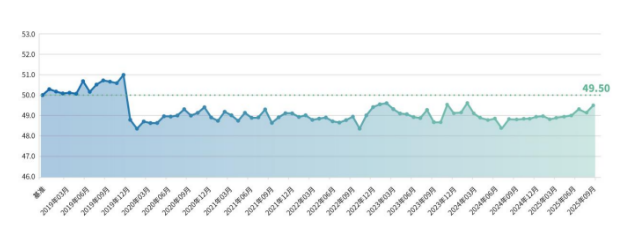
9月普惠金融-景气指数整体向好,经营融资同步改善
Jing Ji Wang· 2025-10-30 02:12
Core Insights - The Inclusive Finance Prosperity Index reached 49.50 points in September, an increase of 0.32 points from August, indicating simultaneous improvement in both operational and financing dimensions [1] Financing Dimension - The financing prosperity index rose to 54.93 points in September, up 0.71 points from August, reflecting effective release of corporate financing demand and a stable decrease in financing costs [2] - The average interest rate for newly issued corporate loans in September was approximately 3.1%, down about 40 basis points year-on-year, demonstrating the continued effectiveness of monetary policies such as reserve requirement ratio cuts and interest rate reductions [2] Operational Dimension - The operational prosperity index increased to 48.44 points in September, up 0.24 points from August, driven by a sustained recovery in consumer demand and improved order volumes for small and micro enterprises [3] - The operational vitality index rose by 0.29 points in September, indicating that enterprises are accelerating production and optimizing service processes in response to market changes [3] Industry Performance - Among nine major industries, six showed an increase in operational prosperity, particularly in wholesale and retail, accommodation and catering, and transportation, while three industries, including real estate and construction, experienced declines [4] Regional Performance - In terms of regional performance, five out of seven regions showed an increase in operational prosperity, with East China and South China leading the way, while Northeast and North China saw declines [5] Index Overview - The Inclusive Finance Prosperity Index is jointly launched by several financial institutions and reflects the development status of inclusive finance services for small and micro enterprises, based on both objective data from financial institutions and subjective data from surveys of over 5,000 small and micro enterprises [5][7]
上海:常态化、阵地化的金融服务进一步向园区和企业延伸
Xin Hua Cai Jing· 2025-10-30 01:28
Core Insights - Shanghai's "One Park One Characteristic Financial Service Plan" has made significant progress with the unveiling of the "Audio-Visual Jingjie·Meta Space" sub-center and the inclusive financial consulting room in Jing'an District [1][2] - This initiative enhances the three-tier service network of regional inclusive financial service hubs, financing service centers, and dedicated consulting rooms, extending financial services to parks and enterprises [1] - The "Audio-Visual Jingjie·Meta Space" aims to provide comprehensive financial support to ultra-high-definition audio-visual enterprises, addressing issues related to financing inquiries and consultant accessibility [1] Financial Services Development - The event featured discussions between inclusive financial consultants from various institutions, including Shanghai Financing Guarantee Center and several insurance and banking companies, focusing on financing guarantees and diverse financing products [2] - Enterprises can prioritize government financing guarantee products and utilize commercial insurance for larger credit applications, while banks offer various financing products in areas like technology innovation and supply chain finance [2] - Investment institutions are particularly interested in the effective transformation of intellectual property and market applications for early-stage hard technology companies, with key parks in Shanghai providing financing channels for startups [2]
17次提及金融!“十五五”规划建议发布,重点提及金融领域哪些内容?
Xin Lang Cai Jing· 2025-10-30 00:56
Core Insights - The "15th Five-Year Plan" emphasizes the importance of financial development, mentioning finance 17 times, and outlines a roadmap for building a strong financial nation [1][8] Financial Development Initiatives - The plan proposes nine key measures to enhance the financial system, including improving the central bank's framework and establishing a robust monetary policy and macro-prudential management system [1][9] - It highlights the need to develop technology finance, green finance, inclusive finance, pension finance, and digital finance [2][11] Capital Market Enhancements - The plan calls for improving the inclusiveness and adaptability of capital market systems, ensuring a balanced investment and financing relationship [3] - It encourages the development of direct financing methods such as equity and bonds, as well as the steady growth of futures, derivatives, and asset securitization [4] Financial Institution Optimization - The plan aims to optimize the financial institution system, urging various financial entities to focus on their core businesses and improve governance [5] Financial Infrastructure and Digital Currency - There is a push for building a safe and efficient financial infrastructure and the steady development of the digital renminbi [6][7] Financial Regulation and Risk Management - The plan emphasizes comprehensive financial regulation, enhancing collaboration between central and local authorities, and building a risk prevention and resolution system to ensure financial stability [8][13] - It outlines measures to address risks in key areas such as real estate and local government debt, with significant reductions in financing platform numbers and debt levels [14] International Financial Cooperation - The plan highlights the importance of advancing global economic financial governance reforms and maintaining a fair and open international economic order [16] - It reports significant progress in cross-border payment systems and the internationalization of the renminbi, with the currency becoming a major player in global trade financing [17][18] Shanghai International Financial Center - The plan stresses the acceleration of building Shanghai as an international financial center, which is crucial for enhancing China's global financial influence [19]