对等关税

Search documents
特朗普关税倒计时!苹果“包机”从印度抢运iPhone回美国,仓库已囤了够卖几个月的货
凤凰网财经· 2025-04-08 14:30
来源| 每日经济新闻 遭到特朗普的所谓"对等关税"当头一棒,苹果公司损失惨重。 自特朗普政府宣布实施所谓"对等关税"以来,苹果公司已连续三个交易日遭遇重挫,暴跌近20%,公司市值缩水6380亿美元(约合人民币4.68万亿 元)。 01 派飞机从印度抢运iPhone回美国 苹果供应链总监:与时间赛跑 4月8日,据《印度时报》报道,3月27日至29日期间,5架满载iPhone和其他产品的货机从印度起飞,直抵美国。 这是苹果为规避特朗普所谓"对等关税"而进行的紧急行动。苹果供应链总监在内部会议上直言:"这是一场与时间的赛跑,每延迟一天,美国仓库就 会损失800万美元。"数据显示, 苹果美国仓库目前已储备超150亿美元的iPhone库存,相当于去年第四季度美国市场销量的3倍 。 而随着"对等关税"政策落地,美国还将于4月9日对印度实施26%的对等关税,印度产iPhone对美关税将大幅提高。 值得注意的是,在美国宣布关税政策之后,印度并未宣布对等反制,而是希望获得美国关税豁免。据《印度时报》透露,苹果仍在评估新关税对其全 球供应链的长期影响,而价格调整可能会在全球范围内实施,而不仅限于美国市场。 近年来,苹果不断加大在 ...

美国“对等关税”实施倒计时!黄金当下如何寻找交易机会?国信期货首席分析师顾冯达私密直播前瞻深度分析!1.88元立即抢购
news flash· 2025-04-08 14:15
美国"对等关税"实施倒计时!黄金当下如何寻找交易机会?国信期货首席分析师顾冯达私密直播前瞻深 度分析!1.88元立即抢购 相关链接 ...
任天堂高管暗示Switch 2涨价,国内官方店铺:暂未接到调价通知
Bei Jing Shang Bao· 2025-04-08 12:15
"对等关税"对企业的影响持续扩大。据媒体报道,任天堂美国总裁道格·斯宾塞·鲍泽在日前表示,其产 品定价误判,下一代Switch 2主机定价策略未预先考量美国关税变量。目前该公司正"积极评估"25%游 戏机进口关税对终端售价的影响。 北京商报记者第一时间向国内任天堂官方旗舰店询问定价情况,对方表示:暂未接到调价通知。 除此之外,Switch 2的代订服务依旧火热。北京商报记者注意到,某代订价格为100元的链接已经收获 了2.1万次浏览、737人想要。多位从事Switch 2代购的线上商家表示,截至目前Switch 2的代订价格从 100—500元不等,目测其首发价格将达到4、5千元左右。 4月2日,美国总统特朗普宣布美国将对进口商品征收广泛的"对等关税",新关税计划从中国、越南进口 的商品将分别面临54%和46%的关税。 公开资料显示,任天堂在日本设有总部开发中心,主要用于游戏软件研发和硬件创新,主机硬件生产仍 以中国和越南为主。其中,中国是Switch的重要生产基地,承担了全球大部分Switch游戏机的组装任 务。 在业内看来,Switch目前的高定价已经引发了一些消费者的不满,若再涨价,可能会进一步削弱消费 ...


公募基金量化遴选类策略指数跟踪周报(2025.04.06):“对等关税”引全球巨震,常青低波策略续获超额-20250408
HWABAO SECURITIES· 2025-04-08 12:14
Report Industry Investment Rating No information provided. Core Viewpoints of the Report - The "reciprocal tariff" announced by Trump this week led to significant fluctuations in the global market, with the A-share market also declining. The Evergreen Low-Volatility Strategy continued to accumulate excess returns, and the defensive view in the strategy was verified [2]. - The recommended order of quantitative strategy allocation is Evergreen Low-Volatility Strategy > Overseas Equity Strategy > Equity Fund Enhancement Strategy. For A-shares, a neutral and cautious attitude is maintained in the short and medium term, and a defensive allocation is recommended. For overseas markets, investors with low overseas positions can appropriately deploy at the bottom, and the long - term upward trend of US stocks is still optimistic [3]. - The Evergreen Low-Volatility Fund Strategy had a small correction this week, with a return of -0.626%, showing low - volatility defensive attributes and still being worthy of allocation. The Equity Fund Enhancement Strategy closed down this week, with a return of -1.215%, and its excess performance needs to wait [4]. - The Cash Enhancement Fund Strategy achieved a return of 0.027% this week, outperforming the benchmark. The Overseas Equity Allocation Fund Strategy closed down this week, with a return of -1.537%. In the long - term, the globalization investment still has strong diversification allocation value [5]. Summary by Relevant Catalogs 1. Tool - based Fund Portfolio Construction Ideas - For active equity funds, a low - volatility fund portfolio strategy is constructed to meet the defensive needs of investors in high - risk markets and the needs of investors with moderate risk preferences. An equity fund portfolio strategy with similar risk - volatility characteristics to the benchmark index is constructed to provide a more offensive choice for investors with high risk preferences [11]. - For money funds, a money fund screening system is built to help investors optimize short - term idle funds. For QDII funds, an overseas market selected portfolio is constructed to meet the needs of global asset allocation [12]. 1.1. Evergreen Low - Volatility Fund Portfolio - The strategy aims to select funds with long - term stable returns in high - equity - position actively managed funds. By considering the maximum drawdown, volatility, and valuation of funds, a low - volatility active equity fund portfolio is constructed [13]. 1.2. Equity Fund Enhancement Portfolio - The strategy aims to meet the needs of equity fund investors with different risk preferences. By analyzing the source of fund returns and constructing a portfolio based on the continuity of Alpha returns, it provides an offensive choice for high - risk - preference investors [14]. 1.3. Cash Enhancement Fund Portfolio - A money fund screening system is constructed by considering multiple factors such as management fees, duration, and institutional holding ratio, to help investors optimize short - term idle funds [15]. 1.4. Overseas Equity Allocation Portfolio - Based on long - and short - term technical indicators, an overseas market selected portfolio is constructed by screening equity indices of multiple countries or regions, meeting the needs of investors for global asset allocation [12]. 2. Tool - based Fund Portfolio Performance Tracking | Strategy | This Week Return | Last Month Return | YTD Return | Return Since Strategy Inception | | --- | --- | --- | --- | --- | | Evergreen Low - Volatility Fund Strategy | -0.626% | 1.388% | 0.718% | 8.582% | | Equity Fund Enhancement Strategy | -1.215% | 1.027% | 1.668% | 9.332% | | Cash Enhancement Fund Strategy | 0.027% | 0.141% | 0.433% | 3.320% | | Overseas Equity Allocation Fund Strategy | -1.537% | -2.786% | -1.097% | 23.104% | [17] 2.1. Evergreen Low - Volatility Fund Portfolio - The portfolio has long - term low - volatility characteristics, with significantly better volatility and maximum drawdown than the CSI Active Equity Fund Index. It has achieved significant excess returns and has both defensive and offensive capabilities [19][20]. 2.2. Equity Fund Enhancement Portfolio - Since the strategy has been running for a short time, its performance is close to the CSI Active Equity Fund Index. It is expected to have stronger elasticity when the market environment improves [22]. 2.3. Cash Enhancement Fund Portfolio - After double screening of risk elimination and scoring, the portfolio has continuously outperformed the benchmark, and the cumulative excess return since July 2023 has exceeded 0.29% [26]. 2.4. Overseas Equity Allocation Portfolio - Since July 31, 2023, the portfolio has accumulated high - level excess returns, and global allocation can increase the return of the equity investment portfolio [27].
贝森特:筑起关税墙的最终目标是让就业机会回到美国
news flash· 2025-04-08 11:57
贝森特:筑起关税墙的最终目标是让就业机会回到美国 金十数据4月8日讯,美国财长贝森特接受CNBC采访时表示,美国提高对几十个国家的关税是所谓对等 关税的一部分,其目的是让贸易伙伴回到谈判桌上,让就业机会回到美国。贝森特说:"如果我们筑起 关税墙,最终目标将是让就业机会回到美国。但与此同时,我们将征收大量关税。""如果我们成功了, 在某种程度上,关税将是一块融化的冰块,因为随着制造设施在美国建设,你将获得收入,而随着关税 的下降,我们开始从工资税中获得新产业的税收,这两者之间应该有某种程度的对称。" ...
川金诺:公司产品对北美地区无进出口业务,经营不受美国“对等关税”的影响
news flash· 2025-04-08 11:52
Group 1 - The company, Chuanjinno (300505), announced that its main product export regions include South Asia, Southeast Asia, and South America [1] - The company has no import or export business with North America, indicating that its operations are not affected by the US "reciprocal tariffs" [1]

“国家队”出手稳市,政策工具箱还有哪些弹药待发
和讯· 2025-04-08 10:15
Core Viewpoint - The Chinese government is actively implementing measures to stabilize the A-share market in response to the impact of "reciprocal tariffs," with the establishment of a domestic version of a stabilization fund to alleviate market concerns and boost investor confidence [1][2][3]. Group 1: Government Actions - Central Huijin Investment announced its continued support for the A-share market by increasing its holdings in exchange-traded funds (ETFs), emphasizing the long-term development prospects of China's capital market [1]. - The People's Bank of China and Central Huijin confirmed their roles in stabilizing the capital market, with the central bank ready to provide sufficient re-lending support if necessary [1][2]. - The Financial Regulatory Administration adjusted the regulatory ratios for insurance funds, increasing the upper limit for equity asset allocation and relaxing requirements for tax-deferred pension investments, thereby expanding the investment space for equity capital [1]. Group 2: Policy Measures and Economic Outlook - A macro policy analyst compared the current situation to 2022, suggesting that the government has a range of policy tools available to support the stock market, including monetary easing and fiscal measures [2][3]. - The anticipated macro policy reserves include monetary policies such as reserve requirement ratio cuts, structural interest rate reductions, and innovative monetary policy tools to support consumption and foreign trade [2]. - Fiscal policies may involve accelerating the issuance of government bonds, expanding the scope of "old for new" policies, and promoting tax reforms to stimulate economic growth [2][3]. Group 3: Market Reactions and Economic Implications - The market showed increased trading activity, with significant transaction volumes in the CSI 500 ETF and CSI 1000 ETF, indicating heightened investor engagement [1]. - The potential impact of the "reciprocal tariffs" could lead to a decline in overall demand, necessitating further fiscal measures to counteract the economic slowdown [4][6]. - Recommendations for short-term actions include enhancing counter-cyclical macroeconomic adjustments to stabilize growth and expanding consumer spending through targeted subsidies and support for the real estate market [5][6].

美国研究机构:对等关税的报复与谈判
2025-04-08 05:58
Summary of Key Points from the Conference Call Industry or Company Involved - The discussion primarily revolves around the implications of the U.S. government's aggressive tariff policies and their impact on global trade relations, particularly with China, the EU, Japan, and other countries. Core Points and Arguments - The U.S. government aims to use aggressive tariffs to bring trade partners to the negotiation table, targeting a 10% standard tax rate to reach an agreement and end mutual retaliation, though this scenario is deemed unlikely [2][3] - Initial responses from the EU and other countries are expected to include partial retaliatory actions, posing significant risks to policy and economic outlooks [2] - China has responded swiftly with a 34% counter-tariff and increased export controls on rare earth materials, crucial for the tech industry, indicating a firm stance against U.S. actions [2][8] - The EU is preparing countermeasures, likely involving substantial retaliatory tariffs and threats in other sectors, including digital and financial services [2][9] - Japan and the UK are less likely to retaliate but also unlikely to make significant concessions, with Japan surprised by the 24% tariff rate [2][3] - The likelihood of the U.S. escalating its tariff actions is over 50%, particularly against China, which could include asset freezes and financial sanctions, potentially damaging the existing financial system [2][6] - The probability of successful negotiations is estimated at only 20%, as the U.S. assumes its economic strength can compel compliance from trade partners [4] Other Important but Possibly Overlooked Content - The global response to U.S. tariffs is categorized into three types: strong retaliation (as seen with Canada), low-profile negotiation attempts (like Japan and the UK), and complete capitulation (potentially from smaller nations like Vietnam) [5] - The U.S. could take a rational economic approach, similar to past agreements with Canada and Mexico, but this outcome is considered unlikely at only 40% probability [6] - China's strong response indicates a lack of hope for a quick negotiation, which may influence Europe's stance and lead to a more unified response against U.S. tariffs [9][10] - The EU is expected to announce measures in response to U.S. tariffs, including potential tariffs of up to 20% on most imported goods from the U.S. [10][11] - Japan's legal debate regarding the imposition of retaliatory tariffs highlights the complexities of international trade law and the potential for diplomatic negotiations to resolve disputes [15][20] - The ongoing discussions in Japan about emergency fiscal measures reflect concerns over the economic impact of U.S. tariffs on domestic markets [20] This summary encapsulates the critical insights from the conference call regarding the current trade tensions and their implications for various countries and industries.
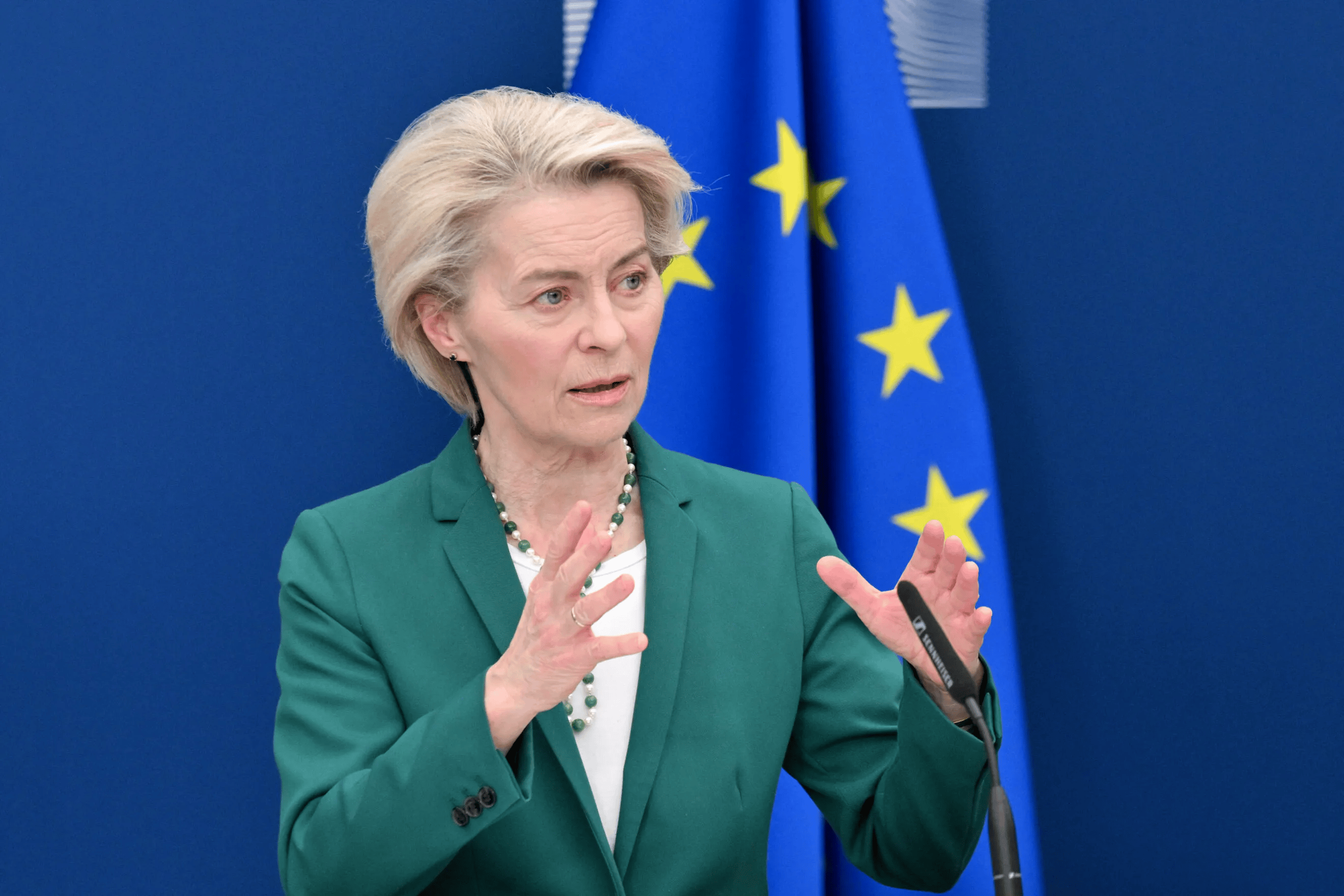
应对美国“对等关税”,欧盟作了两手准备丨热点分析
Sou Hu Cai Jing· 2025-04-08 04:52
欧盟如何应对美国政府关税大棒?答案是两手准备。 欧盟是美国的重要贸易伙伴,美国进口商品中,来自欧盟的最多,2024年美国进口商品中,来自欧盟的占18.5%。在美国出口商品方面,欧盟是其第二大市 场(加拿大居第一)。 对此,欧盟现在的做法是做好两手准备。 一方面希望谈判解决问题。 欧盟负责贸易的官员谢夫乔维奇称,欧盟仍希望通过对话和谈判推动美方取消关税。 欧盟委员会主席冯德莱恩也说,欧盟已做好和美国谈判的准备。 冯德莱恩甚至提出欧盟和美国互相实行零关税的想法。有意思的是,最近这几天,马斯克也提议美欧之间实现零关税。 不过,零关税听起来似乎很简单公平,真正实行起来难度却非常大。实际上,美国和欧盟在十多年前就想成立完全自由贸易区,当时双边谈判成立"跨大西 洋贸易和投资伙伴关系"(TTIP)。但在特朗普第一任期时,美国政府否定了这个设想。 关税方面,这届美国政府加征关税之前,世贸组织称欧盟对美国商品征收的平均关税为5%,而欧盟认为实际上美欧双边贸易,互相征收的平均关税为1%左 右。 因为各种商品情况不一样,所以征收关税有差别。比如在汽车方面,欧盟对美国汽车征收10%关税,而美国对欧盟汽车征收关税平均为2.5%。前一阵 ...