
贸易报复

Search documents
对上特朗普的关税威胁,欧洲严阵以待看了看手里的牌,敢打吗?
Xin Lang Cai Jing· 2026-01-19 08:57
Core Viewpoint - The recent military exercises in Greenland by several European countries have provoked a strong response from U.S. President Trump, who announced a series of tariffs on goods from Denmark, Norway, Sweden, France, Germany, the UK, the Netherlands, and Finland, starting at 10% and potentially rising to 25% if an agreement regarding the "complete and total purchase of Greenland" is not reached [1][4]. Group 1: European Response to Tariffs - European leaders are preparing to respond to Trump's tariff threats, considering options such as trade retaliation, utilizing a "trade nuclear option," enhancing cooperation with other regions, and potentially reducing defense collaboration with the U.S. [1][5]. - The EU is evaluating its stance towards the U.S. as Trump's trade issues are now directly linked to security concerns, prompting a reassessment of their position [4][5]. - There is a consensus among EU officials that a response is necessary, as the cost of U.S. support on NATO and Ukraine issues has become too high [5]. Group 2: Potential Countermeasures - The EU is considering several countermeasures, including delaying the implementation of zero tariffs on U.S. products, which could affect the approval of a previous trade agreement [6][7]. - The EU may reintroduce a list of retaliatory tariffs on U.S. products, which had previously been shelved, potentially affecting over $100 billion worth of goods [6][7]. - The EU could activate the "anti-coercion tool," which allows for a range of responses, including export controls and restrictions on U.S. companies in the EU market [7][8]. Group 3: Broader Implications and Alliances - The tariffs have reignited the EU's interest in diversifying its trade relationships to reduce dependence on the U.S., with ongoing trade agreements with South American countries and potential deals with India and Australia [8][9]. - European leaders are concerned that Trump's actions could destabilize NATO and affect security in Ukraine, prompting discussions on increasing military presence in Greenland and enhancing defense spending [7][8]. - There is a possibility of limiting or terminating U.S. military access to bases in Europe, although this would escalate tensions significantly [8]. Group 4: Legal and Political Considerations - The implementation of Trump's tariffs may face legal challenges, as the White House has not clarified the legal basis for these tariffs, which could be subject to scrutiny by the U.S. Supreme Court [10][14]. - The tariffs could be circumvented through intra-EU trade arrangements, as countries within the EU could reroute goods to avoid tariffs [14].


外媒:欧盟考虑对930亿欧元输欧美国商品加征关税
Zhong Guo Xin Wen Wang· 2026-01-19 00:29
Core Viewpoint - The European Union is considering imposing tariffs on goods worth €93 billion imported from the United States as a countermeasure against U.S. tariffs on European countries [1] Group 1: Tariff Measures - The proposed retaliatory tariffs would revive measures that were suspended after the EU signed a trade agreement with the U.S. in July 2025 [1] - Officials indicated that the response to U.S. tariffs is no longer a question of whether to act, but rather which measures to implement [1] Group 2: Alternative Options - Another option under consideration is the use of the EU's Anti-Coercion Instrument (ACI), which aims to penalize countries that use market leverage for geopolitical coercion [1] - The ACI is seen as a more forceful measure, but it may raise concerns among more cautious member states within the EU [1]
英媒:欧盟考虑对美祭出930亿欧元报复性关税
Xin Lang Cai Jing· 2026-01-18 22:30
Core Viewpoint - European countries are considering retaliatory measures against the United States, including imposing tariffs worth €93 billion (approximately $107.7 billion) or restricting access for U.S. companies to the EU market due to President Trump's threats to NATO allies following the rejection of his Greenland acquisition plan [2][4]. Group 1 - The European Union is drafting these retaliatory measures to gain leverage in upcoming negotiations with President Trump during the World Economic Forum in Davos [5].

美国贸易代表办公室警告或对欧盟服务业采取报复措施
Di Yi Cai Jing· 2025-12-16 23:29
Core Viewpoint - The U.S. Trade Representative's Office has indicated that it may take retaliatory actions against the EU and certain member states if they continue to impose what the U.S. deems "discriminatory" regulations, lawsuits, taxes, or fines on American service industries [1] Group 1 - The U.S. claims that American service providers face unfair treatment in the EU market while several European companies operate freely in the U.S. [1] - Specific European companies mentioned include Accenture, DHL, Siemens, and Spotify, which are noted for their operations in the U.S. [1] - The U.S. Trade Representative's Office stated that it will utilize relevant tools granted by U.S. law to address what it considers "unreasonable" measures [1]



狠话说尽后,欧盟:中方代表团水平很高,周四在布鲁塞尔不见不散
Guan Cha Zhe Wang· 2025-10-28 04:14
Core Points - The supply issues of rare earths and the Nexperia semiconductor situation are severely impacting the European automotive industry, causing significant concern among EU member states [1] - The EU is preparing to engage in discussions with a high-level Chinese technical delegation regarding rare earth issues, indicating a desire to find a resolution to the supply crisis [1][2] - The Dutch government's intervention in Nexperia has led to a freeze on assets and operations, which is expected to disrupt the supply chain for automotive manufacturers in Europe, particularly in Germany [4][5] Group 1: Rare Earth Supply Issues - The EU is facing a potential crisis in the automotive sector due to rare earth supply disruptions, prompting discussions of retaliatory measures against China [1] - A high-level Chinese delegation is scheduled to visit Brussels to discuss rare earth issues, with preliminary meetings already taking place [1][2] - The EU is exploring options to mitigate the impact of rare earth supply shortages, including local production and diversification of suppliers [5][7] Group 2: Nexperia Semiconductor Situation - The Dutch government has mandated a freeze on Nexperia's assets and operations, which has raised concerns about the impact on the global automotive supply chain [4][5] - Nexperia's operations in China are facing challenges due to the Dutch government's intervention, leading to reduced output and supply chain complications [4][5] - The German government is actively engaging with affected companies to address potential supply chain difficulties stemming from the Nexperia situation [5][7] Group 3: EU's Trade Measures and Responses - The EU is considering new regulations that would impose conditions on Chinese companies operating in Europe, including technology transfer and local content requirements [7] - Discussions among EU member states are ongoing regarding potential retaliatory trade measures against China, with a focus on the recent rare earth export controls [7][8] - The EU is preparing a list of trade measures to enhance its negotiating position in discussions with China, reflecting a strategic approach to the ongoing trade tensions [7][8]

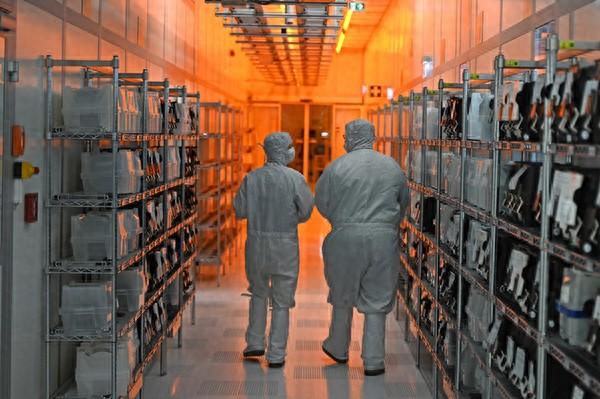
中国打响对美关税反击战,印度嘴上说要加入,行动时却扯中方后腿
Sou Hu Cai Jing· 2025-10-19 01:54
Core Viewpoint - The article discusses India's reluctance to effectively retaliate against the U.S. in the ongoing trade war, highlighting its tendency to undermine China's efforts while failing to take decisive action against the U.S. [1][6][14] Group 1: India's Response to U.S. Tariffs - India has previously announced plans to impose retaliatory tariffs on U.S. goods but has not followed through, indicating a lack of resolve in confronting the U.S. [7] - The Indian government has expressed intentions to learn from China's approach to countering U.S. tariffs, yet has not taken significant steps to implement such measures [3][6]. - Despite initial enthusiasm, India's actions have resulted in higher tariffs on its own goods, with a reported 50% maximum tariff imposed, leading to stalled negotiations with the U.S. [9] Group 2: China's Position in the Trade War - China has actively engaged in countermeasures against the U.S., utilizing its leverage in rare earth exports and other sectors, which has put pressure on the U.S. [3][16]. - The article emphasizes that China's success in the trade war could benefit global markets, including India, if India chose to align with China rather than undermine it [16]. - China's recent actions, such as imposing anti-dumping duties on Indian solar panels, reflect its strategy to protect its interests while responding to India's provocations [9][14]. Group 3: Implications for India - India's attempts to impose anti-dumping duties on Chinese solar panels, with rates up to 30%, are seen as counterproductive and indicative of its narrow-minded approach [9][14]. - The article suggests that India's lack of support for China in the trade war could lead to negative consequences for its own economy, as it risks losing out on potential benefits from a successful Chinese counter-offensive against the U.S. [16]. - The ongoing tensions and India's actions may ultimately harm its relationship with both China and the U.S., as it navigates its position in the trade landscape [6][14].
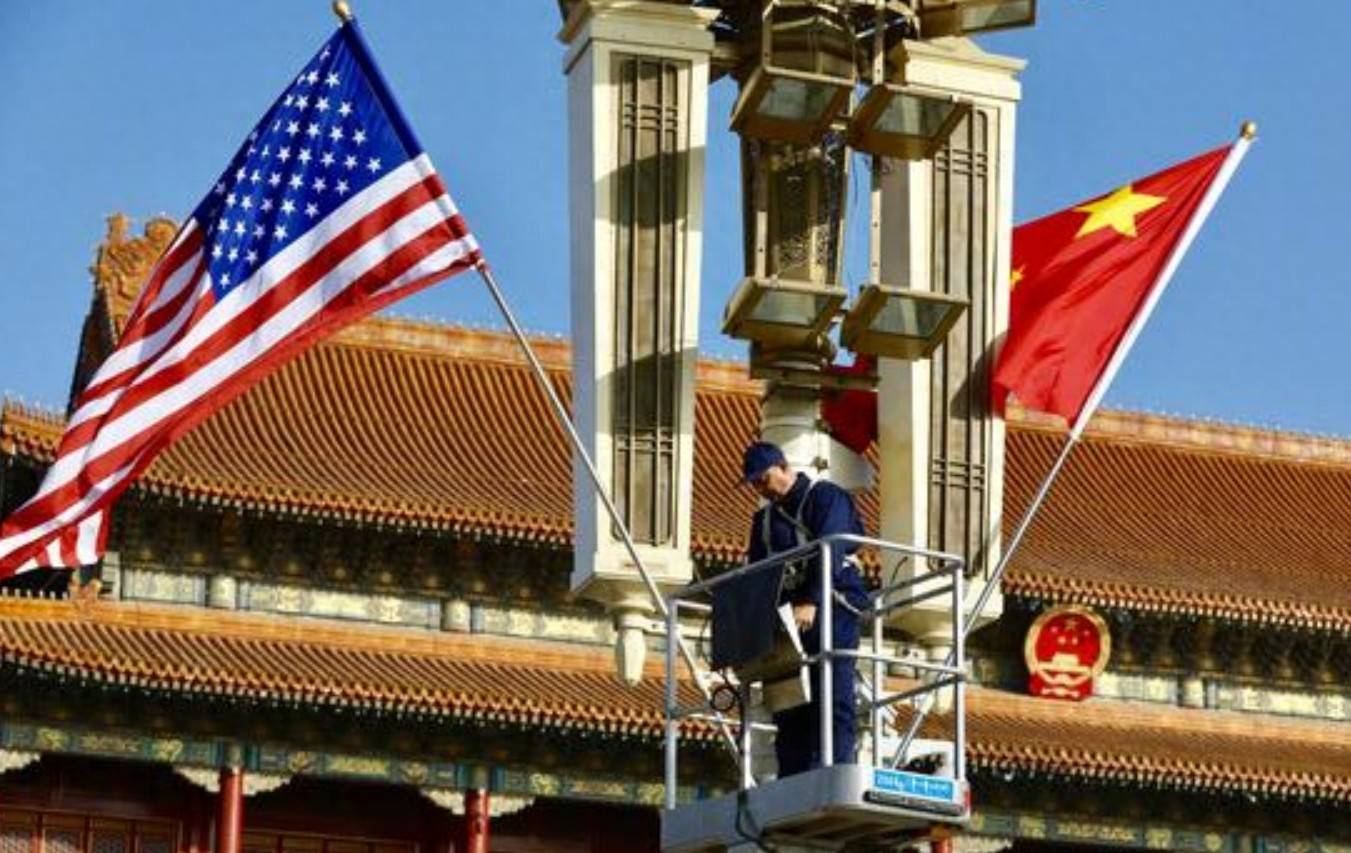
制裁中国“食用油”?,美报复恐自食其果
Sou Hu Cai Jing· 2025-10-16 00:37
Core Points - The article discusses the escalating trade tensions between the U.S. and China, particularly focusing on the U.S. response to China's export restrictions on rare earths and other products [1][3] - President Trump has threatened to impose a 100% tariff on Chinese goods and hinted at retaliatory measures against Chinese imports, particularly targeting used cooking oil (UCO) [1][3] Group 1: U.S.-China Trade Relations - The U.S. is considering retaliatory actions against China for halting imports of American soybeans, which has led to a significant drop in soybean prices in the U.S. [1][3] - Trump has accused China of deliberately stopping U.S. soybean imports and suggested that the U.S. could stop purchasing Chinese cooking oil as a countermeasure [3] Group 2: Used Cooking Oil (UCO) Market - China is a major supplier of used cooking oil to the U.S., with the U.S. accounting for 43% of China's UCO exports in 2024 [3] - The demand for UCO in the U.S. has surged due to the Biden administration's push for green transportation, which relies on UCO for biofuel production [3] Group 3: Implications of Trade Actions - Economists question the effectiveness of targeting Chinese cooking oil, noting that Europe is also a significant buyer of Chinese UCO, with exports to Europe increasing by 45% year-on-year in the first nine months of 2024 [5] - Cutting off UCO supplies from China could adversely affect U.S. domestic reduction plans and energy transition efforts, potentially leading to higher costs for biofuel production [5]

巴西对着美国说话挺直接,就问那 40% 的关税能不能撤了。
Sou Hu Cai Jing· 2025-10-07 01:23
Group 1 - The article discusses Brazilian President Lula's direct appeal to the U.S. regarding the 40% tariff imposed on Brazilian exports, emphasizing the need for a resolution to this issue [2][3] - The 40% tariff increase from 10% to 50% has severely impacted Brazilian exporters, particularly in the coffee and orange juice sectors, with coffee farmers reporting losses and orange juice producers unable to sell their products [2][3] - Brazilian aircraft manufacturer Embraer faces significant financial losses due to the tariffs, estimating a loss of 2 billion reais, and highlighting the negative impact on U.S. suppliers as well [3] Group 2 - Lula argues that the U.S. has benefited from a trade surplus with Brazil over the past 15 years, with a cumulative surplus of 410 billion USD, and that the rationale for the tariff is unfounded [3][4] - The tariffs are seen as a political maneuver rather than an economic necessity, with Lula asserting that the U.S. should not interfere in Brazil's judicial matters [4] - Brazil has initiated a complaint to the WTO against the U.S. for violating trade agreements and is exploring new markets to mitigate the impact of the tariffs [4][5] Group 3 - The Brazilian industry is experiencing significant declines in exports, with a reported 52 billion reais loss and a 22.3% drop in aircraft manufacturing exports [5] - The furniture industry is also suffering, with a substantial decrease in orders from the U.S., which accounts for 30% of its market [5] - Lula emphasizes the importance of mutual respect in trade relations, indicating a willingness to negotiate while maintaining Brazil's sovereignty [5]
外媒爆料:巴西正考虑对美国实施报复性贸易措施,卢拉已批准开展研究
Huan Qiu Wang· 2025-08-29 02:07
Core Viewpoint - Brazil is considering retaliatory trade measures in response to the 50% tariffs imposed by the U.S. on several Brazilian goods, as announced by President Trump [1][3]. Group 1: Government Response - Brazilian President Lula has approved a study to evaluate whether and what retaliatory measures Brazil can take against the U.S. tariffs [3]. - Lula has criticized the U.S. for lacking seriousness in its relations with Brazil, stating that the tariffs harm both Brazilian exporters and American consumers [3]. Group 2: Tariff Implementation - The U.S. government's policy of imposing an additional 50% tariff on certain Brazilian products officially took effect on the 6th of this month [3].
德法敦促欧盟准备对美国采取贸易报复措施
Shang Wu Bu Wang Zhan· 2025-07-24 18:18
Group 1 - Germany and France are urging other EU member states to support retaliatory measures against US tariffs, aiming for a strong EU stance before the August 1 trade agreement deadline [1] - Germany previously advocated for negotiations with the Trump administration to lower US export tariffs but has shifted to a tougher approach, while France has consistently pushed for retaliatory tariffs to pressure US companies [1] - The EU is considering the use of the never-before-used Anti-Coercion Instrument (ACI), which would allow the EU to block US companies from public tenders, revoke intellectual property protections, and impose import/export restrictions [1] Group 2 - The EU plans to impose a package of tariffs on US imports worth €21 billion starting August 6, with a second round of retaliatory measures targeting US goods valued at €72 billion set for a vote on the same day [2] - The EU Commission is preparing a third list of measures targeting the services sector, including taxes on digital services and online advertising revenue [2] - The EU Commission's trade spokesperson stated that any countermeasures will not be implemented before August 1, as the focus remains on negotiations [2]