
循环经济

Search documents
博苑股份(301617) - 2025年5月14日投资者关系活动记录表
2025-05-14 09:46
Group 1: Core Competitive Advantages - The company's core competitive advantages include a circular economy and comprehensive service advantage, utilizing resource integration technology to convert waste into production materials, thereby reducing procurement costs and enhancing customer loyalty through a full industry chain service [2] - The company has a strong technical research and development capability, holding 49 patents (27 invention patents) and has established a provincial-level R&D platform, earning accolades such as "Specialized, Refined, Characteristic, and Innovative 'Little Giant'" and "Shandong Province Manufacturing Industry Single Champion" [2] - The company maintains high product quality and strong customer resources, with major products certified by multiple systems and stable quality, fostering long-term partnerships with well-known clients in niche markets [2] - The company leads the market share in iodides and luminescent materials, participating in the formulation of 1 industry standard and 11 group standards, demonstrating significant industry influence [2] - Compliance in operations has earned customer trust and ensured stable development, with qualifications in safety production and hazardous waste treatment, recognized as an outstanding environmental protection unit [3] Group 2: Financial Performance and Challenges - The company's gross profit margin for 2024 declined compared to the previous year due to rising raw material prices and the continued growth of trade business revenue, which has lower profit margins [3] Group 3: Industry Barriers - The fine chemical industry has high entry barriers, including: - Technical barriers: High technical requirements across multiple fields necessitate long-term R&D investment and experience accumulation, directly affecting product quality, cost control, and environmental compliance [3] - Market barriers: Strict supplier audits from downstream pharmaceutical and chemical industries, along with high switching costs, make it difficult for new entrants to gain market recognition in the short term [3] - Qualification barriers: Production of hazardous chemicals and hazardous waste treatment requires multiple administrative licenses, with increasingly stringent safety and environmental regulations raising compliance thresholds [3] - Financial barriers: Significant funding is required for R&D, equipment upgrades, and capacity expansion, imposing high financial strength requirements on enterprises [3]
循环经济行业现状与发展趋势分析 | 交通战略研究
Sou Hu Cai Jing· 2025-05-14 02:57
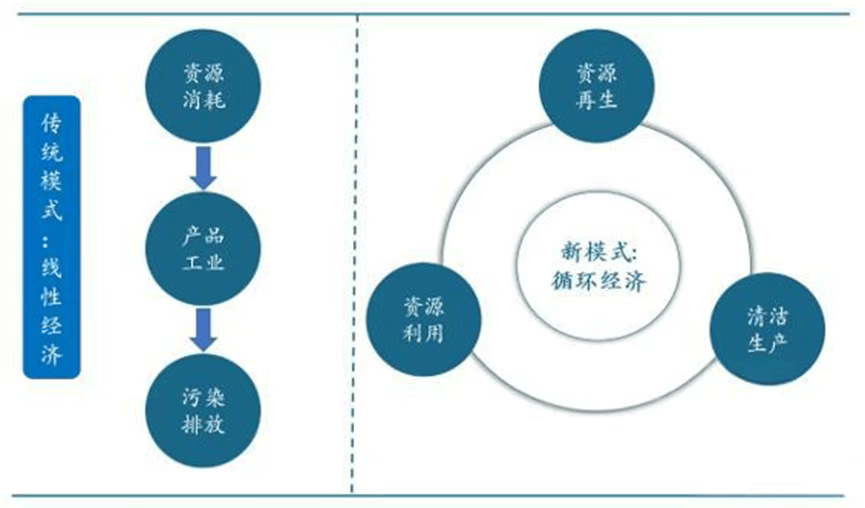
Core Viewpoint - The development of a circular economy is crucial for addressing resource scarcity and environmental pollution, especially in China, which is facing significant challenges as the world's second-largest economy. The circular economy is increasingly recognized as a vital pathway for achieving comprehensive green transformation and carbon neutrality goals [1][2]. Industry Overview - Circular economy is an economic growth model focused on efficient and cyclical resource utilization, characterized by low consumption, low emissions, and high efficiency, aligning with sustainable development principles. It represents a fundamental shift from traditional linear economic models to a closed-loop feedback process of resource use, clean production, and resource regeneration [2][4]. Application Areas - The circular economy has a wide range of applications, including: - Resource regeneration and recycling, utilizing waste materials to replace virgin resources. - Comprehensive utilization of bulk solid waste, such as using fly ash and smelting slag to produce alternative building materials. - Biomass waste utilization for clean energy, replacing traditional fossil fuels. - Recovery of waste heat and energy from industrial processes to improve system efficiency. - Circular transformation of industrial parks to enhance resource and energy utilization efficiency [5][6]. Current Development Status - The Chinese government has prioritized the development of the circular economy as a strategic initiative for sustainable development, implementing various policies to promote high-quality growth in this sector [7][8]. Market Size - The circular economy industry in China is experiencing robust growth, with the market size surpassing 4 trillion yuan in 2023 and projected to reach approximately 4.64 trillion yuan in 2024. Key growth drivers include the comprehensive utilization of bulk solid waste, resource regeneration, and waste resource utilization [12][14]. Competitive Landscape - The market for circular economy in China is characterized by diverse competition, with state-owned enterprises holding significant market shares due to policy support. However, private enterprises are emerging as new forces, leveraging flexible operations and differentiated services. The competition is particularly intense in areas such as industrial solid waste treatment and recycling of used resources [19]. Challenges Faced - Despite progress, the circular economy in China faces challenges, including insufficient industrial scale and specialization, inadequate incentive mechanisms and regulatory frameworks, and insufficient resource recovery in key areas [20]. Future Development Trends - The future of the circular economy is expected to be shaped by technological innovation, improved policy frameworks, deepened industry collaboration, and expanded international cooperation. Technologies such as IoT, AI, and big data will enhance resource recovery efficiency, while a more robust policy environment will support high-quality development in the sector [21][23][24].

塑料餐盒再生不再是资源的“末端处置”
Xiao Fei Ri Bao Wang· 2025-05-14 02:38
Core Viewpoint - The recycling of disposable plastic food containers in China is transitioning from marginal treatment to large-scale, high-value regeneration, with a significant increase in recycling rates and total volume [1][2]. Group 1: Recycling Rates and Volume - The recycling rate of polypropylene (PP) food containers in China reached 29.6% in 2023, surpassing the average recycling rate of low-value plastic packaging at 16.3% and approaching the national overall waste plastic recycling rate of 31% [1]. - The total amount of recycled plastic food containers in 2023 reached 400,000 tons, a 60% increase compared to 2020 [1]. Group 2: High-Value Applications - Approximately 29% of recycled materials are used in the packaging industry, 15% in automotive manufacturing, and 13% and 12% in electronics and home manufacturing, respectively [2]. - The proportion of high-value applications has increased by 6 percentage points since 2020, indicating a shift away from low-end products in plastic recycling [2]. Group 3: Governance and Industry Development - China's plastic recycling industry has developed a unique path characterized by "enterprise-led + government-enterprise collaboration + technology-driven" approaches over the past three years [2]. - Leading enterprises are driving industry layout, forming a closed-loop industrial chain that includes recycling, sorting, cleaning, and granulation [2]. Group 4: Challenges in the Recycling Industry - A lack of unified national recycling standards hinders the scale and standardization of the industry, leading to management friction and limiting cross-regional resource allocation [3]. - The trend of complex container designs increases recycling and reuse costs, with some products becoming "recyclable but unprocessable" due to added colors, coatings, or composite materials [3]. - Public participation in recycling efforts remains inconsistent, with many areas still relying on manual sorting by cleaners or volunteers [3]. Group 5: Recommendations for Improvement - The establishment of national standards for "easy to recycle, easy to regenerate" design is essential, promoting the use of single-material, transparent PP products [4]. - A standardized recycling chain system should be developed, including identification systems, graded management mechanisms, and quality traceability platforms [4]. - Policies should shift from incentivizing end-of-life disposal to guiding source reduction and a full-chain responsibility mechanism, encouraging proactive consumer participation in recycling [4].
黄金:从硬通货到循环经济的双重价值密码
Sou Hu Cai Jing· 2025-05-13 10:46
Group 1 - The core viewpoint of the article highlights the revolution in gold plating applications across various industries, emphasizing the transition of gold from jewelry to high-end manufacturing as a protective layer [1][3] - The electronic information industry consumes approximately 120 tons of gold annually, with 70% used for gold plating due to its high conductivity and corrosion resistance [3] - In the aerospace sector, gold plating on satellite sensors reflects 98% of cosmic rays, while rocket engine nozzles can withstand temperatures up to 3000°C due to gold coatings [3] Group 2 - Gold plating waste is identified as an overlooked "urban gold mine," with electronic waste containing gold layers that can yield 300-500 grams of gold per ton, significantly higher than the average yield from traditional gold mining [3][5] - The jewelry industry generates gold waste that accounts for 15%-20% of its total consumption, including gold dust and waste liquids from electroplating processes [5] - Industrial waste, such as worn-out gold-plated connectors, can still have a gold layer purity of over 99% [5] Group 3 - The recovery of gold plating waste involves advanced technologies, including mechanical disassembly, chemical leaching, and electrolysis, achieving high purity levels of gold [5][7] - The economic value of recovering gold from waste is substantial, with projections indicating that one ton of electronic waste containing 0.3% gold could generate a value of 222,600 yuan, far exceeding the value of the same weight in scrap iron [5] - The global market for gold plating waste recovery has grown from $12 billion in 2018 to $21 billion in 2023, with a compound annual growth rate of 12% [5] Group 4 - Regulatory measures have been implemented to ensure safe and environmentally friendly recovery practices, requiring companies to have hazardous waste handling qualifications [7] - Companies like Jiangxi Jinhui and Shenzhen GreenMei have established closed-loop management systems for waste recovery, refining, and material regeneration, promoting industry standardization [7] - The article emphasizes the transformation of gold's value chain from extraction and consumption to a circular economy model, highlighting the importance of recycling gold plating waste for sustainable development [7][9]

迪卡侬涨价被骂上热搜:消费者不买账,高端化转型遇挫
Yang Zi Wan Bao Wang· 2025-05-13 08:57
Core Insights - Decathlon reported a modest sales increase of 3.8% but experienced a significant net profit decline of 15%, raising concerns about its pricing strategy and market positioning [1][3] - The company's attempt to shift from a "value for money" brand to a more "professional" and "premium" image has faced backlash from consumers, who feel alienated by the price increases [1][3] - Decathlon's revenue growth has drastically slowed from 21.3% in 2021 to just 1.15% in 2023, indicating challenges in its market strategy [6] Sales and Profit Performance - Sales increased by 3.8%, while net profit fell by 15% [1] - Revenue growth has dropped significantly, with a decline from 21.3% to 1.15% from 2021 to 2023 [6] Pricing Strategy and Consumer Reaction - Price increases for key products have been substantial, with items like hiking skirts rising from 99.9 yuan to 129.9 yuan and fleece jackets from 249 yuan to 499 yuan [3] - A social media poll revealed that out of 40,000 participants, only 9,000 supported Decathlon, indicating a loss of its original customer base [3] Market Position and Competition - The global sportswear market is expected to grow to $544 billion by 2028, but Decathlon is struggling to capitalize on this growth due to its focus on entry-level products [6] - Competitors like Arc'teryx and Lululemon have successfully captured the high-end market, leaving Decathlon at a disadvantage [9] Strategic Initiatives - Decathlon plans to revamp 200 global stores by 2024 and aims to upgrade 90% of its product line by 2026 [7] - The company is focusing on local production and targeting middle-class consumers in China [7] Future Outlook - Decathlon's challenge lies in balancing its traditional value-oriented approach with its aspirations for a premium market presence [10] - The company is reportedly considering selling a 30% stake in its Chinese operations, valued at over $1 billion, highlighting the urgency of its strategic adjustments [9]
动力电池回收开启新纪元:“国家队+产业龙头+全球化服务商”共同打造循环经济“新范式”
智通财经网· 2025-05-13 06:28
自2024年10月18日挂牌成立以来,中国资源循环集团(以下简称"中国资环集团")以"国家队"身份展开一 系列的战略布局,其通过央地协同与产业链垂直整合的双轮驱动,加速构建了覆盖废钢、电子产品、废 旧电池、有色金属、塑料等全领域的资源循环生态系统。 晋景新能拥有的香港首间动力电池处理设施对于组建战略性再生资源全球供应链具有特殊的战略性意 义。据公开资料显示,晋景新能的香港首间动力电池处理设施是香港乃至大湾区新能源产业链的关键项 目,集智能处理、梯次利用、资源再生于一体的高智能储能产品处理基地,设计产能直接可满足香港 2035年规划的电动车电池处理需求,预计于2025年底试运营,并于2026年正式投产。在签约仪式上,香 港特区政府环境及生态局局长谢展寰出席並表示,该项目既是香港电池回收技术发展的重要里程碑,也 是配合香港政府电动车电池生产者责任计划的重要平台。 作为串联起大湾区与国外资源、国内制造通路的关键载体,晋景新能香港首间动力电池处置设施已成为 其区域协同与全球化战略的核心枢纽,有望成为未来香港从传统金融中心向"国际绿色科技枢纽"转型的 标杆案例。这就意味着,在以香港为"桥头堡"建立链接海内外市场的战略性 ...

一季度全市基本生活类和部分升级类商品销售增势较好
Nan Jing Ri Bao· 2025-05-13 03:11
Group 1 - The consumer market in Nanjing shows a stable foundation and a wave of upgrades, with retail sales of grain and oil, daily necessities, and sports and entertainment products increasing by 21.7%, 11.1%, and 19.6% respectively in the first quarter [1][3] - The establishment of "15-minute convenient living circles" has significantly improved residents' daily lives, with 166 such circles completed, covering 220 communities and providing services to 2.532 million residents, achieving a satisfaction rate of 97.86% [2][3] - The growth in retail sales of basic and upgraded goods reflects the vitality of the consumer market, driven by increased resident income and changing consumption concepts, with per capita disposable income reaching 24,411 yuan, a year-on-year increase of 4.5% [6] Group 2 - The sports goods sector is experiencing a notable consumption upgrade, with retail sales of sports and entertainment products increasing by 19.6% in the first quarter, driven by rising health awareness among consumers [4][6] - The newly opened Decathlon store in Nanjing aims to create a differentiated commercial ecosystem by integrating green consumption concepts and community sports activities, enhancing the urban sports economy [6] - Decathlon plans to open two more physical stores in Nanjing by 2025, indicating a commitment to expanding its market presence and promoting sports consumption [6]
惠城环保(300779) - 2025年5月12日投资者关系活动记录表
2025-05-12 10:34
Group 1: Project Progress - The 200,000 tons/year mixed waste plastic resource utilization demonstration project is currently in the preparation stage for commencement, with progress reported as smooth [2][3][7][19]. - The project successfully completed ignition on April 8, 2025, and is now undergoing testing before official production [3][22]. - The project is expected to expand capacity based on strategic development plans and waste plastic recovery conditions after the initial production [5][21]. Group 2: Stakeholder Engagement - The company held a collective performance briefing for listed companies in Qingdao on May 12, 2025, to engage with investors [2]. - Investors are encouraged to check the company's periodic reports for the latest shareholder numbers, which can be confirmed by contacting the securities affairs department [4][8]. Group 3: Financial Matters - The company's current fundraising plan of 850 million yuan is on hold due to the need for energy approval processes, with a resumption of review pending [6][10][12][13]. - The company is closely monitoring stock price trends and emphasizes the importance of rational investor perspectives on market fluctuations [22]. Group 4: Technical and Operational Queries - The company has established a comprehensive technical management system to protect its proprietary technology related to waste plastic cracking [20]. - The expected yield from the mixed waste plastic deep catalytic cracking project is approximately 85%-90%, influenced by the types and compositions of the waste plastic [18].
石化行业如何向“新”向“绿”
Sou Hu Cai Jing· 2025-05-12 05:13
Core Viewpoint - The petrochemical industry is transitioning from capacity expansion to innovation-driven development, focusing on niche markets and high-quality growth amidst challenges in the "14th Five-Year Plan" period [1][2]. Group 1: Industry Status - The petrochemical industry remains a pillar of the national economy, contributing approximately 12% to the total industrial revenue, with projected revenues of 16.28 trillion yuan in 2024 [1][2]. - China holds a leading position in global petrochemical production, with major chemical raw material capacities ranking first worldwide, and significant advancements in technology and equipment autonomy [1][2]. Group 2: Challenges Faced - The industry is currently facing three major pressures: increased difficulty in maintaining stable growth due to market demand fluctuations, challenges in achieving green and low-carbon transitions, and rising uncertainties in international trade affecting supply chains [2][3]. - Profit margins are declining, with a reported 20.79% decrease in profits for 2023 and an expected further decline of 8.8% in 2024 [2]. Group 3: Strategic Directions - The industry consensus emphasizes the need to accelerate the upgrade of traditional industries through new technologies and equipment, eliminate outdated capacities, and avoid price wars [3][4]. - Focus areas for development include new energy, new materials, green chemistry, circular economy, and artificial intelligence, with an emphasis on collaborative innovation across the supply chain [4]. Group 4: Technological Integration - The industry aims to leverage digital transformation through smart factory initiatives, integrating advanced technologies such as AI, 5G, and big data to enhance operational efficiency and risk management [4].
生物基聚合物市场增势强劲
Zhong Guo Hua Gong Bao· 2025-05-12 02:07
Core Insights - The report by Nova Institute highlights the significant growth potential of the biobased polymer industry, with a projected compound annual growth rate (CAGR) of 13% from 2024 to 2029 [2] - Biodegradable biobased polymers are expected to grow at a CAGR of 17%, while non-biodegradable biobased polymers will see a more moderate growth rate of 10% [2] - Asia and North America are set to dominate the global biobased polymer supply, collectively accounting for over 80% of the market by 2029, while Europe’s market share is projected to decline from 13% to 10% [2] Market Growth Potential - The biobased polymer market is anticipated to perform well in 2024, with strong growth expected in the coming years [2] - The average capacity utilization for biodegradable biobased polymers is currently at 65%, indicating significant room for capacity expansion and market development [2] - Non-biodegradable biobased polymers have a high capacity utilization rate of 90%, reflecting strong market demand [2] Product Differentiation - In 2024, a total of 4.2 million tons of biobased polymers are expected to be produced, with cellulose acetate (CA) and epoxy resins leading the market, accounting for 26% and 32% of total production, respectively [3] - 100% biobased PLA is widely used in packaging and medical applications, representing 8% of the total production [3] - The production capacity growth from 2023 to 2024 is primarily driven by the expansion of PLA and epoxy resin capacities in Asia, along with increased polyurethane production globally [3] Industry Challenges and Responses - Global brands are key drivers in the biobased polymer market, actively shifting strategies towards sustainable and climate-friendly solutions [4] - Europe faces significant challenges due to a lack of cohesive policy frameworks, which hampers the full realization of biobased polymers' advantages [4] - The industry also contends with technical bottlenecks and high production costs, making it difficult to compete with traditional fossil-based polymers [4] Future Outlook - The biobased polymer industry is poised for unprecedented growth opportunities, particularly led by Asia's capacity expansion and technological innovations [5] - With ongoing technological advancements, improved policies, and sustained market demand, biobased polymers are expected to capture a larger market share in the future [5] - Collaboration among regions is essential to overcome industry development bottlenecks and elevate the biobased polymer sector to new heights [5]