
ESG

Search documents
天阳科技:深耕海南自贸区绿色金融与数字技术融合
Sou Hu Cai Jing· 2025-11-21 01:20
Core Viewpoint - Tianyang Technology (300872) is actively engaging in opportunities presented by the Hainan Free Trade Zone through its subsidiary, focusing on integrating green finance, digital technology, and credit systems to support sustainable development [1] Group 1: Company Initiatives - The company has established a subsidiary, Hainan Green Digital Credit Co., Ltd., to develop an ESG data platform and green credit system for enterprises in the Hainan Free Trade Port [1] - The subsidiary aims to utilize big data and blockchain technology to create a comprehensive digital credit evaluation system based on corporate sustainability [1] - The company plans to leverage cross-border capital flow policies in the Free Trade Port to attract international investment in green projects, particularly in sectors like tropical agriculture, tourism, and deep-sea industries [1] Group 2: Future Plans - The company will monitor relevant policies in the Hainan Free Trade Zone and actively seek potential opportunities that align with its operational capabilities [1]
“新中金”要来了!利好引爆,证监会重磅!
Sou Hu Cai Jing· 2025-11-21 00:12
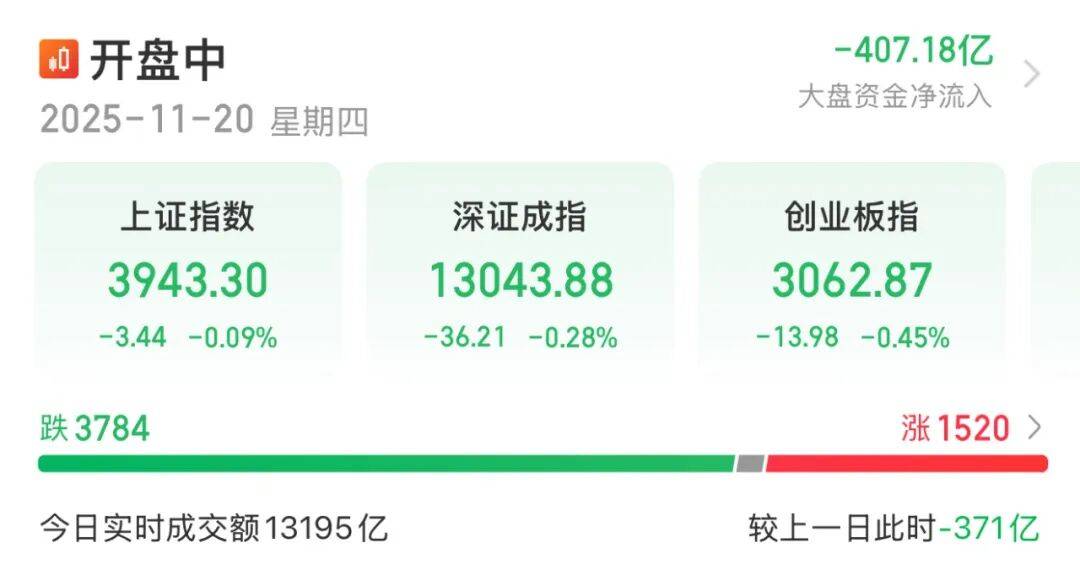
Market Overview - A-shares opened higher on November 20, with the Shanghai Composite Index at 3960.7 points, up 0.35%, while the Shenzhen Component Index and the ChiNext Index rose by 1.03% and 1.79% respectively. However, by the time of reporting, all three indices experienced a decline, with the Shanghai Composite down 0.09%, the Shenzhen Component down 0.28%, and the ChiNext down 0.45% [1][3]. Company Developments - China International Capital Corporation (CICC) plans to merge with Dongxing Securities and Xinda Securities through a share swap, aiming to enhance its capital strength and consolidate client resources. This merger is expected to bolster CICC's competitive position in the securities industry, potentially leading to a total asset value of 1009.583 billion yuan and a net profit of 9.520 billion yuan post-merger [3][8]. - The merger is part of a broader trend of accelerated consolidation in the brokerage sector, with several firms having already completed mergers since 2024, including Guolian + Minsheng and Guotai Junan + Haitong [8]. Market Sentiment - The market showed significant interest in China Bank, which saw a 5.17% increase in its stock price, reaching a new historical high with a market capitalization exceeding 2 trillion yuan. Other major banks also experienced stock price increases, contributing to a positive sentiment in the financial sector [3]. ETF and Investment Trends - The securities ETF has seen substantial growth, with an increase of over 26 billion units this year, bringing its total size to over 61.7 billion yuan, making it the largest in its category. This growth reflects a strong interest in brokerage opportunities amid a favorable market environment [9]. - The performance of listed brokerages has been robust, with a year-on-year increase in revenue and net profit of 43% and 63% respectively for the third quarter of 2025, indicating a sustained bullish market trend [9].

ESG实践分化加剧,中小企业陷合规困境
Zhong Guo Jing Ying Bao· 2025-11-20 23:41
Core Insights - The article discusses the divergence in ESG (Environmental, Social, and Governance) practices among companies, particularly between large enterprises and small to medium-sized enterprises (SMEs), under the backdrop of China's dual carbon goals [1][2]. Group 1: ESG Practice Divergence - ESG practices have shifted from being optional to a necessity for market competition, with significant differences observed based on company size, industry, and region [1]. - Large state-owned enterprises (SOEs) and leading private enterprises are more advanced in ESG disclosures and governance due to regulatory guidance and international market demands [1][2]. - SMEs often face challenges such as lack of funding, professional talent, and market incentives, leading to a focus on minimal compliance rather than proactive ESG strategies [1][2]. Group 2: Current ESG Implementation - Company A, a downstream automotive parts supplier, exemplifies the challenges faced by SMEs, relying on low-cost measures for compliance and often producing hastily compiled ESG reports [2]. - A report indicates that over 70% of companies will establish board-level oversight for sustainability by 2024, with a notable increase in integrating ESG factors into risk management [2]. - The ESG report disclosure rates vary significantly, with smaller companies showing much lower rates compared to larger counterparts [2]. Group 3: Recommendations for SMEs - SMEs are encouraged to focus on niche markets and leverage supply chain collaborations to enhance their ESG capabilities [3]. - Companies should utilize government resources, such as free disclosure templates and databases, to reduce transformation costs [3]. - The report outlines six initiatives to enhance ESG practices among listed companies, including strengthening sustainable policy implementation and promoting digital integration for better governance [3].

今日视点:ESG质量“重新定义”上市公司估值体系
Zheng Quan Ri Bao· 2025-11-20 23:11
Core Insights - The enhancement of ESG ratings among A-share listed companies indicates a significant shift in operational philosophy and management practices, reflecting the increasing importance of ESG quality in the capital market [1][2] Group 1: Restructuring Valuation Logic - ESG quality is becoming a key metric for assessing sustainable growth potential, moving beyond traditional financial indicators like profit and revenue [2] - Improved ESG ratings signify authoritative recognition in areas such as environmental compliance and employee rights, enhancing operational resilience and sustainable growth [2] - The focus on ESG is shifting valuation logic towards a balance between financial quality and sustainable development [2] Group 2: Risk Pricing Logic - High-quality ESG performance serves as an effective tool for reducing risk premiums, as poor ESG ratings often lead to higher perceived risks and increased discount rates [3] - Enhanced ESG ratings create a risk management framework that mitigates potential penalties and internal governance issues, thereby lowering overall risk levels [3] - This reduction in risk contributes to a decrease in valuation discount rates, ultimately increasing the company's fair valuation [3] Group 3: Capital Cost Impact - Companies with strong ESG performance are more likely to attract long-term capital from major investment institutions, leading to lower financing costs [4] - Regulatory bodies are increasingly emphasizing ESG disclosure requirements, giving companies with superior ESG performance an advantage in capital market activities [4] - The widening of financing channels and reduction in capital costs directly enhance corporate value, establishing ESG as a tangible financial competitive edge [4] Group 4: Market Consensus and Investment Narrative - A growing consensus among investors suggests that companies with high ESG ratings are better positioned for sustainable growth and regulatory compliance [5] - This consensus drives capital towards high ESG-rated companies, creating a positive cycle of quality ratings, capital inflow, and valuation enhancement [5] - The establishment of a "certainty premium" for leading ESG companies reinforces their weight in the valuation system, highlighting the importance of integrating ESG into corporate strategy and operations [5]
Inside SMX's Global Rise From Molecular Marker to the Company That Taught Matter to Speak
Accessnewswire· 2025-11-20 18:15
Core Insights - The article highlights unexpected developments in the ESG (Environmental, Social, and Governance) sector, indicating that even regulators were caught off guard by recent changes [1] Group 1 - The article suggests that the current state of ESG compliance and regulation is evolving rapidly, leading to unforeseen challenges for companies [1] - It emphasizes the need for companies to adapt to these changes in order to remain compliant and competitive in the market [1] - The piece points out that the lack of foresight among regulators may lead to increased scrutiny and pressure on companies to meet ESG standards [1]


ESG质量“重新定义”上市公司估值体系
Zheng Quan Ri Bao· 2025-11-20 16:16
Core Insights - The MSCI China A-share index has seen a significant increase in ESG ratings, with 36.8% of companies improving their ratings and the proportion of companies rated AAA or AA rising from 7.2% to 14% [1] - ESG is becoming a crucial factor in reshaping the valuation logic of listed companies in China, reflecting a shift in management practices and increasing market focus on ESG quality [1] Group 1: Reshaping Valuation Logic - ESG quality is now a key metric for assessing sustainable growth potential, moving beyond traditional financial indicators like profit and revenue [1] - Companies with improved ESG ratings demonstrate resilience and sustainable growth capabilities, as they gain authoritative recognition in areas such as environmental compliance and social responsibility [1] Group 2: Risk Pricing Logic - High-quality ESG performance serves as an effective tool for reducing risk premiums, as poor ESG ratings often lead to higher compliance and governance risks, increasing discount rates and exerting downward pressure on valuations [3] - Enhanced ESG ratings create a risk management framework that mitigates potential penalties and internal governance issues, thereby lowering overall risk levels and improving valuations [3] Group 3: Capital Cost Impact - Companies with strong ESG ratings are more likely to attract long-term capital from major investment institutions, leading to lower costs for issuing financial instruments [4] - Regulatory bodies are increasingly emphasizing ESG disclosure, giving companies with superior ESG performance an advantage in capital market activities [4] Group 4: Market Consensus and Investment Narrative - A growing consensus among investors favors companies with high ESG ratings, as they are perceived to be more aligned with green transformation and regulatory changes, enhancing their long-term sustainability [5] - This consensus fosters a positive cycle of capital inflow into high ESG-rated companies, creating a "certainty premium" that reinforces the importance of ESG in valuation frameworks [5] - The improvement in ESG ratings among listed companies is a natural outcome of China's high-quality economic development and capital market internationalization [5]
A股ESG实践从“合规披露”迈向“主动布局”
Zheng Quan Ri Bao· 2025-11-20 16:05
Core Viewpoint - The enthusiasm for ESG (Environmental, Social, and Governance) practices in the A-share market remains strong, with 36 companies disclosing or updating their ESG management systems by November 20, indicating a shift from compliance to proactive engagement in ESG practices [1] Group 1: ESG Practice Development - A-share listed companies are increasingly integrating ESG practices across various industries, with a notable rise in the number of companies publishing sustainability reports, reaching 2,462 by April 30, 2025, a 5.72 percentage point increase from the previous year [2] - The proactive awareness of ESG among A-share companies is growing, focusing on institutional frameworks, digital capabilities, and value creation [2][3] Group 2: Institutional Framework - More A-share companies are embedding ESG principles into their strategic frameworks, establishing a three-tier governance structure that includes the board, management, and execution levels [3] - By 2025, 185 A-share companies have disclosed their ESG management systems, promoting standardization in ESG governance [3] Group 3: Digitalization and Value Creation - A-share companies are leveraging technologies like big data, AI, and blockchain to enhance their ESG management capabilities, improving accuracy and efficiency in areas such as carbon emissions accounting and supply chain risk monitoring [3] - ESG is becoming a crucial link between companies and capital, with 500 ESG-related indices in the A-share market, 91% of which have seen gains this year, indicating that companies with strong ESG performance attract more capital [4] Group 4: Market Ecosystem - The development of ESG practices is supported by a robust market ecosystem involving policies, capital, and intermediary institutions, with regulations mandating the disclosure of sustainability reports [5] - The issuance of green bonds has surged, with 316 green bonds issued this year, totaling 256.74 billion, marking a 22.48% increase in quantity and a 20.83% increase in scale compared to the previous year [6] Group 5: Future Directions - The future of ESG practices in China is expected to focus on product innovation, expanding from single tools to comprehensive solutions, and increasing participation from individual investors [7]
Diana Shipping(DSX) - 2025 Q3 - Earnings Call Transcript
2025-11-20 15:02
Financial Data and Key Metrics Changes - Time charter revenues for Q3 2025 were $51.9 million, down from $57.5 million in the same quarter last year, reflecting the sale of two vessels earlier this year and one vessel in September 2024 [10] - Adjusted EBITDA decreased to $20.3 million from $23.7 million year-over-year, consistent with a smaller fleet [10] - Net income nearly doubled to $7.2 million from $3.7 million in Q3 2024, driven by lower expenses and a $10.6 million gain from the valuation of the investment in Genco [11] - Cash decreased to $133.9 million as of September 30, 2025, from $207.2 million at the end of 2024, due to strategic investments [11] - Long-term debt increased slightly to $651.1 million as of September 30, 2025, from $637.5 million at year-end 2024 [12] Business Line Data and Key Metrics Changes - Fleet utilization reached 99.5% for Q3 2025, indicating effective vessel management [4] - Time charter equivalent averaged $15,178 per day, a 1% decrease compared to $15,333 per day in Q3 2024 due to softer charter rates [12] - Daily operating expenses rose 1% to $6,014 compared to $5,964 last year, mainly due to higher crew costs [13] Market Data and Key Metrics Changes - The dry bulk market showed solid performance in Q3, with record Chinese imports reaching nearly 580 million metric tons [3] - The 12-month time charter rate for a typical Capesize stood at around $24,000 a day, with rates for Campermax and Ultramax at $15,600 and $15,900 per day, respectively [17] - The Baltic Capesize Index was at 3,636, and the Baltic Panamax Index at 1,895 as of November 19 [18] Company Strategy and Development Direction - The company is focused on a disciplined chartering strategy, securing approximately $149 million in contracted revenues with an average time charter rate of $16,200 per day [8] - Ongoing fleet modernization efforts include the delivery of two methanol dual-fuel new-building Campermax dry bulk vessels expected at the end of 2027 and early 2028 [4] - The company is committed to promoting eco-friendly technologies and modernizing its fleet as part of its ESG initiatives [32] Management's Comments on Operating Environment and Future Outlook - Management noted that the bulk carrier market has weathered geopolitical and trade developments well, with positive sentiment and new building orders appearing [17] - The outlook for 2026 appears positive, with potential revenues projected to reach $224.7 million at an average time charter rate of $17,102 per day [15] - The company anticipates that while projected revenues for 2025 may not fully cover break-even, the outlook for 2026 supports a return to cash flow profitability [15] Other Important Information - The company declared a quarterly cash dividend of $0.01 per common share for Q3 2025, totaling approximately $1.16 million [7] - The company has acquired 14.9% of Genco Shipping and Trading Limited's common shares [6] Q&A Session Summary Question: What is the company's strategy regarding its stake in Genco? - Management stated that the position in Genco has strategic value, and they are currently observing developments without direct contact with Genco's management [37] Question: What is the status of the company's holding in Ocean Chow? - Management indicated that Diana Shipping's interest in Ocean Chow is minimal and not material at this stage [39]

Diana Shipping(DSX) - 2025 Q3 - Earnings Call Transcript
2025-11-20 15:02
Financial Data and Key Metrics Changes - Time charter revenues for Q3 2025 were $51.9 million, down from $57.5 million in the same quarter last year, reflecting the sale of two vessels earlier this year and one vessel in September 2024 [9] - Adjusted EBITDA decreased to $20.3 million from $23.7 million year-over-year, consistent with a smaller fleet [9] - Net income nearly doubled to $7.2 million from $3.7 million in Q3 2024, driven by lower expenses and a $10.6 million gain from the valuation of the investment in Genco [10] - Cash decreased to $133.9 million as of September 30, 2025, from $207.2 million at the end of 2024, due to strategic investments [10] - Long-term debt increased slightly to $651.1 million as of September 30, 2025, from $637.5 million at year-end 2024 [11] Business Line Data and Key Metrics Changes - Fleet utilization reached 99.5% for Q3 2025, highlighting effective vessel management [4] - Time charter equivalent averaged $15,178 per day, a 1% decrease compared to $15,333 per day in Q3 2024 due to softer charter rates [11] - Vessel operating expenses decreased by 6% to $20 million compared to $21.2 million in Q3 2024, attributed to the smaller fleet size [12] Market Data and Key Metrics Changes - The dry bulk market showed solid performance in Q3, with record Chinese imports reaching nearly 580 million metric tons [3] - The 12-month time charter rate for a typical Cape was around $24,000 a day, up from earlier in the year [17] - The bulk carrier fleet is forecasted to grow by 3.1% this year and by 3.4% in 2026, with the Cape segment projected to increase by only 1.4% in 2025 [24] Company Strategy and Development Direction - The company is focused on a disciplined chartering strategy, securing approximately $149 million in contracted revenues with an average time charter rate of $16,200 per day [7] - Ongoing fleet modernization efforts include the delivery of two methanol dual-fuel new-building Kamsarmax dry bulk vessels expected at the end of 2027 and early 2028 [4] - The company is committed to ESG initiatives, promoting eco-friendly technologies and modernizing the fleet [31] Management's Comments on Operating Environment and Future Outlook - Management noted that the bulk carrier market has weathered geopolitical and trade developments well, with positive sentiment and new building orders appearing [17][18] - The outlook for 2026 appears positive, with potential revenues projected to reach $224.7 million at an average time charter rate of $17,102 per day [15] - Management emphasized the importance of proactive debt management and liquidity actions to provide resilience for future opportunities [16] Other Important Information - The company declared a quarterly cash dividend of $0.01 per common share for Q3 2025, totaling approximately $1.16 million [6] - The average age of the fleet is approximately 12 years, with a total deadweight capacity of about 4.1 million tons [4] Q&A Session Summary Question: What is the company's strategy regarding its stake in Genco? - Management stated that the position in Genco has strategic value, and they are currently observing developments without direct contact with Genco's management [36] Question: What is the current holding in OceanPal? - Management indicated that Diana Shipping's interest in OceanPal is minimal and not material at this stage [38]
Diana Shipping(DSX) - 2025 Q3 - Earnings Call Transcript
2025-11-20 15:00
Financial Data and Key Metrics Changes - Time charter revenues for Q3 2025 were $51.9 million, down from $57.5 million in the same quarter last year, reflecting the sale of two vessels earlier this year [10] - Adjusted EBITDA decreased to $20.3 million from $23.7 million year-over-year, consistent with a smaller fleet [10] - Net income nearly doubled to $7.2 million from $3.7 million in Q3 2024, driven by lower expenses and a $10.6 million gain from the valuation of the investment in Genco [10] - Cash decreased to $133.9 million as of September 30, 2025, from $207.2 million at the end of 2024, due to strategic investments [11] - Long-term debt increased slightly to $651.1 million as of September 30, 2025, from $637.5 million at year-end 2024 [12] Business Line Data and Key Metrics Changes - Fleet utilization reached 99.5% for Q3 2025, indicating effective vessel management [4] - Time charter equivalent averaged $15,178 per day, a 1% decrease compared to $15,333 per day in Q3 2024 [12] - Daily operating expenses rose 1% to $6,014 compared to $5,964 last year, mainly due to higher crew costs [13] Market Data and Key Metrics Changes - The dry bulk market showed solid performance in Q3, with record Chinese imports reaching nearly 580 million metric tons [3] - The 12-month time charter rate for a typical Capesize stood at around $24,000 a day, with rates for Campermax and Ultramax at $15,600 and $15,900 respectively, all up from earlier in the year [18] - The Baltic Capesize Index was at 3,636, and the Baltic Panamax Index at 1,895 as of November 19 [18] Company Strategy and Development Direction - The company is focused on fleet modernization and sustainability, with plans to deliver two methanol dual-fuel new-building Campermax vessels by early 2028 [4] - A disciplined chartering strategy has secured approximately $149 million in contracted revenues, ensuring earnings visibility and resilience against market downturns [8] - The company is committed to promoting eco-friendly technologies and transparency in emissions data as part of its ESG initiatives [32] Management Comments on Operating Environment and Future Outlook - Management noted that the bulk carrier market has weathered geopolitical and trade developments well, with positive sentiment and new building orders appearing [18] - The outlook for 2026 appears positive, with projected revenues supporting a return to cash flow profitability despite potential challenges in 2025 [15] - The company is observing developments in Genco Shipping and Trading Limited, considering its strategic stake [33] Other Important Information - The company declared a quarterly cash dividend of $0.01 per common share for Q3 2025, totaling approximately $1.16 million [6] - The average age of the fleet is approximately 12 years, with ongoing efforts to modernize [14] Q&A Session Summary Question: How should we think about your significant stake in Genco now? - Management stated that the position in Genco has strategic value, and they are currently observing developments without direct contact with Genco's management [33] Question: Can you comment on the recent development in Ocean Chow? - Management indicated that Diana Shipping's interest in Ocean Chow is minimal and not material at this stage [34]